University of Florida Tuition and Fees
University of Florida Tuition and Fees

(Last Updated – 06/2025)
Located in Gainesville, Florida, the University of Florida (UF) is a top-tier public research university and a flagship institution of the State University System of Florida, offering a wide array of undergraduate, graduate, and professional programs across disciplines such as engineering, business, health sciences, and the liberal arts.
Keep reading to learn UF’s tuition and mandatory fees for both in-state and out-of-state students, available financial aid opportunities, acceptance rates, admission requirements, and more.
Total Cost of Attendance
University of Florida tuition for the 2024-25 school year was $6,381 for in-state students and $28,659 for out-of-state students. This has remained the same since the 2021-22 academic year. In comparison, the national average for public four-year schools is $11,260 for in-state students and $29,150 for out-of-state students.
Costs for 2024-25
|
Student Type |
In-State |
Out-of-State |
|
Tuition & Fees |
$6,381 |
$28,659 |
|
Books & Supplies |
$810 |
$810 |
|
Food & Housing |
$12,120 |
$12,120 |
|
Other Expenses |
$4,210 |
$4,210 |
|
Total Cost of Attendance |
$23,521 |
$45,799 |
Financial Aid
To help pay for University of Florida tuition, 92% of students use financial aid, including student loans, grants, or scholarships.
Generally, financial aid is monetary assistance awarded to students based on personal need or merit. Students who qualify for financial aid can use it to pay for college costs like tuition, books, and living expenses.
The federal government is the largest provider of student financial aid. However, aid can also be given by state governments, colleges and universities, private companies, and nonprofits. The different types include:
• Scholarships: Scholarships can be awarded by schools and other organizations based on students’ academic excellence, athletic achievement, community involvement, job experience, field of study, or financial need.
• Grants: Grants are generally based on financial need. These can come from federal, state, private, and nonprofit organizations.
• Work-study: Federal Work-Study provides qualifying students with part-time employment to earn money for expenses while in school.
• Federal student loans: Federal student loans are money borrowed directly from the U.S. Department of Education. They come with fixed interest rates that are typically lower than private loans.
Colleges, universities, and state agencies use the Free Application for Federal Student Aid (FAFSA®) to determine financial aid eligibility. The FAFSA can be completed online, but note that state, federal, and school deadlines may differ.
You can find other financial aid opportunities on databases such as:
• U.S. Department of Education – Search for grants from colleges and universities by state
• College Scholarship Service Profile (CSS) – A global college scholarship application used by select institutions to award financial aid
Recommended: The Differences Between Grants, Scholarships, and Loans
Private Student Loans
When it comes to student loans at UF, students take out federal loans (10%) or private loans (1%). The average private student loan is $22,023.
Private student loans are funded by private organizations such as banks, online lenders, credit unions, some schools, and state-based or -affiliated organizations. While federal student loans have interest rates that are regulated by Congress, private lenders follow a different set of regulations, so their qualifications and interest rates can vary widely.
What’s more, private loans have variable or fixed interest rates that may be higher than federal loan interest rates, which are always fixed. Private lenders may (but don’t always) require you to make payments on your loans while you are still in school, compared to federal student loans which you don’t have to start paying back until after you graduate, leave school, or change your enrollment status to less than half-time.
Private loans don’t have a specific application window and can be applied for on an as-needed basis. However, if you think you may need to take out a private loan, it’s a good idea to submit your FAFSA first to see what federal aid you may qualify for, as it generally may have better rates and terms.
If you’ve missed the FAFSA deadline or you’re struggling to pay for school throughout the year, private loans can potentially help you make your payments. Just keep in mind that you will need enough lead time for your loan to process and for your lender to send money to your school.
Recommended: Guide to Private Student Loans
Projected 4-Year-Degree Price
The University of Florida cost for four years is $94,084 for students from Florida and $183,196 for students from other states. The average four-year cost for a public university in the U.S. is $115,360.
Here’s some Florida Student Loan & Scholarship Information.
Recommended: Credit Hours: What They Are & Why They Matter
Undergraduate Tuition and Fees
Costs for 2024-25
|
Student Type |
In-State |
Out-of-State |
|
Tuition & Fees |
$6,381 |
$28,659 |
|
Books & Supplies |
$810 |
$810 |
|
Total |
$7,191 |
$29,469 |
In-state students attending UF in 2024-25 paid $7,191 for tuition, fees, books, and supplies, while out-of-state students paid $29,469.
Graduate Tuition and Fees
Costs for 2024-25
|
Student Type |
In-State |
Out-of-State |
|
Tuition |
$10,770 |
$27,335 |
|
Fees |
$1,967 |
$2,795 |
|
Total |
$12,737 |
$30,130 |
University of Florida tuition for graduate school is $12,737 for in-state students and $30,130 for out-of-state students. This is similar to the average cost of $37,610 for a master’s degree at a four-year public institution in the U.S. There are graduate loans available to help with these costs.
Cost per Credit Hour
Wondering how much it costs per credit hour at the University of Florida? For undergraduates in 2022-23, the total cost per credit hour for Florida residents was $212.71. For graduate students, it was $530.69.
Campus Housing Expenses
Costs for 2024-25
|
Student Type |
On-Campus |
Off-Campus |
|
Room & Board |
$12,120 |
$599+/mo* |
|
Other Expenses |
$4,210 |
$4,210 |
*Starting rate for a studio based on available apartments on UF’s off-campus housing website in 2025.
University of Florida students are not required to live on campus, though roughly 24% of freshmen choose to live in one of 26 residence halls. Students also have the option to live in a Living Learning Community around art, black culture, engineering, international living, ROTC, and more.
Many upperclassmen choose to live near the Gainesville campus in apartments, duplexes, or houses. You can find more about off-campus housing at UF here .
University of Florida Acceptance Rate
Fall 2023
|
Number of applications |
65,375 |
|
Number accepted |
15,690 |
|
Percentage accepted |
24% |
The UF acceptance rate of 24% means that getting into the university can be competitive.
Admission Requirements
Here’s what it takes to apply to the University of Florida.
Required:
• High school grades
• High school transcript
• SAT or ACT scores
The deadline for applications is January 15, with decisions given in the middle of March. You can apply to the University of Florida here .
SAT and ACT Scores
UF does require test scores, though it has no preference for either SAT or ACT. Here are the 25th and 75th percentile scores:
|
Subject |
25th Percentile |
75th Percentile |
|
SAT Evidence-Based |
650 |
730 |
|
SAT Math |
650 |
750 |
|
ACT Composite |
28 |
33 |
|
ACT English |
27 |
34 |
|
ACT Math |
26 |
31 |
Popular Majors at the University of Florida
The University of Florida offers a wide range of options for undergraduate degrees. Here are the most popular majors.
1. Biology
Biology students interested in a Bachelor of Science degree can choose one of two specializations: integrative biology or pre-professional biology. There is also a Bachelor of Arts degree in biology that is suited for students who want a career in education, the allied health professions, or interdisciplinary fields.
Undergraduate degrees in 2023-24: 616
2. Psychology
Psychology students may choose a specialization from general psychology, behavioral and cognitive neuroscience, or behavior analysis. All students will learn about psychology, statistics, mathematics, and biology, and will have the option of doing a senior honors thesis.
Undergraduate degrees in 2023-24: 611
3. Business Administration
Business majors get a foundation in economics, mathematics, computing skills, and accounting. They will also learn about finance, management, marketing, and operations management, and can choose courses like international studies, mass communication, criminology, science, or a foreign language.
Undergraduate degrees in 2023-24: 556
4. Computer & Information Science
Students in this program will study communication for engineers, physics, calculus, statistics, operating systems, digital design, and more.
Undergraduate degrees in 2023-24: 420
5. Economics
The economics program at UF includes courses on international trade, law and economics, economics of sports, game theory, and public choice.
Undergraduate degrees in 2023-24: 312
6. Political Science
Students who are interested in a degree in political science will take courses in American and comparative politics, political theory, international relations, public policy, and public administration.
Undergraduate degrees in 2023-24: 287
7. Mechanical Engineering
This program provides a solid understanding of mathematics, science, and basic engineering sciences, while giving students the opportunity to go deeper into subjects like manufacturing, robotics, solid mechanics, thermal and fluid systems, dynamics and controls, and biomechanics.
Undergraduate degrees in 2023-24: 268
8. Finance
Finance students learn about economics, mathematics, computing skills, and accounting, as well as finance, management, marketing, and operations management, among other subjects.
Undergraduate degrees in 2023-24: 240
9. Applied Physiology & Kinesiology
This program is ideal for students who want to get into the fitness, wellness, and allied health fields. It offers courses on exercise programming and techniques and anatomical aspects of the movement. Students have the opportunity to intern in the field.
Undergraduate degrees in 2023-24: 223
10. Marketing
A marketing degree from University of Florida combines core business principles with specialized courses in consumer behavior, digital marketing, branding, and market research. Students engage in experiential projects and internships, preparing them for careers in advertising, sales, product management, and market consulting.
Undergraduate degrees in 2023-24: 209
Graduation Rate
Here are the graduation rates of students who started at UF in 2017:
• 4 years: 76%
• 6 years: 91%
Post-Graduation Median Earnings
UF graduates earn, on average, $71,588 per year. This is slightly higher than the national average of $68,680.
Bottom Line
At the University of Florida, not only do you have the sunny weather of Florida, but you also have access to a stellar education at a top-rated institution. The price of attendance is reasonable, and student loans can help you pay for your schooling.
If you’ve exhausted all federal student aid options, no-fee private student loans from SoFi can help you pay for school. The online application process is easy, and you can see rates and terms in just minutes. Repayment plans are flexible, so you can find an option that works for your financial plan and budget.
Cover up to 100% of school-certified costs including tuition, books, supplies, room and board, and transportation with a private student loan from SoFi.
SoFi Private Student Loans
Please borrow responsibly. SoFi Private Student loans are not a substitute for federal loans, grants, and work-study programs. We encourage you to evaluate all your federal student aid options before you consider any private loans, including ours. Read our FAQs.
Terms and conditions apply. SOFI RESERVES THE RIGHT TO MODIFY OR DISCONTINUE PRODUCTS AND BENEFITS AT ANY TIME WITHOUT NOTICE. SoFi Private Student loans are subject to program terms and restrictions, such as completion of a loan application and self-certification form, verification of application information, the student's at least half-time enrollment in a degree program at a SoFi-participating school, and, if applicable, a co-signer. In addition, borrowers must be U.S. citizens or other eligible status, be residing in the U.S., Puerto Rico, U.S. Virgin Islands, or American Samoa, and must meet SoFi’s underwriting requirements, including verification of sufficient income to support your ability to repay. Minimum loan amount is $1,000. See SoFi.com/eligibility for more information. Lowest rates reserved for the most creditworthy borrowers. SoFi reserves the right to modify eligibility criteria at any time. This information is subject to change. This information is current as of 4/22/2025 and is subject to change. SoFi Private Student loans are originated by SoFi Bank, N.A. Member FDIC. NMLS #696891 (www.nmlsconsumeraccess.org).
SoFi Loan Products
SoFi loans are originated by SoFi Bank, N.A., NMLS #696891 (Member FDIC). For additional product-specific legal and licensing information, see SoFi.com/legal. Equal Housing Lender.
Financial Tips & Strategies: The tips provided on this website are of a general nature and do not take into account your specific objectives, financial situation, and needs. You should always consider their appropriateness given your own circumstances.
Third-Party Brand Mentions: No brands, products, or companies mentioned are affiliated with SoFi, nor do they endorse or sponsor this article. Third-party trademarks referenced herein are property of their respective owners.
Non affiliation: SoFi isn’t affiliated with any of the companies highlighted in this article.
External Websites: The information and analysis provided through hyperlinks to third-party websites, while believed to be accurate, cannot be guaranteed by SoFi. Links are provided for informational purposes and should not be viewed as an endorsement.
SOISL-Q225-071
University of Tennessee Tuition Costs and Fees
University of Tennessee Tuition and Fees
(Last Updated – 06/2025)
The University of Tennessee, Knoxville, also known as UT Knoxville, is the flagship campus of the five-campus University of Tennessee system. The public, four-year research institution is known for its supply chain and sciences programs and is home to the UT Space Institute and the UT Institute of Agriculture.
Here’s an overview of University of Tennessee tuition costs for both in-state and out-of-state students, housing and other costs, as well as Tennessee’s acceptance rate.
Total Cost of Attendance
|
Expenses |
In-State |
Out-of-State |
|
Tuition & Fees |
$13,812 |
$33,256 |
|
Books & Supplies |
$1,598 |
$1,598 |
|
Food & Housing |
$13,356 |
$13,356 |
|
Other Expenses |
$6,298 |
$6,298 |
|
Total Cost of Attendance |
$35,064 |
$54,508 |
Financial Aid
Nearly every student at UT Knoxville (90%) uses one or more types of financial aid to help pay for the University of Tennessee’s costs. This may include scholarships, grants, and/or loans. For example, 17% of students have Pell Grants, a type of federal funding for undergraduates with exceptional financial need.
Generally, financial aid is monetary assistance awarded to students based on personal need merit. Students who qualify for financial aid can use it to pay for college costs like tuition, books, and living expenses.
The federal government is the largest provider of student financial aid. However, aid can also be given by state governments, colleges and universities, private companies, and nonprofits. The different types include:
• Scholarships: These can be awarded by schools and other organizations based on students’ academic excellence, athletic achievement, community involvement, job experience, field of study, or financial need.
• Grants: Grants are generally based on financial need. These can come from federal, state, private, or nonprofit organizations.
• Work-study: Federal Work-Study provides qualifying students with part-time employment to earn money for expenses while in school.
• Federal student loans: Federal student loans are money borrowed directly from the U.S. Department of Education. They come with fixed interest rates that are typically lower than private loans.
Colleges, universities, and state agencies use the Free Application for Federal Student Aid (FAFSA®) to determine financial aid eligibility. The FAFSA can be completed online, but note that state, federal, and school deadlines may differ.
You can find other financial aid opportunities on databases such as:
• U.S. Department of Education — Search for grants from colleges and universities by state
• College Scholarship Service Profile (CSS) — A global college scholarship application used by select institutions to award financial aid
Recommended: Tennessee Student Loan & Scholarships
Private Student Loans
At the University of Tennessee, Knoxville, 29% of students take out federal student loans and 7% take out private student loans. The average private student loan is $23,030.
Private loans are funded by private organizations such as banks, online lenders, credit unions, some schools, and state-based or -affiliated organizations. While Federal student loans have interest rates that are regulated by Congress, private lenders follow a different set of regulations so their qualifications and interest rates can vary widely.
What’s more, private loans have variable or fixed interest rates that may be higher than federal loan interest rates, which are always fixed. Private lenders may (but don’t always) require you to make payments on your loans while you are still in school, compared to federal student loans, which you don’t have to start paying back until after you graduate, leave school, or change your enrollment status to less than half-time.
Private loans don’t have a specific application window and can be applied for on an as-needed basis. However, if you think you may need to take out a private loan, it’s a good idea to submit your FAFSA first to see what federal aid you may qualify for, since it generally has better rates and terms.
If you’ve missed the FAFSA deadline or you’re struggling to pay for school during the year, private loans can potentially help you make your tuition payments. Just keep in mind that you will need enough lead time for your loan to process and for your lender to send money to your school.
Recommended: Guide to Private Student Loans
Projected 4-Year-Degree Price
The University of Tennessee cost for four years, including tuition and fees, room and board, books, and other expenses, would be $140,256 for Tennessee residents (based on 2024-25 numbers). This is higher than the national average of $115,360 for in-state students at public universities.
For residents of other states, the total cost of UT Knoxville would be $218,032, which is more than the national average for out-of-state students at public universities of $186,920.
This student loan and scholarship information may be valuable as you research schools and costs.
Undergraduate Tuition and Fees
Costs for 2024-25
|
Expenses |
In-State |
Out-of-State |
|
Tuition & Fees |
$13,812 |
$33,256 |
|
Books & Supplies |
$1,598 |
$1,598 |
|
Total |
$15,410 |
$34,854 |
The cost for University of Tennessee tuition and fees was $13,812 for in-state students and $33,256 for out-of-state students in 2024-25. Books and supplies were $1,598. This came to a total cost of $15,410 for in-state students and $34,854 for out-of-state students.
Graduate Tuition and Fees
|
Expenses |
In-State |
Out-of-State |
|
Tuition |
$13,720 |
$32,208 |
|
Fees |
$2,252 |
$2,252 |
|
Total |
$15,972 |
$34,760 |
The average University of Tennessee tuition and fees for graduate school was $15,972 for in-state residents in 2024-25. In comparison, the average cost of graduate school in the U.S. is $36,760.
There are many options for graduate loans that can help with these costs.
Cost per Credit Hour
The cost per credit hour for Tennessee residents is $502. Out-of-state residents will pay $1,317 per credit hour.
Campus Housing Expenses
|
Expenses |
On-Campus |
Off-Campus |
|
Food & Housing |
$13,356 |
$16,448 |
|
Other Expenses |
$6,298 |
$6,298 |
|
Total Living Expenses |
$19,654 |
$22,746 |
At UT Knoxville, freshmen are required to live on campus. Students can choose from apartment-style housing, residence halls, and community-style halls. There are also Living and Learning Communities where students can live with others who share their same interests and fields of study.
For upperclassmen, there are many off-campus housing options within walking distance of the university.
University of Tennessee Acceptance Rate
|
Number of Applications |
Number Accepted |
Percentage Accepted |
|
50,488 |
23,224 |
46% |
Admission Requirements
When applying to the University of Tennessee, here’s what you’ll need to submit with your application.
Required:
• High school academic record
• Standardized test scores
• Essay
Optional:
• Recommendation letters (academic, professional, or personal)
• Supporting statement (might include academic achievements, community involvement, and other information about your experiences and background)
The UT Knoxville Early Action application deadline is November 1, and the Regular Admission deadline is December 16.
SAT and ACT Scores
Here are the standardized test scores of accepted students at UT Knoxville.
|
Subject |
25th Percentile |
75th Percentile |
|
SAT Evidence-Based |
600 |
670 |
|
SAT Math |
590 |
670 |
|
ACT Composite |
25 |
31 |
|
ACT English |
24 |
32 |
|
ACT Math |
24 |
29 |
Popular Majors at the University of Tennessee
UT Knoxville offers numerous degree programs across 12 academic colleges and the Baker School of Public Policy. These are some of the most popular majors.
1. Supply Chain Management
The Supply Chain Management Bachelor of Science (BS) degree has several areas of focus to choose from, including Business Analytics, Health Integrated and Business Engineering, Information Management, or International Business.
Undergraduate degrees in 2023-24: 423
2. Psychology
Psychology students will learn research methods they can apply in hands-on lab work. They’ll take courses like Human Development, Cognitive Basis of Behavior, and Evolutionary Psychology and Ethology.
Undergraduate degrees in 2023-24: 332
3. Marketing
Depending on a student’s interest, a marketing degree can focus on Business Analytics, Customer and Brand Strategy, Digital and Visual Marketing, Professional Sales, Health Integrated Business and Engineering, Information Management, International Business, or Supply Chain Management.
Undergraduate degrees in 2023-24: 295
4. Nursing
Students train for future placement as a licensed registered nurse. The school also offers an accelerated track for a Bachelor of Science in Nursing degree for non-nurses who already have a college degree and want to pursue a career in nursing.
Undergraduate degrees in 2023-24: 239
5. Biological Science
In this program, biological science majors can opt for a concentration like Biochemistry and Cellular and Molecular Biology, Ecology and Evolutionary Biology, Microbiology, or the Biology of Global Health.
Undergraduate degrees in 2023-24: 239
6. Finance
Students interested in pursuing a BS degree in finance learn how to assess financial statements, construct investment portfolios, present financial data, and more.
Undergraduate degrees in 2023-24: 237
7. Kinesiology
Kinesiology students learn about exercise physiology, biomechanics, sport psychology, motor behavior, and physical activity epidemiology. Many choose to pursue a master’s degree. They typically go on to have careers in physical therapy, occupational therapy, chiropractic, or athletic training, or as physician assistants.
Undergraduate degrees in 2023-24: 192
8. Business Statistics
Another top major at UT Knoxville is business statistics, which focuses on applied statistics. Students learn how to gather data about an organization’s performance, analyze it to offer business solutions, and make predictions about further growth.
Undergraduate degrees in 2023-24: 179
9. Mechanical Engineering
After getting a solid foundation in general science, mechanical engineering students learn about mechanical design, solid and fluid mechanics, thermodynamics, heat transfer, vibrations, manufacturing processes, instrumentation, and automatic control.
Undergraduate degrees in 2023-24: 143
10. Political Science
Political science students can opt for a concentration in International Affairs, Law and Courts, or Public Administration. Courses in this degree program include Introduction to Comparative Politics, Introduction to Political Philosophy, and Tennessee Government and Politics.
Undergraduate degrees in 2023-24: 132
Graduation Rate
Here are the graduation rates at the University of Tennessee for students pursuing bachelor’s degrees who began in fall 2017.
• 4 years: 56%
• 6 years: 73%
Post-Graduation Median Earnings
UT Knoxville graduates earn a median annual salary of $60,249. This is slightly less than the median annual salary for all graduates of four-year colleges, which is $68,680.
Bottom Line
With a fairly affordable tuition, the chance to get a quality education, and a wide variety of majors to choose from, the University of Tennessee, Knoxville may be a great choice. To help cover the cost, financial aid is available in the form of grants, scholarships, federal student loans, and private student loans.
If you’ve exhausted all federal student aid options, no-fee private student loans from SoFi can help you pay for school. The online application process is easy, and you can see rates and terms in just minutes. Repayment plans are flexible, so you can find an option that works for your financial plan and budget.
Cover up to 100% of school-certified costs including tuition, books, supplies, room and board, and transportation with a private student loan from SoFi.
SoFi Private Student Loans
Please borrow responsibly. SoFi Private Student loans are not a substitute for federal loans, grants, and work-study programs. We encourage you to evaluate all your federal student aid options before you consider any private loans, including ours. Read our FAQs.
Terms and conditions apply. SOFI RESERVES THE RIGHT TO MODIFY OR DISCONTINUE PRODUCTS AND BENEFITS AT ANY TIME WITHOUT NOTICE. SoFi Private Student loans are subject to program terms and restrictions, such as completion of a loan application and self-certification form, verification of application information, the student's at least half-time enrollment in a degree program at a SoFi-participating school, and, if applicable, a co-signer. In addition, borrowers must be U.S. citizens or other eligible status, be residing in the U.S., Puerto Rico, U.S. Virgin Islands, or American Samoa, and must meet SoFi’s underwriting requirements, including verification of sufficient income to support your ability to repay. Minimum loan amount is $1,000. See SoFi.com/eligibility for more information. Lowest rates reserved for the most creditworthy borrowers. SoFi reserves the right to modify eligibility criteria at any time. This information is subject to change. This information is current as of 4/22/2025 and is subject to change. SoFi Private Student loans are originated by SoFi Bank, N.A. Member FDIC. NMLS #696891 (www.nmlsconsumeraccess.org).
SoFi Loan Products
SoFi loans are originated by SoFi Bank, N.A., NMLS #696891 (Member FDIC). For additional product-specific legal and licensing information, see SoFi.com/legal. Equal Housing Lender.
Financial Tips & Strategies: The tips provided on this website are of a general nature and do not take into account your specific objectives, financial situation, and needs. You should always consider their appropriateness given your own circumstances.
Third-Party Brand Mentions: No brands, products, or companies mentioned are affiliated with SoFi, nor do they endorse or sponsor this article. Third-party trademarks referenced herein are property of their respective owners.
Non affiliation: SoFi isn’t affiliated with any of the companies highlighted in this article.
External Websites: The information and analysis provided through hyperlinks to third-party websites, while believed to be accurate, cannot be guaranteed by SoFi. Links are provided for informational purposes and should not be viewed as an endorsement.
SOISL-Q225-086
First-Time Homebuyer Guide
First-Time Homebuyer Guide
Buying a house for the first time is a big deal. It’s as exciting as it is overwhelming!
Ultimately, buying your first home requires a mix of saving, strategy, and savvy.
We know there’s a lot to learn, which is why we created this step-by-step guide for first-time homebuyers like you. Get the knowledge you need to confidently purchase a home.
Understand the First-Time Homebuyer Advantage
First-time homebuyers often have access to down payment assistance and flexible loan qualification requirements. Who qualifies as a first-time homebuyer? Someone purchasing their very first home, sure, but also someone who has not owned a principal residence in the past three years, as well as certain other groups. So check into whether you qualify.
First-time homebuyers may be able to get a Federal Housing Administration (FHA) loan, which can have a down payment as low as 3.5%. Some other lenders also offer as little as 3% down for qualifying first-time homebuyers. You may have to pay for private mortgage insurance (PMI) or pay a mortgage insurance premium (MIP), as most lenders require one or the other when the down payment is less than 20% of the purchase price. But rest assured, many first-time homebuyers put down less than 20%. The median down payment for a first-time homebuyer in 2024 was 9%, according to the National Association of Realtors®

Helpful articles:
Figure Out if You’re Financially Ready
Maybe you’re seeking space for a home office or a growing family. Or perhaps you’re craving the community aspects of suburbia or the buzz of a vibrant, walkable city. Or maybe you’re just ready to achieve that major milestone of becoming a homeowner.
Whatever your situation may be, start with the question “Am I financially ready to buy?” before factoring in the emotional reasons for buying a home. Here are four signs you may be ready to buy:
1
Your budget is big enough to cover the down payment, mortgage payments, property taxes, homeowners insurance, and any maintenance fees. This mortgage calculator can help you visualize how much you can save on your mortgage with different down payments.
2
You plan on staying put for a while. In the early years of a mortgage, more of your money generally goes to paying down the interest than to paying off the principal. So staying in a house gives you a chance to begin chipping away at what you owe. It may also give your home time to appreciate in value.
3
You have good credit, which may lead to better loan terms.
4
Rents in your area are higher than what a house payment may be. Check out our buy or rent quiz to see where you stand.
Now you can consider the emotional perspective. Do you crave the autonomy of owning your own place? Are you dying to have control over paint colors and tile choices? Do you yearn for a second bedroom for a child, want your own garden, or need a yard for your dog?
On the flip side: Are you willing to live without your landlord (and their midnight visits to fix your broken heater)? Are you ready for a lot of responsibility?
If you’re fairly certain the time is right to buy, you’ll want to prepare to move quickly when you see a home you like. Here are three steps to make sure you are financially prepared:
1. Review Your Credit Reports
Since your financial history is a factor in getting approved for a mortgage loan (and snagging the best loan terms possible), it’s important to know what your credit report from each of the three main credit bureaus says about you.
You can look at your credit reports for free at annualcreditreport.com and catch any errors that may affect the terms lenders will offer you. Two common reporting errors are late payments and incorrect balances due on open accounts.
If you find an error, you can file a dispute with both the credit bureau and organization that provided the information to the bureau. Correcting misinformation and waiting for any adjustment to your credit score can take time, so it helps to start this step as early as possible. If you find your score needs a bit of help, consider using a free credit-monitoring tool to get on track. Watching your number rise can be motivating!
Helpful articles:
2. Figure Out Your Budget
While lusting over homes online and at open houses, it’s helpful to explore just how much house you can afford. A home affordability calculator can help you estimate the cost of purchasing a home and the monthly payment.
Getting prequalified for a mortgage is another good way to test the financial waters. You’ll provide just a few pieces of information online or by phone, and a lender will estimate the loan amount you could receive. That unofficial number will help you look for homes in your range.
Helpful tools and articles:
3. Set Aside Money for a Down Payment and Closing Costs
To buy a house, you’ll need money for a down payment and closing costs, of course. But you’ll also want to budget for moving expenses, and maybe buying new furniture or sprucing up the landscaping. So grab a calculator and start drawing your financial picture. While the decision to buy might be easy, the actual buying process can require discipline, mental fortitude, and a lot of stick-to-itiveness.
Helpful tools and articles:
Moving Out of State? Check the Cost of Living and Rates
Relocating away from your current hometown may change your expenses — for better or worse. Before you get your heart set on a specific location, it’s smart to check the cost of living and mortgage rates in that state.
Current Mortgage Rates by State
Current mortgage rates by state.
Compare current home interest rates by state and find a mortgage rate that suits your financial goals.
Select a state to view current rates:
Prep for the Home-Buying Process
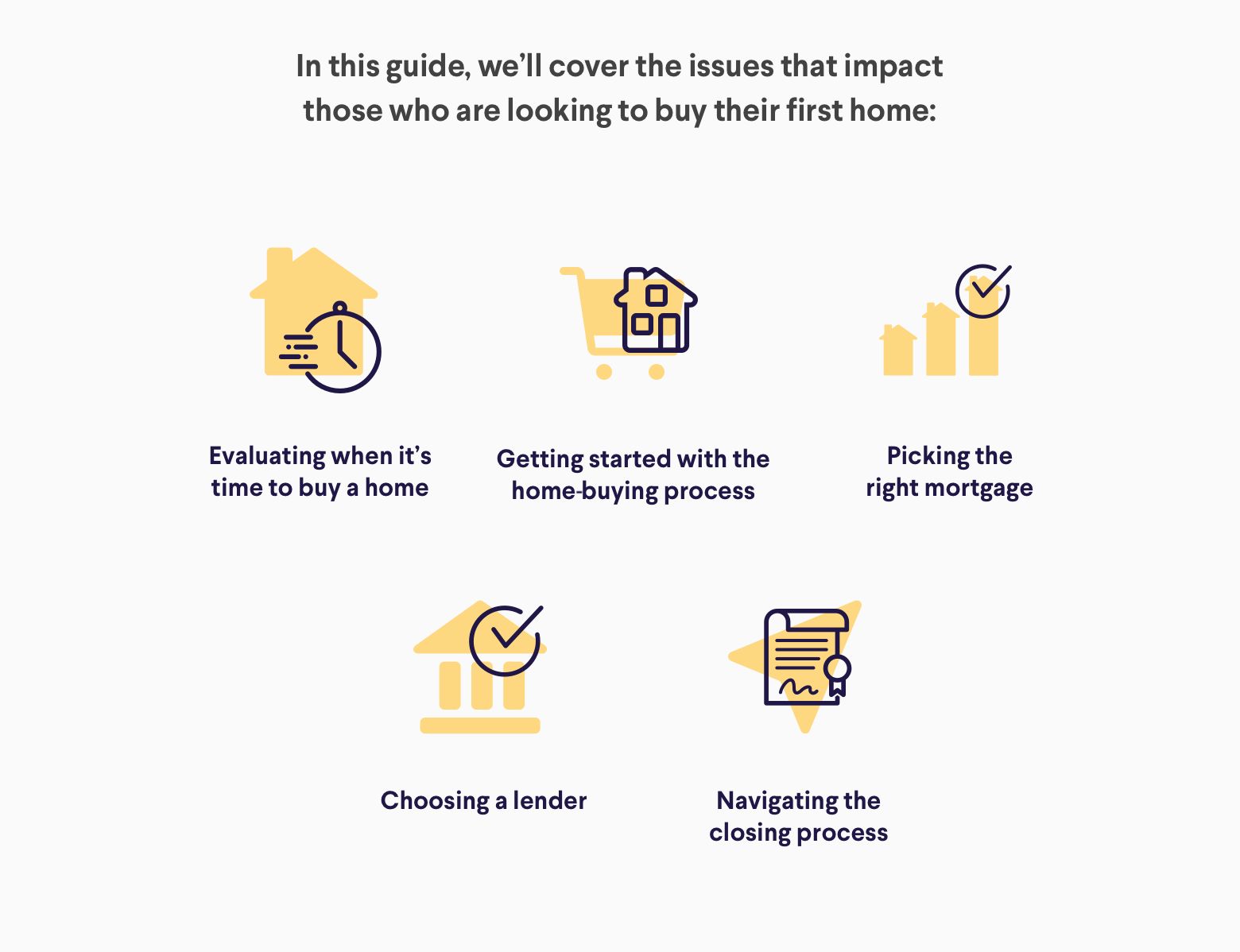
Prior to diving into an active home search, it helps to get a high-level overview of the steps involved in the home-buying process: You’ll get your finances in order and get prequalified for a mortgage; do some initial research into house types and neighborhoods; find a real estate agent to help you navigate your search; get preapproved for a mortgage; locate a home you love; bid and negotiate; have the home inspected; and close on your dream property.
Helpful articles:
Get Preapproved for a Mortgage
Unlike prequalification, which gives you a rough idea of how much money you can borrow, mortgage preapproval is a formal step, when a lender verifies your credit history, income, debt, and assets (so it helps to have your financial documents organized in advance).
This is the moment when you’ll begin to determine what kind of mortgage you want to take out. Will it be a fixed rate or an adjustable rate? How long a term?
A preapproval letter, typically good for 90 days, states that a lender is tentatively willing to lend you a specific sum for a mortgage. The letter shows sellers that you’re a serious buyer who has been vetted. That means you’re ready to act when you find your ideal home and agree on a price.
A preapproval letter is not a guarantee, though. Final loan approval rests with mortgage underwriting.
No matter your mortgage needs, SoFi is here to help.
Consider your financial goals and your long-term plans, then choose a mortgage that best supports those goals.
Get Serious About Your Home Search
Most homebuyers take on a buyer’s agent to represent their interests. As a first-time homebuyer, it really helps to have a pro on your side. You may think you know what to look for when buying a house, but a good real estate agent can also help you save money if they know the area values well and can give you negotiating advice. This may be particularly helpful if you get into a bidding war.
Once you’ve found a home you love and the offer is accepted, it’s tempting to want to move in as quickly as possible. But regardless of how perfect a home may seem during a casual walk-through, a home inspection is a good idea. It can identify issues that could require expensive repairs down the line. Lenders don’t require an inspection, but including a home inspection as a contingency clause when you present your offer is considered a smart move.
The inspector will typically assess the plumbing, mechanical systems, and the structure of the home. Once the inspection is complete, you should receive a report within a couple of business days. With this information in hand, you may be able to go back to the seller to further negotiate the price of the home and necessary repairs.
Most mortgage lenders will require an objective property valuation after the seller has accepted an offer. The buyer pays for the appraisal ordered through the lender.
Helpful articles:
Finalize Your Mortgage
As you move into the final phase with your mortgage lender, you can ensure the home mortgage loan terms suit your finances and plans for the future.
A fixed-rate mortgage has an interest rate that stays the same for the entire term of the loan, regardless of fluctuations in the broader economy. Generally speaking, these loans have a higher interest rate than the introductory rates on most adjustable-rate mortgages (ARMs).
An ARM is so named because the interest rate can fluctuate over time. ARMs often start out with a fixed rate that is adjusted after an initial period, typically three to 10 years. The lower introductory interest rate is attractive to many buyers, but in signing onto an ARM, you are taking the risk that interest rates might rise after your introductory period.
A third option, the interest-only mortgage, is less common with first-time homebuyers. These mortgages give borrowers the option to pay only the interest on the loan each month for a period of, say, five to 10 years. At that point, the loan converts to a standard structure in which principal and interest are paid monthly.
Close and Celebrate!
• The escrow company/closing agent will calculate legal fees, transfer taxes, and closing costs, as well as coordinate the transfer of ownership via the deed.
• The lender provides documentation of the loan, including the note, the mortgage, closing fees, and other disclosures.
• The title company will furnish documentation of clear ownership in the form of a title insurance policy.
Before closing, you will need to schedule a final walk-through to ensure that any agreed-upon repairs have been completed and the home has been left in satisfactory condition. You’ll receive a closing disclosure three or more business days before the loan closing for review of fees and terms. If everything checks out, you and the sellers will sign the closing documents.
After the documentation and all financial transactions have been verified as complete by the escrow company or closing agent, the escrow company will record the change of ownership with the county and you will be given the house keys.
Helpful articles:
The Takeaway
Buying your first home can be nerve-racking, but programs are available to make homeownership feasible for first-timers, even if you aren’t sitting on a giant nest egg for a down payment. With some smart shopping — for both a house and a mortgage loan — you’ll be on your way in no time.
Looking for an affordable option for a home mortgage loan? SoFi can help: We offer low down payments (as little as 3% - 5%*) with our competitive and flexible home mortgage loans. Plus, applying is extra convenient: It's online, with access to one-on-one help.
FAQ
What are the steps of buying a house?
Everyone’s experience is unique, but generally, the process starts with calculating how much house you can afford, saving up for a down payment, and familiarizing yourself with the market. Then, you can go to a lender to get preapproval on a mortgage. With your preapproval letter in hand, you can start shopping. Once you’ve submitted an offer on the home you want, you can finalize your mortgage, get a home inspection, and close on the home.
What do I need to know before buying a house for the first time?
It’s important to know what you can afford, taking into consideration not only the upfront costs (down payment, closing costs, etc.) but also the long-term costs (including mortgage payments, property taxes, and home repairs). Compare home mortgage loan rates carefully. Find a real estate agent who understands your goals and budget to help you along the way.
What is the first step to buying a house for the first time?
The first step is figuring out how much house you can afford, based on how much money you have saved, your income, and current debts.
How much money should you have to start buying a house?
You’ll want to have saved at least 3% of your estimated purchase price of a new home. This is your down payment. You’ll also need a cushion for closing costs. Don’t drain your entire savings: It’s still wise to have at least 3 to 6 months of living expenses saved in case of an emergency.
What is the best way to buy a new house?
The best way to buy a new house is with patience and prudence. Take time to calculate how much you can realistically afford in the long term. Get prequalified for a mortgage to know what rate you might qualify for, seek preapproval for a home loan, and get the home inspected before closing on it. Your perfect home is one that checks your most important boxes without creating financial stress.
Ready to get started?
Learn more about SoFi Home Loans today.
We’ll help you discover whether this year is the year you make your dreams of homeownership a reality.
SoFi Loan Products
SoFi loans are originated by SoFi Bank, N.A., NMLS #696891 (Member FDIC). For additional product-specific legal and licensing information, see SoFi.com/legal. Equal Housing Lender.
SoFi Mortgages
Terms, conditions, and state restrictions apply. Not all products are available in all states. See SoFi.com/eligibility-criteria for more information.
*SoFi requires Private Mortgage Insurance (PMI) for conforming home loans with a loan-to-value (LTV) ratio greater than 80%. As little as 3% down payments are for qualifying first-time homebuyers only. 5% minimum applies to other borrowers. Other loan types may require different fees or insurance (e.g., VA funding fee, FHA Mortgage Insurance Premiums, etc.). Loan requirements may vary depending on your down payment amount, and minimum down payment varies by loan type.
¹FHA loans are subject to unique terms and conditions established by FHA and SoFi. Ask your SoFi loan officer for details about eligibility, documentation, and other requirements. FHA loans require an Upfront Mortgage Insurance Premium (UFMIP), which may be financed or paid at closing, in addition to monthly Mortgage Insurance Premiums (MIP). Maximum loan amounts vary by county. The minimum FHA mortgage down payment is 3.5% for those who qualify financially for a primary purchase. SoFi is not affiliated with any government agency.
Financial Tips & Strategies: The tips provided on this website are of a general nature and do not take into account your specific objectives, financial situation, and needs. You should always consider their appropriateness given your own circumstances.
Third-Party Brand Mentions: No brands, products, or companies mentioned are affiliated with SoFi, nor do they endorse or sponsor this article. Third-party trademarks referenced herein are property of their respective owners.
Tax Information: This article provides general background information only and is not intended to serve as legal or tax advice or as a substitute for legal counsel. You should consult your own attorney and/or tax advisor if you have a question requiring legal or tax advice.
Checking Your Rates: To check the rates and terms you may qualify for, SoFi conducts a soft credit pull that will not affect your credit score. However, if you choose a product and continue your application, we will request your full credit report from one or more consumer reporting agencies, which is considered a hard credit pull and may affect your credit.
Qualifying for the reward requires using a real estate agent that participates in HomeStory’s broker to broker agreement to complete the real estate buy and/or sell transaction. You retain the right to negotiate buyer and or seller representation agreements. Upon successful close of the transaction, the Real Estate Agent pays a fee to HomeStory Real Estate Services. All Agents have been independently vetted by HomeStory to meet performance expectations required to participate in the program. If you are currently working with a REALTOR®, please disregard this notice. It is not our intention to solicit the offerings of other REALTORS®. A reward is not available where prohibited by state law, including Alaska, Iowa, Louisiana and Missouri. A reduced agent commission may be available for sellers in lieu of the reward in Mississippi, New Jersey, Oklahoma, and Oregon and should be discussed with the agent upon enrollment. No reward will be available for buyers in Mississippi, Oklahoma, and Oregon. A commission credit may be available for buyers in lieu of the reward in New Jersey and must be discussed with the agent upon enrollment and included in a Buyer Agency Agreement with Rebate Provision. Rewards in Kansas and Tennessee are required to be delivered by gift card.
HomeStory will issue the reward using the payment option you select and will be sent to the client enrolled in the program within 45 days of HomeStory Real Estate Services receipt of settlement statements and any other documentation reasonably required to calculate the applicable reward amount. Real estate agent fees and commissions still apply. Short sale transactions do not qualify for the reward. Depending on state regulations highlighted above, reward amount is based on sale price of the home purchased and/or sold and cannot exceed $9,500 per buy or sell transaction. Employer-sponsored relocations may preclude participation in the reward program offering. SoFi is not responsible for the reward.
SoFi Bank, N.A. (NMLS #696891) does not perform any activity that is or could be construed as unlicensed real estate activity, and SoFi is not licensed as a real estate broker. Agents of SoFi are not authorized to perform real estate activity.
If your property is currently listed with a REALTOR®, please disregard this notice. It is not our intention to solicit the offerings of other REALTORS®.
Reward is valid for 18 months from date of enrollment. After 18 months, you must re-enroll to be eligible for a reward.
SoFi loans subject to credit approval. Offer subject to change or cancellation without notice.
The trademarks, logos and names of other companies, products and services are the property of their respective owners.
SOHL-Q225-270
First-Time Homebuyer Programs and Loans
First-Time Homebuyer Programs and Loans

Who Qualifies as a First-Time Homebuyer?
You might be surprised to learn that you could qualify as a first-time homebuyer even if you’ve owned a home in the past. (And of course, if you’re purchasing for the very first time, you could qualify.)
Many lenders and homebuyer programs follow the U.S. Department of Housing and Urban Development’s definition of a first-time homebuyer. The agency states that as long as you have not owned a principal residence in the three years prior to closing on a new home, you can be considered a first-time buyer. A single parent who has only previously owned a home with a former spouse would also be considered a first-time homebuyer, as would those who have only owned a home that didn’t sit on a permanent foundation (such as some manufactured homes).
As a first-time homebuyer, you would have the same considerations as other buyers when it comes to figuring out how to pay for a property: You may need a down payment, and you’ll likely need to make regular mortgage payments as well. That’s where these helpful programs come in.

Down Payment Assistance (DPA) Programs
If you haven’t saved up an adequate down payment and don’t think you’ll be receiving a gift from family or friends to close the gap, a Down Payment Assistance (DPA) program may be for you. Assistance might come in the form of a grant or a loan; sometimes mortgage loans are forgivable over a number of years if you continue to live at the home. In addition to being a first-time homebuyer, you may need to meet other qualifications, including being within a certain income limit or purchasing in a specific geographical area.
Most DPA programs are offered at the city and county level. Many work only with particular lenders, but most programs will work with FHA loans (popular with first-time homebuyers thanks to lenient credit requirements and a low minimum down payment).
Some programs allow you to use the money they provide to cover closing costs, while others do not. Many require homebuyer education courses. Consider these options:
Conventional Home Loans with Low Down Payments
You’ve probably heard the rule of thumb that homebuyers should put down 20% up front toward the cost of their new property. This is certainly ideal, but things are considerably different for most first-time homebuyers. On average, the typical down payment for a first-time homebuyer in 2024 was 9%, versus 23% for a repeat purchaser, according to the National Association of Realtors®.
Many lenders will loan to first-time homebuyers who put down as little as 3%, provided the borrower has a good credit score and meets other requirements, such as purchasing private mortgage insurance (PMI) to temper the risk for the lender. Some loans also qualify for the Federal Housing Finance Agency discount, which debuted in early 2023 and automatically provides for a mortgage rate discount for eligible first-time buyers.
Take a look at these home loan options that have low down payments:
| Program | What it is | Minimum Down Payment | Typical Qualifications | Typically Offered By |
|---|---|---|---|---|
| Conventional 97 | This loan, with guidelines established by Fannie Mae, allows first-time homebuyers to put only 3% down and finance the other 97% of their purchase. It is a fixed-rate mortgage with a term not exceeding 30 years. | 3% |
• At least one borrower must be a first-time buyer. • Home must be borrower’s primary residence. • If all borrowers are first-time owners, a homeowner education program may be required. • No income limits. • Credit score of at least 620, although it takes a score of 680+ to qualify for all features of this loan. |
Many lenders offer this type of mortgage. |
| HomeOne | This fixed-rate loan is backed by Freddie Mac and can be used for purchases or no-cash-out refinancing. | 3% |
• No income limits. • At least one borrower must be a first-time homebuyer. • Homeowner education is required if all borrowers are first-time homebuyers. • At least one borrower must have a usable credit score; minimums are set by lenders. • Manufactured homes are not eligible for this loan. |
Many lenders offer this option. |
| Home Possible | Also backed by Freddie Mac, this loan stands apart for allowing co-borrowers who do not live in the home the opportunity to sign on to a loan for a one-unit property. It also allows borrowers to have another financed property, good news for those who need to sell a home they already own. And it allows adjustable-rate loans. | 3%; borrowers have the ability to source their down payment from employer-assistance programs, family members, secondary financing, even sweat equity. And buyers who share their home with a tenant can use rental proceeds as qualifying income for the mortgage. |
• Borrowers are not required to be first-time buyers. • Must be within 80% of area median income for the census tract where the home is located. • Credit score of 660 or better. |
Many lenders offer this option. |
| HomeReady | This Fannie Mae program has many of the same features as the Conventional 97, including the option to put just 3% down on the price of a home. HomeReady, however, is designed for those in the low- to moderate-income bracket. | 3% |
• Borrowers are not required to be first-time buyers. • If all borrowers are first-time owners, a homeowner education program may be required. • Must be within 80% of area median income for the census tract where the home is located. |
Many lenders offer this option. |
Government Programs for First-Time Homebuyers
Loans backed by the U.S. government are appealing for many first-time homebuyers because they may require a low down payment (or none at all) and have more lenient standards regarding borrowers’ credit scores.
If you’re already starting to feel like there are as many types of loans as there are types of homebuyers, you’re not wrong. Use this chart to determine which government-backed loans you might want to explore further.
| Program | What it is | Minimum Down Payment | Typical Qualifications | Typically Offered By |
|---|---|---|---|---|
| FHA Loan | The Federal Housing Administration (FHA) insures mortgages for single-family and multifamily properties, making relaxed credit requirements possible. FHA loans usually have lower rates than comparable conventional loans. It is also possible to add income from an accessory dwelling unit (ADU) to a borrower’s possible income for the purposes of qualifying for a mortgage. | The minimum down payment is 3.5%, however those with a FICO® credit score between 500 and 579 will need to put down 10%. The down payment can come in the form of a gift or grant from a government or nonprofit homebuying program. | FHA loans require an upfront mortgage insurance premium (MIP) of 1.75% of the base loan amount, which can be rolled into the loan. As of May 2025, monthly MIP for new homebuyers is 0.15% to .75% — most often 0.55%. High and low earners may apply for an FHA loan, but they must have at least two established credit accounts. | Approved private lenders. |
| VA Loan | VA loans are available to eligible active-duty military members, veterans, reserve members, National Guard members, and certain surviving spouses. | There is no down payment required. |
• To receive a VA loan, a veteran, service member, reserve member, National Guard member, or surviving spouse first has to apply for a Certificate of Eligibility. • Most mortgage lenders will want to see a FICO credit score above 620. • The home you wish to purchase will need to be appraised by a VA-approved appraiser. • No private mortgage insurance is required. |
Approved private lenders. |
| USDA Loan | This fixed-rate loan program is for low- and moderate-income buyers living in rural areas. It allows for the purchase of a new home but also allows borrowers to wrap some renovation costs into a home purchase. The loan can be used for modular or manufactured housing. | There’s no down payment for those who qualify. |
• Median household income of the borrower cannot exceed 115% of the median income in the area where you are buying. • You must occupy the home. • There is no minimum credit score but applicants must “demonstrate a willingness and ability to handle and manage debt,” according to the USDA. |
Approved private lenders. |
| Native American Direct Loan | If a veteran or their spouse is a Native American, they may qualify for a Native American Direct Loan (NADL) to purchase, construct, or improve a home on federal trust land. The VA issues these 30-year, low-fixed-rate loans directly to borrowers. | There is no down payment required in most cases, and private mortgage insurance is not required. |
• As with a typical VA loan you must apply for and receive a Certificate of Eligibility from the VA. • You must also meet the VA’s credit standards, although the agency does not specify its threshold. • Your tribal government needs to have an agreement with the VA spelling out each party’s responsibility in the loan. |
Work directly with a NADL coordinator to apply for this loan. To make an appointment, email [email protected] or call 888-349-7541 (TTY: 711). |
| Energy-Efficient Mortgage | The Federal Housing Administration’s Energy Efficient Mortgage (EEM) program helps families finance energy efficient improvements with their FHA-insured mortgage. The idea is that lower energy costs will help increase the funds available for mortgage payments. The energy loan is capped at the lesser of: 5% of the property’s value; 115% of the median area price of a single family dwelling; or 150% of the conforming Freddie Mac Limit. | The minimum down payment is 3.5%, however those with a FICO credit score between 500 and 579 will need to put down 10%. |
Qualifications are the same as for an FHA mortgage (see above) with the following adjustments: • A buyer will only have to qualify for the base amount of the mortgage, not including the cost of efficiency upgrades. • The home and plans for the energy efficiency upgrades will need to be assessed by a qualified energy assessor. |
Approved private lenders. |
| Good Neighbor Next Door | With this U.S. Department of Housing and Urban Development (HUD) program, single-family homes in areas targeted for revitalization are listed for sale exclusively to eligible buyers, who can receive 50% off the price of the home and roll renovation costs (within certain limits) into their financing of the home purchase. | If the purchase is financed with an FHA loan, you can put as little as $100 down. |
• You must be employed full-time as a law enforcement officer, firefighter, emergency medical technician, or pre-K through 12th-grade teacher (public or private school). • Buyers must make the home their primary residence for at least three years. • HUD requires borrowers to sign a second mortgage for the discounted amount, although you will pay no interest or principal as long as you stay for three years. • There are no income limits or credit requirements for this loan, although buyers using FHA financing will have to qualify for an FHA loan. |
You may finance this loan through any lender, but for maximum benefits you’ll want an FHA-backed loan. |
| HomePath Ready Buyer Program | HomePath gives buyers purchasing their primary residence a chance to make offers and purchase Fannie Mae-owned foreclosed properties before they’re available to investors. First-time buyers of these properties who complete Fannie Mae HomeView, an education course, may receive up to 3% in closing cost assistance. Many buyers combine this program with a HomeReady mortgage. | See HomeReady mortgage, above. | Anyone can purchase a HomePath property. | See HomeReady mortgage, above. |
First-Time Homebuyer Programs by State
Many first-time homebuyer programs are managed at the state or local level. Find options for your state under “State Homebuyer Programs” in the chart below. It’s also always a good idea to look at your state housing finance agency’s site for information about its programs (find yours under “State Housing Agency,” in the chart below).
The Department of Housing and Urban Development also lists some local and state assistance programs.
Yet another way to look into local programs you might qualify for: Ask your loan officer about down payment assistance grants and loans. The loan officer will also know which programs the lender can accept.
Relocating? Learn more about the cost of living in your chosen state.
Nonprofit Programs for First-Time Homebuyers
Several nonprofits offer financial assistance to homebuyers. Some are national while others work only in certain regions. Many focus on lower-income homebuyers, and they often include financial literacy and home ownership training among their services. Here are just a few of the nonprofit programs for first-time homebuyers:
Neighborhood Assistance Corporation of America
The largest HUD-certified nonprofit organization, NACA provides a mortgage with a below-market fixed rate with no down payment, no closing costs, no fees, and no private mortgage insurance. It focuses on low- and moderate-income people and communities, and partners with particular large lenders.
Habitat for Humanity
Individuals and families who demonstrate a need for safe and affordable housing, and who are willing to put in “sweat equity” may contact their local Habitat organization for information.
National Homebuyers Fund
This nonprofit organization offers a down payment assistance grant of up to 5% of the mortgage loan, or a second mortgage loan with 0% interest that is forgiven after three years. You don’t need to be a first-time homebuyer to qualify. The National Homebuyers Fund provides financing through FHA, USDA, VA and conventional mortgages. You’ll need to work with a participating mortgage lender. Credit score requirements and allowable debt-to-income ratios are flexible.
Employer-Sponsored Programs for First-Time Homebuyers
Some companies help employees buy homes by offering direct down payment assistance, investing in affordable housing for workers, or guiding employees to government-sponsored grants and low-interest loans. Wesleyan University, for example, offers programs for its employees. Check your employee benefits policy to see if you’re fortunate enough to work for a company or organization that provides this benefit.
The Takeaway
Many programs exist to make home ownership possible for first-time homebuyers, but you will have to do some work to research your options and take advantage of them. The good news? You may qualify as a first-time buyer even if you have previously owned a home.
Looking for an affordable option for a home mortgage loan? SoFi can help: We offer low down payments (as little as 3% - 5%*) with our competitive and flexible home mortgage loans. Plus, applying is extra convenient: It's online, with access to one-on-one help.
View your rate
FAQ
What is a first-time homebuyer?
A first-time homebuyer is someone who has never owned a home, as well as anyone who hasn’t owned a principal residence in the last three years. Certain other groups, including those who have only previously owned a home with a former spouse, also qualify.
How do you buy a house if you have no money?
The VA and USDA have programs that make it possible for eligible applicants to purchase a home with no money down. Some state and nonprofit programs also provide down payment assistance. You will, however, still need to be able to make payments on a home loan.
What is Biden’s $25,000 Downpayment Toward Equity Act?
The Downpayment Toward Equity Act would have provided $100 billion in direct assistance to help first-time, first-generation homebuyers purchase a home. The funds would have reduced mortgage rates and also helped cover down payments and closing costs. Alas, the Act did not pass in Congress.
What is the new California program for first-time homebuyers?
The Dream for All program provided down payment assistance in connection with a mortgage for first-time homebuyers. The program was paused for new applicants shortly after it debuted in early 2023 because funds were quickly exhausted.
Does Michigan have a down payment assistance program?
The Michigan State Housing Development Authority offers a $10,000 down payment assistance program for low- and middle-income homebuyers. Applicants must complete a homebuyer education program to qualify.
SoFi Loan Products
SoFi loans are originated by SoFi Bank, N.A., NMLS #696891 (Member FDIC). For additional product-specific legal and licensing information, see SoFi.com/legal. Equal Housing Lender.
SoFi Mortgages
Terms, conditions, and state restrictions apply. Not all products are available in all states. See SoFi.com/eligibility-criteria for more information.
*SoFi requires Private Mortgage Insurance (PMI) for conforming home loans with a loan-to-value (LTV) ratio greater than 80%. As little as 3% down payments are for qualifying first-time homebuyers only. 5% minimum applies to other borrowers. Other loan types may require different fees or insurance (e.g., VA funding fee, FHA Mortgage Insurance Premiums, etc.). Loan requirements may vary depending on your down payment amount, and minimum down payment varies by loan type.
Financial Tips & Strategies: The tips provided on this website are of a general nature and do not take into account your specific objectives, financial situation, and needs. You should always consider their appropriateness given your own circumstances.
Third-Party Brand Mentions: No brands, products, or companies mentioned are affiliated with SoFi, nor do they endorse or sponsor this article. Third-party trademarks referenced herein are property of their respective owners.
External Websites: The information and analysis provided through hyperlinks to third-party websites, while believed to be accurate, cannot be guaranteed by SoFi. Links are provided for informational purposes and should not be viewed as an endorsement.
Tax Information: This article provides general background information only and is not intended to serve as legal or tax advice or as a substitute for legal counsel. You should consult your own attorney and/or tax advisor if you have a question requiring legal or tax advice.
¹FHA loans are subject to unique terms and conditions established by FHA and SoFi. Ask your SoFi loan officer for details about eligibility, documentation, and other requirements. FHA loans require an Upfront Mortgage Insurance Premium (UFMIP), which may be financed or paid at closing, in addition to monthly Mortgage Insurance Premiums (MIP). Maximum loan amounts vary by county. The minimum FHA mortgage down payment is 3.5% for those who qualify financially for a primary purchase. SoFi is not affiliated with any government agency.
†Veterans, Service members, and members of the National Guard or Reserve may be eligible for a loan guaranteed by the U.S. Department of Veterans Affairs. VA loans are subject to unique terms and conditions established by VA and SoFi. Ask your SoFi loan officer for details about eligibility, documentation, and other requirements. VA loans typically require a one-time funding fee except as may be exempted by VA guidelines. The fee may be financed or paid at closing. The amount of the fee depends on the type of loan, the total amount of the loan, and, depending on loan type, prior use of VA eligibility and down payment amount. The VA funding fee is typically non-refundable. SoFi is not affiliated with any government agency.
Checking Your Rates: To check the rates and terms you may qualify for, SoFi conducts a soft credit pull that will not affect your credit score. However, if you choose a product and continue your application, we will request your full credit report from one or more consumer reporting agencies, which is considered a hard credit pull and may affect your credit.
Qualifying for the reward requires using a real estate agent that participates in HomeStory’s broker to broker agreement to complete the real estate buy and/or sell transaction. You retain the right to negotiate buyer and or seller representation agreements. Upon successful close of the transaction, the Real Estate Agent pays a fee to HomeStory Real Estate Services. All Agents have been independently vetted by HomeStory to meet performance expectations required to participate in the program. If you are currently working with a REALTOR®, please disregard this notice. It is not our intention to solicit the offerings of other REALTORS®. A reward is not available where prohibited by state law, including Alaska, Iowa, Louisiana and Missouri. A reduced agent commission may be available for sellers in lieu of the reward in Mississippi, New Jersey, Oklahoma, and Oregon and should be discussed with the agent upon enrollment. No reward will be available for buyers in Mississippi, Oklahoma, and Oregon. A commission credit may be available for buyers in lieu of the reward in New Jersey and must be discussed with the agent upon enrollment and included in a Buyer Agency Agreement with Rebate Provision. Rewards in Kansas and Tennessee are required to be delivered by gift card.
HomeStory will issue the reward using the payment option you select and will be sent to the client enrolled in the program within 45 days of HomeStory Real Estate Services receipt of settlement statements and any other documentation reasonably required to calculate the applicable reward amount. Real estate agent fees and commissions still apply. Short sale transactions do not qualify for the reward. Depending on state regulations highlighted above, reward amount is based on sale price of the home purchased and/or sold and cannot exceed $9,500 per buy or sell transaction. Employer-sponsored relocations may preclude participation in the reward program offering. SoFi is not responsible for the reward.
SoFi Bank, N.A. (NMLS #696891) does not perform any activity that is or could be construed as unlicensed real estate activity, and SoFi is not licensed as a real estate broker. Agents of SoFi are not authorized to perform real estate activity.
If your property is currently listed with a REALTOR®, please disregard this notice. It is not our intention to solicit the offerings of other REALTORS®.
Reward is valid for 18 months from date of enrollment. After 18 months, you must re-enroll to be eligible for a reward.
SoFi loans subject to credit approval. Offer subject to change or cancellation without notice.
The trademarks, logos and names of other companies, products and services are the property of their respective owners.
SOHL-Q225-269
Arkansas First-Time Home Buying Assistance Programs & Grants for 2025
Arkansas First-Time Home-Buying Assistance Programs & Grants

(Last Updated – 06/2025)
If you’re a first-time homebuyer hoping to put down roots in the “Natural State,” you can look forward to many homes priced well below the U.S. median home sale price of $438,357, according to Redfin data.
The median selling price of an Arkansas home hit $266,500 in June 2025, a 4.2% increase in 12 months, Redfin reported. In some areas, the increases were steeper. Centerton, Harrison, and Searcy all saw double-digit percentage increases in prices year-over-year. Centerton’s median home price is now $442,500.
Fortunately, buyers who are struggling with the costs of purchasing their first home in Arkansas may be able to get some financial help through programs offered by the state and some cities. Longstanding federal programs can also improve a buyer’s chances of success.
Recommended: First-Time Homebuyer Guide
Who Is Considered a First-Time Homebuyer in Arkansas?
Here’s something you should know as you start your search for a home loan: For most programs in Arkansas, there is no first-time buyer requirement. For those that do have a requirement, applicants are considered first-time homebuyers if they haven’t owned a home for at least the past three years. (Veterans, veterans’ spouses, and those buying in targeted areas also may qualify for this program.)
Before you start the application process, whether assistance is offered by a state or city, it’s a good idea to be clear on the specific eligibility standards.
Recommended: Understanding Mortgage Basics
3 Arkansas Housing Programs for First-Time Homebuyers
Most homebuyer programs in Arkansas are designed for low- to moderate-income buyers who need help finding affordable loan terms or coming up with a down payment and/or closing costs.
Program participants typically must meet requirements regarding income, credit scores, and debt-to-income (DTI) ratio. They may also encounter limits on how much the home that’s being purchased can cost, and the home must be owner occupied. Also, at least one borrower may have to complete a homebuyer education course.
The Arkansas Development Finance Authority (ADFA) offers several assistance programs first-time homebuyers might want to consider.
1. ADFA Move-Up Loan Program
The ADFA’s Move-Up offering provides an affordable 30-year fixed-rate mortgage to qualifying low- to moderate-income homebuyers. Borrowers can choose from several different mortgage types, including conventional, FHA, VA, or USDA loans.
Benefits and qualifications include:
• Low-income buyers who are at or below 80% of the area median income may qualify for a lower interest rate
• Loan can be combined with other ADFA programs (down payment assistance and mortgage credit certificate)
• Annual income limit is $142,000
• Minimum credit score of 640
• Maximum DTI of 45%
• Must take homebuyer education course if you’re a first-time buyer with a conventional mortgage
• Terms may vary based on type of loan
• No prepayment penalty
• Maximum purchase price is $424,100
• Type of homes allowed may vary based on loan type
To learn more, go to the ADFA website and read about the Move-Up Loan Program. You can get started on your application once you’ve found a participating lender.
You can get started by working with a participating lender .
2. ADFA SmartStart First-Time Homebuyer Loan Program
ADFA makes use of IRS rules to issue tax-exempt mortgage revenue bonds. The savings, generated from the tax-exemption, are passed along to low- and middle-income homebuyers, who receive a below-market interest rate on a 30-year fixed-rate mortgage loan for a lower monthly payment.
Benefits and qualifications include:
• Applicants must be first-time homebuyers or experienced homebuyers who are buying in a select group of counties
• Purchase price of a home cannot exceed $425,000
• Minimum credit score: 640
• Household income cannot exceed limits, which vary by location
• Can be combined with ADFA Down Payment Assistance program (see below)
To learn more, go to the ADFA website and read about the SmartStart Program. You can get started on your application once you’ve found a participating lender.
3. ADFA Down Payment Assistance
If you qualify for an ADFA first mortgage, you also may benefit by pairing it with a second mortgage for a down payment or closing costs from the ADFA Down Payment Assistance Program.
Benefits and qualifications Include:
• $1,000 to $15,000 in assistance in the form of a 10-year second mortgage with a rate matching that of your ADFA first mortgage
• Cash back at closing to cover items paid outside of closing
• Must be paired with ADFA first mortgage
• Must meet ADFA Move-Up program guidelines
To learn more, go to the ADFA website and read about the Down Payment Assistance Program. You can get started on your application once you’ve found a participating lender.
A participating lender can help you apply for this program.
Other Arkansas Homebuyer Programs by Location
If you’ve already chosen the part of Arkansas you hope to make your home, you also may want to research local buyer assistance programs. (And if you aren’t sure where to put down roots, check out a guide to the best affordable places in Arkansas to live.)
Check back occasionally for new offers. Some first-time homebuyer programs base their opportunities (and deadlines) on the funds they expect to become available. When their money runs out, they may press pause.
Some local programs include:
Crawford-Sebastian Community Development Council Programs
The Crawford-Sebastian Community Development Council’s Homeownership and Asset Development Center provides homebuyer counseling and education programs as well as down payment assistance in the form of grants and forgivable loans. For information on the benefits and requirements of various programs, you can check out the Homeownership Program page, email [email protected], or call 479-785-2303.
City of Jonesboro Homeownership Assistance Program
Jonesboro’s Homeownership Assistance Program was created to help low- and moderate-income homebuyers who wish to purchase a property in the city. The program offers qualifying first-time homebuyers a grant that can be used for their down payment and closing costs. For information, you can go to the Homeownership Assistance Program page, email [email protected], or call 870-336-7170.
City of Little Rock Down Payment Assistance Program
Little Rock’s down payment assistance program offers up to $5,000 to qualifying low- and moderate-income first-time homebuyers through a forgivable second loan. For information, check out the program brochure or ask your Arkansas lender about applying.
City of Pine Bluff Homebuyer Assistance Program
Pine Bluff’s Economic and Community Development Department offers this program, which was created to help low- and moderate-income buyers. Qualified applicants may receive assistance of $2,000 for a down payment and up to $3,000 of eligible closing costs. For requirements and approved lenders, check out the program’s brochure .
How to Apply to Arkansas Programs for First-Time Homebuyers
Follow the links under each program to find participating lenders or other contacts.
Federal Programs for First-Time Homebuyers
Several federal government programs are available for people with low credit scores or limited funds for a down payment. They are sometimes for repeat homeowners, but these national programs are generally created for people who are buying a first home or who haven’t owned a home in several years.
The mortgages tend to be for single-family homes, two- to four-unit properties that will be owner occupied, approved condos, townhomes, planned unit developments, and some manufactured homes.
Federal Housing Administration (FHA) Loans
The FHA, which is part of the U.S. Department of Housing and Urban Development (HUD), insures mortgages for borrowers with lower credit scores. Homebuyers choose from an approved-lenders list of institutions participating in the FHA loan program. Loans have competitive interest rates and require a down payment of 3.5% of the purchase price for borrowers, who typically need FICO® credit scores of 580 or higher. Those with scores as low as 500 must put at least 10% down.
Limits for FHA loans in 2025 range from $524,225 for single units to $1,008,300 for four-unit properties. Higher-cost areas tend to have higher limits.
In addition to examining your credit score, lenders will look at your debt-to-income ratio (DTI, your monthly debt payments compared with your monthly gross income). A DTI of up to 57% is allowed for FHA loans, vs. a typical 45% maximum for a conventional loan.
Gift money for the down payment is allowed from certain donors and will be documented in a gift letter for the mortgage.
FHA loans without exception require mortgage insurance premiums (MIP): This includes a fee of 1.75% of the base loan amount, usually rolled into the loan, upfront. Borrowers must carry annual premiums for the life of the loan. As of 2025, new homebuyer monthly MIP is 0.15% to 0.75%. With a down payment of at least 10%, the removal of mortgage insurance is possible after 11 years. For a $300,000 mortgage balance, upfront MIP would be around $5,250 and monthly MIP, at a rate of 0.55%, would be around $137.
To learn more about options, including FHA loans for refinancing and rehabbing properties, read about FHA requirements, loan limits, and rates.
Freddie Mac Home Possible Mortgages
Low- and very low-income borrowers may make an affordable 3% down payment on a Home Possible® mortgage. These loans allow various sources for down payments, including co-borrowers, family gifts, employer assistance, secondary financing, and sweat equity.
The Home Possible mortgage is for buyers who have a credit score of 660 or higher. Once you pay off 20% of the loan, the Home Possible mortgage insurance becomes unnecessary, which will lower your mortgage payments.
Once you pay 20% of your loan, the Home Possible mortgage insurance will be canceled, which will lower your mortgage payments.
Fannie Mae HomeReady Mortgages
Fannie Mae HomeReady® Mortgages allow down payments as low as 3% for low-income borrowers. Applicants generally need a credit score of at least 620; pricing may be better for credit scores of 680 and above. Like the Freddie Mac program, HomeReady loans allow flexibility for down payment financing, such as gifts and grants.
For income limits, a comparison to an FHA loan, and other information, go to this Fannie Mae site.
Fannie Mae Standard 97 LTV Loan
The conventional 97 LTV loan is for first-time homebuyers of any income level who have a credit score of at least 620 and meet debt-to-income criteria. The 97% loan-to-value mortgage requires 3% down. Borrowers can get down payment and closing cost assistance from third-party sources.
Department of Veterans Affairs (VA) Loans
Active members of the military, veterans, reservists, and surviving spouses who are eligible may apply for loans backed by the Department of Veterans Affairs. These loans designed for those who serve our country can be used to buy, build, or improve homes, have lower interest rates than most other mortgages and don’t require a down payment. Most borrowers pay a one-time funding fee that can be rolled into the mortgage.
Another VA loan advantage is that they do not require PMI for borrowers who make a down payment of less than 20%. And they have more flexible credit score requirements. In some cases, even those who have previously been in foreclosure or bankruptcy can qualify.
Borrowers applying for a VA loan will need a Certificate of Eligibility from the VA so make sure to review a guide to qualifying for a VA loan as a first step in the process.
Native American Veteran Direct Loans (NADLs)
Eligible Native American veterans and their spouses may use these no-down-payment loans to buy, improve, or build a home on federal trust land. Unlike VA loans listed above, the Department of Veterans Affairs is the mortgage lender on NADLs. The VA requires no mortgage insurance, but it does charge a funding fee.
US Department of Agriculture (USDA) Loans
No down payment is required on these loans to moderate-income borrowers that are guaranteed by the USDA in specified rural areas. Borrowers pay an upfront guarantee fee and an annual fee that serves as mortgage insurance.
The USDA also directly issues loans to low- and very low-income people. For loan basics and income and property eligibility, check out this USDA website.
HUD Good Neighbor Next Door Program
This program helps police officers, firefighters, emergency medical technicians, and teachers qualify for mortgages in the areas they serve. Borrowers can receive 50% off a home in what HUD calls a “revitalization area.” They must live in the home for at least three years.
Visit the HUD program page.
First-Time Homebuyer Stats for 2025
Here are some stats on homebuyers and the homebuying process.
• Percentage of buyers nationwide who are first-time buyers: 24%
• Median age of first-time homebuyers: 38
• Median down payment for first-time homebuyer: 9%
• Median home price in Arkansas: $266,500
• Median down payment: $26,232
• Average rent in Arkansas: $1,400
• Average credit score in Arkansas: 695
Additional Financing Tips for First-Time Homebuyers
In addition to federal and state government-sponsored lending programs, there are other financial strategies that may help you become a homeowner. Some examples:
• Traditional IRA withdrawals. The IRS allows qualifying first-time homebuyers a one-time, penalty-free withdrawal of up to $10,000 from their IRA if the money is used to buy, build, or rebuild a home. For the purposes of IRA withdrawals, a first-time homebuyer is someone who has not owned a principal residence in the last two years. You will still owe income tax on the IRA withdrawal. If you’re married and your spouse has an IRA, they may also make a penalty-free withdrawal of $10,000 to purchase a home. The downside, of course, is that large withdrawals may jeopardize your retirement savings.
• Roth IRA withdrawals. Because Roth IRA contributions are made with after-tax money, the IRS allows tax- and penalty-free withdrawals of contributions for any reason as long as you’ve held the account for five years. You may also withdraw up to $10,000 in earnings from your Roth IRA without paying taxes or penalties if you are a qualifying first-time homebuyer and you have had the account for five years. With accounts held for less than five years, homebuyers will pay income tax on earnings withdrawn.
• 401(k) loans. If your employer allows borrowing from the 401(k) plan that it sponsors, you may consider taking a loan against the 401(k) account to help finance your home purchase. With most plans, you may be able to borrow as much as 50% of your 401(k) balance, up to $50,000, within a 12-month period and incur no taxes or penalties. You pay interest on the loan, which is paid into your 401(k) account. You usually have to pay back the loan within five years, but if you’re using the money to buy a house, you may have up to 15 years to repay.
• State and local down payment assistance programs. Usually offered at the regional or county level, these programs provide flexible second mortgages for first-time buyers looking into how to afford a down payment.
• The mortgage credit certificate program. First-time homeowners and those who buy in targeted areas can claim a portion of their mortgage interest as a tax credit, up to $2,000. Any additional interest paid can still be used as an itemized deduction. To qualify for the credit, you must be a first-time homebuyer, live in the home, and meet income and purchase price requirements, which vary by state. If you refinance, the credit disappears, and if you sell the house before nine years, you may have to pay some of the tax credit back. There are fees associated with applying for and receiving the mortgage credit certificate that vary by state. Often the savings from the lifetime of the credit can outweigh these fees.
• Your employer. Your employer may offer access to lower-cost lenders and real estate agents in your area, as well as home buying education courses.
• Your lender. Always ask your lender about any first-time homebuyer grant or down payment assistance programs available from government, nonprofit, and community organizations in your area.
The Takeaway
Low- and moderate-income first-time homebuyers in Arkansas may be able to pair a mortgage with down payment assistance. Other first-time buyers can shop for a mortgage on their own that’s a good fit.
Looking for an affordable option for a home mortgage loan? SoFi can help: We offer low down payments (as little as 3% - 5%*) with our competitive and flexible home mortgage loans. Plus, applying is extra convenient: It's online, with access to one-on-one help.
FAQ
Should I take first-time homebuyer classes?
Yes! Good information is key to a successful home-buying experience for anyone, but especially for newcomers, who can easily be overwhelmed by the jargon, technicalities, and magnitude of applying for a mortgage and purchasing a home. First-time homebuyer classes can help. Indeed they are required for many government-sponsored loan programs. And for everyone else, this experience is a great way to get acquainted with the home-buying process before you dive into your search in earnest.
Do first-time homebuyers with bad credit qualify for homeownership assistance?
Often they do. Many government and nonprofit homeowner assistance programs are available to people with lower credit scores. And often, interest rates and other loan pricing are competitive with those of loans available to borrowers with higher credit scores. That said, almost any lending program has credit qualifications.
What credit score do I need for first-time homebuyer assistance in Arkansas?
Most homebuyer programs in Arkansas require a minimum credit score of 640.
Requirements may vary from one program or organization to the next, though, and some programs may use criteria other than credit scores to determine a borrower’s eligibility.
Is there a first-time homebuyer tax credit in Arkansas?
Not at present, although there are other programs to help first-time homebuyers.
Is there a first-time veteran homebuyer assistance program in Arkansas?
Veterans may qualify for an ADFA mortgage and mortgage credit certificate, or the Home American Rescue Plan.
What is the average age of first-time homebuyers?
The average age of a first-time homebuyer has increased to an all-time high of 38, according to data from the National Association of Realtors®.
Photo credit: iStock/BlazenImages
SoFi Loan Products
SoFi loans are originated by SoFi Bank, N.A., NMLS #696891 (Member FDIC). For additional product-specific legal and licensing information, see SoFi.com/legal. Equal Housing Lender.
SoFi Mortgages
Terms, conditions, and state restrictions apply. Not all products are available in all states. See SoFi.com/eligibility-criteria for more information.
*SoFi requires Private Mortgage Insurance (PMI) for conforming home loans with a loan-to-value (LTV) ratio greater than 80%. As little as 3% down payments are for qualifying first-time homebuyers only. 5% minimum applies to other borrowers. Other loan types may require different fees or insurance (e.g., VA funding fee, FHA Mortgage Insurance Premiums, etc.). Loan requirements may vary depending on your down payment amount, and minimum down payment varies by loan type.
Financial Tips & Strategies: The tips provided on this website are of a general nature and do not take into account your specific objectives, financial situation, and needs. You should always consider their appropriateness given your own circumstances.
Third-Party Brand Mentions: No brands, products, or companies mentioned are affiliated with SoFi, nor do they endorse or sponsor this article. Third-party trademarks referenced herein are property of their respective owners.
External Websites: The information and analysis provided through hyperlinks to third-party websites, while believed to be accurate, cannot be guaranteed by SoFi. Links are provided for informational purposes and should not be viewed as an endorsement.
Tax Information: This article provides general background information only and is not intended to serve as legal or tax advice or as a substitute for legal counsel. You should consult your own attorney and/or tax advisor if you have a question requiring legal or tax advice.
¹FHA loans are subject to unique terms and conditions established by FHA and SoFi. Ask your SoFi loan officer for details about eligibility, documentation, and other requirements. FHA loans require an Upfront Mortgage Insurance Premium (UFMIP), which may be financed or paid at closing, in addition to monthly Mortgage Insurance Premiums (MIP). Maximum loan amounts vary by county. The minimum FHA mortgage down payment is 3.5% for those who qualify financially for a primary purchase. SoFi is not affiliated with any government agency.
†Veterans, Service members, and members of the National Guard or Reserve may be eligible for a loan guaranteed by the U.S. Department of Veterans Affairs. VA loans are subject to unique terms and conditions established by VA and SoFi. Ask your SoFi loan officer for details about eligibility, documentation, and other requirements. VA loans typically require a one-time funding fee except as may be exempted by VA guidelines. The fee may be financed or paid at closing. The amount of the fee depends on the type of loan, the total amount of the loan, and, depending on loan type, prior use of VA eligibility and down payment amount. The VA funding fee is typically non-refundable. SoFi is not affiliated with any government agency.
Qualifying for the reward requires using a real estate agent that participates in HomeStory’s broker to broker agreement to complete the real estate buy and/or sell transaction. You retain the right to negotiate buyer and or seller representation agreements. Upon successful close of the transaction, the Real Estate Agent pays a fee to HomeStory Real Estate Services. All Agents have been independently vetted by HomeStory to meet performance expectations required to participate in the program. If you are currently working with a REALTOR®, please disregard this notice. It is not our intention to solicit the offerings of other REALTORS®. A reward is not available where prohibited by state law, including Alaska, Iowa, Louisiana and Missouri. A reduced agent commission may be available for sellers in lieu of the reward in Mississippi, New Jersey, Oklahoma, and Oregon and should be discussed with the agent upon enrollment. No reward will be available for buyers in Mississippi, Oklahoma, and Oregon. A commission credit may be available for buyers in lieu of the reward in New Jersey and must be discussed with the agent upon enrollment and included in a Buyer Agency Agreement with Rebate Provision. Rewards in Kansas and Tennessee are required to be delivered by gift card.
HomeStory will issue the reward using the payment option you select and will be sent to the client enrolled in the program within 45 days of HomeStory Real Estate Services receipt of settlement statements and any other documentation reasonably required to calculate the applicable reward amount. Real estate agent fees and commissions still apply. Short sale transactions do not qualify for the reward. Depending on state regulations highlighted above, reward amount is based on sale price of the home purchased and/or sold and cannot exceed $9,500 per buy or sell transaction. Employer-sponsored relocations may preclude participation in the reward program offering. SoFi is not responsible for the reward.
SoFi Bank, N.A. (NMLS #696891) does not perform any activity that is or could be construed as unlicensed real estate activity, and SoFi is not licensed as a real estate broker. Agents of SoFi are not authorized to perform real estate activity.
If your property is currently listed with a REALTOR®, please disregard this notice. It is not our intention to solicit the offerings of other REALTORS®.
Reward is valid for 18 months from date of enrollment. After 18 months, you must re-enroll to be eligible for a reward.
SoFi loans subject to credit approval. Offer subject to change or cancellation without notice.
The trademarks, logos and names of other companies, products and services are the property of their respective owners.
SOHL-Q225-211

Stay up to date on the latest business news and stock market happenings.