Current Mortgage Rates in Tampa, FL Today
Apply online or call for a complimentary mortgage consultation.
Compare mortgage rates in Tampa.
Key Points
• Mortgage rates in Tampa are influenced by economic conditions and personal financial factors such as credit score.
• Even a slight change in mortgage rates can have a big impact on your monthly payment and the amount you’ll pay over the life of your loan.
• Florida has resources and programs to make the dream of homeownership a reality for first-time buyers and those with limited financial resources.
• Fixed-rate mortgages provide predictability, while adjustable-rate mortgages (ARMs) usually have a lower introductory rate, but adjust up or down after that.
• Fixed-rate mortgages provide predictability, while adjustable-rate mortgages (ARMs) usually have a lower introductory rate, but adjust up or down after that.
Introduction to Tampa Mortgage Interest Rates
Mortgage rates in Tampa are a key consideration for anyone looking to buy a home. They can greatly affect how much home you can afford and what your long-term financial planning looks like. This guide will help you understand how mortgage rates are determined and how you can get the best rate for your situation — it’s especially helpful if you are buying your first home. Step one in your mortgage journey? Understanding where rates in Tampa come from.
Where Mortgage Rates Come From
The rate a homebuyer obtains for their home loan is influenced by a combination of factors, including the economy and the borrower’s financial situation and credit history. Let’s break it down:
Economic Factors Influencing Mortgage Rates
• The bond market, particularly the 10-year U.S. Treasury Note, has historically been a primary indicator of where mortgage rates are headed. When the rates on the note rise, mortgage interest tends to head in the same direction.
• The health of the housing market also plays a role. When the housing market cools and more homes are available than there are buyers, lenders may lower rates to keep attracting customers.
• Inflation and unemployment also play a role in determining mortgage rates. When the economy is strong, mortgage rates tend to rise, reflecting the potential for increased demand for borrowing and potentially higher costs for lenders providing loans to consumers. A recession is usually accompanied by lower mortgage rates.
Borrower Factors Influencing Mortgage Rates
• Your credit score is a significant predictor of the rate you’ll be offered. The higher the score, the lower the rate you’ll likely obtain.
• The amount of your down payment plays a role as well. Making a larger down payment can result in a lower interest rate because borrowers who have more equity in their newly purchased property are perceived as a lower default risk by the lender.
• Your debt-to-income (DTI) ratio is also important. Lenders will look at your income in relation to your monthly debts. In general, mortgage lenders like to see a DTI ratio of no more than 36%, though that is not necessarily the maximum.
The type of home mortgage loan you choose and its term will also impact your interest rate. We’ll get into that in more detail below.
In general, mortgage lenders like to see a DTI ratio of no more than 36%, though that is not necessarily the maximum.



More home loan resources.
-
First-Time Homebuyer Guide
-
First-Time Homebuyer Programs and Loans
-
Mortgage Preapproval Process


Apply online or call us for a complimentary mortgage consultation.
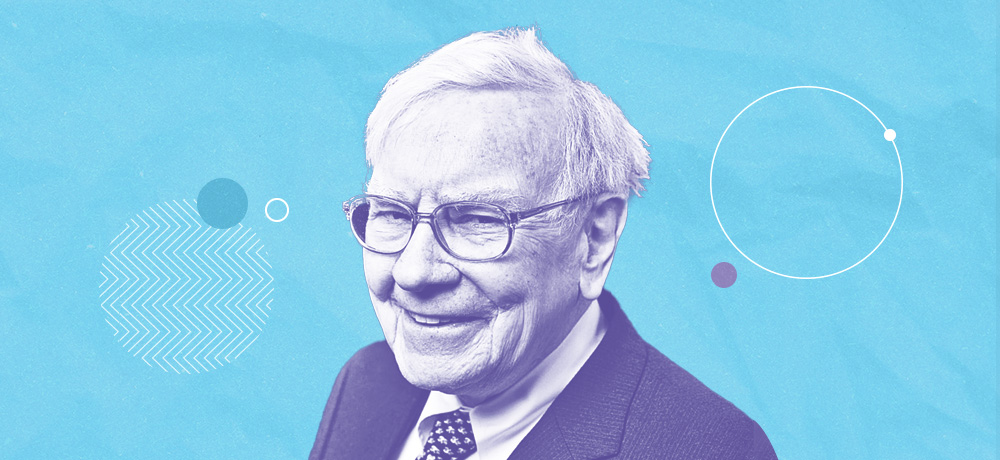
Warren Buffett Lessons for All of Us
This article appeared in SoFi's On the Money newsletter. Not getting it? Sign up here.
Warren Buffett’s decision to step down as CEO of Berkshire Hathaway marks the end of an era for the famous investment conglomerate. But his pending retirement is arguably far more significant for the financial world at large.
The 94-year-old billionaire investor and philanthropist has been a cultural icon for decades. His plainspoken, relatable advice — the highlight of Berkshire’s annual shareholder meetings and letters — contains lessons and inspiration for all of us who are looking to take control of our financial futures.
In fact, his approach to money — characterized by common sense, discipline, and a focus on long-term value — has become a cornerstone of financial literacy.
So what? Buffett has served as a reassuring beacon of sound financial advice for most of our lifetimes, using his unique homespun style to educate Americans about not just investing, but saving, borrowing, learning and adapting. As his platform and level of influence change with the shift in Berkshire leadership, let’s not forget the many important principles he has helped instill.
Here are just a few of Buffett’s most valuable insights from over the years:
On the importance of good money habits:
“You can’t start young enough on working on good money habits… Someone said that the chains of habit are too light to be felt until they’re too heavy to be broken. And habits really make an enormous difference in your life.” (2015)
On the value of long-term investing:
“You do not have to know as much about accounting or stock market terminology or whatever else it may be… None of that counts at all, really, in a lifetime of investing. What counts is having a philosophy that you stick with.” (2018)
“I don’t try and guess the stock market; I just buy businesses I like.” (2017)
“The stock market is there to serve you and not to instruct you. You need to formulate your [own] ideas on price and value… If the price gets cheaper and you have funds, you know, logically, you should buy more.” (2003)
On why time is so important for leveraging compound interest:
“The nature of compound interest is, it behaves like a snowball of sticky snow. And the trick is to have a very long hill — which means either starting very young or living to be very old.” (1999)
On credit card debt:
“If I had one piece of advice to give to young people — you know, across the board — it would be just don’t get in debt…The game plays a lot easier if you’re a little bit ahead of the game than if you’re behind the game.” (2004)
On the link between happiness and money:
“I probably know as many rich people as just about anybody. I don’t think they’re happier because they get super rich. I think they are happier when they don’t have to worry about money.” (2019)
Related Reading
• Warren Buffett: The End of an Era (FXStreet)
• How Warren Buffett Changed the Way Investors Think of Investing (The New York Times via InsuranceNewsNet)
• 5 Money Lessons Warren Buffett Taught His Kids That You Can Teach Yours (The Economic Times)
Please understand that this information provided is general in nature and shouldn’t be construed as a recommendation or solicitation of any products offered by SoFi’s affiliates and subsidiaries. In addition, this information is by no means meant to provide investment or financial advice, nor is it intended to serve as the basis for any investment decision or recommendation to buy or sell any asset. Keep in mind that investing involves risk, and past performance of an asset never guarantees future results or returns. It’s important for investors to consider their specific financial needs, goals, and risk profile before making an investment decision.
The information and analysis provided through hyperlinks to third party websites, while believed to be accurate, cannot be guaranteed by SoFi. These links are provided for informational purposes and should not be viewed as an endorsement. No brands or products mentioned are affiliated with SoFi, nor do they endorse or sponsor this content.
SoFi isn't recommending and is not affiliated with the brands or companies displayed. Brands displayed neither endorse or sponsor this article. Third party trademarks and service marks referenced are property of their respective owners.
OTM20250507SW
Read moreKelsea Ballerini
{/* Kelsea Ballerini LP 6/6/25 – Phase 2 */}
{/* www.SoFi.com/RisingStars */}
{/* Hero */}
TN students can get between $5 and $1K in stock—on us.
We’ve partnered with Kelsea Ballerini to help Tennessee students start investing early by offering each student a minimum of $5 in stock—and the chance to get up to $1,000—to start building their portfolio by opening a SoFi Active Invest account.* It’s just one aspect of the Rising Stars Program.
Get started
*The removal of the funding requirement for 18-24 year olds in TN for Claw Promotion is valid between 6/6/25 and 7/31/25. Probability of member receiving $1,000 is 0.028%. See full terms and conditions here.
{/* SoFi is investing $2M+ to support TN students */}
SoFi is investing $2M+ to support TN students
through the Rising Stars Program.
We partnered with Kelsea Ballerini to create the Rising Stars Program. Our goal: To help support the next generation of Tennessee students with financial skills and resources they need to succeed in their postsecondary education, pursue meaningful careers, and build generational wealth.
Here are the two ways we’re doing this:
{/* We’re empowering TN students to start investing early */}
We’re empowering TN students
to start investing early.
Up to $1,000 in stock for each TN student on us
Tennessee students—let’s get you started on your investing journey. We’re helping to start your first investing step by offering every TN student, ages 18-24, your first investment on us—a minimum of $5 (with the chance of getting $1,000) in stock.* Open a SoFi Active Invest account now through 7/31/25.
Benefits of investing with SoFi:
• An all-in-one investing platform that’s easy to use
• Trade stocks and ETFs with no commission fees (other fees apply)
• Get a complimentary 30-minute session with a financial planner via SoFi Wealth, LLC
Get started
*The removal of the funding requirement for 18-24 year olds in TN for Claw Promotion is valid between 6/6/25 and 7/31/25. Probability of member receiving $1,000 is 0.028%. See full terms and conditions here.
{/* In partnership with tnAchieves, the rising stars program */}
In partnership with tnAchieves, the Rising Stars Program is holistically supporting students as they pursue higher education.
The nonprofit tnAchieves is a nationally recognized leader in college access and success. Through the tnAchieves COMPLETE program, Tennessee students receive critical support and mentorship they need to earn a postsecondary education. Students in the tnAchieves COMPLETE program are 6x more likely to graduate than their peers—a testament to the program’s methods of success.
Grants to students in the tnAchieves COMPLETE program
These grants will allow tnAchieves to offer financial resources to more students—think essentials like food, housing, laptops, textbooks, and even emergency expenses. Because when students have security in their essentials, their studies can come into focus.
A financial readiness curriculum
SoFi is offering a financial readiness curriculum for tnAchieves students that covers topics like budgeting, investing, and saving for future life milestones. In addition, SoFi will offer resources for COMPLETE coaches so they can best serve 1-on-1 tailored support to their students.
Learn more
{/* horizon top*/}
{/* The Sofi Generational Wealth fund impact */}
The SoFi Generational Wealth Fund impact.
SoFi has already contributed millions of dollars across several other initiatives to empower underserved communities to build wealth for the next generation.

By helping low-income families buy their first homes.
Learn more

By helping families grow and build generational wealth.
Learn more

By funding public high school sports programs in need.
Learn more

By empowering women’s financial independence.
Learn more
{/*FAQs*/}
FAQs
Anyone ages 18+ who opens a SoFi Active Invest account through the Rising Stars Program will automatically be directed to the offer, but only individuals who are ages 18-24 and reside in Tennessee will be exempt from the standard $50 deposit minimum requirement.
The interest form is not required for eligibility—it’s just so we can contact you to let you know when the offer becomes available in June. If you don’t wish to provide your information, you can just check back on this page in June to open your account when the offer opens.
The SoFi Generational Wealth Fund is a series of initiatives through which SoFi works to help close the generational wealth gap in America by empowering underserved communities to get their money right and achieve their ambitions. See above to learn more about our impact to date.
Florida State University Tuition and Fees
Florida State University Tuition and Fees

Total Cost of Attendance
Florida State University (FSU) is a public research university known for its excellent academic programs, vibrant student life, and successful sports teams. It’s located in Florida’s capital city of Tallahassee, giving students easy access to business and government networking opportunities, cultural activities, and dining and shopping. It’s a big school: The total undergraduate enrollment at Florida State in the fall of 2023 was 32,217.
The cost of attendance at Florida State University was $25,952 for in-state students in 2023-2024, and $39,082 for out-of-state students. Here’s a breakdown of those costs.
|
Florida State University Costs |
In-State |
Out-of-State |
|
Tuition & Fees |
$5,656 |
$18,786 |
|
Books & Supplies |
$1,000 |
$1,000 |
|
Room & Board |
$12,740 |
$12,740 |
|
Other Expenses |
$6,556 |
$6,556 |
|
Total Cost of Attendance |
$25,952 |
$39,082 |
Financial Aid
Approximately 95% of full-time beginning undergraduate students at Florida State used some type of financial aid to cover their costs in 2023-24. More specifically:
• 32% received some type of federal grant
• 79% received state or local government grants/scholarships
• 36% received institutional grants or scholarships
• 20% took out federal student loans, averaging $5,180
These funds make it possible for students from lower- and middle-income families to attend college and attain a degree.
Explore financial aid options: Florida Student Loan & Scholarship Information
Generally, financial aid is monetary assistance awarded to students based on personal need and merit. Students who qualify for financial aid can use it to pay for college costs like tuition, books, and living expenses.
The federal government is the largest provider of student financial aid. However, aid can also be given by state governments, colleges and universities, private companies, or nonprofits. The different types include:
• Scholarships: These can be awarded by schools and other organizations based on students’ academic excellence, athletic achievement, community involvement, job experience, field of study, and financial need.
• Grants: Generally based on financial need, these can come from federal, state, private, and non-profit organizations.
• Work-study: This federal program provides qualifying students with part-time employment to earn money for expenses while in school.
• Federal student loans: This is money borrowed directly from the U.S. Department of Education. It comes with fixed interest rates that are typically lower than private loans.
Colleges, universities, and state agencies use the Free Application for Federal Student Aid (FAFSA) to determine financial aid eligibility. The FAFSA can be completed online, but note that state, federal, and school deadlines may differ.
You can find other financial aid opportunities on databases such as:
• US Department of Education – Search for open and upcoming grant opportunities grants from colleges and universities by state
• College Scholarship Service Profile (CSS) – A global college scholarship application used by select institutions to award financial aid
• SoFi Scholarship Finder – Search thousands of scholarships, grants, and other aid award opportunities and filter for specific criteria, including location and field of study.
Recommended: The Differences Between Grants, Scholarships, and Loans
Private Student Loans
At Florida State University, roughly 3% of students take out private student loans, averaging $14,943, to help with their educational costs.
Private loans are funded by private organizations such as banks, online lenders, credit unions, some schools, and state-based or state-affiliated organizations. While Federal student loans have interest rates that are regulated by Congress, private lenders follow a different set of regulations, so their qualifications and interest rates can vary widely.
What’s more, private loans have variable or fixed interest rates that may be higher than federal loan interest rates, which are always fixed. Private lenders may (but don’t always) require you to make payments on your loans while you are still in school. Federal student loans don’t have to be paid back until after you graduate, leave school, or change your enrollment status to less than half-time.
Private loans don’t have a specific application window and can be applied for on an as-needed basis. However, if you think you may need to take out a private loan, it’s a good idea to submit your FAFSA first to see what federal aid you may qualify for because it generally has better rates and terms.
If you’ve missed the FAFSA deadline or you’re struggling to pay for school during the year, private loans can potentially help you make your tuition payments. Just keep in mind that you will need enough lead time for your loan to process and for your lender to send money to your school.
Recommended: Guide to Private Student Loans
Projected 4-Year-Degree Price
Based on costs from the 2023-24 school year, a four-year degree at Florida State University — including tuition, books, room and board, and other expenses — would be approximately $103,808 for an in-state student and $156,328 for an out-of-state student.
The average four-year cost for a U.S. public university in 2023-24 was $115,360 (in-state) and $186,920 (out-of-state). That means Florida State can be less expensive, on average, for both in-state and out-of-state students.
This student loan and scholarship information may be valuable as you research schools and costs.
Undergraduate Tuition and Fees
|
Florida State University Costs 2023-24 |
In-State |
Out-of-State |
|
Tuition & Fees |
$5,656 |
$18,786 |
|
Room & Board |
$12,740 |
$12,740 |
|
Total Cost of Attendance |
$18,396 |
$31,526 |
The total cost of attendance for undergraduates at FSU in 2023-2024 was $18,396 for in-state students and $31,526 for out-of-state students. This is less than the average annual cost of attendance for public colleges in the U.S., which is $28,840 for in-state students and $46,730 for out-of-state students.
Graduate Tuition and Fees
|
Florida State University Costs 2023-24 |
In-State |
Out-of-State |
|
Tuition |
$9,684 |
$24,116 |
|
Fees |
$1,869 |
$2,591 |
|
Total Cost of Attendance |
$11,553 |
$26,707 |
Tuition and fees for graduate students at Florida State University averaged $11,553 (in-state) and $26,707 (out-of-state) for the 2023-24 academic year. For in-state students, this is significantly less than the average cost of graduate school tuition and fees for schools in the U.S., which is $21,730 per year. But for out-of-state graduate students, the cost is higher than average.
Cost per Credit Hour
Tuition costs for Florida State University are set annually by the Florida Legislature, with additional local and university fees set by the Florida State University Board of Trustees and the Florida Board of Governors. Tuition costs vary by campus.
• The cost per credit hour for undergraduates at the main campus in Tallahassee in 2024-25 is $215.55 for in-state students and $721.10 for out-of-state students.
• The cost per credit hour for graduate students at the main campus in 2024-25 is $479.32 for in-state students and $1,110.72 for out-of-state students.
Tuition costs at Florida State have risen slowly over the past decade, and didn’t increase at all from 2023-24 to 2024-25.
Campus Housing Expenses
Costs for 2023-24
|
Florida State University Costs 2023-24 |
On-Campus |
Off-Campus |
|
Room & Board |
$12,740 |
$12,660 |
|
Other Expenses |
$6,556 |
$6,556 |
|
Total Estimated Living Expenses |
$19,296 |
$19,216 |
Florida State University has 17 residence halls for undergraduate students. All are co-ed buildings with single-gender suites or apartments. The type of rooms available and number of bathrooms vary. Freshmen aren’t required to live on campus, but most choose to do so. Overall, 21% of students live in college-owned, -operated or -affiliated housing, and 79% of students live off campus.
The Office of University Housing at Florida State provides a guide to off-campus housing with current listings and average rent costs (priced per bedroom):
• Studio: $1,070
• 1 Bedroom: $746
• 2 Bedroom: $456
• 3 Bedroom: $424
Note that the lease students sign may be for a full year rather than just the academic year.
Florida State University Acceptance Rate
Fall 2023
• Number of applications: 74,038
• Percentage accepted: 25%
At 25%, Florida State University’s acceptance rate is considered selective.
Admission Requirements
The holistic review process used by the FSU Office of Admissions is based on three of the school’s core values: Vires (strength), Artes (skill), and Mores (character). That means along with traditional measures of student success, other factors will be considered. No single criterion guarantees acceptance.
Admissions Requirements:
• Secondary school GPA
• Secondary school record
• Completion of college-preparatory program
• SAT or ACT scores
• English proficiency test
Optional:
• Secondary school rank
• Work experience
• Personal statement or essay
Application deadlines for Florida State University vary. The Early Action deadline (for Florida students only) is October 15, with a decision release date of December 11. The Regular Decision deadline (for all students) is December 1, with a decision release date of February 12. The Rolling Decision deadline (for all students) is March 1, with a rolling decision release in April.
SAT and ACT Scores
When evaluating for admission, FSU uses students’ highest earned ACT, SAT and Classic Learning Test (CLT) sub scores to calculate the highest total score. This is a process known as “super scoring.”
At least one test score must be submitted before the materials deadline (which is one week after the application deadline), but additional scores can be submitted later.
Here’s a look at scores from students who enrolled in Fall 2023 at the 25th and 75th percentiles.
|
Subject |
25th Percentile |
75th Percentile |
|
SAT Evidence-Based |
630 |
700 |
|
SAT Math |
610 |
690 |
|
ACT Composite |
27 |
31 |
|
ACT English |
26 |
33 |
|
ACT Math |
25 |
29 |
Popular Majors at Florida State University
Florida State University offers a total of 546 academic majors, with 185 undergraduate majors. Here’s a look at some of the most popular areas of study for undergraduates.
1. Psychology
Courses and research opportunities for undergrads cover several areas of study, including clinical psychology, cognitive psychology, developmental psychology, neuroscience/psychobiology, social psychology, and performance management/applied behavior analysis. Students are prepared for various careers and/or to continue their education in graduate or professional school.
Undergraduate degrees in 2022-23: 767
2. Finance
Finance majors at Florida State are prepared for careers in financial management and analysis, commercial and investment banking, financial institutions, financial markets, investments, portfolio analysis and management, financial planning and multinational finance. Finance also is recognized as a valuable major for students who plan to pursue graduate study in law or business.
Undergraduate degrees in 2022-23: 662
3. Marketing, Marketing Management
Marketing majors pursue a course of study that includes topics such as marketing research and strategy, understanding consumer behavior, and how organizations create and deliver outstanding value.
Undergraduate degrees in 2022-23: 574
4. Criminal Justice, Safety Studies
The Criminology and Criminal Justice major gives students the opportunity to experience several facets of the criminal justice field so they can choose the career path that is the best fit.
Undergraduate degrees in 2022-23: 481
5. Political Science and Government
The FSU political science department offers a wide variety of courses in American politics, international relations, comparative politics, and public policy. The program can prepare graduates for careers in politics or government or for graduate study in political science, law, or the other social sciences.
Undergraduate degrees in 2022-23: 388
6. Biology, Biological Sciences
An undergraduate major in biological science covers a wide variety of subjects. Specific academic concentrations within the major include cell and molecular biology; ecology, evolution, and environmental biology; marine biology; physiology and neuroscience; invertebrate and vertebrate zoology; plant sciences; and pre-professional health sciences.
Undergraduate degrees in 2022-23: 357
7. Business Administration and Management
Courses for this major cover subjects like negotiations, management, multinational management, and business and society. Students can learn the skills necessary to pursue a leadership role in any setting they choose.
Undergraduate degrees in 2022-23: 256
8. English Language and Literature
The English department at Florida State University allows students to specialize in one of three tracks: Literature, Media and Culture; Creative Writing; or Editing, Writing, and Media.
Undergraduate degrees in 2022-23: 247
9. International Relations and Affairs
The International Affairs program prepares students for careers in the public and private sectors, including positions in government, business, nongovernmental and nonprofit organizations, journalism, research, and teaching. This course of study may also lead to a more specialized doctoral program.
Undergraduate degrees in 2022-23: 242
10. Public Health
The Public Health major at Florida State University is designed to prepare students in the policy, practice, and methods of public health. The program includes training in each of the fundamental areas of public health: epidemiology, environmental health sciences, health policy and management, social and behavioral sciences, and biostatistics.
Undergraduate degrees in 2022-23: 240
Graduation Rate
Florida State University’s overall graduation rate for students who began their studies in 2017 is 83%. Here’s a breakdown of the school’s graduation rate by how long it took that cohort of students to earn a degree.
• 4 years: 73%
• 6 years: 83%
Post-Graduation Median Earnings
The median annual earnings of Florida State University graduates is $62,000. This is less than the national median salary for college graduates, which is $68,680.
Bottom Line
Florida State University offers a wide range of degree programs and a dynamic student experience — both inside and outside the classroom. The average cost of attendance is lower than the average for public universities overall, and there are many student aid options available to help make the cost even more manageable for students.
SoFi Private Student Loans
Please borrow responsibly. SoFi Private Student loans are not a substitute for federal loans, grants, and work-study programs. We encourage you to evaluate all your federal student aid options before you consider any private loans, including ours. Read our FAQs.
Terms and conditions apply. SOFI RESERVES THE RIGHT TO MODIFY OR DISCONTINUE PRODUCTS AND BENEFITS AT ANY TIME WITHOUT NOTICE. SoFi Private Student loans are subject to program terms and restrictions, such as completion of a loan application and self-certification form, verification of application information, the student's at least half-time enrollment in a degree program at a SoFi-participating school, and, if applicable, a co-signer. In addition, borrowers must be U.S. citizens or other eligible status, be residing in the U.S., Puerto Rico, U.S. Virgin Islands, or American Samoa, and must meet SoFi’s underwriting requirements, including verification of sufficient income to support your ability to repay. Minimum loan amount is $1,000. See SoFi.com/eligibility for more information. Lowest rates reserved for the most creditworthy borrowers. SoFi reserves the right to modify eligibility criteria at any time. This information is subject to change. This information is current as of 4/22/2025 and is subject to change. SoFi Private Student loans are originated by SoFi Bank, N.A. Member FDIC. NMLS #696891 (www.nmlsconsumeraccess.org).
SoFi Bank, N.A. and its lending products are not endorsed by or directly affiliated with any college or university unless otherwise disclosed.
SoFi Loan Products
SoFi loans are originated by SoFi Bank, N.A., NMLS #696891 (Member FDIC). For additional product-specific legal and licensing information, see SoFi.com/legal. Equal Housing Lender.
Non affiliation: SoFi isn’t affiliated with any of the companies highlighted in this article.
External Websites: The information and analysis provided through hyperlinks to third-party websites, while believed to be accurate, cannot be guaranteed by SoFi. Links are provided for informational purposes and should not be viewed as an endorsement.
SOISL-Q225-005

Online Insurance – Term Life Coverage
{/* National Insurance Awareness 2025- Launch 6/16*/}
{/* https://www.sofi.com/online-insurance/get-covered/ */}
Help protect what matters most—this month and always.
Did you know June 28 is National Insurance Awareness Day? Yep, it’s a real thing. Celebrate by finding the right insurance policy for your needs, from auto to life. We make it quick and easy.
Explore coverage
{/* Why shop mobile & desktop */}
Why get term
life insurance
through Ladder?
It’s affordable.
Coverage starts as low as
$19/month (and there are no
hidden fees).1
It’s fast.
Answer a few questions to apply
online and get your approval
status in minutes, with no doctor’s
visits required for coverage
up to $3M.2
It’s flexible.
Policies range from $100K to
$8M and 10 to 30 years—and you
can adjust coverage at any time.
It’s personalized.
Find coverage to match your
needs and get help from
Ladder’s licensed agents.
{/* Why shop tablet*/}
Why get term life insurance through Ladder?
Competitive rates.
Ethos offers competitive insurance rates starting at $20/month.
Will and estate planning.
Eligible policies include a free will and more, valued at $898.3
Quick application.
Apply and get an instant decision. You could be covered in ten minutes with no medical exam.
Get my quote
Coverage and pricing is subject to eligibility and underwriting criteria.
{/* Why get term life insurance through Ethos */}
Why get term life insurance through Ladder?
Coverage and pricing is subject to eligibility and underwriting criteria.
It’s affordable.
Coverage starts as low as $24/month (and there are no hidden fees).1
It’s fast.
Answer a few questions to apply online and get your approval status in minutes, with no doctor’s visits required for coverage up to $3M.2
It’s flexible.
Policies range from $100K to $8M and 10 to 30 years—and you can adjust coverage at any time.
It’s personalized.
Find coverage to match your needs and get help from Ladder’s licensed agents.
{/* When’s the last time you looked for a policy? Let’s see if you could save. */}
When’s the last time you looked for a policy? Let’s see if you could save.
Get my quote
}
heading=”Life insurance”
topRightPillClassName=””
topRightPillText=”1 / 4″
/>
Learn more
}
heading=”Auto insurance”
topLeftImg={{
}}
topRightPillClassName=””
topRightPillText=”2 / 4″
/>
Learn more
}
heading=”Home insurance”
topLeftImg={{
}}
topRightPillClassName=””
topRightPillText=”3 / 4″
/>
Learn more
}
heading=”Renters insurance”
topLeftImg={{
}}
topRightPillClassName=””
topRightPillText=”4 / 4″
/>
{/* Articles and resources Auto */}
Articles and resources
See more
{/* Articles and resources Life */}
Articles and resources
See more
{/* Why get term life insurance through Ladder – Hidden*/}
Why get term life insurance through Ladder?
Get a free quote
It’s affordable.
Coverage starts as low as $5/month (and there are no hidden fees).1
It’s fast.
Answer a few questions to apply online and get your approval status in minutes, with no doctor’s visits required for coverage up to $3M.2
It’s flexible.
Policies range from $100K to $8M and 10 to 30 years—and you may adjust coverage at any time.
It’s personalized.
Find coverage to match your needs and get help from Ladder’s licensed agents.
{/* Horizon Top */}
{/* Insurance made easy */}
Insurance made
easy.
Apply for a policy and get a free quote in minutes.
Get my quote
Read more

Stay up to date on the latest business news and stock market happenings.