SoFi Blog

Tips and news—
for your financial moves.

Fraud Education and Account Security | SoFi

Account Security

SoFi fraud prevention
starts here.

Report suspicious activity. Learn how we help
your money stay safe and privacy stay secure.

REPORT FRAUD

Report suspicious activity.

Imposter scams are on the rise. But you’ve got SoFi on your side. Remember, we’ll never call you to request personal info or one-time passwords.

Concerned you’re a victim? Here’s what to do.


Contact us with concerns.

If something seems suspicious or you have security questions, call us at 855-456-7634 (opt 8) or chat with us online.


Freeze your card.

If you have any concerns, you can freeze your card in the mobile app. Unfreeze it at any time. Learn more.

Checklist

SoFi security
checklist.

Let’s work together to help
keep you safe.

1/6

Two-factor authentication.

Add an extra layer of security in addition to your password. Choose from text, voice calls, or an authenticator app.

Settings > Security > Two-factor authentication

Two-factor authentication.

Add an extra layer of security in addition to your password. Choose from text, voice calls, or an authenticator app.

Settings > Security > Two-factor authentication

2/6

Time-based one-time password (TOTP).

Authenticator apps build these temporary codes as an extra security layer at login.

Settings > Security > Two-factor authentication > Authenticator app

Time-based one-time password (TOTP).

Authenticator apps build these temporary codes as an extra security layer at login.

Settings > Security > Two-factor authentication > Authenticator app

3/6

Call verification.

Get an alert when SoFi calls you, so you know it’s legit.

Call verification.

Get an alert when SoFi calls you, so you know it’s legit.

4/6

Freeze card.

Temporarily freeze misplaced cards to help prevent unauthorized charges. Easily unfreeze anytime.

Banking >

> Debit Card > Freeze card
Banking >

> Credit Card > Your card > Freeze card

Freeze card.

Temporarily freeze misplaced cards to help prevent unauthorized charges. Easily unfreeze anytime.

Banking >

> Debit Card > Freeze card
Banking >

> Credit Card > Your card > Freeze card

5/6

Suspicious logins.

Get alerts for new or unusual login attempts, so you can change your password or freeze your card if needed.

Suspicious logins.

Get alerts for new or unusual login attempts, so you can change your password or freeze your card if needed.

6/6

Monitor activity.

You can easily review your login history in the app to spot any suspicious activity.

Settings > Security > Login history

Monitor activity.

You can easily review your login history in the app to spot any suspicious activity.

Settings > Security > Login history

IDENTITY

Spot possible
identity theft with
these red flags.

We’re helping you watch out because safety and security concerns go beyond your SoFi account.

Unauthorized account activity.

If you see transactions you don’t recognize on any card or account, act quickly. Hackers may have your info. Contact your bank or institution right away.

‘,
title: ‘Unauthorized account activity.’
},
{
ctaIsButton: true,
ctaLink: ”,
ctaText: ”,
hasCta: true,
imgSrc: ‘https://d32ijn7u0aqfv4.cloudfront.net/wp/wp-content/uploads/raw/BR25-1818600_Fraud-Education-Hub_Listicle-2_All.webp’,
text: ‘

Credit report concerns.

If you see accounts on your credit report that you don’t recognize—or you’re unexpectedly denied credit—consider a credit freeze at Equifax, Experian, and TransUnion.

‘,
title: ‘Credit report concerns.’
},
{
ctaIsButton: true,
ctaLink: ”,
ctaText: ”,
hasCta: false,
imgSrc: ‘https://d32ijn7u0aqfv4.cloudfront.net/wp/wp-content/uploads/raw/BR25-1818600_Fraud-Education-Hub_Listicle-3_All.webp’,
text: ‘

Surprise collections notice.

If someone tries to collect on a debt or tax payment from you that you don’t owe, first be sure the collector is legit. Then work with them to figure out the source of the fraud.

‘,
title: ‘Surprise collections notice.’
},
{
ctaIsButton: true,
ctaLink: ”,
ctaText: ”,
hasCta: false,
imgSrc: ‘https://d32ijn7u0aqfv4.cloudfront.net/wp/wp-content/uploads/raw/BR25-1818600_Fraud-Education-Hub_Listicle-4_All.webp’,
text: ‘

Unauthorized access.

If a device you don’t recognize is accessing any of your accounts, consider revising your password immediately or adding extra security like two-factor authentication.

‘,
title: ‘Unauthorized access.’
}

]}
/>

FAQs

Security questions and answers.


Did SoFi send this text message?

At SoFi, we understand the importance of direct and effortless communication with our valued customers. That’s why we utilize short-codes, those concise 5- or 6-digit numbers you see, to enhance your experience when receiving communications via SMS.

Depending on the type of message, you may receive a SoFi SMS from one of the following numbers (message and data rates may apply):

95178 (Fraud and Account Security)

697634 (One-Time Passcode)

63617 (Customer Service)

Your security is our priority, and we will never ask for sensitive information like passwords or account numbers via text. If you’re not sure the text message is safe—do not click on any links and please contact SoFi immediately if you notice any unauthorized activity in your account.


How is SoFi working to keep my information safe?

SoFi takes the privacy and security of its members’ financial and personal information very seriously. We maintain industry-standard administrative, technical, and physical safeguards designed to protect your information’s confidentiality and integrity. Our systems and security controls are reviewed by third parties against security standards such as SSAE18, SOC2, and PCI DSS, and rigorous third-party penetration testing is done at least annually.

If there is a suspected password compromise by a third-party service, SoFi requires you to reset your password upon your next login. You can only bypass this process one time before you will have to reset your password in order to gain access to your account.


Is biometric login like Face ID the same thing as two-factor authentication?

No. Some mobile devices offer biometric login, which uses a physical characteristic belonging only to you (like your fingerprint or your face) to log you into your phone and into specific apps that you authorize. Biometric login is a convenient and safe way to log in, but it’s still only acting as a single “factor” to access your account and can only protect you if you’re using that same device where you have enabled a biometric login.

Even if you use something like Face ID on your mobile device, it’s still important to set up a second factor as an added layer of protection. The second factor helps protect your account in case someone other than you tries to access your account, or if you want to access your account from multiple devices.


Did SoFi send this email?

SoFi takes the privacy and security of its members’ financial and personal information very seriously. We maintain industry-standard administrative, technical, and physical safeguards designed to protect your information’s confidentiality and integrity.

Depending on the type of email sent, you may receive SoFi emails from one of the following domain names:

•   sofi.com

•   r.sofi.com

•   daily.sofi.com

•   mail.sp.sofi.com

•   op.sp.sofi.com

•   m.sofi.org

•   o.sofi.org

•   notify.sofitravel.com

SoFi also uses third-party services to send emails, with domains including:

•   qemailserver.com

•   investordelivery.com

•   proxyvote.com

•   apexfintechdocuments.com

If you’re not sure the email is safe—do not click on any links and please forward the email to: [email protected] so that our team can investigate.

As a reminder, SoFi will never ask for your account password or personal information via email.


I received a 2FA code that I did not request. Is my account secure?

We keep the security of your account at top priority, this is exactly why we use two-factor authentication.

Please note, if you have any third-party sites linked to your account such as Mint/Intuit/YNAB, they can cause a two-factor message to be generated when the site attempts to sync your account information.

As a security measure, we recommend you change your password and review your account for any inconsistencies. If you notice any unauthorized activity please start a live chat with one of our agents so that we can take further steps to protect your account.

Please note you will be prompted to log in.


Can I use email for two-factor authentication (2FA)?

SoFi Members who have SMS or voice call as their primary 2FA method can choose email as a secondary option. However, email can no longer be set as the primary 2FA method on your SoFi account.

Please note:

•   You will not have the option of 2FA via email if SoFi has detected a recent password change (ie. in the last 72 hours).

•   This feature is available in IOS, the Android app, Web and Mobile Web.

Please see the steps below to choose email as a secondary 2FA option:

1.    Log in to your SoFi account.

2.    Click on ‘Send to my email.’

3.    The code will be sent to the email on file.

4.    Once received enter it in the ‘One-time password’ field and click ‘Verify code.’


Can I change the way I receive my verification code?


Yes! You can receive login verification codes as your two-factor authentication method through SMS, voice calls, or by using an authenticator app. To manage these options, visit your security settings in your profile, and select “Two-factor authentication” to get started.


What is an authenticator app?


Authenticator apps generate a time-based one-time password (TOTP) as a verification source. SoFi supports apps like Google Authenticator, Microsoft Authenticator, LastPass, Okta, Authy, and others, which allow our members a more-secure mechanism to protect their accounts. This option is currently only available via the online website.


What is two-factor authentication (2FA)?

Two-factor authentication (2FA) is a method for helping to keep online accounts more secure by enforcing the use of two of these types of “factors”:

1. Something you know (like your password)

2. Something you have (like your mobile phone)

3. Something you are (like your fingerprint)

Two-factor or multi-factor authentication is a common and recommended practice for protecting important accounts such as those associated with financial services.

2FA strengthens an account’s security because the second factor acts as an additional “gate.” This extra gate helps your account security by reasonably verifying that you are who you say you are after you submit your correct email address and login password.


Why am I unable to update my email address?

Member email addresses cannot be used on more than one account at a time. If you received an error message that the email you attempted to change is already in use, you can:

1. Log into the other account where the email address is used and change it to a different email address that you own.

2. If you aren’t able to log in, or are unaware of another account where the email address might be in use, please call us at 855-456-7634 so that we can assist you.


I received a text, is it really from SoFi?

SoFi uses secure SMS text-based messages, in some cases, to get direct, quick communication to our applicants and members. If you would rather not receive text messages, please log into your SoFi account and under Account Settings you can update your Communication Preferences.

You can also cancel any push notifications via text by updating your Notification Preferences page.

If you still have concerns a SoFi agent is able to confirm if a message was sent or not, feel free to contact us at (855) 456-SOFI (7634).


I am setting up 2FA, but I am not getting the text with the code.

Oh no! We’re sorry to hear this. If it’s been more than five minutes since you made the request:

1. Double-check that your correct mobile phone number or email is listed

2. Ensure that you have a stable WiFi connection or cell phone service

3. Try selecting a different 2FA method

1.    Example: If you used phone 2FA, try sending the code to your email

If you still do not receive the code and are unable to log into your account, please call us at (855) 456-7634 so that we can help.


I Got a New Device and Can’t Use My Usual 2FA — Is There Another Way to Log In?

Yes, we offer Identity Verification right in the App, Website or Mobile browser! Please follow the step-by-step experience below to reset Two-Factor Authentication (2FA):

1.    Login to SoFi with your email address and password.

2.    Next, you’ll be prompted to select a new 2FA method: phone, email or Verify with ID instead.

3.    Select Verify with ID instead, you’ll be prompted to:

1.    Take a picture of your ID (front and back).

2.    Take a selfie.

4.   Once complete you’ll be prompted to change your 2FA method.

5.   Congrats, you have successfully gained access to your account!


Does SoFi support two-factor authentication (2FA) apps?


Yes! SoFi supports Authenticator apps such as Google Authenticator, Microsoft Authenticator, LastPass, Okta, Authy and others, giving you additional security options to protect your account.

If you would like to use this option, please go to your two-factor authentication settings in your profile or web or the mobile app.


How do I update the two-factor authentication (2FA) method on my account?

This article covers how to update your 2FA method (text, email, or phone call) through the mobile app or a desktop web browser. Click on the instructions below for step-by-step information!


Mobile App Instructions

}
expand={

}
/>

1.    Click the Profile icon in the top left corner and select “Settings”

2.    Click Security

3.    Click Two-Factor Authentication

4.    Select your preferred Two-Factor Authentication method and follow any confirmation steps to successfully update your preferred method!


Desktop Instructions

}
expand={

}
/>

1.    Log into your account at SoFi.com.

2.    Click on your name in the top right corner, and select “My Profile”

3.    Under “Settings”, click on “Two-Factor Authentication”

4.    Select your preferred Two-Factor Authentication method and follow any confirmation steps to successfully update your preferred method!

If you do NOT receive your 2FA code within 5 minutes of making the request:

1.    Double-check your selected 2FA method and contact information

2.    Ensure that you have a stable WiFi connection or cell phone service

3.    Try selecting a different 2FA method.

Still not receiving your code? Give us a call at 1 (855) 456-7634


RESOURCES

Learn more about fraud prevention.


{/* Collapsible content comes first */}


{/* Sticky Container */}

View less}
expand={}
/>

RESOURCES

Learn more about fraud prevention.


Read more
SoFi Banking

{/* Banking Main 9/4/25 – APY Boost */}


{/* New Style Hero */}

SoFi Checking and Savings

Bank better with up to 4.30% APY2
and no account fees1.

For a limited time, boost your APY to 4.30% for six months. Plus, you could get a welcome bonus of up to $300.3

2Earn up to 4.30% Annual Percentage Yield (APY) on SoFi Savings with a 0.70% APY Boost (added to the 3.30% APY as of 11/12/25) for up to 6 months. Open a new SoFi Checking & Savings account and enroll in SoFi Plus by 1/31/26. Rates variable, subject to change. Terms apply here. SoFi Bank, N.A. Member FDIC.


  • Pay no account fees1


    No account, overdraft, or monthly fees—just great banking.

  • Earn $50 or $300 with eligible4 direct deposit3

    Just open your account and set up eligible direct deposit of $1,000 or more. Terms apply

  • Earn up to 4.30% APY2 with eligible4 direct deposit

    Limited-time only: Get a 0.70% boost on our highest savings APY of 3.30%4 when you set up a new account with eligible direct deposit. Terms apply

  • Up to $3M additional FDIC insurance through a network of participating banks5

    Learn more and opt in here.

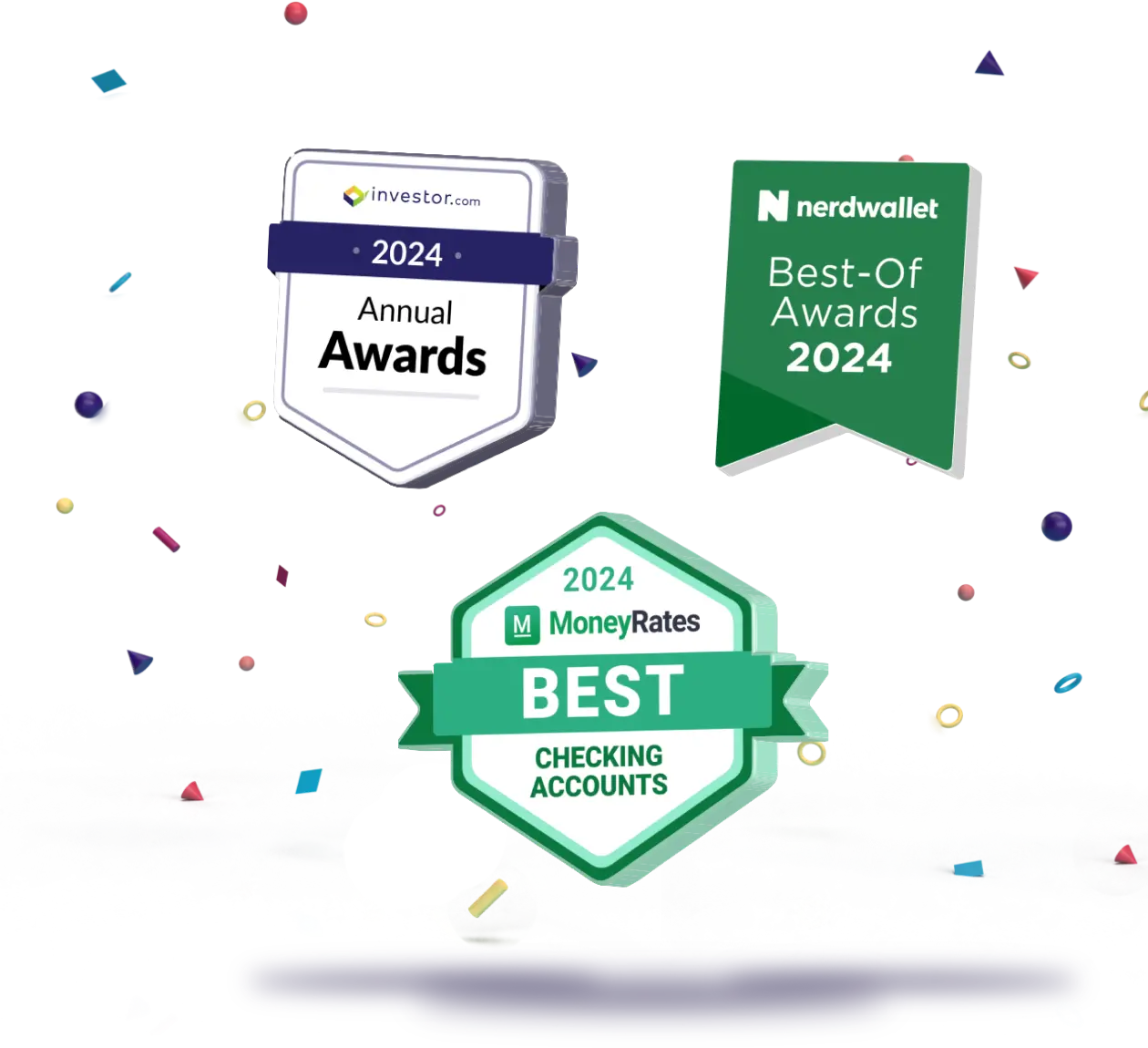
SoFi Bank 2024 accolades

{/*Trust Pilot Mod*/}


{/* Fuel your savings with a 0.70% APY boost */}

Fuel your savings with a 0.70% APY boost.2 Here are the necessary steps.

  • Open a new SoFi Checking and Savings account by 1/31/26.

  • Become a SoFi Plus member within 60 days by setting up an eligible direct deposit or enrolling in a $10/month (every 30 days) subscription.6

  • Enjoy a 0.70% APY boost on savings for six months as long as you maintain your SoFi Plus membership. Heads up: you’ll still get our 0.70% bump on top of the standard savings rate, even if our variable APY changes.


Open an account

2Earn up to 4.30% Annual Percentage Yield (APY) on SoFi Savings with a 0.70% APY Boost (added to the 3.30% APY as of 11/12/25) for up to 6 months. Open a new SoFi Checking & Savings account and enroll in SoFi Plus by 1/31/26. Rates variable, subject to change. Terms apply here. SoFi Bank, N.A. Member FDIC.

{/* Summer Travel boxes */}
{/*


*/}

{/* Holiday boxes */}


{/* WHAT DOES BETTER BANKING LOOK LIKE? UPDATED 11Feb25*/}

This is what better banking looks like.


Open an account

No account fees1

No overdraft fees. No minimum balance fees. No monthly fees. Plus, 55,000+ fee-free ATMs within the Allpoint® Network.7

Earn up to 4.30%2
with SoFi Plus

Limited-time only: Get a 0.70% boost on our highest savings APY of 3.30% 4 when you set up a new account with eligible direct deposit. Terms apply.

Up to 2-day-early-paycheck8

Feel the magic of payday up to two days earlier—automatically—when you set up direct deposit.

No-fee Overdraft Coverage

Overspent by accident? No problem. You’ll be covered up to $50 with no fees with eligible direct deposit of at least $1,000.9

Do it all in one app.

Pay bills, deposit checks, send money, manage your digital wallet, and get live customer support 7 days a week, all in the SoFi app.

Additional FDIC Insurance

Access additional insurance up to $3M on deposits through a seamless network of participating banks. Learn more and opt in here.5


Sign up


{/* Horizon */}

{/*Get award winning banking NEW 2025 Assets Updates*/}

Get award-winning banking.

See for yourself why SoFi won 10 banking awards from 9 industry publications last year.


Open an account

Awards or rankings are not indicative of future success or results. Neither SoFi Bank, N.A. nor its employees paid a fee in exchange for ratings. Awards and ratings are independently determined and awarded by their respective publications.


{/* Savings rates above the national average */}

Savings rates that are way above the national average.10

Get ready to earn 3.30% APY 4 with eligible direct deposit—that’s 9x the national average savings rate 10—on your savings and Vault balances. Plus now through 1/31/26 new members can get a 6-month 0.70% boost on our highest savings APY of 3.30% with eligible direct deposit. Terms apply.


Open an account

2Earn up to 4.30% Annual Percentage Yield (APY) on SoFi Savings with a 0.70% APY Boost (added to the 3.30% APY as of 11/12/25) for up to 6 months. Open a new SoFi Checking & Savings account and enroll in SoFi Plus by 1/31/26. Rates variable, subject to change. Terms apply here. SoFi Bank, N.A. Member FDIC.


{/* Mobile banking made easy */}


Mobile banking made easy.

Securely log in to our easy-to-use app and access popular online banking features: pay bills, find ATMs, send money, make a mobile deposit, and more. And rest easy with no minimum balance, and no monthly maintenance fee1.


Open an account


Open an account

Mobile banking made easy.

Securely log in to our easy-to-use app and access popular online banking features: pay bills, find ATMs, send money, make a mobile deposit, and more. And rest easy with no minimum balance, and no monthly maintenance fee1.


Open an account


Open an account


{/*FAQs*/}

FAQs


What is an online bank account?

An online bank account conveniently allows you to manage your accounts from your computer or mobile device. This includes sending money, depositing checks, paying bills, and everything you’d normally do at a physical branch. Because SoFi does not have any physical branches, we’re able to pass those savings to our members!


How easy is it to open a bank account online?

Opening an account is quick and easy. All we need are a few pieces of information such as name, home address, and Social Security number. In some cases, we may need additional documentation like a copy of your driver’s license, and/or a current photo ID to verify your identity.


Can a student open an account?

Of course. Anyone over 18 can open an individual or joint online bank account. In fact, we have some special offers for students (must have an .edu email address to qualify).

Learn more about our Student Checking and Savings Offer.


How do I set up direct deposit?

Simply download this

Learn more: How to Set Up Direct Deposit


What will my APY be?

As long as you direct deposit your pay or add $5,000 every 30 days, you’ll earn 3.30% APY on your savings & Vaults balances and 0.50% APY on your checking balances.* If you do not have a direct deposit or $5,000 in deposits every 30 days, you’ll earn 1.00% APY on savings & Vaults balances and 0.50% APY on checking balances. 3

Interest rates are variable and subject to change at any time. Additional information can be found at sofi.com/legal/banking-rate-sheet.


Why do I need to sign up for direct deposit?

When you set up direct deposit into your account, you are trusting your paycheck with us. We want to repay that trust by making sure that we give you the best of what SoFi has to offer, including up to 3.30% APY (annual percentage yield)3, plus features like No-Fee Overdraft Coverage7 and up to 2-Day Early Paycheck.6


Are online bank accounts safe?

All SoFi Checking and Savings accounts receive industry-standard FDIC insurance of up to $250,000 per member (joint accounts are insured up to $500,000). SoFi Checking and Savings members can earn up to $3M of FDIC insurance by enrolling in the SoFi Insured Deposit Program 4. For more information on FDIC insurance coverage, please visit www.FDIC.gov.


How do I withdraw and deposit cash?

SoFi makes it easy to both withdraw and deposit money. To withdraw, simply visit any of the 55,000 Allpoint ATMs (more locations than Chase, Wells Fargo, and Bank of America combined!). You won’t pay any fee as long as you visit one of these ATMs. In order to deposit money, simply visit a retail location that offers GreenDot services.5


Do I need a minimum balance to open an account or get the highest interest rate?

There is no minimum balance required to open a SoFi Checking & Savings account. Members can unlock 3.30% APY savings balances with either direct deposit (no minimum required) or by depositing at least $5,000 every 30 days.4 For more information, please visit sofi.com/banking/#4/.

Learn more: How Much Money Is Needed to Start a Bank Account?


Is there a minimum age?

You must be 18 years or older to open an individual or joint bank account.

Learn more: How Old Do You Have to Be to Open a Bank Account?


Can I sign up for an individual checking or savings account?

When you sign up for a SoFi online bank account, you will receive both a checking account and a savings account. We do not currently offer standalone checking or savings accounts.


If I keep my entire balance in savings, will funds automatically move to checking as needed to pay bills?


Yes. As long as you have Overdraft Protection enabled, we’ll automatically pull from your available savings balances in the event that your checking balance is insufficient. Overdraft protection covers ACH withdrawals (bill pay, loans, P2P), checks and debit card transactions. Note that overdraft protection will not pull from your Vaults. To turn on Overdraft Protection, open the SoFi app, tap More > Overdraft and toggle the feature on.


Any limits on savings account withdrawals per month or transfers between accounts?


No, there are no current limits on saving withdrawals or transfers between checking, savings and Vaults.


To unlock the highest APY, does it matter where I direct deposit my funds
(checking vs savings?)


Nope, it doesn’t matter. To unlock the highest the highest APY, you may either:

-Get paid via direct deposit (into either your checking or savings). Eligible direct deposits are the electronic deposits of your paycheck, pension or government payments (e.g., Social Security) from your employer, benefits provider, or the government.

-Add $5,000 or more to your checking or savings account every 30 days.


Is there a maximum or ‘cap’ on the 3.30% APY?


There is not currently a maximum on the 3.30% APY for savings or Vaults.


What about fees?

We’re proud to say that banking with SoFi has no account fees and no service charges—and we’re working hard to keep it that way.1 There are no fees on overdraft, account open, minimum balance, dormant account or regular maintenance. We also offer no ATM fees at 55,000+ Allpoint ATMs worldwide.5 Check out a full list of fees and service charges: No Fees.


{/* More banking tips and resources */}

More banking tips and resources
just clicks away.


See more articles


{/* Get up to apy */}

Earn up to 4.30% APY2
with eligible direct deposit.

Limited-time only. Terms apply.


Open an account


SoFi > Banking

Read more

SoFi Refi 0.250% rate discount | SoFi

{/* SLR Rate Discount Special 50 */}
{/* https://www.sofi.com/sofi-at-work/slr-special-50/ */}


{/* Hero */}


STUDENT LOAN REFINANCING

Don’t miss this additional 0.250%
rate discount.


Refinancing your student loans could save you thousands. And for a limited time, apply through this page and you can enjoy an additional 0.250% student loan rate discount2 exclusively available to you through SoFi at Work. Offer good from 8/15/25 through 11/15/25.


View your rate

✓ Checking your rate will not affect your credit score.

{/* Why choose sofi? */}

Why choose SoFi?

Since 2011, we’ve helped over 515,000 members refinance their student loan debt. Here’s just a bit of what they enjoy:

  • Serious savings.
    Zero fees required.

    You could save thousands with a lower interest rate and no fees required.

  • Easy online process

    Your time matters. View your
    rate in two minutes.

  • Member benefits

    Access SoFi Travel benefits3, our debt summary tool, rewards points to pay toward loans4, and more.

{/* Real stories from real grads */}

Real stories from real grads.

582,000+
SoFi members have refinanced their student loans

$50 billion+
In student loans refinanced

4.3/5 stars
On Trustpilot

4.3/5 star rating based on 9,668 reviews as of July 7, 2025. See trustpilot.com/review/sofi.com for more info.

{/* How refinancing student loan works at sofi */}

How refinancing student loans works at SoFi.

First, we’ll see if you qualify.

You can see some basic eligibility criteria for different loan types. Plus, we’ll consider other factors like your financial history, credit score, and monthly income versus expenses.

Then, you pick a loan with a competitive interest rate.

If you’re approved, you can select from flexible terms that could lower your interest or monthly payments. All with no fees required.

Don’t forget to get a discount.

For example, you could get a 0.25% interest rate discount by enrolling in autopay.1


View your rate


 Checking your rate will not affect your credit score.

{/* FAQs */}

FAQs


Who should refinance their student loans?

Student loan refinancing is a great solution for working graduates who have high-interest, unsubsidized Direct Loans, Graduate PLUS loans, and/or private student loans. Federal student loans do carry some special benefits, for example, public service loan forgiveness and economic hardship programs, that may not be accessible to you after you refinance. Check out this blog post that provides more information: When to Consolidate Federal and Private Loans by Refinancing. Or, call us at 855-456-SOFI (7634) for a free consultation about your particular situation.


Is it worth it to refinance student loan?

The answer to this question depends on your specific financial situation. However, student loan refinancing may be a good option if you can qualify for a lower interest rate and/or a shorter repayment period. By reducing your rate and getting a lower monthly payment term, you’ll owe less interest over the life of the loan and save money in the long run.


Can I refinance both federal and private student loans?

Yes, SoFi will consolidate all qualified education loans.


Am I a good candidate to refinance my student loans with SoFi?

SoFi aims to revolutionize financial services—ultimately improving the system for everyone. Today, we’re able to offer significant savings and flexibility to US citizens or permanent residents who have graduated from a selection of Title IV accredited university or graduate programs, are employed, have a sufficient income from other sources, or hold a job offer with a start date within 90 days, have a responsible financial history, and a strong monthly cash flow.


What is the difference between consolidating and refinancing student loans?

Student loan consolidation is when you combine multiple loans into one single loan. Student loan refinancing, on the other hand, is when you get a new loan at a new interest rate and/or a new term. You can refinance both federal and private loans. Learn more here.


What’s the difference between fixed and variable rate loans?

Fixed rate loans are loans that have an interest rate that does not change over the life of a loan, which means you pay the same amount each month. It also means you know with certainty the total interest that you’ll pay over the life of the loan. Fixed rate is a general term that can apply to different types of loans with a variety of uses, including student loans, mortgages, auto loans, and unsecured personal loans.

Variable rate loans are loans that have an interest rate that will fluctuate over time in line with prevailing interest rates. Sometimes they are also known as floating-rate loans.

Find more info on Fixed vs. Variable Rate Loans.


Where can I find more information about student loans in general?

Deciding how to best handle your student loan refinancing can be an intimidating process. That’s why we’ve put together our Student Loan Help Center to give you guidance on existing student loan payments, refinancing, budgeting, and common terminology so you can feel more confident in your journey to becoming debt free.


How will applying impact my credit score?

To check the rates and terms you qualify for, SoFi conducts a soft credit pull that will not affect your credit score. However, if you choose a product and continue your application, we will request your full credit report from one or more consumer reporting agencies, which is considered a hard credit pull. Learn more here.


What are the differences in refinancing federal vs. private loans?

When you refinance your federal student loans, you’ll have a new private loan, and private loans are not eligible for federal programs and benefits, but it could be a good option if your goal is to lower your monthly payments or get a lower rate. Once federal loans are refinanced into private loans, they can’t be converted back, so it’s important you consider all your options. Learn more here.


What’s the difference between an APR and an interest rate?

Your interest rate includes the interest percentage you will be charged for taking a loan out, accrued on a daily basis, and does not include any other fees. An APR is the sum of the interest rate plus extra fees and expressed as a percentage.


See all FAQs

{/* Tips and resources for student loan refinancing */}

Tips and resources for
student loan refinancing.


{/* horizon */}

{/* Get help from a human */}

Get help from a human.

Ask questions and get help every step of the way from our live customer support team.

Operating hours:

Monday–Thursday 5am–7pm PT

Friday–Sunday 5am–5pm PT


Contact us


Contact us


Read more

SoFi Refi 0.250% rate discount | SoFi

{/* SLR Rate Discount Special 375 */}
{/* https://www.sofi.com/sofi-at-work/slr-special-375/ */}


{/* Hero */}


STUDENT LOAN REFINANCING

Don’t miss this additional 0.250%
rate discount.


Refinancing your student loans could save you thousands. And for a limited time, apply through this page and you can enjoy an additional 0.250% student loan rate discount2 exclusively available to you through SoFi at Work. Offer good from 8/15/25 through 11/15/25.


View your rate

✓ Checking your rate will not affect your credit score.

{/* Why choose sofi? */}

Why choose SoFi?

Since 2011, we’ve helped over 515,000 members refinance their student loan debt. Here’s just a bit of what they enjoy:

  • Serious savings.
    Zero fees required.

    You could save thousands with a lower interest rate and no fees required.

  • Easy online process

    Your time matters. View your
    rate in two minutes.

  • Member benefits

    Access SoFi Travel benefits3, our debt summary tool, rewards points to pay toward loans4, and more.

{/* Real stories from real grads */}

Real stories from real grads.

582,000+
SoFi members have refinanced their student loans

$50 billion+
In student loans refinanced

4.3/5 stars
On Trustpilot

4.3/5 star rating based on 9,668 reviews as of July 7, 2025. See trustpilot.com/review/sofi.com for more info.

{/* How refinancing student loan works at sofi */}

How refinancing student loans works at SoFi.

First, we’ll see if you qualify.

You can see some basic eligibility criteria for different loan types. Plus, we’ll consider other factors like your financial history, credit score, and monthly income versus expenses.

Then, you pick a loan with a competitive interest rate.

If you’re approved, you can select from flexible terms that could lower your interest or monthly payments. All with no fees required.

Don’t forget to get a discount.

For example, you could get a 0.25% interest rate discount by enrolling in autopay.1


View your rate


 Checking your rate will not affect your credit score.

{/* FAQs */}

FAQs


Who should refinance their student loans?

Student loan refinancing is a great solution for working graduates who have high-interest, unsubsidized Direct Loans, Graduate PLUS loans, and/or private student loans. Federal student loans do carry some special benefits, for example, public service loan forgiveness and economic hardship programs, that may not be accessible to you after you refinance. Check out this blog post that provides more information: When to Consolidate Federal and Private Loans by Refinancing. Or, call us at 855-456-SOFI (7634) for a free consultation about your particular situation.


Is it worth it to refinance student loan?

The answer to this question depends on your specific financial situation. However, student loan refinancing may be a good option if you can qualify for a lower interest rate and/or a shorter repayment period. By reducing your rate and getting a lower monthly payment term, you’ll owe less interest over the life of the loan and save money in the long run.


Can I refinance both federal and private student loans?

Yes, SoFi will consolidate all qualified education loans.


Am I a good candidate to refinance my student loans with SoFi?

SoFi aims to revolutionize financial services—ultimately improving the system for everyone. Today, we’re able to offer significant savings and flexibility to US citizens or permanent residents who have graduated from a selection of Title IV accredited university or graduate programs, are employed, have a sufficient income from other sources, or hold a job offer with a start date within 90 days, have a responsible financial history, and a strong monthly cash flow.


What is the difference between consolidating and refinancing student loans?

Student loan consolidation is when you combine multiple loans into one single loan. Student loan refinancing, on the other hand, is when you get a new loan at a new interest rate and/or a new term. You can refinance both federal and private loans. Learn more here.


What’s the difference between fixed and variable rate loans?

Fixed rate loans are loans that have an interest rate that does not change over the life of a loan, which means you pay the same amount each month. It also means you know with certainty the total interest that you’ll pay over the life of the loan. Fixed rate is a general term that can apply to different types of loans with a variety of uses, including student loans, mortgages, auto loans, and unsecured personal loans.

Variable rate loans are loans that have an interest rate that will fluctuate over time in line with prevailing interest rates. Sometimes they are also known as floating-rate loans.

Find more info on Fixed vs. Variable Rate Loans.


Where can I find more information about student loans in general?

Deciding how to best handle your student loan refinancing can be an intimidating process. That’s why we’ve put together our Student Loan Help Center to give you guidance on existing student loan payments, refinancing, budgeting, and common terminology so you can feel more confident in your journey to becoming debt free.


How will applying impact my credit score?

To check the rates and terms you qualify for, SoFi conducts a soft credit pull that will not affect your credit score. However, if you choose a product and continue your application, we will request your full credit report from one or more consumer reporting agencies, which is considered a hard credit pull. Learn more here.


What are the differences in refinancing federal vs. private loans?

When you refinance your federal student loans, you’ll have a new private loan, and private loans are not eligible for federal programs and benefits, but it could be a good option if your goal is to lower your monthly payments or get a lower rate. Once federal loans are refinanced into private loans, they can’t be converted back, so it’s important you consider all your options. Learn more here.


What’s the difference between an APR and an interest rate?

Your interest rate includes the interest percentage you will be charged for taking a loan out, accrued on a daily basis, and does not include any other fees. An APR is the sum of the interest rate plus extra fees and expressed as a percentage.


See all FAQs

{/* Tips and resources for student loan refinancing */}

Tips and resources for
student loan refinancing.


{/* horizon */}

{/* Get help from a human */}

Get help from a human.

Ask questions and get help every step of the way from our live customer support team.

Operating hours:

Monday–Thursday 5am–7pm PT

Friday–Sunday 5am–5pm PT


Contact us


Contact us


Read more

Liberty University Tuition and Fees


Liberty University Tuition and Fees

Liberty University Tuition and Fees

On this page:

    By Kelly Boyer Sagert

    (Last Updated – 08/2025)

    If you’d like to get your degree from a Christian institution, Liberty University, located in Lynchburg, Virginia, is one of the largest Christian colleges in the country. It has an undergraduate population of 52,823, and a total population of almost twice that number. Learn more about this private Evangelical school.

    Total Cost of Attendance

    Liberty tuition for the 2024-25 school year was $22,362. This is substantially lower than the average tuition at private institutions of $41,540 per year.

    Costs for 2024-25

    Expense

    Cost

    Tuition & Fees

    $22,362

    Books & Supplies

    $1,581

    Room & Board

    $13,835

    Other Expenses

    $6,578

    Total Cost of Attendance

    $44,356

    Financial Aid

    When it comes to Liberty University cost, nearly all the university’s students (98%) receive one or more forms of financial aid, which can include grants, loans, and scholarships.

    Explore financial aid options: Virginia Student Loan & Scholarships.

    Generally, financial aid is monetary assistance awarded to students based on personal need or merit. Students who qualify for financial aid can use it to pay for college costs like tuition, books, and living expenses.

    The federal government is the largest provider of student financial aid. However, aid can also be given by state governments, colleges and universities, private companies, and nonprofits. The different types include:

    •  Scholarships: These can be awarded by schools and other organizations based on students’ academic excellence, athletic achievement, community involvement, job experience, field of study, or financial need.

    •  Grants: Generally based on financial need, these can come from federal, state, private, and nonprofit organizations.

    •  Work-study: This federal program provides qualifying students with part-time employment to earn money for expenses while in school.

    •  Federal student loans: This is money borrowed directly from the U.S. Department of Education. It comes with fixed interest rates that are typically lower than private loans.

    Colleges, universities, and state agencies use the Free Application for Federal Student Aid (FAFSA) to determine financial aid eligibility. The FAFSA can be completed online, but note that state, federal, and school deadlines may differ.

    You can find other financial aid opportunities on databases such as:

    •  US Department of Education – Search for grants from colleges and universities by state

    •  College Scholarship Service Profile (CSS) – A global college scholarship application used by select institutions to award financial aid

    •  Scholarship Search Tool

    Recommended: The Differences Between Grants, Scholarships, and Loans

    Private Student Loans

    While 52% of Liberty students take out federal student loans, 9% take out private loans. These private loans average $16,681.

    Private loans are funded by private organizations such as banks, online lenders, credit unions, some schools, and state-based or -affiliated organizations. While federal student loans have interest rates that are regulated by Congress, private lenders follow a different set of regulations so their qualifications and interest rates can vary widely.

    What’s more, private loans have variable or fixed interest rates that may be higher than federal loan interest rates, which are always fixed. Private lenders may (but don’t always) require you to make payments on your loans while you are still in school, compared to federal student loans which you don’t have to start paying back until after you graduate, leave school, or change your enrollment status to less than half-time.

    Private loans don’t have a specific application window and can be applied for on an as-needed basis. However, if you think you may need to take out a private loan, it’s a good idea to submit your FAFSA first to see what federal aid you may qualify for since that generally has better rates and terms.

    If you’ve missed the FAFSA deadline or you’re struggling to pay for school during the year, private loans can potentially help you make your tuition payments. Just keep in mind that you will need enough lead time for your loan to process and for your lender to send money to your school.

    Recommended: Guide to Private Student Loans

    Projected 4-Year-Degree Price

    Liberty tuition costs for four years, including room and board, books, and other fees, total $177,424. This is much lower than the national average of $241,680 at private U.S. institutions.

    Here’s some Student Loan & Scholarship Information for you.

    Repay student loans your way.

    Find the monthly
    payment & rate that fits your budget.

    Undergraduate Tuition and Fees

    Here are tuition costs at Liberty University.

    Costs for 2024-25

    Expense

    Cost

    Tuition & Fees

    $22,362

    Books & Supplies

    $1,581

    Total

    $23,943

    The tuition, fees, and supplies at Liberty University in 2024-25 was $23,943 vs. $41,540 as the national average for private universities.

    Graduate Tuition and Fees

    These are the costs for graduate students at Liberty University.

    Costs for 2024-25

    Expense

    Cost

    Tuition

    $8,026

    Fees

    $704

    Total Cost of Attendance

    $8,730

    The Liberty University cost for graduate school, including tuition and fees, was $8,730 in 2024-25. This is far lower than the national average at a private university of $21,730.

    There are many options for graduate loans that can help with these costs.

    Cost per Credit Hour

    The cost per credit hour for part-time Liberty University residential undergrad students is $815. The cost per credit hour for students enrolled in liberty’s online program is $455 for part-time students, while the full-time online cost is $390 per credit hour.

    Campus Housing Expenses

    Here are campus housing expenses for Liberty University students.

    Costs for 2024-25

    Student Type

    On-campus

    Off-campus

    Room & Board

    $13,835

    $12,133

    Other Expenses

    $6,578

    $7,382

    Total

    $20,413

    $19,515

    Unmarried students under age 21 are required to live on campus at Liberty University in one of seven housing options. Residence halls include traditional housing for separate genders, as well as apartment-style suites. For upperclassmen who choose to live off-campus, there are several apartments located near campus. Learn more about the options for off campus housing .

    Liberty University Acceptance Rate

    Here is the acceptance rate at Liberty University.

    Fall 2023

    Number of Applications

    Number Accepted

    Percentage Accepted

    36,921

    36,551

    99%

    Liberty University has an exceptionally high acceptance rate of 99%.

    Admission Requirements

    Liberty University has a few requirements for admission, and a few recommended options.

    Required:

    •  High school transcript

    •  Essay

    Recommended:

    •  Reference letters

    •  Community service

    Standardized test scores currently aren’t required or considered.

    Graduation Rate

    Here is the graduation rate for Liberty University.

    •  Graduation rate: 63%

    Post-Graduation Median Earnings

    After graduating with an undergraduate degree at Liberty University, you can expect to earn, on average, about $44,813 per year. This is below the national average of $68,516.

    Bottom Line

    With a strong focus on Christian values, a very high acceptance rate, and an affordable tuition, Liberty University might be the right place for you to further your education if you’re looking for a Christian college. Plus, the school’s many options for financial aid could help you pay for it.

    SoFi private student loans offer competitive interest rates for qualifying borrowers, flexible repayment plans, and no origination fees.

    View your rate

    SoFi Private Student Loans
    Please borrow responsibly. SoFi Private Student loans are not a substitute for federal loans, grants, and work-study programs. We encourage you to evaluate all your federal student aid options before you consider any private loans, including ours. Read our FAQs.
    Terms and conditions apply. SOFI RESERVES THE RIGHT TO MODIFY OR DISCONTINUE PRODUCTS AND BENEFITS AT ANY TIME WITHOUT NOTICE. SoFi Private Student loans are subject to program terms and restrictions, such as completion of a loan application and self-certification form, verification of application information, the student's at least half-time enrollment in a degree program at a SoFi-participating school, and, if applicable, a co-signer. In addition, borrowers must be U.S. citizens or other eligible status, be residing in the U.S., Puerto Rico, U.S. Virgin Islands, or American Samoa, and must meet SoFi’s underwriting requirements, including verification of sufficient income to support your ability to repay. Minimum loan amount is $1,000. See SoFi.com/eligibility for more information. Lowest rates reserved for the most creditworthy borrowers. SoFi reserves the right to modify eligibility criteria at any time. This information is subject to change. This information is current as of 4/22/2025 and is subject to change. SoFi Private Student loans are originated by SoFi Bank, N.A. Member FDIC. NMLS #696891 (www.nmlsconsumeraccess.org).
    SoFi Bank, N.A. and its lending products are not endorsed by or directly affiliated with any college or university unless otherwise disclosed.


    SoFi Loan Products
    SoFi loans are originated by SoFi Bank, N.A., NMLS #696891 (Member FDIC). For additional product-specific legal and licensing information, see SoFi.com/legal. Equal Housing Lender.


    Non affiliation: SoFi isn’t affiliated with any of the companies highlighted in this article.

    Third-Party Brand Mentions: No brands, products, or companies mentioned are affiliated with SoFi, nor do they endorse or sponsor this article. Third-party trademarks referenced herein are property of their respective owners.


    External Websites: The information and analysis provided through hyperlinks to third-party websites, while believed to be accurate, cannot be guaranteed by SoFi. Links are provided for informational purposes and should not be viewed as an endorsement.


    SOISL-Q325-058

    Read more
    TLS 1.2 Encrypted
    Equal Housing Lender