SoFi Blog

Tips and news—
for your financial moves.

Cost of Living in Nevada


Cost of Living in Nevada

An aerial view of a suburban neighborhood and golf course with a snow-capped mountain range in the distance.

On this page:

    (Last Updated – September 4,2025)

    Nevada offers very different lifestyles, depending on the location you choose there. Large cities, like Las Vegas and Reno, attract those who crave 24/7 nightlife, entertainment, and access to thriving job markets in hospitality, health services, education, and tech. The state also welcomes those who prefer a more natural environment, offering access to outdoor recreation and natural landmarks, like Lake Tahoe and Great Basin National Park.

    Like other states, Nevada has its downsides. The state’s extreme weather — three-figure heat during the summer and extreme cold in mountain areas — as well as relatively few job opportunities outside its major cities could discourage prospective Nevadans.

    If you’re thinking about living in the Silver State, here’s what to know about the cost of living in Nevada.

    What’s the Average Cost of Living in Nevada?

    Average cost of living in Nevada: $54,054 per year

    Nevada has the lowest cost of living among the states in the Far West, a category that includes Alaska, California, Hawaii, Oregon, and Washington.

    The Missouri Economic Research and Information Center (MERIC) identifies the cost of living in the U.S. by state. The national index score is fixed at 100; the lower a state’s cost of living index (COLI) compared to the national baseline, the less expensive it is to live there. A COLI above 100 suggests a higher cost of living compared to the national average.

    Nevada’s COLI is 99.5, slightly below the national index. The average cost of living in Nevada is significantly lower than coastal neighbors like California (141.6) and Oregon (112.7).

    The Bureau of Economic Analysis breaks down the average Nevadan’s personal annual expenditures as follows.

    Category

    Average Annual Per-Capita Cost in Nevada

    Housing and Utilities

    $10,329

    Health Care

    $7,198

    Food and Beverages (nonrestaurant)

    $4,562

    Gas and Energy Goods

    $1,276

    All Other Personal Expenditures

    $30,688

    The average monthly expenses Nevada residents can expect to pay comes to about $4,504 per person.

    Housing Costs in Nevada

    Median Housing Costs in Nevada: $1,622 to $1,867 per month

    Housing options in Nevada are diverse — the state’s bustling cities offer modern high-rise living while its rural areas offer large plots of land. Nevada has 1,281,018 housing units as of August 25, 2025, according to the U.S. Census Bureau.

    The average home value in Nevada’s housing market is $452,606, compared to The national average of $368,581. The average monthly mortgage payment in Nevada is $2,567.51. Whether you’re buying your first home in the state or you’re a repeat buyer, chances are you can find a place that’s relatively affordable.

    Rental housing costs in Nevada, according to the latest census data, are as follows:

    •  Median studio rent: $1,230

    •  Median one-bedroom rent: $1,333

    •  Median two-bedroom rent: $1,575

    •  Median three-bedroom rent: $1,930

    •  Median four-bedroom rent: $2,228

    •  Median five-bedroom or more rent: $2,663

    •  Median gross rent: $1,622

    Below is a snapshot of what average home values are in different cities across the state, based on Zillow’s August 2025 data.

    Nevada City

    Average Home Value

    Carson City

    $493,876

    Elko

    $355,420

    Henderson

    $494,576

    Las Vegas

    $434,234

    Mesquite

    $385,728

    Reno

    $566,164

    Sparks

    $524,485

    Utility Costs in Nevada

    Average Utility Costs in Nevada: $388.62 per month

    In addition to a monthly rent or mortgage payment, you’ll need to budget utility costs into your monthly cost of living in Nevada. Here are common utilities and the average monthly bill for each.

    Utility

    Average Nevada Bill

    Electricity

    $145.62

    Natural Gas

    $56

    Cable & Internet

    $115

    Water

    $72

    Food & Beverages

    Average Food and Beverage Costs in Nevada: $380 per month

    Monthly expenses for groceries and food vary, depending on your palate and appetite. Generally, Nevadans spend an average of $4,562 annually on food and beverages; this breaks down into about $380 per month, per person.

    For a family of four, food expenditures work out to an average of $1,520 per month. According to the Council for Community and Economic Research, there’s not a dramatic difference in food costs in the two main cities.

    Nevada Area

    Grocery Items Index

    Las Vegas

    103.7

    Reno-Sparks

    102.9

    Transportation

    Average Transportation Costs in Nevada: $10,520 to $19,575 per year

    A majority of Nevada households (92.9%) have at least one personal vehicle, according to a Forbes Advisor study. That research also found that the state tied with California for being the most expensive state in which to own a car. Larger cities offer public transit, like bus routes and intercity rail systems, as well as access to rideshare and taxis in metro and tourist areas.

    The transportation costs households can expect depend on the number of family members per household. Here’s an example of how annual transportation expenses vary, based on MIT’s 2025 Living Wage Calculator.

    Family Makeup

    Average Annual Transportation Cost

    One adult, no children

    $10,520

    Two working adults, no children

    $12,175

    Two working adults, three children

    $19,575

    Health Care in Nevada

    Average Health Care Costs in Nevada: $7,198 per person, per year

    The average amount that Nevada residents spend on health care is $7,198 per person, annually, according to the Bureau of Economic Analysis. This spending category, however, fluctuates based on multiple factors. Age, current health and pre-existing conditions, medical needs, and insurance coverage all contribute to the cost of health care in Nevada.

    Child Care

    Average Child Care Costs in Nevada: $808 to $1,109 per child, per month

    Child care is often a significant expenditure for families. Certain types of child care in Nevada have monthly costs in four figures, almost as high as the average rent in the state. Households with one or more children face a significantly higher cost of living in Nevada than those that don’t require child care.

    Here are average costs of care per month in Nevada, per child, based on data from CostofChildCare.org.

    Type of Child Care

    Average Cost Per Month, Per Child

    Infant Classroom

    $1,109

    Toddler Classroom

    $909

    Preschooler Classroom

    $808

    Home-Based Family Child Care

    $1,057

    Taxes

    Average Taxes in Nevada: No statutory state income tax.

    Nevada is one of eight U.S. states that don’t impose a statutory state income tax, according to the Tax Foundation. This can be a big draw for many people who are interested in moving to Nevada.

    Miscellaneous Costs

    After budgeting for the essential monthly cost of living in Nevada, you’ll likely want to have funds set aside for discretionary spending. Here are a handful of the diverse leisure experiences that the state offers.

    •  The Sphere Experience in Las Vegas: $182 to $300+, before fees

    •  Sand Harbor State Park entrance fee: $10 for residents

    •  Las Vegas Raiders Stadium Ticket: Starting at $211

    •  Entrance to Lake Mead National Park: $15-$25 for a standard pass

    Thanks to the mix of activities available in the state, there’s something to do for all budget ranges.

    How Much Money Do You Need to Live Comfortably in Nevada?

    How much you need to earn to maintain a comfortable lifestyle in Nevada depends on many individual factors. For example, family size, location, and lifestyle all contribute to how far your income will stretch in Nevada.

    That said, there are metrics about how much you need to live in Nevada, though living comfortably may require a bit more. The cost of living for one Nevadan is $54,054 per year, and MIT’s 2025 Living Wage Calculator finds that a living wage for a single, working adult who doesn’t have a child is $23.85 per hour. By way of comparison, the breadwinner in a family of four with only one working adult must make $43.20 hourly.

    According to the U.S. News & World Report’s state rankings, Nevada comes in at 34th for affordability, and MERIC ranks Nevada in the middle of the pack with a cost of living index score of 99.5.

    What City Has the Lowest Cost of Living in Nevada?

    When it comes to the average cost of living in Nevada, there can be significant variations in different areas. Below is a brief comparison of the state’s two major metropolitan areas, based on data from the Council for Community and Economic Research’s 2024 Cost of Living Index.

    Las Vegas, Nevada

    With a population of 641,903, the Las Vegas metro area is located in southern Nevada. It’s part of Clark County and
    includes the Henderson and Paradise areas. Its landmark — the Las Vegas Strip — is famous for its vibrant nightlife,
    gambling, entertainment, and world-class dining. It has a COLI of 98.5, just under the national score.

    Reno, Nevada

    Reno-Sparks, Nevada has a COLI of 104.1. It’s located in the Truckee Meadows, east of the Sierra Nevada mountains.
    The metropolitan area includes two counties, Washoe and Storey. As many as 264,165 residents live in Reno and
    108,445 in Sparks. Lake Tahoe offers residents nearby access to outdoor activities, like skiing, hiking, and water
    recreation. The area is also becoming a hotspot for the tech industry, drawing companies and talent from all areas
    of the country.

    Helpful Resources for Future Nevada Residents


    The Takeaway

    Nevada offers a little bit of everything, allowing it to please even the most discerning residents. People who aren’t deterred by extreme desert weather are likely to appreciate the modest monthly cost of living in Nevada. And while the affordability factor is compelling, many will also enjoy the exciting nightlife or the wealth of outdoor activities, depending on where they settle down.

    Looking for an affordable option for a home mortgage loan? SoFi can help: We offer low down payments (as little as 3% - 5%*) with our competitive and flexible home mortgage loans. Plus, applying is extra convenient: It's online, with access to one-on-one help.

    SoFi Mortgages: simple, smart, and so affordable.


    View your rate

    FAQ

    Is Nevada expensive to live in?

    Overall, Nevada isn’t among the most expensive states to live in. The Missouri Economic Research and Information Center ranked the cost of living in Nevada at 99.5, which is very close to the national baseline.

    What is a livable salary in Nevada?

    A single adult with no kids must earn $23.85 per hour to make a living wage in Nevada, according to MIT’s 2025 Living Wage Calculator. For a family of four, with two working adults and two children, the necessary living wage is $28.67 per working adult.

    Is Nevada a good state to live in?

    Nevada offers a bit of everything, from fast-paced urban centers to rural, small-town communities. Certain pockets have booming job markets, like hospitality in Las Vegas and tech in Reno. However, those who are looking for mild weather might not appreciate the extremes during summer and winter months.


    Photo credit: iStock/Wirestock

    SoFi Loan Products
    SoFi loans are originated by SoFi Bank, N.A., NMLS #696891 (Member FDIC). For additional product-specific legal and licensing information, see SoFi.com/legal. Equal Housing Lender.


    SoFi Mortgages
    Terms, conditions, and state restrictions apply. Not all products are available in all states. See SoFi.com/eligibility-criteria for more information.


    *SoFi requires Private Mortgage Insurance (PMI) for conforming home loans with a loan-to-value (LTV) ratio greater than 80%. As little as 3% down payments are for qualifying first-time homebuyers only. 5% minimum applies to other borrowers. Other loan types may require different fees or insurance (e.g., VA funding fee, FHA Mortgage Insurance Premiums, etc.). Loan requirements may vary depending on your down payment amount, and minimum down payment varies by loan type.


    Financial Tips & Strategies: The tips provided on this website are of a general nature and do not take into account your specific objectives, financial situation, and needs. You should always consider their appropriateness given your own circumstances.


    Third-Party Brand Mentions: No brands, products, or companies mentioned are affiliated with SoFi, nor do they endorse or sponsor this article. Third-party trademarks referenced herein are property of their respective owners.


    External Websites: The information and analysis provided through hyperlinks to third-party websites, while believed to be accurate, cannot be guaranteed by SoFi. Links are provided for informational purposes and should not be viewed as an endorsement.


    Tax Information: This article provides general background information only and is not intended to serve as legal or tax advice or as a substitute for legal counsel. You should consult your own attorney and/or tax advisor if you have a question requiring legal or tax advice.

    SOHL-Q225-160

    Read more

    Cost of Living in Nebraska


    Cost of Living in Nebraska

    A green roadside sign welcomes travelers to Nebraska,

    On this page:

      (Last Updated – September 4,2025)

      Nebraska lies in the heart of the Midwest and is one of the fastest-growing states in the region, according to the U.S. Census Bureau. Along with rolling plains and a vibrant college football scene, Nebraska boasts a thriving economy that attracts plenty of jobseekers.

      What is the cost of living in Nebraska like compared to the rest of the U.S.? It may come as no surprise to learn that the Cornhusker State is an affordable place to call home. Keep reading to learn more about the cost of living in Nebraska and how it may fit your budget.

      What’s the Average Cost of Living in Nebraska?

      Average cost of living in Nebraska: $52,177 per year

      Before you move to Nebraska, it’s wise to assess the impact on your monthly budget. The Bureau of Economic Analysis puts the average cost of living in Nebraska at $52,177 annually. Based on that figure, you’d need $4,348 in monthly income to live here. Overall, it’s one of the best affordable places in the U.S.

      Speaking of the cost of living in the U.S., Nebraska ranks 16th, according to the Missouri Economic Research and Information Center (MERIC). It’s not the cheapest place to live, but it’s nowhere near the most expensive either.

      Here’s how average consumer spending in Nebraska breaks down.

      Category

      Average Annual Per-Capita Cost in Nebraska

      Housing and Utilities

      $7,756

      Health Care

      $9,572

      Food and Beverages (nonrestaurant)

      $3,904

      Gasoline and Energy Goods

      $1,992

      All Other Personal Expenditures

      $28,953

      Housing Costs in Nebraska

      Average Housing Costs in Nebraska: $885 to $1,896.64 per month

      Whether you’re buying your first home or you’re a repeat buyer, there are plenty of homes in Nebraska, many of which sell at reasonable prices. There are also many lenders to choose from as you begin the mortgage preapproval process.

      The average home value in Nebraska was $276,711 in August 2025, according to Zillow. The median sale price, meanwhile, was $281,650, significantly below the national median sale price of $371,300. The average monthly mortgage payment is $1,897.

      Here’s what you can expect to spend on housing monthly in Nebraska if you’re renting.

      Housing Status

      Typical Cost

      Studio

      $885

      One Bedroom

      $893

      Two Bedroom

      $1,059

      Three Bedroom

      $1,292

      Four Bedroom

      $1,512

      Five or More Bedrooms

      $1,450

      Median Gross Rent

      $1,042

      Where you live in Nebraska can make a difference in what you pay for a home. Here’s how the average home value compares in selected Nebraska cities, according to Zillow.

      Nebraska City

      Average Home Value

      Columbus

      $270,723

      Fremont

      $252,904

      Grand Island

      $259,702

      Kearney

      $314,153

      Lincoln

      $289,468

      Norfolk

      $259,146

      North Platte

      $206,601

      Omaha

      $293,272

      Papillion

      $407,559

      Prices are within a normal range for the most part, which lowers the odds of needing a jumbo loan to buy a home.

      Recommended: What Are the Different Types of Home Mortgage?

      Utility Costs in Nebraska

      Average Utility Costs in Nebraska: $311.52 per month

      Housing may be your biggest expense, but utilities can also add up. Here’s what you’ll pay for utility services in Nebraska monthly.

      Utility

      Average Nebraska Bill

      Electricity

      $111.52

      Natural Gas

      $68

      Cable & Internet

      $97

      Water

      $35

      Note that these figures don’t include sewer or cell phone service, which can increase your overall expenditures.

      Food & Beverages

      Average Cost of Food and Beverages in Nebraska: $325 per month, per person

      Rising grocery prices can instantly increase your cost of living. According to the Bureau of Economic Analysis, Nebraskans spend an average of $3,904 per capita on food annually. The average monthly expenses for one person works out to about $325, which adds up to $1,300 for a family of four.

      Where you live in Nebraska can determine how much you pay for groceries. The Council for Community and Economic Research ranks food costs for major American cities. Here’s how grocery prices compare for the Nebraska cities surveyed, from lowest to highest.

      City in or Near Nebraska

      Grocery Items Index

      Kansas City, MO

      97.3

      Omaha, NE

      99.1

      Lincoln, NE

      99.3

      Denver, CO

      101.3

      Transportation

      Average Transportation Costs in Nebraska: $10,958 to $19,720 per year

      Getting around in Nebraska can add up if you’re paying for gas, vehicle maintenance, and insurance. Public transportation is available in larger cities like Omaha and Lincoln, but if you live in the suburbs or a rural area, you’ll need a vehicle to go from A to B.

      Here’s how the average cost of transportation in Nebraska breaks down, according to MIT’s Living Wage Calculator.

      Family Makeup

      Average Annual Transportation Cost

      One adult, no children

      $10,958

      Two working adults, no children

      $12,264

      Two working adults, three children

      $19,720

      Health Care in Nebraska

      Average Health Care Costs in Nebraska: $9,572 per year, per person

      The average Nebraska resident pays $9,572 for health care each year, according to the Bureau of Economic Analysis. That’s just shy of $800 per month for doctor visits, medications, and other health care expenses.

      Your actual health care spending will depend on your medical history, age, and insurance coverage.

      Child Care

      Average Child Care Costs in Nebraska: $922 to $1,196 per month, per child

      Child care can easily be one of the biggest expenses households face. In Nebraska, families pay anywhere from $922 to $1,196 per month on average for child care for a single child.

      The amount you’ll pay depends on the level of care your child needs and the number of children you have. Here’s a sample of how child care costs in Nebraska compare, according to CostofChildCare.org.

      Type of Child Care

      Average Cost Per Month, Per Child

      Infant Classroom

      $1,196

      Toddler Classroom

      $1,196

      Preschooler Classroom

      $922

      Home-Based Family Child Care

      $954

      Taxes

      Highest Marginal Tax Rate in Nebraska: 5.20%

      Nebraska has a graduated income tax system that assesses higher tax rates at higher levels of income. The highest marginal tax rate is 5.2%, which applies to single filers with incomes above $38,870 and married couples earning more than $77,730, according to the Tax Foundation.

      Type of Tax

      Tax Rate

      Income Tax

      5.20%

      Sales Tax

      6.98%

      Property Tax

      1.43%

      Where you live in Nebraska can determine what you pay in property taxes. Here’s how the typical property tax bill compares across selected Nebraska counties.

      County

      Median Tax Bill

      Adams

      $2,670

      Douglas

      $4,295

      Kearney

      $2,675

      Lancaster

      $4,055

      Merrick

      $1,969

      Nance

      $1,470

      Platte

      $2,789

      Richardson

      $1,329

      Thomas

      $1,228

      York

      $2,115

      Miscellaneous Costs

      Average Miscellaneous Costs in Nebraska: $28,953 per year

      The typical Nebraskan spends $28,953 per year on miscellaneous expenses, according to the Bureau of Economic Analysis. Miscellaneous expenses are anything you might spend money on after you’ve paid for essentials like housing, utilities, food, health care, transportation, and child care.

      Here’s a sampling of how costs to various Nebraska attractions compare if you’re looking to have a little fun as a family.

      •   Trek the Omaha Zoo with kids: $22.50 to $31.95, depending on age and military status

      •   Take in the sights at the Scotts Bluff National Monument: Free

      •   Explore Indian Cave State Park: $7 to $14 for daily permits

      •   Get to know the local history at the Chimney Rock museum: $4 to $8 (kids under four are free)

      How Much Money Do You Need to Live Comfortably in Nebraska?

      As mentioned earlier, the cost of living in Nebraska is $52,177 per year. Beyond that, the amount of money you need to live comfortably in Nebraska depends largely on your preferred standard of living. Nebraska comes in 12th in U.S. News & World Report’s Affordability rankings, so it’s not unreasonable to assume you could live fairly well here, even on a smaller income.

      Creating an estimated budget can help you decide if you can afford the cost of living in Nebraska. Look at essential expenses, from housing to transportation to food, then compare the average cost of each one with your expected income to gauge how affordable Nebraska is likely to be for you.

      Recommended: Do You Qualify as a First -Time Homebuyer?

      What City Has the Lowest Cost of Living in Nebraska?

      Some Nebraska cities are more affordable than others. Comparing the cost of living can help you narrow down which cities are the best fit for your budget. Here’s a look at how costs compare in three Nebraska cities, using data from the Council for Community and Economic Research’s Cost of Living Index for 2024.

      Hastings

      Hastings is one of the most affordable cities in Nebraska, with an affordability index of 85.7 (compared to the
      national average of 100). The average value for homes is $206,242, according to Zillow.

      Lincoln

      Lincoln has an affordability index of 93.8, which actually makes it slightly more expensive than Omaha. The average
      value of homes is $289,468, while the average renter pays $1,308 per month. Like other Nebraska cities, home prices
      and rent prices in Lincoln have experienced a slow but steady upward trend over the last year.

      Omaha

      Omaha is Nebraska’s most populous city and many people move here to take advantage of job opportunities and good
      schools. Traffic is a little heavier but there’s also plenty to do, whether you prefer the arts or the nightlife
      scene. So, what is the cost of living in Omaha, Nebraska?

      It scores a 93.1 on the cost of living index, making it surprisingly affordable for a larger city. The average home value is $293,272, according to Zillow. Renters, meanwhile, pay $1,443 on average.

      Helpful Resources for Future Nebraska Residents


      The Takeaway

      Nebraska may fly under the radar as a destination of choice to move to, but if you’re looking for a slower pace and a cost of living that won’t break the bank, you can find them both here. The overall affordability makes Nebraska attractive for families, recent college grads, and retirees.

      Looking for an affordable option for a home mortgage loan? SoFi can help: We offer low down payments (as little as 3% - 5%*) with our competitive and flexible home mortgage loans. Plus, applying is extra convenient: It's online, with access to one-on-one help.

      SoFi Mortgages: simple, smart, and so affordable.


      View your rate

      FAQ

      How much money do you need to live in Nebraska?

      The amount of money you need to live in Nebraska depends on your lifestyle and spending habits. The average cost of living is around $52,000, but you may spend more or less than that. The number of people in your household, where you live, and your income can also influence your cost of living.

      What is a good salary in Nebraska?

      A good salary in Nebraska is one that allows you to pay all your bills, cover discretionary expenses, and still save for the future. According to MIT’s Living Wage Calculator, a living wage in Nebraska ranges from $14.71 per hour to $59.30 per hour, depending on how many working adults and children are in the household. Nebraska’s minimum wage, meanwhile, is $13.50 per hour.

      What are the pros and cons of living in Nebraska?

      One of the biggest pros of living in Nebraska has to be its low cost of living. Housing is exceptionally affordable compared to other states, even in Nebraska’s largest cities. The cons are being landlocked and having to deal with harsh winter weather.


      Photo credit: iStock/wellesenterprises

      SoFi Loan Products
      SoFi loans are originated by SoFi Bank, N.A., NMLS #696891 (Member FDIC). For additional product-specific legal and licensing information, see SoFi.com/legal. Equal Housing Lender.


      SoFi Mortgages
      Terms, conditions, and state restrictions apply. Not all products are available in all states. See SoFi.com/eligibility-criteria for more information.


      *SoFi requires Private Mortgage Insurance (PMI) for conforming home loans with a loan-to-value (LTV) ratio greater than 80%. As little as 3% down payments are for qualifying first-time homebuyers only. 5% minimum applies to other borrowers. Other loan types may require different fees or insurance (e.g., VA funding fee, FHA Mortgage Insurance Premiums, etc.). Loan requirements may vary depending on your down payment amount, and minimum down payment varies by loan type.


      Financial Tips & Strategies: The tips provided on this website are of a general nature and do not take into account your specific objectives, financial situation, and needs. You should always consider their appropriateness given your own circumstances.


      Third-Party Brand Mentions: No brands, products, or companies mentioned are affiliated with SoFi, nor do they endorse or sponsor this article. Third-party trademarks referenced herein are property of their respective owners.


      External Websites: The information and analysis provided through hyperlinks to third-party websites, while believed to be accurate, cannot be guaranteed by SoFi. Links are provided for informational purposes and should not be viewed as an endorsement.


      Tax Information: This article provides general background information only and is not intended to serve as legal or tax advice or as a substitute for legal counsel. You should consult your own attorney and/or tax advisor if you have a question requiring legal or tax advice.

      SOHL-Q225-159

      Read more

      Cost of Living in Mississippi


      Cost of Living in Mississippi

      A wooden pier extends into the water at sunset, with a small building at the end and sailboats docked nearby.

      On this page:

        (Last Updated – September 5,2025)

        Known for its scenic river towns, vibrant musical and literary heritage, and warm hospitality, Mississippi draws people looking for a slower pace of life and a lower cost of living.

        The state isn’t for everyone, though. While it’s more affordable than other areas of the country, some Mississippians leave looking for better economic opportunities and access to stronger health care and education systems.

        Here’s what you need to know about the cost of living in the Magnolia State.

        What’s the Average Cost of Living in Mississippi?

        Average Cost of Living in Mississippi: $42,131 per year

        Mississippi is among the most affordable places in the U.S. In fact, it’s the second-cheapest state to live in, right after Oklahoma, according to data from the Missouri Economic Research and Information Center (MERIC).

        MERIC gives each state a cost of living index (COLI) number. The national average of 100 serves as the baseline. A COLI that falls under 100 means a state is less expensive than the national average, and a COLI higher than 100 indicates that it’s more expensive.

        As of the first quarter of 2025, Mississippi’s COLI number is 87.3. Compare this to the COLI numbers of neighboring states Alabama (87.6), Louisiana (93.2), Texas (91.8), and Florida (102.0).

        Each year, the average Mississippian spends around $42,131, according to the U.S. Bureau of Economic Analysis Cost of Living Index. That translates to average monthly expenses of $3,511 per person.

        Here’s a look at how that breaks down with the average annual per capita cost of some common expenses.

        Category

        Average Annual Per-Capita Cost in Mississippi

        Housing and utilities

        $7,023

        Health care

        $7,645

        Food and beverages (excludes restaurant meals and drinks at bars)

        $4,022

        Gas and energy goods

        $1,561

        All other personal expenditures

        $21,880

        Source: The Bureau of Economic Analysis, Personal Consumption Expenditures by State

        Housing Costs in Mississippi

        Median Housing Costs in Mississippi: $716 to $1,353 per month

        Whether you’re a first-time home buyer or relocating to a new town within the state, Mississippi’s affordable housing is an obvious draw. There are roughly 1.35 million housing units in Mississippi, 69.5% of which are owner occupied, according to figures from the U.S. Census Bureau.

        The average home value was $191,607 as of August 2025, according to Zillow. Values were up 0.9% from the year before. Compare that to the average price of all homes in the United States, which was $368,581, up an average of 0.3% from the year before.

        The monthly cost to keep a roof over your head in Mississippi, according to the latest census data:

        •  Median monthly mortgage home loan cost: $1,353

        •  Studio: $716

        •  1 bedroom: $724

        •  2 bedroom: $859

        •  3 bedroom: $1,039

        •  4 bedroom: $1,130

        •  5 or more bedrooms: $1,255

        •  Median gross rent: $898

        When talking about real estate, the mantra is location, location, location. The Magnolia State is no exception. Home values here will vary greatly by city.

        Here are typical home values for Mississippi’s top cities, according to Zillow’s August 2025 data.

        Mississippi City

        Average Home Value

        Jackson

        $84,214

        Gulfport

        $198,795

        Southhaven

        $274,638

        Hattiesburg

        $217,738

        Biloxi

        $229,163

        Olive Branch

        $334,514

        Tupelo

        $203,405

        Meridian

        $112,999

        Pearl

        $198,967

        Recommended: Jumbo Loans

        Utility Costs in Mississippi

        Average Utility Costs in Mississippi: $370.07 per month

        The amount you pay for a mortgage or rent isn’t the only thing you’ll need to keep your household going. Be sure to factor in utilities as part of your average monthly expenses.

        Utility

        Average Mississippi Bill

        Electricity

        $153.07

        Natural gas

        $63

        Cable and internet

        $115

        Water

        $39

        Groceries & Food

        Average Grocery & Food Costs in Mississippi: $335.17 per person per month

        Average costs for food and beverages in Mississippi are about $335.17 per person per month, according to the Bureau of Economic Analysis. Costs will be higher for larger families. An average family of four can expect to pay closer to $1,340.67 a month for groceries.

        The Council for Community and Economic Research monitors grocery costs across the country. Here are comparative grocery costs in Mississippi for 2024, from lowest to highest. Remember, the number 100 represents the national average.

        Mississippi City

        Grocery Items Index

        Hattiesburg

        96.9

        Jackson

        97.5

        Meridian

        96.1

        Tupelo

        94.9

        Transportation

        Average Transportation Costs in Mississippi: $10,929 to $20,336 per year

        Public transit is a challenge in Mississippi. Each part of the state does have public transportation systems that service the area, with 60 total providers making 5 million trips per year. There are also two Amtrak routes that connect the state. Unsurprisingly, many people rely on their own cars to get around, which means paying for fuel and auto maintenance.

        Here are estimated monthly costs per MIT’s Living Wage Calculator:

        Family Makeup

        Average Annual Transportation Cost

        One adult, no children

        $10,929

        Two working adults, no children

        $12,648

        Two working adults, three children

        $20,336

        Health Care in Mississippi

        Average Health Care Costs in Mississippi: $7,645 per person, per year

        Average annual per capita health care cost for residents of Mississippi usually hovers around $7,645, according to the Bureau of Economic Analysis Personal Consumption Expenditures report.

        However, the amount you pay will depend on a variety of factors, including your health care coverage, age, and health conditions.

        Child Care

        Average Child Care Costs in Mississippi: $768 to $1,098 per child, per month

        As any parent knows, the monthly cost of child care for young children depends largely on the age of the child and what kind of care they are receiving. Here’s a look at monthly costs according to type of classroom or if a child is cared for at home, per CostofChildCare.org.

        Type of Child Care

        Average Cost Per Month, Per Child

        Center-based infant care

        $1,098

        Center-based toddler care

        $915

        Center-based preschooler care

        $778

        Home-based family child care

        $768

        Taxes

        Average Taxes in Mississippi: 4.4% flat tax

        Mississippi has a flat individual income tax rate of 4.4%. By contrast, the federal government has a progressive income tax with a top rate of 37% for the wealthiest individuals in 2025.

        The state also has an effective property tax rate of 0.70% on the value of owner-occupied housing, as well as a sales tax of 7%. Municipalities may assess their own sales tax, and the average combined state and local sales tax is 7.06%.

        Here’s how Mississippi compares to neighboring states.

        Mississippi

        Louisiana

        Alabama

        Income tax

        4.4%

        3.0%

        5.0%

        Property tax rate

        0.58%

        0.55%

        0.36%

        Sales tax

        7.0%

        5.0%

        4.0%

        Corporate tax

        5.0%

        5.5%

        6.5%

        Recommended: Mortgage Refinance

        Miscellaneous Costs

        Once you’ve covered necessary expenses for living, there’s plenty of fun and culture to be had in the Magnolia State. Here’s how much some popular activities will set you back.

        •  Birthday of Elvis Presley: Entrance to this Tupelo attraction is $12 for adults and $5 for children.

        •  Ohr-O’Keefe Museum of Art: This art museum, with buildings designed by Frank Gehry, houses a collection of pottery by the so-called “Mad Potter of Biloxi” George E. Ohr. Entrance is $12 for adults and $6 for students.

        •  Delta Blues Museum: Celebrate Mississippi’s deep musical history at this Clarksdale attraction. General admission is $15 for adults and $10 for students.

        •  The Mississippi Aquarium: This Gulfport attraction boasts a 5.8-acre campus, complete with indoor and outdoor attractions and more than 200 species of aquatic animals. Adult admission day of is $32.95 for ages 13 to 64, and $27.95 for children 3 to 12.

        How Much Money Do You Need to Live Comfortably in Mississippi?

        What is the cost of living in Mississippi if you want to live comfortably? The answer to this question depends on the number of people in your family as well as subjective factors, like how you define comfort.

        What we can say is that living in Mississippi is generally inexpensive. The state is ranked second in affordability by the U.S. News and World Report, right behind Arkansas. And as we mentioned, Mississippi boasts one of the lowest costs of living nationwide, surpassed only by West Virginia. That means your money will go farther in Mississippi than it will in most other states, potentially allowing you to buy a bigger home and afford a larger family.

        What City Has the Lowest Cost of Living in Mississippi?

        While Mississippi is generally an affordable place to live, there are cities that are more budget-friendly. Here are a few of the lowest-cost cities in the state, courtesy of the Council for Community and Economic Research’s 2024 Cost of Living Index.

        Tupelo

        Tupelo, located near the Northeast corner of the state, has the lowest cost of living in Mississippi, with an index
        of 82.7. But there’s more to the city than its affordability. It also enjoys a revitalized downtown, a noteworthy
        live music scene (it is the home of Elvis Presley, after all), and a community calendar brimming with
        events.

        Hattiesburg

        There are lots of reasons to put Hattiesburg on your list of must-see spots. The University of Southern Mississippi
        and William Carey College, both of which call the city home, regularly bring in best-in-class arts and entertainment
        events. The city also boasts award-winning restaurants, charming shops and cafes, and plenty of parks and
        recreational activities. And when you’re ready to get out of town, New Orleans, Jackson, the Mississippi Gulf Coast,
        and Mobile, Ala., are all a short drive away.

        Jackson

        A few years ago, Mississippi’s capital city turned 200, but in many ways, the celebration continues today. A
        diverse culinary scene, vibrant arts districts, and nationally acclaimed cultural attractions like the Mississippi
        Civil Rights Museum have helped land Jackson on many best-of lists. However, in recent years, the city has also
        struggled with public safety concerns and issues with clean drinking water.

        Helpful Resources for Future Mississippi Residents


        The Takeaway

        Interested in making a move to the South? You might consider Mississippi for its slow pace of life, rich history, and diverse geography — from beaches on the coast to the winding rivers of the Delta. Plus the cost of living in the state is among the lowest in the nation.

        Looking for an affordable option for a home mortgage loan? SoFi can help: We offer low down payments (as little as 3% - 5%*) with our competitive and flexible home mortgage loans. Plus, applying is extra convenient: It's online, with access to one-on-one help.

        SoFi Mortgages: simple, smart, and so affordable.


        View your rate

        FAQ

        Is Mississippi an expensive place to live?

        No, Mississippi is among the least expensive states to live in, with the second lowest cost of living index in the country.

        What are the pros and cons of living in Mississippi?

        Mississippi is one of the cheapest places to live in the country, with a deep cultural heritage in music, literature, and the arts. However, it may not have the best access to health care and education resources. Residents often leave the state looking for better economic opportunities elsewhere.

        What should I know before moving to Mississippi?

        Before moving to Mississippi, it’s important to understand that it is a rural state with limited resources. You will likely need to rely on a car to get around. And you will also want to consider the weather. It is a humid subtropical climate that is prone to natural disasters, including hurricanes.


        Photo credit: iStock/Sanghwan Kim
        SoFi Mortgages
        Terms, conditions, and state restrictions apply. Not all products are available in all states. See SoFi.com/eligibility-criteria for more information.


        SoFi Loan Products
        SoFi loans are originated by SoFi Bank, N.A., NMLS #696891 (Member FDIC). For additional product-specific legal and licensing information, see SoFi.com/legal. Equal Housing Lender.


        *SoFi requires Private Mortgage Insurance (PMI) for conforming home loans with a loan-to-value (LTV) ratio greater than 80%. As little as 3% down payments are for qualifying first-time homebuyers only. 5% minimum applies to other borrowers. Other loan types may require different fees or insurance (e.g., VA funding fee, FHA Mortgage Insurance Premiums, etc.). Loan requirements may vary depending on your down payment amount, and minimum down payment varies by loan type.


        Third-Party Brand Mentions: No brands, products, or companies mentioned are affiliated with SoFi, nor do they endorse or sponsor this article. Third-party trademarks referenced herein are property of their respective owners.


        Non affiliation: SoFi isn’t affiliated with any of the companies highlighted in this article.

        Financial Tips & Strategies: The tips provided on this website are of a general nature and do not take into account your specific objectives, financial situation, and needs. You should always consider their appropriateness given your own circumstances.

        SOHL-Q225-157

        Read more

        Cost of Living in Minnesota


        Cost of Living in Minnesota

        An aerial view of the Minneapolis skyline at sunset, with a bridge over the Mississippi River in the foreground.

        On this page:

          (Last Updated – September 4,2025)

          Minnesota is one of the best-kept secrets in the U.S. It hasn’t experienced a huge population boom, but does have many attractive features that make it a great place to call home. It has a strong job market, with just a 3.2% unemployment rate that’s a full point lower than the national average. There’s also a healthy balance of big cities and big nature opportunities, not to mention multiple professional sports teams to cheer on from the stands.

          So how does the average cost of living in Minnesota compare to the rest of the country? Here’s everything you need to know about living — and spending — in the North Star State.

          What’s the Average Cost of Living in Minnesota?

          Average Cost of Living in Minnesota: $56,489 per year

          Minnesota ranks 18th in lowest cost of living in the U.S., according to the 2025 Cost of Living Index from the Missouri Economic Research and Information Center (MERIC). Its cost of living index number is 93.7, which puts it below the national baseline score of 100. It’s cheaper than some neighboring states like Wisconsin and Illinois, but still more expensive than others, such as Iowa, North Dakota, and South Dakota.

          The average state resident spends $56,489 on personal expenditures each year, according to the Bureau of Economic Analysis. In other words, the average cost of living in Minnesota per month averages $4,707, or $18,829 for a family of four.

          Here’s what the average yearly costs look like for common bills in Minnesota.

          Category

          Average Annual Per-Capita Cost in Minnesota

          Housing and Utilities

          $10,031

          Health Care

          $9,839

          Food and Beverages (nonrestaurant)

          $3,721

          Gas and Energy Goods

          $1,576

          All Other Personal Expenditures

          $31,321

          Housing Costs in Minnesota

          Median Housing Costs in Minnesota: $995 to $1,813 per month

          Housing is more affordable in Minnesota compared to the rest of the country. As of August 2025, the state’s median home value is $351,614 according to Zillow, compared to $368,581 nationally.

          Areas located near water are quite a bit more expensive, however. The median home value in Lake Shore, for instance, is $700,120 — roughly double Minnesota’s overall number. But that does mean you likely won’t need a jumbo loan due to the high cost of living, no matter where you settle down.

          Here’s a snapshot of what monthly costs renters can expect to pay, according to the U.S. Census Bureau data.

          •  Studio: $995

          •  1 bedroom: $1,127

          •  2 bedroom: $1,326

          •  3 bedroom: $1,622

          •  4 bedroom: $1,813

          •  5 or more bedrooms: $1,682

          •  Median gross rent: $1,264

          Considering a specific area in Minnesota when buying your first home? Here are the median home values in some of the state’s largest cities, according to Zillow.

          Minnesota Area

          Average Home Value

          Minneapolis

          $325,531

          Saint Paul

          $288,019

          Rochester

          $327,857

          Duluth

          $267,995

          Bloomington

          $355,418

          Brooklyn Park

          $339,384

          Woodbury

          $462,382

          Plymouth

          $615,243

          Lakeville

          $481,079

          These price ranges allow buyers to choose from several different types of home loans, like conventional and FHA. Starting out with the mortgage preapproval process can help you prepare for home shopping at the right price point in Minnesota.

          Recommended: What Are the Different Types of Mortgage Loans?

          Utility Costs in Minnesota

          Average Utility Costs in Minnesota: $312.78

          Utility costs are a must-have part of monthly expenses for one person. Here’s what you can expect to pay when you live in Minnesota.

          Utility

          Average Minnesota Bill

          Electricity

          $110.78

          Natural Gas

          $55

          Cable & Internet

          $113

          Water

          $34

          Groceries & Food

          Average Food & Beverage Costs in Minnesota: $310 per month

          The Bureau of Economic Analysis estimates that food and beverage costs average $3,721 per year in Minnesota. So for your monthly budget, expect to spend around $310 per person, or $1,240 for a family of four.

          How do grocery costs in Minnesota cities stack up against the country as a whole? The Council for Community and Economic Research’s Grocery Items Index sets a national baseline score of 100. Anything below that is under the national cost of living average, while higher numbers are above the national average.

          Minnesota City

          Grocery Items Index

          Mankato

          103.6

          Minneapolis

          102.6

          St. Cloud

          97.1

          St. Paul

          105.2

          Transportation

          Average Transportation Costs in Minnesota: $10,019 to $18,643 per year

          Driving a vehicle is the easiest way to get around broader Minnesota, but you also have public transportation options in some areas. In Minneapolis-St. Paul, for instance, you can choose from METRO options like train and light rail.

          To get a sense of how much transportation costs in Minnesota, check out this snapshot of different family structures and average annual costs, according to MIT’s Living Wage Calculator.

          Family Makeup

          Average Annual Transportation Cost

          One adult, no children

          $10,019

          Two working adults, no children

          $11,595

          Two working adults, three children

          $18,643

          Health Care in Minnesota

          Average Health Care Costs in Minnesota: $9,839 per person per year

          Health care costs for Minnesota residents average just over $9,800 per year, according 2023 estimates from the Bureau of Economic Analysis. For a family of four, that amounts to $39,356 annually.

          Minnesota is on par with health care costs in other states in the Plains regions. The two most expensive states in the area are North Dakota and South Dakota, both averaging more than $11,000 per person each year.

          Child Care

          Average Child Care Costs in Minnesota: $1,002 to $1,658 per child, per month

          Child care costs can add a lot to your monthly budget. The amount you’ll spend on each child depends on their age as well as the type of classroom they’re in. Explore different averages in Minnesota to get a sense of what to expect using the data below from CostofChildCare.org.

          Type of Child Care

          Average Cost Per Month, Per Child

          Infant Classroom

          $1,658

          Toddler Classroom

          $1,190

          Preschooler Classroom

          $1,002

          Home Based Family Child Care

          $1,239

          Taxes

          Maximum Income Tax Rate in Minnesota: 9.85%

          The highest-earning residents in Minnesota will pay 9.85% marginal tax rate in addition to federal taxes. Additionally, the state has a 1% high earners’ capital gains surtax, which applies to gains over $1 million.

          These tax rates are much higher than Minnesota’s neighbors; the next closest tax rate is Wisconsin with 7.65%. South Dakota, on the other hand, has no state income tax at all.

          Miscellaneous Costs

          There’s plenty to do throughout the year in Minnesota. But what is the cost of living in Minnesota after your necessary expenses? Here are the average prices of some popular outings.

          •  Minnesota Twins baseball game: Starting at $20

          •  Cave tour at Forestville/Mystery Cave State Park: $15

          •  Minneapolis Institute of Art: Free general admission

          •  All-day kayak rental at Chain of Lakes: $80

          Plus, there are plenty of parks and other outdoor excursions to enjoy at no cost.

          How Much Money Do You Need to Live Comfortably in Minnesota?

          Everyone has a different level of comfort when it comes to spending and saving. According to the U.S. News and World Report Affordability Ranking, Minnesota comes in 29th out of the 50 states for overall affordability. But it’s also listed as the 4th best state overall, and the 7th best state for opportunity, making it one of the best affordable places in the U.S.

          MERIC’s cost of living data series also puts Minnesota below the national average, with a 93.7 cost of living index score. The nation as a whole is set at a score of 100, so things are cheaper in Minnesota compared to many other states.

          What City Has the Lowest Cost of Living in Minnesota?

          Here’s how the cost of living in Minnesota varies based on four well-known cities in the state: Mankato, Minneapolis, St. Cloud, and St. Paul.

          Mankato

          Located south of Minneapolis, Mankato is a large town with a big personality. It’s home to a number of colleges and
          universities, ensuring a lively atmosphere. In terms of cost of living, Mankato has an overall index score of 95.1
          and a very affordable housing score of 79. Groceries, however, may feel a little more expensive, thanks to a higher
          food score of 103.6.

          Minneapolis

          Minneapolis is a large city that offers both indoor and outdoor fun. It has a number of lakes in the area, plus
          popular area attractions like the Mall of America. And you may even have some extra cash for shopping. Minneapolis
          has an overall cost of living of 93.6, and its housing score is 82.9.

          St. Cloud

          St. Cloud is a small city located in the center of Minnesota, with ice skating in the winter at the Lake George
          skating rink and lush landscape walks in the warmer months at the Munsinger/Clemens Gardens. Cost of living is below
          average across the board in St. Cloud, with scores of 97.6 overall, 97.1 for groceries, and 80.8 for housing.

          St. Paul

          St. Paul is a walkable city with tons of architectural charm. The overall cost of living score is 94, while housing
          is just 81.3. Groceries, however, score the highest out of the four cities listed here, at 105.2.

          Recommended: Finding Down
          Payment Assistance Programs

          Helpful Resources for Future Minnesota Residents


          The Takeaway

          Minnesota is an affordable state with a strong economy, making it a great option for anyone considering a relocation to the Midwest. Another reason to consider putting down roots in the North Star State? A low cost of living and below-average home prices.

          Looking for an affordable option for a home mortgage loan? SoFi can help: We offer low down payments (as little as 3% - 5%*) with our competitive and flexible home mortgage loans. Plus, applying is extra convenient: It's online, with access to one-on-one help.

          SoFi Mortgages: simple, smart, and so affordable.


          View your rate

          FAQ

          Is it expensive to live in Minnesota?

          Overall, the cost of living in Minnesota is lower than the national average. However, some specific categories, like groceries, may be more expensive depending on the area you live in.

          Is it cheaper to live in Minnesota or Texas?

          There are a lot of variables to consider, especially specific locations. But in general, MERIC scores Minnesota’s cost of living at 95.1, while Texas scores 92.7. That means Texas is cheaper overall.

          Is MN a good state to live in?

          Yes, Minnesota can be a great place to live in, especially for people who love to experience all four seasons throughout the year. Its unemployment rate is lower than the national average, which also signals a strong job market.


          Photo credit: iStock/Sean Pavone

          SoFi Loan Products
          SoFi loans are originated by SoFi Bank, N.A., NMLS #696891 (Member FDIC). For additional product-specific legal and licensing information, see SoFi.com/legal. Equal Housing Lender.


          SoFi Mortgages
          Terms, conditions, and state restrictions apply. Not all products are available in all states. See SoFi.com/eligibility-criteria for more information.


          *SoFi requires Private Mortgage Insurance (PMI) for conforming home loans with a loan-to-value (LTV) ratio greater than 80%. As little as 3% down payments are for qualifying first-time homebuyers only. 5% minimum applies to other borrowers. Other loan types may require different fees or insurance (e.g., VA funding fee, FHA Mortgage Insurance Premiums, etc.). Loan requirements may vary depending on your down payment amount, and minimum down payment varies by loan type.


          Financial Tips & Strategies: The tips provided on this website are of a general nature and do not take into account your specific objectives, financial situation, and needs. You should always consider their appropriateness given your own circumstances.


          Third-Party Brand Mentions: No brands, products, or companies mentioned are affiliated with SoFi, nor do they endorse or sponsor this article. Third-party trademarks referenced herein are property of their respective owners.


          External Websites: The information and analysis provided through hyperlinks to third-party websites, while believed to be accurate, cannot be guaranteed by SoFi. Links are provided for informational purposes and should not be viewed as an endorsement.


          Tax Information: This article provides general background information only and is not intended to serve as legal or tax advice or as a substitute for legal counsel. You should consult your own attorney and/or tax advisor if you have a question requiring legal or tax advice.

          SOHL-Q225-156

          Read more

          Cost of Living in Michigan


          Cost of Living in Michigan

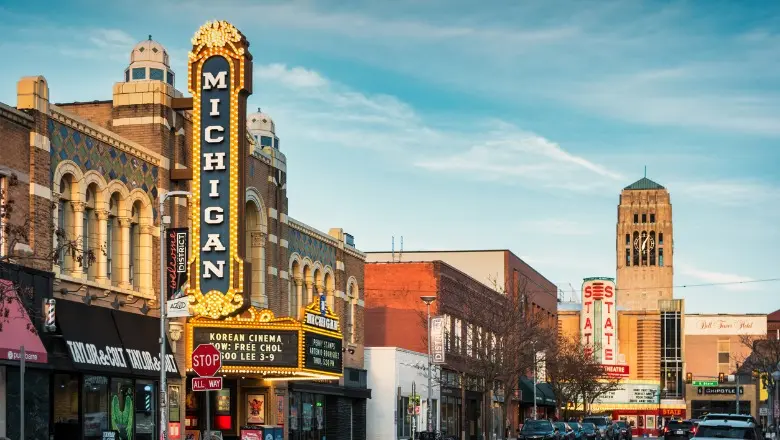
          A vibrant street view of the Michigan Theater marquee and other shops in downtown Ann Arbor.

          On this page:

            (Last Updated – September 3,2025)

            Michigan is known for its lakeside coastlines and for being the heart of America’s automotive legacy. Its lush forests and majestic lakes are a favorite among outdoor recreation enthusiasts, while affordable housing and urban revitalization efforts in major metropolitan cities, like Detroit, attract new residents.

            The state’s natural beauty and economic promise, however, are balanced against extreme winter weather and an unstable job market outside the biggest metros. If you’re thinking about relocating to the Great Lakes State, here’s what to know about the cost of living in Michigan.

            What’s the Average Cost of Living in Michigan?

            Average Cost of Living in Michigan: $52,210 per year

            Michigan is in the top 10 of states with the lowest cost of living, according to the Missouri Economic Research and Information Center (MERIC). The national index is fixed at 100, so the lower the index number, the lower the state’s cost of living (and vice versa).

            Michigan ranked eighth, with a cost of living index of 89.8.

            The average annual cost of living here is $52,210 per person, according to the U.S. Bureau of Economic Analysis Cost of Living Index. That translates to average monthly expenses of $4,350 per person.

            Here’s what that looks like when broken down by spending categories.

            Category

            Average Annual Per-Capita Cost in Michigan

            Housing and Utilities

            $8,810

            Health Care

            $8,381

            Food and Beverages (nonrestaurant)

            $4,172

            Gas and Energy Goods

            $1,449

            All Other Personal Expenditures

            $29,398

            Source: The Bureau of Economic Analysis, Personal Consumption Expenditures by State

            Housing Costs in Michigan

            Median Housing Costs in Michigan: $837 to $1,521 per month

            As of July 1, 2024, there were approximately 4.6 million housing units in Michigan, according to the U.S. Census Bureau. August 2025 Zillow data revealed that the average home value in Michigan is $262,505. This is lower than the average U.S. home value of $368,581 — good news for first-time homebuyers on a budget.

            Below is generally what you can expect to pay for housing, based on the latest Census data:

            •  Median monthly mortgage home loan cost: $1,521

            •  Median studio rent: $837

            •  Median one-bedroom rent: $900

            •  Median two-bedroom rent: $1,148

            •  Median three-bedroom rent: $1,270

            •  Median four-bedroom rent: $1,386

            •  Median five-bedroom or more rent: $1,405

            •  Median gross rent: $1,101

            The city you settle into greatly impacts housing costs. Here’s a snapshot of average home values across various Michigan cities, per Zillow.

            Of course, Michigan home prices can vary substantially depending on where you are in the state. Here are the typical home prices in 10 major Michigan cities, according to Zillow, in August 2025.

            Michigan Area

            Average Home Value

            Detroit

            $80,676

            Lake Ann

            $399,204

            Traverse City

            $439,588

            Cedar

            $515,880

            Glen Arbor

            $594,309

            Empire

            $632,605

            Suttons Bay

            $648,864

            Lake Leelanau

            $860,962

            Leland

            $1,115,111

            Maple City

            $605,440

            If you’re interested in buying a home in Michigan, finding down payment assistance programs can help.

            Recommended: Jumbo Loans

            Utility Costs in Michigan

            Average Utility Costs in Michigan: $330.62 per month

            In addition to housing expenses, you’ll want to budget for other costs, like utility services. Here’s how much it costs to keep the lights on in the average Michigan household.

            Utility

            Average Michigan Bill

            Electricity

            $113.62

            Natural Gas

            $74

            Cable & Internet

            $116

            Water

            $27

            Sources: U.S. Energy Information Administration, Electric Sales, Revenue, and Average Price, 2023; Statista.com, “Average monthly residential utility costs in the United States in 2023, by state; DoxoInsights, U.S. Cable & Internet Market Size and Household Spending Report 2023; and Rentcafe.com, What Is the Average Water Bill?

            Groceries & Food

            Average Food & Beverage Costs in Michigan: $348 per month

            According to the Bureau of Economic Analysis, the average monthly food and beverage cost for Michiganders is $348. For a family of four, grocery and food expenses climb to $1,392 per month.

            Some metropolitan regions in the state have a grocery item index below the national average of 100. One exception is Detroit-Dearborn-Livonia metro, which has an index of 101 — slightly higher than the national average.

            Michigan Metro

            Grocery Items Index

            Niles

            96.7

            Kalamazoo-Portage

            96.8

            Flint

            98.3

            Grand Rapids-Kentwood

            98.4

            Detroit-Dearborn-Livonia

            101.0

            Source: The Council for Community and Economic Research – Cost of Living Index, 2024 average

            Transportation

            Average Transportation Costs in Michigan: $10,166 to $18,917 per year

            Generally, Michigan residents rely on personal vehicles as their primary transportation. Residents in large cities, like Detroit and Ann Arbor, have access to public city buses, Amtrak rail, and downtown-specific services, like the QLINE streetcar, which can help reduce transportation expenses.

            Family Makeup

            Average Annual Transportation Cost

            One adult, no children

            $10,166

            Two working adults, no children

            $11,765

            Two working adults, three children

            $18,917

            Source: MIT’s Living Wage Calculator, 2025

            Health Care in Michigan

            Average Health Care Costs in Michigan: $8,381 per person, per year

            The Bureau of Economic Analysis’ Personal Consumption Expenditures report found that the average health care costs in Michigan was $8,381 per person, annually.

            Health expenses are highly variable, though. Your actual expense will depend on your age, current medical needs and treatments, and level of health insurance coverage, among other factors.

            Child Care

            Average Child Care Costs in Michigan: $878 to $1,135 per child, per month

            Child care is generally a significant monthly expense for parents, and it’s no different for families in Michigan. The average monthly cost of child care in the state for just one child rivals the cost of one month’s rent for a two-bedroom unit.

            Below are average child care costs, based on the type of care needed.

            Type of Child Care

            Average Cost Per Month, Per Child

            Infant Classroom

            $1,135

            Toddler Classroom

            $974

            Preschooler Classroom

            $878

            Home-Based Family Child Care

            $1,098

            Source: CostofChildCare.org

            Taxes

            Marginal Tax Rate in Michigan: 4.25%

            Individual Michigan residents pay a flat marginal state income tax rate of 4.25%, according to the Tax Foundation’s 2025 State Individual Income Tax Rates and Brackets report. Consumers in the state also face a 6% sales tax on goods and services.

            Let’s take a look at how Michigan stacks up against a couple of neighboring states.

            Michigan

            Wisconsin

            Indiana

            Income tax

            4.25% flat

            7.65%

            3%

            Property tax rate

            1.15%

            1.25%

            0.77%

            Sales tax

            6.0%

            5.0%

            7.0%

            Corporate tax

            6.0%

            7.9%

            4.9%

            Miscellaneous Costs

            After budgeting for essential monthly expenses, Michigan residents can use their remaining discretionary income toward the state’s entertainment and iconic food options. Here are some to consider:

            •  The Henry Ford Museum: $38 for regular price general admission

            •  Ferry ticket: $38 round trip

            •  Pictured Rocks National Lakeshore: Up to $25 for a standard pass

            •  Coney dog: $2.60

            If your budget feels tight each month, reducing your miscellaneous costs is the first step to maintaining a manageable lifestyle in Michigan.

            How Much Money Do You Need to Live Comfortably in Michigan?

            What constitutes a “comfortable lifestyle” is subjective and differs from person to person. Factors like the number of people in your household and your personal priorities also influence how much you’ll need to live your preferred lifestyle. And remember, the cost of living in the U.S. varies depending on your exact location.

            One way to gauge whether Michigan is a financially comfortable place to live is by evaluating its affordability. U.S. News and World Report’s Affordability Ranking placed Michigan at 23rd on the list of most affordable states — solidly in the middle. Additionally, MERIC’s cost of living index put Michigan below the national average for cost of living.

            Recommended: Best Affordable Places in the U.S.

            What City Has the Lowest Cost of Living in Michigan?

            According to the Council for Community and Economic Research, Benton Harbor and Kalamazoo are two Michigan cities that offer affordable living.

            Benton Harbor, Michigan

            Benton Harbor, located southwest of Grand Rapids and near St. Joseph, offers lakefront living and a vibrant Arts District and culture. Its low cost of living, at 63.7, makes it an exceptionally affordable city to call home.

            Kalamazoo, Michigan

            Kalamazoo attracts students to the city, thanks to the multiple colleges and universities within its borders. Though it’s located between Detroit and Chicago, there’s plenty to do and see right here in town, including festivals, museums, and more. The city’s various amenities, coupled with housing costs that are about 40% cheaper than the national average, makes it an appealing place to live for young professionals and families.

            Helpful Resources for Future Michigan Residents


            The Takeaway

            Michigan offers a lot of promise. Nature, hiking, and lakeside activities are all within reach, as is being immersed in a bustling city life, depending on where in the state you decide to live. What’s more, the cost of living is lower than the national average — and one of the lowest in the region.

            Looking for an affordable option for a home mortgage loan? SoFi can help: We offer low down payments (as little as 3% - 5%*) with our competitive and flexible home mortgage loans. Plus, applying is extra convenient: It's online, with access to one-on-one help.

            SoFi Mortgages: simple, smart, and so affordable.


            View your rate

            FAQ

            Is Michigan a high cost of living state?

            No, Michigan’s cost of living index is the eighth lowest in the nation, according to the Missouri Economic Research and Information Center (MERIC).

            What is the average cost of housing in Michigan?

            The median housing cost ranges from $837 to $1,521 per month. The amount you pay depends on whether you’re paying a mortgage or renting, in addition to the number of bedrooms.

            What is considered a good salary in Michigan?

            According to MIT’s Living Wage Calculation, a living wage in the state for an adult with no children is $20.97 per hour. For a household in Michigan with two working adults and three children, a living wage would be $29.46 per hour.


            Photo credit: iStock/benedek

            SoFi Loan Products
            SoFi loans are originated by SoFi Bank, N.A., NMLS #696891 (Member FDIC). For additional product-specific legal and licensing information, see SoFi.com/legal. Equal Housing Lender.


            SoFi Mortgages
            Terms, conditions, and state restrictions apply. Not all products are available in all states. See SoFi.com/eligibility-criteria for more information.


            *SoFi requires Private Mortgage Insurance (PMI) for conforming home loans with a loan-to-value (LTV) ratio greater than 80%. As little as 3% down payments are for qualifying first-time homebuyers only. 5% minimum applies to other borrowers. Other loan types may require different fees or insurance (e.g., VA funding fee, FHA Mortgage Insurance Premiums, etc.). Loan requirements may vary depending on your down payment amount, and minimum down payment varies by loan type.


            Financial Tips & Strategies: The tips provided on this website are of a general nature and do not take into account your specific objectives, financial situation, and needs. You should always consider their appropriateness given your own circumstances.


            Third-Party Brand Mentions: No brands, products, or companies mentioned are affiliated with SoFi, nor do they endorse or sponsor this article. Third-party trademarks referenced herein are property of their respective owners.


            External Websites: The information and analysis provided through hyperlinks to third-party websites, while believed to be accurate, cannot be guaranteed by SoFi. Links are provided for informational purposes and should not be viewed as an endorsement.


            Tax Information: This article provides general background information only and is not intended to serve as legal or tax advice or as a substitute for legal counsel. You should consult your own attorney and/or tax advisor if you have a question requiring legal or tax advice.

            SOHL-Q225-155

            Read more
            TLS 1.2 Encrypted
            Equal Housing Lender