SoFi Blog

Tips and news—
for your financial moves.

Top 5 Tips for Refinancing Student Loans in 2019

Top 5 Tips for Refinancing
Student Loans in 2019

It’s a new year—and the perfect time to take a fresh look at your student loans. With recent changes in the financial landscape, now is a great time to consider a change if you are one of the 40MM+ individuals with student debt. Refinancing and consolidating student loans can be a financial game changer: You can pay your debt in a single monthly payment and potentially lower your rates—meaning less interest and more peace of mind.

Here are our top five tips to help you navigate and understand student loan refinancing.

1

Know Your Loans

Make sure to take inventory of the current loans you have. Which lenders are they with? Are they private or federal loans? What’s the balance owed and the interest rate for each loan? It’s important to know where you are today to better evaluate your best options for student loan refinancing. For example, the Federal Direct Loan consolidation program won’t let you combine your private and federal student loans to a single payment or interest rate. You should also understand what deferment and forgiveness benefits are, and if they’re applicable to your loan and circumstances. Check out these helpful tips on consolidating federal and private student loans.

2

Do the Math

In order to better understand how much you’ll benefit from refinancing, it’s best to know your numbers: Specifically, the overall balance owed and average interest rates across both your federal and private loans. Once you have that info, you can use an online Student Loan Calculator to see how refinancing will impact your current situation and the monthly and lifetime savings you can expect (if applicable).

3

Understand Fixed vs. Variable Rates

This is important, as most lenders will offer both fixed and variable interest rate options when refinancing student loans. Which one should you choose?It depends: Do you want your rate to stay constant long-term or start out low and adjust incrementally? Head over to our fixed vs. variable rates page for a helpful overview of fixed and variable rates to see what best suits your needs.

4

Choose a Lender

When it comes to choosing a lender for student loan refinancing, you’ve got options. There are many helpful articles and online resources to find the right lender for you, but ultimately you’ll want to find a refinancing partner that offers a competitive rate. Additional benefits can also be helpful—like payment deferral (in case of job loss), career coaching, or discounts on other financial products that can save you money. Here are a few sites that may be helpful in finding the best match for your student loan refinancing: Student Loan Hero, Magnify Money, and
Lendedu
.

5

Lock In Your Rate

The sooner you refinance your student loans, the quicker you can start meeting your financial goals with a simpler monthly bill or a lower interest rate. So don’t wait—make 2019 the year for action. Check your rate in 2 minutes.

Student Loan Calculator

Learn how you could lower your monthly payments and save on total interest when you refinance student loans with SoFi.

Calculate Savings

You Might Also Like

The SoFi Guide to Student Loan Refinancing Thumbnail

The SoFi Guide to Student Loan Refinancing

Want to save money on your student loan debt? Looking to lower your interest rates? Our guide has the answers you’re looking for. More

Student Loan Smarts

Student Loan Consolidation: When to Combine Federal and Private Loans Through Refinancing

One of the biggest student loan myths out there is that borrowers can’t consolidate federal and private student loans…
More

Student Loan Smarts

Student Loan Smarts: How Student Loans Affect Your Credit Score

Are you currently paying down a substantial student loan balance? If so, you’re not alone. A recent…
More


View Our Blog


Read more

Refinance Student Loan – What to Do When Student Loan Variable Rates Rise

What to Do When

Student Loan Variable Rates Rise

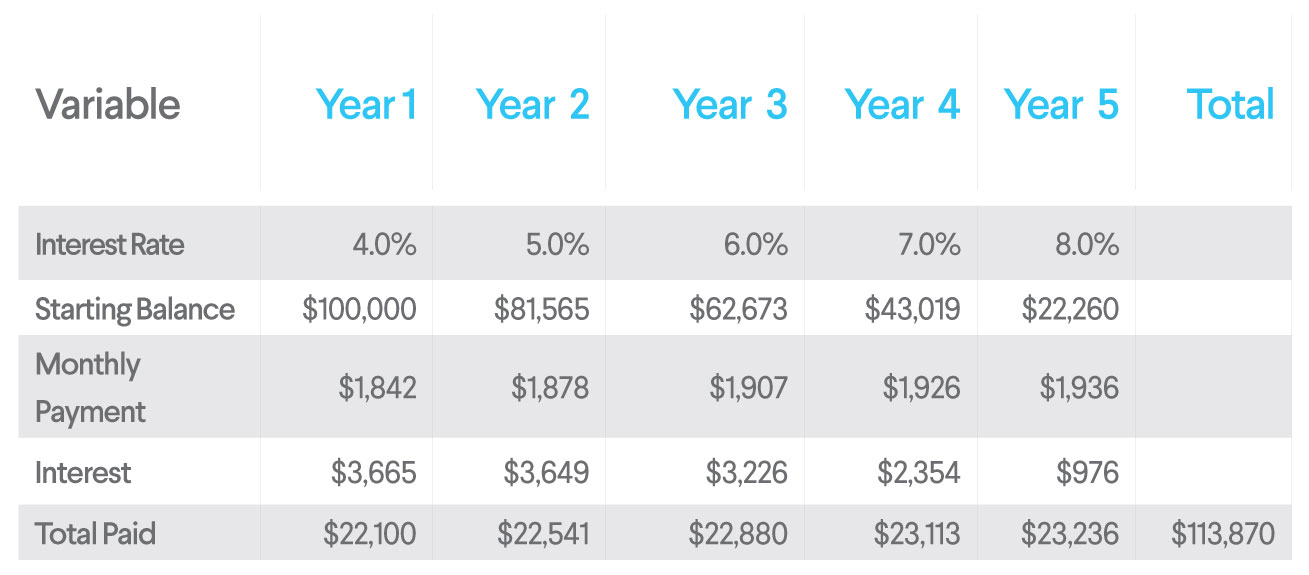
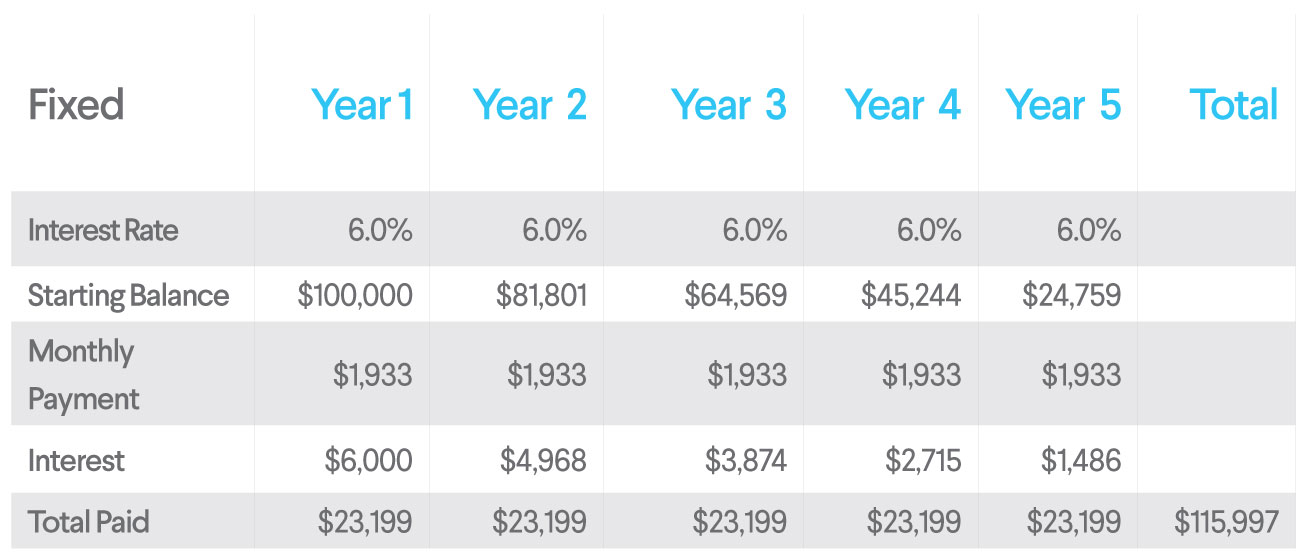
So you have a variable rate loan. What to do if you receive a notice that interest rates have risen? First things first: Don’t panic. About a quarter of all SoFi borrowers choose variable rate loans for their student loan refinance, so you’re definitely not alone.Typically, variable rate loans start with interest rates that are 1% to 2% lower than comparable fixed rate loans. For example, you could be offered a fixed rate quote of 6% or a variable rate quote of 4%. SoFi’s variable rates are tied to the 30 day average SOFR index, a common global index that reflects short-term interest rates and can change monthly. The 30 day average SOFR index rose in very small increments several times in 2016, increasing overall by 0.33% (from 0.43% to 0.76%). If you have a SoFi variable rate loan, this means your interest rate also would have increased by 0.33% over the whole year. On a $100,000 loan, that’s only about a $15 difference in monthly payments.

It can feel frustrating seeing your variable interest rate rise with SOFR. But even if interest rates rise, variable rates often still save money over the longer term. Consider this example:
variable rates comparison table

variable rates comparison table

Note that in the example, the loan is larger earlier in the term before the borrower has paid much of it off. In a rising rate environment, that is also when the interest rate is lowest. By the time the interest rate has risen, the total loan balance is much smaller. That means that even though the variable rate increased from 4% to 8% over the life of the loan, you’d still end up paying less in interest than you would if you had selected the 6% fixed rate from the beginning.

For context, in the last 20 years, interest rates have never increased more than five percentage points in a five-year period.

variable rates

Many variable rate loans have a cap to protect borrowers so that no matter what happens to the 30 day average SOFR index, borrowers will never pay more than that cap. SoFi’s variable rate loans for student loan refinancing are capped at a maximum of 8.95% or 9.95%—depending on the loan term.

So, what can you do?

For most borrowers, the best course might be to do nothing. There’s no universal right or wrong answer for whether a fixed or variable rate is better. Your decision all depends upon your personal situation and flexibility.

You might prefer to keep your variable rate if you want to take advantage of the maximum possible savings (i.e., the lowest possible interest rate to start) but have the financial flexibility to make higher monthly payments if interest rates rise. You might also prefer a variable rate if you plan to pay off your loan in a short timeframe, such as seven years or less.

Alternatively, if you like the consistency of knowing exactly what your monthly payments will be over time, you can consider refinancing your variable rate loan into a new fixed rate loan. Also, if you plan to pay your loan back over a longer period of time (say 10 or 20 years), you might prefer to eliminate the risk of interest rate changes with a new fixed rate loan.

With SoFi, you’re always able to apply to refinance your loan again at no additional cost. There are no prepayment penalties for repaying your existing loan early, and there are no origination fees for taking out a new loan.

Ultimately the decision on the loan term, amount, and loan type depend on your personal situation.

Still have more questions? Click here to learn more about fixed and variable rates, or call our Customer Support team at 855-456-7634 (SOFI).
 

You Might Also Like

variable_graph

Fixed vs. Variable Rate Loans

What’s the difference between fixed rate loans and variable rate loans and which options is better? Here’s a resource to help you understand and choose between fixed and variable rate loans. More

fixed_vs_variable

How to Choose Between Variable and Fixed Rate Student Loans

Got student loans? We’ve got you covered with our Student Loan Smarts blog series. Our expert tips and hacks… More

variable rate student loan

Evaluating a Variable Rate Student Loan

There are a lot of factors to take into account when choosing a student loan—differing interest rates, private vs. public, the pros and cons of working with various lenders. More


View More Articles

Questions? Call us 7 days a week at 855-456-7634

Contact Us

Read more
16 money and career podcasts we love

Our 16 Favorite Podcasts for Your Career and Money

For people focused on their careers, finances, and relationships, podcasts are the self-help books of the 21st century. They’re typically pretty short (most under an hour) and easily accessible, allowing listeners to take in episodes while driving, working out, or whipping up something for dinner.

Because we know how important career success, wealth, and personal connections are to our members, we’ve handpicked 16 podcasts that offer everything from advice on achieving business success to finance tips to lessons on how to enrich your life.

Read more
How far will your money go in different cities

Here’s How Far Your Money Will Go in 7 U.S. Cities Millennials Are Moving To The Most

While relocating for a stellar career opportunity can give you great footingand a sweeter paycheck—there’s much to consider before packing. You’ll want to feel confident that you’re uprooting to not only grow your career, but also to thrive personally.

As you factor in all that could make your nights and weekends more enjoyable, be it the number craft breweries or rock climbing walls in your potential new ‘hood, you’ll also want to look at the life/work metrics and: cost of living; safe, affordable neighborhoods; and job growth rates. After all, you’ll want to live comfortably and continue to save and invest in your future.

Read more
TLS 1.2 Encrypted
Equal Housing Lender