Arizona Retirement Guide 2026
(Last Updated – 9/10/2026)
Arizona has long captivated retirees with its stark beauty and promise of endless sunshine. From the saguaro-filled deserts of Tucson to the blue waters of Lake Mead, the Grand Canyon State offers an outdoor lifestyle that few other destinations can match.
Arizona remains a cheaper alternative to California, but surging housing prices and summer temperatures that demand serious budgeting for air conditioning mean your retirement requires a sharper financial strategy than it did a decade ago. It’s no longer just about picking a golf course. It’s about adjusting to new price tags.
Key Points
- Tax friendly-ish: Arizona doesn’t tax Social Security, and its flat income tax rate is low, but other retirement income is generally taxed.
- Cost of living is up: The secret is out. Housing and living costs have risen, pushing the state’s affordability index above the national average.
- Climate reality: You get mild winters, but you pay for them with intense summer heat that drives up utility bills.
- Health care is a draw: The state boasts top-tier medical facilities, particularly in the Phoenix and Scottsdale areas.
- Lifestyle diversity: Options range from luxury resorts in Scottsdale to active adult communities in the West Valley and cooler mountain towns, such as Prescott.
Cost of Living in Arizona
Arizona is no longer a cheaper area of the Southwest. While it remains more affordable than coastal California, costs have crept up significantly.[1]
The state’s cost of living index sits at roughly 107.6, meaning it is now around 7.60% more expensive than the U.S. average. Housing is the primary driver, with an index of 119.0, but prices vary by region.[2]
| Cost of Living | Arizona Approximate Value* | U.S. Average (100 = U.S.) |
|---|---|---|
| Cost of Living Index | 107.6 (i.e., 7.60% above U.S. average) | 100 |
| Typical Home Price | ~$433,000[3] | ~$377,000[4] |
Sources: The Council for Community & Economic Research (C2ER) annual Cost of Living Index, Q1 2026, via Missouri Economic Research and Information Center, compares regional expenditures across households in the upper quintile of income; Redfin Housing Market Data, January 2026.
Housing Costs (Buying vs Renting)
The housing market has stabilized after a frantic post-pandemic surge, but prices remain elevated. The median home price in the Phoenix metro area is around $455,000.[5] Rent for a one-bedroom apartment in a decent area is typically $900-$1,200, but deals can be found in outlying suburbs.[6]
Utilities and Everyday Expenses
Here is the desert tax: Electricity. While your winter gas bill might be negligible, summer cooling costs can be shocking. The average summer electric bill can reach $200-$250/month, with homeowners in Phoenix sometimes paying $400-$450. Groceries and transportation costs generally track slightly above national averages due to the sprawling nature of the cities.
What This Means for Retirees
Budget heavily for summer utilities. When buying a home, check the age of the A/C unit and the quality of the insulation. This could protect your finances and improve your comfort.
What Is a Good Retirement Income in Arizona?
You get more for your money in Arizona than in California, but you need a solid cushion to handle the summer spikes and housing costs.
Income Benchmarks
| Lifestyle Tier | Estimated Annual Income | Description |
|---|---|---|
| Lean | $50,000 – $65,000 | Renting a small apartment or owning a mobile home in an affordable 55+ park (e.g., Mesa, Apache Junction). |
| Moderate | $65,000 – $80,000 | Owning a home in a standard active adult community (Sun City, Green Valley) with budget for golf and dining. |
| Comfortable | $80,000+ | Luxury living in Scottsdale or a newer build in the West Valley, with funds for summer travel to escape the heat. |
Sources: Household estimates based on studies from GoBankingRates (2025-2026), World Population Review (2025).[7]
Real-World Scenarios
- Scenario A (Lean): You own a manufactured home in Mesa (lot rent included). Social Security ($24k) plus a pension ($36k) gives you $60,000/year. You enjoy community activities and the winter weather on a tight budget.
- Scenario B (Moderate): You buy a patio home in Sun City West. Combined income from investments and Social Security is $73,000/year. You play golf weekly and dine out often, but you stay in town during the summer.
- Scenario C (Comfortable): You live in a single-family home in North Scottsdale. You draw $130,000/year from your portfolio. This supports a high-end lifestyle and a second home or long rentals in cooler climates during July and August.
What This Means for Retirees
A “snowbird” lifestyle (living in Arizona only in winter) effectively doubles your housing costs. If you stay year-round, your income goes further, but you must manage the summer heat.
Taxes and Retirement in Arizona
Arizona is moderately tax-friendly. It’s not a zero-income-tax state like Florida or Nevada, but it keeps rates reasonable.
The Good News: Social Security and Flat Tax
Arizona does not tax Social Security benefits. For other income (wages, 401(k) withdrawals, pensions), the state has moved to a 2.50% flat income tax rate. This simplifies things and keeps the bite relatively small compared to progressive tax states.
The Details: Pensions and 401(k)
While Social Security is safe, most other retirement income, including IRA and 401(k) withdrawals, is taxed at that 2.50% rate. There is a deduction of up to $2,500 for certain military and government pensions, but private pensions are fully taxable.
Property and Sales Tax
Property taxes are a bright spot: rates are relatively low (0.48% on owner-occupied housing), which helps offset higher home prices. However, sales tax can be high. The state rate is 5.60%, but local sales tax rates bring the combined average to 8.52%.
Estate/Inheritance Tax
Good news here: Arizona does not impose estate tax or inheritance tax.
What This Means for Retirees
You will pay some state income tax on your investments, but the low flat rate and lack of estate tax make it a very efficient place to preserve wealth.
Health Care Access and Quality
Arizona is a medical hub for the Southwest, attracting retirees with high-quality care.[10][11][12]
- Access: Excellent in metro areas. Phoenix and Tucson are packed with specialists, clinics, and hospitals.
- Options: The Mayo Clinic has major campuses in Scottsdale and Phoenix that provide world-class care.
- Quality: The state ranks third in the U.S. for health care quality and 13th for senior health care, but its overall rankings may suffer due to poorer access in rural areas.[13][14]
What This Means for Retirees
Living near Loop 101 in Phoenix/Scottsdale or central Tucson puts you minutes away from some of the best health care in the country.
Lifestyle and Things to Do in Retirement
It’s an outdoor lover’s playground with more than 30 million acres of federal public lands and numerous national parks.[15]
- Outdoor Recreation: Hiking, biking, and golfing in Arizona are world-class. You have over 300 days of sunshine to enjoy them.
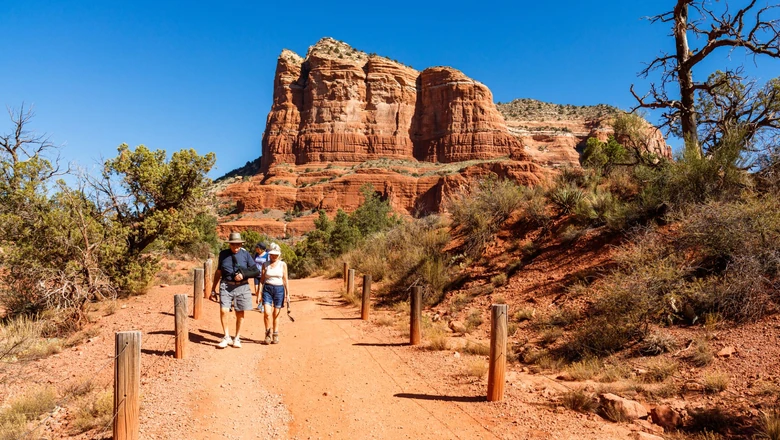
- Scenic Beauty: Arizona isn’t just desert. It’s home to the Coconino National Forest, Red Rock State Park, and the Grand Canyon.
- Summer Strategy: Life shifts indoors or to the pool from June to September. People tend to plan outdoor activities around the coolest parts of the day.
You might need to decide if you are a “morning person” who can beat the heat, or if you plan to leave Arizona when the mercury hits 110°F.
Best Places to Retire in Arizona
From luxury oases to budget-friendly communities, there is a spot for everyone.
Most Popular/Active Adult
- Sun City/Sun City West (Maricopa County): The original active adult communities. Unmatched amenities, affordable housing, and golf carts.
- Green Valley (Pima County): South of Tucson. Laid back, very affordable, and surrounded by stunning mountain views.
- Villages at Lynx Creek (Yavapai County): A popular option in the Prescott Valley, which offers four mild seasons.
Most Affordable Cities
- Tucson (Pima County): Generally cheaper than Phoenix. Offers a unique blend of culture, history, and modern energy as well as great food (it is a UNESCO City of Gastronomy).
- Casa Grande (Pinal County): Situated between Phoenix and Tucson. Growing rapidly, affordable, but fewer high-end amenities.
- Bullhead City (Mohave County): On the Colorado River. Very affordable, sunny, and close to the casinos of Laughlin, NV.
Cities With Strong Health Care Access
- Scottsdale (Maricopa County): Home to Mayo Clinic and HonorHealth. The gold standard for medical access (and cost).
- Phoenix (Central/Downtown): Proximity to Banner – University Medical Center and St. Joseph’s Hospital and Medical Center.
- Tucson (Foothills): A short drive from Tucson Medical Center, Banner – University Medical Center, and Northwest Medical Center.
Pros and Cons of Retiring in Arizona
Pros
- Social Security is tax-exempt and income tax is a low flat rate.
- Mild and sunny winter weather in Phoenix and Tucson.
- World-class health care facilities (Mayo Clinic).
- Stunning, diverse landscapes for outdoor adventures.
Cons
- Extreme summer heat (110°F+ for weeks) leads to high electric bills.
- Rising housing costs have eroded the “budget” appeal.
- Water scarcity concerns in the long term.
- Intense sun can damage skin health.
Is Arizona a Good Fit for Your Retirement?
Use this checklist to see if the Grand Canyon State matches your goals for your golden years.
How Arizona Compares to Other Destinations
Arizona offers a distinct “Western” vibe compared to its rivals.
- Versus Florida: Arizona generally has dry heat, which typically means no hurricanes, and mountains, but taxes retirement income (2.50%). Florida has beaches and zero income tax but suffers from humidity and high insurance costs.
- Versus Nevada: Nevada has zero income tax, but Arizona generally offers better health care infrastructure and more diverse outdoor scenery beyond the casino cities.
For retirees who want an active, outdoor lifestyle and top-tier medical care without the humidity of the South, Arizona remains a top contender—if you can handle the summer spike.
Tips for Retiring in Arizona
Ready to head west? Here is how to land smoothly.
- Test the summer: It might be a good idea to visit in July before you buy. Finding out whether 115°F is a dealbreaker will inform your decision.
- Audit the A/C: When buying a home, the age and efficiency of the air conditioner is the single most important inspection item.
- Hydrate and moisturize: The low humidity is healthy but requires an adjustment. Drink more water than you think you need.
- Check water assuredness: In some outlying areas, water supply relies on hauled water or wells. Verifying the water situation for any property can help you avoid surprises later.
- Look for solar: Choosing a home with owned (not leased) solar panels could save you over $1,000 in electric bills annually.
The Takeaway
Arizona is no longer the cheaper alternative it once was, but it remains a premier retirement destination for lifestyle and health.
For those who prioritize an active, sun-drenched life and access to world-class medical care, the costs are often worth it. The key is to budget realistically for the “summer tax” on utilities and to choose a community that fits your health care pace.
Arizona is still a top-tier choice, but the math has changed. Run the numbers on summer cooling costs and be realistic about housing. If those fit your budget, the lifestyle is hard to beat.
Ready to invest for your retirement? It’s easy to get started when you open an IRA online with SoFi. SoFi doesn’t charge commissions, but other fees apply (full fee disclosure here).
Easily manage your retirement savings with a SoFi IRA.
FAQ
Is it true that Arizona doesn’t tax Social Security?
Yes. Arizona does not tax Social Security benefits at the state level. However, most other forms of retirement income (including 401(k) and IRA withdrawals) are taxed at a flat rate of 2.50%.
How bad are the summer electric bills really?
They can be steep. Expect to pay between $200 and $400 per month during the peak summer months (June-September), depending on the size of your home and the age of your A/C unit. “Budget billing” could help you make predictable payments and smooth these costs out over the year.
Do I need to worry about water shortages?
It depends on where you live. Major metro areas such as Phoenix and Tucson have robust “100-year water supply” mandates and diversified sources. However, if you are looking at property in outlying rural areas or relying on a private well, it is a good idea to verify the water security before buying.
Is Arizona good for “snowbirds”?
Absolutely. The state is built for part-time residents, with many communities offering three-six-month rentals. Just be aware that peak season (December-March) can be more expensive.
What is the “monsoon season”?
This is Arizona’s summer rainy season, typically running from mid-June to September. It brings dramatic thunderstorms, dust storms (haboobs), and a temporary spike in humidity. Storms can break the heat, but residents should be prepared in case of flash floods.
Article Sources
- Arizona State University: Arizona’s growing housing crisis the topic of newly released report.
- Missouri Economic Research and Information Center.
- Redfin Arizona Housing Market Data, January 2026.
- Redfin: United States Housing Market.
- Redfin Phoenix, AZ Housing Market.
- Zillow Phoenix, AZ rental market.
- GoBankingRates: The Minimum Savings You Need to Retire in Every State (2026);
GoBankingRates: How Much a Comfortable Retirement Will Cost You in Each State in 2025;
World Population Review: 2026 Average Retirement Income by State (2025 data). - Tax Foundation: Taxes in Arizona.
- Kiplinger: Retirement Taxes: How All 50 States Tax Retirees.
- Mayo Clinic in Arizona — Mayo Clinic.
- Health Care Quality — U.S. News.
- Health Care Access — U.S. News.
- The Commonwealth Fund: State Health Data Center.
- Senior Living: Senior Healthcare State Report Cards.
- Arizona Office of Tourism: Outdoor Adventures.
Photo credit: iStock/RAUL RODRIGUEZ
This content is for educational and informational purposes only. The products, services, or features discussed may not currently be available via the SoFi platform. Any references to third-party products, services, or companies do not constitute an endorsement, recommendation, or solicitation by SoFi. Readers should independently evaluate their options and consider their individual financial needs and circumstances before making any decisions. ©2026 SoFi Technologies, Inc. All rights reserved.
Disclaimer: The projections or other information regarding the likelihood of various investment outcomes are hypothetical in nature, do not reflect actual investment results, and are not guarantees of future results.
SOIN-Q126-017