Mar
10
2023

Now that the Secure 2.0 Act of 2022 has become law, what steps should HR professionals be taking? SoFi At Work breaks it down for you.
Read more
The SoFi Product Drop — our regular series where we dive into new features and updates from across our platform designed to improve your experience. SoFi is constantly working to make every product work harder for you and work better together.
Check out what’s new for you from the last month:
SoFi launches no fee options trading¹. It is now simpler than ever to do all your trading in the same app where you manage all of your money. SoFi offers level two options trading, allowing members to buy options calls or puts once approved to trade. A call option gives the holder the right to buy an underlying asset, like a stock, for a specific price, also called the strike price. A put option gives the holder the right to sell an underlying asset at the strike price.
At SoFi, options trading will be fee free, with zero commissions or contract fees. We’ve worked hard to simplify your experience to make trading options a seamless experience, whether via our app or on our website, and provide investors all the educational tools they need to invest and achieve their financial goals. Learn more about options trading with SoFi here.
SoFi Plus is now available to all eligible members. SoFi Plus is our first-ever premium membership product, intended to ensure members get the most out of their money at every turn. SoFi Plus provides you the best value for using all of SoFi’s products and services together, giving you confidence that you can turn to SoFi for all of your financial needs.
SoFi Plus perks include double SoFi rewards points on qualifying activities² and preferred access to IPOs³, as well as welcome offers like 3% cash back on eligible SoFi Credit Card purchases⁴.
More benefits for SoFi Plus members:
– 3.50% APY on all savings balances⁵, 14x the national average savings account rate⁶
– 2.50% APY on checking balances, 62x the national average⁷
– No-fee overdraft coverage⁸
– Up to 2-day early paycheck⁹
– Discounted personal loan rates¹⁰
See more about how you can unlock SoFi Plus here.
Expanded insurance coverage for our members to include cyber insurance. In addition to offering members auto, life, home and renters insurance, SoFi has partnered with Blink℠ by Chubb® to offer cyber insurance to membersⁱ¹.
Cyber insurance can help stop hackers from picking your digital pockets – including protection from fraud, identity theft, phishing scams and more. It’s easy to get a quote online here.
SoFi Checking & Savings’ APY increased to 3.5% on savings balances for direct deposit members. With holiday shopping in full swing, we’re thrilled to increase the APY (Annual Percentage Yield) on your SoFi savings accounts from 3.25% to 3.50% for direct deposit members, 14x the national savings account average⁶. Members will continue to earn 2.50% on their checking balances. For members without direct deposit, the APY is 1.20%, 30x the national checking average¹².
If you don’t have a direct deposit setup already, sign up here. And if you aren’t already getting better banking with SoFi, open an account here.
Disclosures
1.
| INVESTMENTS ARE NOT FDIC INSURED – ARE NOT BANK GUARANTEED – MAY LOSE VALUE |
Brokerage and Active investing products offered through SoFi Securities LLC, member FINRA(www.finra.org)/SIPC(www.sipc.org).
Options involve risks, including substantial risk of loss and the possibility an investor may lose the entire amount invested in a short period of time. Before an investor begins trading options they should familiarize themselves with the Characteristics and Risks of Standardized Options [HYPERLINK: https://www.theocc.com/getmedia/a151a9ae-d784-4a15-bdeb-23a029f50b70/riskstoc.pdf. Tax considerations with options transactions are unique, investors should consult with their tax advisor to understand the impact to their taxes.
2. Terms: 2x rewards points on qualifying activity: Monthly grant of Rewards Points under the SoFi Rewards Program (Please review your “How to earn points” page in your app for additional details) during periods in which the Plus Member has enabled Qualifying Direct Deposits. The specific number of rewards points is subject to change at any time and can be found here. SoFi Plus members also can earn double the points as stated on the SoFi Member Rewards “Earn Wall” for qualifying earn triggers (see app for most up-to-date source of truth) with the following exclusions: Credit or Debit card spend paid in rewards points, welcome bonuses paid in rewards points (including any referral bonuses paid in rewards points), points for recurring Direct Deposits, and select incentivized campaigns paid in rewards points where noted.
3. Investing in an Initial Public Offering (IPO) involves substantial risk, including the risk of loss. Further, there are a variety of risk factors to consider when investing in an IPO, including but not limited to, unproven management, significant debt, and lack of operating history. For a comprehensive discussion of these risks please refer to SoFi Securities’ IPO Risk Disclosure Statement. IPOs offered through SoFi Securities are not a recommendation and investors should carefully read the offering prospectus to determine whether an offering is consistent with their investment objectives, risk tolerance, and financial situation.
4. 3% Cash Back on SoFi Credit Card Purchases for 12 months on your SoFi Credit Card: You will need to maintain a qualifying Direct Deposit every month with SoFi Checking and Savings in order to continue to receive this promotional cash back rate. Qualifying Direct Deposits are defined as deposits from enrolled member’s employer, payroll, or benefits provider via ACH deposit. Deposits that are not from an employer (such as check deposits; P2P transfers such as from PayPal or Venmo, etc.; merchant transactions such as from PayPal, Stripe, Square, etc.; and bank ACH transfers not from employers) do not qualify for this promotion. It may take up to 90 days for your qualifying Direct Deposit to be recognized, after which you will begin earning 3% cash back. If you do not see your 3% cash back benefit after 90 days, please contact our help center. A maximum of 36,000 rewards points can be earned from this limited-time offer. After the promotional period ends or once you have earned the maximum points offered by this promotion, your cash back earning rate will revert back to 2%. 36,000 rewards points are worth $360 when redeemed into SoFi Checking and Savings, SoFi Money, SoFi Invest, Crypto, SoFi Personal Loan, SoFi Private Student Loan or Student Loan Refinance and are worth $180 when redeemed as a SoFi Credit Card statement credit.
Promotion Period: The Program will be available from 4/5/22 12:01AM ET to 12/31/23 11:59PM ET. SoFi reserves the right to exclude any Member from participating in the Program for any reason, including suspected fraud, misuse, or if suspicious activities are observed. SoFi also reserves the right to stop or make changes to the Program at any time.
Eligible Participants: All new members who apply and get approved for the SoFi Credit Card, open a SoFi Checking and Savings account, and set up Direct Deposit transactions (“Direct Deposit”) into their SoFi Checking and Savings account during the promotion period are eligible. All existing SoFi Credit Card members who set up Direct Deposit into a SoFi Checking & Savings account during the promotion period are eligible. All existing SoFi members who have already enrolled in Direct Deposit into a SoFi Checking & Savings account prior to the promotion period, and who apply and get approved for a SoFi Credit Card during the promotion period are eligible. Existing SoFi members who already have the SoFi Credit Card and previously set up Direct Deposit through SoFi Money or SoFi Checking & Savings are not eligible for this promotion.
5. SoFi members with direct deposit can earn up to 3.50% annual percentage yield (APY) on savings balances (including Vaults) and 2.50% APY on checking balances. There is no minimum direct deposit amount required to qualify for the 3.50% APY for savings and 2.50% APY for checking balances. Members without direct deposit will earn 1.20% APY on all account balances in checking and savings (including Vaults). Interest rates are variable and subject to change at any time. These rates are current as of 12/16/2022. Additional information can be found at https://www.sofi.com/legal/banking-rate-sheet.
6. 14x based on FDIC monthly savings account rate as of December 16, 2022.
7. 62x based on FDIC monthly interest checking rate as of December 16, 2022.
8. Overdraft Coverage is limited to $50 on debit card purchases only and is available to customers with monthly direct deposits of $1,000 or more. Members with a prior history of non-repayment of negative balances are ineligible for Overdraft Coverage.
9. Early access to direct deposit funds is based on the timing in which we receive notice of impending payment, which is typically up to two days before the scheduled payment date.
10. Terms and conditions apply. SOFI RESERVES THE RIGHT TO MODIFY OR DISCONTINUE PRODUCTS AND BENEFITS AT ANY TIME WITHOUT NOTICE. To qualify, a borrower must be a U.S. citizen or other eligible status, be residing in the U.S., and meet SoFi’s underwriting requirements. SoFi Personal Loans can be used for any lawful personal, family, or household purposes and may not be used for post-secondary education expenses. Minimum loan amount is $5,000. Additional terms and conditions may apply. Lowest rates reserved for the most creditworthy borrowers. The average of SoFi Personal Loans funded in 2021 was around $33K. Information current as of XX/XX/XX. SoFi Personal Loans originated by SoFi Bank, N.A. Member FDIC. NMLS #696891 (www.nmlsconsumeraccess.org). See SoFi.com/legal for state-specific license details.
To qualify for an additional 0.25% APR direct deposit discount you must: (1) set up autopay with a SoFi Checking and Savings or a SoFi Money account within 20 days of the funding of your loan, AND (2) setup payroll direct deposits of at least $1,000/mo to a SoFi Checking and Savings account or a SoFi Money account within 35 days of the funding of your loan. If you do not set up autopay with a SoFi Checking and Savings account or a SoFi Money account within 20 days of the funding of your loan, AND set up payroll direct deposits to a SoFi Checking and Savings account or a SoFi Money account within 35 days of the funding of your loan, you will not be qualified for this additional 0.25% direct deposit rate reduction. Once qualified, you will receive this additional 0.25% direct deposit discount during periods in which you have direct deposits of at least $1,000/mo turned on with your SoFi Checking and Savings account or SoFi Money account. This additional direct deposit discount will be lost during periods in which you have turned off direct deposits for your SoFi Checking and Savings account or SoFi Money account. You are not required to enroll in autopay or direct deposits to receive a loan. The Direct Deposit Rate Reduction excludes members from receiving any other cash incentive related to the SoFi Checking and Savings direct deposit promotional program.
11. Blink℠ by Chubb® is the marketing name used to refer to subsidiaries of Chubb Limited providing insurance and related services described on this website. For a list of these subsidiaries, please visit our website at www.chubb.com. Property and Casualty products are underwritten by Ace American Insurance Company and its U.S. based underwriting affiliates. Accident, Health, Disability and Life insurance products are underwritten by Combined Insurance Company of America (Chicago, IL) in all states except New York. In New York, these products are underwritten by Combined Life Insurance Company of New York (Latham, NY). Combined Insurance Company of America is not licensed and does not solicit business in New York. Coverages contain exclusions and limitations and may not be available in all states. This communication contains product summaries only. Coverage is subject to the language of the policies as actually issued. The following products described on this website are offered through Social Finance, LLC underwritten by Executive Risk Indemnity, Inc.
SoFi does have a compensation agreement with Blink℠ by Chubb®.
Coverage and pricing is subject to eligibility and underwriting criteria. SoFi Agency and its affiliates do not guarantee the services of any insurance company.
12. 30x based on FDIC monthly interest checking rate as of December 16, 2022.
Read more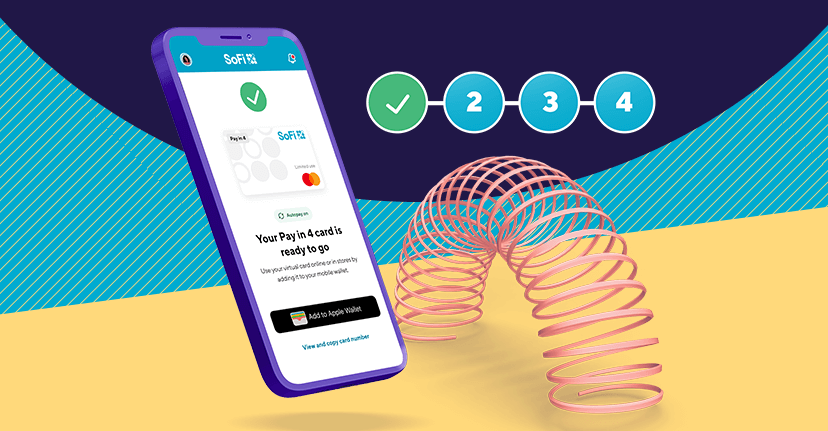
SoFi is rolling out early access to Pay in 4 to select SoFi members over the coming weeks. Pay in 4 is designed to provide SoFi members increased flexibility when it comes to large purchases.
Read more
Drata, an automated compliance company, received $200 million in funding, bringing its total valuation to $2 billion.
Read more
Stay up to date on the latest business news and stock market happenings.
