SoFi Blog

Tips and news—
for your financial moves.

Week Ahead on Wall Street: The Big One

Trade and Jobs

This week marks a critical juncture for financial markets, with two major storylines set to converge: The implementation of broad-ranging tariffs and the Friday jobs report. Investors seem more focused on the former – which President Trump has referred to as “the big one” – but both have the potential to move markets.

On the trade side, tariff announcements are expected to include not just Mexico, Canada, and China (our largest trading partners accounting for over 40% of U.S. imports), but any and every country. That might sound like an exaggeration, yet it can’t be ruled out given comments from the President and administration officials about the possibility of reciprocal and “secondary” tariffs.

Reciprocal tariffs impose identical duties on other nations for any duties placed on U.S. products. Secondary tariffs – a more novel concept recently introduced by the President – entail the U.S. placing a 25% tariff on any country that buys oil from Venezuela, a sanctioned country with the largest proven oil reserves in the world. Pursued to their fullest extent alongside the auto tariffs announced last week, they could significantly impact most countries. How all of this trade policy uncertainty shakes out will have major implications for inflation, business investment, and consumer spending.

Simultaneously, the week’s jobs data comes at a good time considering that recent surveys show consumers are feeling increasingly pessimistic. The latest data from the University of Michigan’s Survey of Consumers shows two thirds of consumers expect unemployment to rise over the next 12 months – the highest reading since February 2009. Will businesses maintain the positive hiring momentum or will the bad vibes weaken the labor market? This week could provide more hints but leave the big question unsolved.

Economic and Earnings Calendar

Monday

•   March Chicago Business Barometer: The barometer provides information on U.S. economic activity and business conditions, consisting of seven activity indicators and three buying policy indicators.

•   March Dallas Fed Manufacturing Activity: This is the Dallas Fed’s survey of manufacturing executives in the region on business conditions and their outlook.

Tuesday

•   February Construction Spending: Construction data is a leading indicator of business activity.

•   February Job Openings: A key measure of business demand for labor is the number of job openings, since reducing openings is easier and preferable to layoffs.

•   March ISM Manufacturing PMI: This index from the Institute for Supply Management tracks how purchasing managers across the manufacturing sector feel about the business environment.

•   March Dallas Fed Non-Manufacturing Activity: This is the Dallas Fed’s survey of services executives in the region on business conditions and their outlook.

•   March Wards Total Vehicle Sales: Cars are a big ticket item for consumers, so underlying vehicle sales trends can help shine a light on demand for durable goods.

Wednesday

•   March ADP Employment Report: This survey, usually released a day or two before the official government jobs report, offers insight into private sector employment trends.

•   February Factory and Durable Goods Orders: These metrics give insight into underlying trends for leading cyclical indicators.

•   Weekly Mortgage Applications: Mortgage activity gives insight on demand conditions in the housing market.

Thursday

•   March Challenger Job Cuts: The firm Challenger, Gray & Christmas tracks the number of layoff announcements each month by sector.

•   February Trade Balance: Trade, made up of exports and imports, is an important driver of economic activity.

•   March S&P Global US PMIs: These indexes track how purchasing managers across different industries feel about the business environment.

•   March ISM Services PMI: This index from the Institute for Supply Management tracks how purchasing managers across different services industries feel about the business environment.

•   Weekly Jobless Claims: This high frequency labor market data gives insight into filings for unemployment benefits. Jobless claims have continued to show a labor market that remains strong despite having cooled.

•   Fedspeak: Fed Vice Chair Philip Jefferson will participate in a moderated discussion titled Central Bank Communication and Textual Analysis Techniques at the Atlanta Fed.

•   Earnings: Conagra Brands (CAG), Lamb Weston (LW)

Friday

•   March Employment Situation Summary: This monthly blockbuster release from the Labor Department gives a comprehensive look at employment, wages, and hours worked in the previous month.

•   Fedspeak: Fed Chair Jerome Powell will speak with Milwaukee Journal Sentinel’s James Nelson and The Washington Post’s Heather Long at the 2025 Society for Advancing Business Editing and Writing conference.


Want to see more stories like this?
On the Money is SoFi’s flagship newsletter
for all things personal finance.

Check it out


Please understand that this information provided is general in nature and shouldn’t be construed as a recommendation or solicitation of any products offered by SoFi’s affiliates and subsidiaries. In addition, this information is by no means meant to provide investment or financial advice, nor is it intended to serve as the basis for any investment decision or recommendation to buy or sell any asset. Keep in mind that investing involves risk, and past performance of an asset never guarantees future results or returns. It’s important for investors to consider their specific financial needs, goals, and risk profile before making an investment decision.

The information and analysis provided through hyperlinks to third party websites, while believed to be accurate, cannot be guaranteed by SoFi. These links are provided for informational purposes and should not be viewed as an endorsement. No brands or products mentioned are affiliated with SoFi, nor do they endorse or sponsor this content.

SoFi isn't recommending and is not affiliated with the brands or companies displayed. Brands displayed neither endorse or sponsor this article. Third party trademarks and service marks referenced are property of their respective owners.

Read more
A New Reason to Check Your Bank Balance

This article appeared in SoFi's On the Money newsletter. Not getting it? Sign up here.

If you thought you could save money simply by checking an app on your phone regularly, would you do it? Heck ya, right? Ok, but what if the app showed your bank balance? Would your answer change?

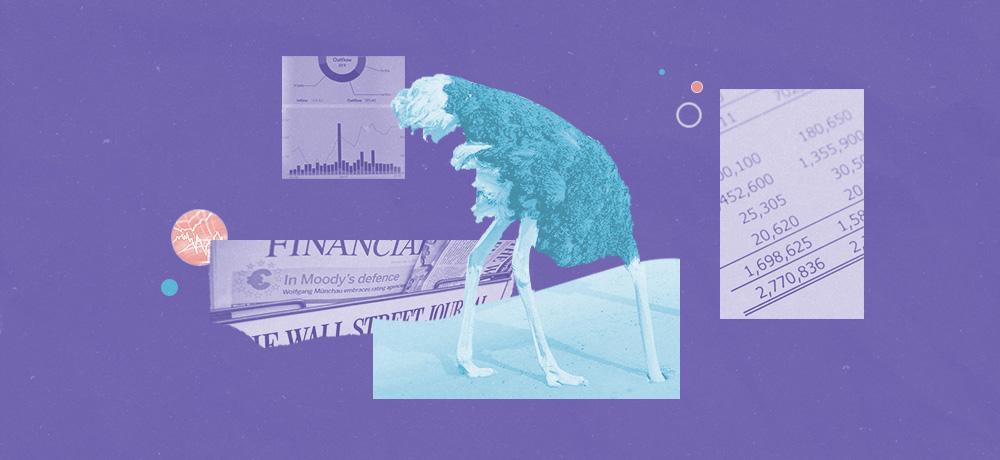
If you’d feel more hesitant, it could be because of the so-called “ostrich effect.” According to behavioral economists, some of us purposely avoid knowing where we stand with our money — just like an ostrich who buries their head in the sand — because of fear we’ll be disappointed by what we see.

But let’s go back to this saving money incentive. According to a group of business school professors, checking your bank account regularly can accomplish more than you might think.

The professors’ study of what’s known as the “payday effect” — the tendency to overspend right after getting your paycheck — shows that people who don’t check their accounts regularly spend significantly more after they get paid, including on impulsive shopping or eating out.

“Regular account monitoring appears to be a powerful tool for avoiding the common trap of overspending after payday,” Ray Charles Howard, one of the professors, wrote last November in a newsletter published by the University of Virginia’s Darden School of Business.

Compared to infrequent checkers, regular account checkers show 60% to 70% less variation in their discretionary spending, the research shows. (They are also more apt to notice things like fraud attempts.)

So what? Avoidance is a common psychological response to many things that make us anxious, including our finances. But using some of today’s most ubiquitous digital tools can push us to be more disciplined. If you just can’t look at a balance you’re worried is low, Howard suggests taking these steps to overcome your fears:

•   Set regular dates and times to check your banking apps.

•   Don’t overdo the checking – constant text notifications can make you anxious.

•   Look for spending patterns and trends rather than focusing on absolute numbers.

•   Use a budgeting app (such as SoFi’s Relay) that brings all your accounts together for a big-picture view.

Related Reading

•   Do You Ignore Your Bank Balance? You May Be ‘Money Avoidant’ (SoFi)

•   Anatomy of the Average American Paycheck (Talker Research)

•   Risks of Buy Now, Pay Later: ‘Ticket to Overspending,’ Expert Says (Fox Business)


Please understand that this information provided is general in nature and shouldn’t be construed as a recommendation or solicitation of any products offered by SoFi’s affiliates and subsidiaries. In addition, this information is by no means meant to provide investment or financial advice, nor is it intended to serve as the basis for any investment decision or recommendation to buy or sell any asset. Keep in mind that investing involves risk, and past performance of an asset never guarantees future results or returns. It’s important for investors to consider their specific financial needs, goals, and risk profile before making an investment decision.

The information and analysis provided through hyperlinks to third party websites, while believed to be accurate, cannot be guaranteed by SoFi. These links are provided for informational purposes and should not be viewed as an endorsement. No brands or products mentioned are affiliated with SoFi, nor do they endorse or sponsor this content.

SoFi isn't recommending and is not affiliated with the brands or companies displayed. Brands displayed neither endorse or sponsor this article. Third party trademarks and service marks referenced are property of their respective owners.

OTM20250331SW

Read more

On The Money Re-engagement Poll


on the money logo

Got it. Thank you for taking a moment to give On the Money your valuable feedback.

Read more

On The Money Re-engagement Confirmation


on the money logo

Got it. We’ll make sure to keep you on our subscriber list. Thank you for being an On the Money reader!

Read more

Is 682 a Good Credit Score?


Is 682 a Good Credit Score?

706 credit score

On this page:

    By Ashley Kilroy

    Your credit score is one of the most important financial metrics that lenders use to evaluate your creditworthiness, or how likely you are to repay your debts. In the U.S., FICO® is the most widely used credit scoring system. It ranges from 300 to 850, with higher scores indicating better creditworthiness.

    So is a 682 credit score bad? No, a credit score of 682 is considered “good” credit, meaning you should be eligible for a broad range of financing and credit products. That said, having “good” credit isn’t quite as good as having “very good” or “exceptional” credit. As a result, lenders probably won’t offer you their most competitive products and terms.

    How does a 682 credit score affect your ability to borrow? Let’s unpack what this number means and what financial choices you have.

    Key Points

    •   Your credit score is calculated using many different pieces of credit data in your credit report.

    •   A 682 credit score is considered good and can provide access to various financial products.

    •   This score may not qualify for the best interest rates or premium financial products.

    •   Some lenders allow you to prequalify, giving you an idea of what type of loan you’ll qualify for without impacting your credit.

    •   Paying bills on time and reducing debt can improve your credit profile and unlock lower rates and more benefits in the future.

    What Does a 682 Credit Score Mean?

    You can think of your credit score like an adult report card. Similar to grades in school, your credit score is based on your performance in several different areas, and can have a significant influence on your future opportunities. Rather than tests and assignments, however, your credit score is based on how well you manage and repay your debts, information that is available in your credit reports.

    Here’s how FICO Scores break down:

    •   Poor: 300-579

    •   Fair: 580-669

    •   Good: 670-739

    •   Very Good: 740-799

    •   Excellent: 800-850

    A 682 score lands in the “good” credit tier, indicating that you are a responsible borrower with a decent credit history. However, it’s in the lower end of the good range, meaning there is still room for improvement. In addition, you’ll probably want to manage your credit carefully to prevent dropping into the more restrictive “fair” credit score range.

    What Else Can You Get with a 682 Credit Score?

    A 682 credit score can grant you access to various financial products, including credit cards, auto loans, mortgages, and personal loans, though not necessarily at the best rates and terms. Here’s what you can expect in different lending categories.

    Can I Get a Credit Card with a 682 Credit Score?

    Many credit card issuers approve applicants with credit scores in the “good” range. However, you may not be eligible for premium credit cards that offer the best rewards, lowest annual percentage rates (APRs), and highest credit limits. Instead, you can expect to qualify for mid-tier credit cards that offer moderate benefits, such as no annual fee, cash-back rewards, and (possibly) an introductory 0% APR offer on balance transfers or purchases.

    You’ll want to keep in mind, however, that your “good” credit does not guarantee approval for a credit card. In addition to your credit score, card issuers will typically also consider your gross income and monthly financial obligations to determine if you qualify for a card, and if so, how much credit they can give you.

    To qualify for an even better credit card, you’ll want to work on building your credit profile by making on-time payments on current debts, paying down existing balances, and avoiding multiple credit applications (which trigger hard credit inquiries) in a short period of time.

    Can I Get an Auto Loan with a 682 Credit Score?

    With a 682 score, you have a good chance of getting approved for a car loan. But you may be stuck paying above-average rates.

    While there’s no set minimum score to get approved for a car loan, your credit score plays a big role in determining your interest rate on your auto loan. According to fourth- quarter 2024 data from Experian, borrowers with high credit scores (781 and above) usually get the best rates, with an average of 4.77% APR for new cars. Those with scores in the 661-780 range, however, pay an average of 6.35% APR for new car loans.

    To get a good deal on a car loan for a 682 score, consider shopping around even before you hit the dealership. Prequalifying can give you an idea of the type of car loan you may be able to get without impacting your credit score. Having multiple quotes in your back pocket could help you negotiate a better rate from whatever lender you choose.

    If you’re not happy with the rates you’re seeing, you may be able to get a cheaper deal by adding a cosigner to your loan or increasing your down payment — either move lessens risk to the lender, which may allow them to offer you a lower rate.

    Can I Get a Mortgage with a 682 Credit Score?

    A 682 score meets the minimum for most types of mortgages. Lenders typically require a minimum credit score of 620 for a conventional home loan, which is the most popular type of mortgage and isn’t insured by any government agency.

    Here’s how different mortgage options may apply to you:

    •  
    Conventional loan: You should qualify, but may not get the lowest interest rate. Down payments requirements for conventional mortgages vary but can be as low as 3%. Keep in mind that you’ll need to pay for private mortgage insurance if you put down less than 20%.

    •   FHA loan: This is a type of mortgage insured by the Federal Housing Administration (FHA). With a score above 580, you may be eligible for an FHA loan with a down payment as low as 3.5%. FHA loans come with lower ceilings than conventional loans, though, and require you to pay mortgage insurance premiums..

    •   VA loan: These home loans are guaranteed by the U.S. Department of Veterans Affairs (VA). If you’re a veteran, service member, or surviving spouse, a 682 credit score should qualify you for a VA loan with competitive terms. There’s no minimum down payment, mortgage insurance, or credit score requirement, but you’ll need to pay a funding fee ranging from 1.25% to 3.3% at closing.

    •   USDA loan: This type of mortgage is guaranteed by the U.S. Department of Agriculture (USDA). If you have a low- to moderate- income, a USDA loan can help you buy a home in a rural, USDA-eligible area. These loans don’t have a credit score or down payment requirement, but do charge guarantee fees.

    To improve your mortgage rate, consider building your credit profile before applying or making a larger down payment.

    Can I Get a Personal Loan with a 682 Credit Score?

    A personal loan is a type of installment loan that you get from a bank, credit union, or online lender and use for almost any purpose, such as covering an emergency expense, making a large purchase, or consolidating debt. Loan amounts can range anywhere from $250 to $100,000, and repayment terms are usually from two to seven years.

    You can probably qualify for a personal loan with a 682 credit score, though it may not be at the most favorable rate. Even so, a personal loan could still be cheaper than other forms of credit, such as high interest credit cards. Currently, the average personal loan interest rate is around 12%, compared to nearly 29% for credit cards.

    If you already have high-interest debt, you might consider using a personal loan to pay off your existing balances. An online personal loan calculator can help you figure out if this could be a cost-effective move.

    The Takeaway

    A 682 credit score is considered “good” under the FICO scoring model and provides access to various financial products, including credit cards, auto loans, mortgages, and personal loans. While you may not qualify for the best interest rates or premium financial products, you are still in a strong position to borrow responsibly.

    You may be able to access better financial opportunities in the future by focusing on responsible credit management, such as making on-time payments, paying down balances, and limiting new credit applications. This could help you build your credit profile and unlock better interest rates and financial products in the future.

    Think twice before turning to high-interest credit cards. Consider a SoFi personal loan instead. SoFi offers competitive fixed rates and same-day funding. See your rate in minutes.


    SoFi’s Personal Loan was named NerdWallet’s 2024 winner for Best Personal Loan overall.

    View your rate

    SoFi Loan Products
    SoFi loans are originated by SoFi Bank, N.A., NMLS #696891 (Member FDIC). For additional product-specific legal and licensing information, see SoFi.com/legal. Equal Housing Lender.


    Non affiliation: SoFi isn’t affiliated with any of the companies highlighted in this article.

    Financial Tips & Strategies: The tips provided on this website are of a general nature and do not take into account your specific objectives, financial situation, and needs. You should always consider their appropriateness given your own circumstances.


    Disclaimer: Many factors affect your credit scores and the interest rates you may receive. SoFi is not a Credit Repair Organization as defined under federal or state law, including the Credit Repair Organizations Act. SoFi does not provide “credit repair” services or advice or assistance regarding “rebuilding” or “improving” your credit record, credit history, or credit rating. For details, see the FTC’s website .


    Third-Party Brand Mentions: No brands, products, or companies mentioned are affiliated with SoFi, nor do they endorse or sponsor this article. Third-party trademarks referenced herein are property of their respective owners.


    SOPL-Q125-037

    Read more
    TLS 1.2 Encrypted
    Equal Housing Lender