SoFi Blog

Tips and news—
for your financial moves.

Spotting Cashier’s Check Scams and Fraud

SoFi does not currently offer all the products and services in this article. Our content covers a variety of financial topics for educational purposes only.

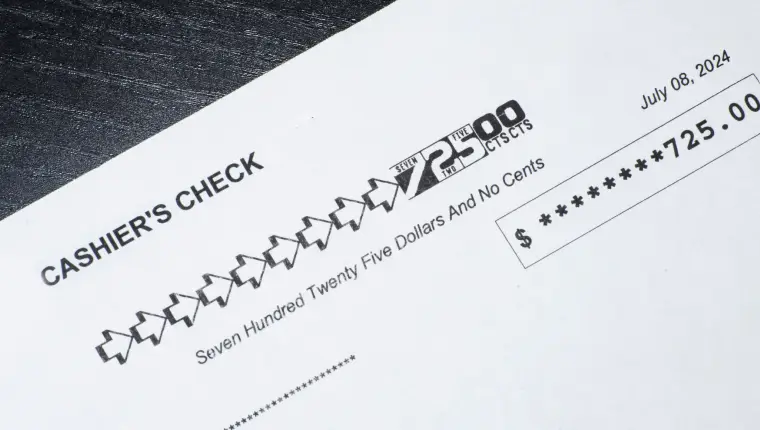
Consumers often use cashier’s checks for larger purchases because they offer the recipient of the funds extra security. That’s because cashier’s checks are guaranteed by a bank, rather than the purchaser.

Unfortunately, printing technology has improved over recent decades, making it easier for scammers to print fraudulent cashier’s checks at home and trick unsuspecting consumers into accepting them as legitimate forms of payment. Knowing how to spot a fake cashier’s check is crucial to avoiding these scams.

Learn how cashier’s checks work, common scams using them, and how to protect yourself.

At this time, SoFi does not offer cashier’s checks.

What Is a Cashier’s Check?

A cashier’s check is a check issued and guaranteed by a bank or credit union. This typically instills confidence in the recipient that the check won’t bounce when they deposit it at their own financial institution. They are common in real estate transactions and when making large purchases.

When you deposit a cashier’s check in your checking account, the money usually clears faster than a traditional personal check. Cashier’s checks can be more secure because they are more challenging to forge — though it’s not impossible.

Recommended: Certified Check vs. Cashier’s Check

How Do Cashier’s Checks Work?

Cashier’s checks are like a prepaid check. If you need to pay someone with a cashier’s check, you can go to your bank to purchase one. The money will immediately leave your account, and you can give the cashier’s check to the person or business as payment. When they deposit the cashier’s check, your bank will release the funds to cover the cost.

•   If you don’t have a bank, you may still be able to get a cashier’s check from a financial institution. Rather than withdraw the funds from your account, the bank would instead require that you pay cash to have a cashier’s check issued.

•   Cashier’s checks are usually not free. On top of the amount to be paid with the check, banks usually charge around $8 to $15 to issue a cashier’s check.

4 Common Cashier’s Check Scams

Just as there are many types of bank fraud in general, cashier’s check scams run the gamut, but most follow a similar structure. Typically, a fraudster will give you a fake cashier’s check that looks real, and they’ll ask you to deposit it and then send some money back to them. Afterward, the bank will discover that the original cashier’s check was fake — and you’ll owe all the money back, including the amount you sent to the scammer.

Here are the specifics on a few common scams to watch out for:

Employment Scams

Two popular employment scams include fake cashier’s checks:

•   Mystery shopper scam: In this scam, the fraudster will hire people to report on the quality of various money transfer businesses as mystery shoppers. As part of the assessment, the victim of the scam will receive a cashier’s check to deposit at a local bank, then send the money back to the employer through a money transfer service (say, a wire transfer) to evaluate the service. After sending the cash back to the fake employer, the victim will learn from the bank that the cashier’s check was fraudulent. Instead, the funds sent to the scammer came out of the “real” funds in their bank account.

•   Work-from-home scam: Another employment scam involves hiring remote employees and sending them an overpayment. The supposed employer might send a starting bonus via cashier’s check. The fake employer just asks that new employees pay an account activation fee to cover the cost. If successful, the scammer will receive the funds for this fee before the victim realizes the cashier’s check is fake.

In addition, some remote work scams may be overpayment scans, described below.

Windfall Scams

Windfall scams are common and often involve a cashier’s check. In a popular scheme, scammers will lead victims to believe they’ve won the lottery (usually a foreign lottery); in others, victims will learn they’ve received an inheritance.

To claim the earnings, however, the victim must pay taxes and fees. They’ll cash the fake cashier’s check they have been sent and wire money to the scammer before learning that the cashier’s check was fake. You’ll then have to repay the bank — and be out the money you paid the fraudster.

Recommended: Terrible Financial Advice to Avoid

Purchase and Overpayment Scams

The overpayment scam is a common type of cashier’s check fraud. If you sell a product to someone online, like through an online auction or marketplace (eBay, Craigslist, Facebook Marketplace), the scammer may send you a cashier’s check for more than the purchase price.

When you point this out to the scammer, they’ll apologize, say they made a mistake, and ask you to send the difference back to them. After you send them some money, you’ll discover that the original cashier’s check was fake — so you’ll have lost money as well as the product you’re selling.

In other cases, the buyer may give you a cashier’s check for the right amount. You’ll ship them the product, only to later discover the check was fake. While you aren’t out any money, you’re still out the product.

Overpayment scams may also take the form of remote work scenarios. You will be sent a check and then be asked to forward a portion of it to another party as part of your “new job.” Alas, if you do so, you could discover the check was a fake and the money you forwarded is now lost.

Property Rental Scams

If you are a landlord renting out a property, be wary of cashier’s checks. In some cases, scammers may offer to pay the first and last months’ rent payment plus the security deposit without ever seeing the property — often because they claim they are moving for a new job and need a place fast.

They’ll send you the money via cashier’s check, then back out of the rental, saying the job fell through. The scammer will offer to let you keep the security deposit but ask if you’d be willing to wire any of the prepaid rent back. Only after sending the money will you realize the scammer paid you with a fake cashier’s check.

Tips for Spotting Fake Cashier’s Checks

Wondering how to spot a fake cashier’s check? Here are a few tips:

•   Check the bank name: Some scammers utilize real banks’ names and information, which makes it harder to differentiate between a real and fake cashier’s check. But a dead giveaway is a cashier’s check with a fake bank name. A quick online search can help you identify a bogus name.

•   Check the postmark: If you received the check in the mail, the postmark city should match the city of the supposed bank.

•   Verify the amount: A cashier’s check for the incorrect amount could be the sign of a scam in the works, such as an overpayment ruse.

•   Look for security features: Real cashier’s checks use a combination of security features, like color-changing ink, security threads, and watermarks. While fake cashier’s checks might contain these as well, a check without these hallmarks is an obvious indication of a scam.

•   Check the payee name: If the payee’s name line is blank, you are probably in possession of a fake cashier’s check.

Recommended: How to Build Financial Security

Tips for Avoiding Cashier’s Check Scams

Knowing how to spot a fake cashier’s check can be helpful, but here are some tips for avoiding scenarios where you’d receive a fraudulent cashier’s check altogether:

•   Only accept cashier’s checks from people you know and trust.

•   Consider a traceable online payment system for doing business, instead of a cashier’s check.

•   Accept cashier’s checks only for the agreed-upon amount, never more.

•   Use your judgment: If someone is sending you money you weren’t expecting, especially if they’re a stranger, it’s likely too good to be true.

•   Don’t agree to send anyone money until you’ve verified with your bank that the cashier’s check has cleared and was free of fraud.

Verifying Cashier’s Checks

If you are accepting this kind of check, it’s important to learn to spot a real vs. fake cashier’s check and keep your eyes peeled for signs of fraud. A good way to avoid a cashier’s check scam can be to verify the check with the issuing bank. You can call or visit the bank in person, if there’s a branch nearby.

Just don’t use the phone number that might be printed on the questionable check, as it may go to the scammer. Instead, search for the bank online, find its legitimate website, and call the customer service number. Provide the check number, issue date, and amount — and the bank should be able to verify if the check is legitimate.

Do Victims of Cashier’s Check Fraud Have Any Recourse?

If you have already sent money to a scammer in an untraceable way, like via wire transfer, you may not be able to get your money back. Banks can deduct the amount of the fraudulent check from your account or require you to pay for the amount you withdrew using the fraudulent check. Some points to note:

•   You can report the fraud to the United States Postal Inspection Service (if the check came in the mail), your state or local consumer protection agencies, and the Internet Crime Complaint Center.

•   You can contact the bank whose name appeared on the fake cashier’s check, as well as the bank where you deposited the fake cashier’s check. Additionally, you’ll want to notify the platform on which you first encountered the scammer (for example, an apartment rental site or an online marketplace).

•   Submit a formal complaint to the Federal Trade Commission (FTC), and file a police report with the local police.

These steps may help you resolve the case and/or prevent the scammers from perpetuating more fraud.

Recommended: What Is an E-Check?

The Takeaway

Cashier’s checks are a legitimate form of payment often used in high-dollar transactions or to add a sense of confidence between buyers and sellers who don’t know each other. However, they can be easy for scammers to forge, so it’s important to stay alert when receiving a cashier’s check as payment. Knowing the difference between a real vs. fake cashier’s check can be an important skill in protecting your finances.

FAQ

How can I verify if a cashier’s check is real?

You can inspect a cashier’s check for obvious signs that it’s a fake, like a missing payee name, a fake bank name, and incorrect amounts. But if you’re dealing with a more sophisticated fake cashier’s check, your best bet is to find the bank online, call their customer service number, and ask them to confirm the check’s authenticity.

What happens if you deposit a fake cashier’s check?

Once the bank discovers that the cashier’s check you deposited was fake, they’ll deduct that amount from your account or seek repayment some other way. In instances where you’ve sent some money back to the scammer, you’ll be out that money. In instances where you sold goods to a scammer, you’ll unfortunately be unlikely to get the item back.

Can a bank tell if a cashier’s check is real?

Bank tellers may also have difficulty determining if a cashier’s check is fake or real. While they can spot the more obvious signs, more sophisticated scammers can slip fake cashier’s checks past bank tellers. Internally, banks eventually discover that the cashier’s check is fake (usually a couple of weeks later when it’s returned unpaid), long after the fraudster has gotten away with their scam.


Photo credit: iStock/Richard Stephen

SOBK0423026

Read more


How Do Banks Investigate Unauthorized Transactions?

This content may include information about products, features, and/or services that SoFi does not provide and is intended to be educational in nature.

When an unauthorized transaction is reported, a bank typically gathers information, analyzes the incident, and makes a determination about what happened and what the next steps will be.

In today’s era of digital commerce and banking, there are a number of options that can make it easier to pay for goods and services, such as online bill pay, debit cards, and mobile wallets.

Sometimes, however, despite your best efforts to keep your private information secure, you may discover an unauthorized transaction. If this happens, know that banks work hard to investigate and resolve this kind of issue in several ways. Learn more here.

What Are Unauthorized Transactions?

Unauthorized transactions are any bank account transactions that the account holder did not approve of. It could be a payment that was mistakenly charged to your account, but it could also indicate fraudulent activity. For instance, a criminal might write a fraudulent check from your checking account or use your debit card to make an unauthorized withdrawal from your bank account without your knowing it.

There are a number of different methods fraudsters may use to try to get access to your checking account, including:

•   Stealing and “washing” a check (meaning erasing the original information and adding fraudulent details)

•   Stealing your debit card (or finding a lost debit card)

•   Stealing your information with card skimmers and hidden cameras

•   Conducting a scam in which they try to convince you to share your confidential account info

💡 Quick Tip: Typically, checking accounts don’t earn interest. However, some accounts do, and online banks are more likely than brick-and-mortar banks to offer you the best rates.

Initial Detection of Unauthorized Transactions

There are two main ways to detect unauthorized transactions:

1.    You as the account holder may notice a transaction in your checking account that you did not authorize. If you have bank alerts set up for your account, you may also get a push notification about a transaction you did not make.

2.    The bank itself may detect the unauthorized transaction. Banks have advanced fraud detection methods, including pattern recognition, machine learning, artificial intelligence, behavioral analysis, geolocation data, and more that can tip them off when a transaction appears to be fraudulent.

If you as the customer notice the bank account fraud, it’s crucial that you contact your bank’s fraud department immediately (the number is typically on the back of your debit card). A representative can walk you through next steps, such as:

•   Canceling or freezing your debit card

•   Ordering a new card

•   Updating your bank account password (and ideally your email password as well)

•   Starting a formal fraud investigation with the bank

If the bank’s fraud detection software notices a suspicious transaction, the bank will generally contact you via text, email, or phone call to verify the transaction. If you don’t recognize the transaction, the bank will begin its fraud investigation.

Recommended: How to Report Identity Theft

Bank Investigation Process

When consumers report potential fraud, banks generally have 10 business days to investigate the transaction (20 business days if the account was opened in the last 30 days). Once the bank has determined there was an error, it has only a single day afterward in which to correct it.

If the bank can’t complete its investigation within 10 or 20 business days, it must issue the consumer a credit to the account for the disputed amount, minus $50, while the investigation continues. Usually, the bank or credit union has up to 45 days to finish their investigation and share their findings. In some cases (such as if the incident occurred in a foreign country), it may take up to 90 days to achieve a final resolution.

Whether you as the consumer bring the unauthorized transaction to the bank’s attention or the bank’s fraud detection system finds the issue, the bank or credit union will typically investigate as follows:

1.    Gather transaction details. The bank’s fraud team will collect as much information about the transaction as it can, including the time and date, the merchant, and the amount. They’ll also analyze other transaction patterns and consumer behavior.

2.    Make a determination. Based on these details, the bank should be able to determine if the transaction was unauthorized or if there are fraudulent charges — and if the merchant has any blame in the scenario.

3.    Take action. The bank may or may not reimburse the customer, depending on their findings. Further, the bank may pursue charges against the criminal, if applicable and possible. The bank will also file a suspicious activity report (SAR) if that is deemed appropriate and hand the case over to the authorities.

Recommended: What Can Someone Do With Your Bank Account and Routing Number?

Fraud Prevention Measures

Even consumers who take the strictest safety measures can be victims of bank fraud. Nevertheless, it’s worth doing everything in your power to avoid unauthorized transactions, including:

•   Using unique, complex passwords. Your email, financial accounts, and any other online accounts should have unique and complex passwords. These should be updated often and never reused or shared. You might want to consider using a password manager service to assist with this.

•   Turning on alerts. Bank alerts can be helpful in spotting fraud in real time. Turn on all relevant alerts available in your bank’s mobile app or on its website. You can also monitor your transactions in app or on the site and balance your checking account regularly to help you identify unauthorized charges.

•   Using all the security measures available to you. Multifactor authentication (MFA) and biometric screening (such as facial recognition) add extra layers of protection on top of passwords.

•   Not sharing your PIN. Think of a unique PIN for your debit card, and don’t share it with anyone.

•   Protecting your wallet. Always be smart about where you stash your wallet. Also consider using an RFID wallet. This can block contactless scanning of your cards’ chips, which hold your confidential banking details. Only carry the cards you need; keep the rest at home in a safe.

•   Being careful at ATMs and points of sale. Make sure no one is watching you punch in your PIN when making a transaction (they could steal your card and then use it). Always check ATMs and gas pumps for signs of card skimmers, or devices that fit over the slot where you dip your card and steal your credentials.

•   Recognizing phishing scams. Fraudsters are always finding new ways to get account information. Educate yourself about the latest phishing and bank scams, and always be wary when someone asks for your account information. Just because someone calls or texts saying they are “from your bank” doesn’t make it true.

The Takeaway

Just as it’s important to take basic security measures to prevent your financial information from getting into the wrong hands, it’s also crucial to act quickly if you detect an unauthorized charge on your debit card or a fraudulent transaction in your account. Banks must take reasonable steps to investigate unauthorized transactions and notify you of the results in a timely manner.

Interested in opening an online bank account? When you sign up for a SoFi Checking and Savings account with direct deposit, you’ll get a competitive annual percentage yield (APY), pay zero account fees, and enjoy an array of rewards, such as access to the Allpoint Network of 55,000+ fee-free ATMs globally. Qualifying accounts can even access their paycheck up to two days early.

Better banking is here with SoFi, NerdWallet’s 2024 winner for Best Checking Account Overall.* Enjoy up to 3.80% APY on SoFi Checking and Savings.

Open an account

FAQ

What triggers a bank investigation of unauthorized transactions?

If you don’t recognize a charge in your checking account, you should report the unauthorized transaction to your bank right away to trigger an investigation. To do so, contact your bank’s fraud department. Banks also monitor your account for fraudulent charges and may contact you if their security measures detect an unauthorized transaction.

How long does a bank investigation typically take?

In most scenarios, banks have 10 business days to investigate a fraudulent transaction after you report it. If they can’t finish it in that time, they may have to credit your account while they continue the investigation. In total, banks and credit unions have 45 business days to resolve an issue, except for some specific exceptions (like if the fraud occurred in another country).

What actions can customers take to help prevent unauthorized transactions?

To help prevent unauthorized transactions from hitting your checking account, you can use a strong password and opt in to multifactor authentication or biometric screening; turn on fraud alerts; be cautious when using your debit card in public; and freeze or cancel your card if you lose it, among other habits.


Photo credit: iStock/NoSystem images

SOBK-Q224-1934356-V1

Read more

Identity Theft and Credit Card Fraud Statistics: 33 Eye-Openers

This content may include information about products, features, and/or services that SoFi does not provide and is intended to be educational in nature.

Judging from the latest statistics, the most lucrative work-from-home job in America may be Con Artist. Fraudsters are utilizing texts, social media, fake websites, apps, emails, and old-fashioned voice calls to separate Americans from their money — billions every year. They play on our greed, or charity, or desperation. And they take all forms of payment.

The best way to fight back against fraud is to be aware of current schemes so you don’t fall victim in the first place. Below we share the top financial shakedowns, with enough details to help you recognize red flags, and statistics that will blow your mind. Read on to learn how to avoid getting fleeced (and how to report it if you are).

Identity Theft and Credit Card Fraud Trends

If you’ve been the victim of identity theft or credit card fraud, you’re hardly alone.

According to the Federal Trade Commission (FTC), there were 552,000 reported cases of identity theft through the first half of 2024. At this rate, the year is on track to surpass the number of reported cases in 2023.

Meanwhile, there were 214,607 reported cases of credit card fraud by mid-year, up 6% from the previous six months. The impact of both crimes can be substantial. In 2023 alone, some 2.6 million consumers collectively lost more than $10 billion to fraud — a 14% increase from 2022.

There are several potential reasons for the surge. More people are turning to digital tools to handle everyday tasks, like shopping and banking. At the same time, scam email messages — no, that’s not the U.S. Post Office — have also spiked in recent years. And finally, the rise of crypto seems to play a role: The FTC has warned consumers that no reputable utility or creditor will demand payment only in crypto.

If you’re a victim of credit card fraud, it’s important to report it ASAP. You can get your credit report and find out your credit score for free at AnnualCreditReport.com®.

You can also enlist the help of a money tracker app, which allows you to manage all of your finances from one convenient dashboard.

Recommended: What Credit Score Is Needed to Buy a Car?

33 Identity Theft and Credit Card Fraud Stats

Below we do a deep dive into the most common types of fraud: imposters, online shopping scams, fake prizes and sweepstakes, false job opportunities, fictional charities, investment swindles, and more. All numbers quoted below are from 2023 FTC data.

1 Imposters: Reports Filed

The total reports filed in this one category came to 853,935, with 21% of filers admitting losses. An imposter is a person who pretends to be someone else to steal your personal information or money. They might call, text, or email you and may pose as someone you know. (“I’m on vacation in London and lost my wallet! Can you send me some cash?”).

2 Imposters: Losses

The median loss suffered by victims was $800. The total dollar amount of imposter scam losses was $2.668 billion.

3 Imposters: Scenarios

The most common way imposters approached targets was via email, and victims often paid via credit card.

4 Imposters: Top States Affected

Oregon led with 2,640.7 reports per million people. Washington and Colorado followed close behind.

Recommended: What Is a Tri-Merge Credit Report?

5 Online Shopping: Reports Filed

Total reports filed came to 369,469, with 53% claiming losses. In an online shopping scam, someone pretends to have a legitimate business by creating a phony website or posting fake ads on a real retailer’s site.

(Another form of this fraud is when scammers create and post fake negative reviews of small businesses and then tell owners that they’ll remove the reviews in exchange for digital gift cards.)

6 Online Shopping: Losses

The median loss suffered by victims was $125. The total dollar amount of online shopping scam losses totaled $392 million.

7 Online Shopping: Scenarios

Victims are most often taken in by websites or apps — not surprising, given the nature of this fraud — and are asked to pay via gift card.

8 Online Shopping: Top States Affected

Delaware led with 1,183.4 reports. New Hampshire and Colorado placed second and third.

9 Prizes & Sweepstakes: Reports Filed

Total reports filed came to 157,520, with 13% reporting losses. “Great news!,” a voice over the phone gushes. “You’ve won money or valuable prizes!” All the winner needs to do is provide their bank account information or pay a processing fee.

10 Prizes & Sweepstakes: Losses

The median loss suffered by victims was $878. Total losses equaled $338 million.

11 Prizes & Sweepstakes: Scenarios

Phone calls, texts, and emails are the most common contact method. Gift cards were of the top payment types.

12 Prizes & Sweepstakes: Top States Affected

West Virginia topped the list with 781.2 reports. Delaware and Alabama placed and showed.

13 Internet Services: Reports Filed

Total reports filed equaled 125,118, with 7% admitting losses. This category includes the use of fake messages or copycat sites — ostensibly from someone’s internet service provider — as part of a phishing or spoofing scam used to commit identity theft. It also includes theft of personal information: debit card PINs, credit card and bank account numbers, and passwords.

14 Internet Services: Losses

The median loss suffered was $250. Total losses came to $36 million.

15 Internet Services: Scenarios

Typically, individuals are contacted via social media and send money via payment app.

16 Internet Services: Top States Affected

Delaware was first in line with 418.6 reports per million people. Nevada and Florida came close on its heels.

17 Job Opportunities: Reports Filed

Total reports filed were 110,364, with 32% reporting a loss. Scammers post genuine-looking want ads and business opportunities in print and online. The catch? There is no job. They just want your personal information and your money. As just one example, a “work-from-home career” starts after the target pays for training, certifications, and/or starter kits.

Recommended: Should I Sell My House Now or Wait?

18 Job Opportunities: Losses

Consumers experienced a median loss of $2,137. Total losses reached $491 million.

19 Job Opportunities: Scenarios

People are most often connected by text and pay the scammers via cryptocurrency.

20 Job Opportunities: Top States Affected

Nevada was again the top contender, with 408.3 reports per million people. Arizona and Georgia achieved second and third place.

21 Advance Payments: Reports Filed

Total reports came to 29,878, with 35% of them suffering a financial loss. Advance payments, as the name implies, refer to a consumer pre-paying for a service. Credit service businesses purport to sell information that will allow the consumer to create a new credit file — perhaps after an identity theft occurred.

22 Advance Payments: Losses

The median loss of each victim was $638. The total amount lost was $75 million.

23 Advance Payments: Scenarios

Fraudsters typically communicate with potential victims via websites and apps for this kind of scam, and request wire transfers to collect the money.

24 Advance Payments: Top States Affected

Mississippi is number one this time, with 152.3 reports per million people. Georgia and Florida follow as numbers two and three.

25 Fake Charities: Reports Files

Total reports came to 9,809, with 27% reporting a monetary loss. Scammers pretend to be from a real or fake charity and ask you to make a donation right then for, say, a natural disaster that just occurred.

26 Fake Charities: Losses

The median loss was $392. The total amount lost was $22.5 million. Asking people to support a heartwarming cause has, unfortunately, been quite successful.

27 Fake Charities: Scenarios

Messages go out via social media, and have the potential to go viral. Scammers most often collect their money through a payment app.

28 Fake Charities: Top States Affected

Alaska led the way with 38.0 reports per million people. Georgia and Nebraska came in second and third place.

29 Investments: Reports Filed

Total reports came to 107,699, with 75% claiming a financial loss. With investment fraud, a scammer tries to get you to invest: in stocks, bonds, real estate, whatever. They may provide false information about a real investment or make something up entirely.

30 Investments: Losses

The median loss was $7,768. Total losses equaled $4.642 billion.

31 Investments: Scenarios

These so-called investment opportunities are described on social media platforms, with cryptocurrency being the top payment method.

32 Investments: Top States Affected

Nevada (again!) leads the way, with 289.9 reports per million people. Florida and Arizona trail behind in terms of percentage of population, but are way ahead in absolute numbers: Washingtonians filed 1,074 reports; Californians, 5,349 reports.

33 Bonus Stat: Tax Prep

A missing refund is one sign that someone else may have filed a fake tax return in your name. Here’s more information about what to do when you don’t receive a tax refund.

The FTC notes that 5,949 reports about tax preparation fraud were filed in 2023, with 10% of people reporting a monetary loss. The total loss was $1.9 million with a median loss of $500.

How to Avoid Credit Card Fraud

As these numbers show, there are plenty of scammers out there. Here are some ways to protect yourself against money scammers:

•   Avoid using debit cards, which are directly connected to your bank account. Credit cards and payment apps tend to be safer. Check your banking and credit card statements regularly, watching for errors and suspicious charges.

•   If your bank offers free transaction alerts, sign up now. For example, you can get an alert whenever a large payment (you choose the number) hits your account. Find out more about different types of bank fraud.

•   If you get a call from a company asking for payment data or other personal information, hang up. If it’s a company you normally deal with, call them back directly to see if the call was genuine.

•   Use password protection on your smartphone and computer devices. Keep your browsers up-to-date, and use reputable anti-virus software downloaded from the app store (not an ad, email or website). Avoid using public WiFi.

•   Shop at reputable retailers only, including but not limited to the ones you use online. If you have questions about a store, check them out on the Better Business Bureau website.

•   When pumping gas or using an ATM, watch out for skimmers: devices that capture your account information for fraudulent purposes. If anything looks odd, let the establishment know.

•   Be cautious about clicking on links from unknown sources, checking to make sure that an email or text message really came from the place it claims and is a reputable organization.

•   Monitor your credit report and watch for inaccuracies. What qualifies as credit monitoring varies, so look for services that send alerts whenever something new hits your report. You may also be able to sign up for free credit monitoring.

How to Report Credit Card Fraud

The first step is to file a dispute with your credit card company. Then you can contact your police station or sheriff’s office. You can also report the fraud to your state’s attorney general (get their contact info from https://www.naag.org/find-my-ag/) You can also submit an online claim with the FTC at https://reportfraud.ftc.gov/#/

The Takeaway

Scammers are reaching out via text, social media, fake websites, apps, emails, and old-fashioned voice calls to separate you from your money. Their stories play on your greed, or charity, or desperation. And they take all forms of payment — but they especially like gift cards and crypto. By learning to recognize the top schemes, you can help protect yourself from getting swindled. More pro tips: Monitor your transactions, avoid using debit cards for purchases, and don’t ever give out your personal or financial info unless you’re 100% sure of who you’re dealing with.

Take control of your finances with SoFi. With our financial insights and credit score monitoring tools, you can view all of your accounts in one convenient dashboard. From there, you can see your various balances, spending breakdowns, and credit score. Plus you can easily set up budgets and discover valuable financial insights — all at no cost.

SoFi helps you stay on top of your finances.

Learn more

FAQ

What are some common credit card scams?

Scammers can be pretty creative. Phishing is when a con artist tries to get you to share personal info or credit card information on the phone, by email, or text. Fake online websites can be built to steal credit card info. Skimmers can be set up on ATMs and credit card readers. And people with ill intent can monitor public WiFi for credit card info. And these are just some of the types of financial fraud out there.

How do credit card scams happen?

Sometimes, your physical credit card can be stolen. More often, someone gets your credit card data without having the actual card. Identity thieves can also steal personal information, set up credit cards in your name, and start spending.

How can you spot credit card fraud?

As you monitor bank statements, credit card statements, and your credit report, you may spot information that just isn’t right. Although this isn’t always because of credit card fraud, that’s a common cause. Proactively investigate when something looks suspicious. You can also set up alerts with your bank to flag certain kinds of transactions.


Photo credit: iStock/SaskiaAcht

SORL-Q324-038

Read more

San Diego State University (SDSU) Tuition and Fees


San Diego State University (SDSU) Tuition and Fees

 San Diego State University (SDSU) Tuition and Fees

On this page:

    By Kelly Boyer Sagert

    (Last Updated – 08/2025)

    San Diego State University is a four-year public research university located in San Diego, California. Founded in 1897, SDSU is known for its diversity and inclusion, serving as a federally designated Hispanic-serving institution, as well as supporting Asian American and Native American Pacific Island communities. The school is well known for its research-oriented education and Division I athletic program. Degrees offered at SDSU range from bachelor’s to doctorates.

    This guide will walk you through SDSU’s admissions requirements, tuition, financial aid statistics, acceptance rate, popular majors, and more.

    Total Cost of Attendance

    Costs for 2024-25

    Expense

    In-State

    Out-of-State

    Tuition & Fees

    $8,728

    $21,328

    Room & Board

    $23,030

    $23,030

    Books & Supplies

    $946

    $946

    Other Expenses

    $3,386

    $3,386

    Total Cost of Attendance

    $36,090

    $48,690

    Financial Aid

    During the 2022-23 academic year, 95% of first-time, full-time SDSU undergraduates received some sort of financial assistance. It took the form of scholarships, grants, loans, or a combination of these. For example:

    •   94% of students received grants or scholarships, with the average award being $5,459.

    •   30% of students took out student loans, averaging $7,137.

    Explore financial aid options: California Student Loan & Scholarships

    Generally, financial aid is monetary assistance awarded to students based on personal need and merit. Students who qualify for financial aid can use it to pay for college costs like tuition, books, and living expenses.

    The federal government is the largest provider of student financial aid. However, aid can also be given by state governments, colleges and universities, private companies, and nonprofits. The different types include:

    •  Scholarships: These can be awarded by schools and other organizations based on students’ academic excellence, athletic achievement, community involvement, job experience, field of study, or financial need.

    •  Grants: Generally based on financial need, these can come from federal, state, private, or nonprofit organizations.

    •  Work-study: This federal program provides qualifying students with part-time employment to earn money for expenses while in school.

    •  Federal student loans: This is money borrowed directly from the U.S. Department of Education. It comes with fixed interest rates that are typically lower than private loans.

    Colleges, universities, and state agencies use the Free Application for Federal Student Aid (FAFSA) to determine financial aid eligibility. The FAFSA can be completed online, but note that state and federal and school deadlines may differ.

    You can find other financial aid opportunities at sources such as:

    •  U.S. Department of Education – Learn more about the grants that are bestowed by the federal government

    •  College Scholarship Service Profile (CSS) – A global college scholarship application used by select institutions to award financial aid

    •  Scholarship Search Tool

    Recommended: The Differences Between Grants, Scholarships, and Loans

    Private Student Loans

    At SDSU, 28% of first-time students took out federal student loans in 2022-23. That same year, 3% of students took out private student loans, with the average figure being $21,117.

    Private loans are funded by private organizations such as banks, online lenders, credit unions, some schools, and state-based or state-affiliated organizations. While Federal student loans have interest rates that are regulated by Congress, private lenders follow a different set of regulations so their qualifications and interest rates can vary widely.

    What’s more, private loans have variable or fixed interest rates that may be higher than federal loan interest rates, which are always fixed. Private lenders may (but don’t always) require you to make payments on your loans while you are still in school, compared to federal student loans, which you don’t have to start paying back until after you graduate, leave school, or change your enrollment status to less than half-time.

    Private loans don’t have a specific application window and can be applied for on an as-needed basis. However, if you think you may need to take out a private loan, it’s a good idea to submit your FAFSA first to see what federal aid you may qualify for, as it generally may have better rates and terms.

    If you’ve missed the FAFSA deadline or you’re struggling to pay for school during the year, private loans can potentially help you make your payments. Just keep in mind that you will need enough lead time for your loan to process and for your lender to send money to your school.

    Recommended: Guide to Private Student Loans

    Projected 4-Year Degree Price

    The San Diego State University cost for four years would be $144,360 for in-state students, based on 2024-25 numbers. To compare, the average cost for four years at a public university in the U.S. is $115,360.

    For students from out of state, the four-year degree price at SDSU is $194,760. This is slightly higher than the national out-of-state average of $186,920.

    Here’s some Student Loan & Scholarship Information for you.

    Repay student loans your way.

    Find the monthly
    payment & rate that fits your budget.

    Undergraduate Tuition and Fees

    Costs for 2024-25

    Expense

    In-State

    Out-of-State

    Tuition & Fees

    $8,728

    $21,328

    Room & Board

    $23,030

    $23,030

    Total

    $31,758

    $44,358

    The average annual in-state cost of attendance at a four-year public university is $28,840, according to CollegeData.com. This makes SDSU about 10% more expensive than average for in-state students.

    The average cost for out-of-state students at a public university is $46,730. SDSU is slightly less expensive than average for out-of-state students.

    Graduate Tuition and Fees

    Costs for 2024-25

    Expense

    In-State

    Out-of-State

    Tuition

    $7,608

    $17,688

    Fees

    $2,644

    $2,644

    Total

    $10,252

    $20,332

    For in-state students who attend graduate school, San Diego State University tuition and fees in 2024-25 were $10,252 per year; for out-of-state students, the sum was $20,332.

    By comparison, the average graduate student at a public institution spends $10,320 a year on tuition and fees.

    There are many options for graduate loans that can help with San Diego State University’s costs.

    Cost per Credit Hour

    As of 2024-25, in-state undergrads studying part-time (enrolled in up to six units) pay $6,712 in tuition and fees.

    Campus Housing Expenses

    Costs for 2024-25

    Expense

    On Campus

    Off Campus

    Room & Board

    $23,030

    $2,309/mo*

    Other Expenses

    $3,386

    $5,376

    *Average rate based on available one-bedroom apartments near SDSU. Source: Rentable.com.

    The university is affiliated with two off-campus community housing options as well.

    San Diego State University Acceptance Rate

    Fall 2023

    Number of Applications

    Number Accepted

    Percentage Accepted

    82,800

    28,152

    34%

    The San Diego State University acceptance rate is 34%, making it a relatively selective school. In fall 2023, 82,800 people applied to SDSU, with 28,152 accepted.

    Admission Requirements

    SDSU accepts applications from October 1 to December 2 for the following fall term.

    Here’s what’s required to apply for admission to SDSU (and all California State University campuses) as a first-year student:

    •  High school name(s), date of graduation, and diploma

    •  Unofficial transcripts for 15 college prep courses you’ve completed to fulfill California’s A-G requirements

    ◦  For each course, a grade of C or better is required

    ◦  Official transcripts will be used to confirm this information

    •  Credit Card or PayPal account

    ◦  Application fees are due at time of submission

    Supplemental factors that may affect admissions include:

    •  Number of courses exceeding minimum A-G requirements

    •  GPA in math and science courses

    •  Household income

    •  Extracurricular and leadership involvement

    •  Educational program participation in high school

    SAT and ACT Scores

    The university does not use ACT/SAT test scores in determining admissions.

    Graduation Rate

    The graduation rate for students who began their studies in fall 2017 is:

    •  Four years: 57%

    •  Six years: 78%

    •  Eight years: 81%

    Post-Graduation Median Earnings

    Graduates of SDSU earn a median salary of $64,909; the midpoint salary for grads of similar four-year colleges is $53,727.

    Bottom Line

    SDSU provides a quality education in a diverse environment. San Diego State University tuition is more affordable than many other universities, while graduates earn salaries about 21% higher than those of other schools’ alumni.

    View your rate

    SoFi Private Student Loans
    Please borrow responsibly. SoFi Private Student loans are not a substitute for federal loans, grants, and work-study programs. We encourage you to evaluate all your federal student aid options before you consider any private loans, including ours. Read our FAQs.
    Terms and conditions apply. SOFI RESERVES THE RIGHT TO MODIFY OR DISCONTINUE PRODUCTS AND BENEFITS AT ANY TIME WITHOUT NOTICE. SoFi Private Student loans are subject to program terms and restrictions, such as completion of a loan application and self-certification form, verification of application information, the student's at least half-time enrollment in a degree program at a SoFi-participating school, and, if applicable, a co-signer. In addition, borrowers must be U.S. citizens or other eligible status, be residing in the U.S., Puerto Rico, U.S. Virgin Islands, or American Samoa, and must meet SoFi’s underwriting requirements, including verification of sufficient income to support your ability to repay. Minimum loan amount is $1,000. See SoFi.com/eligibility for more information. Lowest rates reserved for the most creditworthy borrowers. SoFi reserves the right to modify eligibility criteria at any time. This information is subject to change. This information is current as of 4/22/2025 and is subject to change. SoFi Private Student loans are originated by SoFi Bank, N.A. Member FDIC. NMLS #696891 (www.nmlsconsumeraccess.org).
    SoFi Bank, N.A. and its lending products are not endorsed by or directly affiliated with any college or university unless otherwise disclosed.


    SoFi Loan Products
    SoFi loans are originated by SoFi Bank, N.A., NMLS #696891 (Member FDIC). For additional product-specific legal and licensing information, see SoFi.com/legal. Equal Housing Lender.


    Non affiliation: SoFi isn’t affiliated with any of the companies highlighted in this article.

    External Websites: The information and analysis provided through hyperlinks to third-party websites, while believed to be accurate, cannot be guaranteed by SoFi. Links are provided for informational purposes and should not be viewed as an endorsement.


    SOISL-Q325-070
    Read more

    Rice University Tuition and Fees


    Rice University Tuition and Fees

    Rice University Tuition

    On this page:

      By Susan Guillory

      (Last Updated – 08/2025)

      Total Cost of Attendance

      Rice University, located in Houston, Texas, is one of the top-ranked private universities in the country. Rice has a 6:1 undergraduate student-to-faculty ratio and a dynamic campus life.

      Rice University tuition and fees for the 2024-25 school year totaled $63,799. This is substantially higher than the 2023-24 national average of $41,540 for tuition and fees at private universities.

      Costs for 2024-2025


      Expense

      Cost

      Tuition & Fees

      $63,799

      Books & Supplies

      $1,440

      Room & Board

      $18,100

      Other Expenses

      $3,640

      Total Cost of Attendance

      $86,979

      Financial Aid

      A full 70% of undergraduates use financial aid to help with the Rice University cost. This includes student loans, scholarships, and grants.

      Explore financial aid options: Texas Student Loan & Scholarship Information

      Generally, financial aid is monetary assistance awarded to students based on personal need and merit. Students that qualify for financial aid can use it to pay for college costs like tuition, books, and living expenses.

      The federal government is the largest provider of student financial aid. However, aid can also be given by state governments, colleges and universities, private companies, and nonprofits. The different types include:

      •  Scholarships: These can be awarded by schools and other organizations based on students’ academic excellence, athletic achievement, community involvement, job experience, field of study, and financial need.

      •  Grants: Generally based on financial need, these can come from federal, state, private, and non-profit organizations.

      •  Work-study: This federal program provides qualifying students with part-time employment to earn money for expenses while in school.

      •  Federal student loans: This is money borrowed directly from the U.S. Department of Education. It comes with fixed interest rates that are typically lower than private loans’ rates.

      Colleges, universities, and state agencies use the Free Application for Federal Student Aid (FAFSA) to determine financial aid eligibility. The FAFSA can be completed online, but note that state and federal and school deadlines may differ.

      You can find other financial aid opportunities at sources such as:

      •  U.S. Department of Education – Learn more about the grants that are bestowed by the federal government

      •  College Scholarship Service Profile (CSS) – A global college scholarship application used by select institutions to award financial aid

      •  Scholarship Search Tool

      Recommended: The Differences Between Grants, Scholarships, and Loans

      Private Student Loans

      For Rice University tuition in the academic year 2022-2023, 6% of beginning Rice students took out federal student loans, and 1% took out private student loans that averaged $27,304.

      Private loans are funded by private organizations such as banks, online lenders, credit unions, some schools, and state-based or state-affiliated organizations. While federal student loans have interest rates that are regulated by Congress, private lenders follow a different set of regulations so their qualifications and interest rates can vary widely.

      What’s more, private loans have variable or fixed interest rates that may be higher than federal loan interest rates, which are always fixed. Private lenders may (but don’t always) require you to make payments on your loans while you are still in school, compared to federal student loans, which you don’t have to start paying back until after you graduate, leave school, or change your enrollment status to less than half-time.

      Private loans don’t have a specific application window and can be applied for as needed. However, if you think you may need to take out a private student loan, it’s a good idea to submit your FAFSA first to see what federal aid you may qualify for, as it generally may have better rates and terms.

      If you’ve missed the FAFSA deadline or you’re struggling to pay for school throughout the year, private loans can potentially help you make your payments. Just keep in mind that you will need enough lead time for your loan to process and for your lender to send money to your school.

      Recommended: Guide to Private Student Loans

      Projected 4-Year-Degree Price

      The Rice University cost for four years, based on 2024-25 numbers, would be $347,916. In comparison, the average cost (using 2023-24 figures) for a four-year degree at a private institution is $241,680.

      Here’s some Student Loan & Scholarship Information for you.

      Undergraduate Tuition and Fees

      Costs for 2024-25

      Expense

      Cost

      Tuition & Fees

      $63,799

      Room & Board

      $18,100

      Total

      $81,899

      The total Rice University cost, including tuition, fees, room, and board, totaled $81,899 for undergraduates in 2024-25.

      Graduate Tuition and Fees

      Costs for 2024-25

      Expense

      Cost

      Tuition

      $56,230

      Fees

      $800

      Total

      $57,030

      The Rice cost to attend one year of graduate school was $57,030 in 2024-25. This is higher than the average cost of graduate school at a private university, which is $51,770.

      There are many options for graduate loans that can help with these costs.

      Cost per Credit Hour

      Students can choose part-time enrollment at Rice and pay per credit hour. The cost of Rice University per credit hour is $2,620 for new students and $2,491 for continuing students. In addition, there is a part-time enrollment fee of $175 per semester.

      Campus Housing Expenses

      Costs for 2024-25

      Expense

      On Campus

      Off Campus

      Room & Board

      $18,100

      $1,759/mo*

      Other Expenses

      $3,640

      $3,640

      *Average rate based on available one-bedroom apartments listed on Rice University’s off-campus housing website in 2025.

      Although Rice students aren’t required to live on campus, the university’s residential life centers around the 11 colleges on campus. The idea is to make it easier to get to know other students in your area of study.

      For those who prefer to live off-campus, there are many apartments, duplexes, and houses located nearby.

      Rice University Acceptance Rate

      Fall 2023

      Number of Applications

      Number Accepted

      Percentage Accepted

      32,473

      2,597

      8%

      The Rice University acceptance rate is low. Only 8% of the students who apply to Rice are accepted.

      Admission Requirements

      Interested in applying to Rice? Here’s what you’ll need to supply along with your application.

      Required:

      •  High school transcript

      •  Letters of recommendation from school counselor and 2 teachers

      •  Rice writing supplement (essay)

      Recommended:

      •  SAT or ACT scores

      •  Interview with Rice alumnus or current student

      The Early Decision deadline for Rice is November 1. The Regular Decision deadline is January 4.

      SAT and ACT Scores

      Standardized test scores are currently not required at Rice. However, it can be helpful to know how other students scored.

      Subject

      25th Percentile

      75th Percentile

      SAT Evidence-Based
      Reading/Writing

      730

      770

      SAT Math

      770

      800

      ACT Composite

      34

      36

      ACT English

      35

      36

      ACT Math

      33

      36

      Rice University Graduation Rate

      These are the graduation rates at Rice University:

      •  Four years: 87%

      •  Six years: 92%

      •  Eight years: 93%

      Post-Graduation Median Earnings

      Graduates of Rice University bring home a median salary of $89,718. This is significantly higher than the overall median salary of $53,727 earned by 2024 graduates of private nonprofit colleges.

      Bottom Line

      Rice University provides students with a quality education and a rich campus life. While Rice tuition is steep, it’s more affordable than many top-tier schools. And because Rice is a need-blind institution, your ability to pay for the Rice cost won’t be a factor when you apply. Rice is selective, however, so the trickiest part may be getting in!

      View your rate

      SoFi Private Student Loans
      Please borrow responsibly. SoFi Private Student loans are not a substitute for federal loans, grants, and work-study programs. We encourage you to evaluate all your federal student aid options before you consider any private loans, including ours. Read our FAQs.
      Terms and conditions apply. SOFI RESERVES THE RIGHT TO MODIFY OR DISCONTINUE PRODUCTS AND BENEFITS AT ANY TIME WITHOUT NOTICE. SoFi Private Student loans are subject to program terms and restrictions, such as completion of a loan application and self-certification form, verification of application information, the student's at least half-time enrollment in a degree program at a SoFi-participating school, and, if applicable, a co-signer. In addition, borrowers must be U.S. citizens or other eligible status, be residing in the U.S., Puerto Rico, U.S. Virgin Islands, or American Samoa, and must meet SoFi’s underwriting requirements, including verification of sufficient income to support your ability to repay. Minimum loan amount is $1,000. See SoFi.com/eligibility for more information. Lowest rates reserved for the most creditworthy borrowers. SoFi reserves the right to modify eligibility criteria at any time. This information is subject to change. This information is current as of 4/22/2025 and is subject to change. SoFi Private Student loans are originated by SoFi Bank, N.A. Member FDIC. NMLS #696891 (www.nmlsconsumeraccess.org).
      SoFi Bank, N.A. and its lending products are not endorsed by or directly affiliated with any college or university unless otherwise disclosed.


      SoFi Loan Products
      SoFi loans are originated by SoFi Bank, N.A., NMLS #696891 (Member FDIC). For additional product-specific legal and licensing information, see SoFi.com/legal. Equal Housing Lender.


      Non affiliation: SoFi isn’t affiliated with any of the companies highlighted in this article.

      External Websites: The information and analysis provided through hyperlinks to third-party websites, while believed to be accurate, cannot be guaranteed by SoFi. Links are provided for informational purposes and should not be viewed as an endorsement.


      SOISL-Q325-068

      Read more
      TLS 1.2 Encrypted
      Equal Housing Lender