Table of Contents
Mobile homes offer an affordable path to homeownership, but the insurance requirements are a little different than what you’d find with a standard homeowners insurance policy. Find out how to know if your home falls under the mobile home category, what policy coverage includes, and how to choose the right amount of protection.
Key Points
• HO-7 insurance covers manufactured and mobile homes — factory-built structures on steel frames — with premiums determined by coverage amount, deductible size, claims payout type, and home condition.
• Five coverage categories are included: dwelling, other structures, personal property, personal liability, and loss of use for temporary living expenses during repairs.
• Covered perils typically include fire, windstorms, hail, and vandalism, while earthquakes, flooding, transit accidents, and general wear and tear are commonly excluded from coverage.
• Actual cash value policies reimburse based on fair market value, including depreciation, while replacement cost value policies cover rebuilding with new materials of similar quality.
• Mobile home insurance is not legally required, but lenders financing mobile homes typically mandate that borrowers maintain an active policy throughout the loan period.
What Is an HO-7 Mobile Home Insurance Policy?
An HO-7 insurance policy offers coverage for manufactured homes. Annual premium pricing depends on how much coverage you choose, the kind of claims payout you include, the size of your deductible, and the condition of your mobile home.
When comparing HO-7 vs. HO-3 (a standard homeowners insurance policy), the features are usually quite similar. A typical mobile home insurance policy includes coverage on the dwelling, detached structures, personal property, and personal liability.
If a covered peril occurs that causes damage to any of the above, you can file a claim with your insurance company to get reimbursed for the repairs.
Recommended: A Comprehensive Guide to Homeowners Insurance
What Types of Homes Does an HO-7 Policy Cover?
Even though HO-7 is usually called mobile home or manufactured home insurance, it covers several categories of living scenarios.
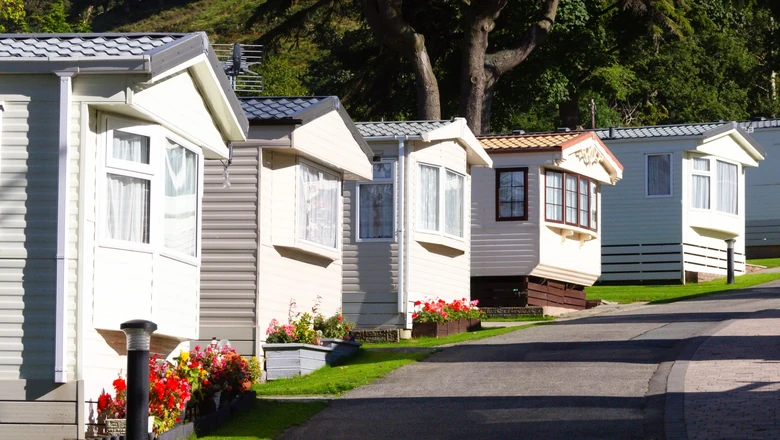
Manufactured and Mobile Homes
The first category of eligible property types includes manufactured and mobile homes. Both refer to factory-built homes, usually built on a steel frame instead of having a basement or crawlspace foundation. Even assembly happens off-site. This is where manufactured homes differ from modular homes, which are built in a factory but assembled at the building site.
The difference between a manufactured home and a mobile home is the date they were built. Those built before June 15, 1976, are considered mobile homes, while anything after that is manufactured. A mobile home should have a HUD-issued data plate inside that displays the date it was built.
Park Model Homes
A park model home is a type of RV that looks like a tiny home. The difference is that it’s less than 400 square feet and moveable. Like a traditional manufactured home, a park model is built on a metal frame with wheels, making it easy to tow.
Commonly found in RV parks or seasonal campgrounds, they’re not typically used as permanent residences. Park models are also excluded from HUD manufactured home regulations since they’re considered RVs. Still, you can insure your park model home through a mobile home insurance policy.
Stationary RVs and Travel Trailers
Stationary RVs and travel trailers are usually smaller than a park model home but can be reconfigured to serve as a permanent residence. They’re also eligible for mobile home insurance coverage. If the RV or travel trailer isn’t being driven, you typically don’t need auto insurance for collision coverage since you’re just staying in one place.
To make an RV stationary, people often remove the wheels and add a skirt to add extra protection and insulation. You could also invest in additions or decking to expand living space and make it feel more permanent.
Recommended: How to Switch Mobile Home Insurance
What Does Mobile Home Insurance Cover?
Five categories of coverage come with a mobile home insurance policy.
• Dwelling: This coverage helps pay for repairing or rebuilding your home and any attached structures if they’re damaged by a covered peril.
• Other structures: This is for any detached structures on your property, including a fence, shed, or carport.
• Personal property: This coverage is for your personal belongings inside your mobile home.
• Personal liability: If someone is injured on your property or has their property damaged, personal liability coverage could pay for any legal responsibilities that arise.
• Loss of use coverage: Loss of use can help cover the costs of living elsewhere (such as a hotel) if you can’t live in your home while repairs are being made. It may also be called additional living expenses.
Covered perils activating these coverages usually include things like fire, windstorms, hail, and vandalism.
Recommended: Manufactured vs. Mobile vs. Modular Homes
Standard Exclusions: What Isn’t Covered?
Not every natural disaster is covered by a mobile home insurance policy. An exclusion means coverage is excluded from your policy. This usually includes damage caused by earthquakes and flooding. If you live in an area that’s prone to these issues, you may be able to purchase an additional policy to get covered.
Mobile home insurance also doesn’t cover accidents that occur while the building is in transit. And like other home insurance policies, problems that stem from general wear and tear are not included. As the homeowner, you’re responsible for proactive maintenance.
Recommended: HO-3 vs HO-6 Insurance
How Are Mobile Home Insurance Claims Paid?
The amount you receive when filing an insurance claim varies depending on the type of reimbursement coverage you have. Here’s an overview of each option.
Actual Cash Value (ACV)
When you have an actual cash value policy, the claim payment amount is determined by the fair market value of your mobile home, not the amount it would cost to replace it with an all-new home today.
That means you may not receive enough money to fully repair your home, and you would be responsible for the difference. In the event of a total loss, you could consider purchasing a used mobile home that matches the claim payout amount.
Replacement Cost Value (RCV)
Replacement cost value gives you better financial protection because it covers the cost of replacing your mobile home with a new version of the same likeness and quality of the original one, up to your dwelling coverage limit.
Your premium will be higher for this better quality policy feature, but you’ll generally receive a larger payout than you would with the actual cash value model.
Stated Amount Coverage
With stated amount coverage, your insurer doesn’t solely calculate the value of your home or a replacement at the time of the claim. Instead, it compares the replacement cost value and the stated value that’s listed in your policy, then covers the lower amount if you file a claim for a total loss.
The Takeaway
The right mobile home insurance policy can provide you with peace of mind knowing you’re covered under many different scenarios. Compare quotes from SoFi today to find the perfect fit that works within your budget.
Your home is one of your most important financial assets — making sure it's properly covered is part of protecting everything you've built. SoFi makes it easy to shop and compare homeowners insurance quotes from top carriers, all in one place. Explore your coverage options.
SoFi brings you real rates, with no bait and switch.
FAQ
Is mobile home insurance required by law?
Mobile home insurance is not required by law. However, if you have a loan on your property, your lender will likely require you to keep an active policy.
Does an HO-7 policy cover my mobile home while it is being moved?
No, HO-7 does not typically include any incidents that occur while the home is in transit.
How is HO-7 insurance different from standard HO-3 homeowners insurance?
HO-7 insurance is different from standard HO-3 homeowners insurance in that it’s designed specifically for mobile homes. Many of the coverage features overlap, but your insurer will use different criteria when building out your policy.
Does mobile home insurance cover flood damage?
No, mobile home insurance doesn’t cover flood damage unless you’ve purchased an additional policy specifically for flooding.
Can I insure a mobile home built before 1976?
You can insure a mobile home built before 1976, but you’ll likely need to find a specialty insurance company.
How much mobile home insurance coverage do I need?
The amount of mobile home insurance coverage you need depends on the value of your property and belongings inside.
Photo credit: iStock/Eileen Groome
Third-Party Brand Mentions: No brands, products, or companies mentioned are affiliated with SoFi, nor do they endorse or sponsor this article. Third-party trademarks referenced herein are property of their respective owners.INSURANCE PRODUCTS ARE NOT FDIC INSURED • NOT INSURED BY ANY FEDERAL GOVERNMENT AGENCY • NOT A DEPOSIT OR OTHER OBLIGATION OF, OR GUARANTEED BY SOFI BANK, N.A. OR ANY OF ITS AFFILIATES
How SoFi Agency Is Compensated:
There is no charge to use SoFi Agency. However, we receive compensation from insurers and other vendors in the following ways:
● Commissions: A fee paid by the insurer for originating your policy, typically calculated as a percentage of your premium.
● Contingent & Supplemental Commissions: Performance-based bonuses from insurers for hitting annual targets, like customer volume or retention. (Supplemental commissions are based on past performance and known in advance; contingent commissions are not).
● Marketing Fees: Compensation for presenting promotions or linking you to an insurer’s application site.
● Affinity Partner Revenue: Income earned when you engage with or request services from third-party partners advertising on our platform.
If you have any questions about how we are compensated, please feel free to reach out to SoFi Agency.
All insurance products shown on SoFi are underwritten and provided by licensed insurance carriers, not SoFi Agency. SoFi Agency does not underwrite or price insurance policies. Insurance products presented may not be available in all states, and your rates and savings will vary based on individual factors. The rates or savings advertised are not necessarily available from all providers or advertisers. Not all carriers or options in the marketplace are shown.
Disclaimer: Many factors affect your credit scores and the interest rates you may receive. SoFi is not a Credit Repair Organization as defined under federal or state law, including the Credit Repair Organizations Act. SoFi does not provide “credit repair” services or advice or assistance regarding “rebuilding” or “improving” your credit record, credit history, or credit rating. For details, see the FTC’s website .
Financial Tips & Strategies: The tips provided on this website are of a general nature and do not take into account your specific objectives, financial situation, and needs. You should always consider their appropriateness given your own circumstances.
Non affiliation: SoFi isn’t affiliated with any of the companies highlighted in this article.
SOPRO-Q226-021