
Monday,
April 3, 2023
Market recap
Dow Jones
33,273.10
+414.07 (+1.26%)
S&P 500
4,108.93
+58.10 (+1.43%)
Nasdaq
12,221.91
+208.43 (+1.74%)

Top Story
Considering a work-life balance change?
The four-day work week is gaining popularity as more and more businesses explore it as an option. Here’s how it’s working for businesses like Lowe’s.

US stocks finished higher Friday after lower-than-expected inflation numbers added to investor morale.
• The Fed’s inflation index of choice, year-over-year PCE, came in at 5%, compared to analyst expectations of 5.1%. The figure was also notably lower than the previous month’s 5.3%, solidifying a positive downward trend. Month-over-month core PCE experienced a similar decline to 0.3%, compared to the 0.4% estimate, offering a degree of relief after the previous months’ acceleration.
• The Euro Area also saw inflation pressures ease to their lowest levels since February 2022 at 6.9%. While the figure was below expectations, it, too, sits well above the ECB’s target, keeping pressure on policy makers to push forward with rate hikes.
• Virgin Orbit (VORB) will cease operations and cut nearly its entire workforce. After failing to secure a funding lifeline, including from majority owner Richard Branson, shareholders sent the stock tumbling more than 40%.
What to be on the lookout for today
• The manufacturing PMI will be released for March. This metric has shown four consecutive months of falling factory activity, which likely signals falling consumer demand.
Budgeting for beginners: a 6 step guide.
While setting up your first budget can seem intimidating, the process actually isn’t as complicated (or as time-consuming) as many people think.
Budgeting simply involves looking at your expenses and income over a certain period of time, typically a month, then using that information to come up with a plan for spending and saving.
You can learn more on how to create a personalized budget for beginners at SoFi Learn, or utilize Insights in the SoFi app to start tracking your spending.
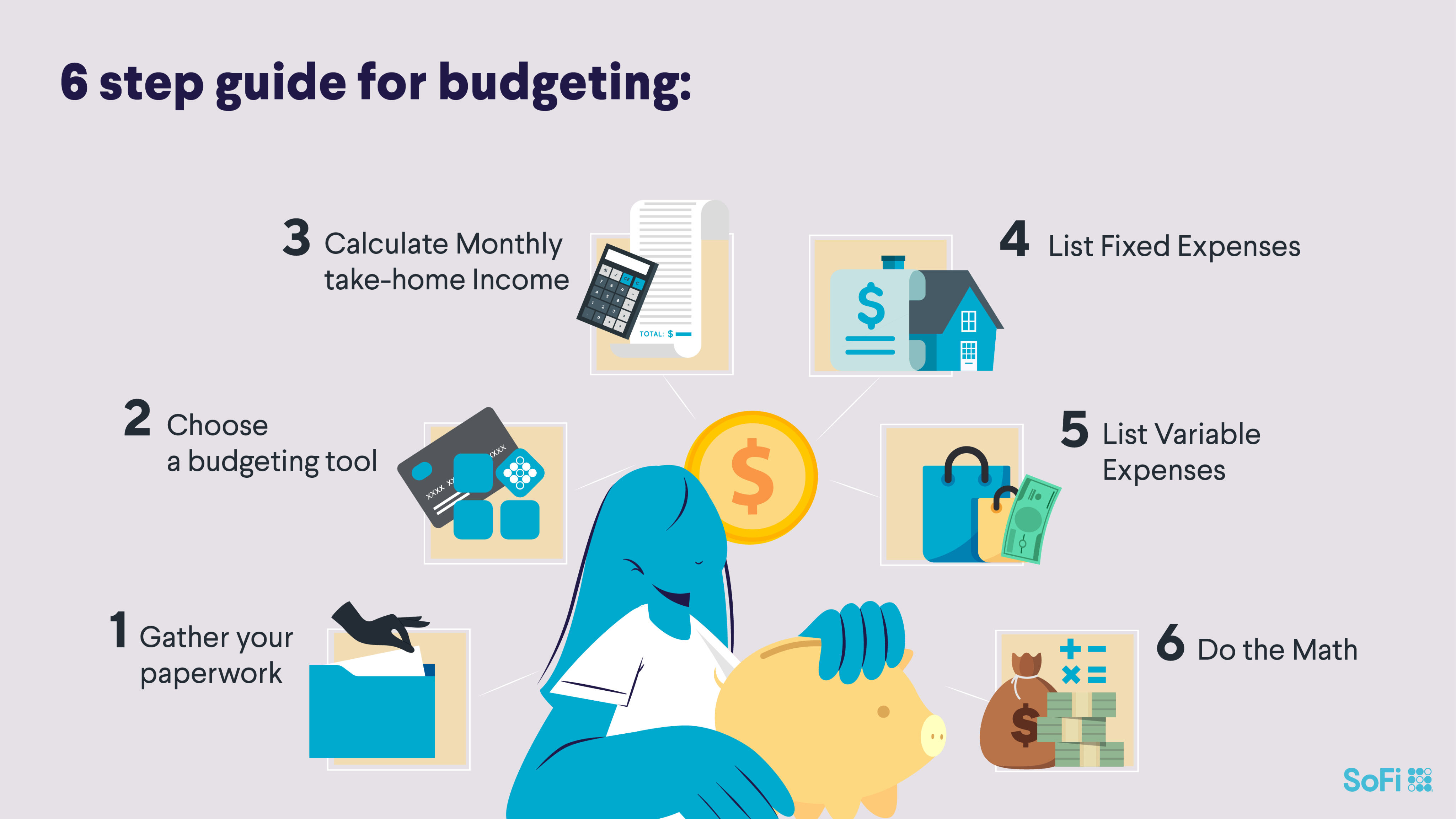
Here are 6 key steps to help you get started:
Gather your paperwork: Gather up bank statements, utility bills, paystubs, credit card bills, insurance bills, loan statements, and receipts from the past 3-4 months.
Choose a budgeting tool: Insights in the SoFi app allows you to sync all of your banking information help you track and categorize expenses.
Calculate your monthly take-home income: Take your paycheck after taxes, healthcare, automatic deductions, and any other items are taken out.
List your fixed expenses: Expenses that you pay at a fixed rate each month, such as rent, car payments, internet and cable bills, cell phone bills, student loans, etc.
List your variable expenses: how much you spend on anything else that fluctuates month-to-month. Ex dining out or shopping. Use past credit card and bank statements to get a sense of variable spending.
Do the math: Deduct average monthly expenses from average monthly income to see how much is left over for savings. If there’s nothing left over, trim expenses.
Today’s top stories
This 170-year old clothing company has an interesting – and controversial – plan for using AI. Levi Strauss & Co (LEVI) will offer investors clarity on its AI announcement. Plus, inflation insights file in from edible goods conglomerates Conagra Brands (CAG), Simply Good Foods (SMPL), and Constellation Brands (STZ). Read more >> The Fed may have taken a small step back from its purely hawkish tone, but is that good for markets? Liz Young gives a play-by-play of what happened in March. Read more >> Landing a good paying job doesn’t always require a college degree. Though a bachelor’s degree is often a minimum requirement for many careers, there are a handful of occupations offering decent salaries that don’t. Read more >>Not-so-breaking news
-
Screen fatigue is causing many adults to revert to using “dumb phones” — or cell phones with features limited to calling, texting, and photos. Sales of flip phones are up by tens of thousands.
-
Amazon (AMZN) is adding a “frequently returned” notice to items that are commonly returned by purchasers. This move is intended to improve the customer experience for shoppers and help the online marketplace reduce costs.
-
NATO has banned members from downloading TikTok on NATO-owned devices. The military alliance is now the latest governmental body to ban the video-sharing app, joining the likes of the US, UK, and European Parliament.
-
Bed, Bath, and Beyond (BBBY) is offering $500 retention bonuses to employees at closing locations. Workers can receive the bonus if they remain working at a store until its closure.
-
Japan is restricting exports on 23 types of advanced semiconductor manufacturing equipment. This is an effort to prevent the chips from being used for military use by countries such as China.
Financial planner tip of the day
"If it works with your income, the 50/30/20 budget is one simple method for people starting to reorganize their finances. This budget allocates 50% of your income for essentials, like rent and bills, 30% toward personal day-to-day spending, and 20% for savings or financial goals."
Brian Walsh, CFP® at SoFi