
Wednesday,
March 9, 2022
Market recap
Dow Jones
32,631.72
-185.66 (-0.57%)
S&P 500
4,170.66
-30.43 (-0.72%)
Nasdaq
12,795.55
-35.41 (-0.28%)
Top Story
Wild Session Ends With Stocks Down, Small Businesses Worried About Inflation
• US stocks fell Tuesday amid the ongoing geopolitical tension involving Russia and Ukraine. It was an up-and-down session that saw significant volatility for all three major indexes. Energy markets and rising oil prices in particular are weighing on sentiment. Russia is one of the world’s largest exporters of oil and natural gas. Key metals are also produced there. Commodity prices are on a general upswing as the situation unfolds.
• The highest number of small businesses since 1981 now list inflation as their top concern. This is per the NFIB’s small business survey, which finds many such businesses have raised prices to offset higher costs. The NFIB small business optimism index fell by 1.4 points in February to 95.7 — just last summer it was over 102.
What to Be on the Lookout for Today
• Job openings for January are due. The US Labor Department issues this Job Openings and Labor Turnover Survey (JOLTS) every month, and economists consider it an indication of labor demand. Job openings increased in December to 10.9 million, nearly matching last July’s all-time high of 11.098 million. Meanwhile, job resignations fell by 161,000 to 4.3 million, which is still considered high amid what some have called “The Great Resignation.”
• Campbell Soup Company (CPB) reports earnings. The food company is among several in the industry that saw profit margins slide last year amid supply-chain constraints. Specifically, costs are higher for vegetable oils, nuts, plastics, and other key supplies, as well as labor and transportation.
Payment History and Your Credit Score: What You Need to Know
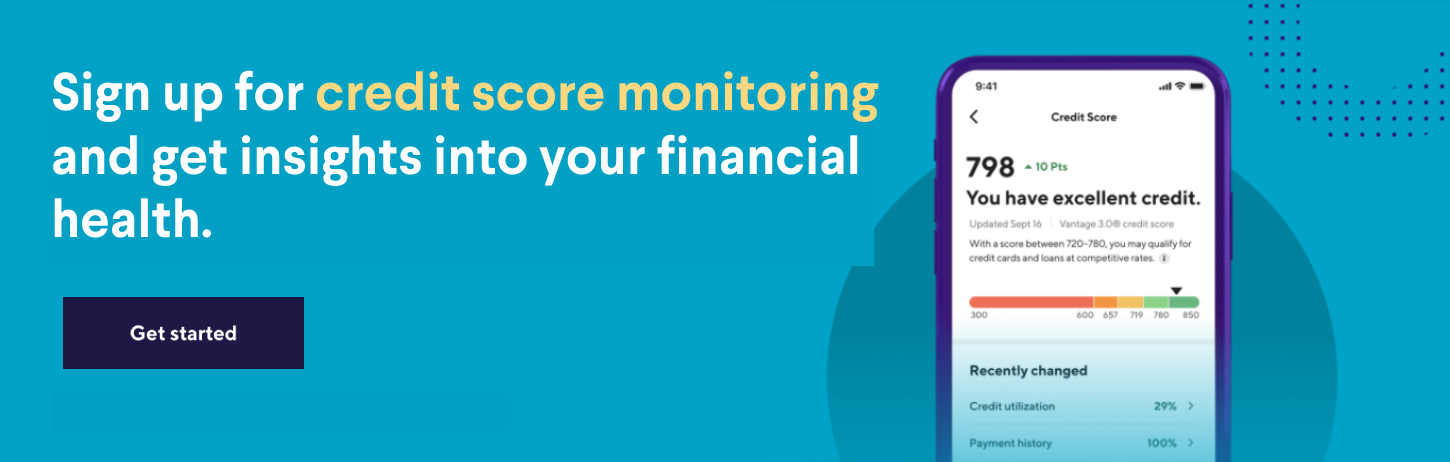
You might not feel like an occasional late payment on a credit card is a big deal, but it can impact your credit score negatively. In fact, payment history accounts for 35% of your FICO score (the scoring system for the credit bureau Experian).
The easiest way to raise your credit score? Pay your bills on time. Many loans and credit cards will allow you to set up autopay, which is a foolproof way to make sure you never miss a payment.
Track your credit score for free in the SoFi app, where the factors affecting your score are broken out to make them easier to understand.

A Few Headlines That Should Be on Your Radar
The US has banned the import of Russian fossil fuels, which has the potential to send oil prices spiking even higher. Compared to Europe, the US is less reliant on oil imports from Russia — but analysts warn the ban is likely to have a ripple effect across the entire economy. This latest economic sanction in response to Russia’s invasion of Ukraine is perhaps the most damaging to President Vladimir Putin and the Russian economy, as around 40% of their federal budget revenue is derived from oil exports. Meanwhile, with gasoline prices over $4 per gallon, US consumers are likely to keep feeling the “pain at the pump.” Read more >> Fast food promotions are getting a modern makeover: instead of a toy or other giveaway item, Shake Shack (SHAK) is offering Bitcoin (BTC) with your purchase, provided you use Block’s Cash Card. Block CEO Jack Dorsey is an outspoken advocate for Bitcoin, comparing it to the internet in its infancy, and even suggesting it could help achieve world peace. Other fast-food chains like Burger King (QSR) and McDonald’s (MCD) have also experimented with blockchain technology promotions. Read more >> Visa (V) and Mastercard (MA) are planning fee increases that may have a downstream impact on consumers' buying power. Merchants could look to pass those fees onto shoppers that are using credit cards to make purchases. Larger merchants are bracing for higher costs when accepting credit cards for payment. This involves so-called interchange fees, which are charged as a percentage of the total purchase amount. Analysts say prices may be raised in some cases to offset these fee increases. Read more >> The term “black swan event” is widely used in finance today to describe an unanticipated event that severely impacts the financial markets. Black swan events are hard to predict and unavoidable for investors. Learn what you should do and how to invest during a Black Swan event. Read more >>Not-So-Breaking News
-
Scotts Miracle-Gro (SMG) is forecasting lower-than-anticipated profit for 2022 as a whole due to an anticipated decline in cannabis sales through the company’s subsidiary Hawthorne, which aims to facilitate cannabis investment. Executives say an oversupply of cannabis is posing a challenge.
-
Google (GOOGL) has agreed to purchase cybersecurity firm Mandiant (MNDT) for $5.4 billion, which comes out to $23 per share. Founded in 2004, Mandiant would become part of Google’s cloud-computing division if the deal is approved.
-
Petco (WOOF) reported a profit in its most recent quarter, exceeding Wall Street estimates for both earnings and revenue. Executives also delivered upbeat sales guidance for the full year. Analysts contend this is a result of the pet adoption boom observed throughout the pandemic.
-
Dick’s Sporting Goods (DKS) beat analyst expectations on the top and bottom lines in the fourth quarter, with same-store sales growing by 5.9%. The retailer’s stock has outperformed the broader market over the past year, with share prices up 29.8% during that time.
-
Amazon (AMZN) has launched an app called Amp that allows users to livestream their own music shows. DJs can interact with listeners and choose from millions of songs already licensed by Amazon. This comes as live audio services have surged throughout the pandemic.
Financial Planner Tip of the Day
“For individuals who want to invest in the markets and not think about it, then the broad exposure — and generally lower fees — offered by index funds may make sense. Investing in index funds tends to work best when you hold your money in the funds for a longer period of time, or use a dollar-cost-average strategy, where you invest consistently over time to take advantage of both high and low points”
Brian Walsh, CFP® at SoFi