
Wednesday,
February 3, 2021
Market recap
Dow Jones
30687.48
475.57 (1.57%)
S&P 500
3826.31
52.45 (1.39%)
Nasdaq
13612.78
209.38 (1.56%)
Amid evolving news + uncertainty surrounding COVID-19, your financial needs are our top priority. For more information on COVID-19 and your finances click here.

Top Story
Cheers to Uber’s New Acquisition
Uber to Buy Drizly for $1.1 Billion
Uber (UBER) announced yesterday that it has reached a deal to acquire Drizly, the alcohol delivery startup, for $1.1 billion in stock and cash. The pandemic has battered Uber’s core ride-share business. Meanwhile, demand for food and beverage delivery has soared, giving Uber a much-needed lifeline.
Uber has seen rising demand for its original delivery service, UberEats. It also acquired the food delivery app Postmates last year in a $2.65 billion stock deal. Now Uber will add Drizly to its delivery arm. Uber plans to integrate Drizly into its food delivery app while also maintaining Drizzly as a standalone service.
Online Alcohol Sales Boom During Pandemic
Drizzly’s founders say the app began in 2012 because of a text—“Why can't you get alcohol delivered?”Now, you can. Drizzly currently provides alcohol delivery services in over 1,400 US cities through partnerships with thousands of retailers.
Online alcohol sales surged by 80% last year. Some analysts expect buying alcohol online will continue even after the pandemic subsides and people can return to restaurants and bars. In 2019 ecommerce accounted for only 1% of US alcohol sales, but that number is expected to hit 7% by 2024. During the pandemic, a number of states have loosened restrictions on alcohol delivery regulations to help restaurants and bars stay afloat. Some expect that these changes will be permanent, which will help online alcohol sales stay strong.
Uber’s Emphasis on Delivery
Uber has recently sold some of its less profitable segments like Jump, its electric bike and scooter business, and Advanced Technologies Group, its autonomous vehicle project. The company seems to be shifting its focus from high-tech transportation initiatives to delivery operations.
In addition to purchasing Drizly and Postmates, Uber recently bought the Chilean delivery startup Cornershop. Through this acquisition, it has begun delivering groceries in the US and Canada. It has also partnered with Walgreens (WBA) and CVS (CVS) to deliver medicines, cleaning supplies, and other products. The deal with Drizly is still subject to regulatory approval, but is expected to close within the first half of this year.
Learn the Basics of Investing with a SoFi Financial Planner
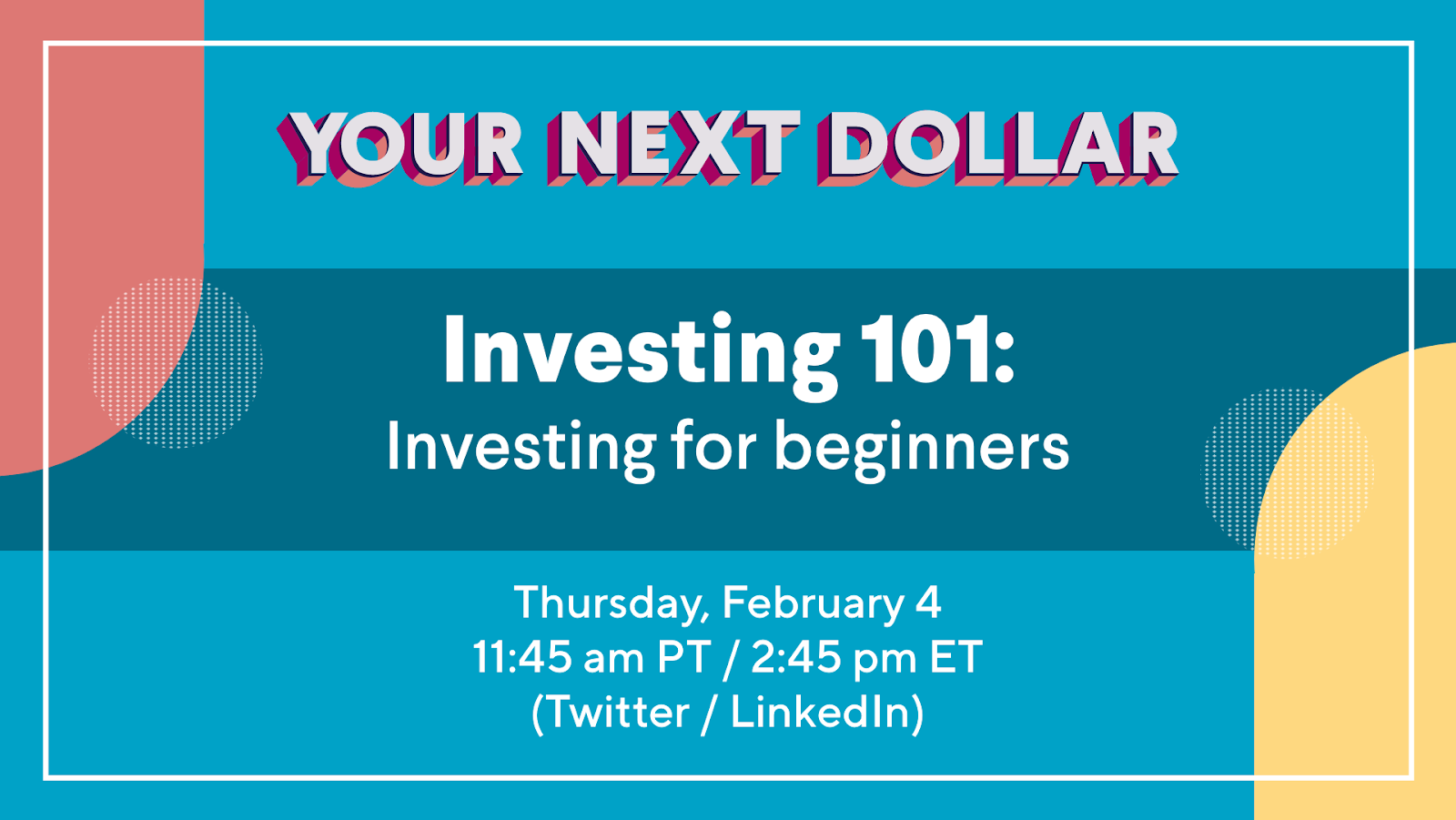
New to investing? Then you won’t want to miss this event. Join SoFi Financial Planner Brian Walsh for an intro course on investing—this Thursday, February 4 at 11:45 am PT on Linkedin and Twitter. Register in the SoFi app!
TikTok’s Rival Goes Public This Week
Background on Kuaishou
Kuaishou, a Chinese short-video app backed by Tencent Holdings (TCEHY), is planning an IPO in Hong Kong this Friday. Analysts expect it will hit a valuation of over $60 billion.
More than 262 million users in China check Kuaishou an average of 10 times per day. Like its competitor TikTok, Kuaishou allows users to create, share, and watch short videos on their smartphones. Like TikTok, Kuaishou employs specialized algorithms to deliver personalized content to viewers.
Finding New Revenue Sources
One of Kuaishou’s main revenue streams comes from allowing viewers to send small virtual gifts to content creators as they watch livestreams. The app takes roughly a 45% cut of the money spent on these gifts. Three years ago the app generated 95% of its revenue in this way. That number has recently fallen to about 62% in part due to the economic downturn resulting from the pandemic.
In order to diversify its revenue sources, Kuaishou is ramping up its advertising business. Ad sales on the platform surged 213% during the nine month period ending in September, compared to the same period a year prior. Despite this rapid growth, Kuaishou is significantly behind its most direct rival, Douyin when it comes to ad revenue. Douyin is also owned by TikTok’s parent company Bytedance. The app earns more than three times the advertising revenue per user hour that Kuaishou does currently.
A Win for the Hong Kong IPO Market
In addition to facing intense competition, Kuaishou has also encountered regulatory roadblocks as it has tried to expand internationally. It has also struggled with censorship and regulations at home. Despite these challenges, investors are bullish about the company’s upcoming public debut.
Zooming out, Kuaishou’s choice to go public in Hong Kong further cements the city’s role as a market for Chinese tech companies. Hong Kong has welcomed companies making their public debuts, like the smartphone maker Xiaomi Corp and food delivery and travel booking company Meituan. Additionally, Chinese tech giants trading on US exchanges like Alibaba (BABA) and JD.com (JD) have recently pursued second listings in Hong Kong. Kuaishou’s IPO will be another big step for Hong Kong.
Demand for Premium Paper Products Is on a Tear
Wood Pulp Prices Rise
The price of wood pulp, which is used to make a variety of paper products, is increasing sharply because of a unique set of circumstances. Since December 1, Bleached softwood kraft pulp futures have surged by 48% on the Shanghai Futures Exchange and currently cost about $1,037 per ton.
Analysts say that if these trends continue paper products companies could see slimmer margins in the coming months. These companies include Kimberly-Clark (KMB), the maker of Kleenex and Huggies diapers, as well as Procter & Gamble (PG), which owns Charmin and Bounty. Meanwhile, pulp makers like International Paper (IP) and Canfor Pulp Products could get a boost.
Changing Consumer Habits Impact Pulp Market
There is currently particularly high demand for softwood pulp, which is made from coniferous trees that are too small or knotty to become lumber and is used to make premium bathroom and kitchen paper products. Because consumers are spending more time at home, demand for these products has climbed.
Though the toilet paper shortage that occurred in the early days of the pandemic is a thing of the past, the market is still very different than it was a year ago. Demand for bulk toilet paper and paper towels used in restaurants and offices has plummeted. These products, which tend to be cheaper and scratchier, are made from recycled material. Softer, premium bathroom tissue and towels, which people tend to use at home, are made from new pulp. This is why new pulp prices are rising.
A Bubble or a Long Term Trend?
Pulp prices are also up because the US dollar is weak, which means it is cheaper for companies in China and elsewhere to buy the commodity because it is priced in US dollars. According to the Wall Street Journal Index, which compares the dollar to other currencies, the dollar has fallen 5.6% over the past year.
Analysts are trying to determine whether the spike in pulp prices is a bubble or a long-term shift. Though some of these trends may only impact pulp prices in the short term, bullish investors in pulp believe that the commodity will stay popular because companies focused on ESG goals may turn to biodegradable paper packaging instead of plastic and foam. Graphic Packaging Holding Co (GPK), a paper packaging company, believes that roughly $5 billion worth of plastic packaging will be replaced with paper each year going forward.
Not-So-Breaking News
- Tesla (TSLA) is voluntarily recalling 134,951 Model S and Model X vehicles because of issues with their touchscreens. The company said these problems could lead to the loss of certain safety features while the cars are driving.
- Astra, which became the latest private company to go into space in December, is planning an IPO. It will merge with an SPAC called Holicity (HOL). The deal values the rocket maker at a $2.1 billion enterprise value.
- ExxonMobil (XOM) shared better-than-expected Q4 profits yesterday. The company also announced plans for a new business called ExxonMobil Low Carbon Solutions which will focus on alternative energy solutions. Exxon plans to invest $3 billion in the new group over the next five years.
- Preliminary readings show that the euro zone economy contracted by 6.8% in 2020. During the final quarter of last year, the region’s economy experienced a 0.7% fall as governments tightened restrictions on businesses to curb the spread of COVID-19 during the second wave.
- Yesterday, Amazon (AMZN) reported revenue of $125.56 billion during Q4 of 2020—its largest quarter by revenue ever. The company also announced that Jeff Bezos will step down as CEO and will be replaced by Andy Jassy during the third quarter of this year. Bezos will become the executive chair of Amazon’s board.
- Back in June 2020, SoFi committed to donating $1 million to various organizations that empower Black and African Americans. Today, we’re proud to share that we have fulfilled that commitment as part of one of our core values, Embrace Diversity. We believe everyone should feel welcome, included, and able to contribute. Read more about the organizations chosen on the SoFi blog.
Financial Planner Tip of the Day
"Financial health isn’t synonymous with a person’s savings or how much they currently earn. It may be helpful to think of good financial habits as a future-oriented exercise routine that can start with small daily steps—something done today that’s motivated by longer-term gains."
Brian Walsh, CFP® at SoFi