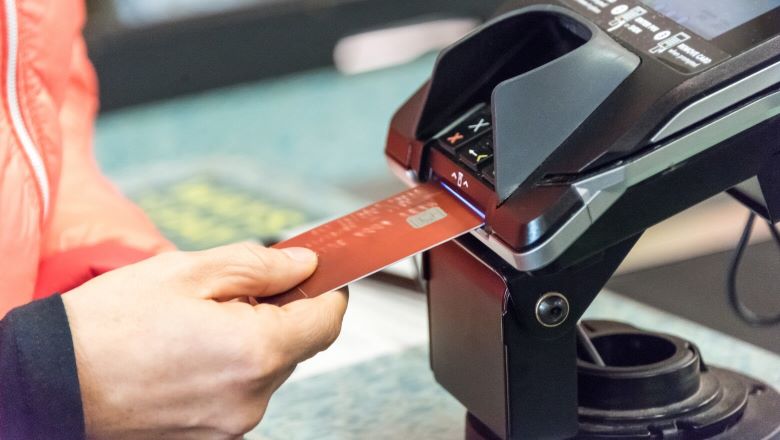
A credit card chip malfunction can be a small embarrassment and disruption in your day-to-day life, but don’t panic. There are several reasons why it might be malfunctioning, including wear and tear, dirt buildup, or an issue with your account.
Here, learn the basics of credit card chips, the different reasons a credit card chip might stop working, and what to do if it malfunctions.
• If your credit card chip isn’t working, you might try cleaning it with wipes or a microfiber cloth to remove grime.
• Use the magnetic stripe if the chip fails to work, and check for card reader issues by trying a different terminal.
• If cleaning doesn’t fix the issue, see if there is an issue with your account by contacting the card issuer.
• Request a replacement card if cleaning doesn’t fix the issue and your account is in good standing.
• Monitor and manage your credit card account to avoid limits and missed payments.
What Is a Credit Card Chip?
A credit card chip is a microchip that’s embedded in your credit card. The chip protects your data when you make an in-person payment. It uses a process called tokenization that encrypts your information, and generates a one-time code for each transaction.
Thanks to this technology, your credit card information is never received or transmitted by the merchant. This lowers the instances of credit card fraud when you use your card in a store or restaurant.
How a Credit Card Chip Works
Chip technology is also known as “card-and-PIN,” “card-and-signature,” or EMV (aka Europay, Mastercard, and Visa). The microchip that’s embedded in your card uses a process called tokenization. This is the same technology used in contactless credit cards and payments. In short, tokenization takes your sensitive card information and converts it into a unique token. This token protects your card info and account details.
The credit card chip holds encrypted data and transaction codes. These transaction codes are unique, one-time use, and always changing. As a result, it’s hard for counterfeit thieves to duplicate the data that’s stored on the chip.
Credit Card Chip Types
Within the realm of credit cards, there are three main chip types:
Standard “smart cards”: If you want to make an in-person purchase or take out cash at an ATM, many “smart cards” with the EMV chip technology simply require you to insert or tap your card into the card terminal.
Chip-and-PIN cards: This type of credit credit chip offers the most security. To make a purchase or make a withdrawal from an ATM with a chip-and-PIN card, you’ll need to first tap your card into the card reader, then punch in your credit card PIN code.
Chip-and-signature cards: This type of chip card provides a bit more security than if you simply swiped your card, but it’s not as secure as the chip-and-PIN type card. As the name implies, to use your card, you insert your card into the reader, then provide a signature for the transaction to go through.
Chip-and-signature cards aren’t as secure as their chip-and-PIN counterparts because it’s easier for fraudsters to forge a signature than to decipher your 4-digit PIN.
5 Things That Can Cause a Credit Card Chip to Stop Working
Here are some reasons why your credit card stopped working, and how to avoid these hiccups from happening:
Grime Buildup
Your card encounters dirt each time you insert or swipe in a machine, and grime will build up over time. This grime buildup could mean the terminal can’t read your card. To avoid this from happening, wipe down your card periodically.
Wear and Tear
Over time, the chip can get scratched or damaged. While scratches to the plastic on your card won’t cause any issues, scratches or dings to the chip might cause your chip to stop working and the transaction won’t go through.
To prevent wear and tear, consider protecting your physical card with a protective sleeve holder. These are usually made of a thin yet durable material, like synthetic fibers.
Heat or Water Damage
If you accidentally spill coffee and your credit card gets doused in the hot liquid or you leave your card in the hot car in the middle of summer, the chip on your card might get warped and go on the fritz.
To avoid this from happening, keep your card in your wallet when not in use. And be mindful of exposing it to extreme heat.
Sometimes when your chip stops working it’s because there’s an issue with your account. Common reasons include going over your credit limit, a missed minimum payment, or making purchases in locations where you don’t normally shop.
In this case, try swiping your credit card instead of doing the chip-and-PIN route. Hopefully that will resolve the issue and your payment will go through.
💡 Quick Tip: When using your credit card, make sure you’re spending within your means. Ideally, you won’t charge more to your card in any given month than you can afford to pay off that month.
Issue with your account
Sometimes when your chip stops working it’s because there’s an issue with your account. Common reasons include going over your credit limit, the billing info doesn’t match with your account, or you’re making purchases in locations where you don’t normally shop.
To steer clear of this potential issue, watch your credit limit. You can log on to your account or check your card balance on your card’s mobile app. If you’re using your card while on a business trip or vacation, set a vacation alert.
💡 Quick Tip: When using your credit card, make sure you’re spending within your means. Ideally, you won’t charge more to your card in any given month than you can afford to pay off that month.
What to Do if Your Credit Card Chip Stops Working
Here’s how to fix your credit card’s chip if it’s not working:
Clean the Card
If your chip is malfunctioning because of dirt buildup, try to clean your card. Gently wipe it down with an antibacterial wipe, alcohol pad, or microfiber cloth. You can also gently wipe around the edges of your chip with a cotton swab.
Swipe Instead
The magnetic stripe on your card also contains your account data. If the problem is with the checkout terminal, try swiping instead of tapping your card. There’s a chance that your transaction will go through without a hitch.
Get a Replacement Card
If the chip on your card regularly doesn’t work and no amount of cleaning fixes the problem, you might need to reach out to your credit card issuer and ask for a new one. You can do so by calling the number on the back of your card or on the issuer’s website or app. You can sometimes request a new card directly on the app or issuer’s website.
How long it will take for you to receive a replacement card depends on the credit card issuer, but you can expect it to take anywhere from one to seven business days. There might be a charge for a replacement card and a charge if you want shipment to be expedited.
There are a handful of reasons why your credit card chip stopped working. By doing a bit of investigating, you can get to the root of the issue and troubleshoot accordingly. Most likely you’ll just need to clean the card, but sometimes you may need to request a new one or address an issue with your credit card account.
FAQ
What do you do if your credit card chip doesn’t work?
If your credit card chip isn’t working, there’s usually a simple explanation why. It could be the result of normal wear-and-tear, heat or water damage, or grime buildup. Or it could be an issue with the card terminal or your account. Try to clean your card to see if that helps. If you’re in the middle of a purchase, swipe your card instead of inserting it into the terminal. In some instances, you might need to replace your credit card or address an account issue.
What can ruin a chip in a credit card?
There are a few ways a credit card chip can get ruined: regular wear and tear, grime buildup, or extreme heat or water damage.
Can you still use your card if the chip is broken?
You can still use your card by swiping. However, swiping your card instead of going the “chip-and-PIN” or “chip-and-signature” route reduces its security. You may want to request a replacement card.
Photo credit: iStock/Juanmonino
Financial Tips & Strategies: The tips provided on this website are of a general nature and do not take into account your specific objectives, financial situation, and needs. You should always consider their appropriateness given your own circumstances.
Third-Party Brand Mentions: No brands, products, or companies mentioned are affiliated with SoFi, nor do they endorse or sponsor this article. Third-party trademarks referenced herein are property of their respective owners.
Third Party Trademarks: Certified Financial Planner Board of Standards Center for Financial Planning, Inc. owns and licenses the certification marks CFP®, CERTIFIED FINANCIAL PLANNER®
You probably know how easily you can tap to pay for items when shopping and click to send a friend money for your share of dinner. Why can’t most of your financial transactions be that easy?
They can be. You can be freed from much of the usual day-to-day account activity by automating your finances. Doing so can eliminate your wondering whether you have paid bills on time, allocated the right amount to savings, and more.
Automating your finances can be a smart money move that saves you on late fees and reduces financial stress. It may also help you establish and stick to a budget, as well as get on a path to growing your wealth.
Deciding where and when to automate personal finances need not be complicated. Here’s a guide sharing what it means to automate your finances, the different ways you can put your money management on autopilot, and tips for making the process super simple.
Key Points
Automating finances simplifies bill payments and savings through prescheduled and preapproved fund transfers.
Automated fund transfers can be used to receive paycheck funds quickly, pay bills on time, and steadily increase savings for emergency funds, retirement contributions, college, and more.
Automated investing may promote consistent portfolio growth and long-term financial stability.
Creating a budget accounting for retirement and savings goals, debt payments, and other expenses can help you set up automatic payments and transfers.
Regular financial reviews can help you quickly catch errors and prevent overdrafts.
What Does It Mean to Automate Your Finances?
Automating your finances means you use today’s technology to preschedule and preapprove transfers of your funds. It’s a “set it and forget it” way to pay bills, move money from checking to savings, and even enrich your retirement account.
The beauty of doing so means you can avoid late fees (which many of us, no matter how responsible we are, get hit with sooner or later). You may also become more organized and free your mind to ponder better things. Worrying about when bills are due is so last decade, after all!
Check out our Money Management Guide.
This article is from SoFi’s guide on how to manage your money, where you can learn basic money management tips and strategies.
What Kind of Accounts Can You Automate?
If you’re wondering what kind of accounts you can automate, you’ll probably like this answer: Almost any kind. Here’s a list of some of the most popular:
Credit cards
Rent or mortgage
Utilities
Investment accounts
Loans (car, personal, etc.)
Insurance
Savings (from short-term vacation funds to your emergency fund to retirement accounts).
Automating payments can spare you late fees and overdraft charges. It can also help you streamline the process of staying active and accountable on your accounts (a great way to avoid winding up with credit charge offs).
It may also help keep your credit score from being impacted by missed payments. In fact, payment history contributes 35% to your FICO® score.[1] You want to protect those digits.
(BTW, it’s a good idea to scan for common credit report errors on an annual basis, just to make sure nothing is amiss.)
💡 Quick Tip: Want to save more, spend smarter? Let your bank manage the basics. It’s surprisingly easy, and secure, when you open a bank account online.
Increase your savings with a limited-time APY boost.*
*Earn up to 4.00% Annual Percentage Yield (APY) on SoFi Savings with a 0.70% APY Boost (added to the 3.30% APY as of 12/23/25) for up to 6 months. Open a new SoFi Checking and Savings account and pay the $10 SoFi Plus subscription every 30 days OR receive eligible direct deposits OR qualifying deposits of $5,000 every 31 days by 3/30/26. Rates variable, subject to change. Terms apply here. SoFi Bank, N.A. Member FDIC.
Different Ways to Automate Your Finances
When it comes to the set-up of automating personal finances, there are a few different techniques to try. Here, you’ll learn some of the most popular options so you can decide what’s right for you, whether it’s one method or a combination.
Option 1: Sign Up for Automatic Payments With Your Creditor
Here’s how this works: Say your wifi provider or landlord of your rental apartment gives you an automatic bill payment option.
• Through their payment portal, you’ll set up an autopay schedule, connecting the service provider to your bank account. On the agreed-upon date (say, rent is due by the 7th of every month so you select to pay on the 6th), they will automatically deduct the amount from your checking.
• In some cases, you may be assessed a fee for this privilege; it varies with the provider.
• When you opt into this kind of plan, you may be given the opportunity to have the payment charged to a credit card or deducted from an account other than your bank account. Look carefully, though; you may wind up paying additional fees for this.
You may find that some creditors don’t offer you the kind of convenience described above, but your bank may swoop in and help you pay automatically. Many major banks will issue payments on your behalf to a creditor or service provider, which can make your life infinitely easier. No more writing checks every month and digging around for stamps. Here are the steps to take:
• Check with your bank about what they offer. Typically, they will need the name, account number, and potentially the address of the business you are paying.
• You’ll also need to assess how long this process will take every month; it may not be instantaneous. You’ll want to make sure the money arrives on time and you are not charged any late fees so your credit score doesn’t suffer.
• Then you’ll sign up for the series of payments to be handled by your bank.
Option 3: Set Up Direct Deposit With Your Employer (if You Have the Option)
An excellent way to automate and fund your personal finances is to set up direct deposit of your paycheck (the vast majority of salaried workers are paid this way). You’ll know your salary is getting sent to your bank account and when it hits. Some pointers:
You’ll likely need to share your account number and routing number with your employer in order to establish direct deposit.
You may also need a voided check to get the funds moving to the right place.
You can then schedule your automated payments for the right dates, when your balance is feeling especially flush.
A great hack to know about: Some bank accounts will allow you access to your paycheck funds a day or two early if you sign up for direct deposit with them. That’s another great way to keep abreast of those bills.
Option 4: Set Up Automatic Retirement Contributions
It’s all too easy to think, “I’ll get around to saving for retirement…someday.” Perhaps that’s why the American households had a median balance of only $87,000 in retirement accounts, according to the Federal Reserve’s most recent survey.[2] That’s probably not enough if your dream is moving to Hawaii at age 65 and spending your days with your toes in the sand.
That’s why learning how to automate your finances for retirement savings can be such a helpful practice. Many experts suggest depositing at least 15% of your pretax income into your retirement plan every paycheck. Some tips:
If your employer offers a retirement savings plan, you can authorize your HR or payroll department to automatically whisk away a certain amount of your pre-tax income every paycheck and put it toward retirement. You won’t miss what never hits your checking account, right?
Aim for the maximum amount allowed, or at least put in enough to get any company match that’s offered. Otherwise, you’re leaving free money on the table.
If you’re self-employed, you may be able to automate your savings with recurring transfers into such vehicles as a solo 401(k), SEP IRA, or SIMPLE IRA as you save for your future.[3]
Option 5: Put Your Savings on Autopilot
Your non-retirement savings are another important account to automate. Again, if your salary hits your checking account, you may feel rich and go spend more than you should. By automating your savings and funneling money from your paycheck straight into an account, you may avoid going on shopping sprees.
This can be a very effective tool. In one study by financial psychologist Brad Klontz, people who visualized their goals and set up automatic withdrawals enjoyed a 73% increase in their savings after just one month.[4]
Into what kind of account can you direct those funds? That’s up to you. Perhaps you want to have a few separate accounts that feed different goals. You might have one account for a down payment fund, one for vacation savings, and one for your child’s educational expenses. You can direct how much and how often you want each transfer to be.
Of course, there are options about where exactly you keep your savings. Some possibilities to consider:
Standard savings accounts are good, but a high-yield savings account can be even better. These tend to pay a significantly higher annual percentage yield (APY) than a standard account and are often offered by online vs. traditional banks.
Certificate of Deposit (CD) accounts can be another good option. These are time deposits, meaning you commit to keep the funds with the financial institution for a specific period of time, which may typically range from a few months to several years. In return, you are assured a specific interest rate. However, there may be penalties if you withdraw funds early.
A TreasuryDirect account can allow you to make recurring purchases of electronic savings bonds directly from your paycheck. You can learn more about this at the Treasury Direct website.
Option 6: Set Up Regular Contributions to Your Emergency Fund
Your emergency fund is another type of savings that can benefit from automated infusions of money. An emergency fund is a stockpile of easily accessed cash that can tide you over when unexpected circumstances hit. Perhaps you get a major car repair or medical bill or are laid off from your job. An emergency fund can let you pay bills without accessing a high-interest line of credit (say, ringing up too much debt on your credit card).
In terms of emergency funds, keep the following in mind:
It’s wise to have at least three to six months’ worth of basic living expenses in the bank. That means mortgage or rent, utilities, insurance payments, food, childcare, and other must-have goods and services, plus minimum debt payments.
Most people can’t create this fund with a single, lump-sum deposit. Making regular transfers into your account (even if it’s only $20 per paycheck or per month) will get you started. Any contribution is better than nothing!
Where to keep your emergency fund? Since you want it to be available almost immediately in urgent situations, a **high-yield savings account** or **standard savings account** can be a good option. Either way, you’ll earn some interest. A money market account, which combines some of the features of savings and checking accounts, may also serve this purpose.
Option 7: Sign Up for Automated Investing With Your Brokerage
If you currently have an investment portfolio or are planning on starting one, that’s another task that can be made simpler by technology. Automated investing can allow you to achieve consistency with minimal effort, which can help you build your net worth over time.
Some examples:
As noted above, you might set up recurring transfers into a retirement plan that invests the funds for you.
You may automate contributions to a 529 investment account, designed to help families save for future educational expenses, such as college.
You can automatically transfer money from your checking account into a brokerage account.
You might work with a robo-advisor that picks investments based on your needs and preferences and also rebalances your portfolio.
Investing apps are another possibility to help automate investing. These can be as simple as the ones that round up the price of purchases and then invest the change for you.
Tips to Successfully Automate Your Finances
Now that you have a good grounding in the benefits and how-to’s of automating personal finances, consider these strategies for success:
Create a Budget Based on the Balance You Get Paid
Look at where your money stands after you deduct your retirement and savings amounts. With the remaining funds, you can plan out ways to budget. There are various techniques out there, like the 50-30-20 budget rule, among others. Do an online search and see what resonates with you.
A budget will guide your saving and spending and can reveal how you are doing in terms of setting financial goals and meeting them on other fronts, such as a vacation fund or a retirement account.
It will help you handle good vs. bad debt more effectively. All are terrific ways to avoid excessive debt and build wealth.
Be Aware of All Your Bill Due Dates
As you automate your finances, do pay careful attention to the due dates on your bills. Who wants to see their hard-earned cash get drained by late fees?
Look at the calendar; check when your paycheck hits and when certain bills are due. Some creditors may set your due date in stone; others may have some flexibility. Similarly, some autopay portals may allow you to set the payment date; others may have a specific date on which they will debit funds.
Make sure you understand if there’s any lag with automatic payments. Be sure they will arrive on time.
It can be better to stagger autopayments so you don’t risk overdrawing your account. See what best suits your lifestyle and money style to keep your account in good shape.
Review Your Bank Account and Bank Statements Often to Stay on Top of Your Transactions
One of the pleasures of automating your finances is that you are freed from thinking and worrying about your money and your bills on a regular basis. However, daily life involves all kinds of money blips, from treating your bestie to a fancy birthday dinner to (ugh) having fraudulent charges appear on your credit card bill.
So do review your bank account and other statements regularly to make sure everything is as it should be and that your balance isn’t too low. Check in with your accounts often. Should you check your bank account every day? Not necessarily. A couple of times a week can be a good cadence.
Increase Your Contributions When It Makes Sense
While you’re checking your finances and bank balances, don’t overlook whether it’s time to increase your contributions to help meet your savings goals. If you’ve gotten a raise or paid off a student loan, you may have funds available to save more.
Or you might find that a chunk of change has accumulated in your checking account which could do more for your finances if used elsewhere. There are times when you may want to increase your transfers to reflect your positive financial status.
The Takeaway
Automating your finances can be a great way to take control of your money and make bill paying and saving so much more convenient. That kind of organization can let you breathe easier when it comes to managing your money and be more successful in meeting your financial goals.
Interested in opening an online bank account? When you sign up for a SoFi Checking and Savings account with eligible direct deposit, you’ll get a competitive annual percentage yield (APY), pay zero account fees, and enjoy an array of rewards, such as access to the Allpoint Network of 55,000+ fee-free ATMs globally. Qualifying accounts can even access their paycheck up to two days early.
Better banking is here with SoFi, NerdWallet’s 2024 winner for Best Checking Account Overall.* Enjoy 3.30% APY on SoFi Checking and Savings with eligible direct deposit.
FAQ
How often should I review and adjust my automated finances?
You should review your finances and automated transactions regularly to monitor your payments and balance, which for some people may mean a couple of times weekly; for others, it might be every other week. Also, it’s wise to check in when you have significant changes in your life, whether you’ve gotten a raise, took out a mortgage, or moved to an area with a higher cost of living. You may want to recalibrate your automated transfers.
Is it safe to automate my finances?
By and large, it is safe to automate your finances. You should, however, check in regularly to make sure you are not overdrafting or getting close to it, and also to keep in touch with your money. It’s possible that a glitch could delay a payment and, unfortunately, it’s important to be aware of any potential signs of fraud when conducting any type of financial transaction.
What are the best tools or apps to use for automating my finances?
There are an array of tools and apps for automating your finances. A good place to start may be with your very own financial institution. They may have automated savings and investing products, roundup apps, and other tools to help you make the most of your money and grow your wealth.
Can I still make manual payments even if I have automatic payments set up?
In many cases, you will still be able to make a manual payment even if you have automated payments set up. This could occur when you have an additional bill for an account that is set on autopay, or when you have a credit and want to pay a lower amount. Check with your creditor or the financial institution handling the transfer for details on how to do this smoothly.
SoFi Checking and Savings is offered through SoFi Bank, N.A. Member FDIC. The SoFi® Bank Debit Mastercard® is issued by SoFi Bank, N.A., pursuant to license by Mastercard International Incorporated and can be used everywhere Mastercard is accepted. Mastercard is a registered trademark, and the circles design is a trademark of Mastercard International Incorporated.
Financial Tips & Strategies: The tips provided on this website are of a general nature and do not take into account your specific objectives, financial situation, and needs. You should always consider their appropriateness given your own circumstances.
Annual percentage yield (APY) is variable and subject to change at any time. Rates are current as of 12/23/25. There is no minimum balance requirement. Fees may reduce earnings. Additional rates and information can be found at https://www.sofi.com/legal/banking-rate-sheet
Eligible Direct Deposit means a recurring deposit of regular income to an account holder’s SoFi Checking or Savings account, including payroll, pension, or government benefit payments (e.g., Social Security), made by the account holder’s employer, payroll or benefits provider or government agency (“Eligible Direct Deposit”) via the Automated Clearing House (“ACH”) Network every 31 calendar days.
Although we do our best to recognize all Eligible Direct Deposits, a small number of employers, payroll providers, benefits providers, or government agencies do not designate payments as direct deposit. To ensure you're earning the APY for account holders with Eligible Direct Deposit, we encourage you to check your APY Details page the day after your Eligible Direct Deposit posts to your SoFi account. If your APY is not showing as the APY for account holders with Eligible Direct Deposit, contact us at 855-456-7634 with the details of your Eligible Direct Deposit. As long as SoFi Bank can validate those details, you will start earning the APY for account holders with Eligible Direct Deposit from the date you contact SoFi for the next 31 calendar days. You will also be eligible for the APY for account holders with Eligible Direct Deposit on future Eligible Direct Deposits, as long as SoFi Bank can validate them.
Deposits that are not from an employer, payroll, or benefits provider or government agency, including but not limited to check deposits, peer-to-peer transfers (e.g., transfers from PayPal, Venmo, Wise, etc.), merchant transactions (e.g., transactions from PayPal, Stripe, Square, etc.), and bank ACH funds transfers and wire transfers from external accounts, or are non-recurring in nature (e.g., IRS tax refunds), do not constitute Eligible Direct Deposit activity. There is no minimum Eligible Direct Deposit amount required to qualify for the stated interest rate. SoFi Bank shall, in its sole discretion, assess each account holder's Eligible Direct Deposit activity to determine the applicability of rates and may request additional documentation for verification of eligibility.
See additional details at https://www.sofi.com/legal/banking-rate-sheet.
We do not charge any account, service or maintenance fees for SoFi Checking and Savings. We do charge a transaction fee to process each outgoing wire transfer. SoFi does not charge a fee for incoming wire transfers, however the sending bank may charge a fee. Our fee policy is subject to change at any time. See the SoFi Bank Fee Sheet for details at sofi.com/legal/banking-fees/.
1SoFi Bank is a member FDIC and does not provide more than $250,000 of FDIC insurance per depositor per legal category of account ownership, as described in the FDIC’s regulations. Any additional FDIC insurance is provided by the SoFi Insured Deposit Program. Deposits may be insured up to $3M through participation in the program. See full terms at SoFi.com/banking/fdic/sidpterms. See list of participating banks at SoFi.com/banking/fdic/participatingbanks.
Tax Information: This article provides general background information only and is not intended to serve as legal or tax advice or as a substitute for legal counsel. You should consult your own attorney and/or tax advisor if you have a question requiring legal or tax advice.
Disclaimer: Many factors affect your credit scores and the interest rates you may receive. SoFi is not a Credit Repair Organization as defined under federal or state law, including the Credit Repair Organizations Act. SoFi does not provide “credit repair” services or advice or assistance regarding “rebuilding” or “improving” your credit record, credit history, or credit rating. For details, see the FTC’s website .
External Websites: The information and analysis provided through hyperlinks to third-party websites, while believed to be accurate, cannot be guaranteed by SoFi. Links are provided for informational purposes and should not be viewed as an endorsement. Third Party Trademarks: Certified Financial Planner Board of Standards Center for Financial Planning, Inc. owns and licenses the certification marks CFP®, CERTIFIED FINANCIAL PLANNER®
*Awards or rankings from NerdWallet are not indicative of future success or results. This award and its ratings are independently determined and awarded by their respective publications.
Many people are sidestepping cash lately. According to a March 2024 Forbes Advisor survey, a full 70% of U.S. adults use card payments most often, and only 21% always have some cash on hand.[1]
But does that mean everyone should forego cash once and for all? Not necessarily. In fact, some financial experts say that a cash-only system may be a wise money move in certain situations.
An exclusively cash lifestyle may help you follow your budget, sidestep overspending, and avoid the high cost of overdraft, interest, and other fees that can be incurred when you pay by check, debit, and/or credit card.
But going all-cash has its downsides, too. It may not be convenient or as secure as other ways of paying.
To figure out what’s right for you, read on.
Key Points
Cash-only living enhances budgeting and savings by making spending visible and tangible.
This approach reduces the risk of overspending and incurring high financial fees.
Moving away from digital spending can also improve privacy and online security.
Potential drawbacks include ATM fees and increased risk of theft or loss.
Living cash-only does not contribute to building a credit history, which can impact future financial opportunities.
Pros of Cash-Only Living
Spending money the old-fashioned way — by regularly withdrawing cash from your checking account and keeping it in your wallet — can offer some significant perks. Here are some benefits that come with paying with cash for all your transactions.
Using Cash-Only Can Help You Budget — and Save
When spending is invisible, it can be all too easy for people to forget that real money is actually going out the door — and all too easy to get in over their heads.
Using a cash-only payment system, even if it’s just for a month or two, can be a great way to see exactly how much you’re spending each day and week, and help you learn how to live within your monthly budget. With cash accounting, you only take out the amount you’ve allotted to spend for a certain period of time. When you’re out of bills, you’re done.
And if you use the envelope system (more on that below), you’ll be able to set aside specific amounts for all of your spending categories, such as rent, food, and entertainment. You can then only use the cash you’ve withdrawn for those expenses, which can keep you from spending outside of those pre-set limits.
Cash-Only Living Can Help You Maintain Privacy and Security
Every debit or credit card transaction leaves a digital paper trail, and enables companies to know exactly what you buy, when you buy, and precisely how much you spend.
A more troubling concern can be the potential for data leaks of your personal and credit card information, which can result in identity theft. If someone steals your identity, they could potentially empty your accounts and obtain new credit cards and credit lines in your name.
Cash-Only Living Can Help You Save on Interest and Fees
Credit cards often come with annual, as well as late payment fees.
And some stores and service providers, especially small and local businesses, may charge an extra fee to take a credit card payment, since they have to pay for the transaction.
In addition, if you don’t pay your credit card balance in full, you’re likely to end up paying exponentially more, thanks to high credit card interest rates. As of May 2025, the average annual percentage rate (APR) for credit cards is 28.63%.
Cons of Using Only Cash
Using cash-only can also come with risks and disadvantages. Here are some of the drawbacks.
Cash Living Can Come With Costs
Some ATMs charge fees for withdrawing cash, which can be troublesome if you find yourself suddenly out of money and need to use an ATM outside of your own bank’s network.
By using credit cards instead of depending on ATMs, you may be able to avoid those costs.
Keeping cash on your person or in your home comes with vulnerability. You could be a victim of theft, you could lose some money, or the cash stashed in your home could be destroyed by a flood or fire. While not highly likely, it can happen.
A lost or stolen credit card, on the other hand, can be reported and you can often successfully dispute any instances of fraudulent charges.
You Fail to Build Up a Credit History
There’s something ironic about the way lenders look at credit history: If you haven’t borrowed much in the past, lenders may be reluctant to lend to you now.
Opening a credit card account is one way you can build up a credit history (other forms of credit, such as student or car loans, count as well).
A strong credit score is based in part on the average age of your accounts (the older the better), as well as a history of paying your bills on time, and how much debt you have in relation to the amount of credit available to you.
Your credit score is an important factor if you’d like to take out a loan in the future, such as an auto loan or home mortgage. If you pay for everything exclusively in cash and never use credit (which is often hard to pull off), you may have trouble showing that you have the credit history to qualify.
Increase your savings with a limited-time APY boost.*
*Earn up to 4.00% Annual Percentage Yield (APY) on SoFi Savings with a 0.70% APY Boost (added to the 3.30% APY as of 12/23/25) for up to 6 months. Open a new SoFi Checking and Savings account and pay the $10 SoFi Plus subscription every 30 days OR receive eligible direct deposits OR qualifying deposits of $5,000 every 31 days by 3/30/26. Rates variable, subject to change. Terms apply here. SoFi Bank, N.A. Member FDIC.
Tips for Living a Cash-Only or a Cash-Mostly Life
If you decide to switch to an all, or largely, cash life, here are some strategies to help make the shift as seamless as possible.
Choosing Which Categories to Switch to Cash
Certain payments and bills, such as a mortgage or your student loan, need to be paid digitally or by check.
But you may want to switch groceries, entertainment, clothing, and eating out to cash-only to keep better tabs on the outflow.
Cutting Back on Debit/Credit Card and Check Use
For your cash-only categories, it may be a good idea to stop using your credit card (and even your debit card and checkbook) to pay for anything in those categories. That way, you can really track your cash.
Setting up a System for Tracking Cash Flow
To keep cash for different categories separate, you might consider using the envelope budget method.
With this system, you set a certain amount of cash to spend in each budget category. These pools of money are kept separate in different envelopes. To keep track of the flow, you can put receipts in the same envelopes as you spend.
The goal is to make the cash last all month. Once the envelope is empty, you’ll either be done for the month or will need to take cash out of a different envelope, potentially short-changing another category.
Whether it’s a certain day each week or month, you’ll want to make sure that you go to the ATM on a regular basis to get the full amount of cash that you’ll need until the next ATM trip. Ideally, you want to take your cash out of your checking and not your savings account, especially if you’re earning competitive interest in a high-yield savings account.
Planning Shopping Trips in Advance
It’s generally better not to carry a load of cash around, so you may want to know ahead of time what errands you’ll be running, and how much you’ll need for each outing.
If you’re looking to fix or improve your everyday spending habits, nothing works quite like a cash-only lifestyle.
By forcing you to stick to pre-set spending limits (and actually see where your money is going), this approach can help you keep your monthly spending within your budget.
While cash-only living can take away from efforts to build credit and can have some security issues, this method of spending can also help you save on credit card fees and interest.
Whether you opt for an all-cash or partly-cash lifestyle, you’ll want to choose a bank that provides easy access to your funds, while also paying a competitive return on your balance.
Interested in opening an online bank account? When you sign up for a SoFi Checking and Savings account with eligible direct deposit, you’ll get a competitive annual percentage yield (APY), pay zero account fees, and enjoy an array of rewards, such as access to the Allpoint Network of 55,000+ fee-free ATMs globally. Qualifying accounts can even access their paycheck up to two days early.
Better banking is here with SoFi, NerdWallet’s 2024 winner for Best Checking Account Overall.* Enjoy 3.30% APY on SoFi Checking and Savings with eligible direct deposit.
FAQ
Is using cash-only a good idea?
Using cash-only can be beneficial for budgeting and avoiding debt, as it provides a tangible sense of spending. However, it can be impractical, especially for large purchases or online transactions. Cash also doesn’t offer the same level of security as cards, since you generally can’t get cash back if it’s lost or stolen. Additionally, paying cash-only limits your ability to build a credit history, which is important for major financial activities like renting an apartment or getting a loan.
Is it illegal to have over $10,000 in cash?
It is not illegal to have over $10,000 in cash. However, if you deposit or make a payment of more than $10,000 in cash, financial institutions and businesses are required to report it to the government. And if you are traveling with an excess of $10,000, you must report it to a Customs and Border Protection officer when you enter or exit the U.S. As long as the cash is legally obtained and reported when necessary, there are no legal issues with possessing it.
Can you live off only cash?
Living off only cash is possible but challenging. It can work for everyday expenses like groceries and dining out, but it’s impractical for larger transactions, such as rent, utilities, and online purchases. Cash also doesn’t build a credit history, which can affect your ability to secure loans or rent an apartment. Additionally, carrying large amounts of cash can be unsafe and inconvenient, especially for travel or emergencies.
SoFi Checking and Savings is offered through SoFi Bank, N.A. Member FDIC. The SoFi® Bank Debit Mastercard® is issued by SoFi Bank, N.A., pursuant to license by Mastercard International Incorporated and can be used everywhere Mastercard is accepted. Mastercard is a registered trademark, and the circles design is a trademark of Mastercard International Incorporated.
Annual percentage yield (APY) is variable and subject to change at any time. Rates are current as of 12/23/25. There is no minimum balance requirement. Fees may reduce earnings. Additional rates and information can be found at https://www.sofi.com/legal/banking-rate-sheet
Eligible Direct Deposit means a recurring deposit of regular income to an account holder’s SoFi Checking or Savings account, including payroll, pension, or government benefit payments (e.g., Social Security), made by the account holder’s employer, payroll or benefits provider or government agency (“Eligible Direct Deposit”) via the Automated Clearing House (“ACH”) Network every 31 calendar days.
Although we do our best to recognize all Eligible Direct Deposits, a small number of employers, payroll providers, benefits providers, or government agencies do not designate payments as direct deposit. To ensure you're earning the APY for account holders with Eligible Direct Deposit, we encourage you to check your APY Details page the day after your Eligible Direct Deposit posts to your SoFi account. If your APY is not showing as the APY for account holders with Eligible Direct Deposit, contact us at 855-456-7634 with the details of your Eligible Direct Deposit. As long as SoFi Bank can validate those details, you will start earning the APY for account holders with Eligible Direct Deposit from the date you contact SoFi for the next 31 calendar days. You will also be eligible for the APY for account holders with Eligible Direct Deposit on future Eligible Direct Deposits, as long as SoFi Bank can validate them.
Deposits that are not from an employer, payroll, or benefits provider or government agency, including but not limited to check deposits, peer-to-peer transfers (e.g., transfers from PayPal, Venmo, Wise, etc.), merchant transactions (e.g., transactions from PayPal, Stripe, Square, etc.), and bank ACH funds transfers and wire transfers from external accounts, or are non-recurring in nature (e.g., IRS tax refunds), do not constitute Eligible Direct Deposit activity. There is no minimum Eligible Direct Deposit amount required to qualify for the stated interest rate. SoFi Bank shall, in its sole discretion, assess each account holder's Eligible Direct Deposit activity to determine the applicability of rates and may request additional documentation for verification of eligibility.
See additional details at https://www.sofi.com/legal/banking-rate-sheet.
*Awards or rankings from NerdWallet are not indicative of future success or results. This award and its ratings are independently determined and awarded by their respective publications.
Financial Tips & Strategies: The tips provided on this website are of a general nature and do not take into account your specific objectives, financial situation, and needs. You should always consider their appropriateness given your own circumstances.
We do not charge any account, service or maintenance fees for SoFi Checking and Savings. We do charge a transaction fee to process each outgoing wire transfer. SoFi does not charge a fee for incoming wire transfers, however the sending bank may charge a fee. Our fee policy is subject to change at any time. See the SoFi Bank Fee Sheet for details at sofi.com/legal/banking-fees/.
Disclaimer: Many factors affect your credit scores and the interest rates you may receive. SoFi is not a Credit Repair Organization as defined under federal or state law, including the Credit Repair Organizations Act. SoFi does not provide “credit repair” services or advice or assistance regarding “rebuilding” or “improving” your credit record, credit history, or credit rating. For details, see the FTC’s website .
There are multiple ways to get cash into your bank account, where it’s secure and might even earn some interest. You could go old school and deposit bills in person or take advantage of all the mobile transactions available.
Here’s help knowing all the different ways you can deposit money into your bank account, along with how-tos. Equipped with this knowledge, you can be even more ready to get your hard-earned dollars socked away.
Key Points
Multiple methods exist for depositing cash into bank accounts, including direct deposits, account transfers, and cash deposits at bank branches or ATMs.
Direct deposit offers a simple way to add funds, while ATM deposits may vary in terms of immediate availability depending on the bank’s policies.
Online bank customers can utilize mobile deposits, ACH transfers, prepaid cards, or money orders to efficiently add cash to their accounts.
Using peer-to-peer transfer apps allows for quick cash movement, though fees may apply for instant transfers or specific transaction limits.
Understanding the timeframes for deposits is crucial, as cash typically clears faster than checks, and policies vary between financial institutions.
Here, we’ll take a closer look at each, and, a bit later, how to use ATMs to deposit cash.
1. Using Direct Deposit
Direct deposit is by far the simplest and easiest way to get cash into your bank account. All you have to do is visit your bank branch, fill out a deposit slip, hand the slip and your money to the teller, and be on your way.
If the bank is closed or you want to avoid standing in a long line indoors, you can deposit cash at an ATM. You likely won’t need to fill out a deposit slip at the ATM because the computer can read the check or count the cash and then electronically credit the account associated with the ATM card.
Be sure, however, that you know your financial institution’s policies when you make a deposit at an ATM. Unlike an in-person deposit where your money is typically available immediately, your funds may not be available right away with an ATM deposit (especially if it’s not your bank’s ATM). Also, some ATM’s don’t accept cash deposits. So inquire before you make your deposit.
2. Deposit Cash Using an Account Transfer
Perhaps you have more than one account at your bank (there are often incentives to do so, which many people take advantage of). It can be quite convenient to move money via a bank transfer between accounts.
You might complete a one-time transfer at the bank or online to transfer money from savings to checking to cover a large, unexpected expense. Or perhaps you want to set up recurring automatic transfers on payday to whisk 10% of your salary into savings. Or, say you’ve accumulated a chunk of change in one account and want to open a certificate of deposit (CD) to lock in your interest rate. An account transfer could make that happen, too.
3. External Transfer
Maybe you don’t want to keep all your eggs in one basket, so you have more than one financial institution where you keep your money. No worries if you want to move money between accounts as part of managing your banking. Some financial institutions allow you to link accounts held elsewhere.
The how-to’s: Complete what’s necessary to link the accounts (this can involve just inputting an account’s routing and account number), and you can easily transfer money between them.
How else to put cash into a bank account? Wire transfers may sound old-fashioned, but they are still an effective way to send money to someone else’s bank account. Say someone needs to send you money, but you don’t bank with the same financial institution. They can do a wire transfer from their bank to yours using providers like Western Union.
Wire transfers are fast, and the money arrives pretty much immediately. The downside is that you have to share your bank account information, which can give you cause for concern if you don’t know the person you’re dealing with.
Also, wire transfers charge the sender a fee, which may vary on factors such as whether you’re sending/receiving domestically or internationally. The person sending you the funds could want to deduct the fee from the money they are sending your way. And banks may charge fees related to wire transfers as well, so again, do a little research first to avoid any surprises.
5. Peer-to-Peer Transfer
Money-transfer apps or platforms like PayPal, Zelle, or Venmo can be convenient ways to move money around, whether that means a friend paying you back for their share of the dinner tab or someone who employs you as a gig worker sending you your fee. The way these platforms work is that you can receive money either directly into your account or into the money-transfer app and then transfer it to your bank account.
Worth noting: Sometimes you may pay a fee for an instantaneous transfer versus one that takes a day or two. There can be other costs and transaction limits involved as well, so familiarize yourself with the specifics of the platform you are thinking of using.
6. Depositing Cash at Your Bank Branch
One last way to put cash in your bank account. If you bank at a traditional financial institution with brick-and-mortar branches, you could take your money in person and fork it over. Typically, this involves handing the cash to a teller with a deposit slip.
While many people who are paid in cash may use this method, it is of course important to be cautious when en route to the bank with a pocket full of bills. If you lose the money or are robbed, that money would be gone.
Increase your savings with a limited-time APY boost.*
*Earn up to 4.00% Annual Percentage Yield (APY) on SoFi Savings with a 0.70% APY Boost (added to the 3.30% APY as of 12/23/25) for up to 6 months. Open a new SoFi Checking and Savings account and pay the $10 SoFi Plus subscription every 30 days OR receive eligible direct deposits OR qualifying deposits of $5,000 every 31 days by 3/30/26. Rates variable, subject to change. Terms apply here. SoFi Bank, N.A. Member FDIC.
4 Ways to Deposit Cash in an Online Bank Account
If your accounts are at an online bank, you may wonder how best to deposit your cash. After all, there isn’t a brick-and-mortar branch to stroll into, and no one wants to mail cash. But don’t worry; you likely have plenty of options.
One is to find an in-network ATM. Find out what network of ATMs your online bank is part of, and you can then deposit cash in one of those ATMs. Be sure to keep your receipt until the money surfaces in your account so you’re sure everything went through properly.
That’s not always convenient, though, so consider some other options:
You can deposit your checks remotely. It’s super simple and you don’t have to leave home, which is one of the benefits of mobile deposits. All you need to do is take a picture of the front and the back of the check and deposit it via your bank’s mobile app.
2. ACH Transfer
You can also get money deposited directly into your account by what are known as ACH (or Automated Clearing House) transfers. These can be set up to go into your account on a recurring basis, too. For example, you can have your HR department deposit your paychecks into your account, and you can do the same with government benefits if you enroll in the program to get your money this way. Once you know how to set up direct deposit, it might just be a game-changer for you.
3. Depositing Cash Using a Prepaid Card
There’s another option if your online bank account isn’t part of an ATM network: a prepaid debit card that’s linked to your account. With a prepaid card, you can load money on it in a variety of ways. For example, you can go to participating retailers to deposit cash. Then you could transfer the money from the prepaid debit card to your linked online bank account.
But of course, there can be a downside. You may be charged fees to get the card, deposit cash, or withdraw funds. Do the math. If you don’t need to do it frequently, it might be worth it. But if you have to do this often, the additional costs might be a deal-breaker. Shop around for a card that suits your needs.
4. Using a Money Order to Deposit Cash
If all else fails, you could go retro and buy a money order. You get one from the post office or businesses like Western Union. You’ll likely pay less than $5, though the fee depends on the amount of the money order. You can mail the money order to your online bank. Just double-check that the bank accepts money orders for deposits.
5. Transferring From Another Bank Account
Another option is to transfer funds from another bank account. Whether you keep multiple bank accounts at one financial institution or divide them between different banks, you can send money from one account to an online account simply. You can likely use the transfer feature in your bank’s app, add the necessary bank account and routing number, and get the money heading where you want it.
Can You Deposit Cash in an ATM?
Yes, you often can. Many ATMs accept cash, though a few do not. Check with your bank or look carefully at the ATM you are planning to use to see whether a cash deposit is an option.
Using a Deposit Slip for an ATM
Like many other bits of paperwork, deposit slips are used less often than in the past when banking. Most ATMs do not require deposit slips. The computer that’s part of the ATM can verify and count the bills without the need for you to provide extra paperwork stating the amount.
Of course, you’ll want to double-check that where you are making your deposit has a machine that doesn’t require a deposit slip before you put your cash in. There may still be some devices out there that still require a deposit slip and envelope.
Funds May Not Be Available Immediately
If you deposit cash into your bank’s ATM, the money is typically available almost immediately. This is a change from the past, when a teller had to receive and then verify the deposit before funds were made available. This typically took one of two days.
Also keep in mind that many banks don’t allow you to deposit cash into an out-of-network ATM. If they do, there might be a fee involved as well as a delay in funds availability. It’s wise to check such details before you attempt to put some bills into this kind of machine.
When Does a Deposit Typically Appear in Your Account?
Every financial institution has its own rules about how long cash takes to clear or how long a direct deposit takes. Know, however, that federal law establishes the maximum length of time a bank or credit union can make you wait.
Cash, as you might guess, tends to clear most quickly. If deposited in person to your checking or savings account, it may become available the same day or the next day. If you deposit it to an ATM in your bank’s network, it could take until the second business day to clear; if you use an out-of-network ATM that accepts cash from those who aren’t account holders, that can take five business days.
The typical time period for checks and money orders to clear is between two and five days. According to the Consumer Financial Protection Bureau (CFPB), generally, these are the guidelines:
If you deposit a check or checks for $200 or less in person to a bank employee, you can access the full amount the next business day.
If you deposit checks totaling more than $200, you can access $225 the next business day, and the rest of the money the second business day.
Here are a few nice exceptions involving in-person deposits at your bank. You should be able to access the full amount on the next business day if you deposit:
A certified check
A check from another account at your bank or credit union
A check from the government.
The amount of time a bank or credit union holds funds you deposit by check is sometimes referred to as a “deposit hold” or “check hold.” Some banks or credit unions may make funds available more quickly than the law requires, and some may expedite funds for a fee.
If you need the money from a particular check, you can ask the teller or a customer service representative when the funds will become available. A receipt showing your deposit does not mean that the money is available for you to use.
Knowing these timeframes can be very helpful as you stay on top of your money and work to make sure you know your approximate balance and don’t bounce any checks.
There are many options in terms of depositing cash into your bank account, whether you use a traditional or online bank. You’ll find options from going to a brick-and-mortar branch to using an ATM to mobile and ACH deposits and more. The timeframes for all of these deposits will vary, so check your bank’s policies.
You’ll want to be sure you don’t draw on your funds before they are fully available. It’s an important move to keep your account in good standing and avoid the fees many banks charge for overdrafts.
Interested in opening an online bank account? When you sign up for a SoFi Checking and Savings account with eligible direct deposit, you’ll get a competitive annual percentage yield (APY), pay zero account fees, and enjoy an array of rewards, such as access to the Allpoint Network of 55,000+ fee-free ATMs globally. Qualifying accounts can even access their paycheck up to two days early.
Better banking is here with SoFi, NerdWallet’s 2024 winner for Best Checking Account Overall.* Enjoy 3.30% APY on SoFi Checking and Savings with eligible direct deposit.
Can you deposit cash into someone else’s bank account?
Typically, you can deposit cash into someone else’s bank account if you know the name on their account and their account number and if you go into a branch with the cash.
When does the money I deposit get reflected in my account?
A deposit can reflect in your account almost immediately (especially if it’s cash) or take a day or two to show up in your account. Also, the timing of funds availability for withdrawal or transfer can vary depending on the size and form of the deposit (such as whether you deposited a money order in person at a branch or deposited cash into an out-of-network ATM).
How do you deposit large amounts of cash?
You can use any of the standard methods: as cash (though do be cautious), by transfer, by check, and with other techniques. But also know that a financial institution must report any cash transaction involving a deposit or withdrawal of over $10,000 to the Internal Revenue Service (IRS).
Is there a fee to deposit cash at a bank?
Most banks do not charge a fee to deposit cash at a bank. However, some banks may assess a fee if you deposit the funds into an out-of-network ATM.
Can you deposit cash without going to the bank?
Depending on your bank, you may be able to deposit your cash into an out-of-network ATM. You might have to pay a fee to do so.
Photo credit: iStock/JoeLena
SoFi Checking and Savings is offered through SoFi Bank, N.A. Member FDIC. The SoFi® Bank Debit Mastercard® is issued by SoFi Bank, N.A., pursuant to license by Mastercard International Incorporated and can be used everywhere Mastercard is accepted. Mastercard is a registered trademark, and the circles design is a trademark of Mastercard International Incorporated.
Annual percentage yield (APY) is variable and subject to change at any time. Rates are current as of 12/23/25. There is no minimum balance requirement. Fees may reduce earnings. Additional rates and information can be found at https://www.sofi.com/legal/banking-rate-sheet
Eligible Direct Deposit means a recurring deposit of regular income to an account holder’s SoFi Checking or Savings account, including payroll, pension, or government benefit payments (e.g., Social Security), made by the account holder’s employer, payroll or benefits provider or government agency (“Eligible Direct Deposit”) via the Automated Clearing House (“ACH”) Network every 31 calendar days.
Although we do our best to recognize all Eligible Direct Deposits, a small number of employers, payroll providers, benefits providers, or government agencies do not designate payments as direct deposit. To ensure you're earning the APY for account holders with Eligible Direct Deposit, we encourage you to check your APY Details page the day after your Eligible Direct Deposit posts to your SoFi account. If your APY is not showing as the APY for account holders with Eligible Direct Deposit, contact us at 855-456-7634 with the details of your Eligible Direct Deposit. As long as SoFi Bank can validate those details, you will start earning the APY for account holders with Eligible Direct Deposit from the date you contact SoFi for the next 31 calendar days. You will also be eligible for the APY for account holders with Eligible Direct Deposit on future Eligible Direct Deposits, as long as SoFi Bank can validate them.
Deposits that are not from an employer, payroll, or benefits provider or government agency, including but not limited to check deposits, peer-to-peer transfers (e.g., transfers from PayPal, Venmo, Wise, etc.), merchant transactions (e.g., transactions from PayPal, Stripe, Square, etc.), and bank ACH funds transfers and wire transfers from external accounts, or are non-recurring in nature (e.g., IRS tax refunds), do not constitute Eligible Direct Deposit activity. There is no minimum Eligible Direct Deposit amount required to qualify for the stated interest rate. SoFi Bank shall, in its sole discretion, assess each account holder's Eligible Direct Deposit activity to determine the applicability of rates and may request additional documentation for verification of eligibility.
See additional details at https://www.sofi.com/legal/banking-rate-sheet.
*Awards or rankings from NerdWallet are not indicative of future success or results. This award and its ratings are independently determined and awarded by their respective publications.
Financial Tips & Strategies: The tips provided on this website are of a general nature and do not take into account your specific objectives, financial situation, and needs. You should always consider their appropriateness given your own circumstances.
Third-Party Brand Mentions: No brands, products, or companies mentioned are affiliated with SoFi, nor do they endorse or sponsor this article. Third-party trademarks referenced herein are property of their respective owners.
This article is not intended to be legal advice. Please consult an attorney for advice.
Third Party Trademarks: Certified Financial Planner Board of Standards Center for Financial Planning, Inc. owns and licenses the certification marks CFP®, CERTIFIED FINANCIAL PLANNER®
The 30-day rule says, when tempted to make an impulse purchase, to wait 30 days and see if you still really want the item. This can help you avoid overspending, veering away from your budget, and taking on credit card debt. It forces you to pump the brakes on a purchase and wait before buying.
Here, you’ll learn more about the 30-day rule and how it can help you save money.
Key Points
The 30-day rule advises to wait 30 days before making any non-essential purchases to ensure thoughtful spending.
Record the details of the desired item, including the price and location, for reference, and put a note in your calendar for 30 days later.
During the waiting period, evaluate the necessity and whether it fits within the budget.
After 30 days, compare the item’s price with other vendors to find the best deal.
If the item is still desired and affordable, proceed with the purchase.
What Is the 30-Day Rule?
The 30-day rule is a simple strategy that has the power to help you control your spending and make solid financial choices. Here’s how it works:
If you feel the urge to make a significant purchase of something that’s non-essential, whether it’s in a store or online, the rule says: Stop. Leave the store, or click away from the site.
Write down what you wanted to buy, along with where it can be found, and its price. Date the document and then mark on your calendar when 30 days will have passed.
Some people find this additional step helpful: Rather than just write down the amount of the discretionary purchase, you could put that amount of money into your savings account. Seeing your pumped-up savings account balance can potentially help you decide not to purchase something that’s an impulse buy.
During the 30 days, you can think about whether you really need the item or, if it’s a “want” rather than a “need,” whether you want to spend discretionary funds from your bank account on it.
After 30 days have passed, if you still wish to purchase the item, then you can potentially do so, knowing that it’s no longer an impulse buy. Rather, it’s likely to be a well thought-out and planned financial choice. It can also help your budget to compare prices with different vendors after you’ve made your decision to buy.
Pros and Cons of the 30-Day Savings Rule
Now that you understand the principle behind the 30-days savings rule, consider the upside:
It helps you avoid impulse buys.
It gives you time to assess a major purchase, comparison-shop, and budget.
However, the 30-day savings rule can also have downsides:
It can lead to feelings of frustration or deprivation not to be able to buy in the moment.
If you wait 30 days and then decide to buy, the item you want could be more expensive or sold out.
Needs vs Wants
The 30-day rule can be an excellent way to manage the causes of overspending and help you differentiate needs from wants.
Examples of Needs
Needs are your basic living expenses; the items that are vital for daily life. For example, if you’re out of toilet paper, that clearly goes into the needs category, and doesn’t fit the rule. You could shop for a better price, sure, but it’s a pretty necessary purchase.
If your car is almost out of gas and you’ve got to drive to work in the morning, the same concept applies. Yes, if you need to eat dinner and the cupboards are bare and the fridge is empty, you’ll need food (but not necessarily steak and lobster).
Examples of Wants
On the other hand, wants are things that are not part of daily survival. Groceries to cook dinner are an example of needs, but a pricey sushi dinner or even that vanilla latte to go in the morning are clearly wants.
When it comes to shopping, you may find yourself giving into wants when you pick up some new shoes just because they’re on sale or decide to upgrade your phone even though your current one works fine.
There’s a middle ground, of course, where it may be tougher to decide if something is a need or want, and whether the rule applies. For example, you may have a big work conference coming up, and there’s a really sweet suit on sale.
On the one hand, you may have an outfit that will work just fine, but on the other, this one may be more appropriate, giving you the confidence to shine at the conference. In that case, it may make sense to think about the purchase for a day or two, rather than for a full 30.
Increase your savings with a limited-time APY boost.*
*Earn up to 4.00% Annual Percentage Yield (APY) on SoFi Savings with a 0.70% APY Boost (added to the 3.30% APY as of 12/23/25) for up to 6 months. Open a new SoFi Checking and Savings account and pay the $10 SoFi Plus subscription every 30 days OR receive eligible direct deposits OR qualifying deposits of $5,000 every 31 days by 3/30/26. Rates variable, subject to change. Terms apply here. SoFi Bank, N.A. Member FDIC.
The Role of FOMO Spending
FOMO (which stands for Fear of Missing Out) spending is the kind in which you feel that if you don’t buy a particular item, you might miss out on something important. This could happen if you see social media posts where friends (and perhaps even people you don’t know!) are buying something you don’t have. That can lead to what’s known as FOMO spending.
This anxiety can significantly influence how people spend their money, serving as motivation to spend funds that they can’t really afford. Some points to consider:
The reality is that not everyone’s financial situation is the same. Your friends may earn a higher income, have a different debt situation, and manage lesser expenses than you do.
If you find yourself feeling peer pressure to spend in ways that aren’t healthy for your budget, it may make sense to come up with alternative, less expensive activities to do together.
For instance, instead of going out to an expensive new restaurant with a friend, you could cook together. And just because everyone else may seem to be spending their summer vacation at a far-flung destination doesn’t mean you can’t have a great getaway at a nearby cabin on a lake or travel somewhere exotic during the off-season.
If you’re more tempted to buy when you use your credit or debit card, it may be wise to bring a set amount of cash instead when going to spending-trigger locations. If you love to shop, shop, “window-shop” online to your heart’s content, and then maybe consider visiting a brick-and-mortar store when it’s time to make a purchase. This can help ensure that the item lives up to your expectations.
Each of these strategies is a way of practicing delayed gratification — and there are plenty of benefits to engaging in this healthy behavior (besides from possibly fattening your wallet).
Delayed gratification, according to studies, is often a trait found in successful people. When someone can delay satisfaction until the appropriate time, they are more likely to thrive financially, as well as in their relationships, careers, and health than those who haven’t yet mastered the skill.
It isn’t always easy to wait when doing something might make you feel good right now, but waiting can lead to bigger rewards in the future. As this becomes a practice, it can help to boost your overall self-control and achieve long-term goals.
One of the more well-known studies on delayed gratification involves, of all things, marshmallows. This study was conducted at Stanford University in the 1960s,[1] and went like this:
Participating children were taken into a room where they each found one marshmallow on their plates.
The children could choose to eat their marshmallow now, or wait 15 minutes and then get a second one.
The children who chose to wait, the researchers discovered, had higher standardized test scores. They also were found to have fewer behavioral issues and health problems.
You might use this study to think about your own ability to wait for greater rewards. Focusing on finances, you might consider times when a quick impulse purchase didn’t turn out to be the best move, as well as times when saving for something better was ultimately more rewarding. These moves can help you cut back on spending and, say, build up an emergency fund.
The above strategies all have one thing in common. They involve tracking your spending and saving so that you can make choices that fit your budget, lifestyle, goals, and dreams.
As part of that process, it may make sense to identify where you’re overspending. The reality is that it’s gotten super easy to spend — and, therefore, overspend — in today’s frictionless financial world.
You may find that you’re spending literally hundreds of dollars a month in ways you didn’t realize, whether that’s by picking up a quick coffee at the drive-thru window, a subscription you rarely use, or something else entirely.
When you know where your money is going, down to the last penny, it can help you adjust your budget in a way that prioritizes your financial needs and money goals. That could involve paying down debt, saving up for a vacation next summer, or banking some cash for the down payment on a house in the future.
Here are some additional savings strategies to consider:
Pay Yourself First
Want to pay yourself first? You can do this by having money automatically deducted from your paycheck and transferred into your savings account. By automating your savings, you can make sure that you don’t spend money that can be helping to fund your future dreams.
Try Out Different Budget Methods
It can take a little trial and error to find a budget that works for you and your unique situation. Some people like the 50/30/20 rule, others use the envelope system, and there are many other options. Do a little online searching and experimenting to find one that works for you.
Use an App
Technology can help you track your spending and save more. Your financial institution may have tools that make this a snap. Or you might decide to take advantage of a roundup app that puts a little money into savings with every purchase you make. Again, see what your bank offers, or an online search can reveal alternatives.
Start a Side Hustle
Another way to save more is to earn more. Starting a low-cost side hustle can be one way to do just that. Whether that means walking dogs, selling your nature photos, or providing social media services for local businesses, there could be a simple and satisfying way to tap your talents and bring in more cash.
The Takeaway
The 30-day rule can help you save money. It says that if you are thinking of making an impulse purchase, you should wait 30 days before buying. If, after the end of that time, you still really, really want the item, go ahead and buy it if you can finance it. This can help you avoid overspending and racking up credit card debt. It may help you keep more money in your budget for essential spending or debt payments or in your bank account, earning some interest.
Interested in opening an online bank account? When you sign up for a SoFi Checking and Savings account with eligible direct deposit, you’ll get a competitive annual percentage yield (APY), pay zero account fees, and enjoy an array of rewards, such as access to the Allpoint Network of 55,000+ fee-free ATMs globally. Qualifying accounts can even access their paycheck up to two days early.
Better banking is here with SoFi, NerdWallet’s 2024 winner for Best Checking Account Overall.* Enjoy 3.30% APY on SoFi Checking and Savings with eligible direct deposit.
FAQ
What is the 30-day rule for saving money?
With the 30-day rule, you wait 30 days before making a major purchase to be sure you really want or need it. This technique of waiting can help you delay gratification, feel more in control of your finances, and potentially avoid overspending on impulse buys.
Does the 30-days rule work?
The 30-day rule can work if you stick with it. By waiting 30 days before making a major purchase, you have time to consider whether you really need it, shop around for the best price, or decide that it was an impulse buy and you don’t really want it anymore.
What is the golden rule of saving money?
The golden rule of saving money is to save money before you spend. Some people refer to this as “paying yourself first.” By prioritizing saving, you can potentially minimize debt and reach your financial goals.
SoFi Checking and Savings is offered through SoFi Bank, N.A. Member FDIC. The SoFi® Bank Debit Mastercard® is issued by SoFi Bank, N.A., pursuant to license by Mastercard International Incorporated and can be used everywhere Mastercard is accepted. Mastercard is a registered trademark, and the circles design is a trademark of Mastercard International Incorporated.
Annual percentage yield (APY) is variable and subject to change at any time. Rates are current as of 12/23/25. There is no minimum balance requirement. Fees may reduce earnings. Additional rates and information can be found at https://www.sofi.com/legal/banking-rate-sheet
Eligible Direct Deposit means a recurring deposit of regular income to an account holder’s SoFi Checking or Savings account, including payroll, pension, or government benefit payments (e.g., Social Security), made by the account holder’s employer, payroll or benefits provider or government agency (“Eligible Direct Deposit”) via the Automated Clearing House (“ACH”) Network every 31 calendar days.
Although we do our best to recognize all Eligible Direct Deposits, a small number of employers, payroll providers, benefits providers, or government agencies do not designate payments as direct deposit. To ensure you're earning the APY for account holders with Eligible Direct Deposit, we encourage you to check your APY Details page the day after your Eligible Direct Deposit posts to your SoFi account. If your APY is not showing as the APY for account holders with Eligible Direct Deposit, contact us at 855-456-7634 with the details of your Eligible Direct Deposit. As long as SoFi Bank can validate those details, you will start earning the APY for account holders with Eligible Direct Deposit from the date you contact SoFi for the next 31 calendar days. You will also be eligible for the APY for account holders with Eligible Direct Deposit on future Eligible Direct Deposits, as long as SoFi Bank can validate them.
Deposits that are not from an employer, payroll, or benefits provider or government agency, including but not limited to check deposits, peer-to-peer transfers (e.g., transfers from PayPal, Venmo, Wise, etc.), merchant transactions (e.g., transactions from PayPal, Stripe, Square, etc.), and bank ACH funds transfers and wire transfers from external accounts, or are non-recurring in nature (e.g., IRS tax refunds), do not constitute Eligible Direct Deposit activity. There is no minimum Eligible Direct Deposit amount required to qualify for the stated interest rate. SoFi Bank shall, in its sole discretion, assess each account holder's Eligible Direct Deposit activity to determine the applicability of rates and may request additional documentation for verification of eligibility.
See additional details at https://www.sofi.com/legal/banking-rate-sheet.
*Awards or rankings from NerdWallet are not indicative of future success or results. This award and its ratings are independently determined and awarded by their respective publications.
Financial Tips & Strategies: The tips provided on this website are of a general nature and do not take into account your specific objectives, financial situation, and needs. You should always consider their appropriateness given your own circumstances.
This content is provided for informational and educational purposes only and should not be construed as financial advice.
Third-Party Brand Mentions: No brands, products, or companies mentioned are affiliated with SoFi, nor do they endorse or sponsor this article. Third-party trademarks referenced herein are property of their respective owners.
Third Party Trademarks: Certified Financial Planner Board of Standards Center for Financial Planning, Inc. owns and licenses the certification marks CFP®, CERTIFIED FINANCIAL PLANNER®