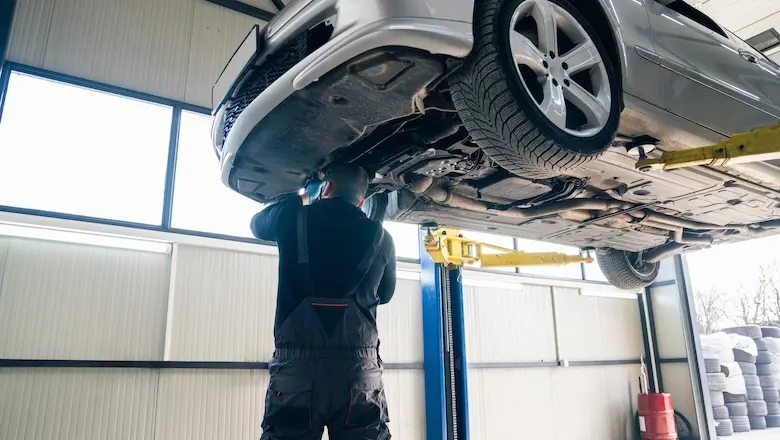
Your car’s suspension helps maximize your vehicle’s performance and ensures you have a smooth ride as you’re driving down the road. The suspension system consists of shock-absorbing components that increase friction with the road to ensure your tires are making a good connection with the pavement. This helps smooth your ride by absorbing energy from bumps in the road.
As you might imagine, your suspension is subject to a fair amount of wear and tear, and there are many components that may eventually need repair or replacing.
Here’s a closer look at how much you can expect to pay to replace your suspension system, signs your suspension system may be failing, factors that impact repair costs, and more.
Key Points
• The suspension system of a car includes various components such as shocks, struts, springs, control arms, and bushings.
• Signs that your car’s suspension may need repair or replacement include unusual noises (like clunking or squeaking), uneven tire wear, poor handling, and a bumpy or unstable ride.
• The cost of suspension repair or replacement can vary widely depending on the specific components that need attention, the make and model of the car, and the labor rates of the repair shop.
• While some minor suspension repairs can be done by DIY enthusiasts, more complex issues often require professional expertise.
• Ways to pay for suspension repair include cash savings, using a credit card, taking out a personal loan, or refinancing your auto loan with a cash out refinance.
How Much Does a Suspension Repair Cost for a Car?
Repairs to your suspension system can cost anywhere from $1,000 to $5,000, depending on what went wrong and what needs to be replaced. Wheel alignment, for example, may be relatively inexpensive, costing $20 to $400, while shock absorber replacement could cost as much as $1,500.
How Do I Know I Need a Car Suspension Repair?
When your car’s suspension system is not working properly, there are a number of symptoms you should look out for, including:
You Feel Every Bump in the Road
Your car’s suspension helps keep you from feeling bumps and potholes in the road. As it breaks down, you may start to notice these in the main cabin of the car. Not only may the impact of bumps increase, but you may feel them for longer.
Your Car Is Harder to Steer
A car that bumps around more than usual may be more difficult to control. What’s more, depending on where repair is needed, your car may pull to one side, which will force you to constantly compensate as you’re steering.
You Notice Irregular Tire Wear
When your car is functioning properly, the treads of your tires should wear evenly. Uneven wear can signal problems with your suspension. You may consider having your tires rotated as soon as possible to stave off the need to replace them.
Your Car Squeaks While Driving Over Bumps
A failing suspension can also be quite noisy. Your car may make all sorts of sounds, including squeaking, clunking, or grinding, depending on which part of the system is failing.
Your Car Sits Low on One Side
If your car tilts to one side while parked on a level surface, suspension components on that side of your car may be failing.
Your Wheel Alignment Is Poor
Misaligned wheels can put stress on other components of your suspension system. Wheels that have fallen out of alignment can make steering feel sloppy or like your car isn’t responding correctly when you move the wheel. Having your wheels aligned can fix these issues and help prevent future problems.
Your Struts Are Worn Down
Your car will either have shock absorbers or struts. Worn down struts can make a knocking noise when you drive over bumps.
Your Shock Absorbers Are Worn Out
Failing shock absorbers have a hard time keeping your tire on the pavement. As a result, your car may bounce, shake, and vibrate more when it goes over bumps.
Recommended: Guide to Transmission Replacements
What Factors Impact Suspension Repair Costs?
If you’ve noticed one or more of the above signs, your suspension may be failing and need to be repaired or replaced. You should bring it to a reputable auto mechanic as soon as possible. The cost to repair or replace suspension components will depend on a number of factors, including:
The Make and Model of Your Vehicle
The make and model of your vehicle tells you the brand of your car, the type of car, and the year that it was made. Cars that are common and popular may be cheaper to repair. SUVs, luxury vehicles, or rare automobiles that require specialty parts can be more expensive to repair.
Recommended: How Much Is My Car Really Worth?
The Severity of the Damage
A failing component can cause a cascade of damage. Cost will depend on whether or not you simply need to repair one part or if you’ll need to replace a multitude of parts. Be aware that suspension components often come in pairs, which means you’ll need to replace both parts on your vehicle, which can increase labor costs.
The Parts Required for Repairs
There’s a wide range in cost for the actual components. Shock absorber replacement can run you $200 to $1,500, coil spring replacement may cost $550 to $700, strut replacement can run up to $900, and wheel alignment can cost $20 to $400. You may or may not need multiple repairs and replacements in one single visit.
The Brand of the Suspension Component
Different brands of components will provide different design, quality, efficacy, and durability. You may choose lower cost brands, but you may lose some of the qualities listed above. Pricier brands may last longer and need to be replaced less frequently, which can save you money in the long run.
The Mechanic You Choose
The price to repair a suspension system will vary depending on location and the mechanic you choose. You may want to get a quote from several mechanics to help ensure that you’re receiving a fair price.
Recommended: Smarter Ways to Get a Car Loan
4 Ways to Cover Suspension Repair and Replacement Costs
When it comes time to pay your bill at the auto mechanic, you have several options to cover your cost.
Cash
Cash is by far the cheapest way to cover the cost of auto repairs since paying in cash doesn’t involve interest payments. However, if you don’t have enough cash on hand to pay for the repairs and cover other necessary immediate expenses, you may consider financing options.
Recommended: How Much Does a Car AC Compressor Cost?
Credit Card
Credit cards may be a good short-term financing option if you believe you can pay your balance in full at the end of the billing cycle. Credit card companies tend to charge relatively high interest rates, which are currently hovering around 21%, according to the St. Louis Federal Reserve (FRED).
If you pay your credit card in full each month, you may avoid interest payments. However, if you carry a balance, your debt can become increasingly expensive.
Personal Loan
A personal loan for car repairs allows you to borrow a lump sum of money which can be used for a wide variety of purposes — including auto repairs — and paid back in regular monthly installments. Interest rates on personal loans tend to be much lower than credit card interest rates, currently averaging 11.57%, according to FRED.
As with credit cards, your credit score will help lenders determine what interest rates to offer, with preferred rates going to borrowers with the best scores.
Recommended: Car Axle Repair and Replacement Costs
Auto Loan Refinancing
Refinancing your auto loan can be a way to save money that can then be used to pay for auto repairs. When you refinance a loan, you take out a new loan to pay off your old loan. This new loan will hopefully have a lower interest rate and may have a lower monthly payment. You can also lower your monthly payment by lengthening your loan term. Beware that in doing so, though, you will be paying interest for longer. This can ultimately increase the cost of your loan.
You can also consider a cash-out auto loan refinance, which gives you cash back when you take out your new loan. This money can then be used to pay for your suspension replacement.
A car loan refinance calculator can help you determine your potential savings.
The Takeaway
A functioning suspension system is critical to your ability to drive your car safely and comfortably. Watch out for the signs that your suspension is failing and if you notice it is, talk to an auto mechanic as soon as you can. Getting ahead of small problems now can potentially help you head off bigger problems down the road that can end up costing you more.
Replacing a suspension system can come with a price tag in the thousands of dollars. Carefully consider your financing options, and choose the option that works the best for your situation.
If you’re seeking auto loan refinancing, SoFi is here to support you. On SoFi’s marketplace, you can shop and compare financing options for your car in minutes.
FAQ
Is it worth it to replace my suspension?
Yes. To drive your car safely and comfortably, you may have no choice but to replace certain components of your suspension system.
Can you drive a car with a damaged suspension?
It is unadvisable to drive a vehicle that has a damaged suspension system. If you suspect your car is in need of repair, take it to a reputable auto mechanic immediately.
What are some common signs that your car’s suspension needs repair or replacement?
Common signs of suspension issues include unusual noises (such as clunking or squeaking), uneven tire wear, poor handling, and a bumpy or unstable ride. Recognizing these symptoms early can help prevent more extensive and costly damage.
Photo credit: iStock/Scharfsinn86
SoFi's marketplace is owned and operated by SoFi Lending Corp.
Advertising Disclosures: The preliminary options presented on this site are from lenders and providers that pay SoFi compensation for marketing their products and services. This affects whether a product or service is presented on this site. SoFi does not include all products and services in the market. All rates, terms, and conditions vary by provider. See SoFi Lending Corp. licensing information below.
Financial Tips & Strategies: The tips provided on this website are of a general nature and do not take into account your specific objectives, financial situation, and needs. You should always consider their appropriateness given your own circumstances.
Third-Party Brand Mentions: No brands, products, or companies mentioned are affiliated with SoFi, nor do they endorse or sponsor this article. Third-party trademarks referenced herein are property of their respective owners.
SOALR-Q325-064