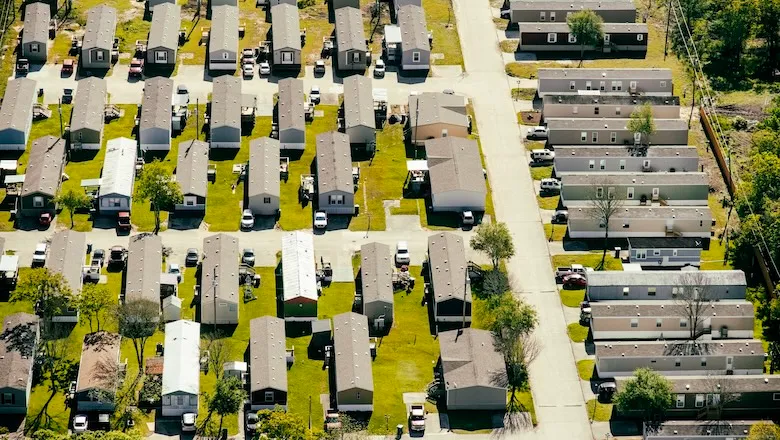
Getting mobile home insurance in Texas is similar to purchasing a standard homeowners’ insurance policy. Find out what’s covered, what’s not, and how where you live in Texas can impact your eligibility and pricing.
Key Points
• Coverage for fire, smoke, lightning, windstorms, hail, falling objects, vandalism, theft, explosions, and vehicle damage is typically included in Texas manufactured home policies.
• Dwelling coverage pays for repairs or rebuilding with limits determined by replacement cost or actual cash value, with replacement cost providing higher coverage.
• Personal property coverage is included with limits typically set at a percentage of dwelling coverage, while liability protection covers injuries to visitors.
• Texas coastal areas and high-risk regions may require additional flood and windstorm policies through the Texas Windstorm Insurance Association for qualifying properties.
• While not legally required in Texas, lenders financing mobile homes typically mandate insurance policies, and flood coverage may be required in high-risk areas.
What Is Mobile Home Insurance?
Mobile home insurance provides financial coverage in the event your home or personal belongings are damaged during certain incidents. But there may be exceptions to the standard coverage available, depending on where you live in Texas. Areas prone to hurricanes, for instance, may need an additional policy.
And while a mobile home insurance policy includes both mobile and manufactured homes, you’ll need a standard homeowners insurance policy if you buy a modular home.
What Does Mobile Home Insurance Cover in Texas?
Most manufactured home insurance in Texas covers five types of expenses when damage is caused by a covered peril. These typically include:
• Fire, smoke, or lightning strikes
• Windstorm or hail
• Falling objects
• Vandalism or theft
• Damage from an explosion, motor vehicle, blizzard, snow, sleet, or ice
Dwelling Coverage
When a covered peril occurs, your dwelling coverage helps pay for the cost to repair or rebuild your manufactured home. Decks, awnings, and any other attached structures are also covered. Your policy will come with a coverage limit, which is the maximum amount of financial assistance you’ll receive. It can be determined in one of two ways:
• Replacement cost: Covers the cost to rebuild a new mobile or manufactured home based on current prices.
• Actual cash value: Covers the value of the mobile home’s current condition, not how much it would cost to rebuild with new materials. While the policy is cheaper, the coverage limit is much lower.
Personal Property Coverage
Getting mobile home insurance in Texas also includes personal property coverage. There’s usually a limit, which is a percentage of your dwelling coverage (such as 50%). So if your maximum dwelling coverage is $100,000 and your personal property coverage is set at 50%, you could be reimbursed for up to $50,000 in damaged or stolen property.
Liability Protection
If someone who doesn’t live with you gets injured on your property, liability protection helps cover their medical expenses and legal fees. So if someone slips and falls on the steps leading into your mobile home, your liability coverage could kick in. Your policy will come with a maximum limit for this portion of coverage.
Additional Living Expenses
Also called loss of use coverage, this part of your homeowners insurance for mobile homes in Texas helps defray costs in case you have to stay in a hotel while repairs are being made. Your policy will have a maximum limit for ALE as well.
Other Structures Coverage
Other structures coverage applies to detached structures on your property, like a shed or a fence.
Recommended: Manufactured vs. Mobile vs. Modular Homes
What Is Typically Not Covered?
There’s a lot of coverage packed into a standard mobile home insurance Texas policy. But some exceptions may require extra policies or paying out of pocket.
These scenarios include:
• Damage caused by neglect or lack of maintenance
• Earthquakes
• Water backups
• High-value items like jewelry or art
Flood, windstorm, and hail damage may require an additional policy, especially if you live on the Texas Coast, in Harris County, or on Galveston Bay. The Texas Windstorm Association (TWIA) provides coverage for properties in designated catastrophe areas, but you’ll need to meet certain requirements set forth by the Texas Legislature to qualify.
How Much Does Mobile Home Insurance Cost in Texas?
The cost of mobile home insurance in Texas varies depending on where you live. Other factors include:
• Size and value of your home
• Age of the manufactured home
• Amount of coverage you want
• Deductible amount
On average, expect to pay $1,500 and $2,700 per year unless you live in a higher risk area — then you could pay more.
Why Texas Mobile Homes May Require Special Consideration
Some areas of Texas are more prone to severe weather, which could cause either higher premiums or difficulty getting covered at all. But there are programs in place to make sure you can get mobile home insurance coverage no matter where you live. As previously mentioned, the Texas Windstorm Association helps mobile home owners in designated catastrophe areas.
There’s also the Texas Fair Plan Association. If you’re denied coverage by two or more traditional insurance carriers, you can apply for coverage with the TFPA.
How to Save on Mobile Home Insurance
Keep costs down when shopping for policies by asking for discounts, such as having a security system or fire sprinkler system. Some companies may also provide lower premiums when you bundle other insurance policies (like your auto) or have zero claims in the last three years.
How to Choose the Right Policy
Here are four steps to help you get quality manufactured home insurance in Texas:
• Compare premium prices: Shop for multiple quotes and look at the annual policy cost and terms.
• Look at coverage: The cheapest policy isn’t always the best. Find out how much coverage you get for dwelling, personal property, and other components.
• Research claims: Ask what percentage of submitted claims are covered
• Search customer reviews: This gives you a sense of the customer service experience.
Try to find a policy that balances an affordable quote with a positive reputation for service and claims handling.
Is Mobile Home Insurance Required in Texas?
You’re not legally required to have a policy in Texas, but your lender may require you to keep a policy if you used mobile home financing to purchase the property. If you don’t have a mortgage, the decision is up to you. Even though there’s an annual cost involved, mobile home insurance gives you a significant amount of financial protection in case your home is damaged by a covered event.
The Takeaway
Buying a manufactured home doesn’t mean you miss out on access to the same financial protections that are available with a “stick-build” home. Keep your home covered with the right policy for mobile home insurance in Texas. Ready to shop? Compare policies instantly from multiple carriers with SoFi.
Your home is one of your most important financial assets — making sure it's properly covered is part of protecting everything you've built. SoFi makes it easy to shop and compare homeowners insurance quotes from top carriers, all in one place. Explore your coverage options.
SoFi brings you real rates, with no bait and switch.
FAQ
How much is mobile home insurance in Texas?
The cost of mobile home insurance in Texas varies depending on where you live, how much coverage you get, and the size and condition of your home.
Does mobile home insurance cover hurricane damage in Texas?
It depends on where you live. Most standard policies do include hurricane coverage, but you may not qualify if you live in high-risk areas of Texas, like the Gulf Coast.
Is flood insurance required for mobile homes in Texas?
Flood insurance may be required for your Texas mobile home if you live in a high-risk area and have a mortgage.
What is the difference between mobile home and manufactured home insurance?
There is no difference between mobile home and manufactured home insurance. Most insurers group them in the same type of policy.
Can I insure an older mobile home in Texas?
The age of your mobile home can impact whether or not you qualify for coverage. If you do qualify, you may have lower replacement cost limits, especially if the insurer uses actual cash value to calculate your dwelling coverage.
Photo credit: iStock/StefaNikolic
INSURANCE PRODUCTS ARE NOT FDIC INSURED • NOT INSURED BY ANY FEDERAL GOVERNMENT AGENCY • NOT A DEPOSIT OR OTHER OBLIGATION OF, OR GUARANTEED BY SOFI BANK, N.A. OR ANY OF ITS AFFILIATES
How SoFi Agency Is Compensated:
● Commissions: A fee paid by the insurer for originating your policy, typically calculated as a percentage of your premium.
If you have any questions about how we are compensated, please feel free to reach out to SoFi Agency.
All insurance products shown on SoFi are underwritten and provided by licensed insurance carriers, not SoFi Agency. SoFi Agency does not underwrite or price insurance policies. Insurance products presented may not be available in all states, and your rates and savings will vary based on individual factors. The rates or savings advertised are not necessarily available from all providers or advertisers. Not all carriers or options in the marketplace are shown.
There is no charge to use SoFi Agency. However, we receive compensation from insurers and other vendors in the following ways:
● Contingent & Supplemental Commissions: Performance-based bonuses from insurers for hitting annual targets, like customer volume or retention. (Supplemental commissions are based on past performance and known in advance; contingent commissions are not).
● Marketing Fees: Compensation for presenting promotions or linking you to an insurer’s application site.
● Affinity Partner Revenue: Income earned when you engage with or request services from third-party partners advertising on our platform.
Tax Information: This article provides general background information only and is not intended to serve as legal or tax advice or as a substitute for legal counsel. You should consult your own attorney and/or tax advisor if you have a question requiring legal or tax advice.
Third-Party Brand Mentions: No brands, products, or companies mentioned are affiliated with SoFi, nor do they endorse or sponsor this article. Third-party trademarks referenced herein are property of their respective owners.
Financial Tips & Strategies: The tips provided on this website are of a general nature and do not take into account your specific objectives, financial situation, and needs. You should always consider their appropriateness given your own circumstances.
SOPRO-Q126-072