The average American driver spends over 290 hours on the road each year. With so much time spent in the car, many people are rethinking the type of vehicle they drive and the impact it has on the environment. For conscientious drivers, EV vs hybrid is a question not solved with a simple Google search.
Charging stations, repair costs, maintenance costs, miles per tank, and miles per charge are some of the things that need to be considered in the electric vs hybrid cars debate. As is auto insurance.
Key Points
• Electric vehicles run entirely on batteries requiring charging at home or public stations, while hybrids combine internal combustion engines with electric motors recharged through regenerative braking
• Purchase prices start around $25,000 for hybrids and $30,000 for EVs, with electric vehicles costing more due to advanced battery technology requirements.
• Electric vehicles require minimal routine maintenance without oil changes, while hybrids maintain similar costs to standard cars with slower brake pad degradation.
• Specialized parts and limited trained technicians make EV repairs significantly more expensive than hybrids, resulting in higher insurance premiums for electric vehicles.
• Electric vehicles produce zero tailpipe emissions with minimal environmental impact, while hybrids excel at long-distance driving due to limited public charging infrastructure.
What Is an Electric Vehicle?
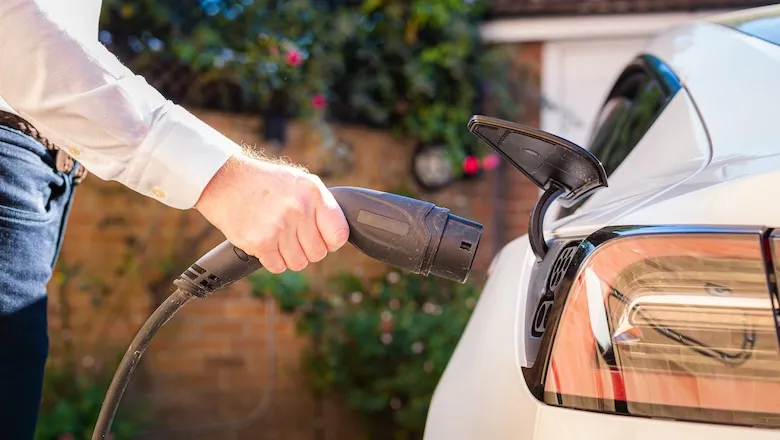
An electric vehicle does not use gasoline to turn the engine. Instead, it relies entirely on batteries. To charge the batteries, EV owners must either charge their cars at home or locate a public charging station, which are becoming more abundant every year.
The number of miles you can go on a single charge depends on the make and model of your EV and your driving habits. Typically, newer models can travel longer than older models, but if you’re prone to aggressive driving (meaning you often accelerate quickly), then the charge on your EV battery won’t last as long.
EVs are often purchased by people who want to have less of an impact on the environment and who aren’t concerned about locating charging stations.
What Is a Hybrid Vehicle?
A hybrid vehicle blends an internal combustion engine with an electric motor powered by batteries. Unlike EVs, some hybrids don’t have to be charged. Instead, the batteries are recharged through regenerative braking. There are some plug-in hybrids on the market, though. These technically don’t need to be plugged in, but you’ll get fewer miles per tank if you don’t charge.
Hybrids are often chosen by people who, like EV owners, want to have less of an impact on their environment but travel greater distances and can’t rely on charging stations.
Key Differences Between EVs and Hybrids
Who wins in a hybrid vs EV comparison?
As noted above, EVs and hybrids have multiple ways they can be compared and contrasted. To truly understand how they differ, you need to understand how they are repowered or refueled, how much it costs to work on them, and the toll they each take on the environment.
Power Source
Electric vehicles are powered through high-capacity batteries, meaning no gasoline is needed to turn the motor. Because of this, EVs don’t have a direct impact on the environment when it comes to carbon emissions.
Hybrids use engines that switch between battery and gasoline power. Some hybrids need to be plugged in to charge their batteries, but many solely rely on regenerative braking for charging.
Fueling and Charging
EVs need to be charged, but how often depends on the specific car in question. Hybrids, on the other hand, require gasoline and do not solely rely on electricity. The gasoline required for a hybrid is the same gasoline that’s needed for a standard car.
Because EVs require special charging stations that are not yet ubiquitous across the United States, hybrids are easier to refuel than EVs. However, this isn’t true for all areas of the country.
Maintenance Costs
EVs don’t have as many moving parts as a hybrid or traditional vehicle. They don’t even require oil changes! Because of this, routine maintenance is very minor.
Hybrids cost about the same to maintain as standard cars, but you may end up actually paying less. Brake pad degradation is slower, and because it has a complementary engine system, the wear and tear on the internal combustion and electrical engines are slower because they trade off workloads. When all is said and done, expect to spend about the same if not less on maintenance than you would with a regular car.
Environmental Impact
As discussed, EV cars have a very minimal impact on the environment compared to standard cars because they have zero tailpipe emissions. The only factors that need to be considered for the truly conscientious are manufacturing impacts on the environment, the power grid used to power the car, and end-of-life battery disposal. Other than those small factors, EVs are much better for the environment than standard cars, especially for local air quality.
Hybrids switch back and forth between battery and fuel power, and are much more fuel efficient than a standard car, leading to lower emissions overall.
Both cars help support a cleaner environment, but it can be argued that an EV is better overall.
Cost Differences Between EVs and Hybrids
The cost differences between EVs and hybrids depend on the model and manufacturer. At purchase, it’s possible to spend around $25,000 for a hybrid and $30,000 for an EV. Just remember that EVs typically cost more because of the battery technology required to power the engine. While they have lower maintenance costs, repair costs can be significantly higher.
Electric vehicle insurance can also be higher than insurance for a hybrid.
Recommended: How Much Auto Insurance Do I Need?
Insurance Considerations for EVs and Hybrids
How does car insurance work for EVs and hybrids?
EVs have more specialized parts, which means when repairs are needed, they can cost more to repair than hybrids. Plus, trained technicians capable of repairing EVs are not as abundant nationwide. Because EVs require both specialized parts and specialized labor, they cost more to insure.
Hybrids cost less because the parts are not as specialized, and the know-how needed to work on them isn’t as in-depth as EVs.
On the plus side, many insurance companies offer discounts for driving both EVs and hybrids. While discounts are one of the many ways to lower car insurance, compare annual costs for specific models with each provider before deciding.
Keep in mind that the costs of car insurance for both EVs and hybrids is likely to be higher than it would be for a standard car.
Recommended: Auto Insurance Terms
The Takeaway
Electric vs hybrid vehicles isn’t as simple as choosing which one is better than the other. An EV has zero direct emissions and costs less to maintain year to year. But repair costs can be high because they have more specialized parts, which, in turn, leads to higher insurance costs.
Hybrids are cheaper to repair and insure, but they have a bigger impact on the environment. Some hybrids don’t require charging and are easier to travel across the country in. Some do if you want better fuel economy.
There are many variables to analyze. Each person may reach a different conclusion with the data they find. In the end, which option is the best for you depends on your budget, needs, and goals.
Having the right auto insurance means knowing you're truly protected — not just checking a legal box. SoFi lets you shop and compare quotes from top carriers in minutes, so you can find coverage that gives you real peace of mind on the road. Explore your coverage options.
SoFi brings you real rates, with no bait and switch.
FAQ
What is the difference between an EV and a hybrid?
The main difference between an EV and a hybrid is the power source. An EV is powered by batteries, while a hybrid is powered by both batteries and gasoline.
Is an EV cheaper to maintain than a hybrid?
Because EVs have fewer moving parts, they are typically cheaper to maintain than a hybrid.
Do EVs cost more to insure than hybrids?
Yes. While EVs are cheaper to maintain than a hybrid, if parts are needed, repair costs can be high. Because of this, EVs often cost more to insure than a hybrid vehicle.
Which is better for long-distance driving?
Recharge stations aren’t as abundant as drivers often need them to be. For long-distance driving, hybrids are often the better choice.
Do hybrids require charging?
Some hybrids do need to be plugged in to charge for maximum fuel efficiency. Many hybrids, however, charge via regenerative braking and internal combustion.
Photo credit: iStock/coldsnowstorm
INSURANCE PRODUCTS ARE NOT FDIC INSURED • NOT INSURED BY ANY FEDERAL GOVERNMENT AGENCY • NOT A DEPOSIT OR OTHER OBLIGATION OF, OR GUARANTEED BY SOFI BANK, N.A. OR ANY OF ITS AFFILIATES
How SoFi Agency Is Compensated:
● Commissions: A fee paid by the insurer for originating your policy, typically calculated as a percentage of your premium.
If you have any questions about how we are compensated, please feel free to reach out to SoFi Agency.
All insurance products shown on SoFi are underwritten and provided by licensed insurance carriers, not SoFi Agency. SoFi Agency does not underwrite or price insurance policies. Insurance products presented may not be available in all states, and your rates and savings will vary based on individual factors. The rates or savings advertised are not necessarily available from all providers or advertisers. Not all carriers or options in the marketplace are shown.
There is no charge to use SoFi Agency. However, we receive compensation from insurers and other vendors in the following ways:
● Contingent & Supplemental Commissions: Performance-based bonuses from insurers for hitting annual targets, like customer volume or retention. (Supplemental commissions are based on past performance and known in advance; contingent commissions are not).
● Marketing Fees: Compensation for presenting promotions or linking you to an insurer’s application site.
● Affinity Partner Revenue: Income earned when you engage with or request services from third-party partners advertising on our platform.
Third-Party Brand Mentions: No brands, products, or companies mentioned are affiliated with SoFi, nor do they endorse or sponsor this article. Third-party trademarks referenced herein are property of their respective owners.
Financial Tips & Strategies: The tips provided on this website are of a general nature and do not take into account your specific objectives, financial situation, and needs. You should always consider their appropriateness given your own circumstances.
SOPRO-Q126-089