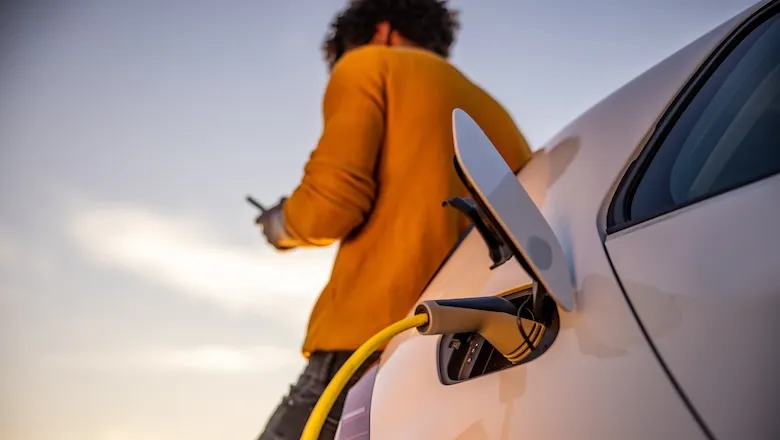
If you’ve been shopping for an electric vehicle (EV) — or you already own one — you may be wondering about maintenance costs down the road. One common concern is the electric car battery replacement cost you may face.
You can make a rough guess ahead of time based on the battery pack’s capacity. The more kilowatt-hours (kWh) the pack can store, the more expensive an out-of-warranty replacement is likely to be. Other factors come into play as well, of course, so the replacement cost will vary on a case-by-case basis.
Here’s what you need to know about EV battery replacement costs in 2026.
Key Points
• The life of an EV battery is about 12 to 15 years in moderate climates.
• Car make and model greatly affect replacement costs; for small electric cars, batteries can cost $5,000 to $8,000, while luxury-car batteries may be priced up to $25,000.
• Labor costs can add $1,000 to $3,000 to the total bill, as specialist mechanics charge $150 to $250 per hour for battery work.
• Warranty coverage usually lasts eight to ten years; depending on when replacement is needed, the owner’s cost may be reduced or eliminated.
• Insurance is unlikely to cover battery replacement unless it’s due to collision damage, vandalism, or theft.
How Much Does It Cost to Replace an EV Battery?
Data from 2024-2025 indicate that replacement of an EV car’s battery costs anywhere from $5,000 to $20,000, including parts and labor. This wide range reflects the sizable array of EVs now on the market.
As noted above, one useful rule of thumb is that the cost of replacing the battery corresponds roughly with the size of the battery pack.
Industry data puts the manufacturing cost of replacement packs at around $110 to $130 per kWh. So, for example, a 75 kWh pack might represent $8,000 to $10,000 in parts before overhead and labor are added. Labor — requiring high-voltage vehicle specialists — typically adds another $1,000 to $3,000 to the bill.
| Vehicle category | Examples | Cost of full battery replacement |
|---|---|---|
| Luxury and long-range models, including electric trucks | BMW iXFord F-150 LightningRivian R1T | $12,000 to $25,000 |
| Mid-size sedans and crossovers | Tesla Model 3Tesla Model Y Hyundai Ioniq 5 | $10,000 to $15,000 |
| Compact EV | Nissan LeafChevy Bolt | $5,000 to $8,000 |
Recommended: How to Lower Car Insurance & Save Money
What Factors Affect EV Battery Replacement Cost?
Several elements drive the cost of replacing a battery in an electric car. The biggest are the EV’s make and model, battery size, and warranty coverage, plus the cost of labor.
If you’re looking for online estimates, seek out prices from current original equipment manufacturers (OEM) and reputable third parties. Your actual quote will vary by region, dealer, and the condition of the pack you’re buying (new, refurbished, or used).
Vehicle Make and Model
The make and model of the vehicle is probably the biggest element in an electric car’s battery cost. Luxury automakers typically charge more for OEM parts. Also, some brands have limited third-party options. A BMW i3 battery replacement through the dealer can run $18,000 or more, while third-party alternatives for the same vehicle might cost $6,500 to $13,500.
Battery Size
Again, the bigger the battery, the higher the EV battery replacement cost. When comparing EVs, remember that the kWh rating on the window sticker doesn’t represent only the range of how far the car will go. It can also serve as a reliable indicator of your worst-case expense — that is, the electric car battery replacement cost post-warranty.
Note that the price of replacing an EV battery is likely to be far more than the cost of a hybrid car battery replacement, what with the huge difference in battery size and capacity.
Labor Costs
EV battery packs are structural components mounted beneath the floor of the vehicle. The average pack weighs close to 1,000 pounds, so installation of a replacement battery requires specialized lifts, high-voltage safety procedures, and diagnostic recalibration.
Labor rates at certified EV centers commonly run $150 to $250 per hour. The job may take anywhere from four to 15 hours, depending on the vehicle design and any additional complications from corrosion or collision damage.
Recommended: How Much Does Car Insurance Cost? Average Costs and Tips to Lower Your Monthly Premium
Warranty Coverage
Another important factor in an electric car’s battery cost is whether the battery is still under warranty. A typical warranty is eight to 10 years, so for EVs on the newer side, the cost of replacing the battery in your electric car could be heavily subsidized or, possibly, free.
How Long Do EV Batteries Last?
Electric vehicle batteries may last 12 to 15 years in moderate climates, according to the National Laboratory of the Rockies.
As of 2025, an industry analysis of more than 22,000 electric vehicles found that batteries degrade by 2.3% per year on average. At that rate, the average battery would retain 81.6% of its original capacity after eight years.
Also, driving habits, charging practices, and climate generally affect longevity. To help keep your battery healthy, EV experts recommend these best practices:
• Recharge the battery to 80% rather than 100%
• Make sure the battery charge stays at 20% or more
• Use slower Level 1 or 2 charging when possible
Recommended: Auto Insurance Terms
Are EV Batteries Covered by Warranty?
Per Federal law, automakers must warranty EV and hybrid batteries for eight years or 100,000 miles, whichever comes first. California’s requirements are more rigorous: Beginning with 2026 vehicles, batteries must retain at least 70% of their range for 10 years or 150,000 miles.
Automakers typically promise that their EV batteries will retain at least 70% of their original capacity during the coverage period. But don’t expect all manufacturers — or even all models from the same automaker — to have equivalent protections.
If you’re considering buying a used EV, check to make sure its warranties will transfer to second or third owners. Verify the in-service date, remaining coverage, and whether the warranty transfers in full. And remember that warranties generally exclude damage from accidents, unauthorized modifications, or failure to follow manufacturer service guidelines.
Recommended: EV vs Hybrid
Does Insurance Cover EV Battery Replacement?
Whether your auto insurance will cover the EV car battery’s cost of replacement depends on the reason it’s being replaced. If it’s a matter of battery degradation, capacity loss over time, or age-related decline, provisions in the car’s warranty will apply.
Electric vehicle insurance is for more dramatic situations, such as a battery that gets damaged in a crash. In that case, collision coverage typically pays for repair or replacement as part of the broader claim. If your EV battery is damaged by a natural disaster or deliberate harm such as vandalism or theft, comprehensive coverage usually applies.
For future reference, it’s worth asking your insurance agent for specifics about how your car insurance works in this scenario. For example, you might ask if your existing policy covers battery damage, how it treats replacement with OEM vs. refurbished packs, and how the insurer would decide whether to write off a post-collision EV as a total loss.
Recommended: How Much Auto Insurance Do I Really Need?
The Takeaway
Real-world data shows that EV batteries remain viable for many years. Yet it is possible that an EV owner might need to swap in a fresh battery, potentially costing thousands of dollars. Fortunately, manufacturer warranties and falling battery prices can help mitigate the expense.
When you’re ready to shop for auto insurance, SoFi can help. Our online auto insurance comparison tool lets you see quotes from a network of top insurance providers within minutes, saving you time and hassle.
SoFi brings you real rates, with no bait and switch.
FAQ
How much does EV battery recycling or disposal cost?
Generally, EV battery recycling doesn’t cost the owner anything. In fact, recyclers can recover certain valuable materials — including lithium, cobalt, and nickel — from old batteries to generate a small return. Some state and local programs exist to make EV battery recycling more accessible for consumers.
By contrast to recycling, disposal can cost from $500 to more than $2,000, depending on the size and type of battery.
Does extreme heat or cold shorten battery life?
Yes. That’s why most modern EVs use active thermal management systems — cooling and heating hardware — to buffer against extremes. Sustained high temperatures can speed up chemical reactions inside the battery, reducing its capacity irreversibly. Low temperatures tend to make lithium-ion batteries less efficient, but range and capacity should return to normal as the battery warms up.
Can you upgrade to a higher-capacity battery when replacing it?
You can, but it’s difficult and not always advisable. The vehicle’s software, cooling systems, and chassis are all engineered around a specific battery configuration, which limits flexibility. That’s why a dealership will generally replace an existing battery pack with a similar or compatible unit. Also, introducing a new type of battery risks voiding your car’s warranty.
Do government incentives apply to EV battery replacement?
Currently, there are no significant federal EV incentives of any sort, meaning there is no federal tax credit for replacing an out-of-warranty battery pack. Some state-level programs offer limited assistance.
How does battery degradation affect resale value?
Battery health makes a big difference in the pricing of used EVs. Sometimes referred to as the “state of health,” an EV’s battery health percentage indicates how much energy it can store now compared to its original capacity. EVs with 90% to 95% battery health typically command baseline market prices, while those with battery health of 80% to 89% are often discounted by 5% to 15%. Cars with battery health below 80% generally sell at steep discounts.
Photo credit: iStock/SimonSkafar
Home and Renters Insurance: Insurance not available in all states.
Experian is a registered trademark of Experian.
SoFi Insurance Agency, LLC. (“”SoFi””) is compensated by Experian for each customer who purchases a policy through the SoFi-Experian partnership.
Non affiliation: SoFi isn’t affiliated with any of the companies highlighted in this article.
Third-Party Brand Mentions: No brands, products, or companies mentioned are affiliated with SoFi, nor do they endorse or sponsor this article. Third-party trademarks referenced herein are property of their respective owners.
Tax Information: This article provides general background information only and is not intended to serve as legal or tax advice or as a substitute for legal counsel. You should consult your own attorney and/or tax advisor if you have a question requiring legal or tax advice.
Financial Tips & Strategies: The tips provided on this website are of a general nature and do not take into account your specific objectives, financial situation, and needs. You should always consider their appropriateness given your own circumstances.
SOPRO-Q126-091