How to Stop Living Paycheck to Paycheck

Stop Living Paycheck to Paycheck: 6 Tips

Living paycheck to paycheck is defined as spending almost all of your income on essentials and everyday expenses so you may not be able to save for future goals nor deal with a financial emergency.

According to a December 2024 report by PYMNTS.com, more than 67% of respondents reported they were living paycheck to paycheck at the end of last year. What can you do if you want to beat those odds and get ahead of your bills? Read on for some steps that may help you achieve financial breathing room.

Key Points

•   Living paycheck to paycheck means your earnings are going towards essential and everyday expenses, meaning you have little for savings or emergencies.

•  To stop living paycheck to paycheck, track your spending for at least 30 days to understand your financial habits.

•  Prioritize the essential expenses, such as food, utilities, shelter, and transportation, as well as gradually building an emergency fund in a separate savings account.

•  Reduce your debt using the snowball or avalanche method, and try to increase your income.

•  Set financial goals and use budgeting apps to manage money efficiently.

6 Ways to Stop Living Paycheck to Paycheck

Maybe it’s inflation eating up your paycheck these days. Or maybe it’s just… life.

Either way, there are likely adjustments you can make — both big and small — to get yourself to a better place financially. Here are a few basics to consider if you’re wondering how to stop living paycheck to paycheck.

1. Set a Budget

Admit it: You knew the b-word was coming.

Making a budget is the best way we know of to get a better handle on your spending and saving. It can show you where your hard-earned money is going every month — and help you nudge it in a different direction if you don’t like what you see.

Yes, it involves sitting down and doing math. You can look at how much money is going in (say, the amount of direct deposits of your paycheck) and how much is flowing out to debt payments, living expenses, and one-off charges (like your home insurance).

If this feels daunting, know that spending apps that can help you set up budget categories and monitor your money movements all in one place, the process isn’t nearly as tedious as it used to be.

You’ll probably have to tweak your budget from time to time — to deal with quarterly or seasonal bills, for example, or if costs go up. And if you’re a freelancer or seasonal worker, it can be tough to budget on a fluctuating income. But creating a comprehensive and realistic budget you can stick to through thick and thin can help you make your paycheck go further.

2. Focus on the Essentials

As you determine your personal budgeting categories, you’ll also be setting spending priorities. That starts with focusing on the essentials. Unless you’re still living with your parents rent-free, it can be a good idea to figure out the amount you’ll need for food, utilities, shelter, and transportation before anything else.

After that, you can play around a bit with what’s most important to you — your “needs” vs. “wants.” You may have to let go of a few things (sorry, Netflix) when you run out of money to spend. That can help keep you from teetering on the edge of overdrafting your checking account.

No matter what happens, you’ll have a roof over your head and something to eat. The lights, heat, and water in your home will keep working. And you can get where you need to go.

Prepare for the Unexpected

If you’re worried that an unexpected bill could come along at any time and take a huge bite out of your finances, you aren’t alone. About 59% of Americans are unable to cover a $1,000 surprise bill with their savings, according to a 2025 survey by Bankrate.

Financial advisors typically recommend keeping at least three to six months’ worth of expenses stashed away in an emergency fund. If that amount is too daunting, you can start with a much smaller amount. Anything you can put away will help if you suddenly have to pay a medical, home, or car repair bill.

You might want to start an automatic savings program, transferring a small amount of money every paycheck into a dedicated savings account. That can help your emergency fund grow with a minimum of effort.
Two more tips:

•   Consider keeping your emergency fund in an online bank account which often offers low or no fees and higher interest rates, which can help your money grow faster.

•   If you want help doing the math, you can use an online emergency fund calculator.

4. Get Out of Debt

If debt payments (credit cards, student loans, etc.) are a big part of your monthly budget, you may want to rethink your debt payoff strategy.

To truly dump your debt burden — and reclaim the money you’re paying in interest every month so you can save it or use it for other things — it can help to have a debt reduction plan. There are many options to choose from, including these popular strategies:

•   The snowball method: With this strategy you put any extra money you can toward paying off your smallest debt — while making the minimum payment on the others. When that balance is paid off, you can move on to the next smallest bill, and so on — slowly eliminating all your debts.

•   The avalanche method: The avalanche method focuses on high-interest debt. With this strategy, you would put any extra you can toward the credit card or loan with the highest interest rate. When that bill is paid off, you move on to the bill with the next highest interest rate, and so on.

If you’re using credit cards just to keep your head above water, you could end up drowning in debt — especially as interest rates are rising. Try to budget with your credit card wisely, instead of thinking of it as a life raft. Charge only what you can afford to pay off each month.

5. Increase Your Income

If your main income stream just isn’t enough — and a pay raise isn’t coming anytime soon — you may want to consider your options for earning extra cash.

That might mean taking on a side hustle (something you can do when you’re not at your regular job), selling stuff you don’t use any more, or maybe renting out a room in your home. Whatever you choose, try to make it fun (or at least bearable), so you aren’t tempted to give up. And make sure the hours, effort, and money you put into the side gig (for supplies, uniforms, etc.) are worth it and you’re really getting ahead.

Recommended: 24 Best Paying Online Side Jobs for Teachers

6. Increase Your Down Payment

If you’re on the verge of buying a house, consider your options. You may want to think about ways to lower your ongoing monthly mortgage expenses. That’s another idea for how to stop living paycheck to paycheck.

A 20% down payment usually isn’t required to finance a home purchase, and most buyers put down less. Yes, your Realtor® and your lender can help you decide how much your down payment should be. But keep in mind that if you can scrape together more, you’ll borrow less, which means you can have lower monthly payments. You’ll also have more equity sooner, and you’ll pay back less interest over the life of the loan.

Increase your savings
with a limited-time APY boost.*


*Earn up to 4.00% Annual Percentage Yield (APY) on SoFi Savings with a 0.70% APY Boost (added to the 3.30% APY as of 12/23/25) for up to 6 months. Open a new SoFi Checking and Savings account and pay the $10 SoFi Plus subscription every 30 days OR receive eligible direct deposits OR qualifying deposits of $5,000 every 31 days by 3/30/26. Rates variable, subject to change. Terms apply here. SoFi Bank, N.A. Member FDIC.

More Tips to Budget and Save Money

Okay, now that we’ve covered the basics, let’s drill down to some other lifestyle changes that can help you spend less and save more.

See the Benefits of Owning Less

It’s tough to say no to buying new, or better, or more — especially when you can make online purchases with just a couple of clicks and use a credit card to pay. But embracing financial minimalism and the mantra that “less is more” can help you change your spending behavior.

Budgeting is a great way to focus on needs vs. wants, and tracking your spending with an app, or even going old-school and writing down every penny you spend in a notebook, can help you set priorities.

Sit Down and Do the Math

It’s easier to get where you want to be if you know where you are. So it can be helpful to pull out all the paperwork when you’re creating your household budget. That means sitting down with purchase receipts, bank and credit card statements, income info, etc., to figure out how much you’re spending every month, what you’re spending it on, and how much you actually have to spend.

Look for Things to Cut

This is the painful part. If you really want to stop living paycheck to paycheck, there’s a good chance you’re going to have to get rid of some of the things you love.

That might mean cutting back on concert or theater tickets (or just choosing cheaper seats). You might have to back off on the morning trips to Starbucks. Or cancel app subscription services. The good news is, you get to pick your priorities — as long as those things track with what you realistically have and want to spend each month.

Embrace a No-Spend Period

It’d be pretty difficult to not spend any money at all for a year — or even a week. (Although some people are trying as part of the “no-spend challenge” trend.)

But by challenging yourself to only spend on things you absolutely have to have for a pre-set period of time, you can really get a feel for what’s important to you. And of course, you save money.

You can go big or small. You can challenge yourself for a year, or a month, or a week. You can try to go without buying anything new, or limit yourself in a specific category: no spending on clothes, shoes, or jewelry; no movies (at the theater or streaming); or no eating at restaurants, for example. And you can post your progress on Twitter or Instagram — if that helps push you to keep going — or you can keep it all private in your diary.

Put Your Savings into a Separate Account

It may seem super convenient to put all your money into a checking account. But that can also make that money super easy to spend.

Funneling some of your funds into a separate savings account can help you keep your hands off your cash as you set up your emergency fund or save for other short- and long-term goals.

And if you put the money into a high-yield online savings account, you typically can earn a higher interest rate than you would with a traditional checking account.

Don’t Be Afraid to Consider Drastic Changes

Some people need to make only a few minor changes to pull out of the paycheck-to-paycheck cycle. Others may need to get more radical. If you can’t get your spending under control, for example, you may need to cut up your credit cards. If you can’t afford your car payments or gas, it might make sense to take the bus or carpool to work. Or you may have to make some uncomfortable budget cuts — like going without cable or shopping at less expensive clothing stores.

When you’re thinking about what moves might help you get ahead, consider crunching the numbers first to see if the change really makes financial sense. Then, try to stay motivated by thinking about what you can do with the money you’ll save. Consulting money management guides can also give you a deeper understanding of how to make changes and spend less.

Avoid Lifestyle Creep

Another idea for how not to live paycheck to paycheck is to be aware of “lifestyle creep.” That’s when your personal cost of living increases as your income increases, perhaps so slowly that you may not notice until you are scrambling to pay your bills.

Maybe you got a raise and thought you could afford to spend a bit more on the things you want. Or maybe your friends are earning more money than they used to — and keeping up socially is hurting you financially.

If you’re overshooting your budget every month and can’t figure out why, it may be time to reexamine your priorities and focus on the larger goals (saving for a house or college for your kids) that could slip away if you can’t get a handle on your spending.

Set Financial Goals

When you’re just winging it financially from month to month and year to year, it can be much harder to live within your means. Setting short- and long-term goals — whether it’s to reduce your debt, build your emergency fund, or save for a new car or home — can motivate you to stay on track.

When you’re setting your goals:

•   Think about what you hope to accomplish and how it would make your life better. (Be specific.)

•   Give yourself a timeline. (Be realistic.)

•   Try to make your goals measurable. (Baby steps are akay!)

Be Patient and Stay Positive

Getting your finances on track can be a little like dieting. You’re bound to slip up from time to time. And getting to your goals may take longer than you planned.

You may even be tempted to give up completely.

But if you stick with your plan, you can improve your financial health — and feel better about yourself and your future.

Recommended: Ways to Reward Yourself Without Breaking Your Budget

Track Your Spending with an Eye Toward Saving

If your goal is to save more, you’ll have to spend less. And one way to get the ball rolling is to track your spending for at least 30 days to see where your money is going.

Once you spot the things you can change, you can start cutting back on current and future spending, and catch up on old debts. Then you can move more and more money to savings — and get closer and closer to your goals.

It may help to choose a budget strategy that focuses on saving, such as the 70-20-10 budget rule, which divides after-tax income into three basic categories: 70% to monthly spending, 20% to savings and debt repayment, and 10% to donations (or to more saving and investing).

The Takeaway

Living paycheck to paycheck is like treading water: You may not be drowning in debt (yet), but you also aren’t getting any closer to your goals.

By taking six critical steps, including budgeting and reducing debt, you can be on a path to end the paycheck-to-paycheck cycle. Doing so can allow you to start building up more money in your bank account.

Interested in opening an online bank account? When you sign up for a SoFi Checking and Savings account with eligible direct deposit, you’ll get a competitive annual percentage yield (APY), pay zero account fees, and enjoy an array of rewards, such as access to the Allpoint Network of 55,000+ fee-free ATMs globally. Qualifying accounts can even access their paycheck up to two days early.


Better banking is here with SoFi, NerdWallet’s 2024 winner for Best Checking Account Overall.* Enjoy 3.30% APY on SoFi Checking and Savings with eligible direct deposit.

FAQ

What is the 70-20-10 rule for money?

The 70-20-10 rule is a budgeting strategy that focuses on both spending and saving. It says that, from your take-home pay, put 70% toward living expenses, 20% toward savings and debt repayment, and 10% toward donations (or you could put more toward saving and investing).

What is considered not living paycheck to paycheck?

If you aren’t living paycheck to paycheck, you’re living comfortably within or below your means, you’re putting savings away for future goals, and you have an emergency account set up so unexpected bills don’t send you spiraling.

What’s the best way to stop living paycheck to paycheck?

A good first step toward ending the paycheck-to-paycheck cycle is to find out where your money is going every month, and to set up a budget that prioritizes smart spending and saving.

Is living paycheck to paycheck stressful?

Yes, living paycheck to paycheck can be stressful. Living this way can create financial anxiety since you know you likely don’t have enough money to cover unexpected expenses, nor can you save for future financial goals.

How many Americans live paycheck to paycheck?

According to a study conducted in December 2024, fully two-thirds (67%) of Americans were living paycheck to paycheck. That can be seen as a sign that people need to manage their money more carefully to free up funds for savings and long-term goals.


Photo credit: iStock/jacoblund

SoFi Checking and Savings is offered through SoFi Bank, N.A. Member FDIC. The SoFi® Bank Debit Mastercard® is issued by SoFi Bank, N.A., pursuant to license by Mastercard International Incorporated and can be used everywhere Mastercard is accepted. Mastercard is a registered trademark, and the circles design is a trademark of Mastercard International Incorporated.

Annual percentage yield (APY) is variable and subject to change at any time. Rates are current as of 12/23/25. There is no minimum balance requirement. Fees may reduce earnings. Additional rates and information can be found at https://www.sofi.com/legal/banking-rate-sheet

Eligible Direct Deposit means a recurring deposit of regular income to an account holder’s SoFi Checking or Savings account, including payroll, pension, or government benefit payments (e.g., Social Security), made by the account holder’s employer, payroll or benefits provider or government agency (“Eligible Direct Deposit”) via the Automated Clearing House (“ACH”) Network every 31 calendar days.

Although we do our best to recognize all Eligible Direct Deposits, a small number of employers, payroll providers, benefits providers, or government agencies do not designate payments as direct deposit. To ensure you're earning the APY for account holders with Eligible Direct Deposit, we encourage you to check your APY Details page the day after your Eligible Direct Deposit posts to your SoFi account. If your APY is not showing as the APY for account holders with Eligible Direct Deposit, contact us at 855-456-7634 with the details of your Eligible Direct Deposit. As long as SoFi Bank can validate those details, you will start earning the APY for account holders with Eligible Direct Deposit from the date you contact SoFi for the next 31 calendar days. You will also be eligible for the APY for account holders with Eligible Direct Deposit on future Eligible Direct Deposits, as long as SoFi Bank can validate them.

Deposits that are not from an employer, payroll, or benefits provider or government agency, including but not limited to check deposits, peer-to-peer transfers (e.g., transfers from PayPal, Venmo, Wise, etc.), merchant transactions (e.g., transactions from PayPal, Stripe, Square, etc.), and bank ACH funds transfers and wire transfers from external accounts, or are non-recurring in nature (e.g., IRS tax refunds), do not constitute Eligible Direct Deposit activity. There is no minimum Eligible Direct Deposit amount required to qualify for the stated interest rate. SoFi Bank shall, in its sole discretion, assess each account holder's Eligible Direct Deposit activity to determine the applicability of rates and may request additional documentation for verification of eligibility.

See additional details at https://www.sofi.com/legal/banking-rate-sheet.

*Awards or rankings from NerdWallet are not indicative of future success or results. This award and its ratings are independently determined and awarded by their respective publications.

We do not charge any account, service or maintenance fees for SoFi Checking and Savings. We do charge a transaction fee to process each outgoing wire transfer. SoFi does not charge a fee for incoming wire transfers, however the sending bank may charge a fee. Our fee policy is subject to change at any time. See the SoFi Bank Fee Sheet for details at sofi.com/legal/banking-fees/.
Financial Tips & Strategies: The tips provided on this website are of a general nature and do not take into account your specific objectives, financial situation, and needs. You should always consider their appropriateness given your own circumstances.

This content is provided for informational and educational purposes only and should not be construed as financial advice.

Third-Party Brand Mentions: No brands, products, or companies mentioned are affiliated with SoFi, nor do they endorse or sponsor this article. Third-party trademarks referenced herein are property of their respective owners.

Third Party Trademarks: Certified Financial Planner Board of Standards Center for Financial Planning, Inc. owns and licenses the certification marks CFP®, CERTIFIED FINANCIAL PLANNER®

SOBNK-Q125-077

Read more

Pros & Cons of Investing in REITs

REIT is the abbreviation for Real Estate Investment Trust, a type of company that owns or operates properties that generate income. Investors can buy shares of REITs as a way of investing in different parts of the real estate market, and there are pluses and minuses to this option.

While developing and operating a real estate venture is out of the realm of possibility for some, REITs make it possible for people to become investors in large-scale construction or other real estate projects.

With a REIT, an investor buys into a piece of a real estate venture, not the whole thing. Thus there’s less responsibility and pressure on the shareholder, when compared to purchasing an investment property. But there is also less control, and most REITs come with specific risks.

Key Points

•   REITs (Real Estate Investment Trusts) allow investors to buy shares of companies that own and operate income-generating properties.

•   Investing in REITs provides diversification and the potential for dividends.

•   REITs can be publicly traded or non-traded, with different risks and trading options.

•   Benefits of investing in REITs include tax advantages, tangibility of assets, and relative liquidity compared to owning physical properties.

•   Risks of investing in REITs include higher dividend taxes, sensitivity to interest rates, and exposure to specific property trends.

What Are REITs?

When a person invests in a REIT, they’re investing in a real estate company that owns and operates properties that range from office complexes and warehouses to apartment buildings and more. REITs offer a way for someone to add real estate investments to their portfolio, without actually developing or managing any property.

Many, but not all, REITs are registered with the SEC (Securities and Exchange Commission) and can be found on the stock market where they’re publicly traded. Investors can also buy REITs that are registered with the SEC but are not publicly traded.

Non-traded REITs (aka, REITs that are not publicly traded) can’t be found on Nasdaq or the stock exchange. They’re traded on the secondary market between brokers which can make trading them a bit more challenging. To put it simply, this class of REITs has a whole different list of risks specific to its type of investing.

Non-traded REITs make for some pretty advanced investing, and for this reason, the rest of this article will discuss publicly traded REITs.

💡 Quick Tip: All investments come with some degree of risk — and some are riskier than others. Before investing online, decide on your investment goals and how much risk you want to take.

Types of REITs

Real Estate Investment Trusts broadly fall into two categories:

•   Mortgage REITs. These REITs can specialize in commercial or residential, or a mix of both. When an investor purchases Mortgage REITs, they’re investing in mortgage and mortgage-backed securities that in turn invest in commercial and residential projects. Think of it as taking a step back from directly investing in real estate.

•   Equity REITs. These REITs often mean someone’s investing in a specific type of property. There are diversified equity REITs, but there are are specialized ones, including:

◦   Apartment and lodging

◦   Healthcare

◦   Hotels

◦   Offices

◦   Self-storage

◦   Retail

💡 If you’re interest in REITs, be sure to check out: What Are Alternative Investments?

Alternative investments,
now for the rest of us.

Explore trading funds that include commodities, private credit, real estate, venture capital, and more.


Pros of Investing in REITs

Investing in REITs can have several benefits, such as:

•   Diversification. A diverse portfolio can reduce an investor’s risk because money is spread across different assets and industries. Investing in a REIT can help diversify a person’s investment portfolio. REITs aren’t stocks, bonds, or money markets, but a class unto their own.

•   Dividends. Legally, REITs are required by law to pay at least 90% of their income in dividends. The REIT’s management can decide to pay out more than 90%, but they can’t drop below that percentage. Earning consistent dividends can be a compelling reason for investors to get involved with REITs.

•   Zero corporate tax. Hand in hand with the 90% payout rule, REITs get a significant tax advantage — they don’t have to pay a corporate tax. To put it in perspective, many dividend stocks pay taxes twice; once corporately, and again for the individual. Not having to pay a corporate tax can mean a higher payout for investors.

•   Tangibility. Unlike other investments, REITs are investments in physical pieces of property. Those tangible assets can increase in value over time. Being able to “see” an investment can also put some people at ease — it’s not simply a piece of paper or a slice of a company.

•   Liquidity. Compared to buying an investment property, investing in REITs is relatively liquid. It takes much less time to buy and sell a REIT than it does a rental property. Selling REITs takes the lick of a button, no FOR SALE sign required.

Compared to other real estate investment opportunities, REITs are relatively simple to invest in and don’t require some of the legwork an investment property would take.

Cons of Investing in REITs

No investment is risk-free, REITS included. Here’s what investors should keep in mind before diving into REITs:

•   Taxes on dividends. REITs don’t have to pay a corporate tax, but the downside is that REIT dividends are typically taxed at a higher rate than other investments. Oftentimes, dividends are taxed at the same rate as long-term capital gains, which for many people, is generally lower than the rate at which their regular income is taxed.

However, dividends paid from REITs don’t usually qualify for the capital gains rate. It’s more common that dividends from REITs are taxed at the same rate as a person’s ordinary income.

•   Sensitive to interest rates. Investments are influenced by a variety of factors, but REITs can be hypersensitive to changes in interest rates. Rising interest rates can spell trouble for the price of REIT stocks (also known as interest rate risk). Generally, the value of REITs is inversely tied to the Treasury yield — so when the Treasury yield rises, the value of REITs are likely to fall.

•   Value can be influenced by trends. Unlike other investments, REITs can fall prey to risks associated specifically with the property. For example, if a person invests in a REIT that’s specifically a portfolio of frozen yogurt shops in strip malls, they could see their investment take a hit if frozen yogurt or strip malls fall out of favor.

While investments suffer from trends, REITs can be influenced by smaller trends, specific to the location or property type, that could be harder for an investor to notice.

•   Plan for a long-term investment. Generally, REITs are better suited for long-term investments, which can typically be thought of as those longer than five years. REITs are influenced by micro-changes in interest rates and other trends that can make them riskier for a short-term financial goal.

💡 Quick Tip: Distributing your money across a range of assets — also known as diversification — can be beneficial for long-term investors. When you put your eggs in many baskets, it may be beneficial if a single asset class goes down.

Are REITs a Risky Investment?

No investment is free of risk, and REITs come with risks and rewards specific to them. As mentioned above, they’re generally more sensitive to fluctuations in interest rates, which have an inverse influence on their value.

Additionally, some REITs are riskier than others, and some are better suited to withstand economic declines than others. For example, a REIT in the healthcare or hospital space could be more recession-proof than a REIT with properties in retail or luxury hotels. This is because people will continue using real estate associated with healthcare spaces regardless of an economic recession, while luxury real estate may not experience continued demands during times of economic hardship.

Risks aside, REITs do pay dividends, which can be appealing to investors. While REITS are not without risk, they can be a strong part of an investor’s portfolio.

Investing in REITs

Investing in publicly traded REITS is as simple as purchasing stock in the market — simply purchase shares through a broker. Investors can also purchase REITs in a mutual fund.

Investing in a non-traded REIT is a little different. Investors will have to work with a broker that is part of the non-traded REITs offering. Not any old broker can help an investor get involved in non-traded REITs. A potential drawback of purchasing non-traded REITs are the high up-front fees. Investors can expect to pay fees, which include commission and fees, between 9 and 10% of the entire investment.


Test your understanding of what you just read.


The Takeaway

Investing in REITs can be a worthwhile sector to add to your portfolio’s allocation. They carry risks, but also benefits that might make them a great addition to your overall plan.

After all, REITs allow investors to partake of specific niches within the real estate market, which may provide certain opportunities. But owing to the types of properties REITs own, there are inevitably risks associated with these companies — and they aren’t always tied to familiar types of market risk.

Invest in what matters most to you with SoFi Active Invest. In a self-directed account provided by SoFi Securities, you can trade stocks, exchange-traded funds (ETFs), mutual funds, alternative funds, options, and more — all while paying $0 commission on every trade. Other fees may apply. Whether you want to trade after-hours or manage your portfolio using real-time stock insights and analyst ratings, you can invest your way in SoFi's easy-to-use mobile app.


Invest in alts to take your portfolio beyond stocks and bonds.


An investor should consider the investment objectives, risks, charges, and expenses of the Fund carefully before investing. This and other important information are contained in the Fund’s prospectus. For a current prospectus, please click the Prospectus link on the Fund’s respective page. The prospectus should be read carefully prior to investing.
Alternative investments, including funds that invest in alternative investments, are risky and may not be suitable for all investors. Alternative investments often employ leveraging and other speculative practices that increase an investor's risk of loss to include complete loss of investment, often charge high fees, and can be highly illiquid and volatile. Alternative investments may lack diversification, involve complex tax structures and have delays in reporting important tax information. Registered and unregistered alternative investments are not subject to the same regulatory requirements as mutual funds.
Please note that Interval Funds are illiquid instruments, hence the ability to trade on your timeline may be restricted. Investors should review the fee schedule for Interval Funds via the prospectus.


INVESTMENTS ARE NOT FDIC INSURED • ARE NOT BANK GUARANTEED • MAY LOSE VALUE

SoFi Invest is a trade name used by SoFi Wealth LLC and SoFi Securities LLC offering investment products and services. Robo investing and advisory services are provided by SoFi Wealth LLC, an SEC-registered investment adviser. Brokerage and self-directed investing products offered through SoFi Securities LLC, Member FINRA/SIPC.

For disclosures on SoFi Invest platforms visit SoFi.com/legal. For a full listing of the fees associated with Sofi Invest please view our fee schedule.

Investment Risk: Diversification can help reduce some investment risk. It cannot guarantee profit, or fully protect in a down market.

Tax Information: This article provides general background information only and is not intended to serve as legal or tax advice or as a substitute for legal counsel. You should consult your own attorney and/or tax advisor if you have a question requiring legal or tax advice.

Financial Tips & Strategies: The tips provided on this website are of a general nature and do not take into account your specific objectives, financial situation, and needs. You should always consider their appropriateness given your own circumstances.


¹Probability of Member receiving $1,000 is a probability of 0.026%; If you don’t make a selection in 45 days, you’ll no longer qualify for the promo. Customer must fund their account with a minimum of $50.00 to qualify. Probability percentage is subject to decrease. See full terms and conditions.

SOIN0523065

Read more
two men high-fiving

How to Negotiate Your Signing Bonus

Although many people believe that the negotiation process ends once they have accepted a job offer, that’s often not the case. One of the most critical aspects of the negotiation process is negotiating your signing bonus. A signing bonus is a monetary incentive that an employer agrees to pay you. This bonus is meant to entice you to accept the job offer, and is typically negotiable.

It can be beneficial to know the nuances of negotiating a signing bonus to get the most out of your job hunt. If you are offered a signing bonus, be sure to negotiate it to get the most money possible. And even if your initial job offer doesn’t include a signing bonus, it might be worth asking for one.

Understanding Why Companies Offer a Hiring Bonus

Employers aren’t obligated to offer job candidates a hiring bonus, which is sometimes called a signing bonus or sign-on bonus. However, companies may choose to extend this one-time financial benefit to attract new talent, especially in a competitive hiring landscape.

This one-time signing bonus can help an employer close the gap between a candidate’s desired pay and what the company can offer. Additionally, the hiring bonus may compensate a new hire for any benefits the candidate might otherwise miss out on by changing jobs or forgoing other job offers.

Companies may also use a sign-on bonus to incentivize an employee to stay with a company for a certain period of time. If an employee quits within an agreed-upon time after accepting the position, they may be required to pay back the bonus.

💡 Recommended: What Is a Good Entry Level Salary?

How Signing Bonuses Work

If you’re being considered for a job, the hiring company can include a signing bonus as part of the job offer. You can then decide whether to accept the bonus and the position, attempt to negotiate for a larger sign-on bonus, or walk away from the offer altogether.

Should you accept the offer, the hiring bonus can be paid out to you as a lump sum or as employee stock options. If the company pays the bonus as a lump cash sum, they may pay it out with a first paycheck, or after a specified period, like 90 days.

Like any other bonuses, salary, or wages you receive, a signing bonus is taxable. So you’ll have to report that money on your tax return when you file. If the signing bonus is paid with regular pay, it’s taxed as ordinary income. If it isn’t, then the sign-on bonus is taxed as supplemental wages. For 2024, the supplemental wage tax rate is 22%, which increases to 37% if your bonus exceeds $1 million.

Additionally, bonuses, whether they’re paid when starting a new job or as a year-end bonus, may also be subject to Social Security and Medicare tax as well as state income tax. Employers withhold these taxes and pay them to the IRS for you. So when you get your bonus, you’re getting the net amount, less taxes withheld.

💡 Quick Tip: When you’re actively investing in stocks, it’s important to ask what types of fees you might have to pay. For example, brokers may charge a flat fee for trading stocks, or require some commission for every trade. Taking the time to manage investment costs can be beneficial over the long term.

Average Signing Bonus

The average signing bonus can vary greatly depending on the company, position, and location. In general, signing bonuses may range from $10,000 to more than $50,000 for management and executive positions, while entry and mid-level position hiring bonuses are usually less than $10,000.

But again, there’s no guarantee that you’ll be offered a signing bonus, or that they’ll be pervasive in your given industry.

What Industries Offer the Highest Hiring Bonuses?

The industries that offer the highest hiring bonuses tend to be in the financial and technology sectors.

However, during competitive labor markets, signing bonuses may be offered in various industries that usually don’t offer a bonus. For instance, following the Covid-19 pandemic and subsequent labor shortage, industries like healthcare, warehousing, and food and beverage offered substantial hiring bonuses to attract potential employees.

💡 Recommended: The Highest-Paying Jobs in Every State

Pros & Cons of Signing Bonuses

Receiving a sign-on bonus could make a job offer more attractive. But before you sign on the dotted line, it’s helpful to consider the advantages and potential disadvantages of accepting a bonus.

Signing Bonus Pros

A signing bonus could help make up a salary shortfall. If you went into salary negotiations with one number in mind, but the company offered something different, a sign-on bonus could make the compensation package more attractive. While the bonus won’t carry on past your first year of employment, it could give you a nice initial bump in pay that might persuade you to accept the position.

You may be able to use a signing bonus as leverage in job negotiations. When multiple companies make job offers, you could use a signing bonus as a bargaining chip. For instance, if Company A represents your dream employer but Company B is offering a larger bonus, you might be able to use that to persuade Company A to match or beat their offer.

A sign-on bonus could make up for benefits package gaps. Things like sick pay, vacation pay, holiday pay, insurance, and a retirement plan can all enhance an employee benefits package. But if the company you’re interviewing with doesn’t offer as many benefits as you’re hoping to get, a large sign-on bonus could make those shortcomings easier to bear.

Signing Bonus Cons

Since sign bonuses are taxable as supplemental wages, you might see a temporary bump in your tax liability for the year. You may want to talk to a tax professional about how you could balance that out with 401(k) or IRA contributions, deductions for student loan interest payments, and other tax breaks.

Additionally, changing jobs might mean having to repay the bonus, depending on your contract. Employers can include a clause in your job offer that states if you leave the company within a specific time frame after hiring, you’d have to pay back your sign-on bonus. If you have to pay back a bonus and don’t have cash on hand to do so, that could lead to debt if you have to get a loan to cover the amount owed.

This might cause you to get stuck in a job you don’t love. If your employer requires you to pay back a signing bonus and six months into the job, you realize you hate it, you could be caught in a tough spot financially. Unless you have money to repay the bonus, you might have to tough it out with your employer a little longer until you can change jobs without any repayment obligation.

Get up to $1,000 in stock when you fund a new Active Invest account.*

Access stock trading, options, alternative investments, IRAs, and more. Get started in just a few minutes.


*Customer must fund their Active Invest account with at least $50 within 45 days of opening the account. Probability of customer receiving $1,000 is 0.026%. See full terms and conditions.

Reasons to Negotiate a Signing Bonus

There are several reasons it can be beneficial to negotiate a signing bonus rather than just accept whatever the employer offers.

For one, a signing bonus can help offset the costs of relocating for a new job. Additionally, a signing bonus can help you maintain your current standard of living while you transition to a new city or state. Finally, a signing bonus can allow you to negotiate for other perks and benefits, such as a higher salary, stock options, or a more generous vacation policy.

When Is a Hiring Bonus Negotiated?

A hiring bonus is typically negotiated during the job offer stage after the employer has extended a job offer to the candidate. You don’t want to get ahead of yourself and ask for a hiring bonus immediately because that could hurt your chances of getting one. You generally want to wait for the hiring manager to start the conversation.

After receiving your official job offer with your projected salary and benefits, you will be able to gauge your potential bonus opportunity; one rule of thumb is that a hiring bonus is about 10% of your annual salary. And if the hiring manager offers you a bonus initially, you might have an advantage in negotiating for a better one.

Tips on How to Ask for a Signing Bonus

If an employer doesn’t offer a sign-on bonus, you don’t have to assume it’s off the table. It’s at least worth it to make the request since the worst that can happen is they say no.

Here are some tips on how to ask for a signing bonus:

1. Know Your Value to the Company

Before asking for more money, either with a bonus or your regular salary, get clear on what value you can bring to the company. In other words, be prepared to sell the company on why you deserve a signing bonus.

2. Choose a Specific Amount

Having a set number in mind when asking for a bonus can make negotiating easier. Do some research to learn what competitor companies are offering new hires with your skill set and experience. Then use those numbers to determine what size bonus it makes sense to ask for.

3. Make Your Case

Signing bonuses are gaining steam in industries such as technology, engineering, and nursing, where there is more competition for the best job candidates. You are also sometimes in a better position to ask for a signing bonus if the company did not meet the salary you requested when interviewing — a signing bonus is an opportunity to recoup some of that difference. Regardless, it never hurts to consider asking for more money.

Just be sure to do your research first. For instance, perhaps discreetly ask your contacts whether the company might be open to offering a signing bonus, and be sure to do some research online or within your network to see how your job offer stacks up.

4. Split the Difference With Your Salary

One way to potentially have your cake and eat it, too, when it comes to signing bonuses is to use your salary to offset it. Specifically, instead of asking for a large bonus, you could ask for a smaller one while also asking for a bump in pay.

An employer may be more open to paying you an additional $2,000 a year to keep you on the payroll, for instance, versus handing out a $20,000 bonus upfront when there’s no guarantee you might stick around after the first year.

5. Get it in Writing

If a signing bonus wasn’t part of your original job offer, and you’ve negotiated for one, ensure you receive an updated contract with the bonus included.

The agreement should spell out the amount of the bonus, how it will be paid (separate check or part of your regular paycheck), and the terms of the bonus. The contract should note how long you must stay employed at the company to retain your bonus (typically one year).

How to Maximize Your Signing Bonus

After receiving a signing bonus, the next question should be: What do I do with the extra money?

There are several ways you can put a signing bonus to work. For example, if you have credit card debt, your best move might be to pay that off. This could be especially helpful if you have credit cards with high-interest rates.

You could also use a sign-on bonus to eliminate some or all of your remaining student loan debt. But if you’d rather save your bonus, you might refinance your loans and use the bonus money to grow your emergency fund. Having three to six months’ worth of living expenses saved up could be helpful in case you lose your job or get hit with an unexpected bill.

Recommended: Don’t know how much to save for unexpected expenses? Try our intuitive emergency fund calculator.

You might also consider longer-term savings goals, such as buying a car or putting money down on a home. Keeping your money in a savings account that earns a high-interest rate can help you grow your money until you’re ready to use it.

Using Your Bonus for Retirement

If you are caught up with your credit card payments and already have an emergency fund, you might consider investing your bonus for the long-term.

This could be a wise financial move considering that a $5,000 signing bonus isn’t as lucrative as negotiating a $2,000 increase in your annual salary. If you can’t negotiate the higher salary, you can at least use your bonus to invest. Investing can be an excellent way to build wealth over time.

For example, you might use part of the money to open a traditional or Roth IRA. This can help you get a head start on saving for retirement and supplement any money you’re already saving in your employer’s 401(k). And you can also enjoy tax advantages by saving your bonus money in these accounts.

💡 Recommended: Should I Put My Bonus Into My 401(k)?


Test your understanding of what you just read.


The Takeaway

There’s a lot to think about when you’re looking for a new job. You want to make sure you find a position you love that will compensate you fairly. So adding another step in the job search process may seem overwhelming. However, asking for and negotiating a signing bonus using the tips above is critical to help you get hired with the bonus you deserve.

Interested in opening an online bank account? When you sign up for a SoFi Checking and Savings account with eligible direct deposit, you’ll get a competitive annual percentage yield (APY), pay zero account fees, and enjoy an array of rewards, such as access to the Allpoint Network of 55,000+ fee-free ATMs globally. Qualifying accounts can even access their paycheck up to two days early.

Better banking is here with SoFi, NerdWallet’s 2024 winner for Best Checking Account Overall.* Enjoy 3.30% APY on SoFi Checking and Savings with eligible direct deposit.

FAQ

What is a signing bonus?

A signing bonus, also known as a hiring bonus or a sign-on bonus, is a bonus given to employees when they are hired. A company will pay a signing bonus to help entice the employee to accept the job offer.

How can you negotiate your signing bonus?

To negotiate a signing bonus, you should be clear about what you are asking for, be reasonable in your request, and have a backup plan if your initial request is not met. It is also important to remember that the company you are negotiating with likely has a budget for signing bonuses, so be mindful of that when making your request.

What is the average signing bonus?

The average signing bonus depends on several factors, including the company, position, and location. In general, the average hiring bonus for managers and executives may range from $10,000 to more than $50,000. For lower-level employees, a signing bonus may be less than $10,000.


Financial Tips & Strategies: The tips provided on this website are of a general nature and do not take into account your specific objectives, financial situation, and needs. You should always consider their appropriateness given your own circumstances.

*Awards or rankings from NerdWallet are not indicative of future success or results. This award and its ratings are independently determined and awarded by their respective publications.

SOBK-Q224-1912283-V1

Read more
hand holding smartphone on yellow background

What Is Considered a Good Return on Investment?

A “good” return on investment is subjective, but in a very general sense, a good return on investment could be considered to be about 7% per year, based on the average historic return of the S&P 500 index, and adjusting for inflation. But of course what one investor considers a good return might not be ideal for someone else.

And while getting a “good” return on your investments is important, it’s equally important to know that the average return of the U.S. stock market is just that: an average of the market’s performance, typically going back to the 1920s. On a year-by-year basis, investors can expect returns that might be higher or lower — and they also have to face the potential for outright losses. In addition, the S&P 500 is a barometer of the equity markets, and it only reflects the performance of the 500 biggest companies in the U.S. Most investors will hold other types of securities in addition to equities, which can affect their overall portfolio return.

Key Points

•   A good return on investment is generally considered to be around 7% per year, based on the average historic return of the S&P 500 index, adjusted for inflation.

•   The average return of the U.S. stock market is around 10% per year, adjusted for inflation, dating back to the late 1920s.

•   Different investments, such as CDs, bonds, stocks, and real estate, offer varying rates of return and levels of risk.

•   It’s important to consider factors like diversification and time when investing long-term.

•   Investing in stocks carries higher potential returns but also higher risk, while investments like CDs offer lower returns but are considered lower-risk.

What Is the Historical Average Stock Market Return?

Dating back to the late 1920s, the S&P 500 index has returned, on average, around 10% per year. Adjusted for inflation that’s roughly 7% per year.

Here’s how much a 7% return on investment can earn an individual after 10 years: If an individual starts out by putting in $1,000 into an investment with a 7% average annual return, compounded annually, they would see their money grow to $1,967 after a decade, assuming little or no volatility (which is unlikely in real life). It’s important for investors to have realistic expectations about what type of return they’ll see.

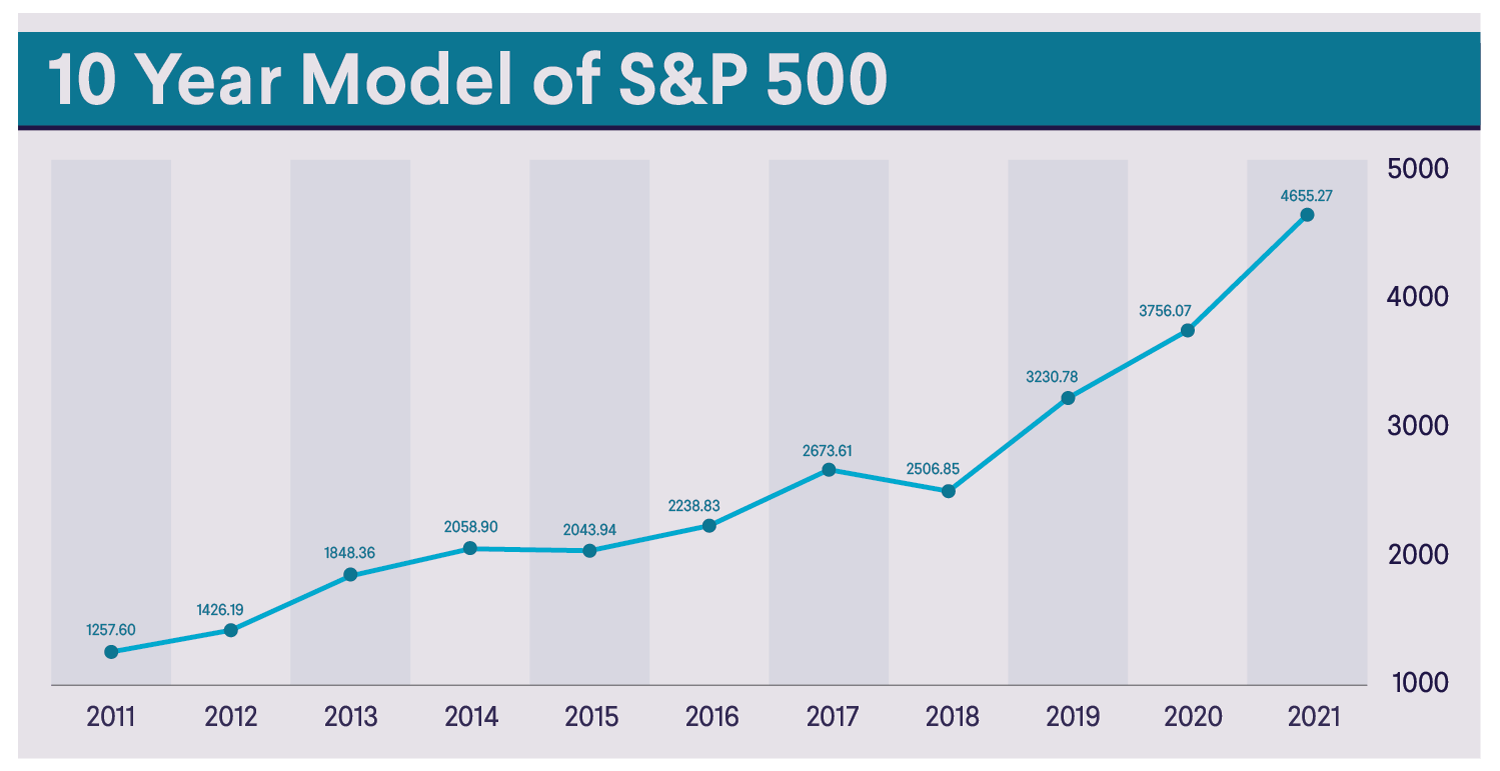
For financial planning purposes however, investors interested in buying stocks should keep in mind that that doesn’t mean the stock market will consistently earn them 7% each year. In fact, S&P 500 share prices have swung violently throughout the years. For instance, the benchmark tumbled 38% in 2008, then completely reversed course the following March to end 2009 up 23%.

Factors such as economic growth, corporate performance, interest rates, and share valuations can affect stock returns. Thus, it can be difficult to say X% or Y% is a good return, as the investing climate varies from year to year.

A better approach is to think about your hoped-for portfolio return in light of a certain goal (e.g. retirement), and focus on the investment strategy that might help you achieve that return.

Line graph: 10 Year Model of S&P 500

Why Your Money Might Lose Value If You Don’t Invest it

It’s helpful to consider what happens to the value of your money if you simply hang on to cash.

Keeping cash can feel like a lower-risk alternative to investing, so it may seem like a good idea to deposit your money into a traditional savings account. But cash slowly loses value over time due to inflation; that is, the cost of goods and services increases with time, meaning that cash has less purchasing power. Inflation can also impact your investments.

Interest rates are important, too. Putting money in a savings account that earns interest at a rate that is lower than the inflation rate guarantees that money will lose value over time. This is why, despite the risks, investing money is often considered a better alternative to simply saving it: The inflation risk is typically lower.

Get up to $1,000 in stock when you fund a new Active Invest account.*

Access stock trading, options, alternative investments, IRAs, and more. Get started in just a few minutes.


*Customer must fund their Active Invest account with at least $50 within 45 days of opening the account. Probability of customer receiving $1,000 is 0.026%. See full terms and conditions.

What Is a Good Rate of Return for Various Investments?

As noted above, determining a good rate of return will also depend on the specific investments you hold, and your asset allocation. You can always calculate the expected rate of return for various securities. Here are different types of securities to consider.

Bonds

Purchasing a bond is basically the same as loaning your money to the bond-issuer, like a government or business. Similar to a CD, a bond is a way of locking up a certain amount of money for a fixed period of time.

Here’s how it works: A bond is purchased for a fixed period of time (the duration), investors receive interest payments over that time, and when the bond matures, the investor receives their initial investment back.

Generally, investors earn higher interest payments when bond issuers are riskier. An example may be a company that’s struggling to stay in business. But interest payments may be lower when the borrower is trustworthy, like the U.S. government, which has never defaulted on its Treasuries.

Stocks

Stocks can be purchased in a number of ways. But the important thing to know is that a stock’s potential return will depend on the specific stock, when it’s purchased, and the risk associated with it. Again, the general idea with stocks is that the riskier the stock, the higher the potential return.

This doesn’t necessarily mean you can put money into the market today and assume you’ll earn a large return on it in the next year. But based on historical precedent, your investment may bear fruit over the long-term. Because the market on average has gone up over time, bringing stock values up with it, but stock investors have to know how to handle a downturn.

As mentioned, the stock market averages a return of roughly 7% per year, adjusted for inflation.

Real Estate

Returns on real estate investing vary widely. It mostly depends on the type of real estate — if you’re purchasing a single house versus a real estate investment trust (REIT), for instance — and where the real estate is located.

As with other investments, it all comes down to risk. The riskier the investment, the higher the chance of greater returns and greater losses. Investors often debate the merit of investing in real estate versus investing in the market.

Likely Return on Investment Assets

For investors who have a high risk tolerance (they’re willing to take big risks to potentially earn high returns), some investments are better than others. So for those who are looking for higher returns, adding riskier investments to a portfolio may be worth considering.

Remember the Principles of Good Investing

Investors focused on seeing huge returns over the short-term may set themselves up for disappointment. Instead, remembering basic tenets of responsible investing can best prepare an investor for long-term success.

First up: diversification. It can be a good idea to invest in a wide variety of assets — stocks, bonds, real estate, etc., and a wide variety of investments within those subgroups. That’s because each type of asset tends to react differently to world events and market forces. Due to that, a diverse portfolio can be a less risky portfolio. Time is another important factor when investing. Investing early for more distant goals, such as retirement, may result in larger returns in the long-term.


Test your understanding of what you just read.


The Takeaway

While every investor wants a “good return” on their investments, there isn’t one way to achieve a good return – and different investments have different rates of return, and different risk levels. Investing in other types of assets tends to deliver lower returns, while stocks (which are more volatile) may deliver higher returns but at much greater risk.

Your own investing strategy and asset allocation will have an influence on the potential returns of your portfolio over time.

Invest in what matters most to you with SoFi Active Invest. In a self-directed account provided by SoFi Securities, you can trade stocks, exchange-traded funds (ETFs), mutual funds, alternative funds, options, and more — all while paying $0 commission on every trade. Other fees may apply. Whether you want to trade after-hours or manage your portfolio using real-time stock insights and analyst ratings, you can invest your way in SoFi's easy-to-use mobile app.

Opening and funding an Active Invest account gives you the opportunity to get up to $1,000 in the stock of your choice.¹


INVESTMENTS ARE NOT FDIC INSURED • ARE NOT BANK GUARANTEED • MAY LOSE VALUE

SoFi Invest is a trade name used by SoFi Wealth LLC and SoFi Securities LLC offering investment products and services. Robo investing and advisory services are provided by SoFi Wealth LLC, an SEC-registered investment adviser. Brokerage and self-directed investing products offered through SoFi Securities LLC, Member FINRA/SIPC.

For disclosures on SoFi Invest platforms visit SoFi.com/legal. For a full listing of the fees associated with Sofi Invest please view our fee schedule.

Financial Tips & Strategies: The tips provided on this website are of a general nature and do not take into account your specific objectives, financial situation, and needs. You should always consider their appropriateness given your own circumstances.

S&P 500 Index: The S&P 500 Index is a market-capitalization-weighted index of 500 leading publicly traded companies in the U.S. It is not an investment product, but a measure of U.S. equity performance. Historical performance of the S&P 500 Index does not guarantee similar results in the future. The historical return of the S&P 500 Index shown does not include the reinvestment of dividends or account for investment fees, expenses, or taxes, which would reduce actual returns.

¹Probability of Member receiving $1,000 is a probability of 0.026%; If you don’t make a selection in 45 days, you’ll no longer qualify for the promo. Customer must fund their account with a minimum of $50.00 to qualify. Probability percentage is subject to decrease. See full terms and conditions.

SOIN-Q125-034

Read more
What Are Margin Rates?

What Are Margin Rates?

A margin rate is the interest rate that applies when investors trade on margin. Margin rates can vary from one brokerage to the next, and there are different factors that affect the rates brokerages charge. Many brokerages use a tiered rate schedule based on the amount of the margin loan.

Trading on margin can increase an investor’s purchasing power and potentially, their returns. Margin trading simply means investing with money borrowed from a brokerage in order to buy more shares than you might otherwise be able. While trading on margin may benefit investors by providing them with additional capital, it can also be riskier than regular online stock trading. Before opening a margin account, it helps to understand the basic margin rate definition.

Key Points

•   Margin rates represent the interest charged on borrowed funds used for trading securities and can vary between different brokerages based on several factors.

•   A margin account allows investors to purchase securities with borrowed money, enabling them to increase their buying power but also introducing additional risks.

•   Factors influencing margin rates include the broker call rate, demand for margin loans, inflation, and the account balance maintained by the investor.

•   Margin rates accrue daily and are charged monthly, meaning that the longer an investor holds a margin loan, the more interest they will pay.

•   Understanding margin rates and their implications is crucial for investors, as these rates directly impact the profitability of margin trading strategies.

Understanding Margin Rates

A margin rate is an interest rate or premium that applies to margin trading accounts with a brokerage.

It helps to start with an overview of how margin accounts work to understand margin rates. Margin accounts allow investors to purchase securities using borrowed money. Investors may use margin to trade options, individual stocks, or other securities. Under Federal Reserve Board Regulation T, brokerage firms must cap the amount investors can borrow up to 50% of the securities’ purchase price. This is called the initial margin.

Investors must also meet maintenance margin requirements in their margin account. Specifically, an investor’s equity can’t fall below 25% of the current market value of the securities held in the account.

If an investor fails to meet maintenance margin guidelines, they may be subject to a margin call. A margin call is when the brokerage requires the investor to deposit more money into their margin account in order to make additional trades.

Brokerage firms charge margin rates, the same way a bank might charge interest on a mortgage or a business loan. Interest is a form of risk management, in the event that a borrower defaults.


💡 Quick Tip: When you’re actively investing in stocks, it’s important to ask what types of fees you might have to pay. For example, brokers may charge a flat fee for trading stocks, or require some commission for every trade. Taking the time to manage investment costs can be beneficial over the long term.

How Margin Rates Work

Margin rates represent the cost of borrowing for an investor for an outstanding margin loan. Each brokerage can set the margin rate differently, it typically reflects the current broker call rate or call money rate. This is the rate that the bank charges the broker for the money used to fund investors’ margin loans.

Brokerages can establish a base rate, then add or subtract percentage points from that margin rate based on the margin balance. The higher the balance in a margin account, the lower the likely margin rate. So the more you borrow from the brokerage, the less you’ll pay in interest for it, as a percentage of the balance.

Increase your buying power with a margin loan from SoFi.

Borrow against your current investments at just 4.75% to 9.50%* and start margin trading.

*For full margin details, see terms.


Factors That Affect Margin Rate

There are a variety of factors that can determine what a brokerage charges for margin rates.

Broker Call Rate

This is the rate that brokerages pay to borrow the money used to fund margin loans. The higher this rate is, the higher the base margin rate may be.

Supply and Demand

Increased demand for margin loans could result in brokerages charging higher margin rates, both to manage risk on those loans and to reap higher profits.

Inflation and Monetary Policy

Margin rates reflect broader interest rates. If banks begin charging brokers higher interest rates, they’ll pass those on to investors.

Account Balance

Maintaining a higher balance on margin could result in a lower margin rate if the brokerage discounts rates for clients who invest more.

How Can Margin Rates Affect You?

Margin rates can determine your total net profit when trading securities on margin.

Assume, for example, that you open a margin account. You want to purchase $10,000 worth of securities of which $5,000 is borrowed money. You take out a margin loan to purchase the stocks. Those same stocks increase in value, so your $10,000 investment ($5,000 of your own money + $5,000 margin) is now worth $15,000.

You sell the stocks and repay the $5,000 you initially borrowed. You also pay $500 in interest to the brokerage for the margin loan. Once you subtract your initial $5,000 investment, the total net profit to you is $4,500.

Now, how do margin rates affect you if your investment doesn’t pan out? Going back to the previous example, say those stocks drop in value to $6,000 rather than increasing. You sell them for that amount, then pay back the $5,000 you borrowed on margin. You also have to pay $500 in interest. If you subtract those amounts from your initial $5,000 investment, you’re now left with only $500.

Understanding margin rates — and the risks involved in margin trading — can help you decide if it’s an investment strategy worth pursuing, based on your risk tolerance and goals.

When Is Margin Rate Charged?

Margin rates are accrued daily and charged on a monthly basis. So as soon as you purchase securities on margin, the margin rate applies and begins accruing. The total amount of margin interest paid depends on how much you borrow from the brokerage, the margin rate and how long it takes you to pay the loan back.

Generally speaking, traders use margins for short-term trading purposes. Though there’s no set end date for margin loans, the longer you take to pay them off, the more interest you’ll pay in total.

How Is Margin Rate Calculated?

Unlike other loans, margin loans typically do not have a set end date. Interest charges accrue monthly. To find the annual interest rate on a margin loan, you’d multiply the margin rate by the principal amount. To find the daily rate, you’d divide that amount by 360 days.

So assume that you have a $100,000 margin loan with a 6.825% margin rate, which is a common margin rate figure at top brokerages. Your yearly interest charges would add up to $6,825. If you divide that by 360, your daily interest charge breaks down to $18.96. If you were to pay your margin loan off in 10 days, you’d pay a total of $189.60 in interest.

Determining how much you’ll pay for a margin loan is relatively easy if you know the margin rates that apply and have an idea of how long it’ll take you to pay it back. At the very least, you can figure out the daily interest charge and use that as a guide for calculating your total profits on a margin trade.


💡 Quick Tip: Are self-directed brokerage accounts cost efficient? They can be, because they offer the convenience of being able to buy stocks online without using a traditional full-service broker (and the typical broker fees).


Test your understanding of what you just read.


The Takeaway

Margin rates refer to the interest rate traders or investors pay on their margin balance – the amount of money they’ve borrowed from a broker to execute traders and buy investments. Margin rates help determine how much traders will pay to use margin, and can help inform investing decisions.

Margin trading is a more advanced investing strategy that requires some consideration of risk and an understanding of market trends. If you’re just getting started with online stock trading and investing, then you may want to get a feel for how stocks work first before opening a margin account.

Invest in what matters most to you with SoFi Active Invest. In a self-directed account provided by SoFi Securities, you can trade stocks, exchange-traded funds (ETFs), mutual funds, alternative funds, options, and more — all while paying $0 commission on every trade. Other fees may apply. Whether you want to trade after-hours or manage your portfolio using real-time stock insights and analyst ratings, you can invest your way in SoFi's easy-to-use mobile app.

Opening and funding an Active Invest account gives you the opportunity to get up to $1,000 in the stock of your choice.¹

FAQ

Are margin rates yearly? Daily?

Margin rates are accrued on a daily basis, and charged by brokerages on a monthly basis. So, every day that a trader has a margin balance, they’re accruing interest in conjunction with their margin rate.

What does margin rate tell you?

The margin rate tells investors how much they’ll pay to borrow money from their brokerage if they trade on margin – or, in other words, it informs them of how much it costs to use margin.


About the author

Rebecca Lake

Rebecca Lake

Rebecca Lake has been a finance writer for nearly a decade, specializing in personal finance, investing, and small business. She is a contributor at Forbes Advisor, SmartAsset, Investopedia, The Balance, MyBankTracker, MoneyRates and CreditCards.com. Read full bio.


About the author

Rebecca Lake

Rebecca Lake

Rebecca Lake has been a finance writer for nearly a decade, specializing in personal finance, investing, and small business. She is a contributor at Forbes Advisor, SmartAsset, Investopedia, The Balance, MyBankTracker, MoneyRates and CreditCards.com. Read full bio.


Photo credit: iStock/Drazen

INVESTMENTS ARE NOT FDIC INSURED • ARE NOT BANK GUARANTEED • MAY LOSE VALUE

SoFi Invest is a trade name used by SoFi Wealth LLC and SoFi Securities LLC offering investment products and services. Robo investing and advisory services are provided by SoFi Wealth LLC, an SEC-registered investment adviser. Brokerage and self-directed investing products offered through SoFi Securities LLC, Member FINRA/SIPC.

For disclosures on SoFi Invest platforms visit SoFi.com/legal. For a full listing of the fees associated with Sofi Invest please view our fee schedule.

Financial Tips & Strategies: The tips provided on this website are of a general nature and do not take into account your specific objectives, financial situation, and needs. You should always consider their appropriateness given your own circumstances.


¹Probability of Member receiving $1,000 is a probability of 0.026%; If you don’t make a selection in 45 days, you’ll no longer qualify for the promo. Customer must fund their account with a minimum of $50.00 to qualify. Probability percentage is subject to decrease. See full terms and conditions.

SOIN1023006

Read more
TLS 1.2 Encrypted
Equal Housing Lender