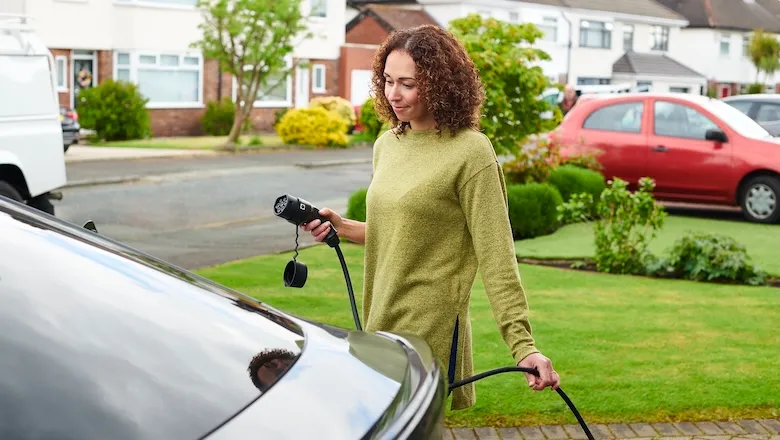
Climate-friendly electric vehicles (EVs) appeal to drivers who want to save the planet while also saving money on fuel. Energy studies show that electric battery power generally costs much less per mile than gas or diesel.
At the same time, EVs are usually pricier to buy and insure. Insurance premiums for EVs cost 20% to 50% more than those for comparable gas-powered cars, according to industry data.
Read on for more about why EVs are more expensive to insure and what you can do to curb your costs.
Key Points
• Insurance premiums for electric vehicles tend to run 20% to 50% higher than comparable gas-powered cars.
• Repair costs drive the premium difference, with electric vehicles requiring 30% more expense and nearly double the mechanical labor hours compared to traditional cars.
• Battery damage often results in insurance companies declaring vehicles totaled rather than attempting repairs, citing safety concerns and potential fire risks from improper fixes.
• Elevated premiums reflect higher replacement values, as electric vehicles typically sell for $8,000 to $11,000 more than their gas-powered counterparts.
• Some electric models with more straightforward engineering can have insurance costs comparable to gas vehicles.
Why EV Insurance May Cost More
Like all cars, EVs need liability, collision, and comprehensive insurance coverage, plus any additional provisions required by state regulators.
But electric vehicle insurance tends to be pricier. On average, EV policies cost up to $44 more per month than those for gas-powered vehicles, according to the National Association of Insurance Commissioners (NAIC).
Recommended: How Does Car Insurance Work?
Factors That Affect Electric Car Insurance Rates
The biggest reasons for the disparity in auto insurance premiums tend to be high repair and replacement costs.
Battery-powered electric cars use complex electronic systems to run cameras, sensors, meters, and other tech features. Maintaining and repairing these systems can be unexpectedly tricky. For example, advanced driver assistance systems (ADAS), which rely on multiple sensors and cameras, can go out of commission due to even minor collision damage.
Repair Costs
When compared to gas-powered cars, EVs cost about 30% more to repair after accidents, according to auto data firm Mitchell. Parts and labor both contribute to the extra expense. Here’s how.
• Replacement parts are harder to come by. A mechanic working on a conventional car can swap in replacement parts made by aftermarket (secondary) manufacturers or reclaimed from a salvage yard. Not so with an EV.
Electric vehicles are still comparatively new and rare (only 2.2% of cars on U.S. roads), meaning there are far fewer junkers from which to reclaim functional auto parts. Also, EV manufacturers often keep their product details proprietary, so only they can sell authorized replacement parts. Tesla, for example, does not cover used, recycled, or third-party items under warranty; its terms of service state that installing these items may also invalidate warranties on related components.
• Labor costs are higher. EVs require almost twice as many hours of mechanical labor as gas-powered cars (3 vs. 1.7), according to Mitchell. But only a fraction of repair shops work on EVs, limiting owners’ ability to comparison-shop for affordable service.
In addition, not all mechanics have the extra training to handle EVs’ high-voltage systems and diagnostics. Those who do have the qualifications are likely to charge higher prices.
Battery Replacement Costs
An EV’s battery is its most expensive component, often accounting for 30% to 50% of the car’s total value. Factor in labor costs for EV specialists, plus disposal fees, and the total cost of replacement can end up between $5,000 and $20,000.
This often makes it uneconomical to replace the battery by itself. As a result, insurers may prefer to write off the car as totaled, especially since improper repairs can cause follow-on damage or, in some cases, fires.
Advanced Technology Features
EVs make use of specialized technology that may prove difficult or expensive to fix or replace. Regenerative braking, for instance, is more complicated than traditional auto brakes. It requires additional components, such as an electric motor and a battery or capacitor.
Batteries often use expensive raw materials like lithium and cobalt, boosting manufacturing costs. International trade constraints could push prices up further, especially if supply chains get tangled.
Vehicle Value
EVs tend to cost $8,000 to $11,000 more than comparable gas-powered vehicles, according to Kelley Blue Book, a respected car valuation guide. Based on a price difference of about $9,000, replacing a totaled EV costs the insurer an average of 18% more. EV policyholders pay heftier premiums to compensate for this.
Recommended: Auto Insurance Terms, Explained
When EV Insurance May Be Comparable to Gas Vehicles
Some smaller, simpler EV models can be insured for roughly the same cost as gas-powered vehicles. These models typically lack exotic hardware, souped-up engines, and fancy “performance” flourishes, which helps keep repair costs in check. Examples include:
• Nissan Leaf
• Hyundai Kona Electric
• Kia Niro EV
• Volkswagen ID.4
• Chevy Equinox EV
If you buy a used, non-luxury EV model for which the purchase price has already dropped, the insurer faces a lower replacement cost. That situation can help bring premiums down significantly, especially if you’ve got a clean driving record.
Recommended: EV vs Hybrid Vehicles
How To Lower Electric Car Insurance Costs
EV drivers do have some ways to lower car insurance. Many are familiar cost-saving moves for any type of auto insurance. Choose a higher deductible, for example, or take advantage of discounts for safe driving or low annual mileage. Additional strategies include:
• Compare quotes by make and model. An annual policy on a moderately priced EV, such as a Leaf or ID.4, can often be had for hundreds less than coverage for a similarly sized Tesla. This accords with the difference in the cars’ respective purchase prices.
• Look into bundling. Bundling your EV insurance with policies for your home, your rental, or your other vehicles can be a money-saving strategy.
• Find out if your credit score is an issue. Some states (e.g., Virginia) allow insurance companies to base premiums on consumers’ credit scores. It’s worth finding out whether your state operates this way and, if so, how much you might save by improving your credit profile.
• At renewal time, shop around. You may find price breaks, especially if your current insurer has announced upcoming premium hikes.
• Consider cutting back full coverage for older EVs. Their lower replacement values might be a reason to rethink how much auto insurance you really need. Don’t skimp on liability coverage, though, since a random fender-bender might obligate you to pay for someone else’s car repair.
The Takeaway
In general, insurance for electric cars vs. gas vehicles tends to be more expensive, and not only because the EVs themselves cost so much to replace. Pricey spare parts and higher fees for certified repair specialists also drive expenses up. But you may be able to moderate your car insurance premiums by buying a smaller EV, a more modestly priced brand, or an older used model.
When you’re ready to shop for auto insurance, SoFi can help. Our online auto insurance comparison tool lets you see quotes from a network of top insurance providers within minutes, saving you time and hassle.
SoFi brings you real rates, with no bait and switch.
FAQ
Do electric cars qualify for insurance discounts?
EVs don’t typically qualify for discounts just by virtue of being electric. And overall, insurance is not cheaper for electric cars. However, EV owners should be able to apply for other insurance discounts, such as those for being a safe driver or for limited mileage.
Is the battery covered under auto insurance?
Policy specifics differ, but an EV’s battery is generally included in comprehensive and collision coverage against damage from accidents, fire, theft, or vandalism.
Does home charging equipment affect insurance rates?
Using home charging equipment isn’t likely to affect your auto insurance premiums. However, a home charging station could have an impact on your homeowners’ insurance rates, as the equipment might introduce potential risks such as fire, electrical surge, trip hazards, and theft.
Are Teslas more expensive to insure than other EVs?
In general, Teslas do cost more to insure than other electric vehicles. That’s because Tesla repair shops and certified mechanics are comparatively scarce and can therefore command higher prices. Also, replacing Tesla’s specialized components costs more, since the company does not allow the use of aftermarket or recycled parts.
Do EVs cost more to repair after a minor accident?
Yes. Repairing an EV after a minor accident can cost hundreds or even thousands of dollars more than repairing similar damage to a gas-powered car. Conventional cars can be fixed with aftermarket or recycled parts, unlike most EVs, which usually need costly manufacturer-specific parts and delicate electronic components.
Photo credit: iStock/sturti
Home and Renters Insurance: Insurance not available in all states.
Experian is a registered trademark of Experian.
SoFi Insurance Agency, LLC. (“”SoFi””) is compensated by Experian for each customer who purchases a policy through the SoFi-Experian partnership.
Third-Party Brand Mentions: No brands, products, or companies mentioned are affiliated with SoFi, nor do they endorse or sponsor this article. Third-party trademarks referenced herein are property of their respective owners.
Disclaimer: Many factors affect your credit scores and the interest rates you may receive. SoFi is not a Credit Repair Organization as defined under federal or state law, including the Credit Repair Organizations Act. SoFi does not provide “credit repair” services or advice or assistance regarding “rebuilding” or “improving” your credit record, credit history, or credit rating. For details, see the FTC’s website .
External Websites: The information and analysis provided through hyperlinks to third-party websites, while believed to be accurate, cannot be guaranteed by SoFi. Links are provided for informational purposes and should not be viewed as an endorsement.
SOPRO-Q126-088