Saturday,
June 3, 2023
Top Story
The week in review
• With just days left until the deadline, the US Senate passed the debt ceiling bill. Negotiated to prevent an unprecedented US default, the bill includes cuts in “discretionary” federal spending, a clawback of COVID-related assistance funding, and a mandate that the pause on federal student loan repayments come to an end no later than Aug. 30, 2023. Here’s how the bill could affect you.
• NVIDIA (NVDA) hit a $1 trillion market cap at the start of trading Tuesday. After its blockbuster earnings and continued rally, the chipmaker became the first in its industry to reach the milestone and one of only five other companies currently worth $1 trillion or more.
• JPMorgan Chase (JPM) is developing an AI program called IndexGPT that uses cloud computing software to analyze and select securities tailored to customer needs. The program is based on the same generative training models as OpenAI's ChatGPT technology, but will be repurposed to offer investment advice.
For more economic news, visit On the Money — SoFi’s one-stop-shop for news, trends, and tips!
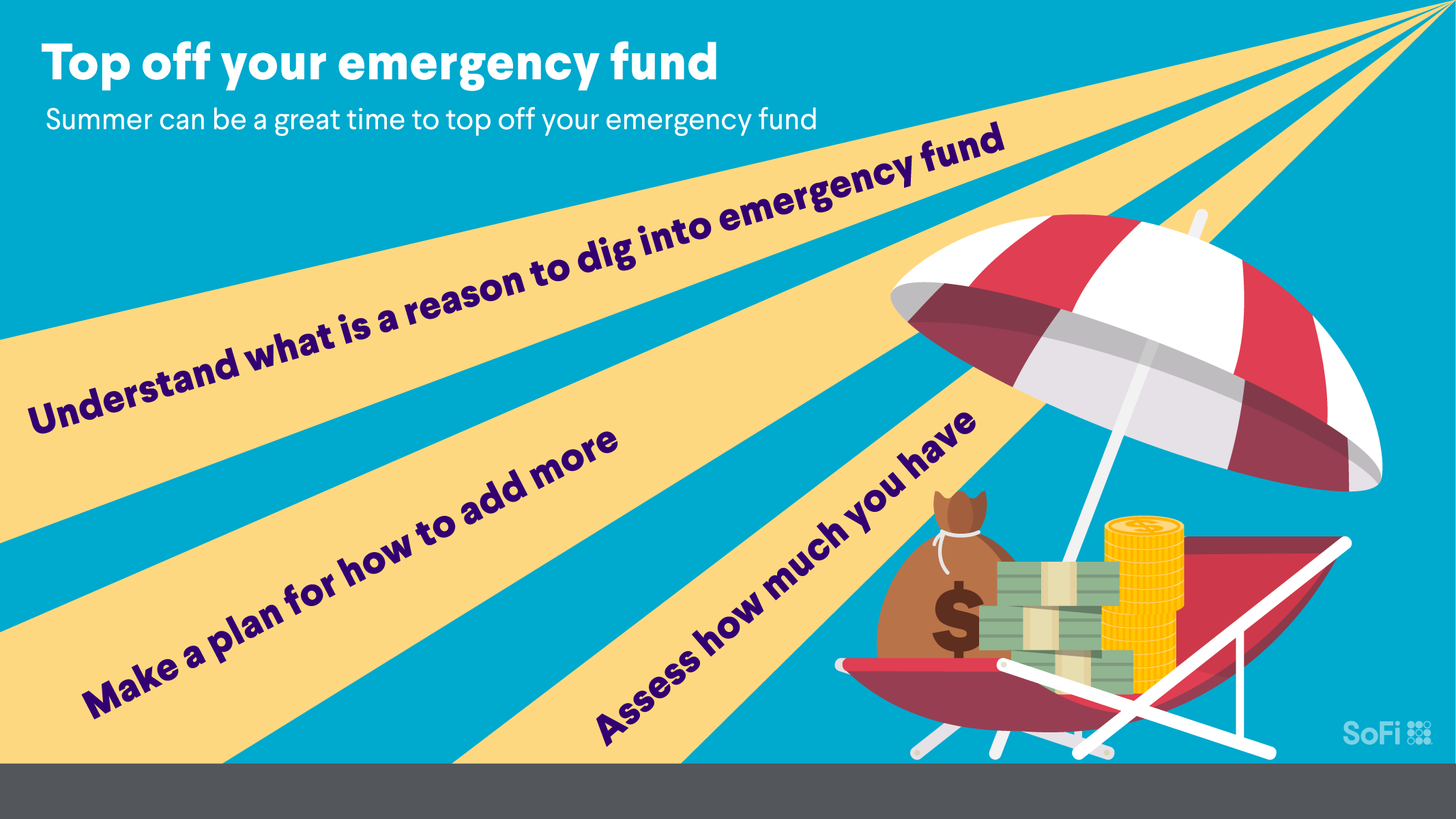
What if-proof your summer: Top up your 911 fund
Now’s a good time to pad your emergency fund. Because in a crisis, the last thing you need is to get hit with credit card interest.
1. What counts as an emergency? A financial emergency is a major expense you can’t put off or do without. Car repairs and unexpected vet visits are emergencies. By keeping clear guardrails around your fund, you can ensure it’s there when you need it. (With a SoFi Bank account, you can create an Emergency Fund Vault right from your mobile app.)
2. Experiment with your budget. Economic uncertainty and layoff news can make anyone anxious. While you can’t control the future, you can control how you prepare. For couples, this might mean experimenting with what it feels like to live off one income and put the other salary into savings.
3. Set a savings goal. Ideally, an emergency fund has 3-6 months of living expenses. That means if your monthly expenses are $4,000, you want at least $12,000 in there. But it can be a good idea to aim for more than the minimum if you can swing it.