

Top Story
This startup wants doctor’s office waiting rooms to be run by robots.
Almost 90% of medical practices struggled to fill front-of-office roles in the past year. Here’s how Hyro hopes AI-powered administrative assistants could change the healthcare industry.

US stocks finished higher Thursday as the debt ceiling bill passed in the House and advanced to the Senate days ahead of the default deadline
• Macy’s (M) reported earnings per share above expectations at $0.56 but came in slightly short on revenue with $4.98 billion. After seeing a 7.9% decline in comparable sales, the company is taking a conservative stance for the rest of the year, anticipating more markdowns and reductions of merchandise orders. The retailer also slashed its full-year outlook, lowering its sales forecast by roughly $1 billion and projecting comparable sales to continue 6% to 7.5% lower.
• Chewy (CHWY) beat both top- and bottom-line estimates. The company’s earnings per share came in at $0.05 and it saw a 14.7% year-over-year increase in revenue at $2.78 billion. Net sales per active customer and sales from autoship customers also reached an all-time high in the quarter. After posting its first profitable quarter to close out 2022, the pet supply retailer cautioned it was seeing a softening in the high-margin discretionary and hard goods categories. Nevertheless, gross margins still increased by 1%.
• The ISM Manufacturing PMI fell to 46.9 in May, down from 47.1 in April and below forecasts of 47. This marked the seventh-consecutive month of contraction in the manufacturing sector. The survey committee highlighted there was more business uncertainty in May as companies continue to manage outputs to better match demand.
What to be on the lookout for today
• Investors will get insight on the state of the US job market with an updated unemployment rate. In April, unemployment matched its 50-year low of 3.4%. Additionally, investors will get an update on the average hourly wage in the US which was $33.36 in April.
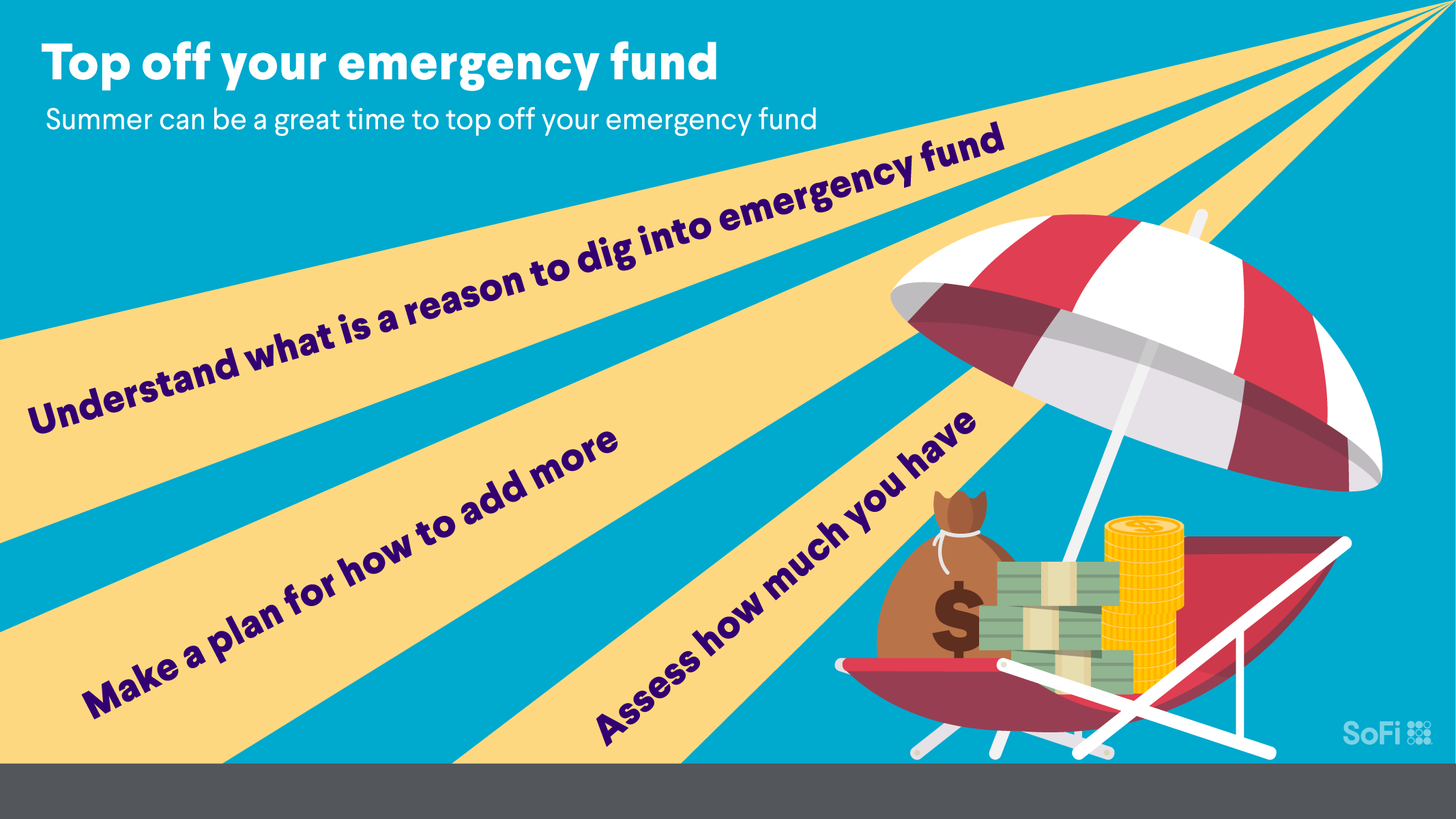
What if-proof your summer: Top up your 911 fund
Now’s a good time to pad your emergency fund. Because in a crisis, the last thing you need is to get hit with credit card interest.
1. What counts as an emergency? A financial emergency is a major expense you can’t put off or do without. Car repairs and unexpected vet visits are emergencies. By keeping clear guardrails around your fund, you can ensure it’s there when you need it. (With a SoFi Bank account, you can create an Emergency Fund Vault right from your mobile app.)
2. Experiment with your budget. Economic uncertainty and layoff news can make anyone anxious. While you can’t control the future, you can control how you prepare. For couples, this might mean experimenting with what it feels like to live off one income and put the other salary into savings.
3. Set a savings goal. Ideally, an emergency fund has 3-6 months of living expenses. That means if your monthly expenses are $4,000, you want at least $12,000 in there. But it can be a good idea to aim for more than the minimum if you can swing it.
Today’s top stories
Lululemon's (LULU) Everywhere Belt Bag is bringing the fanny pack back. The activewear brand’s bag has become ubiquitous among Gen Z consumers, a testament to the company’s unique approach to marketing. Check out how Lulu pulled it off. Read more >> Movie theaters are staging a Hollywood-worthy comeback. If you come to this place for magic, you’re not alone. So far, 2023 movie ticket sales have outpaced 2020 and 2021 combined. Will these coming blockbusters carry cinemas to pre-pandemic levels? Read more >> What were the major market movers in May? Hint: lots of AI. See the analysis of last month by SoFi’s Head of Investment Strategy. Read more >>Not-so-breaking news
-
Walmart (WMT) is swapping out plastic mailers and replacing them with recyclable paper ones. For now, the change will only apply to online orders picked up curbside.
-
Amazon (AMZN) will pay over $30 million to the FTC for claims it violated users’ privacy. The FTC alleges the company’s Ring and Alexa devices violated the Children’s Online Privacy Act by retaining information on younger users.
-
Electric vehicle startup Lucid (LCID) is set to raise another $3 billion as it struggles with mounting losses. The bulk of the investment will come from Saudi Arabia’s Public Investment Fund.
-
Adidas (ADDYY) is selling its remaining Yeezy merchandise after cutting ties with controversial rapper Kanye West. The apparel company says it will donate a portion of the proceeds to charity.
-
Toyota (TM) plans to build its newest electric SUV out of a plant in Kentucky, as major automakers embrace EV tax credits in the US. The SUV is set to roll out in 2025.
Financial planner tip of the day
"It is common to be tempted to time the market. The simple fact is timing the market is a bad idea for the average investor and actually leads to lower returns than the broader market."
Brian Walsh, CFP® at SoFi