
Wednesday,
August 17, 2022
Market recap
Dow Jones
34,152.01
+239.57 (+0.71%)
S&P 500
4,305.20
+8.06 (+0.19%)
Nasdaq
13,102.55
-25.50 (-0.19%)
Top Story
Stocks Waver as Investors Study More Retail Sector Earnings Data, Housing Starts Fall
• US stocks were mixed Tuesday as more data from the retail sector showed Americans are continuing to shop despite record-high inflation. Wall Street veterans suggest the market could still be reacting favorably to last week’s CPI report, which showed prices moderating for the 12-months ending in July.
• Oil prices declined again. Both international benchmark Brent crude and US standard West Texas Intermediate saw their price per barrel fall. This highlights recessionary concerns, especially after this week’s negative report concerning China’s economy.
• Housing starts fell to a near one-and-a-half year low in July. Analysts say this is due to rising mortgage rates, which has caused demand to fall. New residential building permits also slipped over 1% in July.
What to Be on the Lookout for Today
• Technology firm and networking giant Cisco (CSCO) is set to publish its earnings for its latest quarter and fiscal year 2022. Reports from last week indicated that Cisco was hacked by a ransomware gang that was able to pilfer 2.8 gigabytes of data.
• Lowe’s (LOW), Target (TGT), and clothing retailer T.J. Maxx (TJX) are also on the midweek earnings calendar. This continues the week’s focus on consumer spending and the retail sector as a whole.
What is Passive Income?
Passive income is money you can earn without active investment — it isn’t attached to an hourly wage or annual salary.
Passive income streams include things like cash flow from rental properties, dividend-yielding stocks, sales of a product (that requires little or no effort), royalties, and more. If you can make money from something while staying mostly hands-off, then it’s likely a form of passive income.
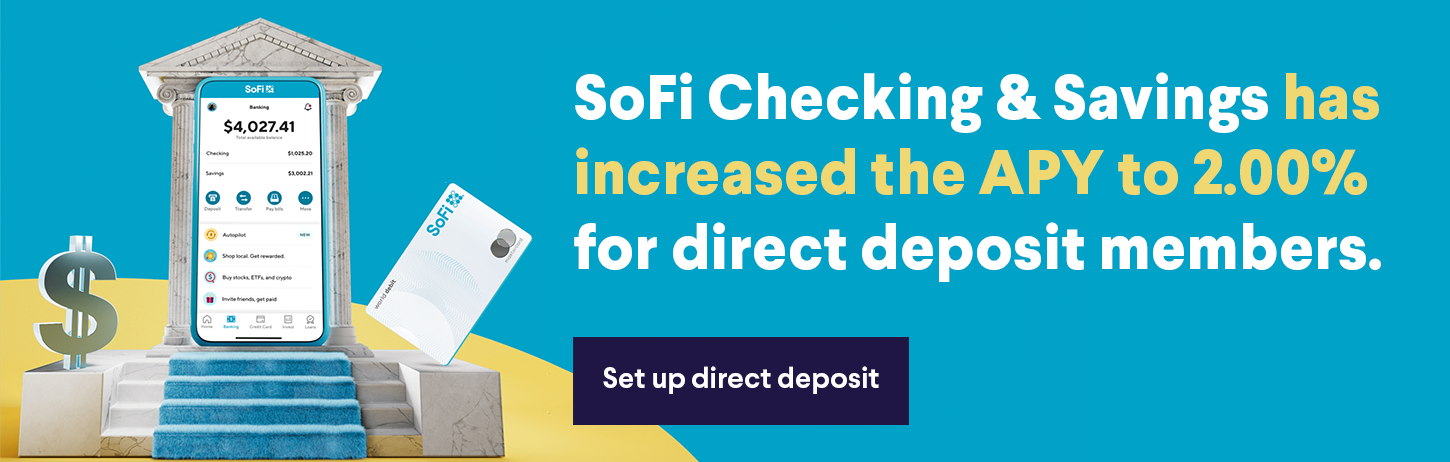
By simply putting your money in the bank, especially in a high yield savings account, you may be able to start earning passive income on it. SoFi members with direct deposit can earn 2.00% annual percentage yield (APY) interest on all account balances in their Checking and Savings accounts (including Vaults). That means you’ll earn more interest in one week than you would in one year in a big bank’s savings account. Set up direct deposit with SoFi here.

A Few Headlines That Should Be on Your Radar
Amid rising mortgage rates and sky-high list prices, some people shelved plans to buy a house. Unfortunately, the rental market offers little relief. Given that the cost of housing is often one of the biggest line items in American’s budgets, negotiating down rents can have a big impact on overall cost of living. We’ve got tips to help rein in the costs. Read more >> Walmart (WMT) has made a deal with Paramount Global (PARA) that will bring streaming services into its membership package. Beginning in September, subscribers will get access to streaming videos in addition to the current membership perks that include free shipping for online orders, discounts on gas, and a 6-month promo of music streaming from Spotify. Read more >> The cycling boom associated with COVID-19 has fizzled out. It made sense when working out at home was the only option, but now that gyms have reopened and inflation is spiking it’s a whole new landscape. Peloton’s (PTON) issues have been well documented as the company looks to reset following the pandemic’s cycling boom. What’s going on at bike shops and cycling-focused gyms? Read more >> The FIRE movement, which stands for “financial independence, retire early,” is gaining popularity. Discover the definition of financial freedom and 17 tips for achieving financial independence. Read more >>Not-So-Breaking News
-
Walmart (WMT) reported better-than-expected results on the top and bottom lines. The discount retailing giant benefited from higher demand as inflationary pressures brought in more shoppers seeking lower prices.
-
Home Depot (HD) beat Wall Street estimates for profits and revenue. The company’s CEO Ted Decker attributed the strong performance to the ongoing popularity of home improvement projects.
-
American Airlines (AAL) plans to buy 20 supersonic Overture planes from Boom Supersonic. The planes are designed to travel at 1,304 miles per hour, which will significantly slash flight times from their current averages.
-
Authentic Brands, which owns Reebok, Forever 21, and Juicy has announced it will buy British fashion brand Ted Baker (TBAKF). The retail conglomerate will pay about $254 million to acquire the fashion chain and expects to benefit from its global footprint.
-
World Wrestling Entertainment (WWE) reported revenue and profit above analyst expectations. It also announced the conclusion of an investigation into former CEO Vince McMahon concerning allegations of unrecorded expenses. As a result, McMahon will pay $19.6 million in unrecorded expenses and WWE will revise its historical financial statements for 2019, 2020, 2021 and Q1 2022.
Financial Planner Tip of the Day
"Risk tolerance means the level of risk you’re comfortable taking; risk capacity is the level of risk you can actually take. You may be comfortable with risk but that does not mean you should, for example with an emergency fund. The opposite is also true for long-term money where your capacity is much higher."
Brian Walsh, CFP® at SoFi