Table of Contents
Virtually all new debit cards in the U.S. today come enabled with a small metallic square, known as an EMV chip. This embedded microchip creates a unique, one-time code for each transaction, making it more secure than older magnetic stripes, which directly share your bank account information.
According to EMVCo — the organization that oversees EMV technology — nearly 15 billion EMV-enabled payment cards are now in circulation worldwide, accounting for about 96% of all in-store card transactions across more than 80 countries.
Read on to learn how chip-enabled debit cards work, why they’re more secure, and what to do if your card’s chip stops working.
Key Points
• EMV debit card chips improve security by generating a unique code for every transaction.
• EMV stands for Europay, MasterCard, and Visa, the companies that developed the technology.
• Chip cards can be inserted into a reader or tapped at NFC-enabled terminals for contactless payments.
• If a chip malfunctions, try cleaning it, tapping vs. dipping, using the magnetic stripe, or requesting a card replacement.
• Mobile wallets generally offer even greater security, thanks to biometric authentication.
What Is a Chip Card and How Does It Work?
Debit cards were invented back in the late 1960s as an alternative to carrying cash or a checkbook. They originally used magnetic stripes to store account information. The stripe holds static data, such as your name, account number, expiration date, and the security code from the back of the card.
Because the information on the magnetic stripe is not encrypted, it’s possible for scammers to use inexpensive devices (called skimmers) at payment terminals to steal your card data during a swipe. Criminals can then copy this stolen information onto counterfeit cards to make unauthorized purchases or withdraw cash.
Modern EMV chip cards offer an extra layer of protection because their chips encrypt data, making it more difficult for fraudsters to copy the information. The term EMV comes from Europay, MasterCard, and Visa, the companies that originally developed the technology to help prevent fraud and counterfeiting.
Understanding EMV Technology
Like the magnetic stripe, an EMV chip contains information about the checking account that is associated with the card. Unlike older magnetic stripe cards, however, EMV chip cards don’t transmit your actual account details during transactions. Instead, the chip generates a unique, one-time transaction code when you tap or insert your card. Even if that code fell into the wrong hands, it couldn’t be used to make another purchase.
While receiving an EMV chip card is the norm when you apply for a debit card, chip cards also still feature magnetic stripes, giving you the option of swiping or dipping/tapping. This is because merchants in the U.S. have not yet universally adopted the costlier chip-enabled card readers. Banks will no longer be required to issue chip cards with a magnetic stripe starting in 2027.
How Chip Cards Create a Unique Transaction Code
EMV cards rely on a security process called tokenization. During a transaction, your real account number is replaced with a one-time token that’s valid only for that specific purpose. The token — not your actual debit card number — travels through the payment network to the issuer for authorization. Once the transaction is complete, the token becomes useless.
Are Chip Debit Cards More Secure Than Magnetic Stripe Cards?
Yes — chip debit cards are generally significantly more secure than magnetic stripe cards.
With magnetic stripe cards, swiping the card allows the terminal to read stored account information. Criminals can exploit this by using skimmers to capture data as it’s being transmitted and use it for unauthorized purchases.
Chip cards were largely designed to help prevent fraudulent transactions. When you swipe or tap an EMV debit card, the chip generates a unique code that cannot be used again, making it more difficult for a fraudster to access your account information and commit debit card fraud.
An added security bonus is that when you use a chip debit card for an in-person transaction, your bank information doesn’t get stored in the retailer’s database. This prevents hackers from getting your account number in the event of a store’s data breach.
This isn’t to say that EMV debit cards are totally risk-free, however. Some hackers have started to use more sophisticated devices called “shimmers” that, like skimmers, can be placed in card reader slots, such as at gas pumps, vending machines, or machines in poorly lit areas. These devices contain microchips that may still be able to retrieve your account information and save it to a magnetic strip on a counterfeit card. While the advanced features of EMV debit cards can help to protect against fraud, it’s important to know that it can still occur.
How to Use Your Debit Card With a Chip
Although the technology behind EMV cards is complex, using one is simple. You generally have two options:
Dipping at a Card Reader
Dipping your card means inserting it into a card reader chip side up and leaving it there until the transaction is complete, which takes a few seconds. The screen will tell you to enter your debit card pin or sign for the purchase, depending on the transaction type and merchant. Once the screen indicates the transaction is complete, you can remove your card and take your receipt.
Tapping for Contactless Payments
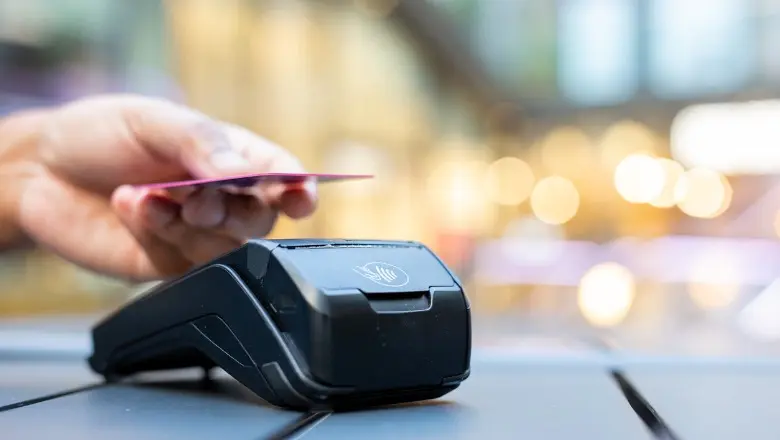
If your card and the reader have the symbol for contactless payments (four curved lines), you can tap the card near the reader instead of inserting it for faster transactions.
Contactless payments use near-field communication (NFC) technology. When you tap your card near a compatible terminal, the chip transmits payment data wirelessly over a very short distance.
Despite common concerns, you can’t accidentally trigger a payment just by walking past a terminal. The card must be intentionally placed very close to the reader for the transaction to occur.
Recommended: What Is Cardless Withdrawal?
What Should You Do if Your Debit Card Chip Malfunctions?
If the chip in your debit card chip is not working, try one of these quick fixes:
• Reinsert correctly: Ensure the chip is facing up and inserted properly into the reader.
• Clean the chip: Gently wipe the chip with a soft cloth to remove dirt, then try again.
• Use a different method: If dipping doesn’t work, try tapping (if that option is available). If neither method works, you can likely use the magnetic stripe option.
• Use a different terminal: The issue might be the merchant’s reader, so you might simply try another machine.
Common Reasons a Debit Card Chip Is Not Working
One of the most common reasons why chips in debit cards stop working is everyday wear and tear. Simply pulling your card out of your wallet, using it, and putting it back can scuff the chip over time. EMV chips can also get damaged or scratched if your card is stored loosely in your bag or phone case.
If the chip gets scratched, cracked, or broken, it may not be able to establish a reliable connection with the card reader. While debit cards are typically water-resistant, prolonged exposure to liquids may also damage an EMV chip.
A common myth is that magnets can lead to a debit card chip malfunction. In reality, magnets mainly affect magnetic stripes — not chip technology.
Steps to Take When You Have a Damaged Chip
If your chip consistently fails to work, try cleaning it with a soft, damp cloth or alcohol wipe. If that doesn’t resolve the problem, contact your issuer and ask for a replacement card. You can do this by calling the number on the back of your card, or you may be able to request a new card on your banking app or the bank’s website. Be sure to specify that the replacement is for a damaged (not lost or stolen) debit card, so they issue a new card with the same number.
Chip Cards vs Mobile Wallets: Which Is More Secure?
Both mobile wallets and chip cards use tokenization for strong security. This means they replace your actual card number with a one-time token, keeping the real data from being exposed during transactions.
However, mobile wallets are generally seen as more secure than chip cards because they rely on multiple authentication steps. To make a payment with a mobile wallet, you typically need to first unlock your device using a passcode, fingerprint, or face ID. Plus, if someone were to steal your phone, you can usually lock or remotely wipe the wallet remotely.
The Takeaway
Chip-enabled (EMV) debit cards offer a high level of security and convenience for everyday spending. By generating unique transaction codes and keeping your account details private, they can significantly reduce the risk of fraud. With options to insert or tap your card, EMV technology provides a safe and seamless way to access your money.
Interested in opening an online bank account? When you sign up for a SoFi Checking and Savings account with eligible direct deposit, you’ll get a competitive annual percentage yield (APY), pay zero account fees, and enjoy an array of rewards, such as access to the Allpoint Network of 55,000+ fee-free ATMs globally. Qualifying accounts can even access their paycheck up to two days early.
FAQ
Can a chip card be hacked?
While EMV chip cards are considered significantly more secure than magnetic stripe cards, they are not invincible. Some fraudsters use advanced tools called “shimmers.” These are very thin devices that can be fitted into a card terminal and illegally capture data stored in the microchips implanted in debit and credit cards.
Additionally, because chip cards still feature magnetic stripes for compatibility with older terminals, they remain vulnerable to traditional skimming. Some advanced schemes even involve intercepting new cards in the mail and tampering with the chips before they ever reach the cardholder.
Do chip cards have an expiration date?
Yes, chip cards (also known as EMV cards) have an expiration date. This date is typically located on the front or back of the card and is formatted as MM/YY (Month/Year). Expiration dates on debit and credit cards help banks manage the security and condition of the cards in circulation. They also ensure that cardholders periodically receive new cards with up-to-date security features. When your card expires, your bank will typically automatically send you a new one, which would also have a working EMV chip.
Why do I still have a magnetic stripe on my chip card?
Chip cards retain a magnetic stripe primarily for backward compatibility with older point-of-sale terminals that have not yet been upgraded to accept EMV chips. While chip readers are now common in the U.S., some merchants, particularly smaller businesses, may still use older swipe-only machines, making the magnetic stripe necessary to ensure the card can be used universally. U.S. banks will no longer be required to issue chip cards with a magnetic stripe starting in 2027.
How do I get a debit card with a chip?
Today, the vast majority of debit cards are made with EMV chips. To get a chip card, you may be able to request a replacement for your current debit card through your bank. Chip cards are the standard today, so requesting a replacement or opening an account will almost certainly get you one.
Can a damaged chip be repaired?
If the damage is minor, such as surface dirt or smudges, gently cleaning the chip with a soft cloth or an alcohol wipe may resolve the issue. However, if the chip is physically damaged — scratched, cracked, or broken — it cannot typically be repaired. In this scenario, the best course of action is to contact your bank or card issuer immediately and request a replacement debit card.
Photo credit: iStock/jorgemata
SoFi Checking and Savings is offered through SoFi Bank, N.A. Member FDIC. The SoFi® Bank Debit Mastercard® is issued by SoFi Bank, N.A., pursuant to license by Mastercard International Incorporated and can be used everywhere Mastercard is accepted. Mastercard is a registered trademark, and the circles design is a trademark of Mastercard International Incorporated.
Annual percentage yield (APY) is variable and subject to change at any time. Rates are current as of 12/23/25. There is no minimum balance requirement. Fees may reduce earnings. Additional rates and information can be found at https://www.sofi.com/legal/banking-rate-sheet
Eligible Direct Deposit means a recurring deposit of regular income to an account holder’s SoFi Checking or Savings account, including payroll, pension, or government benefit payments (e.g., Social Security), made by the account holder’s employer, payroll or benefits provider or government agency (“Eligible Direct Deposit”) via the Automated Clearing House (“ACH”) Network every 31 calendar days.
Although we do our best to recognize all Eligible Direct Deposits, a small number of employers, payroll providers, benefits providers, or government agencies do not designate payments as direct deposit. To ensure you're earning the APY for account holders with Eligible Direct Deposit, we encourage you to check your APY Details page the day after your Eligible Direct Deposit posts to your SoFi account. If your APY is not showing as the APY for account holders with Eligible Direct Deposit, contact us at 855-456-7634 with the details of your Eligible Direct Deposit. As long as SoFi Bank can validate those details, you will start earning the APY for account holders with Eligible Direct Deposit from the date you contact SoFi for the next 31 calendar days. You will also be eligible for the APY for account holders with Eligible Direct Deposit on future Eligible Direct Deposits, as long as SoFi Bank can validate them.
Deposits that are not from an employer, payroll, or benefits provider or government agency, including but not limited to check deposits, peer-to-peer transfers (e.g., transfers from PayPal, Venmo, Wise, etc.), merchant transactions (e.g., transactions from PayPal, Stripe, Square, etc.), and bank ACH funds transfers and wire transfers from external accounts, or are non-recurring in nature (e.g., IRS tax refunds), do not constitute Eligible Direct Deposit activity. There is no minimum Eligible Direct Deposit amount required to qualify for the stated interest rate. SoFi Bank shall, in its sole discretion, assess each account holder's Eligible Direct Deposit activity to determine the applicability of rates and may request additional documentation for verification of eligibility.
See additional details at https://www.sofi.com/legal/banking-rate-sheet.
*Awards or rankings from NerdWallet are not indicative of future success or results. This award and its ratings are independently determined and awarded by their respective publications.
We do not charge any account, service or maintenance fees for SoFi Checking and Savings. We do charge a transaction fee to process each outgoing wire transfer. SoFi does not charge a fee for incoming wire transfers, however the sending bank may charge a fee. Our fee policy is subject to change at any time. See the SoFi Bank Fee Sheet for details at sofi.com/legal/banking-fees/.
^Early access to direct deposit funds is based on the timing in which we receive notice of impending payment from the Federal Reserve, which is typically up to two days before the scheduled payment date, but may vary.
Financial Tips & Strategies: The tips provided on this website are of a general nature and do not take into account your specific objectives, financial situation, and needs. You should always consider their appropriateness given your own circumstances.
Third-Party Brand Mentions: No brands, products, or companies mentioned are affiliated with SoFi, nor do they endorse or sponsor this article. Third-party trademarks referenced herein are property of their respective owners.
Third Party Trademarks: Certified Financial Planner Board of Standards Center for Financial Planning, Inc. owns and licenses the certification marks CFP®, CERTIFIED FINANCIAL PLANNER®
SOBNK-Q425-047