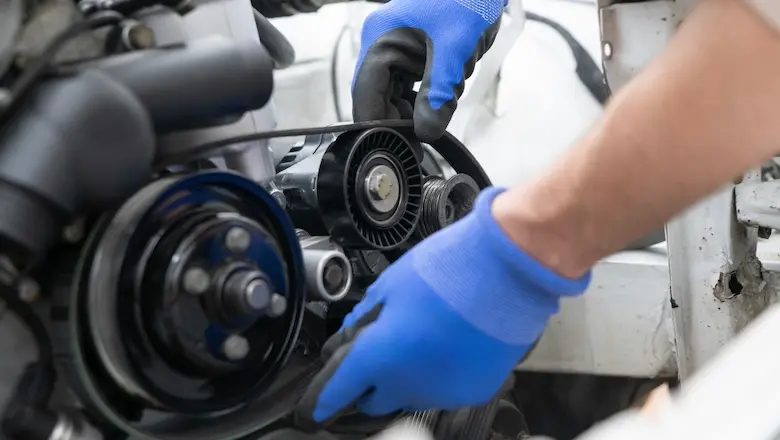
Your timing belt is critical to your engine’s ability to run properly. If it breaks, your engine will stop running immediately and there will likely be damage to other components. That’s why replacing your timing belt is part of regularly scheduled maintenance every 60,000 to 100,000 miles.
Replacement costs can run between $800 and $1,300 as long as you replace your timing belt before it breaks. Costs can be much higher if the belt breaks while your vehicle is running.
Here’s a look at the factors that can affect timing belt replacement cost and signs to look out for that can signal your timing belt needs to be changed.
Key Points
• The cost of a timing belt replacement can vary widely, typically ranging from $800 to $1,300, depending on the make and model of your car.
• Labor costs often constitute a significant portion of the total expense, sometimes more than the cost of the belt itself.
• Additional components like the water pump, tensioner, and idler pulleys may need replacement during the timing belt service, increasing the overall cost.
• Regular maintenance and timely replacement of the timing belt can prevent costly engine damage and ensure your car runs smoothly.
• It’s advisable to consult a trusted mechanic for an accurate estimate and to check your car’s maintenance schedule for recommended replacement intervals.
What Does a Timing Belt Do?
A car’s engine works when a mix of fuel and air combusts inside the engine’s cylinders, which pushes out the pistons that turn the drive shaft. Intake and exhaust valves open and close, allowing the mixture of air and fuel to enter the cylinder and the gases that result from combustion to exit the cylinder. The timing belt ensures that the intake and exhaust valves open and close at the exact time needed.
The timing belt has teeth on it that interlock with the timing gears on the crankshaft and the camshaft. A tensioner holds the belt tight so that it doesn’t skip any teeth, which can be known as jumping time. The timing belt may also turn a gear that powers the water pump.
How Much Is It to Replace a Timing Belt?
The average cost of timing belt replacement is $800 to $1,300. That said, depending on different factors, costs could easily range upward of $1,300 or more. If your timing belt breaks before you replace it, the damage could cost you several times more, as much as $3,000 to $5,000. In some cases, the cost of damage caused by a timing belt break could be more than the value of your vehicle.
If your timing belt breaks while your car is under warranty, your warranty may cover the cost of replacement.
What Affects How Much It Costs to Replace a Timing Belt?
The cost of replacing a timing belt varies according to a variety of factors, including:
Parts Price
Parts and labor are the two main factors that go into how much it costs to fix your timing belt. On average, you can expect parts to cost between $290 and $406.
Your mechanic may suggest that you replace your water pump — which is driven by the timing belt in many vehicles — at the same time, which could cost an extra $100. Doing so may be worth it since your mechanic will already have taken the time and labor to expose the pump.
Labor
Replacing a timing belt takes roughly three to five hours, and you can expect to pay $584 to $857 on labor costs alone. Labor costs can vary depending on where you live and the complexity of the job.
Additional Costs
Your timing belt typically needs to be replaced due to wear and tear associated with driving your vehicle, or about every 60,000 to 100,000 miles. Other parts will likely be wearing out at the same time and your mechanic may suggest replacing them, as well.
Also, if your timing belt breaks, your engine will stop working immediately. In this case, you’ll need to cover the cost of towing your vehicle to your mechanic.
Recommended: The Cost of a Replacement Engine
Signs It’s Time to Replace Your Timing Belt
Your timing belt doesn’t always give you a signal that it’s going to break. Often, the rubber gets old and brittle and simply snaps. However, there are a few warning signs that you should pay careful attention to.
Ticking Sounds
Your timing belt is connected to pulleys on the crankshaft. A timing belt that’s wearing out may not turn them properly, causing a ticking sound.
Recommended: Guide to Crankshaft Repair and Replacement Costs
Engine Starts Suddenly Leaking Oil
A series of nuts hold your timing belt in place. If these get loose, oil can start leaking around the timing belt cover, which can cause the engine to overheat.
New Vibration or Shaking Sensation
A failing timing belt can cause your vehicle to shake or vibrate while moving or idling, and can be a good sign it’s time to have a mechanic investigate your engine.
Engine Feels Less Powerful
A failing timing belt may cause your engine to misfire, as your cylinders can get out of sync. It can also cause your vehicle to perform poorly, which you may notice if you get less power when you press the accelerator.
Trouble Starting the Vehicle
If you can’t start your vehicle, it could be a sign that your timing belt is broken.
Trouble Keeping Vehicle Cool While Running
Your timing belt can help power your water pump. If it’s not working correctly, your engine can overheat. An overheating engine risks damage to other engine parts, so it should be checked out immediately.
Can You Drive With a Bad Timing Belt?
You should not drive with a failing timing belt. If it snaps while you’re driving, your engine will stop, which could put you in a very dangerous position. A broken timing belt can have a ripple effect on other engine components, as well, damaging other parts that will have to be replaced.
Recommended: Cylinder Head Replacement Cost Guide
Financing a Timing Belt Replacement
To cover the cost of replacing your timing belt, you may consider financing with a personal loan or a cash-out auto loan refinance.
A personal loan for car repairs is a type of unsecured installment loan that allows individuals to borrow money to use for auto repairs and other uses. Borrowers agree to pay back the loan in regular monthly payments with interest.
When you refinance a car loan, you pay off your old loan with a new loan, preferably one with a lower interest rate. You may consider refinancing when interest rates have dropped or you’ve built your credit score, helping you qualify for a lower rate. A lower interest rate helps you save money each month, and you can put those savings toward auto repairs.
Another option is a cash-out auto refinance, which allows you to refinance your vehicle and get cash from the loan. You can then use the cash to pay for the repair.
The Takeaway
The cost of a timing belt replacement can vary significantly based on the make and model of your car, with prices typically ranging from $800 to $1,300. Regular maintenance and timely replacement of the timing belt are crucial to avoid more extensive and costly engine damage.
If you can’t afford to replace your timing belt upfront, you might consider a personal loan for auto repairs or a cash-out auto refinance. Either option can help cover the cost of the repair.
If you’re seeking auto loan refinancing, SoFi is here to support you. On SoFi’s marketplace, you can shop and compare financing options for your car in minutes.
FAQ
How long will a timing belt last?
Timing belts typically last between 60,000 and 100,000 miles.
How can I prevent my timing belt from failing?
Unfortunately, your timing belt will eventually wear out, but you can prevent it from failing while you’re driving by replacing it during regularly scheduled maintenance. The maintenance schedule should be laid out in your owner’s manual.
Can I replace my timing belt with an aftermarket one?
Aftermarket parts are not made by the original manufacturer. It is possible to replace your timing belt with an aftermarket timing belt, but it is critical to make sure that it is high quality, that it meets vehicle specifications, and that any necessary adjustments are made.
Will my insurance cover the cost of a timing belt replacement?
Your insurance does not cover regularly scheduled maintenance. If your timing belt is damaged in an accident, your insurance may cover it.
Photo credit: iStock/Михаил Руденко
SoFi's marketplace is owned and operated by SoFi Lending Corp.
Advertising Disclosures: The preliminary options presented on this site are from lenders and providers that pay SoFi compensation for marketing their products and services. This affects whether a product or service is presented on this site. SoFi does not include all products and services in the market. All rates, terms, and conditions vary by provider. See SoFi Lending Corp. licensing information below.
Financial Tips & Strategies: The tips provided on this website are of a general nature and do not take into account your specific objectives, financial situation, and needs. You should always consider their appropriateness given your own circumstances.
Third-Party Brand Mentions: No brands, products, or companies mentioned are affiliated with SoFi, nor do they endorse or sponsor this article. Third-party trademarks referenced herein are property of their respective owners.
SOALR-Q325-109