Table of Contents
Crypto mining can still be profitable, but it’s potentially not as profitable for some as it was in years past. That’s true for a number of reasons. Cryptocurrencies by and large still have value, but calculating the potential for miner profitability can be a bit trickier than before, given the expense of computer hardware and software needed today, as well as the rising cost of energy it takes to keep that mining equipment running. Crypto miners must simultaneously contend with increased competition, along with potentially diminishing rewards.
That said, knowing the factors and expenses involved can help you determine if crypto mining may be a good option for you. Before deciding whether mining Bitcoin, Litecoin, Ethereum Classic, or other cryptocurrencies is worth it, it’s important to know how it works, and what the pros and cons are.
Key Points
• High competition, higher costs, and potentially smaller rewards are some of the challenges miners face today.
• Mining requires specialized, expensive equipment and significant energy.
• Alternatives include joining a mining pool or cloud mining service, though it’s important to vet options for legitimacy.
• Environmental pollution from high electricity consumption is a major concern.
• Miners must remain aware of new regulatory changes and security risks.
The State of Crypto Mining in 2026
Crypto mining is, as of 2026, still very much an active part of the overall crypto ecosystem. But given how popular cryptocurrency and blockchain technology has become in recent years, it’s more competitive than ever, and the rewards for mining certain cryptocurrencies have dwindled.
What Is Crypto Mining?
Crypto mining is the system used by some blockchain networks to validate and secure transactions or data, while simultaneously producing rewards and new cryptocurrencies for miners, or participants on the network. As such, it simultaneously validates the network and expands it.
Crypto mining isn’t just the creation of new cryptocurrencies, like Bitcoin (BTC), which is the first, largest, and most well-known cryptocurrency that utilizes a proof-of-work validation system. It’s also a decentralized global system by which miners validate and secure cryptocurrency transactions, and earn coins themselves. But note that there are many others, such as Litecoin, Ethereum Classic, Dogecoin, and more.
It goes back to the blockchain technology that cryptocurrencies are built on. To run these networks, miners rely on powerful computer systems, or in some cases cloud-based technology, to solve complex mathematical puzzles and validate blocks of digital transactions.
This system is known as proof-of-work (PoW). Under PoW systems, every transaction gets recorded in a transparent, immutable, public ledger known as the blockchain. The miners who solved it get rewarded with new coins being mined.
Overall, mining serves the purpose of validating a crypto network, and generating rewards for network participants, sometimes called validators or miners.
How Major Events Have Reshaped the Industry
Regulatory changes, and potential technology changes, have spurred the industry to some extent. While there are still a lot of things up in the air, legislative changes in 2025 appear to be more crypto-friendly than in previous years.
At the same time, rewards for some cryptos, particularly Bitcoin, have diminished. That’s largely due to a phenomenon introduced with Bitcoin known as the “halving,” which cuts the number of coins rewarded for mining a new block by half.
Bitcoin mining is intensely competitive, especially because the reward is halved every 210,000 blocks and now stands at 3.125 BTC, down from 6.25 BTC. At Bitcoin’s first halving event in 2012, its reward was reduced from 50 to 25 BTC. As more Bitcoins are mined and the supply of new Bitcoins drops, the amount of Bitcoins released with every new block diminishes over time. The supply will purportedly be exhausted by around 2140[1].
While Bitcoin’s halving event is likely the most significant in the crypto sector, given its relative (though volatile) value and reach, a few other cryptocurrencies use halving as well. Litecoin rewards are currently 6.25 coins per block, having last been reduced in August 2023. Litecoin gets halved every 840,000 blocks and is scheduled to produce 84 million coins, compared to Bitcoin’s 21 million.[2]
Ethereum Classic, established as the original Ethereum blockchain code following a 2016 fork that split the blockchain into Ethereum (ETH) and Ethereum Classic (ETC), uses an event called the “fifthening,” which lowers the block rewards by one-fifth, or 20%, every five million blocks.[3]
What Real Miners Are Saying
In a general sense, overall sentiment around the crypto industry is that it may still worth it to mine crypto, assuming you have the correct equipment, know what you’re getting into, and have access to relatively inexpensive electricity.
Again, it’s more competitive, and rewards are diminishing, so it’s not quite as simple, easy, or necessarily as profitable as it once was.
Crypto is
back at SoFi.
SoFi Crypto is the first national chartered bank where retail customers can buy, sell, and hold 25+ cryptocurrencies.
Is Crypto Mining Profitable?
As noted, crypto mining can still be profitable. But it isn’t for everyone. There are a lot of things to take into consideration.
The Unavoidable Costs
If you plan to try crypto mining on your own, here are some things to consider:
• Equipment cost
• Electricity cost
• The time it will take to recoup equipment costs
• How BTC price fluctuations (or that of other crypto) might impact profitability
• The frequency with which you will need to buy newer, more powerful machines and sell old ones
There may be additional things to consider, too, but this is an initial list to consider.
How to Calculate Your Potential ROI
To determine your potential returns from crypto mining, you’ll need to first assess how much income you may be able to generate from mining a specific cryptocurrency.
The rewards you could potentially earn from mining different cryptocurrencies can vary dramatically. Bitcoin miners that successfully validate a new block on Bitcoin’s blockchain will earn 3.125 BTC, currently. As mentioned above, that reward will be reduced during the next halving, and be aware that it is very unlikely for an individual to mine a single Bitcoin on their own, given the vast computational power required.
Rewards for other proof-of-work cryptocurrencies may also change over time, as with Litecoin and Ethereum Classic. Similar to Bitcoin mining, altcoin miners may be most successful when working in teams or mining pools — groups that combine their computer power to mine collaboratively — though keep in mind that rewards are split up between parties.
For every PoW cryptocurrency you may be interested in mining, you’ll also need to know how much you’ll spend on mining equipment, and how much you’re paying for electricity to get a sense of a potential return on your money. That will vary depending on many factors. But with those figures in-hand, you can make an educated guess as to how much crypto rewards you could actually mine for a given cryptocurrency, and then calculate a potential return.
Best Cryptocurrencies to Mine in 2026
For those who choose to undertake the potentially costly task of mining crypto, the best cryptocurrency to mine might be the one with the lowest difficulty and highest price. But it’s critical to remember that these dynamics are in a constant state of flux, so the best cryptocurrency to mine today might not be the best one to mine tomorrow.
Mining Bitcoin: A Game for Giants
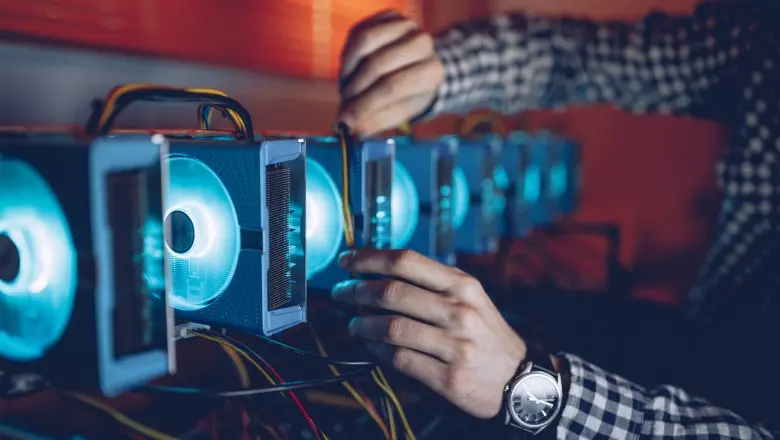
While Bitcoin mining may seem lucrative given its popularity and relative value to other cryptocurrencies, there are some caveats. For instance, to mine crypto effectively and efficiently, specialized machines built and tuned specifically to mine cryptocurrencies are often required. It also requires space, and a great deal of energy, to house and cool these powerful machines that operate around the clock.
There’s also competition to consider: The mining market is dominated by large companies who secure large warehouse facilities to house their army of mining rigs. Some of these companies might run mining pools that smaller miners can contribute to in order to get a piece of some block rewards in exchange for a small fee.
This is all to say that, today, mining Bitcoin, as an individual, is rarely profitable unless someone has access to extra low-cost electricity and affordable equipment. Industrial crypto mining exists, and it’s hard to compete with their large-scale mining operations.
Top Altcoins for GPU Mining
As noted, aside from Bitcoin, there are numerous altcoins and other cryptocurrencies that can potentially be mined. GPU mining, which stands for “graphics processing units,” involves using GPUs, rather than CPUs, to process mining calculations, and they’re generally more efficient at it.
With that in mind, there are many altcoins that users can consider mining with their GPU-equipped mining rigs:
Ethereum Classic (ETC): Unlike Ethereum, which moved to a proof-of-stake consensus mechanism, Ethereum Classic still uses proof-of-work, and may be mined using GPU or ASICs hardware.
Litecoin (LTC): Initially launched in 2011 as a decentralized global payment network and “a lite version of Bitcoin,” it was designed to be faster as well as more lightweight, but its adoption has been slower than Bitcoins’. Litecoin may be mined using high-end GPUs as well as ASICs, though working in a pool may be most viable.
Dogecoin (DOGE): While mining of the popular memecoin may be most effective using an ASICs system, it’s still possible to mine Dogecoin using a powerful GPU system.
Ravencoin (RVN): Ravencoin, a fork of the Bitcoin code used to issue and exchange tokens, is actually designed so that mining is most efficient on consumer GPU systems — and resistant to ASICs systems — thanks to an algorithm it uses called KAWPOW.
In addition to GPU options, there are also still CPU-mineable coins on the market, too, which means they can be mined using a CPU, rather than a GPU or a more advanced rig. Some coins are designed primarily for CPU mining, though these are less common. GPUs generally have more processing power than CPUs, which is why more miners may want to use GPU-equipped rigs to mine. And many cryptos can be mined with either.
Risks and Alternatives for the Crypto Miner
While there are risks associated with mining, an alternative for some people may be to join a crypto mining pool. These also have costs and risks, but may be a less-risky option for some.
As for a primer: Due to the high cost and rising difficulty of mining crypto, most miners today use something called a mining pool, as mentioned previously. Participating in mining pools is considered by many to be the only way for individual miners to make any profit today, and even then it can be difficult to recoup the costs of equipment and electricity.
Within a mining pool, individual miners pool their resources together with other miners, improving their chances of mining a block and earning the rewards. When a block gets mined, the rewards are then split up among the different miners in proportion to the amount of computing power (known as hashing power) they contributed.
Mining pool owners typically charge mining fees for maintaining and participating in the pool. There are several different pools to choose from, each with their own structure.
Further, there are also cloud mining opportunities out there, which effectively allow miners to use computing resources over the internet. Miners using this strategy are renting others’ equipment, which incurs more costs. However, it’s important to vet a cloud mining platform to ensure they’re legitimate and well-reputed, as scams in this sector are an unfortunate reality.
The Major Risks Beyond Profitability
While crypto mining can be profitable in some instances, it does have its risks and downsides. Here’s a brief rundown.
• Environmental Risks: As mentioned, crypto mining is resource-intensive. Running mining rigs eats up a lot of electricity, which, in turn, generates environmental pollution.
• Security Risks: Malware and other security risks exist in the mining sphere, too. For instance, it’s possible that bad actors could use techniques (like phishing) to access someone’s computer, and then load mining codes and programs onto it without them knowing. As such, the victim could be sharing their computing resources and electricity mining with a hacker without even realizing it.
• Regulatory Risks: There are new regulations affecting the crypto space (such as the Genius Act and rules around the national Bitcoin Reserve). There are likely to be more in the future. The point is that the rules and regulations surrounding crypto are in flux, and those new rules and regulations will likely affect miners.
• Financial Risk: Crypto mining requires upfront costs, which can be substantial. You’ll need to buy a “rig,” first and foremost, and stocking up on the necessary computer power can be expensive. As with any financial plan, there are no guarantees the money you put in will pay off. Mining may not be as profitable in the future, meaning you may not see the types of returns you were hoping for longer-term.
Is Mining a Better Option Than Buying Crypto?
Whether or not mining or buying crypto is a better financial option depends on a number of factors, such as your resources, technical skills, tolerance for risk, and timeframe.
To a large extent, it comes down to how much you plan to spend on mining equipment. And it’s important to remember that the hardware needs of crypto mining is constantly evolving as older machines become obsolete, meaning that you need more processing power over time to produce the same potential results. When this happens, miners must acquire new, more advanced hardware.
In that sense, it may make sense for those without the capital and time to devote to mining to simply buy crypto directly. Keep in mind that another alternative individuals could consider is staking vs. mining crypto in order to pursue rewards.
The Takeaway
Crypto mining is still profitable in 2026 however, it may not be as profitable as it once was, and that mining operations have become more expensive to run and maintain. That’s not to say that prospective miners won’t make a profit, but there are more things to consider than in years past.
With that in mind, mining is a complex operation that carries considerable costs and risks.
SoFi Crypto is back. SoFi members can now buy, sell, and hold cryptocurrencies on a platform with the safeguards of a bank. Access 25+ cryptocurrencies, such as Bitcoin, Ethereum, and Solana, with the first national chartered bank to offer crypto trading. Now you can manage your banking, investing, borrowing, and crypto all in one place, giving you more control over your money.
FAQ
Can I make a profit mining with just one GPU?
Possibly, but you should take into account the fact that you may spend more on a mining rig than you could see as a result of your mining efforts.
How long would it take to mine 1 Bitcoin?
There’s no single, correct answer as to how long it takes to mine a single Bitcoin in 2026. It all depends on the amount of hashing power a miner contributes, and a bit of luck. Bitcoin’s blockchain does produce one Bitcoin around every ten minutes, but for an individual miner, there’s no telling when they could receive the reward (since not all miners are rewarded when a block is validated).
How do I find out my exact electricity cost for mining?
To figure out how much you’re spending on electricity for crypto mining, you’ll need to know how much you’re paying for electricity in your specific area, and how much electricity you’re consuming specifically for mining. From there, you can calculate your exact costs, but it could still prove to be tricky.
Is cloud mining a legitimate alternative?
Cloud mining is a viable alternative to putting your money into a crypto mining rig, but know that any potential rewards will likewise be diluted. However, cloud mining scams are not uncommon, unfortunately. It’s important to thoroughly vet any service you’re considering.
Will my mining hardware become worthless in a year?
It’s possible that your mining hardware will lose value over the course of a year, and perhaps even likely.
About the author

Brian Nibley
Brian Nibley is a freelance writer, author, and investor who has been covering the cryptocurrency space since 2017. His work has appeared in publications such as MSN Money, Blockworks, Business Insider, Cointelegraph, Finance Magnates, and Newsweek. Read full bio.
Article Sources
- Bitcoinblockhalf.com. Bitcoin Block Reward Halving Countdown.
- Litecoin. The Cryptocurrency for Payments.
- Ethereum Classic. Ethereum Classic Course: 8. Ethereum Classic’s Monetary Policy.
Photo credit: iStock/South_agency
CRYPTOCURRENCY AND OTHER DIGITAL ASSETS ARE NOT FDIC INSURED • ARE NOT BANK GUARANTEED • MAY LOSE VALUE
Cryptocurrency and other digital assets are highly speculative, involve significant risk, and may result in the complete loss of value. Cryptocurrency and other digital assets are not deposits, are not insured by the FDIC or SIPC, are not bank guaranteed, and may lose value.
All cryptocurrency transactions, once submitted to the blockchain, are final and irreversible. SoFi is not responsible for any failure or delay in processing a transaction resulting from factors beyond its reasonable control, including blockchain network congestion, protocol or network operations, or incorrect address information. Availability of specific digital assets, features, and services is subject to change and may be limited by applicable law and regulation.
SoFi Crypto products and services are offered by SoFi Bank, N.A., a national bank regulated by the Office of the Comptroller of the Currency. SoFi Bank does not provide investment, tax, or legal advice. Please refer to the SoFi Crypto account agreement for additional terms and conditions.
Financial Tips & Strategies: The tips provided on this website are of a general nature and do not take into account your specific objectives, financial situation, and needs. You should always consider their appropriateness given your own circumstances.
Third-Party Brand Mentions: No brands, products, or companies mentioned are affiliated with SoFi, nor do they endorse or sponsor this article. Third-party trademarks referenced herein are property of their respective owners.
External Websites: The information and analysis provided through hyperlinks to third-party websites, while believed to be accurate, cannot be guaranteed by SoFi. Links are provided for informational purposes and should not be viewed as an endorsement.
SOCRYP-Q325-049