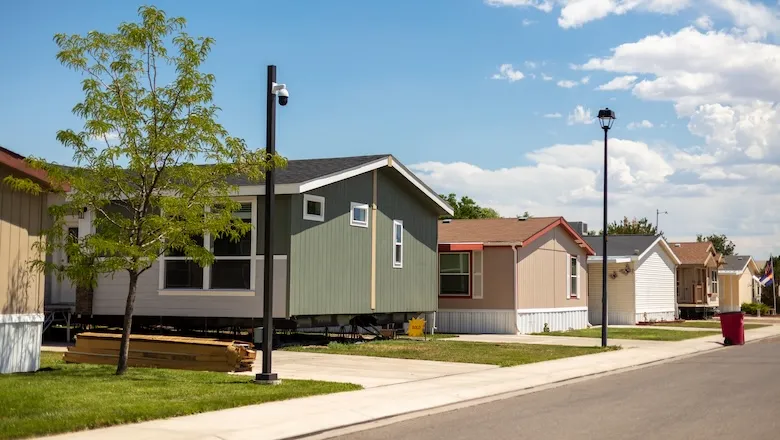
More than 22 million Americans live in mobile homes, according to the National Association of State Energy Officials.
The terms “mobile,” “modular,” and “manufactured” homes are often used interchangeably; however, there are differences in mobile vs modular vs manufactured homes. If you are wondering how to tell them apart, mobile homes are structures built before 1976. Manufactured homes are built on steel chassis and often are on rented land. Modular homes are factory-built in sections and assembled on-site with permanent foundations.
Each type has different regulatory standards that must be met. As for how long they last, the answer varies depending on the structure.
Key Points
• Manufactured homes typically last 30 to 50 years with proper maintenance, while traditional houses last 70 to 100 years, and pre-1976 mobile homes last only 20 to 30 years.
• Mobile homes built after the 1976 HUD Code implementation generally have longer, more predictable lifespans due to superior construction materials and improved building standards.
• Extreme weather, ground moisture, and foundation type significantly affect lifespan, with permanent foundations providing better protection against natural disasters and enhancing overall structural stability
• Regular maintenance, including inspecting for leaks and cracks, replacing worn insulation, and performing upkeep on electrical and plumbing systems, helps extend mobile home longevity.
• Age and condition of mobile homes directly impact financing and insurance options, with newer homes receiving better loan terms and 25-year repayment periods instead of 30 years.
What’s the Average Lifespan of a Mobile or Manufactured Home?
The average U.S. homeowner stays in their house for 12 years, according to data from Redfin. However, the average home lasts much longer. Manufactured homes built after 1976 must adhere to the U.S. Department of Housing and Urban Development’s HUD Code, which means that manufactured homes are built to the same quality standards as many single-family homes.
According to the latest data, most houses last for 70 to 100 years if well maintained, but manufactured homes usually last closer to 30 to 50 years. Mobile homes built before 1976 can last an even shorter period of time.
What Factors Affect How Long a Mobile Home Lasts?
Some mobile homes seem to last much longer than others. If you are looking at buying a manufactured home or a mobile home, you should be aware of what factors affect how long the home can last.
Construction Standards and HUD Code
Mobile homes built after the 1976 HUD Code generally have longer and more predictable life expectancy when properly installed and maintained. They were usually built with more expensive and long-lasting materials
Climate and Weather Exposure
Extreme weather can shorten a home’s lifespan. If extreme weather is unavoidable, applying protective coatings to the outside of the home can help prevent rust and moisture damage. Be sure to also secure the home against storms and heavy winds.
Water is not friendly to housing. Mobile homes that sit on chassis above the ground can be exposed to rising moisture from the earth, which can rot the home’s floor and subflooring from the bottom up. If you live in a damp climate, this is especially important.
Foundation Type
A mobile home on a permanent foundation can have a longer lifespan than one that is not. A permanent foundation can provide better protection against natural disasters like floods and earthquakes. A permanent foundation can also enhance the home’s stability.
Maintenance and Upkeep
Properly maintaining a mobile home can help it last longer. Frequently inspect for leaks, cracks, and damage to the home. If you see any worn-out insulation, replacing it can also help improve energy efficiency. Perform regular maintenance and upkeep to the mobile home’s electrical systems and plumbing.
Quality of Installation
The quality of the installation of a mobile home can obviously affect the mobile home’s lifespan. A home that was properly installed means that it is level, securely anchored, and utilities are connected correctly. All of these things can help the home last longer.
How Long Do Older Mobile Homes Last?
Older mobile homes, especially those built before the implementation of the HUD Code in 1976, typically last between 20 and 30 years. These homes were often built with inferior materials and did not have federal oversight to make sure things were done correctly.
Signs a Mobile Home May Be Near the End of Its Lifespan
There are several signs that a mobile home may be near the end of its lifespan. One of the easiest signs to spot is visible damage, in things like holes in the roof or walls, cracks in the walls or floors, damaged siding, a sagging roof or water stains on the ceiling. Plumbing issues, electrical issues and foundation problems could be indicative of expensive issues in the home
Does Lifespan Affect Insurance or Financing?
The lifespan and age of a mobile home affect the home’s condition, which can in turn affect insurance or financing options. Newer mobile homes are generally considered less risky investments, so it can be easier to get mobile home financing with better loan terms. Loans for manufactured homes typically have a repayment period of 25 years or less instead of the 30-year loan for a traditional home. This means that mobile home or manufactured home loans have higher monthly payments than traditional home loans.
Lifespan can also affect insurance for mobile homes. Mobile home insurance, also called manufactured homeowners insurance, protects both the physical structure of the home and the personal property within it against covered perils like fire, hail, wind, and falling trees. Mobile home insurance is tailored to the unique risks of manufactured homes, which may be more vulnerable to wind, fire, and natural disasters. Older mobile homes may require replacement cost coverage to ensure full repair costs, rather than actual cash value, which only pays the depreciated value.
Recommended: What Is Mobile Home Insurance?
The Takeaway
If you are thinking about buying or building a mobile home or manufactured home, you should compare the cost to build a manufactured home with how long the home may last. When building or buying a home, you should be aware of what affects its durability and how proper maintenance can extend its lifespan.
If you’re a new homebuyer, SoFi Protect can help you look into your insurance options. SoFi and Lemonade offer homeowners insurance that requires no brokers and no paperwork. Secure the coverage that works best for you and your home.
SoFi brings you real rates, with no bait and switch.
FAQ
How long will a mobile home last with proper maintenance?
With proper maintenance, a mobile home can last 30 to 50 years. Manufactured homes will usually last longer than mobile homes.
Do manufactured homes built after 1976 last longer?
Yes, manufactured homes built after 1976 last longer than those built before 1976, due to the federal standards implemented at that time.
How long do trailer homes typically last?
A trailer home is a mostly outdated term for early mobile homes. A mobile home is a factory-built home produced before 1976. Since these homes are older and do not have to adhere to the HUD Codes, they often last much shorter than manufactured homes. Trailer homes may last between 20 and 30 years.
Can a manufactured home last 50 years or more?
If properly maintained, a manufactured home can last 50 years or more.
Does placing a manufactured home on a permanent foundation extend its lifespan?
Yes, placing a manufactured home on a permanent foundation can extend its lifespan. A permanent foundation can provide better protection against natural disasters like floods and earthquakes. A permanent foundation can also enhance the home’s stability.
Photo credit: iStock/eyecrave productions
Home and Renters Insurance: Insurance not available in all states.
Experian is a registered trademark of Experian.
SoFi Insurance Agency, LLC. (“”SoFi””) is compensated by Experian for each customer who purchases a policy through the SoFi-Experian partnership.
Third-Party Brand Mentions: No brands, products, or companies mentioned are affiliated with SoFi, nor do they endorse or sponsor this article. Third-party trademarks referenced herein are property of their respective owners.
Financial Tips & Strategies: The tips provided on this website are of a general nature and do not take into account your specific objectives, financial situation, and needs. You should always consider their appropriateness given your own circumstances.
SOPRO-Q126-083