Table of Contents
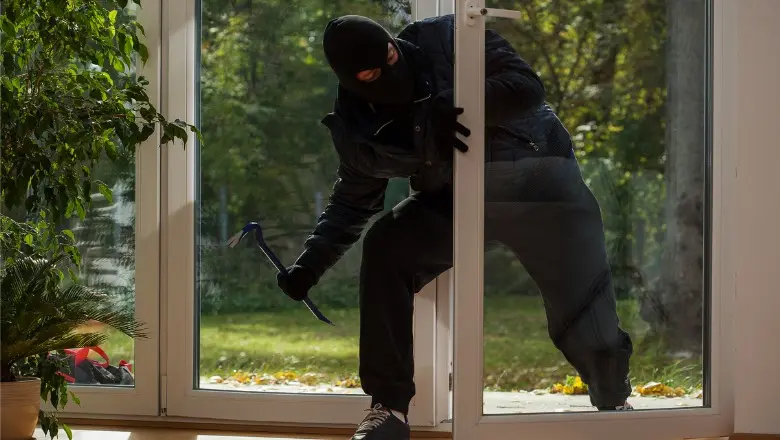
Whether someone ransacked your home during a break-in or swiped valuables from your car, homeowners insurance can help you recover financially from the ordeal. In general, a policy will pay to replace stolen or damaged belongings and repair damages from the theft, up to your coverage limit.
As with other types of insurance, there are nuances to keep in mind. Let’s dive in.
Key Points
• Homeowners insurance covers theft of personal property both inside and outside the home, with specific limits.
• File a police report, document stolen items, and gather proof of ownership for claims.
• Theft from a home under construction or by a household resident is typically excluded.
• Deductibles and sub-limits can reduce the amount received in theft claim payouts.
• Insurance rates may increase after a theft claim, depending on the severity of the loss.
What Does Homeowners Insurance Cover When Property is Stolen?
As we mentioned, standard homeowners insurance policies usually cover the cost of repairing or replacing personal property that was stolen from your home, outside your home, or from a car or storage unit. Here’s a closer look at each scenario.
Theft of Personal Property From Your Home
If belongings are taken from your home, your policy will typically pay for the cost of repairing or replacing them, up to a point. A homeowners insurance policy generally includes a percentage — often between 50% to 70% — for personal property coverage. So, for example, if your policy’s total dwelling limit is $500,000, you’ll have anywhere from $250,000 to $350,000 in personal property coverage.
Recommended: Homeowners Insurance Terms
Belongings Stolen Outside Your Home
Your homeowners insurance should also cover your belongings if they are stolen while outside of your home, including when you’re traveling. Personal property outside your home is usually covered up to 10 percent of your personal property coverage limit or $1,000, whichever is higher.
Items Stolen From a Car or Storage Unit
Many people may think theft from your car would be covered under your auto insurance policy, but it is actually your homeowners insurance that steps in here. While a comprehensive auto insurance policy can protect you if the car itself is stolen, it won’t help pay to replace personal property stolen from inside your car. This would fall under personal property coverage in a homeowners insurance policy.
Homeowners insurance should also cover theft of your personal property in a storage unit.
How Do I File a Theft Claim?
If you need to file a theft claim with your home insurance, be sure to check out your homeowners insurance guide and follow the company’s protocols. These steps can also help.
Immediate Steps to Take After a Theft
First thing first: Ensure that you — and the remainder of your belongings — are safe. Then, call the police to file a police report for theft. You should also take pictures of the area, start making a list of all stolen property and start gathering necessary documentation.
Documentation Needed for Your Claim
Your insurance company will likely require proof of the theft, and a police report can serve that purpose. Any other documentation you have, like appraisals, pictures of the items or other proof, should also be submitted with the insurance claim.
The Claims Timeline and Process
The claims process usually begins with documenting the damage and stolen property, and reporting the incident to your insurance company. The insurer will likely assign an insurance adjuster to assess the damage, review the policy, and provide a settlement estimate.
You will receive payment for the approved amount, minus your deductible. Keep in mind that It can take weeks or months to fully resolve a claim, depending on the company, the complexity of the claim, and the location of the claim.
Recommended: How to Buy Homeowners Insurance
What Theft May Not Be Covered?
Not all theft will be covered by homeowners insurance. Most standard homeowners insurance policies have standard policy exclusions. Theft from a home under construction and theft by a resident of the household, for example, are generally not covered by homeowners insurance. Let’s take a closer look at both scenarios.
Standard Policy Exclusions
Most policies have sub-limits for expensive items like jewelry, furs, firearms, art, or collectibles. Coverage for cash, checks, or money orders that are stolen from your home is also often limited or excluded, as are items used for business purposes.
Most policies also will not cover theft resulting from negligence (like leaving your doors unlocked) or for losses that occur when the home is left vacant for extended periods (like if you reside in a second home for part of the year).
Theft from a Home Under Construction
Standard homeowners insurance policies usually do not cover theft from a home while it is under construction. You can get a “Home Under Construction” rider to your homeowners policy if you have a short term home construction project. A Home Under Construction rider covers losses from such perils as fires, storms, burst pipes, and theft.
If you are building a new home or have a longer construction period, you will need to get a separate builder’s risk policy during construction.
Theft by a Resident of the Household
Homeowners insurance likely will not cover theft committed by a resident of the insured’s own household. Insurance policies are designed to protect against theft by outside parties, so someone living in your household would typically be excluded.
Understanding Your Theft Coverage Limits and Deductibles
Homeowners insurance should cover theft, but how much it actually covers is determined by your policy’s theft coverage limits and deductibles.
Your Overall Personal Property Limit
Your overall personal property limit is usually a percentage of your dwelling coverage. This will vary by policy and is determined partly by whether you have an actual cash value or replacement cost value policy.
Replacement cost value is the amount it will take to replace your personal property without any deduction for depreciation of the items. Actual cash value is the replacement cost value amount, minus depreciation.
Special Sublimits for High-Value Items
If you have high-value items, you may want to consider supplementing your coverage. Scheduled personal property coverage covers expensive items, collectibles, or antiques. Some high-value items, like jewelry, have special sublimits due to their likelihood to be stolen.
If you have a high-value item that you want scheduled under insurance, you’ll need to have it appraised. Scheduling may expand the range of events you are covered for and often includes replacement should you lose the item. Common coverage sublimits are usually capped at $1,000-$2,500 for jewelry or watches, $2,000 to $3,000 for firearms, $2,500 silverware, and $200-$500 for coins and precious metals.
How Your Deductible Affects a Theft Claim Payout
As we discussed, once your claim is approved, you will receive a payout for the cost of the stolen items, minus your deductible. If you have an actual cash value policy, the payout will also subtract the depreciation amount from your payout.
Your homeowners insurance rate may increase after you successfully file a homeowners insurance theft claim. The severity of the claim can impact the amount of the increase.
The Takeaway
No one wants to experience theft, but thankfully you should have some coverage if you have homeowners insurance and the circumstances meet the included criteria. Theft coverage is something that to consider when you’re comparing homeowners insurance policies. There may be nuances with each policy, but an agent can walk you through the details.
If you’re a new homebuyer, SoFi Protect can help you look into your insurance options. SoFi and Lemonade offer homeowners insurance that requires no brokers and no paperwork. Secure the coverage that works best for you and your home.
FAQ
Is my property covered if it’s stolen from my car or while traveling?
Generally speaking, your personal property is covered by your homeowners insurance if it is stolen from your car or while you are traveling.
Are expensive items like jewelry or firearms fully covered against theft?
Expensive items like jewelry or firearms are usually not fully covered by standard homeowners insurance against theft. Most homeowners insurance policies have sub-limits that place a low maximum payout on theft of valuables.
If you want protection against expensive items, you should purchase additional coverage through an endorsement or a separate insurance policy.
What’s the difference between replacement cost (RCV) and actual cash value (ACV)?
Replacement cost value is the amount that it will take to replace your personal property without any deduction for depreciation of the items. Actual cash value is the replacement cost value amount, minus depreciation.
Do I need a police report to file a theft claim?
Yes, you’ll likely need a police report to file a theft claim with your homeowners insurance. Your insurance company may require proof of the theft, and a police report can serve that purpose.
Will my rates go up after filing a homeowners insurance theft claim?
Your homeowners insurance rate may increase after filing a homeowners insurance theft claim. The severity of the claim can impact the amount of the increase.
photo credit: iStock/KatarzynaBialasiewicz
Auto Insurance: Must have a valid driver’s license. Not available in all states.
Home and Renters Insurance: Insurance not available in all states.
Experian is a registered trademark of Experian.
SoFi Insurance Agency, LLC. (“”SoFi””) is compensated by Experian for each customer who purchases a policy through the SoFi-Experian partnership.
Financial Tips & Strategies: The tips provided on this website are of a general nature and do not take into account your specific objectives, financial situation, and needs. You should always consider their appropriateness given your own circumstances.
SOPRO-Q325-018