Cost of Living in Florida
(Last Updated – 03/2025)
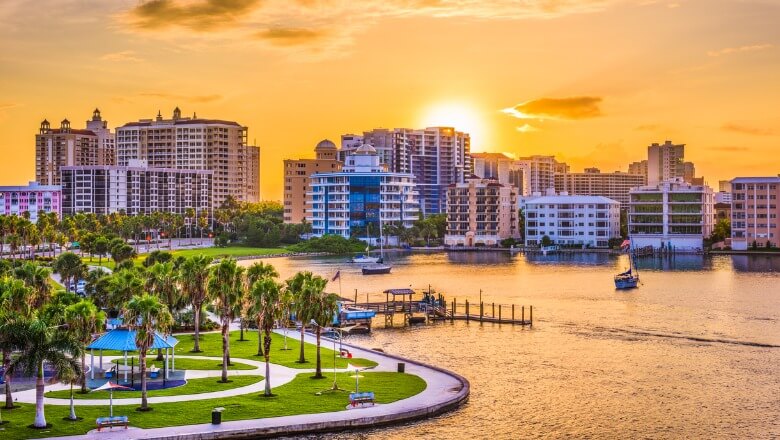
There’s a reason Florida is called the Sunshine State. Along with really fresh orange juice, Florida residents enjoy an average of 237 sunny days every year, compared with the U.S. average of 205.
You also don’t have to worry about any snowy days, because Florida averages zero inches of snow per year, whereas the nationwide average is 28 inches.
All of those beach days are appealing, but how much does it cost to live in the boating and fishing capital of the world? Let’s take a closer look at the numbers to see what the cost of living in Florida is so you can decide if living in Florida makes sense for your wallet.
What’s the Average Cost of Living in Florida?
Average Cost of Living in Florida: $60,204 per year
If you dream of days spent on sandy Florida beaches, your wallet is in luck. Florida residents enjoy the 35th-lowest cost of living in the United States — or 15th-highest — according to the most recent MERIC data. While 35th place may not seem like much to brag about, when you compare what it would cost you to enjoy California’s beaches as a resident, your monthly budget is getting a break. California has the third-highest cost of living in the country.
Rankings give a look at the bigger picture, but what is the cost of living in Florida? Using the most recent data, the Bureau of Economic Analysis found that the average total personal consumption cost in Florida is $60,204 per year. Here’s how that breaks down.
|
Category |
Average Annual Per-Capita Cost in Florida |
|
Housing and Utilities |
$12,191 |
|
Health Care |
$8,996 |
|
Food and Beverages (nonrestaurant) |
$4,736 |
|
Gasoline and Energy Goods |
$1,168 |
|
All Other Personal Expenditures |
$33,112 |
That translates to about $5,017 per person, per month.
Housing Costs in Florida
Average Housing Costs in Florida: $1,480 to $2,725 per month
No matter where you live, one of your largest ongoing expenses will be paying for housing. Florida has around 10.5 million housing units, according to the most recent census data, so there’s an array of housing options throughout the state. How much do those housing options cost? Zillow listed the typical value of Florida homes at about $385,851 in February 2025, compared with a U.S. median existing-home value of $357,138 the previous month.
Here’s what monthly housing prices can look like in Florida, according to the latest census data:
• Median monthly mortgage cost: $1,860
• Median studio rent: $1,480
• Median one-bedroom rent: $1,506
• Median two-bedroom rent: $1,712
• Median three-bedroom rent: $1,933
• Median four-bedroom rent: $2,205
• Median five-bedroom (or more) rent: $2,725
• Median gross rent: $1,719
Housing prices vary throughout the state, so let’s examine the typical home values for 20 major Florida cities, per Zillow, in February 2025. Here they are, from lowest to highest.
|
Florida City |
Average Home Value |
|
Homosassa Springs |
$232,578 |
|
Pensacola |
$254,999 |
|
Ocala |
$270,353 |
|
Tallahassee |
$284,216 |
|
Jacksonville |
$288,709 |
|
Crestview |
$292,029 |
|
Gainesville |
$293,778 |
|
Deltona |
$300,176 |
|
Palm Bay |
$306,682 |
|
Lakeland |
$313,493 |
|
North Port |
$325,243 |
|
Sebastian |
$351,020 |
|
Cape Coral |
$363,443 |
|
Punta Gorda |
$371,562 |
|
Tampa |
$374,105 |
|
Orlando |
$378,740 |
|
Port Saint Lucie |
$391,964 |
|
Panama City Beach |
$414,538 |
|
Naples |
$574,392 |
|
Miami |
$585,611 |
Utility Costs in Florida
Average Utility Costs in Florida: $422 per month
Utility costs can vary a lot, depending on your state, whether you rely on natural gas, the size and age of your home, and age of appliances. Here’s what you can expect to spend in Florida.
|
Utility |
Average Florida Bill |
|
Electricity |
$168 |
|
Natural Gas |
$105 |
|
Cable & Internet |
$113 |
|
Water |
$36 |
Sources: U.S. Energy Information Administration, Electric Sales, Revenue, and Average Price; Statista.com, “Average monthly residential utility costs in the United States, by state”; DoxoInsights, U.S. Cable & Internet Market Size and Household Spending Report; and Rentcafe.com, What Is the Average Water Bill?
Groceries & Food
Average Grocery & Food Costs in Florida: $395 per person, per month
One ongoing expense is groceries and eating out. Where you live can affect how much you’ll spend on food.
The Bureau of Economic Analysis estimates that the average Floridian’s annual nonrestaurant food cost is $4,736, so that’s about $395 per month. A family of four can expect to spend $1,576 per month on groceries, more or less.
The Council for Community and Economic Research, which ranks the food costs in major American cities, ranked Florida cities’ most recent average grocery costs from lowest to highest.
|
Florida City or Metro |
Grocery Items Index |
|
Tallahassee |
99.5 |
|
Daytona Beach |
103.6 |
|
Jacksonville |
104.0 |
|
Cape Coral-Fort Myers |
104.0 |
|
Orlando |
104.7 |
|
Vero Beach-Indian River |
105.6 |
|
Tampa |
105.7 |
|
Sarasota |
107.0 |
|
Fort Lauderdale |
109.7 |
|
Miami-Dade County |
110.8 |
Transportation
Average Transportation Costs in Florida: $9,103 to $16,938 per year
No matter where you live in the country, transportation costs can add up. Throw kids into the mix, and costs rise.
Here’s what transportation can cost in Florida, according to the most recent data from MIT’s Living Wage Calculator.
|
Family Makeup |
Average Annual Transportation Cost |
|
One adult, no children |
$9,103 |
|
Two working adults, no children |
$10,534 |
|
Two working adults, three children |
$16,938 |
Health Care
Average Health Care Costs in Florida: $8,996 per person, per year
The average annual per-capita cost of health care in Florida is $8,996, the most recent Bureau of Economic Analysis Personal Consumption Expenditures by State report found.
It’s worth noting that how much you spend on health care will depend on your unique medical needs and health insurance coverage.
Child Care
Average Child Care Costs in Florida: $702 to $1,364 or more per child, per month
Many parents know the struggle of budgeting for child care. Where you live and the type of care you choose can have an effect on how much you spend.
In Florida if you need care for an infant, you’ll find that home-based family child care is much less expensive than an infant classroom. But once your child gets a little bit older, you’ll save by choosing the toddler classroom route. Let’s take a look at average child care costs in Florida, per recent data from CostofChildCare.org.
|
Type of Child Care |
Average Cost Per Month, Per Child |
|
Infant Classroom |
$1,364 |
|
Toddler Classroom |
$790 |
|
Preschooler Classroom |
$702 |
|
Home-Based Family Child Care |
$989 |
Taxes
Highest Marginal Tax Rate in Florida: None
Ready for some good news? Florida residents aren’t charged any state income tax, as noted by the Tax Foundation’s State Individual Income Tax Rates and Brackets.
If you like the idea of getting away from state income taxes, then you’ll appreciate that the following states also don’t charge state income tax: Alaska, Nevada, New Hampshire, South Dakota, Tennessee, Texas, and Wyoming. The state of Washington does not charge a state income tax, but does tax capital gains income of high-earning individuals at 7%.
Miscellaneous Costs
Now that you have a general idea of what the essentials will cost you, let’s chat about some of the nonessentials that make life fun.
If personal expenditures average $33,112 per person, per year in Florida, this is where Floridians may be spending some of that money (costs are accurate as of March 2025):
• Disney has 4 theme parks and 2 water parks for the family to enjoy in Florida. Walt Disney World annual passes at the park in Orlando, start at $469 per year (plus tax), per person and go as high as $1,549, with additional options to add on. A single-day theme park ticket for ages 10 and up starts at $119. Florida residents are eligible for discounted tickets and passes.
• A day at the Miami Zoo is a much more affordable way to enjoy some family time. Tickets are $25.95 for adults, $21.95 for kids 3-12, and children 2 and under are free.
• To get up close and personal with the alligators Florida is famous for, Gatorland tickets start at $24.99 (kids 3-12) and $34.99 (adults), with additional discounts also available for the theme park in Southchase.
• Dine like a true Floridian with a slice of key lime pie from Mrs. Mac’s Kitchen in Key Largo: $6.99
• Visit Dry Tortugas National Park via boat with a trip on the Yankee Freedom Ferry from Key West. Adult tickets start at $235 and include lunch, snorkeling equipment, entrance fee to the historic fort, and more. Discounts are available.
• The best news is that a day spent on one of Florida’s beaches won’t set you back anything, aside from parking and snacks. Approximately 90% of Florida’s beaches and coastal access points are open to the public.
Recommended: What Are the Average Monthly Expenses for One Person?
How Much Money Do You Need to Live Comfortably in Florida?
While your definition of what it means to live comfortably will be unique to you and your needs, we all have a basic standard of living we hope to meet without having to feel excess financial pressure. If you have your heart set on moving to Florida, you may or may not find it hard to live comfortably.
According to U.S. News & World Report’s Affordability Rankings, Florida is 39 out of 50. That finding falls close to the MERIC data that ranked Florida the 35th most expensive state.
What Cities Have a Low Cost of Living in Florida?
These three Florida cities have the lowest cost of living, according to the most recent Council for Community and Economic Research’s Cost of Living Index composite scores.
Jacksonville
You don’t need to give up big-city life for an affordable lifestyle in Florida. Jacksonville, with around 985,000 residents, as of the latest census estimates, has the lowest cost of living in the Sunshine State, with a cost-of-living index of 92.9. Jacksonville offers opportunities for boating and fishing with the St. Johns River located within city limits, and 1,100 miles of navigable water. Jacksonville is known for having more shoreline than any other city in the country. It has 22 white-sandy beaches along the Atlantic Ocean available for relaxing and soaking up the rays.
Tallahassee
Also located in Northeast Florida, Tallahassee is the second-most affordable city in the state, with a cost-of-living index of 93.0. The state capital, Tallahassee has lots of historical sites including the Florida Historic Capitol Museum and the Mission San Luis de Apalachee. Home to Florida State University and Florida A&M, there’s a robust college student population with a very dedicated sports allegiance. With a population estimate around 202,200, Tallahassee is a mid-sized city with lots to offer residents.
Orlando
According to the Council for Community and Economic Research research data, Orlando comes in as the third lowest city in the state in terms of cost of living with a composite score of 96.4. Home to Disney World and Universal Orlando, which you might have heard of, Orlando also has unique experiences like the Kennedy Space Center and even gardens and art museums. Home to 320,700 residents per the most recent census estimates, the one thing Orlando lacks is oceanfront beaches. That’s because it’s actually located inland, smack dab in the middle of the state.
SoFi Home Loans
If the not-super-high Florida cost of living and salt life speak to you, you may find yourself drawn to the Sunshine State. If you’re ready to buy a primary or second home in Florida, it may be time to start shopping for a mortgage.
Looking for an affordable option for a home mortgage loan? SoFi can help: We offer low down payments (as little as 3% - 5%*) with our competitive and flexible home mortgage loans. Plus, applying is extra convenient: It's online, with access to one-on-one help.
FAQ
Is it expensive to live in Florida?
Your spending habits and needs determine what is truly expensive or not in terms of cost of living, but in Florida, most estimates show a higher than median cost. Ranked 39th by US News & World Report’s affordability report and 35th by MERIC cost-of-living data, Florida stands higher than the middle of the pack of states.
Is Florida a high cost of living state?
Florida is moderately high in terms of cost of living standards, depending on where you choose to live and your spending habits. Adults with no children will not have to factor in child care costs or additional transportation costs for kids, or additional spending on food or housing or health care. But cities like Miami or Naples are also expensive in terms of housing or even grocery costs, per the most recent data, versus cheaper Florida locations like Jacksonville or Homosassa Springs, which had the lowest average home values.
Is Tallahassee, Florida expensive to live?
Tallahassee ranked as one of the cheapest cities to live in Florida, per the latest data from the Council for Community and Economic Research. It has the fourth-lowest home values and the lowest average grocery costs in the state.
Photo credit: iStock/Sean Pavone
SoFi Mortgages
Terms, conditions, and state restrictions apply. Not all products are available in all states. See SoFi.com/eligibility-criteria for more information.
SoFi Loan Products
SoFi loans are originated by SoFi Bank, N.A., NMLS #696891 (Member FDIC). For additional product-specific legal and licensing information, see SoFi.com/legal. Equal Housing Lender.
*SoFi requires Private Mortgage Insurance (PMI) for conforming home loans with a loan-to-value (LTV) ratio greater than 80%. As little as 3% down payments are for qualifying first-time homebuyers only. 5% minimum applies to other borrowers. Other loan types may require different fees or insurance (e.g., VA funding fee, FHA Mortgage Insurance Premiums, etc.). Loan requirements may vary depending on your down payment amount, and minimum down payment varies by loan type.
Tax Information: This article provides general background information only and is not intended to serve as legal or tax advice or as a substitute for legal counsel. You should consult your own attorney and/or tax advisor if you have a question requiring legal or tax advice.
Third-Party Brand Mentions: No brands, products, or companies mentioned are affiliated with SoFi, nor do they endorse or sponsor this article. Third-party trademarks referenced herein are property of their respective owners.
External Websites: The information and analysis provided through hyperlinks to third-party websites, while believed to be accurate, cannot be guaranteed by SoFi. Links are provided for informational purposes and should not be viewed as an endorsement.
Qualifying for the reward requires using a real estate agent that participates in HomeStory’s broker to broker agreement to complete the real estate buy and/or sell transaction. You retain the right to negotiate buyer and or seller representation agreements. Upon successful close of the transaction, the Real Estate Agent pays a fee to HomeStory Real Estate Services. All Agents have been independently vetted by HomeStory to meet performance expectations required to participate in the program. If you are currently working with a REALTOR®, please disregard this notice. It is not our intention to solicit the offerings of other REALTORS®. A reward is not available where prohibited by state law, including Alaska, Iowa, Louisiana and Missouri. A reduced agent commission may be available for sellers in lieu of the reward in Mississippi, New Jersey, Oklahoma, and Oregon and should be discussed with the agent upon enrollment. No reward will be available for buyers in Mississippi, Oklahoma, and Oregon. A commission credit may be available for buyers in lieu of the reward in New Jersey and must be discussed with the agent upon enrollment and included in a Buyer Agency Agreement with Rebate Provision. Rewards in Kansas and Tennessee are required to be delivered by gift card.
HomeStory will issue the reward using the payment option you select and will be sent to the client enrolled in the program within 45 days of HomeStory Real Estate Services receipt of settlement statements and any other documentation reasonably required to calculate the applicable reward amount. Real estate agent fees and commissions still apply. Short sale transactions do not qualify for the reward. Depending on state regulations highlighted above, reward amount is based on sale price of the home purchased and/or sold and cannot exceed $9,500 per buy or sell transaction. Employer-sponsored relocations may preclude participation in the reward program offering. SoFi is not responsible for the reward.
SoFi Bank, N.A. (NMLS #696891) does not perform any activity that is or could be construed as unlicensed real estate activity, and SoFi is not licensed as a real estate broker. Agents of SoFi are not authorized to perform real estate activity.
If your property is currently listed with a REALTOR®, please disregard this notice. It is not our intention to solicit the offerings of other REALTORS®.
Reward is valid for 18 months from date of enrollment. After 18 months, you must re-enroll to be eligible for a reward.
SoFi loans subject to credit approval. Offer subject to change or cancellation without notice.
The trademarks, logos and names of other companies, products and services are the property of their respective owners.
SOHL-Q125-149