Conservative Investing Explained
Conservative investing describes a strategy that avoids risky investments. Blue chip stocks and other established investments are considered conservative.
Read moreConservative investing describes a strategy that avoids risky investments. Blue chip stocks and other established investments are considered conservative.
Read moreWhat is cost basis? Cost basis is the purchase price or original value of an asset or investment. It’s used to calculate capital gains and losses for tax filings.
Read moreA bull market occurs when a broad market index rises at least 20% over two months or more. Bull markets signal higher levels of investor confidence and optimism about the future of the market. They are generally a sign of a strong, healthy economy.
The opposite scenario, in which stock prices fall by 20% over an extended period, is known as a bear market.
If you’re investing in the stock market, it’s important to know the nature of bull markets and their potential impact on your returns.
Key Points
• A bull market is defined by a 20% increase in a broad market index over a period of at least two months.
• Investor confidence and optimism significantly rise during bull markets.
• Bull markets often align with periods of economic expansion and growth.
• Diversification and setting clear goals are essential for managing investments.
• Investors may use a long-term buy-and-hold strategy in a bull market in hopes of seeing gains.
A bull market is broadly defined as a period during which asset prices rise over time. The traditional benchmark for identifying a bull market is an increase of 20% or more in a market index over a two-month period. For example, stock experts might look closely at the Dow Jones Industrial Average (DJIA) or the S&P 500 to determine whether a bull market exists.
Bull markets can imply that the economy is in good shape, with unemployment low and new jobs being created. Investors tend to view a bull market favorably because it suggests that stock prices may continue to rise over the long term. People who buy stocks early in a bull market may benefit later from the investments’ significant price appreciation.
Although there’s no single explanation for how bull and bear markets got their names, people often suggest that the descriptive names are meant to reflect the nature of each animal.
Bulls, for instance, have a reputation for charging or attacking. In a bull market, eager investors may rush in to buy stocks in the hope of capitalizing on future price increases.
Bears, on the other hand, are often seen as being defensive animals that only attack when threatened. In a bear market, it’s common to see investors pull back out of caution and sell off stocks they own or avoid buying new ones. Those behaviors are often driven by fear and uncertainty about the market trending down.
Identifying when a bull market begins or ends is sometimes challenging, given the nature of stock prices and how rapidly they can move up or down. Generally, there are three indicators that stock experts use to determine whether a bull market exists.
• Stock prices, or prices for a broad market index, have increased by 20% or more over a set period of time, typically two months or longer.
• Investor confidence is high and those buying into the market have an optimistic outlook toward the future.
• Overall economic conditions are largely positive, with low unemployment rates and, ideally, low inflation rates as well.
These three signs usually indicate that the market is on a sustained upswing. Other indications of a bull market can include strong earnings reports and marked increases in investors’ dividends.
Bull markets are usually driven by changing undercurrents in the economy. They tend to reflect the business cycle.
The business cycle experiences periods of expansion, followed by periods of contraction. Real gross domestic product is a commonly used metric for determining which of four phases the economy is in.
• Expansion. During the expansion period, the economy is growing and domestic production is up. There may be a bull market for stocks during this period.
• Peak. A peak occurs when the economy exhausts its ability to grow. At this stage, the bull market typically hits its highest levels before entering the next phase.
• Contraction. During the contraction period, the economy shrinks. Companies may cut back on spending or hiring to save money and stocks may enter bear market territory.
• Trough. The trough is the lowest point in the business cycle. It’s followed by the beginning of the next expansion phase, which can open the door to a new bull market.
The business cycle also influences when bear markets occur. In addition, there are times when a bull or bear market is triggered by something other than the business cycle.
The bull market that began in 2009 following the shock of the financial crisis is the longest on record, lasting until the bear market that occurred in early 2020.
Several factors contributed to the sustained length of the bull market, including strategic moves to manage monetary policy on the part of the Federal Reserve, and tax breaks delivered by the 2017 Tax Cuts and Jobs Act.
Many stockholders benefited from steady dividend payouts, and the real estate market also delivered a strong performance during that time.
Bull markets and bear markets are opposites in terms of how participants behave and what the outcomes can mean for investors. Bull markets typically involve upward movement of stock prices while bear markets indicate a downturn.
In a bull market, investors tend to take a positive view of the market. Bear markets, on the other hand, can trigger pessimism, fear, or other negative feelings among investors.
Bull markets are usually marked by thriving economies and high levels of corporate growth. Bear markets point toward a slowing economy and limited growth. In extreme cases, a bear market could suggest that a recession may be on the horizon (although a recession can offer certain opportunities for investors as well).
Investing in a bull market isn’t one-size-fits-all, so your personal approach may be different from other investors. There are, however, a few overall strategies that could help you to try and generate returns while taking on a level of risk you’re comfortable with.
It’s easy to be tempted to follow the crowd when investing in a bull market or a bear market, but it’s important to stay focused on your individual goals, especially if you’re a beginning investor. If you already have a financial plan in place, that plan can act as a guide for how to choose the right asset allocation during a bull market.
Diversification is an important tool for managing risk in a portfolio. When you’re diversified across different asset classes or industries, it helps to limit your exposure to certain kinds of investment risk. If one investment begins to decline in value, your other investments can help to bolster your portfolio.
A higher allocation to stocks may be optimal if stock prices are rising, but you may want to balance those out with less risky investments, like bonds.
If you’re investing in mutual funds or exchange-traded funds (ETFs), consider what assets each one holds to avoid becoming overweighted in one particular industry or sector.
“Going long” simply means adopting a buy-and-hold approach when investing in a bull market. The end goal is to buy stocks at a low price, then sell them later for a higher price to try and generate a return.
Bull markets, in which asset prices rise and investors feel optimistic, are a natural part of the market cycle. A bull market begins when a market index rises 20% or more over a two-month period, and it can last months or years.
Generally, during a bull market, maintaining a diverse portfolio and a clear idea of your goals can help you manage your investments prudently.
Ready to invest in your goals? It’s easy to get started when you open an investment account with SoFi Invest. You can invest in stocks, exchange-traded funds (ETFs), mutual funds, alternative funds, and more. SoFi doesn’t charge commissions, but other fees apply (full fee disclosure here).
A bull market usually signifies that the market is strong. A market where stock prices are generally increasing can offer an opportunity to buy and hold stocks — if you can purchase them before prices rise too high.
Bull markets have no set duration; they can last months or even years. When a bull market occurs, it typically sticks around for a longer period of time than bear markets do.
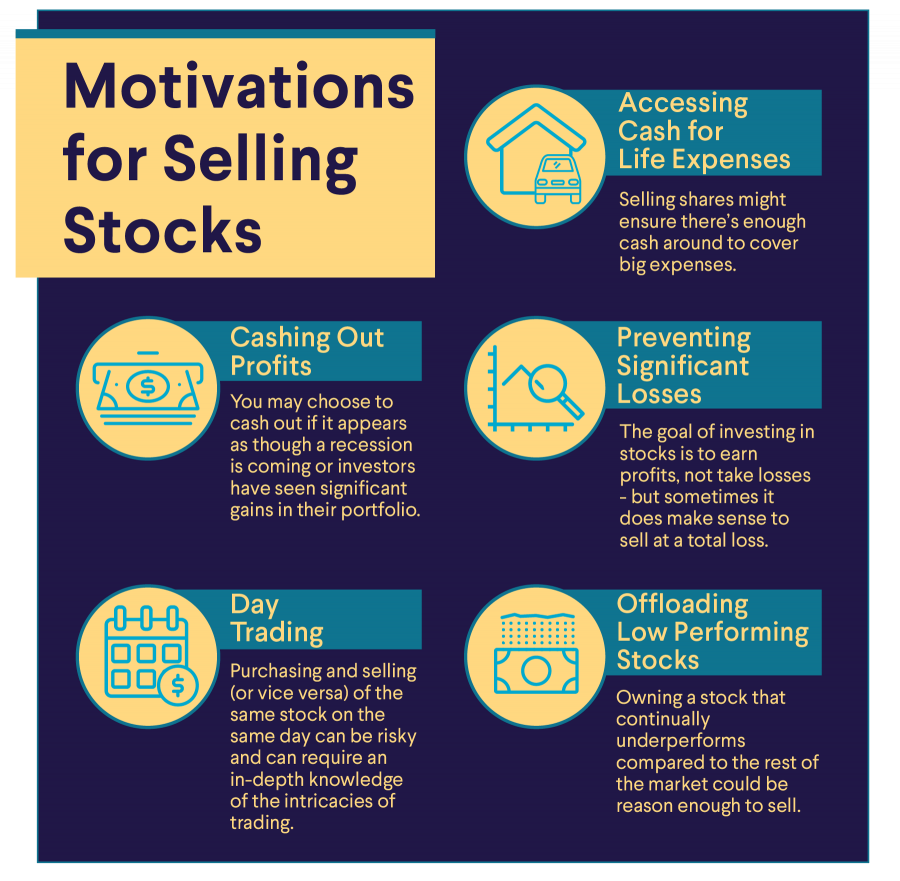
Selling stocks in a bull market could make sense if you’re able to sell them for substantially more than you paid for them. Essentially, it all comes down to timing and what makes sense for your individual goals and tolerance for risk.
About the author
INVESTMENTS ARE NOT FDIC INSURED • ARE NOT BANK GUARANTEED • MAY LOSE VALUE
For disclosures on SoFi Invest platforms visit SoFi.com/legal. For a full listing of the fees associated with Sofi Invest please view our fee schedule.
Financial Tips & Strategies: The tips provided on this website are of a general nature and do not take into account your specific objectives, financial situation, and needs. You should always consider their appropriateness given your own circumstances.
¹Claw Promotion: Probability of Member receiving $1,000 is a probability of 0.026%; If you don’t make a selection in 45 days, you’ll no longer qualify for the promo. Customer must fund their account with a minimum of $50.00 to qualify. Probability percentage is subject to decrease. See full terms and conditions.
SOIN-Q125-007
Read moreCannabis ETFs are funds that concentrate their holdings in the cannabis or marijuana industry. Investing in a single weed ETF could allow you to gain exposure to dozens of cannabis-related companies, without having to buy individual stocks. As such, you might consider adding a cannabis ETF to your portfolio if you’re looking for diversification, as exchange-traded funds or ETFs may offer exposure to a collection of investments in a single basket.
Investors should learn more about ETFs as investments, and the specifics of the marijuana industry, however, before investing.
Key Points
• Cannabis ETFs offer diversification and potential returns in a growing industry.
• Higher volatility and legal, regulatory challenges in the cannabis sector can pose significant investment risks.
• Cannabis ETF selection factors may include expense ratio, holdings, trading volume, liquidity, and regulatory compliance.
• A handful of issuing companies provide some of the more popular U.S. cannabis ETFs.
• Investors should also consider minimum investment, share price, and custodian availability.
Cannabis ETFs are exchange-traded funds that invest in companies that are connected to the cannabis industry. A marijuana ETF works the same way as any other type of ETF, in terms of how it’s traded, as they can be bought and sold on the stock market. As for how they work, ETFs pool money from multiple investors and trade on an exchange. All that sets a cannabis ETF apart from other ETFs is what it invests in — in this case, the cannabis industry.
There are only a handful of cannabis ETFs that trade in the U.S. which suggests that there may be room in the market for newcomers. The world’s first marijuana ETF, Global X Marijuana Life Sciences Index (HMMJ) was launched in Canada in 2017. The first U.S.-focused cannabis ETF landed in 2020, with the introduction of AdvisorShares’ Pure US Cannabis ETF (MSOS).
Marijuana legalization efforts have spurred interest in cannabis investments. At the time of writing, 24 states and the District of Columbia have legalized marijuana for recreational use. Another 14 states have legalized cannabis for medical use. Under federal law, marijuana remains illegal.
Recommended: Stock Market History
The cannabis industry is multilayered and diverse. Cannabis products are typically categorized according to their purpose and use.
Medical marijuana is used to treat pain and symptoms of illness. It’s derived from the Cannabis sativa plant, which contains chemicals and active compounds. These chemicals, which include delta-9 tetrahydrocannabinol (THC) and cannabidiol (CBD), produce reactions in the brain and body that may help to ease pain or create psychoactive effects.
Doctors may prescribe medical marijuana for a variety of conditions, including:
• Glaucoma
• Crohn’s disease
• Epilepsy/seizures
• Multiple sclerosis
• HIV/AIDs
• Alzheimer’s disease
• Amyotrophic lateral sclerosis (ALS)6
It can also be used as a form of pain management for people suffering from other chronic or terminal conditions.
Recreational or adult-use cannabis is cultivated for non-medical purposes.7 In terms of its composition, the underlying chemicals are the same but the strength of each one can vary. With recreational marijuana, there may be higher amounts of THC present. THC is the chemical that produces a “high” when using marijuana.
There’s also a difference in how recreational vs. medical marijuana is sold. Both can be sold at dispensaries but you may need a state-issued cannabis card to purchase the medical version. With recreational marijuana, you may just need a state-issued ID card proving that you’re old enough to make the purchase. Note that the laws regulating how, when, to whom, and even if any type of cannabis is sold varies from state to state.
Hemp is any part of the Cannabis sativa plant that has a THC concentration of no more than 0.3%. CBD is derived from hemp products and is the second most active ingredient in marijuana.
The legality of hemp and CBD products varies from state to state. Legality typically ties into the concentration of THC present. Again, some states are more stringent than others. In Idaho, for instance, CBD must be derived from one of five acceptable parts of the Cannabis sativa plant and have 0% THC.
Cannabis ETFs vary in the underlying investments they hold. Some marijuana ETFs invest in a range of companies across different segments of the industry. Others choose to target a specific niche.
Typically, cannabis investing extends to companies that:
• Grow, distribute, or sell marijuana (medical or recreational)
• Conduct research into the chemical composition of marijuana and its range of uses
• Have an ancillary connection to the industry or have substantial exposure to marijuana stocks
• Marijuana ETFs may have many underlying holdings or few; reading the ETF’s prospectus can give you a better idea of how investments are concentrated.
For example, Cambria Cannabis ETF (TOKE) offers broad exposure that includes cannabis growers, cannabis retailers, and cigarette manufacturers. Amplify Alternative Harvest ETF (MJ), meanwhile, is largely focused on cannabis pharmaceutical companies.
Since this is a relatively new asset class, there are some risks, but if your ETF picks perform well you could realize solid returns with marijuana investments.
Cannabis is a growing industry and investors have the opportunity to get in on the ground floor of new companies as they emerge. As legalization efforts expand, there may be more demand for growers, distributors, sellers, and pharmaceutical companies.
In terms of how much of your portfolio to invest in cannabis ETFs, it depends on your risk tolerance and diversification needs. You may start with a smaller allocation and increase it over time as you get comfortable with the cannabis ETF market and its risks.
All investments have some risk, but cannabis ETFs tend to be more volatile. The market’s relative newness makes it more susceptible to pricing and trading fluctuations. Beyond that, there are legal and regulatory considerations to keep in mind.
Here are some things to weigh before investing in a marijuana ETF.
Cannabis ETFs are subject to greater scrutiny from the Securities and Exchange Commission (SEC) due to the nature of the underlying investments and the overall legality of marijuana. Weed ETFs must adhere to regulatory guidelines regarding the use of a custodian to hold assets, which can sometimes spell trouble if a fund is unable to find a willing custodian.
Aside from that, the legality of marijuana, hemp, and CBB products is not uniform across all 50 states and the various territories held by the U.S. For that reason, it’s important to do your due diligence to understand what you’re really investing in when you buy a cannabis ETF.
If a fund holds investments in cannabis companies that are operating illegally, that could put the entire ETF in jeopardy. Aside from that risk, certain jobs, including government jobs, may revoke your security clearance if you invest in marijuana stocks or ETFs.
There are a handful of cannabis ETFs available for trade in the U.S., and those include:
• AdvisorShares Pure US Cannabis ETF (MSOS)
• Amplify Alternative Harvest ETF (MJ)
• Roundhill Cannabis ETF (WEED)
• AdvisorShares MSOS Daily Leveraged ETF (MSOX)
Some of these ETFs have more than a dozen holdings while others have less than ten. They also vary with regard to dividends, returns, and expense ratios.
Recommended: What Is a Stock?
Choosing a cannabis ETF typically starts with researching and evaluating what type of cannabis companies you’d like exposure to. Once you narrow that down, you can then compare specific metrics for different funds, including:
• Expense ratio. An expense ratio represents how much you’ll pay to own the fund annually. Typically, the lower this number is, the better.
• Holdings. Holdings are what an ETF invests in. You’ll want to look at what a cannabis ETF owns and how much of the fund’s money is concentrated in each investment.
• Trading volume and liquidity. Trading volume and liquidity can give you an idea of how in-demand a marijuana ETF is and how easy (or difficult) it will be to sell it when you’re ready to unload it.
It’s also helpful to consider the minimum investment required, if any, and the share price of the fund. If you have a limited budget for cannabis investing you’ll have to decide whether you want to spread your money across multiple funds or concentrate all of it in a single fund.
Recommended: How to Analyze a Stock
The simplest way to invest in cannabis ETFs is through a brokerage. If you don’t have a brokerage account, you can open one and start investing online. Before you do, take time to review the brokerage’s investment options to make sure you’ll have access to marijuana ETFs. Then consider the minimum account deposit required, if any, and the fees you’ll pay to trade.
Once your account is open and funded, you can begin buying cannabis ETF shares. If you skipped the previous step and haven’t researched any funds yet, you’ll want to backtrack and do that before you get started with trading.
Recommended: Shares vs. Stocks: What’s the Difference?
ETFs held in a brokerage account are subject to capital gains tax if you sell them at a profit. There are two capital gains tax rates:
• Short-term capital gains apply when you hold an investment for less than one year. The rate is equivalent to your ordinary income tax rate.
• Long-term capital gains apply when you hold an investment for longer than one year. Capital gains tax rates range from 0% to 20%, with some exceptions.14
If you’re trading cannabis ETFs it’s to your advantage to consider how selling them at a profit might affect your tax situation. You might consider holding them in a Roth IRA vs. a traditional brokerage account, which allows for tax-free distributions in retirement. Note, however, that you may incur a tax liability in some circumstances.
Cannabis ETFs can help you mix things up with your investment portfolio but it’s important to know the pros and cons. Specifically, there may be some legal and ethical concerns related to cannabis ETFs that investors should be aware of. It is also a relatively new industry, too, which means it could grow in the years ahead, but may be more volatile than other investments.
And if you’re brand new to the market, learn how to invest in stock and build a portfolio from the ground up. You can explore different types of stocks, including marijuana stocks, to decide which investments align with your needs and goals.
Ready to invest in your goals? It’s easy to get started when you open an investment account with SoFi Invest. You can invest in stocks, exchange-traded funds (ETFs), mutual funds, alternative funds, and more. SoFi doesn’t charge commissions, but other fees apply (full fee disclosure here).
Cannabis ETFs can cover all sectors of the industry, including growers and distributors, pharmaceutical companies and researchers, and related businesses, such as tobacco manufacturers. Marijuana ETFs may offer exposure to companies that deal in recreational marijuana, medical marijuana, and/or hemp and CBD products.
Regulatory changes can affect demand for cannabis ETFs if legal changes make marijuana more accessible. On the other hand, regulators could add hurdles to marijuana investing by implementing changes that require cannabis ETFs to meet more stringent guidelines.
Cannabis ETFs may be more volatile than traditional ETFs since the industry is so new and there are still plenty of questions about legality and regulatory requirements. Knowing that going in can help you decide how much of your portfolio to commit to marijuana ETFs if you want to diversify while still managing your risk exposure.
About the author
INVESTMENTS ARE NOT FDIC INSURED • ARE NOT BANK GUARANTEED • MAY LOSE VALUE
For disclosures on SoFi Invest platforms visit SoFi.com/legal. For a full listing of the fees associated with Sofi Invest please view our fee schedule.
Financial Tips & Strategies: The tips provided on this website are of a general nature and do not take into account your specific objectives, financial situation, and needs. You should always consider their appropriateness given your own circumstances.
Exchange Traded Funds (ETFs): Investors should carefully consider the information contained in the prospectus, which contains the Fund’s investment objectives, risks, charges, expenses, and other relevant information. You may obtain a prospectus from the Fund company’s website or by emailing customer service at [email protected]. Please read the prospectus carefully prior to investing.
¹Claw Promotion: Probability of Member receiving $1,000 is a probability of 0.026%; If you don’t make a selection in 45 days, you’ll no longer qualify for the promo. Customer must fund their account with a minimum of $50.00 to qualify. Probability percentage is subject to decrease. See full terms and conditions.
SOIN-Q424-046
Read moreA deposit account is the kind of account that allows you to store money at a bank or credit union and also withdraw funds. Deposit accounts come in many forms, from checking and savings accounts to money market accounts and certificates of deposit.
Each of these deposit accounts has unique features, and together they can help achieve an array of financial goals. They are typically the hub of your everyday financial life, supporting you as you earn, spend, and save money.
Key Points
• Deposit accounts allow you to store and withdraw money at banks or credit unions, serving as a hub for financial activities.
• There are various types of deposit accounts, including checking, savings, money market accounts, and certificates of deposit (CDs), each serving different financial goals.
• Deposit accounts often earn interest, helping your money grow over time, especially in savings accounts, money market accounts, and certificates of deposit.
• Most deposit accounts are insured by the FDIC or NCUA, providing protection against loss up to $250,000 per depositor, per account ownership category, per institution.
• Deposit accounts can be managed online or via mobile apps, offering features like real-time alerts and automated savings to enhance financial management.
Deposit accounts are a core offering of banks. Here’s a closer look at the meaning of deposit accounts and look at how they work.
A deposit account, as noted above, is a bank account where you can safely store (i.e., deposit) and withdraw your money. While there are various types of deposit accounts that specify when or how often you can make withdrawals and how much interest your money makes while deposited, they can all help you manage your spending and saving, whether it’s by allowing you everyday access to funds or by helping you save money for larger, longer-term needs.
You can open a deposit account at a bank or credit union. Depending on the financial institution and type of account, you can deposit money into the account in a variety of formats, such as in-person cash deposits, in-person or mobile check deposits, and electronic fund transfers from other sources, such as a bank-to-bank transfer.
When the money is in the account, it is typically insured (meaning you’re protected against loss; more on that below), and it may earn interest. You can likely withdraw funds using a debit or ATM card, electronic transfer, or online payment.
Banks offer four core types of deposit accounts:
• A checking account is perhaps the most basic type of bank account. It’s a place to store money that you can easily access with a debit card or check, through peer-to-peer money transfer services, and via online payments. Think of it as an easy way to stash and spend money, and it’s safer than carrying cash. It’s also a great place to receive a direct deposit, such as a paycheck, tax refund, or government benefit. However, these accounts typically earn no or low interest.
• A savings account is designed for money you’ll spend less frequently. Instead, you can store money in a savings account and have it earn interest. Over time, as you add more money and it continues to grow with interest, you could save enough for, say, a vacation, down payment on a house or car, or wedding. You can withdraw money as needed, though some banks may limit the number of withdrawals per statement period.
• A money market account (MMAs) is like a savings account, though it may earn more interest and/or may have a higher minimum balance threshold. Often, MMAs offer check-writing capabilities, much like a checking account.
• Certificates of deposit (CDs) are another deposit account geared toward saving, but you must agree to a specific number of months or years (known as the term) during which you won’t access the money. In exchange for keeping your money on deposit, you’ll earn a competitive interest rate. However, if you remove funds before the CD matures, you usually face fees and penalties that could wipe out any interest earned.
Many people have multiple bank accounts. For instance, they might have a checking and savings account, as well as some funds in a CD.
Deposit accounts usually share some of the following core features:
When you keep cash in your wallet, stow it in your sock drawer, or hide it under the mattress, it doesn’t grow. In fact, you could argue you’re losing money over time — inflation ensures your dollars won’t go as far in the future.
But when you put it in a deposit account, it often earns some kind of interest. Some checking accounts aren’t interest-bearing or may only earn a nominal interest rate, but other checking accounts, like some online bank accounts, may earn more favorable levels of interest.
But it’s savings accounts (particularly high-yield savings accounts), money market accounts, and certificates of deposit where interest rates may outpace inflation and help your money grow.
Most banks offer $250,000 of insurance on all deposits via the Federal Deposit Insurance Corporation (FDIC). This means, even in the very rare occurrence of a bank failing, your money is protected up to $250,000 per depositor, per account ownership category, per insured institution. (Some banks may offer additional insurance above this level.)
Credit unions don’t offer FDIC insurance; instead, they typically offer similar coverage, with up to $250,000 of insurance on deposits via the National Credit Union Association (NCUA).
Deposit accounts offer some level of access to your money. Checking accounts are the most liquid type of deposit account; you can withdraw money at any time and for any reason. Savings accounts may limit withdrawals and transfers each statement period, but it’s generally easy to access your money when you need it to cover an emergency or major life purchase.
Money market accounts often come with an ATM card and/or checks that allow you to access your funds. CDs have a maturity date, but you can access your money before then, though you will likely pay a penalty.
Increasingly, banks have made it easy to monitor your spending and savings online. Before opening an account, it’s a good idea to read reviews of mobile banking apps to see which banks have the best security features and easiest-to-use apps for managing your money online. Many offer features such as dashboards to track your earnings, spending, and savings, as well as other useful tools.
Recommended: Does Switching Bank Accounts Affect Your Credit Score?
When you open a bank account, you’ll likely find that deposit accounts offer a number of benefits, including:
When you don’t store your money in a bank, you’re exposed to loss or theft. If you can’t find a $100 bill you swear was in your wallet, no one is going to reimburse you.
But if you keep your money in an insured deposit account — and most bank accounts are insured — you know your money has a safety net. Most banks insure your money with the FDIC, as noted above.
Storing your cash in a bank where it earns a competitive interest rate is a great way to inflation-proof your money. Particularly look for CDs, MMAs, and/or high-yield savings accounts to maximize interest on what’s in your deposit account.
Just remember you need to keep some money in a checking account, even if it earns less interest, to cover your everyday expenses.
Deposit accounts make managing your money easy. You can use a checking account’s debt card to make purchases at the grocery store or pay your bills, and it’s also a good spot for receiving your paycheck as a direct deposit.
Savings accounts can be a little less liquid than checking accounts, but they help you save for regular goals, like home improvements and birthday gifts. When you’re ready to spend the funds, access it at a branch or ATM, or simply transfer it over to your checking account. Many MMAs offer check-writing privileges.
CDs are less convenient for daily transactions, but you can choose from a mix of short- and long-term CDs, ranging from several months to several years, to suit your needs.
Ready to open a deposit account? Here are some strategies to help:
• Assess your financial needs: Do you need to write checks and make regular cash deposits at an ATM? A checking account with a wide ATM network may be ideal. Hoping to earn a lot of interest on money you won’t touch for a few years? Consider a CD.
• Compare account features and fees: When trying to choose which bank is right for you, it can be helpful to compare factors like annual percentage yields (APYs), mobile app reviews, monthly maintenance fees, and overdraft fees. This can guide you to the right deposit account for your needs.
• Consider online vs. traditional banks: Online banks typically offer higher interest rates and lower (or not) fees on deposit accounts, and their mobile app tech is generally very easy to use. But if you prefer going to a brick-and-mortar bank to cash checks, make deposits, and get help from a teller, you may want to consider a traditional bank, even if it means earning less interest.
Managing a deposit account is generally straightforward, and often, you can do so online, through a mobile app, or (with traditional banks) in person. Here are some things to consider when managing a deposit account:
• Real-time alerts: It can be wise to set alerts to make sure no one is spending your money (perhaps via stolen debit card) without your permission. Real-time alerts can also notify you of a low balance so you don’t overdraft.
• Automation: Some banks may offer automated savings features, such as automatically moving money from checking into savings when you get paid or pay with your debit card. Or they might have a rounding-up function for some transactions. Opting into such features can help you grow your savings faster.
• Patience: The key to savings accounts, MMAs, and especially CDs is to practice patience vs. spending. Leaving the money untouched (or adding to it) for several months or even years ensures it grows so you can reach larger goals down the line.
Recommended: 50/30/20 Budget Calculator
Several government regulations protect banking consumers and their deposit accounts.
• Truth in Savings Act: This landmark regulation requires banks to be transparent about fees, interest rates, and other terms impacting deposit accounts such as checking and savings accounts.
• Electronic Fund Transfer Act: This act, from 1978, protects consumers during electronic fund transfers (ETFs). Nowadays, this offers protection for a variety of transactions, such as ATM, debit card, point of sale, direct deposit, Automated Clearing House (ACH), and other similar electronic transfers. Among consumer protections are error resolution and liability limits for unauthorized transactions.
• Regulation CC: Reg CC, as it’s often known, implemented the Expedited Funds Availability Act of 1987, which required banks to make deposited funds available within a certain timeline. In 2003, it also allowed Congress to pass Check 21, which made it easier for consumers to mobile-deposit checks. These provisions continue to benefit consumers today.
Deposit accounts are an essential part of banking and safe money management. You can use these accounts to store your money securely, spend, and help it grow over time with interest. Finding the right deposit account(s) for your needs can involve assessing your needs and comparing offerings to see which bank offers the best combination of competitive interest rates, low fees, and easy-to-use tech features.
Interested in opening an online bank account? When you sign up for a SoFi Checking and Savings account with direct deposit, you’ll get a competitive annual percentage yield (APY), pay zero account fees, and enjoy an array of rewards, such as access to the Allpoint Network of 55,000+ fee-free ATMs globally. Qualifying accounts can even access their paycheck up to two days early.
While they’re both deposit accounts, checking accounts are designed for spending and savings accounts are for keeping money in the bank and helping it grow. Checking accounts offer easy access to your money via debit cards and checks but usually earn low or no interest. Savings accounts tend to earn more interest but may have withdrawal limits.
It depends. Checking accounts typically don’t have withdrawal limits, but some may limit the number of transactions you can make per day. Previously, Regulation D limited withdrawals from savings accounts and MMAs to six per month. This regulation is no longer enforced, but some banks may still cap how many monthly withdrawals you can make. Lastly, CDs are designed so that you don’t make any withdrawals until they mature.
FDIC insurance typically covers deposit accounts in the very rare event of a bank failure. It insures up to $250,000 per depositor, per account ownership category, per institution. That means account holders would have their funds reimbursed up to that amount. (Some banks may offer programs that insure more than $250,000).
Photo credit: iStock/
SoFi Checking and Savings is offered through SoFi Bank, N.A. Member FDIC. The SoFi® Bank Debit Mastercard® is issued by SoFi Bank, N.A., pursuant to license by Mastercard International Incorporated and can be used everywhere Mastercard is accepted. Mastercard is a registered trademark, and the circles design is a trademark of Mastercard International Incorporated.
Annual percentage yield (APY) is variable and subject to change at any time. Rates are current as of 11/12/25. There is no minimum balance requirement. Fees may reduce earnings. Additional rates and information can be found at https://www.sofi.com/legal/banking-rate-sheet
Eligible Direct Deposit means a recurring deposit of regular income to an account holder’s SoFi Checking or Savings account, including payroll, pension, or government benefit payments (e.g., Social Security), made by the account holder’s employer, payroll or benefits provider or government agency (“Eligible Direct Deposit”) via the Automated Clearing House (“ACH”) Network every 31 calendar days.
Although we do our best to recognize all Eligible Direct Deposits, a small number of employers, payroll providers, benefits providers, or government agencies do not designate payments as direct deposit. To ensure you're earning the APY for account holders with Eligible Direct Deposit, we encourage you to check your APY Details page the day after your Eligible Direct Deposit posts to your SoFi account. If your APY is not showing as the APY for account holders with Eligible Direct Deposit, contact us at 855-456-7634 with the details of your Eligible Direct Deposit. As long as SoFi Bank can validate those details, you will start earning the APY for account holders with Eligible Direct Deposit from the date you contact SoFi for the next 31 calendar days. You will also be eligible for the APY for account holders with Eligible Direct Deposit on future Eligible Direct Deposits, as long as SoFi Bank can validate them.
Deposits that are not from an employer, payroll, or benefits provider or government agency, including but not limited to check deposits, peer-to-peer transfers (e.g., transfers from PayPal, Venmo, Wise, etc.), merchant transactions (e.g., transactions from PayPal, Stripe, Square, etc.), and bank ACH funds transfers and wire transfers from external accounts, or are non-recurring in nature (e.g., IRS tax refunds), do not constitute Eligible Direct Deposit activity. There is no minimum Eligible Direct Deposit amount required to qualify for the stated interest rate. SoFi Bank shall, in its sole discretion, assess each account holder's Eligible Direct Deposit activity to determine the applicability of rates and may request additional documentation for verification of eligibility.
See additional details at https://www.sofi.com/legal/banking-rate-sheet.
Financial Tips & Strategies: The tips provided on this website are of a general nature and do not take into account your specific objectives, financial situation, and needs. You should always consider their appropriateness given your own circumstances.
*Awards or rankings from NerdWallet are not indicative of future success or results. This award and its ratings are independently determined and awarded by their respective publications.
Financial Tips & Strategies: The tips provided on this website are of a general nature and do not take into account your specific objectives, financial situation, and needs. You should always consider their appropriateness given your own circumstances.
This content is provided for informational and educational purposes only and should not be construed as financial advice.
Third Party Trademarks: Certified Financial Planner Board of Standards Center for Financial Planning, Inc. owns and licenses the certification marks CFP®, CERTIFIED FINANCIAL PLANNER®
SOBNK-Q424-050
See what SoFi can do for you and your finances.
Select a product below and get your rate in just minutes.