hand holding smartphone on yellow background

What Is Considered a Good Return on Investment?

A “good” return on investment is subjective, but in a very general sense, a good return on investment could be considered to be about 7% per year, based on the average historic return of the S&P 500 index, and adjusting for inflation. But of course what one investor considers a good return might not be ideal for someone else.

And while getting a “good” return on your investments is important, it’s equally important to know that the average return of the U.S. stock market is just that: an average of the market’s performance, typically going back to the 1920s. On a year-by-year basis, investors can expect returns that might be higher or lower — and they also have to face the potential for outright losses. In addition, the S&P 500 is a barometer of the equity markets, and it only reflects the performance of the 500 biggest companies in the U.S. Most investors will hold other types of securities in addition to equities, which can affect their overall portfolio return.

Key Points

•   A good return on investment is generally considered to be around 7% per year, based on the average historic return of the S&P 500 index, adjusted for inflation.

•   The average return of the U.S. stock market is around 10% per year, adjusted for inflation, dating back to the late 1920s.

•   Different investments, such as CDs, bonds, stocks, and real estate, offer varying rates of return and levels of risk.

•   It’s important to consider factors like diversification and time when investing long-term.

•   Investing in stocks carries higher potential returns but also higher risk, while investments like CDs offer lower returns but are considered lower-risk.

What Is the Historical Average Stock Market Return?

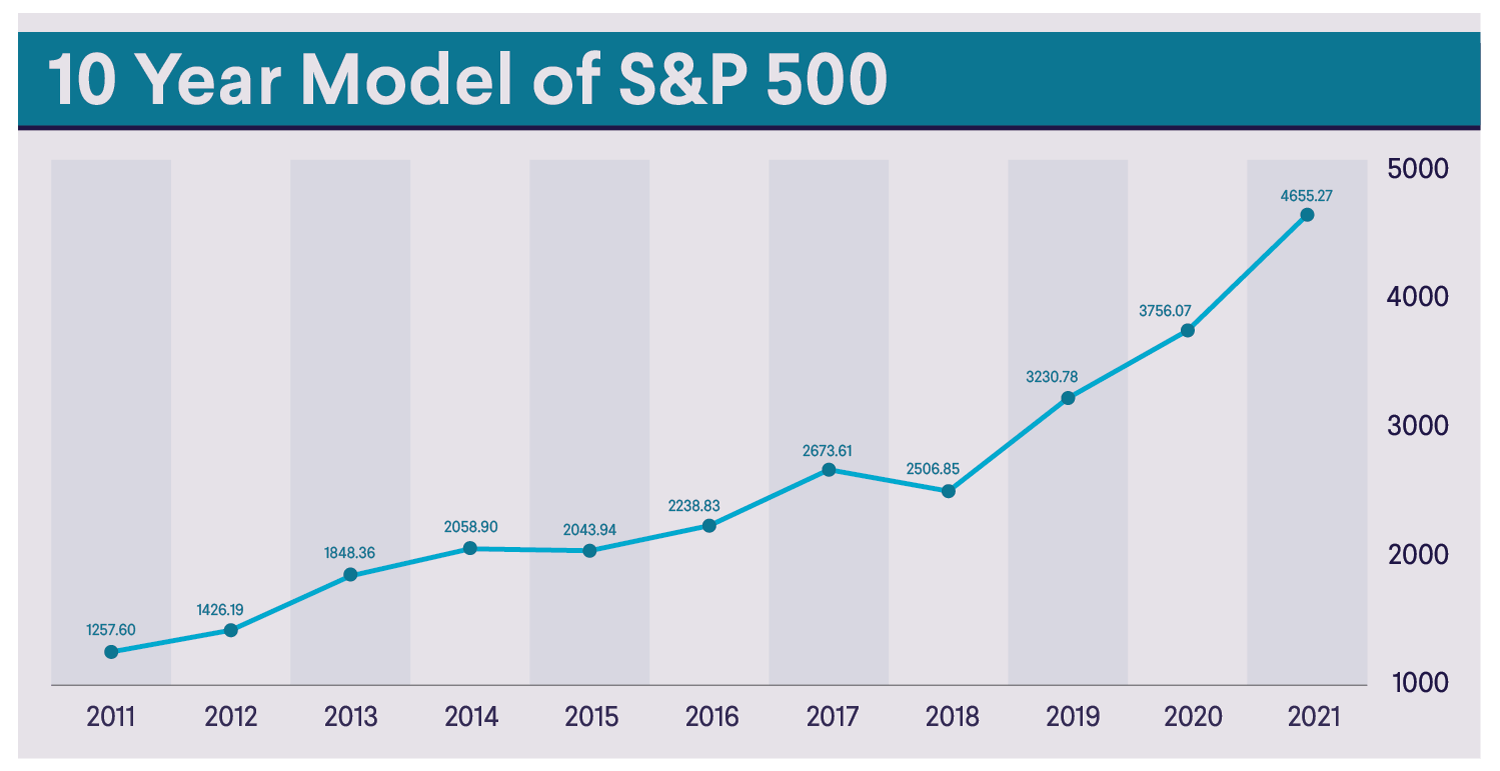
Dating back to the late 1920s, the S&P 500 index has returned, on average, around 10% per year. Adjusted for inflation that’s roughly 7% per year.

Here’s how much a 7% return on investment can earn an individual after 10 years: If an individual starts out by putting in $1,000 into an investment with a 7% average annual return, compounded annually, they would see their money grow to $1,967 after a decade, assuming little or no volatility (which is unlikely in real life). It’s important for investors to have realistic expectations about what type of return they’ll see.

For financial planning purposes however, investors interested in buying stocks should keep in mind that that doesn’t mean the stock market will consistently earn them 7% each year. In fact, S&P 500 share prices have swung violently throughout the years. For instance, the benchmark tumbled 38% in 2008, then completely reversed course the following March to end 2009 up 23%.

Factors such as economic growth, corporate performance, interest rates, and share valuations can affect stock returns. Thus, it can be difficult to say X% or Y% is a good return, as the investing climate varies from year to year.

A better approach is to think about your hoped-for portfolio return in light of a certain goal (e.g. retirement), and focus on the investment strategy that might help you achieve that return.
Line graph: 10 Year Model of S&P 500

Why Your Money Might Lose Value If You Don’t Invest it

It’s helpful to consider what happens to the value of your money if you simply hang on to cash.

Keeping cash can feel like a lower-risk alternative to investing, so it may seem like a good idea to deposit your money into a traditional savings account. But cash slowly loses value over time due to inflation; that is, the cost of goods and services increases with time, meaning that cash has less purchasing power. Inflation can also impact your investments.

Interest rates are important, too. Putting money in a savings account that earns interest at a rate that is lower than the inflation rate guarantees that money will lose value over time. This is why, despite the risks, investing money is often considered a better alternative to simply saving it: The inflation risk is typically lower.

Get up to $1,000 in stock when you fund a new Active Invest account.*

Access stock trading, options, alternative investments, IRAs, and more. Get started in just a few minutes.


*Customer must fund their Active Invest account with at least $50 within 45 days of opening the account. Probability of customer receiving $1,000 is 0.026%. See full terms and conditions.

What Is a Good Rate of Return for Various Investments?

As noted above, determining a good rate of return will also depend on the specific investments you hold, and your asset allocation. You can always calculate the expected rate of return for various securities. Here are different types of securities to consider.

Bonds

Purchasing a bond is basically the same as loaning your money to the bond-issuer, like a government or business. Similar to a CD, a bond is a way of locking up a certain amount of money for a fixed period of time.

Here’s how it works: A bond is purchased for a fixed period of time (the duration), investors receive interest payments over that time, and when the bond matures, the investor receives their initial investment back.

Generally, investors earn higher interest payments when bond issuers are riskier. An example may be a company that’s struggling to stay in business. But interest payments may be lower when the borrower is trustworthy, like the U.S. government, which has never defaulted on its Treasuries.

Stocks

Stocks can be purchased in a number of ways. But the important thing to know is that a stock’s potential return will depend on the specific stock, when it’s purchased, and the risk associated with it. Again, the general idea with stocks is that the riskier the stock, the higher the potential return.

This doesn’t necessarily mean you can put money into the market today and assume you’ll earn a large return on it in the next year. But based on historical precedent, your investment may bear fruit over the long-term. Because the market on average has gone up over time, bringing stock values up with it, but stock investors have to know how to handle a downturn.

As mentioned, the stock market averages a return of roughly 7% per year, adjusted for inflation.

Real Estate

Returns on real estate investing vary widely. It mostly depends on the type of real estate — if you’re purchasing a single house versus a real estate investment trust (REIT), for instance — and where the real estate is located.

As with other investments, it all comes down to risk. The riskier the investment, the higher the chance of greater returns and greater losses. Investors often debate the merit of investing in real estate versus investing in the market.

Likely Return on Investment Assets

For investors who have a high risk tolerance (they’re willing to take big risks to potentially earn high returns), some investments are better than others. So for those who are looking for higher returns, adding riskier investments to a portfolio may be worth considering.

Remember the Principles of Good Investing

Investors focused on seeing huge returns over the short-term may set themselves up for disappointment. Instead, remembering basic tenets of responsible investing can best prepare an investor for long-term success.

First up: diversification. It can be a good idea to invest in a wide variety of assets — stocks, bonds, real estate, etc., and a wide variety of investments within those subgroups. That’s because each type of asset tends to react differently to world events and market forces. Due to that, a diverse portfolio can be a less risky portfolio. Time is another important factor when investing. Investing early for more distant goals, such as retirement, may result in larger returns in the long-term.


Test your understanding of what you just read.


The Takeaway

While every investor wants a “good return” on their investments, there isn’t one way to achieve a good return – and different investments have different rates of return, and different risk levels. Investing in other types of assets tends to deliver lower returns, while stocks (which are more volatile) may deliver higher returns but at much greater risk.

Your own investing strategy and asset allocation will have an influence on the potential returns of your portfolio over time.

Invest in what matters most to you with SoFi Active Invest. In a self-directed account provided by SoFi Securities, you can trade stocks, exchange-traded funds (ETFs), mutual funds, alternative funds, options, and more — all while paying $0 commission on every trade. Other fees may apply. Whether you want to trade after-hours or manage your portfolio using real-time stock insights and analyst ratings, you can invest your way in SoFi's easy-to-use mobile app.

Opening and funding an Active Invest account gives you the opportunity to get up to $1,000 in the stock of your choice.¹


INVESTMENTS ARE NOT FDIC INSURED • ARE NOT BANK GUARANTEED • MAY LOSE VALUE

SoFi Invest is a trade name used by SoFi Wealth LLC and SoFi Securities LLC offering investment products and services. Robo investing and advisory services are provided by SoFi Wealth LLC, an SEC-registered investment adviser. Brokerage and self-directed investing products offered through SoFi Securities LLC, Member FINRA/SIPC.

For disclosures on SoFi Invest platforms visit SoFi.com/legal. For a full listing of the fees associated with Sofi Invest please view our fee schedule.

Financial Tips & Strategies: The tips provided on this website are of a general nature and do not take into account your specific objectives, financial situation, and needs. You should always consider their appropriateness given your own circumstances.

S&P 500 Index: The S&P 500 Index is a market-capitalization-weighted index of 500 leading publicly traded companies in the U.S. It is not an investment product, but a measure of U.S. equity performance. Historical performance of the S&P 500 Index does not guarantee similar results in the future. The historical return of the S&P 500 Index shown does not include the reinvestment of dividends or account for investment fees, expenses, or taxes, which would reduce actual returns.

¹Probability of Member receiving $1,000 is a probability of 0.026%; If you don’t make a selection in 45 days, you’ll no longer qualify for the promo. Customer must fund their account with a minimum of $50.00 to qualify. Probability percentage is subject to decrease. See full terms and conditions.

SOIN-Q125-034

Read more
How Much Does It Cost to Build a Houseboat?

How Much Does It Cost to Build a Houseboat? Guide to Houseboat Costs

For those of us seeking the appeal of a minimalist life on the water, the cost to build a houseboat will depend as much on how much elbow grease we’re willing to dedicate to the project as it does on the type of materials we decide to use for the job.

A houseboat is a self-propelled vessel with a cabin. There are many styles, giving people wide discretion on how they choose to build their own houseboat.

Let’s break down factors and average costs associated with building a houseboat.

Key Points

•   Building a houseboat costs at least $20,000 and probably closer to $50,000 for a basic 50-foot model, assuming DIY construction.

•   Costs increase significantly with professional labor for electrical and plumbing work.

•   Houseboat kits and plans are available for those preferring a DIY approach.

•   Used houseboats vary widely in price, from a few thousand dollars to over $1 million.

•   Financing options for houseboats include boat loans and personal loans, not traditional mortgages.

Average Cost of Building a Houseboat

How much does it cost to build a houseboat? Just like the cost to build a house, it depends on size, materials, whether it’s a total DIY job, and more.

The cost of building a single-story 50-foot houseboat is at least $20,000 and perhaps closer to $50,000, some sources say. To be clear, that low estimate means doing all the work yourself or with the help of friends.

First-time homebuyers can
prequalify for a SoFi mortgage loan,
with as little as 3% down.

Questions? Call (888)-541-0398.


Labor costs for professionals like electricians or plumbers will increase your expenses substantially. So understand that you’ll be trading time and know-how for savings.

There are also houseboat kits and plans for sale. Charmingly, some are advertised as DIY pontoon tiny houses.

By contrast, you can choose to purchase a serviceable preowned houseboat that needs some renovations. Used houseboats can go for anywhere from around $20,000 to way over $1 million (or multi-millions) for luxury craft that border on liveaboard yachts. A houseboat in good condition is generally going to cost you around $60,000 to buy used. Shiver me timbers!

Here’s a rough estimate of the cost of building a houseboat vs. buying a used one.

Building From Scratch Cost Preowned Houseboat Cost
$20,000 and up for 50 feet $60,000 and up

Regardless of whether you’re planning to handle the build yourself or you intend to refurbish a used houseboat, you may need financing. How to pay for it? Not with a traditional mortgage. Options include a boat loan and a personal loan.

Homeowners with sufficient home equity may be able to launch their houseboat plans with a home equity line of credit (HELOC), home equity loan, or cash-out refinance.

Recommended: How to Find a Contractor

Factors That Affect the Cost of a Houseboat

Houseboat living has caught on with some retirees, who want to downsize home-wise.

It also could be a choice for minimalists and millennial homebuyers who think outside the box.

Not everyone, of course, will want to be a full-time liveaboard. Some water lovers will be OK with a basic houseboat for cruising and recreation, one that is maybe trailerable. Those are factors that will affect the cost of your preferred houseboat.

Here are factors to consider.

Size

The size of your houseboat will have a major impact on the cost of materials you’ll need. Are you planning to build a single-story or double-decker houseboat? Will this be something that would fit on a standard 50-foot pontoon base, or will you need something more robust to keep it afloat?

Consider the cost of $50,000 to build a basic 50-foot houseboat that will probably end up offering 450-500 square feet of space. That comes out to at least $110 per square foot, assuming you don’t hire anyone to help with construction. Your houseboat project could very well end up costing more than $200 per square foot.

Bear in mind that these figures are a very rough estimate that was calculated across a broad average of houseboats.

Design

The design of your houseboat will have a large effect on your options when it comes to layout, maneuverability, and aesthetics.

Before you begin construction, you’ll need to decide on what type of hull best suits your houseboat. Aluminum pontoons are popular.

Catamaran cruisers are maneuverable and may be cheaper to build, but they often compromise on space. These designs are easily outfitted with motors and may be best suited for owners who intend to take them out occasionally.

Those looking for larger accommodations may prefer a type of house called a floating home, which is actually different from a houseboat. It often has a concrete hull and is meant to stay in one place, permanently attached to utilities. The price, though, will usually be much higher than that of a houseboat.

A few sailors may opt to build a yacht, which offers the ideal combination of maneuverability and living space. You’ll have to have a hefty check at the ready or prepare to borrow a boatload if you’re considering this option.

Materials

The most common materials used to build boats intended for habitation are aluminum and fiberglass, but in some cases steel and wood can be construction materials of choice.

A standard pontoon base can cost between $3,000 and $10,000.

The cost of interior finishes largely depends on your personal tastes. They can be affordable if you’re fine with a no-frills setup but can tack skyward for more luxurious tastes and larger vessels. Stainless steel appliances and granite countertops cost money, regardless of whether they go in a house or a houseboat.

Will you want a staircase and flybridge? Budget accordingly.

Location and Water Depth

The environment you intend to keep your houseboat in will affect how much you’ll have to pay to make it seaworthy.

The price of an inboard motor may start around $8,000 and go up to $25,000. An outboard could start at $1,000 and go up to around $15,000. Depending on how large your vessel is, you may need to pay for a larger motor with more horsepower.

Federal regulations governing recreational craft prohibit the majority of houseboats from sailing in deep ocean waters. However, cruises along the shoreline, or in a lake or river, are acceptable options for capable houseboats.

Weather

Whether you decide to launch or keep your houseboat in freshwater or saltwater and local weather patterns will affect houseboat maintenance.

Saltwater is a tougher environment but has a lower freezing temperature than freshwater, which means that you likely won’t have to worry about ice forming in the water.

By contrast, if your houseboat will primarily be in freshwater, you may have to deal with ice. As water freezes into ice, it expands, which can damage your hull or rudder.

Permits and Regulations

Any recreational vessel must meet federal safety requirements and possibly abide by state regulations.

Average Cost of Living on a Houseboat Year-Round

The average cost of living on a houseboat is $30,000 per year, including a boat or personal loan payment, some sources say. This breaks down to around $2,500 per month. Some frugal houseboat enthusiasts report living on as little as $6,000 per year.

Most of these costs encompass mooring fees, utilities, and insurance, but you’ll also need to budget for repairs and applicable local fees. Some houseboat communities have a homeowners association that allows all residents to distribute community expenses like maintenance of the docks.

Does a houseboat cost less than a home sitting on terra firma? Generally, yes. You can build a houseboat for far less than a comparably sized single-family home. As a future liveaboard, though, you might want to compare moorage and other fees to the costs of maintaining a traditional home.

The IRS says a boat with cooking, sleeping, and toilet facilities can be a main or second home, so interest paid on a loan for your houseboat could be included in the mortgage interest deduction if you itemize.

The Takeaway

How much does it cost to build a houseboat? The cost could start at $20,000 for a DIY build and depends largely on size and materials. Hiring skilled labor will add to that substantially. An alternative to building a houseboat is buying a used one and making it your own. How to pay for these nautical visions? One way, for qualified homeowners, is a HELOC brokered by SoFi.

SoFi now partners with Spring EQ to offer flexible HELOCs. Our HELOC options allow you to access up to 90% of your home’s value, or $500,000, at competitively lower rates. And the application process is quick and convenient.

Unlock your home’s value with a home equity line of credit brokered by SoFi.

FAQ

How large can a houseboat be?

In most cases, 40 to 50 feet is the average length and 8 to 20 feet the range of width for a houseboat that will be comfortable as a long-term dwelling.

How long does it take to build a houseboat?

A DIY houseboat project could easily take 18 months to complete, but the time frame will depend on whether you’re able to work on the houseboat project full time and whether you enlist any help. Remember to factor in time to obtain necessary permits or inspections for your area.

Where can I get financing to build a houseboat?

You may be able to finance your houseboat build through lenders that focus on marine and RV lending. Other options are a personal loan, a HELOC, a home equity loan, and a cash-out refinance.


Photo credit: iStock/MarkHatfield

SoFi Mortgages
Terms, conditions, and state restrictions apply. Not all products are available in all states. See SoFi.com/eligibility-criteria for more information.


SoFi Loan Products
SoFi loans are originated by SoFi Bank, N.A., NMLS #696891 (Member FDIC). For additional product-specific legal and licensing information, see SoFi.com/legal. Equal Housing Lender.


*SoFi requires Private Mortgage Insurance (PMI) for conforming home loans with a loan-to-value (LTV) ratio greater than 80%. As little as 3% down payments are for qualifying first-time homebuyers only. 5% minimum applies to other borrowers. Other loan types may require different fees or insurance (e.g., VA funding fee, FHA Mortgage Insurance Premiums, etc.). Loan requirements may vary depending on your down payment amount, and minimum down payment varies by loan type.

Financial Tips & Strategies: The tips provided on this website are of a general nature and do not take into account your specific objectives, financial situation, and needs. You should always consider their appropriateness given your own circumstances.

²SoFi Bank, N.A. NMLS #696891 (Member FDIC), offers loans directly or we may assist you in obtaining a loan from SpringEQ, a state licensed lender, NMLS #1464945.
All loan terms, fees, and rates may vary based upon your individual financial and personal circumstances and state.
You should consider and discuss with your loan officer whether a Cash Out Refinance, Home Equity Loan or a Home Equity Line of Credit is appropriate. Please note that the SoFi member discount does not apply to Home Equity Loans or Lines of Credit not originated by SoFi Bank. Terms and conditions will apply. Before you apply, please note that not all products are offered in all states, and all loans are subject to eligibility restrictions and limitations, including requirements related to loan applicant’s credit, income, property, and a minimum loan amount. Lowest rates are reserved for the most creditworthy borrowers. Products, rates, benefits, terms, and conditions are subject to change without notice. Learn more at SoFi.com/eligibility-criteria. Information current as of 06/27/24.
In the event SoFi serves as broker to Spring EQ for your loan, SoFi will be paid a fee.

SOHL-Q125-040

Read more

What Is the Age for Early Retirement for Social Security?

Early retirement age for Social Security is 62. While you can receive benefits then, you will not collect as much as if you wait until full retirement age, which is either 66 or 67, depending on the year you were born. If you delay claiming your benefits until age 70, you can receive still more.

Throughout your working career, you pay employment taxes that help fund Social Security, which provides income when you retire. In 2024, approximately 65 million people received Social Security benefits, totaling more than $1.5 trillion. Whether you choose to retire at 62 or later is a very personal decision with several contributing factors.

Here, learn more about Social Security benefits, early retirement age, and the advantages and disadvantages of filing for your benefits early and late.

Key Points

•   Social Security benefits provide income for retirees, with the amount depending on their earnings and the age at which benefits are claimed.

•   The full retirement age (FRA) for Social Security benefits varies from 66 to 67, based on the year of birth.

•   Benefits can be claimed as early as age 62, but the monthly amount is reduced compared to claiming at FRA.

•   Delaying benefits past FRA can increase the monthly amount through delayed retirement credits, up to a certain point.

•   It’s important to consider short and long-term financial needs before deciding when to claim Social Security benefits.

What Are Social Security Benefits?

Social Security is a social insurance program created in 1935 to pay workers an income once they take retirement at age 65 or older. When people talk about Social Security benefits, they’re referring to a monthly payment that replaces a portion of a worker’s pre-retirement income.

The amount you receive depends on how much you earned and paid in Social Security taxes during the 35 highest-earning years of your career. Generally speaking, the higher your income, the bigger your monthly check will be — up to a point. Also important is the age at which you claim benefits. Typically, the later you receive benefits, the higher your monthly check will be.

Note that retirees aren’t the only ones who are eligible for Social Security benefits. People with qualifying disabilities, surviving spouses of workers who have died, and dependent beneficiaries may also qualify for benefits.

Recommended: When Will Social Security Run Out?

At What Age Can You Collect Social Security?

When the Social Security program began, the full retirement age (FRA) was 65, and that’s still what many in the U.S. think of as the average retirement age. However, as life expectancy in the U.S. has increased, the Social Security Administration (SSA) has adjusted the FRA accordingly.

The chart below illustrates FRA by year of birth.

If You Were Born In Your Full Retirement Age Is
1943-1954 66
1955 66 and 2 months
1956 66 and 4 months
1957 66 and 6 months
1958 66 and 8 months
1959 66 and 10 months
1960 or later 67

Recommended: Low-Stress Jobs for Introverts

What Is the Early Retirement Age for Social Security?

You can choose to claim retirement benefits as early as age 62. However, SSA will reduce your benefit by about 0.5% for every month you receive benefits before your FRA. For example, if your full retirement age is 67 and you file for Social Security benefits when you’re 62, you’d receive around 70% of your benefit.

On the other hand, if you wait to claim benefits after your FRA, you’ll accrue delayed retirement credits. This increases your benefit by a certain percentage for every month you delay after your FRA. For example, if your full retirement age is 67 and you delay receiving benefits until age 70, you’ll get 124% of your monthly benefits. Note that the benefit increase stops when you turn 70.

Recommended: When Can I Retire? This Formula Will Help You Know

Can You Claim Social Security While You’re Still Working?

When you claim your Social Security benefits, the SSA considers you retired. However, you can continue working after retirement and receiving benefits at the same time, though they may be limited.

If you’re younger than FRA for the entire year, the SSA will deduct $1 from your payment for every $2 you earn above an annual limit. In 2025, that limit is $23,400. In the year you reach full retirement age, the SSA will begin deducting $1 for every $3 you make above a different earnings limit — $62,160 in 2025.

No matter their work history, your spouse has the option to claim Social Security benefits based on your work record. That benefit can be up to 50% of your primary insurance amount, which is the benefit you’d receive at FRA. Your spouse can begin receiving spousal benefits at age 62, but they will receive a reduced benefit.

Pros and Cons of Claiming Social Security Early

The main advantage of filing for Social Security early is that you’ll have access to retirement funds sooner. This can be a boon to individuals who need extra money to get by each month. To help you maximize every last dollar, consider using a spending app to create budgets, track spending, and monitor bills.

The main disadvantage of filing early is that you may permanently reduce your monthly benefit amount. This could be a factor to keep in mind as you determine whether you’re on track for retirement.

So how do you decide when to file for your benefits? Consider your “break-even point.” This is the age at which receiving a delayed higher benefit outweighs claiming benefits earlier.

Here’s an example of how that works. Let’s say your FRA is 67 and your annual benefit is $24,000. If you claim your benefit at age 62, your benefit drops to $16,800 a year. If you delay until age 70, your benefit would be $29,760 a year.

By adding up each year’s worth of benefits and comparing them across different potential retirement ages, you find your break-even point. So in that last example, claiming your benefit at FRA breaks even with early filing at age 78. If you expect to live until this age or longer, you may consider filing for Social Security at full retirement age. Delaying until age 70 breaks even with claiming at FRA at age 82. So if you expect to live until 82 or longer, you may consider delaying your benefits.

Check your credit score for free. Sign up and get $10.*

and get $10 in rewards points on us.


RL24-1993217-B

Recommended: How Can I Retire Early?

The Takeaway

Early retirement starts at age 62; that is the earliest age you can receive Social Security income. Your monthly payment amount is determined by how much you’ve earned during your working career and the age at which you claim Social Security benefits. You’re eligible to receive your full benefits when you reach full retirement age (FRA). If you file before then, the monthly payment will be reduced. If you file later, your monthly payment can increase, up to a point. Consider your short- and long-term financial needs carefully before deciding when to claim Social Security so you can budget appropriately.

Take control of your finances with SoFi. With our financial insights and credit score monitoring tools, you can view all of your accounts in one convenient dashboard. From there, you can see your various balances, spending breakdowns, and credit score. Plus you can easily set up budgets and discover valuable financial insights — all at no cost.

See exactly how your money comes and goes at a glance.

FAQ

Can I take Social Security at age 55?

You cannot claim Social Security benefits at age 55. The earliest you can file for benefits is age 62.

What happens to my Social Security if I retire at 55?

If you retire at 55, you will have to wait seven years, until age 62, before you are eligible to claim early Social Security benefits. Retiring early may also affect the size of your benefit if you are leaving work in your top-earning years.

What is the average Social Security benefit at age 62?

The average monthly Social Security retirement benefit in December 2024 was about $1,834.43 for those filing at full retirement age. Filing early at age 62 would reduce that benefit by 30% to $1,284.10.


Photo credit: iStock/svetikd

SoFi Relay offers users the ability to connect both SoFi accounts and external accounts using Plaid, Inc.’s service. When you use the service to connect an account, you authorize SoFi to obtain account information from any external accounts as set forth in SoFi’s Terms of Use. Based on your consent SoFi will also automatically provide some financial data received from the credit bureau for your visibility, without the need of you connecting additional accounts. SoFi assumes no responsibility for the timeliness, accuracy, deletion, non-delivery or failure to store any user data, loss of user data, communications, or personalization settings. You shall confirm the accuracy of Plaid data through sources independent of SoFi. The credit score is a VantageScore® based on TransUnion® (the “Processing Agent”) data.

*Terms and conditions apply. This offer is only available to new SoFi users without existing SoFi accounts. It is non-transferable. One offer per person. To receive the rewards points offer, you must successfully complete setting up Credit Score Monitoring. Rewards points may only be redeemed towards active SoFi accounts, such as your SoFi Checking or Savings account, subject to program terms that may be found here: SoFi Member Rewards Terms and Conditions. SoFi reserves the right to modify or discontinue this offer at any time without notice.

Financial Tips & Strategies: The tips provided on this website are of a general nature and do not take into account your specific objectives, financial situation, and needs. You should always consider their appropriateness given your own circumstances.

This content is provided for informational and educational purposes only and should not be construed as financial advice.

Third-Party Brand Mentions: No brands, products, or companies mentioned are affiliated with SoFi, nor do they endorse or sponsor this article. Third-party trademarks referenced herein are property of their respective owners.

Tax Information: This article provides general background information only and is not intended to serve as legal or tax advice or as a substitute for legal counsel. You should consult your own attorney and/or tax advisor if you have a question requiring legal or tax advice.

SORL-Q125-047

Read more

What Is PMI & How to Avoid It?

If you don’t have a 20% down payment on a home, that’s OK. Most buyers don’t. But if you’re in that league and acquire a conventional mortgage, the lender will want extra assurance — insurance, actually — that you’ll pay the loan back. Private mortgage insurance (PMI) is usually the price to pay until you reach 20% equity or, as lenders say, 80% loan-to-value.

In an effort to help low- and middle-income borrowers, the Biden-Harris Administration reduced monthly mortgage insurance premiums for new FHA loans — that is, loans backed by the Federal Housing Administration. However, those cuts do not affect homebuyers with conventional loans and PMI.

Can you avoid PMI? It’s tough. Below, we’ll take a closer look at PMI, strategies to avoid it, and how to know when you can get rid of it.

Key Points

•   Private mortgage insurance (PMI) is required for conventional mortgages with less than 20% down payment.

•   PMI costs 0.5% to 1.5% of the loan amount annually, increasing monthly payments.

•   FHA, VA, and USDA loans offer alternatives but have different eligibility criteria and fees.

•   Strategies to avoid PMI include using gift funds, gift of equity, down payment assistance programs, and saving more.

•   Borrowers can request PMI be removed from payments once equity reaches 20%.

What Is PMI?

Private mortgage insurance is charged by lenders of conventional home mortgage loans, which are loans not insured by a government agency. FHA, VA (Veterans Administration), and USDA (U.S. Department of Agriculture) loans are government-insured loans.

The 30-year conventional home loan is the most common mortgage, and 20% down is ideal. But…

You’ve seen home prices lately. Twenty percent down on a $250,000 or $400,000 or $750,000 home is just not doable for everyone. In 2024, the median down payment for buyers was 18%, but for first-time homebuyers, it was nine percent, according to the National Association of Realtors.®

PMI is meant to protect the lender from risk. The premiums help the lender recoup its losses if a borrower can’t make the mortgage payments and goes into default.

How Much Does PMI Cost?

PMI is often 0.5% to 1.5% of the total loan amount per year, but can range up to 2.25%.

The cost of PMI depends on the type of mortgage you get, how much your down payment is, your credit score, the type of property, the loan term, and the level of PMI coverage required by your lender.

If you’re shopping for a mortgage and you apply for one or more, the premium will be shown on your loan estimate. If you go forward with a home loan, the premium will be shown on the closing disclosure.


Get matched with a local
real estate agent and earn up to
$9,500 cash back when you close.

How to Pay PMI

Most borrowers pay PMI monthly as a premium added to the mortgage payment.

Another option is to pay PMI with a one-time upfront premium at closing.

Yet another is to pay a portion of PMI up front and the remainder monthly.

How to Avoid PMI Without 20% Down

One way to avoid PMI is to make use of a piggyback mortgage. Another is to seek out lender-paid mortgage insurance.

Piggyback Loan

With a piggyback loan, typically an 80/10/10 mortgage, you’d take out two loans at the same time, a first mortgage for 80% of the home price and a second mortgage for 10% of the home value, and put 10% down. Note: SoFi does not offer piggyback loans. SoFi does offer fixed-rate and adjustable-rate first mortgages, as well as VA and FHA loans.

The 80% loan is usually a 30-year fixed-rate mortgage, and the 10% loan is typically a home equity line of credit that “piggybacks” on the first mortgage.

A 75/15/10 piggyback loan is more commonly used for a condo purchase because mortgage rates for condos are higher when the loan-to-value ratio (LTV) exceeds 75%.

Both loans do not have to come from the same lender. Borrowers can tell their primary mortgage lender that they plan to use a piggyback loan and be referred to a second lender for the additional financing.

Because you’d be taking out two loans, your debt-to-income ratio (monthly debts / gross monthly income x 100) will fall under more scrutiny. Mortgage lenders typically want to see a DTI ratio of no more than 36%, but that is not necessarily the maximum.

Piggybackers will need to be prepared to make two mortgage payments. They will want to examine whether that secondary loan payment will be higher than PMI would be.

Lender-Paid Mortgage Insurance

In most cases with lender-paid mortgage insurance (LPMI), the lender pays the PMI on your behalf but bumps up your mortgage interest rate slightly. A 0.25% rate increase is common.

Monthly payments could be more affordable because the cost of the PMI is spread out over the whole loan term rather than bunched into the first several years. But the loan rate will never change unless you refinance.

Borrowers will want to look at how long they expect to hold the mortgage when comparing PMI and LPMI. If you need a short-term mortgage, plan to refinance in a few years, or want the lowest monthly payment possible, LPMI could be the way to go. Note: SoFi does not offer LPMI.

When PMI Is No Longer Required

Borrowers generally need to have 20% equity in their home to drop PMI.

The Homeowners Protection Act was put in place to protect consumers from paying more PMI than they are required to. Specifically for single-family principal mortgages closed on or after July 29, 1999, the law covers two scenarios: borrower-requested PMI termination and automatic PMI termination.

Once you’ve built 20% equity in your home, meaning you’re at an 80% LTV based on the home’s original value (the sales price or the original appraised value, whichever is lower), you can ask your mortgage loan servicer — in writing — to cancel your PMI if you’re current on all payments. Your monthly mortgage statement shows your loan servicer information.

The very date of this occurrence, barring no extra payments, should have been given to you in a PMI disclosure form when you received your mortgage. It’s based on your loan’s amortization schedule.

As long as you’re current on all payments, PMI will automatically terminate on the date when your principal mortgage balance reaches 78% of the original value of your home.

If that LTV ratio is not reached by the midpoint of the mortgage amortization period, PMI must end the month after that midpoint.

PMI vs. MIP vs. Funding Fees

The upside of PMI is that it unlocks the door to homeownership for many who otherwise would still be renting. The downside is, it adds up.

If you’re tempted to go with an FHA mortgage, realize that this type of loan requires up front and annual mortgage insurance premiums (MIP) that go on for the life of the loan if the down payment was less than 10%.

Mortgages insured by the Department of Veterans Affairs come with a sizable funding fee, with a few exceptions, and loans backed by the Department of Agriculture come with up front and annual guarantee fees.

Type of Loan Upfront Fee Annual Fee
Conventional n/a 0.5% to 1.5%+
FHA 1.75% 0.15% to 0.75%
VA 1.25% to 3.3% n/a
USDA 1% 0.35%


Recommended: PMI vs. MIP

Ways to Boost a Down Payment

A bigger down payment not only may allow a borrower to avoid PMI but usually will afford a better loan rate and provide more equity from the get-go, which translates to less total loan interest paid.

So how to afford a down payment? You could shake down Dad or Granny (just kidding; Grandma responds better to sweet talk than coercion). For a conventional loan, gift funds from a relative or from a domestic partner or fiance count toward a down payment. There’s no limit to the gift, but you may be expected to come up with part of the down payment. You’ll also need to present a formal gift letter to validate the funds given to you.

A gift of equity is a wonderful thing indeed. When a seller gives a portion of the home’s equity to the buyer, it is shown as a credit in the transaction and may be used to fund the down payment on principal or second homes.

You could look into down payment assistance from state, county, and city governments and nonprofit organizations, which usually cater to first-time homebuyers. And home listings on Zillow now include information about down payment assistance programs that might be available to buyers searching for homes on the platform.

Even if you can’t come up with 20%, it’s all good because PMI doesn’t last forever, and real estate is one of the key ways to build generational wealth.

The Takeaway

What is PMI? Private mortgage insurance typically goes along for the ride when a borrower puts less than 20% down on a conventional mortgage. A gift or other down payment assistance can fatten the down payment and help you avoid PMI. If you do end up paying, you can step away from PMI once your equity reaches 20%.

Looking for an affordable option for a home mortgage loan? SoFi can help: We offer low down payments (as little as 3% - 5%*) with our competitive and flexible home mortgage loans. Plus, applying is extra convenient: It's online, with access to one-on-one help.

SoFi Mortgages: simple, smart, and so affordable.

FAQ

Is it better to put down 20% or pay PMI?

It would be great to make a down payment of 20% and avoid private mortgage insurance (PMI) but not everyone can afford it. It’s particularly hard for first-time homebuyers, who often don’t have income from the sale of another residence to fund their next home. Use a home affordability calculator to look carefully at monthly mortgage payment amounts for different home prices and interest rates. Then put down what you feel you can afford without compromising your ability to cover other bills.

How long do I have to pay PMI?

If you are paying private mortgage insurance, you’ll need to pay until you have built up 20% equity in your home (based on the original sale price of the home). At this point, you can request in writing that your loan servicer cancel PMI if you are current on your payments.


SoFi Loan Products
SoFi loans are originated by SoFi Bank, N.A., NMLS #696891 (Member FDIC). For additional product-specific legal and licensing information, see SoFi.com/legal. Equal Housing Lender.


SoFi Mortgages
Terms, conditions, and state restrictions apply. Not all products are available in all states. See SoFi.com/eligibility-criteria for more information.


*SoFi requires Private Mortgage Insurance (PMI) for conforming home loans with a loan-to-value (LTV) ratio greater than 80%. As little as 3% down payments are for qualifying first-time homebuyers only. 5% minimum applies to other borrowers. Other loan types may require different fees or insurance (e.g., VA funding fee, FHA Mortgage Insurance Premiums, etc.). Loan requirements may vary depending on your down payment amount, and minimum down payment varies by loan type.

Financial Tips & Strategies: The tips provided on this website are of a general nature and do not take into account your specific objectives, financial situation, and needs. You should always consider their appropriateness given your own circumstances.

Third-Party Brand Mentions: No brands, products, or companies mentioned are affiliated with SoFi, nor do they endorse or sponsor this article. Third-party trademarks referenced herein are property of their respective owners.

¹FHA loans are subject to unique terms and conditions established by FHA and SoFi. Ask your SoFi loan officer for details about eligibility, documentation, and other requirements. FHA loans require an Upfront Mortgage Insurance Premium (UFMIP), which may be financed or paid at closing, in addition to monthly Mortgage Insurance Premiums (MIP). Maximum loan amounts vary by county. The minimum FHA mortgage down payment is 3.5% for those who qualify financially for a primary purchase. SoFi is not affiliated with any government agency.
Veterans, Service members, and members of the National Guard or Reserve may be eligible for a loan guaranteed by the U.S. Department of Veterans Affairs. VA loans are subject to unique terms and conditions established by VA and SoFi. Ask your SoFi loan officer for details about eligibility, documentation, and other requirements. VA loans typically require a one-time funding fee except as may be exempted by VA guidelines. The fee may be financed or paid at closing. The amount of the fee depends on the type of loan, the total amount of the loan, and, depending on loan type, prior use of VA eligibility and down payment amount. The VA funding fee is typically non-refundable. SoFi is not affiliated with any government agency.
²SoFi Bank, N.A. NMLS #696891 (Member FDIC), offers loans directly or we may assist you in obtaining a loan from SpringEQ, a state licensed lender, NMLS #1464945.
All loan terms, fees, and rates may vary based upon your individual financial and personal circumstances and state.
You should consider and discuss with your loan officer whether a Cash Out Refinance, Home Equity Loan or a Home Equity Line of Credit is appropriate. Please note that the SoFi member discount does not apply to Home Equity Loans or Lines of Credit not originated by SoFi Bank. Terms and conditions will apply. Before you apply, please note that not all products are offered in all states, and all loans are subject to eligibility restrictions and limitations, including requirements related to loan applicant’s credit, income, property, and a minimum loan amount. Lowest rates are reserved for the most creditworthy borrowers. Products, rates, benefits, terms, and conditions are subject to change without notice. Learn more at SoFi.com/eligibility-criteria. Information current as of 06/27/24.
In the event SoFi serves as broker to Spring EQ for your loan, SoFi will be paid a fee.


Checking Your Rates: To check the rates and terms you may qualify for, SoFi conducts a soft credit pull that will not affect your credit score. However, if you choose a product and continue your application, we will request your full credit report from one or more consumer reporting agencies, which is considered a hard credit pull and may affect your credit.

‡Up to $9,500 cash back: HomeStory Rewards is offered by HomeStory Real Estate Services, a licensed real estate broker. HomeStory Real Estate Services is not affiliated with SoFi Bank, N.A. (SoFi). SoFi is not responsible for the program provided by HomeStory Real Estate Services. Obtaining a mortgage from SoFi is optional and not required to participate in the program offered by HomeStory Real Estate Services. The borrower may arrange for financing with any lender. Rebate amount based on home sale price, see table for details.

Qualifying for the reward requires using a real estate agent that participates in HomeStory’s broker to broker agreement to complete the real estate buy and/or sell transaction. You retain the right to negotiate buyer and or seller representation agreements. Upon successful close of the transaction, the Real Estate Agent pays a fee to HomeStory Real Estate Services. All Agents have been independently vetted by HomeStory to meet performance expectations required to participate in the program. If you are currently working with a REALTOR®, please disregard this notice. It is not our intention to solicit the offerings of other REALTORS®. A reward is not available where prohibited by state law, including Alaska, Iowa, Louisiana and Missouri. A reduced agent commission may be available for sellers in lieu of the reward in Mississippi, New Jersey, Oklahoma, and Oregon and should be discussed with the agent upon enrollment. No reward will be available for buyers in Mississippi, Oklahoma, and Oregon. A commission credit may be available for buyers in lieu of the reward in New Jersey and must be discussed with the agent upon enrollment and included in a Buyer Agency Agreement with Rebate Provision. Rewards in Kansas and Tennessee are required to be delivered by gift card.

HomeStory will issue the reward using the payment option you select and will be sent to the client enrolled in the program within 45 days of HomeStory Real Estate Services receipt of settlement statements and any other documentation reasonably required to calculate the applicable reward amount. Real estate agent fees and commissions still apply. Short sale transactions do not qualify for the reward. Depending on state regulations highlighted above, reward amount is based on sale price of the home purchased and/or sold and cannot exceed $9,500 per buy or sell transaction. Employer-sponsored relocations may preclude participation in the reward program offering. SoFi is not responsible for the reward.

SoFi Bank, N.A. (NMLS #696891) does not perform any activity that is or could be construed as unlicensed real estate activity, and SoFi is not licensed as a real estate broker. Agents of SoFi are not authorized to perform real estate activity.

If your property is currently listed with a REALTOR®, please disregard this notice. It is not our intention to solicit the offerings of other REALTORS®.

Reward is valid for 18 months from date of enrollment. After 18 months, you must re-enroll to be eligible for a reward.

SoFi loans subject to credit approval. Offer subject to change or cancellation without notice.

The trademarks, logos and names of other companies, products and services are the property of their respective owners.


SOHL-Q125-041

Read more
What Is a Houseboat? Pros & Cons of Owning a Houseboat

Guide to Houseboats: Definition and Key Characteristics

If you’re interested in living on a houseboat or just pleasure cruising, you’ll want to know the advantages and disadvantages of owning a houseboat.

Here’s a deep dive into the world of houseboats to help you understand what they are, how they work, and whether buying one is the right choice for you.

Key Points

•   Houseboats are designed primarily as dwellings on water, equipped with home-like features such as bathrooms, kitchens, and sleeping quarters.

•   They are generally less seaworthy than regular boats and are meant for enclosed waters like lakes and rivers.

•   Floating homes differ from houseboats in that they are stationary, lack mobility features, and are often larger and more expensive.

•   Houseboats offer unique advantages such as reduced living costs and scenic views, but also have downsides like limited space and ongoing maintenance needs.

•   Financing a houseboat is different from traditional home loans, with options including personal loans, marine loans, and using home equity products.

What Is a Houseboat?

A houseboat is a vessel built or modified to function primarily as a dwelling rather than just transportation.
When comparing houseboats to traditional boats, you can expect houseboats to have the features of a home, including one or more bathrooms, sleeping quarters, and a kitchen.

Houseboats, among the less common types of homes, are distinguished from other boats by their intended use as a dwelling.

Depending on how large the houseboat is and how much the owner is willing to invest, houseboats can range from barebones to luxurious.

First-time homebuyers can
prequalify for a SoFi mortgage loan,
with as little as 3% down.

Questions? Call (888)-541-0398.


Characteristics of a Houseboat

A houseboat stands out in the fleet of traditional boats.

Houseboats Regular boats
Built or modified to function primarily as a residence Built primarily for transportation or recreational purposes
Intended to function as a permanent shelter Generally designed for transport or temporary accommodations
Less maneuverable than regular boats Maneuverable and self-propelled in most cases

Expect houseboats to be less seaworthy than boats specifically designed for transportation. The vast majority of houseboats are intended to be confined to lakes, rivers, and small bodies of water, not the open seas.

Houseboat vs. Floating Home

A houseboat and a “floating home” are different. Floating homes are meant to stay in one place, lacking an engine or navigation system. They usually have a floating concrete foundation.They’re generally much bigger than houseboats and cost more.

Even though some houseboats also dock in one place, most can motor to another location when needed or desired.

Houseboat Design

Houseboats may stretch from 20 feet to over 90 feet. A veranda or flybridge may help occupants make the most of outdoor views.

Hull design and materials vary. Here are some styles.

Pontoon: Flat-bottomed boat that’s supported by two to three floats, or pontoons, for buoyancy. This is common houseboat construction.

Full hull: Conventional boat hull with a large bilge that sits partly in the water and offers more space below deck.

Planing hull: Similar design to full hull but is designed to glide on top of the water at speed.

Catamaran hull: Parallel twin-hulled design that joins two hulls of equal size with a solid frame. The wide beam gives it better stability and handling.

Barge: Large flat-bottomed boat designed to handle heavy loads and operate in rivers and canals.

When researching the type of houseboat you want, you’ll want to make an informed choice when weighing livability and seaworthiness.

Pros and Cons of a Houseboat

It takes a special type of person to live on a houseboat. Here are some of the pros and cons of houseboat living to help you decide if you fall into this category.

Pros

•   Reduced living costs: The lack of land to maintain means you won’t have to worry about shoveling snow or mowing the lawn. You can also expect lower utility costs due to the square footage, which could be enticing to people wanting to downsize their home.

•   Nice views: You can’t get closer to waterfront living. Houseboat living offers the possibility of gorgeous lakeside or riverside views every day you wake up and go to bed.

•   Water activities: Depending on the season and local ordinances, you may be able to fish, canoe, and enjoy all the perks of life on the water without having to take extra time off for a vacation.

•   Lower rent or mortgage: Compared with the average stand-alone house, a houseboat may cost less to buy or rent.

•   Possible tax advantages: Houseboat owners may not have to pay property taxes (although a deeded slip in some areas is considered real property), but they may live in a state, county, or city that imposes personal-property taxes. Also, the IRS says a boat can be your main or secondary residence, entitling you to take advantage of the same tax deductions as the owner of a typical house.

Cons

•   Reduced living space: A modest houseboat may be smaller than most traditional homes.

•   Marina or HOA fees: If you want to remain moored and plugged into the grid, you’ll need to pay slip fees or homeowners association fees.

•   Maintenance: Expect to trade land maintenance expenses for boat maintenance costs. In some cases, you’ll need to find a contractor for repairs or an inspection.

•   Lack of permanence: If you intend to sail from dock to dock, you’ll need to make compromises when it comes to having a permanent mailing address or regular friends and neighbors.

How to Finance a Houseboat

Used houseboats start at a few thousand dollars. New houseboats may range from $250,000 to $750,000.

Can you get a mortgage loan for a houseboat? No. But you may be able to get another kind of loan if you have a credit score in at least the “good” range on the FICO® credit rating scale and meet other lender criteria.

Some banks, credit unions, and online lenders offer boat loans. A marine loan broker can help you find and negotiate a boat loan, but the broker fee is often 10% or more of the houseboat purchase price. The loan might require 10% to 20% down. Note: SoFi does not offer boat loans, although it does offer personal loans, which are another financing option. Most personal loans are unsecured, meaning no collateral is needed.

A personal loan is another option. Personal loans of up to $100,000 are offered by a few lenders. Most are unsecured, meaning no collateral is needed.

A marine loan broker can help you find and negotiate financing, but the broker fee is often 10% or more of the houseboat purchase price. The loan might require 10% to 20% down.

If mortgage rates are ebbing, a cash-out refinance can work for some homeowners.

Other homeowners with sufficient home equity can apply for a home equity line of credit (HELOC) or home equity loan and use that money to buy a houseboat. The rate will typically be lower for an equity product using your home as collateral than that for an unsecured personal loan.

What if your credit isn’t good? So-called bad credit boat loans are afloat out there. They come with a high interest rate. Note: SoFi does not offer bad credit boat loans.

Just as you would shop around for the best mortgage loan offer, you will want to compare a number of houseboat financing options.

Finding a Houseboat to Buy vs. Building One

The cost of buying vs. building a house depends on size, location, the cost of labor and materials, and your taste, and the same holds true of houseboats.

Clearly, buying a used houseboat is almost always quicker and more convenient than trying to build one from scratch. However, if you have the knowhow to build your own houseboat, you’ll have much more freedom when it comes to how you want to design things.

If you’re deciding whether to buy or build a houseboat, you’ll want to consider your budget, time, availability, expertise, facilities, and tools.

Also consider how you would transport the houseboat from land to water when it’s done.

As for the question of time, most custom houseboat builds take months, if not more than a year, to complete. It’ll be much faster and easier to jump into houseboat living with an existing houseboat.

The Takeaway

Houseboats are a novel option for water lovers, including downsizers, retirees, and free spirits. Living on a houseboat can be cheaper than in a traditional home, but you’ll want to make sure you understand the advantages and disadvantages of living on a houseboat before committing. If you are ready to take the plunge, two options for financing your houseboat include a personal loan or a HELOC.

SoFi now partners with Spring EQ to offer flexible HELOCs. Our HELOC options allow you to access up to 90% of your home’s value, or $500,000, at competitively lower rates. And the application process is quick and convenient.

Unlock your home’s value with a home equity line of credit brokered by SoFi.

FAQ

Can you live on a houseboat year-round?

Yes, but you’ll need to compensate for changes in the weather, particularly if the waters where you’re docked tend to freeze during the winter months. This includes ensuring that your houseboat is insulated and heated through the winter.

How long does it take to build a houseboat?

Construction could take 12 to 18 months to complete, depending on whether you’re building a custom houseboat on your own or enlisting the help of professionals.

Can you get a loan for a houseboat?

Yes, but not a traditional mortgage. Options include a boat loan, a personal loan, a home equity loan, and a HELOC.

How does a toilet work on a houseboat?

A marine toilet usually empties into a black-water holding tank until the boat reaches a marina pumping station, or the tank treats the waste and it’s eventually released in a designated discharge area. Noncruising houseboats usually have a hookup that takes out waste through a sewage line.


Photo credit: iStock/wayra

SoFi Loan Products
SoFi loans are originated by SoFi Bank, N.A., NMLS #696891 (Member FDIC). For additional product-specific legal and licensing information, see SoFi.com/legal. Equal Housing Lender.


SoFi Mortgages
Terms, conditions, and state restrictions apply. Not all products are available in all states. See SoFi.com/eligibility-criteria for more information.


*SoFi requires Private Mortgage Insurance (PMI) for conforming home loans with a loan-to-value (LTV) ratio greater than 80%. As little as 3% down payments are for qualifying first-time homebuyers only. 5% minimum applies to other borrowers. Other loan types may require different fees or insurance (e.g., VA funding fee, FHA Mortgage Insurance Premiums, etc.). Loan requirements may vary depending on your down payment amount, and minimum down payment varies by loan type.

Financial Tips & Strategies: The tips provided on this website are of a general nature and do not take into account your specific objectives, financial situation, and needs. You should always consider their appropriateness given your own circumstances.

²SoFi Bank, N.A. NMLS #696891 (Member FDIC), offers loans directly or we may assist you in obtaining a loan from SpringEQ, a state licensed lender, NMLS #1464945.
All loan terms, fees, and rates may vary based upon your individual financial and personal circumstances and state.
You should consider and discuss with your loan officer whether a Cash Out Refinance, Home Equity Loan or a Home Equity Line of Credit is appropriate. Please note that the SoFi member discount does not apply to Home Equity Loans or Lines of Credit not originated by SoFi Bank. Terms and conditions will apply. Before you apply, please note that not all products are offered in all states, and all loans are subject to eligibility restrictions and limitations, including requirements related to loan applicant’s credit, income, property, and a minimum loan amount. Lowest rates are reserved for the most creditworthy borrowers. Products, rates, benefits, terms, and conditions are subject to change without notice. Learn more at SoFi.com/eligibility-criteria. Information current as of 06/27/24.
In the event SoFi serves as broker to Spring EQ for your loan, SoFi will be paid a fee.


Checking Your Rates: To check the rates and terms you may qualify for, SoFi conducts a soft credit pull that will not affect your credit score. However, if you choose a product and continue your application, we will request your full credit report from one or more consumer reporting agencies, which is considered a hard credit pull and may affect your credit.

Tax Information: This article provides general background information only and is not intended to serve as legal or tax advice or as a substitute for legal counsel. You should consult your own attorney and/or tax advisor if you have a question requiring legal or tax advice.

SOHL-Q125-039

Read more
TLS 1.2 Encrypted
Equal Housing Lender