
When Can I Retire This Formula Will Help You Know_780x440

When Can I Retire Calculator

When it comes to figuring out when you can retire, there are a number of factors to consider, including Social Security, other sources of income like a pension, and expenses such as health care costs.

Thankfully, there’s retirement calculators for figuring out these costs, which might help you plan for the future. But first, to decide when you can retire, determine at what age you want to retire and then see how that decision affects your finances.

Key Points

•   Factors to consider when deciding when to retire include Social Security benefits, other sources of income, and expenses like health care costs.

•   The full retirement age for Social Security benefits varies based on birth year.

•   Early retirement can result in reduced Social Security benefits, while delaying retirement can increase monthly benefits.

•   Different retirement accounts, such as Roth IRAs and traditional IRAs, have specific rules for withdrawals.

•   Other sources of retirement income to consider include part-time work, pensions, inheritance, and rental income.

When Can You Get Full Social Security Benefits?

As you consider when to apply for Social Security, you’ll want to understand at what age the government allows people to retire with full Social Security benefits. Not only that, at what age can people start withdrawing from their retirement accounts without facing penalties? For Social Security, the rules are based on your birth year.

The Social Security Administration (SSA) has a retirement age calculator. For example, people born between 1943 and 1954 could retire with full Social Security benefits at age 66.

Meanwhile, those born in 1955 could retire at age 66 and two months, and those born in 1956 could retire at age 66 and four months. Those born in or after 1960 can retire at age 67 to receive full benefits. This can help with your retirement planning.

When you plan to retire is important as you consider your Social Security benefits. What you can collect at full retirement age is different from what you can collect if you retire early or late.

In a 2024 SoFi Retirement Survey, two out of three respondents say they are somewhat or very confident they can retire on time: 70% are hoping to leave the workforce at age 60 or older. Others hope to retire early —17% would like to retire between the ages of 50 and 59.
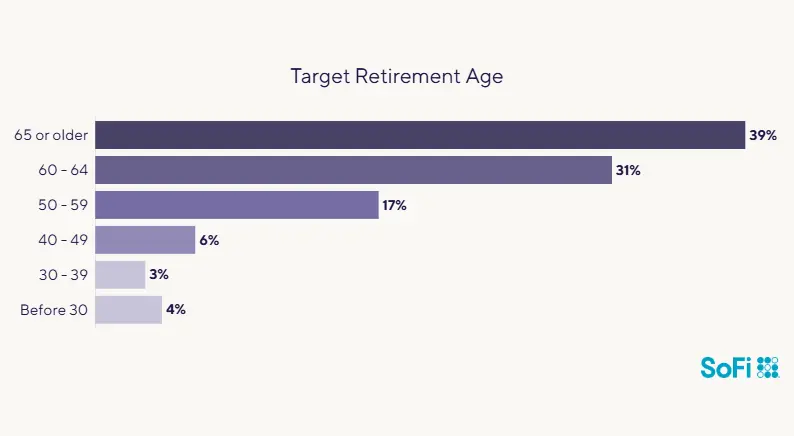
Target Retirement Age
Source: SoFi’s 2024 Retirement Survey

Social Security Early Retirement

A recipient’s benefits will be permanently reduced if they retire before full retirement age. That’s because the earlier a person retires, the less they’ll receive in Social Security.

Let’s use Jane Doe as an example and say she was born in 1960, so full retirement age is 67. If she retires at age 66, she’ll receive 93.3% of Social Security benefits; at age 65 will get Jane 86.7%. If she retires on her 62nd birthday — the earliest she can receive Social Security — she’ll only receive 70% of earnings.

Here’s a retirement planner table for those born in 1960, which shows how one’s benefits will be reduced with early retirement.

How Early Retirement Affects Your Social Security Benefits
Source: Social Security Administration

Social Security Late Retirement

If a person wants to keep working until after full retirement age, they could earn greater monthly benefits. This is helpful to know when choosing your retirement date.

For example, if the magic retirement number is 66 years but retirement is pushed back to 66 and one month, then Social Security benefits rise to 100.7% per month. So if your monthly benefit was supposed to be $1,000, but you wait until 66 years and one month, then your monthly allotment would increase to $1,007.

If retirement is pushed back to age 70, earnings go up to 132% of monthly benefits. But no need to calculate further: Social Security benefits stop increasing once a person reaches age 70. Here is a SSA table on delayed retirement .

Get a 1% IRA match on rollovers and contributions.

Double down on your retirement goals with a 1% match on every dollar you roll over and contribute to a SoFi IRA.1


1Terms and conditions apply. Roll over a minimum of $20K to receive the 1% match offer. Matches on contributions are made up to the annual limits.

Other Retirement Income to Consider

In retirement, you may have other income sources that can help you support your lifestyle and pay the bills. These might include:

Part-Time Work

Working after retirement by getting a part-time job, especially if it’s one you enjoy, could help cover your retirement expenses. And as long as you have reached your full retirement age (which is based on your year of birth, as noted above), your Social Security benefits will not be reduced, no matter what your earnings are.

However, if you retire early, you need to earn under an annual limit, which is $23,400 in 2025, to keep your full benefits. If you earn more than that, you’ll lose $1 in Social Security benefits for every $2 you earn over the limit. (Note that if some of your retirement benefits are withheld because of your earnings, your monthly benefit will increase once you reach full retirement age, taking into account the withheld benefits.)

Pension

A pension plan, also sometimes known as a defined benefits plan, from your employer is usually based on how long you worked at your company, how much you earned, and when you stopped working. You’ll need to be fully vested, which typically means working at the company for five years, to collect the entire pension. Check with the HR rep at your company to get the full details about your pension.

A pension generally gives you a set monthly sum for life or a lump sum payment when you retire.

Inheritance

If you inherit money from a relative, these funds could also help you pay for your retirement. And fortunately, receiving an inheritance won’t affect your Social Security benefits, because Social Security is based on money you earn.

Rental Income

Another potential money-earning idea: You could rent out a home you own, or rent out just the upper floors of the house you live in, for some extra income in retirement. Like an inheritance, rental income will generally not affect your Social Security benefits.

Major Expenses in Retirement

It’s important to draw up a budget for retirement to help determine how much money you might need. The amount may be higher than you realize — which is one of the reasons it’s beneficial to start saving early. In SoFi’s retirement survey, more than half of respondents (51%) say they started saving before age 35.
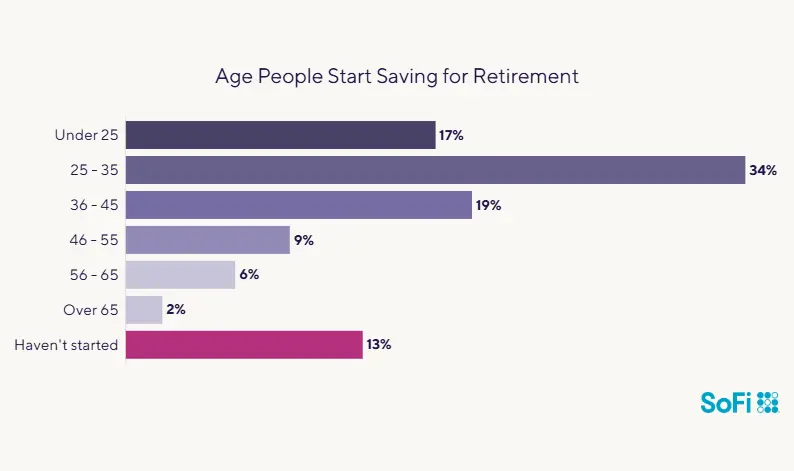
Age People Start Saving for Retirement
Source: SoFi’s 2024 Retirement Survey

As you put together your retirement budget, these are some of the major expenses retirees commonly face.

Healthcare

For most people, health care costs increase as they get older, as medical problems can become more serious or pervasive. According to Fidelity, based on 2024 numbers, the average amount that a couple who are both age 65 will spend on health care during their first year of retirement is $12,800.

Housing

Your mortgage, home insurance, and the costs of maintaining your house can be a significant monthly and yearly expense. In fact, according to the Bureau of Labor Statistics’ 2023 Consumer Expenditures report, Americans aged 65 and older spent an average of $21,445 on housing in 2023.

Travel

If you’re planning to take trips in retirement, or even just drive to visit family, transportation costs can quickly add up. The Bureau of Labor Statistics Consumer Expenditures report found that in 2023, people over age 65 averaged about $9,033 in transportation costs a year, including vehicles, maintenance, gas, and insurance.


💡 Quick Tip: You can’t just sit on the money you save in a traditional IRA account forever. The government requires withdrawals each year, starting at age 73 (for those born in 1950 or later). These are called required minimum distributions or RMDs.

When Can You Withdraw From Retirement Accounts?

Now that you have a sense of your expenses in retirement, let’s look at retirement accounts. Each type of account has different rules about when money can be taken out.

If a Roth IRA account has existed for at least five years, withdrawals can generally be taken from the account after age 59 ½ without consequences. These are known as qualified withdrawals. Taking out money earlier or withdrawing money from a Roth IRA that’s been open for fewer than five years could result in paying penalties and taxes.

There is a little wiggle room. Contributions (but not earnings) can be withdrawn at any time without penalty, no matter the age of the account holder or the age of the account.

Roth IRA withdrawal rules also have some exceptions. Qualified withdrawals may be made from an account that’s been open at least five years for the purchase of a first home (up to a $10,000 lifetime limit), due to a disability, or after the account holder’s death to be paid to their estate or a beneficiary.

People with a traditional IRA can make withdrawals after age 59 ½ without being penalized. The government will charge a 10% penalty on withdrawals before age 59 ½. There are some exceptions, such as the purchase of a first home (up to a $10,000 lifetime limit), some medical and educational expenses, disability, and death.

People with 401(k)s can make withdrawals after age 59 ½ without paying a 10% penalty. Again, there are some exceptions. For example, an individual can generally retire at age 55 and make withdrawals without penalty. There are also exceptions for those under age 59 ½ for hardship withdrawals, disability, and death, among others.

It’s important to be aware that with a traditional IRA and a 401(k), individuals must start making required minimum distributions (RMDs) by age 73 or face a penalty.


Test your understanding of what you just read.


The Takeaway

Deciding at what age to retire is a personal choice. However, by planning ahead for some common expenses, and understanding the age at which you can get full Social Security benefits, you can use a retirement calculator formula to estimate how much money you’ll need each year to live on. And you can supplement your Social Security benefits with other forms of income and by making smart decisions about savings and investments.

Ready to invest for your retirement? It’s easy to get started when you open a traditional or Roth IRA with SoFi. SoFi doesn’t charge commissions, but other fees apply (full fee disclosure here).

Easily manage your retirement savings with a SoFi IRA.

FAQ

How do I calculate my retirement age?

To calculate your full retirement age, which is the age you can receive your full retirement benefits, you can use the Social Security administration’s retirement age calculator . Essentially, if you were born in 1960 or later, your full retirement age is 67. For those born between 1954 and 1959, the full retirement age is between 66 and 67, depending exactly how old they are when they retire (such as age 66 and two months). And for those born between 1943 and 1954, full retirement age is 66.

The earlier you retire before your full retirement age, the less you’ll receive in benefits. Conversely, the longer you keep working, up to age 70, the more you can receive.

Can you legally retire before 55?

Yes, you can legally retire before age 55. However, your Social Security benefits typically won’t kick in until age 62. And even then, because you’ll be tapping into those benefits before your full retirement age of 66 or 67, you’ll get a reduced amount.

The rule of 55 generally allows you to withdraw funds from a 401(k) or 403(b) at age 55 without paying a penalty. That may be something to look into if you’re planning to retire early.

Can you retire after 20 years of work?

In some lines of work, you can retire after 20 years on the job and likely get a pension. This includes those in the military, firefighters, police officers, and certain government employees.

That said, anyone in any industry can retire at any time. However, Social Security benefits don’t typically begin until age 62.


INVESTMENTS ARE NOT FDIC INSURED • ARE NOT BANK GUARANTEED • MAY LOSE VALUE

SoFi Invest is a trade name used by SoFi Wealth LLC and SoFi Securities LLC offering investment products and services. Robo investing and advisory services are provided by SoFi Wealth LLC, an SEC-registered investment adviser. Brokerage and self-directed investing products offered through SoFi Securities LLC, Member FINRA/SIPC.

For disclosures on SoFi Invest platforms visit SoFi.com/legal. For a full listing of the fees associated with Sofi Invest please view our fee schedule.

Financial Tips & Strategies: The tips provided on this website are of a general nature and do not take into account your specific objectives, financial situation, and needs. You should always consider their appropriateness given your own circumstances.

Disclaimer: The projections or other information regarding the likelihood of various investment outcomes are hypothetical in nature, do not reflect actual investment results, and are not guarantees of future results.

Third-Party Brand Mentions: No brands, products, or companies mentioned are affiliated with SoFi, nor do they endorse or sponsor this article. Third-party trademarks referenced herein are property of their respective owners.

Third Party Trademarks: Certified Financial Planner Board of Standards Center for Financial Planning, Inc. owns and licenses the certification marks CFP®, CERTIFIED FINANCIAL PLANNER®

External Websites: The information and analysis provided through hyperlinks to third-party websites, while believed to be accurate, cannot be guaranteed by SoFi. Links are provided for informational purposes and should not be viewed as an endorsement.

SOIN-Q325-038

Read more
Can You Have Multiple IRAs?

Can You Have Multiple IRAs?

In theory, there’s no limit to how many individual retirement accounts (IRAs) one person can have. A retirement saver could potentially maintain more than one traditional IRA, Roth IRA, rollover IRA, or simplified employee pension (SEP) IRA in order to gain certain tax advantages now, and potentially down the road.

That said, the rules governing these different IRA accounts vary considerably, and combining many IRAs — without running afoul of contribution limits or creating tax issues — can be difficult.

How Many Roth and Traditional IRAs Can You Have?

As mentioned above, you may open any number of individual retirement accounts (IRAs). The Internal Revenue Service (IRS) does not limit the number of IRAs you can have and will not penalize you for having multiple IRAs in your name, as long as you follow the rules and contribution limits for each account.

One or more IRAs could work in tandem with a 401(k) workplace retirement plan. For instance, you might put part of each paycheck into a 401(k) plan at work while also maxing out your traditional IRA contributions every year. There might be restrictions, though, about the amount you can deduct.

An individual’s annual contribution limit — for traditional and Roth IRAs combined — is $7,000 ($8,000 for savers ages 50 or older) for the 2025 tax year. For tax year 2026, the limit is $7,500 ($8,600 for those ages 50 or older).

Recommended: What is an IRA?

Types of IRA

The two main account types are the traditional IRA and the Roth IRA. Again, your traditional IRA withdrawals are taxed at your ordinary income tax rate in retirement while Roth IRA money can be withdrawn tax-free.

With a traditional IRA, contributions can provide tax deductions when the money is deposited. Qualified distributions are taxed as ordinary income in retirement. Funds distributed before the account holder reaches age 59 ½ are usually subject to an added 10% tax.

Roth IRA contributions do not qualify for a deduction when deposited. However, when the account holder reaches age 59 ½, the money may be withdrawn tax-free. As with traditional IRAs, you can have multiple Roth IRAs.

There is a third type of IRA, the SEP IRA. These IRAs have higher contribution limits: up to $70,000 for tax year 2025 and $72,000 for tax year 2026, or 25% of compensation, whichever is less. But because these are employer-funded plans, they follow a different set of rules.

If you are self-employed and contributing to a SEP IRA on your own behalf, or if you work for a company with a SEP plan, you may or may not have the option of making traditional IRA contributions — but you could likely contribute to a Roth in addition to the SEP.

You may want to consult with a professional so you don’t over-contribute — or contribute less than you could have — or miss out on any of the potential tax benefits.

Advantages and Disadvantages of Multiple IRAs

Whether it makes sense for you to have multiple IRAs can depend on many factors, including your investment goals, financial situation, marital status, and career plans.

Advantages

Here are some of the chief advantages of maintaining more than one IRA:

•   Tax management. Traditional IRAs and Roth IRAs are taxed differently, as mentioned above. Also, traditional IRAs are subject to required minimum distributions (RMDs), which can increase your taxable income in retirement, while Roth IRAs are not. Having money in both types of IRA could make your retirement investing more tax-efficient.

•   Diversification. Diversification can help manage investment risk. Holding money in multiple IRAs, each with a different investment strategy, could help you create a diversified portfolio.

   Diversification may also benefit you from a tax perspective if you keep less tax-efficient investments in a traditional IRA and more tax-efficient ones in a Roth IRA.

•   Access. Traditional IRAs do not permit early withdrawals before age 59 ½ without triggering a tax penalty. You can, however, withdraw your original contributions from a Roth IRA at any time without owing income tax or penalties on those distributions. Having one IRA of each type could make it less expensive for you to withdraw money early if needed. This is possible whether investing online or not.

•   Avoiding RMDs. Traditional IRAs are subject to RMD rules, which dictate that you must begin taking minimum IRA distributions at age 72. If you don’t, the IRS can levy a steep tax penalty. Roth IRAs aren’t subject to RMD rules, so they could help you hang on to more assets as you age.

Disadvantages

Opening and funding multiple IRAs isn’t always an optimal strategy. Here are some disadvantages that may make you reconsider having several IRAs:

•   Contribution limits. The IRS caps the amount you can contribute in a given year. For 2024, your total contributions to all your IRAs cannot exceed $7,000 (or $8,000 if you’re 50 or older). For 2025, your total contributions to all your IRAs cannot exceed $7,000 (or $8,000 if you’re 50 or older). For 2026, your total contributions to all your IRAs cannot exceed $7,500 (or $8,600 if you’re 50 or older). So having multiple IRAs doesn’t give you an edge in saving up for retirement.

•   Overweighting. When a significant share of your asset allocation is dedicated to a single stock, security, or sector, your portfolio is overweight. This overexposure can heighten your risk profile, such that a downturn in that investment could drag down your entire portfolio. Having multiple IRAs may put you at risk of being overweight if you’re not careful about reviewing the holdings in each account.

•   Fees. Brokerages often charge various fees to maintain IRAs. Plus, within each IRA, you may have to pay additional fees for specific investments. For example, a mutual fund has an annual ownership cost signified by its expense ratio. If you’re not paying attention to each IRA’s fees, it’s possible that you could overpay and shrink your investment returns.

•   Organization. Having multiple IRAs could present an organizational burden in the form of additional paperwork or, if you manage your IRAs online, logging in to multiple brokerages or robo-advisor platforms. You may also worry about increased risk for cybercrime.

Reasons You Might Want More Than One IRA

Evaluating your investment goals can help you decide if having more than one IRA makes sense for you. But you may need extra accounts if you’re:

•   Rolling over a 401(k). When separating from your employer, you could leave your 401(k) money where it is or roll it into a traditional IRA instead. If you open a rollover IRA and already have a Roth account too, you may end up with multiple IRAs.

•   Planning a backdoor Roth. Roth IRAs offer tax-free distributions but there’s a catch: To fund one, you have to meet eligibility requirements pertaining to your income and filing status. People who are over the income limit sometimes work around it by setting up a traditional IRA and later transferring some of that money to a Roth IRA. Taxes are levied on the transferred amount. This arrangement is known as a Roth conversion or backdoor Roth.

•   Married and the sole income-earner. The IRS allows married couples who file a joint tax return to each contribute to IRAs, even when one spouse does not have taxable compensation. So if you’re the breadwinner in your relationship, you could set up an IRA for yourself and open a spousal IRA to make contributions on behalf of your spouse.

•   Self-employed or plan to be. People who are self-employed can use traditional, Roth, or SEP IRAs to save for retirement. You might end up with multiple IRAs if you were an employee who had a traditional or Roth IRA, then later went out on your own as an entrepreneur. You could then open a SEP IRA, which allows for tax-deductible contributions and a higher annual contribution limit ($70,000 in 2025, and $72,000 in 2026).

Reasons You Might Want Your IRAs With Different Companies

Whether you’re planning to open your first IRA or your fifth, it’s important to choose the right place to keep your retirement savings. You can open an IRA with a traditional broker, an online brokerage, or sometimes at your bank or credit union.

So why would you want to have your IRAs in different places? Two big reasons for that center on investment options and insurance.

Setting up IRAs at different brokerages could offer you greater exposure to a wider variety of investments. Every brokerage has its own policies on IRA assets. One brokerage might lean almost exclusively toward investing in exchange-traded funds (ETFs) or index funds, for example, while another might allow you to purchase individual stocks or bonds through your IRA.

You can also benefit from increased insurance coverage. The Securities Investor Protection Corporation (SIPC) insures Roth IRAs and other eligible investment accounts up to $500,000 per person. Under those rules, you could have a traditional IRA at one brokerage and a Roth IRA at another and they’d both be covered up to $500,000.

Note: SIPC coverage only protects you against the possibility of your brokerage failing, not against any financial losses associated with changes in the value of your investments.

How to Transfer an IRA to Another Investment Company

It’s fairly straightforward to move an IRA from one brokerage to another. First you need to set up an IRA at the new brokerage. Then you’d contact your current brokerage to initiate the transfer of some or all of your IRA funds.

You can request a trustee-to-trustee transfer, which allows your current IRA company to move the money to the new IRA on your behalf. No taxes are withheld on the transfer amount and you also avoid the risk of triggering a tax penalty.

The IRS also allows 60-day rollovers, in which you get a distribution from your existing IRA then redeposit it into your new retirement account. Taxes are withheld, so you’ll have to make that amount up when you deposit the money to your new IRA. If you fail to complete the rollover within 60 days, the IRS treats the deal as a taxable distribution.

The Takeaway

Investing in multiple IRAs is perfectly legal and, in theory, you can have an unlimited number of them. The IRS’s annual limits on contributions apply across all your accounts, however. Traditional and Roth IRAs have different tax rules and can sometimes be useful to offset each other. SEP IRAs offer the potential to save more, thanks to their higher contribution limits. Wage earners can often contribute to separate accounts for their non-working spouses, potentially doubling the amount of allowable contributions.

If you have yet to set up an IRA, getting started is easier than you might think. With SoFi Invest, you can open a traditional or Roth IRA. And you may want to consider doing a rollover IRA, where you roll over old 401(k) funds so that you can better manage all your retirement money.

SoFi makes the rollover process seamless and simple, so you don’t have to worry about transferring funds yourself, or potentially incurring a penalty. There are no rollover fees, and you can complete your 401(k) rollover without a lot of time or hassle.

Help grow your nest egg with a SoFi IRA.

FAQ

Does it make sense to have multiple IRAs?

Having more than one IRA could make sense for some people, depending on their investment strategies. When maintaining multiple IRAs, the most important thing to keep in mind are the limits on annual contributions. It’s also helpful to weigh the investment options offered and the fees you might pay to own multiple IRAs.

Can I have both a traditional and a Roth IRA?

Yes, you can have both a traditional IRA and a Roth IRA. However, your total contribution to all your IRAs cannot exceed the annual limits allowed by the IRS.

How many Roth IRAs can I have?

A person can have any number of Roth IRAs. The IRS does, however, set guidelines on who can contribute to a Roth IRA and the maximum amount you can contribute each year.


About the author

Rebecca Lake

Rebecca Lake

Rebecca Lake has been a finance writer for nearly a decade, specializing in personal finance, investing, and small business. She is a contributor at Forbes Advisor, SmartAsset, Investopedia, The Balance, MyBankTracker, MoneyRates and CreditCards.com. Read full bio.


Photo credit: iStock/Prostock-Studio

INVESTMENTS ARE NOT FDIC INSURED • ARE NOT BANK GUARANTEED • MAY LOSE VALUE

SoFi Invest is a trade name used by SoFi Wealth LLC and SoFi Securities LLC offering investment products and services. Robo investing and advisory services are provided by SoFi Wealth LLC, an SEC-registered investment adviser. Brokerage and self-directed investing products offered through SoFi Securities LLC, Member FINRA/SIPC.

For disclosures on SoFi Invest platforms visit SoFi.com/legal. For a full listing of the fees associated with Sofi Invest please view our fee schedule.

Investment Risk: Diversification can help reduce some investment risk. It cannot guarantee profit, or fully protect in a down market.

SOIN0322050
CN-Q425-3236452-01

Read more
What Happens to a 401k When You Leave Your Job?

What Happens to Your 401(k) When You Leave Your Job?

There are many important decisions to make when starting a new job, including what to do with your old 401(k) account. Depending on the balance of the old account and the benefits offered at your new job, you may have several options, including keeping it where it is, rolling it over into a brand new account, or cashing it out.

A 401(k) may be an excellent way for workers to build a retirement fund, as it allows them to save for retirement on a tax-advantaged basis, and many employers offer matching contributions.

Key Points

  • When leaving a job, you have options for your 401(k) account, including leaving it with your former employer, rolling it over into a new account, or cashing it out.
  • If your 401(k) balance is less than $7,000, your former employer may cash out the funds or roll them into another retirement account in your name.
  • If you have more than $7,000 in your 401(k), your former employer cannot force you to cash out or roll over the funds without your permission.
  • If you quit or are fired, you may lose employer contributions that are not fully vested.
  • It is important to consider the tax implications, penalties, and long-term financial security before making decisions about your 401(k) when leaving a job.

A Quick 401(k) Overview

A 401(k) is a type of retirement savings plan many employers offer that allows employees to save and invest with tax advantages. With a 401(k) plan, an employer will automatically deduct workers’ contributions to the account from their paychecks before taxes are taken out.

In 2025, employees can contribute up to $23,500 a year in their 401(k)s, up from $23,000 in 2024. Employees aged 50 and older can make catch-up contributions of $7,500 a year for a total of $31,000 in 2025, up from $30,500 in 2024. Also in 2025, those aged 60 to 63 may contribute an additional $11,250 instead of $7,500, for an annual total of $34,750.[1]

Employees will invest the funds in a 401(k) account in several investment options, depending on what the employer and their 401(k) administrator offer, such as stocks, bonds, mutual funds, and target date funds.

The money in a 401(k) account grows tax-free until the employee withdraws it, typically after reaching age 59 ½. At that point, the employee must pay taxes on the money withdrawn. However, if the employee withdraws money before reaching 59 ½, they will typically have to pay 401(k) withdrawal taxes and penalties.

Some employers also offer matching contributions, which are additional contributions to an employee’s account based on a certain percentage of the employee’s own contributions. Employers may use 401(k) vesting schedules to determine when employees can access these contributions.

Generally, the more you can save in a 401(k), the better. If you can’t max out your 401(k) contributions, start by contributing at least enough money to qualify for your employer’s 401(k) match if they offer one.

What Happens to Your 401(k) When You Quit Your Job?

When you quit your job, you generally have several options for your 401(k) account. You can leave the money in the account with your former employer, roll it into a new employer’s 401(k) plan, move it over to an IRA rollover, or cash it out.

However, if your 401(k) account has less than $7,000, your former employer may not allow you to keep it open. If there is less than $1,000 in your account, your former employer may cash out the funds and send them to you via check. If there is between $1,000 and $7,000 in the account, your employer may roll it into another retirement account in your name, such as an IRA. You may also suggest a specific IRA for the rollover.

With most 401(k) plans, if you have more than $7,000 in your account, your funds can usually remain in the account indefinitely.

Also, if you quit your job and you are not fully vested, you forfeit your employer’s contributions to your 401(k). But you do get to keep your vested contributions.

Is There Any Difference if You’re Fired?

If you are fired from your job, your 401(k) account options are similar to those if you quit your job. As noted above, you can leave the money in the account with your former employer, roll it into a new employer’s 401(k) plan, roll it over into an IRA, or cash it out. The same account limits mentioned above apply as well.

Additionally, if you are fired from your job, you may be eligible for a severance package, which may include a lump sum payment or continuation of benefits, including a 401(k) plan. But these benefits depend on your company and the circumstances surrounding your termination. And, like with quitting your job, you do not get to keep any employer contributions that are not fully vested.

How Long Do You Have to Move Your 401(k)?

If you leave your job, you don’t necessarily have to move your 401(k). Depending on the amount you have in the 401(k), you can usually keep it with your previous employer’s 401(k) administrator.

But if you do choose to roll over your 401(k) as an indirect rollover, you typically have 60 days from the date of distribution to roll over your 401(k) account balance into an IRA or another employer’s 401(k) plan. If you fail to roll over the funds within 60 days, the distribution will be subject to taxes and penalties, and if you are under 59 ½ years old, an additional 10% early withdrawal penalty.

Get a 1% IRA match on rollovers and contributions.

Double down on your retirement goals with a 1% match on every dollar you roll over and contribute to a SoFi IRA.1


1Terms and conditions apply. Roll over a minimum of $20K to receive the 1% match offer. Matches on contributions are made up to the annual limits.

Next Steps for Your 401(k) After Leaving a Job

As you decide what to do with your funds, you have several options, from cashing out to rolling over your 401(k)s to expanding your investment opportunities.

Cash Out Your 401(k)

You can cash out some or all of your 401(k), but in most cases, there are better choices than this from a personal finance perspective. As noted above, if you are younger than 59 ½, you may be slammed with income taxes and a 10% early withdrawal penalty, which can set you back in your ability to save for your future.

If you are age 55 or older, you may be able to draw down your 401(k) penalty-free thanks to the Rule of 55. But remember, when you remove money from your retirement account, you no longer benefit from tax-advantaged growth and reduce your future nest egg.

Roll Over Your 401(k) Into a New Account

Your new employer may offer a 401(k). If this is the case and you are eligible to participate, you may consider rolling over the funds from your old account. This process is relatively simple. You can ask your old 401(k) administrator to move the funds from one account directly to the other in what is known as a direct transfer.

Doing this as a direct transfer rather than taking the money out yourself is important to avoid triggering early withdrawal fees. A rollover into a new 401(k) has the advantage of consolidating your retirement savings into one place; there is only one account to monitor.

Keep Your 401(k) With Your Previous Employer

If you like your previous employer’s 401(k) administrator, its fees, and investment options, you can always keep your 401(k) where it is rather than roll it over to an IRA or your new employer’s 401(k).

However, keeping your 401(k) with your previous employer may make it harder to keep track of your retirement investments because you’ll end up with several accounts. It’s common for people to lose track of old 401(k) accounts.

Moreover, you may end up paying higher fees if you keep your 401(k) with your previous employer. Usually, employers cover 401(k) fees, but if you leave the company, they may shift the cost onto you without you realizing it. High fees may end up eating into your returns, making it harder to save for retirement.

Does Employer Match Stop After You Leave?

Once you leave a job, whether you quit or are fired, you will no longer receive the matching employer contributions.

Look for New Investment Options

If you don’t love the investment options or fees in your new 401(k), you may roll the funds over into an IRA account instead. Rolling assets into a traditional IRA is relatively simple and can be done with a direct transfer from your 401(k) plan administrator. You also may be allowed to roll a 401(k) into a Roth IRA, but you’ll have to pay taxes on the amount you convert.

The advantage of rolling funds into an IRA is that it may offer a more comprehensive array of investment options. For example, a 401(k) might offer a handful of mutual or target-date funds. In an IRA, you may have access to individual securities like stocks and bonds and a wide variety of mutual funds, index funds, and exchange-traded funds.


Test your understanding of what you just read.


The Takeaway

Changing jobs is an exciting time, whether or not you’re moving, and it can be a great opportunity to reevaluate what to do with your retirement savings. Depending on your financial situation, you could leave the funds where they are or roll them over into your new 401(k) or an IRA. You can also cash out the account, but that may harm your long-term financial security because of taxes, penalties, and loss of a tax-advantaged investment account.

Ready to invest for your retirement? It’s easy to get started when you open a traditional or Roth IRA with SoFi. SoFi doesn’t charge commissions, but other fees apply (full fee disclosure here).

Help build your nest egg with a SoFi IRA.

FAQ

How long can a company hold your 401(k) after you leave?

A company can hold onto an employee’s 401(k) account indefinitely after they leave, but they are required to distribute the funds if the employee requests it or if the account balance is less than $7,000.

Can I cash out my 401(k) if I quit my job?

You can cash out your 401(k) if you quit your job. However, experts generally do not advise cashing out a 401(k), as doing so will trigger taxes and penalties on the withdrawn amount. Instead, it is usually better to either leave the funds in the account or roll them over into a new employer’s plan or an IRA.

What happens if I don’t rollover my 401(k)?

If you don’t roll over your 401(k) when you leave a job, the funds will typically remain in the account and be subject to the rules and regulations of the plan. If the account balance is less than $7,000, the employer may roll over the account into an IRA or cash out the account. If the balance is more than $7,000, the employer may offer options such as leaving the funds in the account or rolling them into an IRA.

Article Sources

Photo credit: iStock/chengyuzheng

INVESTMENTS ARE NOT FDIC INSURED • ARE NOT BANK GUARANTEED • MAY LOSE VALUE

SoFi Invest is a trade name used by SoFi Wealth LLC and SoFi Securities LLC offering investment products and services. Robo investing and advisory services are provided by SoFi Wealth LLC, an SEC-registered investment adviser. Brokerage and self-directed investing products offered through SoFi Securities LLC, Member FINRA/SIPC.

For disclosures on SoFi Invest platforms visit SoFi.com/legal. For a full listing of the fees associated with Sofi Invest please view our fee schedule.

Financial Tips & Strategies: The tips provided on this website are of a general nature and do not take into account your specific objectives, financial situation, and needs. You should always consider their appropriateness given your own circumstances.

¹Claw Promotion: Probability of Member receiving $1,000 is a probability of 0.026%; If you don’t make a selection in 45 days, you’ll no longer qualify for the promo. Customer must fund their account with a minimum of $50.00 to qualify. Probability percentage is subject to decrease. See full terms and conditions.

Mutual Funds (MFs): Investors should carefully consider the information contained in the prospectus, which contains the Fund’s investment objectives, risks, charges, expenses, and other relevant information. You may obtain a prospectus from the Fund company’s website or clicking the prospectus link on the fund's respective page at sofi.com. You may also contact customer service at: 1.855.456.7634. Please read the prospectus carefully prior to investing.Mutual Funds must be bought and sold at NAV (Net Asset Value); unless otherwise noted in the prospectus, trades are only done once per day after the markets close. Investment returns are subject to risk, include the risk of loss. Shares may be worth more or less their original value when redeemed. The diversification of a mutual fund will not protect against loss. A mutual fund may not achieve its stated investment objective. Rebalancing and other activities within the fund may be subject to tax consequences.

Tax Information: This article provides general background information only and is not intended to serve as legal or tax advice or as a substitute for legal counsel. You should consult your own attorney and/or tax advisor if you have a question requiring legal or tax advice.

Third Party Trademarks: Certified Financial Planner Board of Standards Center for Financial Planning, Inc. owns and licenses the certification marks CFP®, CERTIFIED FINANCIAL PLANNER®

SOIN-Q225-161

Read more
401(k) Vesting: What Does Vested Balance Mean?

401(k) Vesting: What Does Vested Balance Mean?

Your vested 401(k) balance is the portion of your 401(k) you fully own and can take with you when you leave your employer. This amount includes your employee contributions, which are always 100% vested, any investment earnings, and your employer’s contributions that have passed the required vesting period.

Here’s a deeper look at what being vested means and the effect it can have on your retirement savings.

Key Points

•   401(k) vesting refers to when ownership of an employer’s contributions to a 401(k) account shifts to the employee.

•   401(k) contributions made by employees are always 100% vested; that means they own them outright.

•   Vesting schedules vary, but employees become 100% vested after a specified number of years.

•   401(k) vesting incentivizes employees to stay with their current employer and to contribute to their 401(k).

•   Companies may use immediate, cliff, or graded vesting schedules for their 401(k) plans.

What Does Vested Balance Mean?

The vested balance is the amount of money in your 401(k) that belongs to you and cannot be taken back by an employer when you leave your job — even if you are fired.

The contributions you make to your 401(k) are automatically 100% vested. Vesting of employer contributions typically occurs according to a set timeframe known as a vesting schedule. When employer contributions to a 401(k) become vested, it means that the money is now entirely yours.

Having a fully vested 401(k) means that employer contributions will remain in your account when you leave the company. It also means that you can decide to roll over your balance to a new account, start making withdrawals, or take out a loan against the account, if your plan allows it. However, keeping a vested 401(k) invested and letting it grow over time may be one of the best ways to save for retirement.

How 401(k) Vesting Works

401(k) vesting refers to the process by which employees become entitled to keep the money that an employer may have contributed to their 401(k) account. Vesting schedules can vary, but most 401(k) plans have a vesting schedule that requires employees to stay with the company for a certain number of years before they are fully vested.

For example, an employer may have a vesting schedule requiring employees to stay with the company for five years before they are fully vested in their 401(k) account. If an employee were to leave the company before reaching that milestone, they could forfeit some or all of the employer-contributed money in the 401(k) account. The amount an employee gets to keep is the vested balance. Other qualified defined contribution plans, such as 401(a) plans or 403(b) plans, may also be subject to vesting schedules.

Recommended: What Happens to Your 401(k) When You Leave a Job?

Get a 1% IRA match on rollovers and contributions.

Double down on your retirement goals with a 1% match on every dollar you roll over and contribute to a SoFi IRA.1


1Terms and conditions apply. Roll over a minimum of $20K to receive the 1% match offer. Matches on contributions are made up to the annual limits.

Importance of 401(k) Vesting

401(k) vesting is important because it determines when an employee can keep the employer’s matching contributions to their retirement account. Vesting schedules can vary, but typically after an employee has been with a company for a certain number of years, they will be 100% vested in the employer’s contributions.

401(k) Vesting Eligibility

401(k) vesting eligibility is the time an employee must work for their employer before they are eligible to receive the employer’s contribution to their 401(k) retirement account. The vesting period varies depending on the employer’s plan.

401(k) Contributions Basics

Before understanding vesting, it’s important to know how 401(k) contributions work. A 401(k) is a tax-advantaged, employer-sponsored retirement plan that allows employees to contribute a portion of their salary each pay period, usually on a pre-tax basis.

For tax year 2025, employees can contribute up to $23,500 annually in their 401(k), with an extra $7,500 in catch-up contributions allowed for those age 50 or older. For 2025, those aged 60 to 63 may contribute an additional $11,250 instead of $7,500, thanks to SECURE 2.0.

The Internal Revenue Service (IRS) also allows employers to contribute to their employees’ plans. Often these contributions come in the form of an employer 401(k) match. For example, an employer might offer matching contributions of 3% or 6% if an employee chooses to contribute 6% of their salary to the 401(k).

In 2025, the total contributions that an employee and employer can make to a 401(k) is $70,000 ($77,500 including standard catch-up contributions, and $81,250 with SECURE 2.0 catch-up for those aged 60 to 63).

Employer contributions are a way for businesses to encourage employees to save for retirement. They’re also an important benefit that job seekers look for when searching for new jobs.

Recommended: How To Make Changes to Your 401(k) Contributions

Benefits of 401(k) Vesting

There are several benefits of 401(k) vesting, including motivating employees to stay with a company for the long term because they know they will eventually vest and be able to keep the money they have contributed to their 401(k). Additionally, it incentivizes employees to contribute to a 401(k) because they know they will eventually be fully vested and be entitled to all the money in their account.

401(k) vesting also gives employees a sense of security, knowing they will not lose the money they have put into their retirement savings if they leave their job.

Drawbacks of 401(k) Vesting

While 401(k) vesting benefits employees, there are also some drawbacks. For one, vesting can incentivize employees to stay with their current employer, even if they want to leave their job. Employees may be staying in a job they’re unhappy with just to wait for their 401(k) to be fully vested.

Also, using a 401(k) for investing can create unwanted tax liability and fees. When you withdraw money from a 401(k) before age 59 ½, you’ll typically have to pay a 10% early withdrawal penalty and taxes. This can eat into the money you were hoping to use for retirement.

How Do I Know if I Am Fully Vested in my 401(k)?

If you’re unsure whether or when you will be fully vested, you can check their plan’s vesting schedule, usually on your online benefits portal.

Immediate Vesting

Immediate vesting is the simplest form of vesting schedule. Employees own 100% of contributions right away.

Cliff Vesting

Under a cliff vesting schedule, employer contributions are typically fully vested after a certain period of time following a job’s start date, usually three years.

Graded Vesting

Graded vesting is a bit more complicated. A percentage of contributions vest throughout a set period, and employees gain gradual ownership of their funds. Eventually, they will own 100% of the money in their account.

For example, a hypothetical six-year graded vesting schedule might look like this:

Years of Service

Percent Vested

1 0%
2 20%
3 40%
4 60%
5 80%
6 100%

What Happens If I Leave My Job Before I’m Fully Vested?

If you leave your job before being fully vested, you forfeit any unvested portion of their 401(k). The amount of money you’d lose depends on your vesting schedule, the amount of the contributions, and their performance. For example, if your employer uses cliff vesting after three years and you leave the company before then, you won’t receive any of the money your employer has contributed to their plan.

If, on the other hand, your employer uses a graded vesting schedule, you will receive any portion of the employer’s contributions that have vested by the time they leave. For example, if you are 20% vested each year over six years and leave the company shortly after year three, you’ll keep 40% of the employer’s contributions.

Other Common Types of Vesting

Aside from 401(k)s, employers may offer other forms of compensation that also follow vesting schedules, such as pensions and stock options. These tend to work slightly differently than vested contributions, but pensions and stock options may vest immediately or by following a cliff or graded vesting schedule.

Stock Option Vesting

Employee stock options give employees the right to buy company stock at a set price at a later date, regardless of the stock’s current value. The idea is that between the time an employee is hired and their stock options vest, the stock price will have risen. The employee can then buy and sell the stock to potentially make a profit.

Pension Vesting

With a pension plan, vesting schedules determine when employees are eligible to receive their full benefits.

How Do I Find Out More About Vesting?

There are a few ways to learn more about vesting and your 401(k) vested balance. This information typically appears in the 401(k) summary plan description or the annual benefits statement.

Generally, a company’s plan administrator or human resources department can also explain the vesting schedule in detail and pinpoint where you are in your vesting schedule. Understanding this information can help you know the actual value of your 401(k) account.


Test your understanding of what you just read.


The Takeaway

While any employee contributions to 401(k) plans are immediately fully vested, the same is not always true of employer contributions. The employee may gain access to employer contributions slowly over time or all at once after the company has employed them for several years.

Understanding vesting and your 401(k)’s vesting schedule is one more piece of information that can help you plan for your financial future. A 401(k) and other retirement accounts like a traditional or Roth IRA can be essential components of a retirement savings plan. Knowing when you are fully vested in a 401(k) can help you understand how much money might be available when you retire.

Ready to invest for your retirement? It’s easy to get started when you open a traditional or Roth IRA with SoFi. SoFi doesn’t charge commissions, but other fees apply (full fee disclosure here).

Help build your nest egg with a SoFi IRA.

🛈 While SoFi does not offer 401(k) plans at this time, we do offer a range of individual retirement accounts (IRAs).

FAQ

What does 401(k) vesting mean?

401(k) vesting is when an employee becomes fully entitled to the employer’s matching contributions to the employee’s 401(k) account. Vesting typically occurs over a period of time, such as five years, and is often dependent on the employee remaining employed with the company.

What is the vesting period for a 401(k)?

The vesting period is the amount of time an employee must work for an employer before they are fully vested in the employer’s 401(k) plan. This period is different for each company, but generally, the vesting period is between three and five years.

How does 401(k) vesting work?

Vesting in a 401(k) plan means an employee has the right to keep the employer matching contributions made to their 401(k) account, even if they leave the company. Vesting schedules can vary, but most 401(k) plans have a vesting schedule of three to five years.


INVESTMENTS ARE NOT FDIC INSURED • ARE NOT BANK GUARANTEED • MAY LOSE VALUE

SoFi Invest is a trade name used by SoFi Wealth LLC and SoFi Securities LLC offering investment products and services. Robo investing and advisory services are provided by SoFi Wealth LLC, an SEC-registered investment adviser. Brokerage and self-directed investing products offered through SoFi Securities LLC, Member FINRA/SIPC.

For disclosures on SoFi Invest platforms visit SoFi.com/legal. For a full listing of the fees associated with Sofi Invest please view our fee schedule.

Disclaimer: The projections or other information regarding the likelihood of various investment outcomes are hypothetical in nature, do not reflect actual investment results, and are not guarantees of future results.

Financial Tips & Strategies: The tips provided on this website are of a general nature and do not take into account your specific objectives, financial situation, and needs. You should always consider their appropriateness given your own circumstances.

Third-Party Brand Mentions: No brands, products, or companies mentioned are affiliated with SoFi, nor do they endorse or sponsor this article. Third-party trademarks referenced herein are property of their respective owners.

Third Party Trademarks: Certified Financial Planner Board of Standards Center for Financial Planning, Inc. owns and licenses the certification marks CFP®, CERTIFIED FINANCIAL PLANNER®

SOIN-Q325-043

Read more

How to Rebalance Your 401(k)

Rebalancing is the process of buying and selling assets in a portfolio to bring your allocations back into line with your investment goals. If you’re new to rebalancing 401(k) savings, it helps to know how it works and how often you might want to do it.

Making 401(k) contributions can help you build retirement wealth while enjoying some tax advantages. Periodic 401(k) rebalancing can help ensure that your asset allocation aligns with your risk tolerance and financial goals.

Key Points

•   Determine the current asset allocation in your 401(k) to understand the distribution of investments.

•   Establish a target allocation that aligns with personal financial goals, age, and risk tolerance.

•   Sell assets that exceed the target allocation to reduce overconcentration in certain investments.

•   Purchase assets that are below the target allocation to achieve a balanced portfolio.

•   Automatic rebalancing or target date funds could simplify the process and maintain the desired asset mix.

This article is part of SoFi’s Retirement Planning Guide, our coverage of all the steps you need to create a successful retirement plan.


money management guide for beginners

What Is Rebalancing Your 401(k)?

A 401(k) rebalance refers to buying or selling investments in your workplace retirement plan to bring them back into alignment with the original percentages you started with.

Example

If you started with 50% in equities (stocks) and 50% in bonds, over time that portfolio balance will change as the value of those securities rises or falls. You can then rebalance your portfolio to restore the original 50-50 ratio. (Or you can adjust your allocation according to a new ratio that reflects what you’re comfortable with today.)

Rebalancing isn’t the same as changing your 401(k) contributions. That usually refers to increasing — or decreasing — the amount of your salary you contribute to your plan. If you’re wondering if you change your 401(k) contribution at any time, you typically can, though it might depend on your plan administrator’s rules.

When you rebalance 401(k) assets, you’re changing how the money in your account is allocated. How you determine your retirement goals and your risk tolerance can shape your ideal asset allocation.

When to Rebalance Your 401(k)

There’s not one specific answer for how often to balance your 401(k). Every investor’s needs and goals are different. As a general rule of thumb, you might revisit your 401(k) allocation at least once a year. But rebalancing 401(k) savings could make sense at any time when your allocation no longer matches up with your investment goals or risk tolerance.

Life changes might also affect your decision of how often to rebalance 401(k) assets. For example, you might need to take a second look at your assets if you get married, have a child, or get divorced. Any of those situations can influence the way you approach investing, including how much risk you’re comfortable taking and how much you might need your 401(k) to grow to hit your retirement target.

Age is also a consideration for deciding when to rebalance a portfolio. When you’re younger with years ahead of you to ride out periodic ups and downs in the market, you might not be as concerned with rebalancing your 401(k) assets. You can generally afford to take greater risks at this stage to earn greater rewards with your investments.

As you get older, however, and closer to retirement, you might naturally begin to gravitate toward more conservative investments. If you find yourself growing less tolerant of risk, that’s a sign that it might be time for some 401(k) rebalancing.

Recommended: Average Retirement Savings by Age

Example of Rebalancing a 401(k)

Rebalancing 401(k) assets is a fairly straightforward process. First, you need to decide what you want your target asset allocation to look like. From there, you’d either buy or sell assets until your portfolio achieves the right balance.

Let’s say that you’re 35 years old and your target 401(k) portfolio allocation is 85% stocks and 15% bonds. Upon checking your latest statement, realize that your asset makeup has become 75% stocks and 25% bonds. You could rebalance 401(k) investments by selling 10% of your bond holdings, then reinvesting the proceeds into stocks.

You can do that without tax consequences as long as you’re not withdrawing money from your plan. Should you decide later that it makes more sense to move back to a 75%/25% split, you could sell off some of your stocks and purchase bonds instead.

Benefits of Rebalancing Your 401(k)

What is rebalancing meant to do for you? A few things, actually, and there are good reasons to consider regular 401(k) rebalancing.

Here are some of the main advantages of paying attention to your 401(k) allocation.

•   Manage risk. Rebalancing your retirement savings can help ensure that you’re not taking more risk with your investments than you’re comfortable with. At the same time, it allows you to see if you’re taking enough risk in order to reach your goals.

In the example above, rebalancing the portfolio so it has a higher percentage invested in stocks will increase the portfolio’s risk/reward ratio. Stocks tend to be higher-risk investments, with a higher risk of loss and a higher potential for rewards.

•   Maximize returns. If your 401(k) allocation becomes too conservative, you could miss out on potential opportunities to earn greater returns. Rebalancing can prevent that from happening so that you have a better chance of achieving the level of returns you’re looking for.

•   Keep pace with changing goals. As mentioned, life changes and age can influence your asset allocation preferences. Should your goals or needs change, rebalancing can help you adjust your financial plan both for the short- and long-term.

Is there a downside to 401(k) rebalancing? There can be if the investments you’re buying underperform and don’t deliver the level of returns you’re expecting. Another unintended consequence centers on cost. If you’re swapping out lower-cost investments in your 401(k) for ones with higher fees, that could potentially offset benefits you might realize in the form of better returns.

Get a 1% IRA match on rollovers and contributions.

Double down on your retirement goals with a 1% match on every dollar you roll over and contribute to a SoFi IRA.1


1Terms and conditions apply. Roll over a minimum of $20K to receive the 1% match offer. Matches on contributions are made up to the annual limits.

Steps for Rebalancing Your 401(k)

Ready to rebalance your 401(k)? The process itself isn’t difficult, though you may want to spend some time researching the different investment options offered through your plan.

Calculate Current Asset Allocations

The first step in 401(k) rebalancing is figuring out what kind of asset split you currently have. In other words, what percentage of your account is dedicated to stocks, bonds, or other assets.

You may be able to do that by logging in to your 401(k) plan and checking your asset allocation. Many plan administrators offer online investment portfolio tracking so you can see at a glance how much you have invested in stocks, bonds, or other securities.

If your plan doesn’t automatically calculate your allocation, you can figure it out yourself by identifying the amount of money assigned to each investment, dividing it by the total value of your account, then multiplying by 100.

For example, say that you have $120,000 in your 401(k) and $72,000 of that is in stocks. If you divide $72,000 by $120,000, then multiply by 100, you get 60%. That means 60% of your 401(k) portfolio is stocks. You can perform the same calculation for each type of investment in your plan.

Compare to Target Asset Allocations

Once you know how your 401(k) assets break down, you can compare those percentages to your target percentages. For example, if you’ve got 60% of your 401(k) in stocks and your goal is 80% stocks, then you know you’ve got a 20% gap to close.

How you set your target allocations is entirely up to you and, again, it can depend on things like:

•   Your age

•   Risk tolerance

•   Investment goals

•   Timeframe for investing

You might try using a basic rule of thumb like the rule of 100 or rule of 120 to find a starting point for allocating assets. These rules suggest subtracting your age from 100 or 120, then using that number as a guide for allocating your portfolio to stocks.

For example, if you’re 35, then based on the rule of 120, stocks should account for 85% of your portfolio. You could also look at how much you have saved versus what you need to save. This kind of retirement gap analysis can tell you how close or how far away you are to your goals and where you might need to adjust your savings strategy.

Sell Overweight Assets

Now that you know what your target allocation should be, you can take the next step and sell off overweight assets. These are the ones that are causing your asset allocation to skew away from your ideal alignment.

If you need more stocks, for example, then you’d sell off bonds. And if you want a more conservative allocation, you’d sell some of your stocks so you can use the money to buy more bonds.

Buy Underweight Assets

The last step is to buy underweight assets in order to bring your 401(k) portfolio back in line with where you want it to be. There are a couple of ways you can do this.

First, you could make a large, one-time purchase using the proceeds from the overweight assets that you sold. That might be easiest if you don’t want to make any changes to future allocations of your 401(k) contributions.

The other option is to change your allocations to direct future 401(k) contributions to underweight assets. What you have to keep in mind here is that once you reach your target allocation, you may need to change your future allocation preferences again so that you don’t accidentally end up overweight in one asset class.

One more possibility when considering how to manage 401(k) asset allocation is to check with your plan administrator to see if automatic rebalancing is an option. An automatic rebalance 401(k) feature could make keeping your allocation easier so you don’t have to spend as much time worrying about your assets.

Consider a Target Date Fund

If you want to skip rebalancing altogether, you might consider investing in a target date fund in your 401(k). Target date funds have an asset allocation that shifts automatically over time as you get closer to retirement.

You choose a target date fund based on your expected retirement date and the fund does the rest. Target date funds offer convenience since you don’t have to actively rebalance, but they might not be right for everyone. If the fund’s allocation doesn’t adjust in a way that’s consistent with your goals, you might be overexposed or underexposed to risk.

The Takeaway

If you’re contributing to a 401(k) for your retirement, it helps to know how to make the most of it. Rebalancing your 401(k) can help you stick to an asset allocation that makes the most sense for you. You also have the option of changing your allocation if your risk tolerance changes or your goals shift.

Ready to invest for your retirement? It’s easy to get started when you open a traditional or Roth IRA with SoFi. SoFi doesn’t charge commissions, but other fees apply (full fee disclosure here).

Easily manage your retirement savings with a SoFi IRA.

🛈 While SoFi does not offer 401(k) plans at this time, we do offer a range of Individual Retirement Accounts (IRAs).

FAQ

Is it good to rebalance your 401(k)?

It’s a good idea to rebalance your 401(k) if you’re concerned about taking too much risk — or not enough — with your investments. Rebalancing 401(k) assets is usually recommended when you experience life changes that affect your retirement goals and as you get older.

Should I rebalance my 401(k) before a recession?

Whether it makes sense to rebalance a 401(k) before a recession can depend on your specific financial situation, investment timeline, and current asset allocation. If you’re heavily invested in securities that are typically recession-proof or tend to fare well in economic downturns, then rebalancing might not be necessary. On the other hand, you might want to consider the idea of making some shifts in your 401(k) assets if you think a recession could expose you to more risk than you’re comfortable with. You may also want to consult with a financial professional.

Does it cost money to rebalance 401(k)?

In general, it shouldn’t cost money to rebalance a 401(k), since you’re buying and selling assets in the same plan. However, you may want to ask your plan administrator whether any transaction fees will apply before you move ahead with 401(k) rebalancing. Keep in mind that taking money out of your plan to buy investments could cost you, since early withdrawals are subject to tax penalties.

Should I rebalance my 401(k) in a bear market?

Whether you should rebalance your 401(k) in a bear market can depend on the type of assets you’re holding, your investment timeline, and how much risk you’re willing to take. Bear markets can be opportunities for investors who are comfortable taking more risk, as they might be able to find investments at bargain prices when the market is down. Once the market recovers, those discounted investments might experience gains as prices rise again. But then again, they might not, since there is no guarantee. Carefully consider the pros and cons.


About the author

Rebecca Lake

Rebecca Lake

Rebecca Lake has been a finance writer for nearly a decade, specializing in personal finance, investing, and small business. She is a contributor at Forbes Advisor, SmartAsset, Investopedia, The Balance, MyBankTracker, MoneyRates and CreditCards.com. Read full bio.


Photo credit: iStock/miniseries

INVESTMENTS ARE NOT FDIC INSURED • ARE NOT BANK GUARANTEED • MAY LOSE VALUE

SoFi Invest is a trade name used by SoFi Wealth LLC and SoFi Securities LLC offering investment products and services. Robo investing and advisory services are provided by SoFi Wealth LLC, an SEC-registered investment adviser. Brokerage and self-directed investing products offered through SoFi Securities LLC, Member FINRA/SIPC.

For disclosures on SoFi Invest platforms visit SoFi.com/legal. For a full listing of the fees associated with Sofi Invest please view our fee schedule.

Financial Tips & Strategies: The tips provided on this website are of a general nature and do not take into account your specific objectives, financial situation, and needs. You should always consider their appropriateness given your own circumstances.

Investment Risk: Diversification can help reduce some investment risk. It cannot guarantee profit, or fully protect in a down market.

Third-Party Brand Mentions: No brands, products, or companies mentioned are affiliated with SoFi, nor do they endorse or sponsor this article. Third-party trademarks referenced herein are property of their respective owners.

Tax Information: This article provides general background information only and is not intended to serve as legal or tax advice or as a substitute for legal counsel. You should consult your own attorney and/or tax advisor if you have a question requiring legal or tax advice.

Third Party Trademarks: Certified Financial Planner Board of Standards Center for Financial Planning, Inc. owns and licenses the certification marks CFP®, CERTIFIED FINANCIAL PLANNER®

SOIN-Q325-084

Read more
TLS 1.2 Encrypted
Equal Housing Lender