A laptop and a tablet showing a credit report with a score of 680 sit on a white surface, next to related printouts and a small potted plant.

Is Credit Monitoring Worth It?

It’s no secret that identity theft has been an issue for consumers. In 2024, the Federal Trade Commission (FTC) received 1.1 million identity theft reports. The financial toll of fraud, which includes identity theft, can be substantial. The FTC estimates that it cost Americans more than $12 billion in 2024, with median losses around $497.

One tool that can help detect issues early on is credit monitoring. This service tracks your accounts and alerts you to any changes or suspicious activity, giving you time to start the process of undoing any damage that’s been done.

If you were involved in a data breach, you may receive credit monitoring at no cost. Otherwise, you can pay a nominal fee for the coverage — usually around $10 to $40 a month — or do most of the legwork yourself for free.

Key Points

•   Credit monitoring tracks accounts and alerts users to changes or suspicious activity, helping them discover issues like fraud early.

•   Monitoring credit is also important since a good credit report can facilitate purchasing a home or buying a car.

•   Credit monitoring services can be useful but have drawbacks, such as cost and inability to provide 100% protection.

•   Users can monitor credit for free by requesting a free credit report every 12 months from each of the three major credit bureaus.

•   You can use a credit freeze to prevent identity theft by limiting access to your credit reports.

Why Is It Important to Monitor Your Credit?

Your credit history can have an impact on your ability to make big financial decisions, like purchasing a home or buying a new (or new-to-you) car.

If you have a spotless report, you could get better interest rates on new loans. On the other hand, if your score is what’s considered poor, you could be denied access to certain financial products altogether.

Even if you’re diligent about abiding by best credit practices, if someone has unauthorized use of your information, they can quickly sink your hard-earned credit score. That’s when credit monitoring comes in handy. If you see an alert corresponding to a change you didn’t make, you’ll know something’s up — and you can move quickly to repair any issues that might impact your creditworthiness.

Generally speaking, it’s a good idea to check your credit reports at least once a year. If you’re making a major purchase, consider monitoring your credit for at least three months beforehand to ensure everything is in order.

💡 Quick Tip: Your credit score updates every 30-45 days. Free credit monitoring can help you learn about your score’s normal ups and downs — and when a dip is cause for concern.

Check your credit score for free. Sign up and get $10.*

and get $10 in rewards points on us.


RL24-1993217-B

Pros vs. Cons of Credit Monitoring Services

Credit monitoring can be a useful tool, but there are some drawbacks you’ll want to consider. Here are pros and cons of credit monitoring services.

Pros of Credit Monitoring Services

Many credit monitoring services come with extra features that might help justify their cost. Common examples include:

•  Alerts when there are changes to your personal information, significant balance changes, account closures, or hard inquiries

•  Access to credit reports and scores from one or more of the three major credit bureaus

•  Dark web scans, which check if your personal information has been compromised

•  Identity theft insurance, which can cover any costs you may incur if you’re dealing with identity theft

•  Identity recovery services, which can be useful as you repair any damage from identity theft

Cons of Credit Monitoring Service

Even the best credit monitoring service has its limits. Here are some potential drawbacks to consider:

•  Cost of a subscription

•  Can’t provide 100% protection from all fraud or identity theft

•  Can’t fix inaccuracies on your credit report (you’ll need to handle that)

•  Coverage may not include monitoring from all three major credit bureaus: Experian®, TransUnion®, and Equifax®

•  You may not be alerted if someone uses your name to collect a tax refund or claim benefits from Medicare, Medicaid, Social Security, or unemployment insurance

How to Monitor Credit for Free

There are times when paying for a credit monitoring service makes sense. For example, when you want more robust identity monitoring, prefer a program that monitors reports from the credit bureaus, or need help resolving disputes. It may also be a good move if you suspect your information has been exposed.

But it’s possible to do the job yourself (and avoid paying a subscription fee). Here’s how:

Request a Free Credit Report

By law, you’re entitled to a free credit report every 12 months from each of the three credit bureaus. Visit annualcreditreport.com to get started. While you can ask for the reports at any time, spacing out your requests every few months allows you to keep an eye on your accounts throughout the year.

Find Out If You’re Already Getting Coverage

Some accounts include some level of complimentary credit monitoring, so it’s worth a call to your bank or credit card company to find out if you qualify.

Put a Freeze on Your Credit Reports

There are instances when freezing your credit report might be a good move, such as when you believe your data has been breached or if your Social Security number or other sensitive information was stolen or made public.

A credit freeze allows only a limited number of entities to view your credit reports. This means the credit bureaus can’t provide your personal amount to new lenders, credit card companies, landlords, or hiring managers. While this freezes the renting, hiring, and lending process, it also prevents thieves from stealing your identity and opening a new account in your name.

There’s no charge to freeze or unfreeze your credit, and your credit score won’t be affected.

Request a Fraud Alert

If you think you may be the victim of fraud or identity theft, you may want to consider placing a fraud alert on your credit report. Once a fraud alert is placed, you’ll be asked to provide your phone number, which creditors will use to verify your identity whenever an application for credit is made.

There’s no charge to make the request with the credit bureaus, and the alert is active for one year. It has no impact on your credit score.

💡 Quick Tip: What is credit monitoring good for? For one, maintaining a high credit score can translate to lower interest rates on loans and credit card offers with more perks.

The Takeaway

Credit monitoring services can act like a watchdog over your accounts, flagging suspicious activity or changes so you can move quickly to correct inaccuracies or do damage control. You can take a DIY approach to keeping track of your accounts, which can include requesting a free credit report every year from the three credit bureaus. But if you’ve been the victim of identity theft or fraud — or need more robust monitoring — you may want to consider paying for a credit monitoring service.

Take control of your finances with SoFi. With our financial insights and credit score monitoring tools, you can view all of your accounts in one convenient dashboard. From there, you can see your various balances, spending breakdowns, and credit score. Plus you can easily set up budgets and discover valuable financial insights — all at no cost.

SoFi helps you stay on top of your finances.

FAQ

What are the cons of credit monitoring services?

Credit monitoring services cost money, and they may not cover all three of the major credit bureaus. They don’t fix the credit report inaccuracies they alert you to, and they can’t absolutely guarantee that you’ll never suffer fraud or identity theft.

Is putting a freeze on your credit a good idea?

A credit freeze prevents credit bureaus from letting many entities access your credit report, which means they will typically deny attempts to open new accounts under your name, so it can be a good idea if you believe that your information has been compromised. If you actually do want to open a new credit account or rent a home, you can have the credit freeze lifted so that your report can be checked.

Should you pay for a credit monitoring service?

If your finances are relatively simple, it may not be too difficult to monitor your credit on your own. However, if your finances are more complicated, if you don’t have the time to monitor, or if you want to know that professionals are watching your accounts, a credit monitoring service may be a better fit for you.


SoFi Relay offers users the ability to connect both SoFi accounts and external accounts using Plaid, Inc.’s service. When you use the service to connect an account, you authorize SoFi to obtain account information from any external accounts as set forth in SoFi’s Terms of Use. Based on your consent SoFi will also automatically provide some financial data received from the credit bureau for your visibility, without the need of you connecting additional accounts. SoFi assumes no responsibility for the timeliness, accuracy, deletion, non-delivery or failure to store any user data, loss of user data, communications, or personalization settings. You shall confirm the accuracy of Plaid data through sources independent of SoFi. The credit score is a VantageScore® based on TransUnion® (the “Processing Agent”) data.

*Terms and conditions apply. This offer is only available to new SoFi users without existing SoFi accounts. It is non-transferable. One offer per person. To receive the rewards points offer, you must successfully complete setting up Credit Score Monitoring. Rewards points may only be redeemed towards active SoFi accounts, such as your SoFi Checking or Savings account, subject to program terms that may be found here: SoFi Member Rewards Terms and Conditions. SoFi reserves the right to modify or discontinue this offer at any time without notice.

Non affiliation: SoFi isn’t affiliated with any of the companies highlighted in this article.

Third-Party Brand Mentions: No brands, products, or companies mentioned are affiliated with SoFi, nor do they endorse or sponsor this article. Third-party trademarks referenced herein are property of their respective owners.

Disclaimer: Many factors affect your credit scores and the interest rates you may receive. SoFi is not a Credit Repair Organization as defined under federal or state law, including the Credit Repair Organizations Act. SoFi does not provide “credit repair” services or advice or assistance regarding “rebuilding” or “improving” your credit record, credit history, or credit rating. For details, see the FTC’s website .

Financial Tips & Strategies: The tips provided on this website are of a general nature and do not take into account your specific objectives, financial situation, and needs. You should always consider their appropriateness given your own circumstances.

SORL-Q425-010

Read more
A repetitive pattern of rolled-up twenty-dollar bills with blue rubber bands on a pink background.

What Are the Different Types of Income?

You may think of your income as being your paycheck or your freelance earnings, but there are actually many different types of income. If you have stocks that are generating dividends, that’s income, as is interest you earn on any savings accounts. Do you own a rental property that has rent payments flowing your way? That’s income, too.

Here, you’ll learn about seven common types of income and how they may affect your financial life.

Key Points

•  Income refers to money earned from labor, investments, or other sources.

•  Earned income includes wages, salaries, tips, and bonuses.

•  Interest income is earned from interest-bearing financial vehicles: dividend income comes from stock dividends.

•  Rental income is earned from property rentals, and capital gains are realized when selling assets for more than their purchase price.

•  Royalty income is earned from allowing others to use your property, such as patents or copyrighted work.

What Is Income?

Simply put, income is money that a person or business earns in return for labor, providing a product or service, or returns on investments. Individuals also often receive income from a pension, a government benefit, or a gift. Most income is taxable, but some is exempt from federal or state taxes.

Another way to think about income types is whether it is active (or earned) or passive (or unearned).

•  Active or earned income is just what it sounds like: money that you work for, whether you are providing goods or a service.

•  Passive or unearned income is money you receive even though you are not actively doing anything to get it. For instance, if you have a high-yield savings account that earns you interest, that is passive income. Government benefits, capital gains, rental income, royalties, and more are also considered passive income. (We’ll go through these variations in more detail in a minute.)

People who are paid a salary may tend to think that their annual paycheck earnings are their income, but in truth, it’s common for people to have multiple income streams. Granted, your salary may be by far the largest stream of income, but when considering your overall financial picture, don’t forget to think about the other ways that money comes to you.

Different Types of Income

Here’s a look at seven common types of income.

1. Earned Income

Earned income is the money you earn for work you do, either in a job or self-employed. Earned income includes wages, salaries, tips, and bonuses.

Earnings are taxed at varying rates by the federal and state governments. Taxes may be withheld by your employer. Self-employed workers often pay quarterly and annual taxes directly to the government. Lower-income workers may be eligible for the earned income tax credit.

2. Business Income

Business income is a term often used in tax reporting; you may sometimes also hear it referred to as profit income. It basically means income received for any products or services your business provides. It is usually considered ordinary income for tax purposes.

Expenses and losses associated with the business can be used to offset business income. Business income can be taxed under different rules, depending on what type of business structure is used, such as sole proprietorship, partnership, corporation, etc.

3. Interest Income

When you put money into various types of interest-bearing financial vehicles, the return is considered interest income. Retirees often rely on interest income to help fund their retirement. You can earn interest from a variety of sources including:

•  Certificates of deposit (CDs)

•  Government bonds

•  Treasury bonds and notes

•  Treasury bills (T-bills)

•  Corporate bonds

•  Interest-bearing checking accounts

•  Savings accounts

Interest income is typically taxed as ordinary income, though some types of interest are tax-exempt.

Increase your savings
with a limited-time APY boost.*


*Earn up to 4.00% Annual Percentage Yield (APY) on SoFi Savings with a 0.70% APY Boost (added to the 3.30% APY as of 12/23/25) for up to 6 months. Open a new SoFi Checking and Savings account and pay the $10 SoFi Plus subscription every 30 days OR receive eligible direct deposits OR qualifying deposits of $5,000 every 31 days by 3/30/26. Rates variable, subject to change. Terms apply here. SoFi Bank, N.A. Member FDIC.

4. Dividend Income

Some companies pay stockholders dividends as a way of sharing profits. These are usually regular cash payments that investors can take as income or reinvest in the stock. Dividends from stocks held in a taxable brokerage account are considered taxable income. These funds may be taxed at your regular income-tax rate or at a lower long-term capital gains rate, depending on whether they are classified as “ordinary” or “qualified”.

5. Rental Income

Just as it sounds, rental income is income earned from rental payments on property you own. This could be as straightforward as renting a room in your house or as complicated as owning a multi-unit building with several tenants.

Rental income can provide a steady stream of passive vs. active income. It may enhance your livelihood or even be your main income. When your rental property increases in value, you may also gain from that appreciation and increase in equity. In addition, rental income qualifies for several tax advantages, including taking depreciation and some expense write-offs.

But there are downsides. Owning a rental property isn’t for the faint of heart. Unreliable tenants, decreasing property values, the cost of maintaining and repairing properties, as well as fees for rental property managers can all take a bite out of your rental income stream.

6. Capital Gains

Another important income stream can come from capital gains. You incur a capital gain when you sell an asset for more than what you originally paid for it. For the purposes of capital gains, an asset usually means an investment security such as a stock or bond. But it can also encompass possessions such as real estate, vehicles, or boats. You calculate a capital gain by subtracting the price you paid from the sale price.

There are two types of capital gains — short-term and long-term.

•  Short-term capital gains are realized on assets you’ve held for one year or less.

•  Long-term capital gains are earned on assets held for more than a year.

The tax consequences are different for each type of capital gain. Short-term gains are taxed as ordinary income, while long-term capital gains may be taxed at a lower rate.

Keep in mind, however, that capital losses can happen too. That’s when a capital asset is sold for less than its original purchase price. While it’s never pleasant to experience losses, there can be a small silver lining in this case. You may be able to claim a capital loss deduction from your annual capital gains.

7. Royalty Income

Royalty income comes from an agreement allowing someone to use your property. These payments can come from the use of patents, copyrighted work, franchises, and more.

Some examples: Inventors who license their creations to a third party may receive royalties on the revenue their inventions generate. Celebrities often allow their name to be used to promote a product for royalty payments. Oil and gas companies may pay landowners royalties to extract natural resources from their property. Musicians may earn royalties from music streaming services.

Royalty payments are often a percentage of the revenues earned from the other party using the property. Many things impact how much royalty is paid, including exclusivity, the competition, and market demand. How royalty payments are taxed can also vary, depending on the type of agreement.

Recommended: 10 Personal Finance Basics

The Takeaway

Understanding the seven general income streams (such as earned, dividend, and rental income) can help you make the most of your financial planning. Earning income from any of these sources can provide stability and help you achieve long-term goals, such as saving for retirement. Because some types of income have unique tax implications, it can be important to check with your tax advisor about any tax consequences that may exist.

Aside from earned income, interest is a type of income many people receive. And seeking out the best possible interest rate can be a solid way to enhance your earnings; looking for a high-yield bank account may be a good place to start.

Interested in opening an online bank account? When you sign up for a SoFi Checking and Savings account with eligible direct deposit, you’ll get a competitive annual percentage yield (APY), pay zero account fees, and enjoy an array of rewards, such as access to the Allpoint Network of 55,000+ fee-free ATMs globally. Qualifying accounts can even access their paycheck up to two days early.


Better banking is here with SoFi, NerdWallet’s 2024 winner for Best Checking Account Overall.* Enjoy 3.30% APY on SoFi Checking and Savings with eligible direct deposit.

FAQ

What are the seven common types of income?

The seven common types of income are: earned income (money earned for work); business income (money received for products or services sold); interest income (returns from interest-bearing financial accounts); dividend income (payments from companies to stockholders as a share of profits); rental income (income earned from rental payments on property owned); capital gains (profit incurred when selling an asset for more than its purchase price); and royalty income (payments from licensing property like patents or copyrighted work).

What are the three main types of income?

The three main types of income include: active income (earned from performing a service like a job), passive income (generated from ventures like rental properties where you are not actively involved) and portfolio income (derived from investments such as stocks and bonds). These categories are distinguished by how the money is generated and how the income is taxed.

What are the four main income categories?

From a personal finance perspective, the four main income categories are: active income (money earned directly from a job or services rendered), passive income (recurring income from ventures in which you are not actively involved), portfolio income (earnings from investments like stocks, bonds, and mutual funds), and government income assistance (financial aid from the government for those who qualify).


Photo credit: iStock/Selcuk1

SoFi Checking and Savings is offered through SoFi Bank, N.A. Member FDIC. The SoFi® Bank Debit Mastercard® is issued by SoFi Bank, N.A., pursuant to license by Mastercard International Incorporated and can be used everywhere Mastercard is accepted. Mastercard is a registered trademark, and the circles design is a trademark of Mastercard International Incorporated.

Annual percentage yield (APY) is variable and subject to change at any time. Rates are current as of 12/23/25. There is no minimum balance requirement. Fees may reduce earnings. Additional rates and information can be found at https://www.sofi.com/legal/banking-rate-sheet

Eligible Direct Deposit means a recurring deposit of regular income to an account holder’s SoFi Checking or Savings account, including payroll, pension, or government benefit payments (e.g., Social Security), made by the account holder’s employer, payroll or benefits provider or government agency (“Eligible Direct Deposit”) via the Automated Clearing House (“ACH”) Network every 31 calendar days.

Although we do our best to recognize all Eligible Direct Deposits, a small number of employers, payroll providers, benefits providers, or government agencies do not designate payments as direct deposit. To ensure you're earning the APY for account holders with Eligible Direct Deposit, we encourage you to check your APY Details page the day after your Eligible Direct Deposit posts to your SoFi account. If your APY is not showing as the APY for account holders with Eligible Direct Deposit, contact us at 855-456-7634 with the details of your Eligible Direct Deposit. As long as SoFi Bank can validate those details, you will start earning the APY for account holders with Eligible Direct Deposit from the date you contact SoFi for the next 31 calendar days. You will also be eligible for the APY for account holders with Eligible Direct Deposit on future Eligible Direct Deposits, as long as SoFi Bank can validate them.

Deposits that are not from an employer, payroll, or benefits provider or government agency, including but not limited to check deposits, peer-to-peer transfers (e.g., transfers from PayPal, Venmo, Wise, etc.), merchant transactions (e.g., transactions from PayPal, Stripe, Square, etc.), and bank ACH funds transfers and wire transfers from external accounts, or are non-recurring in nature (e.g., IRS tax refunds), do not constitute Eligible Direct Deposit activity. There is no minimum Eligible Direct Deposit amount required to qualify for the stated interest rate. SoFi Bank shall, in its sole discretion, assess each account holder's Eligible Direct Deposit activity to determine the applicability of rates and may request additional documentation for verification of eligibility.

See additional details at https://www.sofi.com/legal/banking-rate-sheet.

*Awards or rankings from NerdWallet are not indicative of future success or results. This award and its ratings are independently determined and awarded by their respective publications.

Financial Tips & Strategies: The tips provided on this website are of a general nature and do not take into account your specific objectives, financial situation, and needs. You should always consider their appropriateness given your own circumstances.

We do not charge any account, service or maintenance fees for SoFi Checking and Savings. We do charge a transaction fee to process each outgoing wire transfer. SoFi does not charge a fee for incoming wire transfers, however the sending bank may charge a fee. Our fee policy is subject to change at any time. See the SoFi Bank Fee Sheet for details at sofi.com/legal/banking-fees/.
^Early access to direct deposit funds is based on the timing in which we receive notice of impending payment from the Federal Reserve, which is typically up to two days before the scheduled payment date, but may vary.

Tax Information: This article provides general background information only and is not intended to serve as legal or tax advice or as a substitute for legal counsel. You should consult your own attorney and/or tax advisor if you have a question requiring legal or tax advice.

Third Party Trademarks: Certified Financial Planner Board of Standards Center for Financial Planning, Inc. owns and licenses the certification marks CFP®, CERTIFIED FINANCIAL PLANNER®

SOBNK-Q425-028

Read more
A man stands holding his mobile phone, looking at the screen with a satisfied expression.

What Is a Hybrid Account?

About 96% of Americans have a bank account, according to the FDIC’s latest data. and many people have both a checking and a savings account. Sometimes, though, there may be advantages to what is considered a hybrid account, offering the best of both worlds (or at least some of the benefits of each).

For instance, you might enjoy the ease of access that you get with a checking account, thanks to a debit card. And you might also earn a higher interest rate, the way you might with some savings accounts vs. checking.

Financial institutions may offer different versions of hybrid accounts. Read on to learn about some of the most common features so you can decide if a hybrid bank account is right for you.

Key Points

•   Hybrid accounts combine checking and savings features for convenience.

•   They typically provide debit card access and higher interest rates than standard checking accounts.

•   Online banks frequently offer hybrid accounts with better terms.

•   Regularly review account statements to avoid negative balances.

•   Hybrid accounts can help manage finances more efficiently.

Defining the Hybrid Account

There are a variety of bank accounts available to consumers. And the type of accounts people are drawn to will depend on their financial goals, situation, and how they choose to organize their finances.

A hybrid account can merge the features of both checking and savings accounts. Here’s a bit more about hybrid accounts:

•   A hybrid account is one that combines the perks of a checking account with features of an interest-bearing savings account. Instead of linking your checking and savings account, they’re basically functioning as one cohesive account.

•   A hybrid account allows access to your money on a day-to-day basis, like a checking account would. That can mean that you may get a debit card to use with it.

•   On the flip side, it allows your money to grow the way it might in a savings account.

Of course, every financial institution is different, and each might have a different approach to crafting a hybrid bank account. But the main gist of a hybrid account is that it’s a bank account that bears some resemblance to a day-to-day checking account and a long-term savings account.

Recommended: Ways to Manage Your Money

Different Types of Accounts

To understand what can make a hybrid account a useful tool, it’s helpful to first understand the features and pros and cons related to traditional checking and savings accounts and then compare.

Checking Accounts

Checking accounts usually allow you to deposit money, write checks, or use a debit card to pay for goods and services. There are typically no withdrawal limits, and you can often link a checking account to other accounts and credit cards. It might be the account you use to pay recurring bills each month, like a car loan or student loan payment.

Banks, especially online banks, may pay you interest on the money that sits in your checking account. However, regular checking account interest rates are typically low, with an average rate of 0.08% as of October 2025.

These rates don’t always catch up with the national inflation rate, which is currently about 2.92%. That means your money is actually depreciating in value while it sits in the account. In the long term, this may not make checking accounts a particularly good place to park a lot of cash.

Checking accounts may also charge fees for the services they offer, such as monthly maintenance fees.

Increase your savings
with a limited-time APY boost.*


*Earn up to 4.00% Annual Percentage Yield (APY) on SoFi Savings with a 0.70% APY Boost (added to the 3.30% APY as of 12/23/25) for up to 6 months. Open a new SoFi Checking and Savings account and pay the $10 SoFi Plus subscription every 30 days OR receive eligible direct deposits OR qualifying deposits of $5,000 every 31 days by 3/30/26. Rates variable, subject to change. Terms apply here. SoFi Bank, N.A. Member FDIC.

Savings Accounts

Savings accounts are another type of deposit account that you can open with your financial institution of choice. They usually earn some interest, with the current standard savings account earning about 0.40%.

However, high-yield savings accounts are an alternative to traditional accounts; they may sometimes offer interest rates of 4% or more. Higher-interest savings accounts can help you beat inflation so your money doesn’t lose value by growing at a slower rate than inflation. You may find these accounts offered at online banks vs. traditional ones.

Savings accounts are generally appealing because they are a separate place to store money you don’t necessarily want to use on day-to-day expenses. For example, it could be a good place to keep your emergency fund or even to save for a vacation or a move across the country. (Using an emergency fund calculator can help you figure out how much to save.)

However, there are some downsides to savings accounts, too. A few to note, which may or may not apply to only the high-interest variety:

•   They sometimes don’t allow consumers to use them for direct payments.

•   There may be restrictions on the number of savings account transactions you initiate every month.

•   There may be restrictions such as a balance cap that sets a limit on the amount of money on which you can earn a high rate.

•   There could be a minimum opening deposit and ongoing balance requirements to earn the higher interest rate. Or, if you fail to meet the amount, you might be assessed a minimum balance fee, which could offset the extra interest you’re earning.

If you’re considering this as an option, you may want to look closely at the fine print when choosing your savings account.

Hybrid Accounts: The Details

Hybrid bank accounts will often take benefits from checking and savings accounts and combine them into one account. A hybrid account may allow you to use checks or a debit card for day-to-day transactions, while still offering the interest rates typically associated with a savings account. Hybrid bank accounts are often more likely to be offered by online vs. traditional banks.

Traditional brick-and-mortar banks must pay for their storefront locations, the people who staff them, and ATMs. They may do so by charging more and/or higher fees and paying lower interest rates, while online banks can often afford to drop fees and pay higher rates.

You may hear the term money market account (or MMA) used by some financial institutions when describing their hybrid accounts. Keep in mind that this is different from a money market fund, which is a type of investment.

Whichever kind of account you choose, see what kinds of tools and resources (such as budgeting apps) are offered that can enhance your money management, and also check in with your money on a regular basis.

The Takeaway

A hybrid bank account typically combines the features and advantages of both a checking account and a savings account. For instance, you might have the convenience of debit card usage and check-writing privileges (typical of checking accounts) along with the higher interest rates usually offered by savings accounts.

Interested in opening an online bank account? When you sign up for a SoFi Checking and Savings account with eligible direct deposit, you’ll get a competitive annual percentage yield (APY), pay zero account fees, and enjoy an array of rewards, such as access to the Allpoint Network of 55,000+ fee-free ATMs globally. Qualifying accounts can even access their paycheck up to two days early.


Better banking is here with SoFi, NerdWallet’s 2024 winner for Best Checking Account Overall.* Enjoy 3.30% APY on SoFi Checking and Savings with eligible direct deposit.

FAQ

What is a hybrid account in banking?

Hybrid bank accounts combine the features and benefits of checking and savings accounts into a single account. For instance, it may offer checks and/or a debit card, which are usually features of a checking account, along with the higher interest rates typically delivered by a savings account.

What are the four main types of bank accounts?

Usually, the four main types of bank accounts are considered to be checking, savings, and money market accounts (which are a kind of hybrid account), as well as certificates of deposit.

What bank account can you not withdraw from?

The type of bank deposit you typically don’t withdraw from is a certificate of deposit (CD), which is a term account. If you do pull your money out before the end of the term, you usually pay an early withdrawal penalty. Some CDs allow for early withdrawal, but they likely pay a lower interest rate.


SoFi Checking and Savings is offered through SoFi Bank, N.A. Member FDIC. The SoFi® Bank Debit Mastercard® is issued by SoFi Bank, N.A., pursuant to license by Mastercard International Incorporated and can be used everywhere Mastercard is accepted. Mastercard is a registered trademark, and the circles design is a trademark of Mastercard International Incorporated.

Annual percentage yield (APY) is variable and subject to change at any time. Rates are current as of 12/23/25. There is no minimum balance requirement. Fees may reduce earnings. Additional rates and information can be found at https://www.sofi.com/legal/banking-rate-sheet

Eligible Direct Deposit means a recurring deposit of regular income to an account holder’s SoFi Checking or Savings account, including payroll, pension, or government benefit payments (e.g., Social Security), made by the account holder’s employer, payroll or benefits provider or government agency (“Eligible Direct Deposit”) via the Automated Clearing House (“ACH”) Network every 31 calendar days.

Although we do our best to recognize all Eligible Direct Deposits, a small number of employers, payroll providers, benefits providers, or government agencies do not designate payments as direct deposit. To ensure you're earning the APY for account holders with Eligible Direct Deposit, we encourage you to check your APY Details page the day after your Eligible Direct Deposit posts to your SoFi account. If your APY is not showing as the APY for account holders with Eligible Direct Deposit, contact us at 855-456-7634 with the details of your Eligible Direct Deposit. As long as SoFi Bank can validate those details, you will start earning the APY for account holders with Eligible Direct Deposit from the date you contact SoFi for the next 31 calendar days. You will also be eligible for the APY for account holders with Eligible Direct Deposit on future Eligible Direct Deposits, as long as SoFi Bank can validate them.

Deposits that are not from an employer, payroll, or benefits provider or government agency, including but not limited to check deposits, peer-to-peer transfers (e.g., transfers from PayPal, Venmo, Wise, etc.), merchant transactions (e.g., transactions from PayPal, Stripe, Square, etc.), and bank ACH funds transfers and wire transfers from external accounts, or are non-recurring in nature (e.g., IRS tax refunds), do not constitute Eligible Direct Deposit activity. There is no minimum Eligible Direct Deposit amount required to qualify for the stated interest rate. SoFi Bank shall, in its sole discretion, assess each account holder's Eligible Direct Deposit activity to determine the applicability of rates and may request additional documentation for verification of eligibility.

See additional details at https://www.sofi.com/legal/banking-rate-sheet.

*Awards or rankings from NerdWallet are not indicative of future success or results. This award and its ratings are independently determined and awarded by their respective publications.

We do not charge any account, service or maintenance fees for SoFi Checking and Savings. We do charge a transaction fee to process each outgoing wire transfer. SoFi does not charge a fee for incoming wire transfers, however the sending bank may charge a fee. Our fee policy is subject to change at any time. See the SoFi Bank Fee Sheet for details at sofi.com/legal/banking-fees/.
^Early access to direct deposit funds is based on the timing in which we receive notice of impending payment from the Federal Reserve, which is typically up to two days before the scheduled payment date, but may vary.

Financial Tips & Strategies: The tips provided on this website are of a general nature and do not take into account your specific objectives, financial situation, and needs. You should always consider their appropriateness given your own circumstances.

Third Party Trademarks: Certified Financial Planner Board of Standards Center for Financial Planning, Inc. owns and licenses the certification marks CFP®, CERTIFIED FINANCIAL PLANNER®

SOBNK-Q425-003

Read more
A wallet has money, credit cards, and a mobile phone spilling out of it.

How to Avoid Overdraft Fees

In your financial life, overdrafting your bank account is bad enough; no one likes to feel as if they’ve run out of money. But being charged an overdraft fee can dig you even deeper into the hole.

That’s why it can make sense to take some simple steps to avoid overdraft fees. You may be able to get a reprieve by contacting your bank or by linking accounts, among other moves.

In this guide, you’ll learn more about overdrafting and the charges involved, plus smart ideas for how to avoid overdraft fees.

Key Points

•  Regularly monitor your account balance to track available funds and avoid spending more than you have to prevent an overdraft.

•  Set up low balance alerts to receive notifications and take action before overdrafts occur.

•  Manage overdraft coverage options to control when and how overdrafts are handled.

•  Link your checking account to a savings account for automatic transfers to cover low balances.

•  Use a modern mobile banking app for real-time account management and alerts.

What Is an Overdraft Fee?

If you pay out more than is in your bank account when writing a check, using your debit card, or making an electronic bill payment, your bank may go ahead and process the payment you’ve initiated, leaving you with a negative balance.

The bank will likely charge you for the privilege of letting you spend more than you have, and that is an overdraft fee.

How Much Do Overdraft Fees Cost?

Overdraft fees aren’t cheap. The cost can vary somewhat depending on the bank or financial institution, with the current average being $26.77 according to survey data. However, the fee can be as high as $30 to $35.

It’s important to note that the overdraft fee is generally per overdraft. So if you overdraft your account and don’t realize you overdrafted, you might make multiple purchases and incur a separate fee on each one.

And these fees can add up quickly. At almost $27 a pop, just three small purchases could set you back over $75. That’s why it’s helpful to learn how to get rid of overdraft fees.

Some banks may also charge extended overdraft fees (sometimes called continuous or sustained fees) if your account doesn’t go back into positive territory within a few days.

In 2024, Americans paid $12.1 billion in overdraft and related non-sufficient funds (NSF) fees each year. However, some banks are beginning to lower their overdraft fees. Other financial institutions don’t charge any fees for the first $50 of overdraft, which is the SoFi overdraft limit, for example.

8 Smart Ways to Avoid Overdraft Fees

If your bank does charge an overdraft fee, you’ll want to make sure there’s enough money in your account so that you don’t spend more than you have. These strategies can help you avoid overdraft fees.

1. Monitor Your Account Balance Regularly

How often do you monitor your balance? It’s a good idea to make a habit of checking your accounts weekly or even more frequently to make sure your balances aren’t too low.

This can be done quickly online, via mobile app, when you withdraw money from the ATM, and/or by calling the bank and getting an automated update on your account.

One simple way to avoid overdraft fees is to keep a cash cushion in your checking account. A cushion means you have a little more stashed in your account than you typically spend each month in order to cover unexpected or forgotten charges.

This cash cushion can help prevent overdraft. You might even add it as an item on your budget to make sure it gets replenished if you use it up.

Increase your savings
with a limited-time APY boost.*


*Earn up to 4.00% Annual Percentage Yield (APY) on SoFi Savings with a 0.70% APY Boost (added to the 3.30% APY as of 12/23/25) for up to 6 months. Open a new SoFi Checking and Savings account and pay the $10 SoFi Plus subscription every 30 days OR receive eligible direct deposits OR qualifying deposits of $5,000 every 31 days by 3/30/26. Rates variable, subject to change. Terms apply here. SoFi Bank, N.A. Member FDIC.

2. Set up Low Balance Alerts

An easy way to help avoid unexpected overdrafts, plus possible overdraft fees, is to set up some automatic alerts.

•   One that is particularly helpful is a low balance alert, which means you will be notified (by text, email, or cell phone notification) whenever your balance falls below a certain amount.

You could then immediately transfer money from savings, make a mobile deposit into your account, or hold off on making any purchases until another paycheck comes in.

•   Another useful alert you may be able to set up is the overdraft alert. This means you would be notified whenever you overdraft your account.

This alert won’t help you avoid the initial overdraft fee, but it could stop you from continuing to make purchases and incurring more overdraft fees.

3. Understand and Manage Overdraft Coverage

Customers typically have to “opt-in” to a bank’s overdraft coverage program, which many do without thinking much about it when they open their accounts.

This gives the institution permission to clear a transaction even if there is not enough money to cover it in the account by essentially loaning you the money. They may then charge you a fee for this service. You can opt out of overdraft coverage. Once you do this, any purchase you make that you don’t have money in your account to pay for will be declined without a fee.

If you’re unsure about whether you’re enrolled in an overdraft program when you opened your account, you can contact your bank to find out whether you have this coverage or not.

Keep in mind, though, that opting out of overdraft coverage programs typically does not protect you from fees charged for bounced checks.

4. Link Your Checking to a Savings Account

Next on the list of how to avoid overdraft fees: Connect your accounts for overdraft protection.

Overdraft protection service is different from overdraft coverage. This service, which typically involves signing a contract to set up, will link your checking account to another account at the same institution.

Then, in the event that there’s not enough cash in your checking account to cover a transaction, the needed money would be transferred from the linked account to cover it. Some banks may charge a fee for the funds transfer, but these charges are typically lower than overdraft fees. Other banks offer overdraft protection transfers for free.

It’s important to remember, however, that some savings accounts have a limit of six withdrawals per month. If you go over the limit you could be charged an excessive transaction fee.

Recommended: How to Make Money From Home

5. Manage Your Autopay and Bill Pay Dates

It’s a good idea to check when monthly payments are due, and see how that dovetails (or doesn’t) with your paycheck schedule. For instance, you might be more likely to overdraft your account if your credit card payment is due a couple of days before your paycheck hits. If that’s the case, you might try contacting your credit card issuer and see if they could move your due date slightly to better accommodate your cash flow. Many companies will do that for you.

Check the autopay dates for all your bills to make sure you’ll have enough in your account to cover them.

6. Use a Modern Mobile Banking App

Another way to avoid overdraft fees is to use a mobile bank app, which can let you see your account balance, pending payments, and spending in one quick glance at your mobile device.

Mobile banking can make it easy to eyeball how your money looks so you can avoid overspending. You can check your balance on the app before you make purchases in stores or online to make sure you have sufficient funds in your account.

7. Use Direct Deposit to Your Advantage

When you enroll in direct deposit for your paychecks, you’ll generally get your money faster since it’s directly deposited into your account by your employer. You’ll also know exactly when the money will be deposited into the account — typically on every pay day, which might be bi-weekly. Otherwise, if you have an actual paper check to deposit, you have to take it to the bank, which can be inconvenient and time consuming. It also usually takes a few days for the check to clear and the money to be available to you.

Not only that, at some banks, if you have direct deposit, you can get paid up to two days early.

It’s possible to use direct deposit for other payments as well, such as tax refunds and Social Security payments.

8. Switch to a Bank With No Overdraft Fees

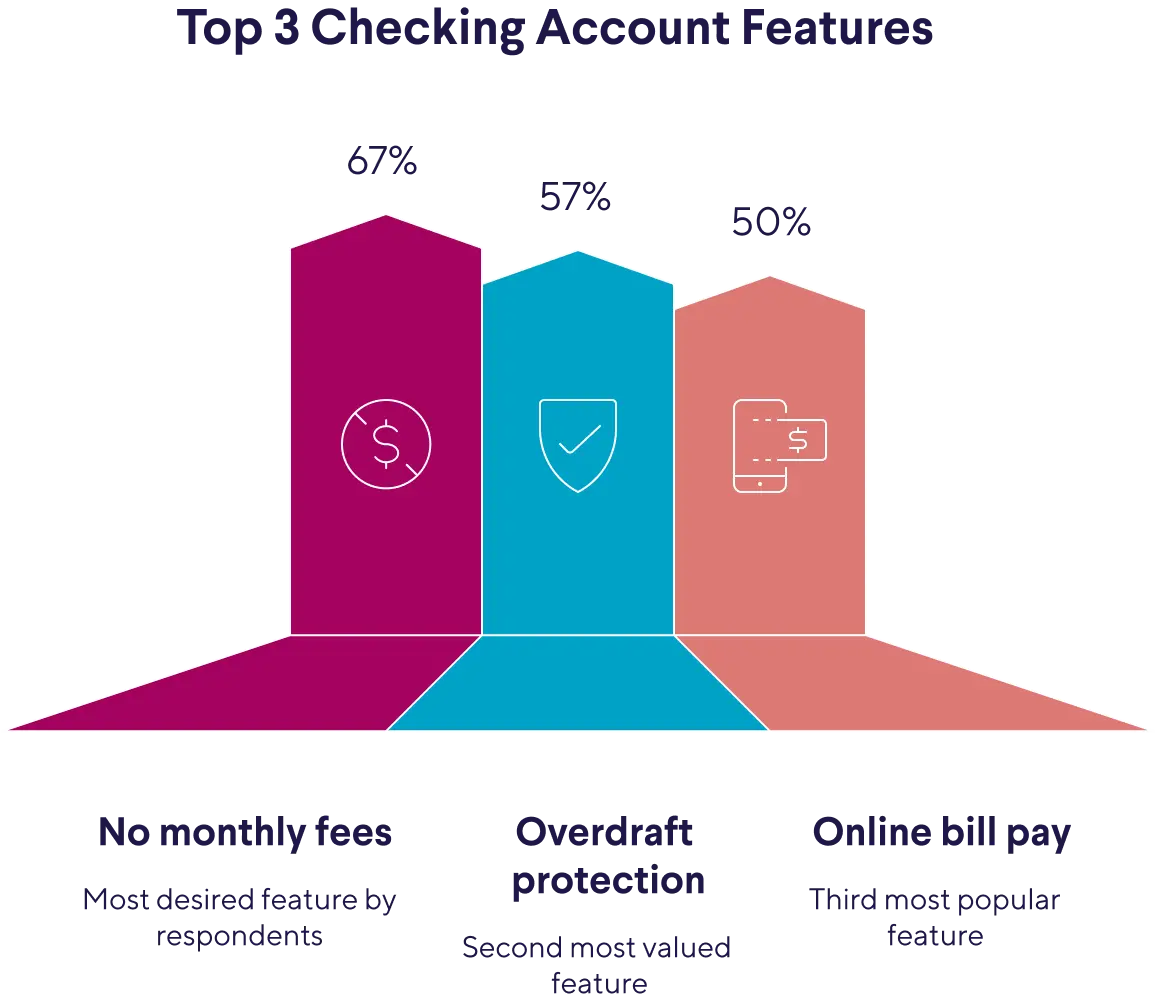
Banks are recognizing that overdraft fees can be a pain point for consumers. In fact, in a 2024 SoFi Banking survey, 57% of respondents said overdraft protection is an important feature in a bank account.

top 3 checking account features based on sofi survey

Source: SoFi’s 2024 Banking Survey

Some banks are now providing fee-free overdraft coverage. This may be limited to a certain amount, such as covering the first $50 of an overdraft, as mentioned earlier. It may also require the customer to get back to a positive balance within a certain period of time (say, until your next direct deposit hits).

It can be wise to shop around for this feature and check online vs. traditional banks for it.

What to Do If You’ve Already Been Charged an Overdraft Fee

If you’ve overdrawn your account, here are some steps to take to help avoid overdraft fees or limit them:

•  The best first action is generally to transfer money into the account right away. You might still be able to prevent an overdraft fee.

You can check to see if your provider has a daily cutoff time or deadline for adding money to an account to correct a negative balance that same day to avoid fees.

Even if you miss the cutoff, transferring money into the account quickly can prevent other fees. That’s because leaving a balance negative for several days can sometimes result in an extended overdraft fee.

•  If you are charged an overdraft fee, however, that doesn’t automatically mean you are stuck paying it. It doesn’t hurt to negotiate with the institution to try to have the fee reimbursed.

You can try to get overdraft fees waived by calling the bank and politely asking if they will remove the charge — if it’s your first offense, you might prevail. You may also want to ask your bank if it has a forgiveness program. Some institutions have policies to waive the first fee charged each year or if a customer is experiencing economic hardship.

How to Avoid an Overdraft Fee at the Checkout

One helpful habit to try: When you’re at the checkout about to make a purchase, first make sure you have enough money in your bank account before you proceed with the transaction. Here’s how.

•  Use your mobile banking app to get an instant balance check on your account (many banking apps offer this feature). That way you can see at a glance if your purchase will be covered.

•  Know your current balance vs. your available balance. There may be deposits or other transactions still pending in your current balance, which could affect what you have available to spend. Focus on the available balance of your account.

•  When using a debit card to make a purchase online, an item may be on back order, and your card might not be charged until the item ships. It can be easy to forget about it and then not have enough funds in your account to cover it when the item does ship. To avoid an overdraft, make a note about delayed charge in your transaction register. You can also set a reminder on your phone to check on the item and the money in your account.

The Takeaway

There are a few simple ways to avoid overdraft fees, such as opting out of overdraft coverage, setting up an automatic low-balance alert, linking your accounts, keeping a little cash cushion in your account, or banking where you get a level of no-fee overdraft coverage.

Interested in opening an online bank account? When you sign up for a SoFi Checking and Savings account with eligible direct deposit, you’ll get a competitive annual percentage yield (APY), pay zero account fees, and enjoy an array of rewards, such as access to the Allpoint Network of 55,000+ fee-free ATMs globally. Qualifying accounts can even access their paycheck up to two days early.


Better banking is here with SoFi, NerdWallet’s 2024 winner for Best Checking Account Overall.* Enjoy 3.30% APY on SoFi Checking and Savings with eligible direct deposit.

FAQ

Can I get an overdraft fee refunded?

It may be possible to get an overdraft fee refunded. Call the bank and ask if they will refund the fee. If it’s the first time you’ve ever overdrafted your account, they might give you a refund. Some banks even have policies to waive the fee in certain situations — such as if a customer is facing economic hardship. So if there was an extenuating circumstance, be sure to explain it. But no matter what the circumstances, it doesn’t hurt to ask politely for a refund.

Is it better to turn off overdraft protection?

You may want to opt out of overdraft coverage, which is different from overdraft protection, which usually triggers a fee. Overdraft protection, on the other hand, typically links your checking account to another account at the same bank and if there’s not enough cash in your checking account to cover a transaction, the needed money would be transferred to cover it. Some banks charge a fee for these transfers, others don’t.

Do overdraft fees affect my credit score?

Overdraft fees generally don’t affect your credit score because your checking account activity is not typically reported to the credit bureaus. However, if you overdraft the account and don’t pay the overdraft and any fees incurred, the bank could send the debt you owe to collections. The collection agency can then report the debt to the credit bureaus which can negatively impact your credit score.

How long do I have to pay an overdraft?

How long you have to pay an overdraft is determined by your bank. Some institutions may give you just a day to cover the overdrawn amount plus any fees, others may give you one or two days. It’s important to find out what your bank’s specific policy is, and then follow it to avoid further negative consequences.

What’s the difference between overdraft protection and overdraft coverage?

Overdraft coverage is a service that gives your bank permission to clear a transaction even if there is not enough money in the account to cover it by essentially fronting you the money. They may then charge you a fee for doing so. Overdraft protection, on the other hand, usually links your checking account to another account at the same bank. If there’s not enough cash in your checking account to cover a transaction, the funds would be transferred to cover it. Some banks offer these transfers free of charge.


SoFi Checking and Savings is offered through SoFi Bank, N.A. Member FDIC. The SoFi® Bank Debit Mastercard® is issued by SoFi Bank, N.A., pursuant to license by Mastercard International Incorporated and can be used everywhere Mastercard is accepted. Mastercard is a registered trademark, and the circles design is a trademark of Mastercard International Incorporated.

Annual percentage yield (APY) is variable and subject to change at any time. Rates are current as of 12/23/25. There is no minimum balance requirement. Fees may reduce earnings. Additional rates and information can be found at https://www.sofi.com/legal/banking-rate-sheet

Eligible Direct Deposit means a recurring deposit of regular income to an account holder’s SoFi Checking or Savings account, including payroll, pension, or government benefit payments (e.g., Social Security), made by the account holder’s employer, payroll or benefits provider or government agency (“Eligible Direct Deposit”) via the Automated Clearing House (“ACH”) Network every 31 calendar days.

Although we do our best to recognize all Eligible Direct Deposits, a small number of employers, payroll providers, benefits providers, or government agencies do not designate payments as direct deposit. To ensure you're earning the APY for account holders with Eligible Direct Deposit, we encourage you to check your APY Details page the day after your Eligible Direct Deposit posts to your SoFi account. If your APY is not showing as the APY for account holders with Eligible Direct Deposit, contact us at 855-456-7634 with the details of your Eligible Direct Deposit. As long as SoFi Bank can validate those details, you will start earning the APY for account holders with Eligible Direct Deposit from the date you contact SoFi for the next 31 calendar days. You will also be eligible for the APY for account holders with Eligible Direct Deposit on future Eligible Direct Deposits, as long as SoFi Bank can validate them.

Deposits that are not from an employer, payroll, or benefits provider or government agency, including but not limited to check deposits, peer-to-peer transfers (e.g., transfers from PayPal, Venmo, Wise, etc.), merchant transactions (e.g., transactions from PayPal, Stripe, Square, etc.), and bank ACH funds transfers and wire transfers from external accounts, or are non-recurring in nature (e.g., IRS tax refunds), do not constitute Eligible Direct Deposit activity. There is no minimum Eligible Direct Deposit amount required to qualify for the stated interest rate. SoFi Bank shall, in its sole discretion, assess each account holder's Eligible Direct Deposit activity to determine the applicability of rates and may request additional documentation for verification of eligibility.

See additional details at https://www.sofi.com/legal/banking-rate-sheet.

*Awards or rankings from NerdWallet are not indicative of future success or results. This award and its ratings are independently determined and awarded by their respective publications.

We do not charge any account, service or maintenance fees for SoFi Checking and Savings. We do charge a transaction fee to process each outgoing wire transfer. SoFi does not charge a fee for incoming wire transfers, however the sending bank may charge a fee. Our fee policy is subject to change at any time. See the SoFi Bank Fee Sheet for details at sofi.com/legal/banking-fees/.
^Early access to direct deposit funds is based on the timing in which we receive notice of impending payment from the Federal Reserve, which is typically up to two days before the scheduled payment date, but may vary.

Financial Tips & Strategies: The tips provided on this website are of a general nature and do not take into account your specific objectives, financial situation, and needs. You should always consider their appropriateness given your own circumstances.

Third-Party Brand Mentions: No brands, products, or companies mentioned are affiliated with SoFi, nor do they endorse or sponsor this article. Third-party trademarks referenced herein are property of their respective owners.

Third Party Trademarks: Certified Financial Planner Board of Standards Center for Financial Planning, Inc. owns and licenses the certification marks CFP®, CERTIFIED FINANCIAL PLANNER®

SOBNK-Q425-005

Read more
A woman is working on a laptop and doing calculations on a pile of financial documents with charts and graphs.

6 Money Habits to Develop Financial Success

Smart money habits can start you on the path to achieving financial success and realizing your dreams. Adopting small (and repeated) changes in behavior can be one way to start building good financial habits that can last a lifetime. Whether your goals are near-term and relatively small (say, hosting an amazing 30th birthday for your partner) or considerably grander (retiring by age 50), planning and discipline are needed to reach them.

Read on to learn six of the most important money habits that can help steer you to financial success and realizing your money goals.

Key Points

•  Setting financial goals can help guide you towards achieving financial and personal dreams.

•  Budgeting helps manage finances by tracking income and expenses.

•  Consolidating debt can improve your debt-to-income ratio.

•  Automating finances helps ensure timely savings and bill payments.

•  Early and consistent investing can build retirement savings through compounding.

Why Good Money Habits Matter

Good money habits can set you up for financial success. They act like guardrails, keeping you moving towards positives (like an impressive retirement fund) and away from potential challenges (say, too much credit card debt). They are, in fact, similar to other wise habits in your life, whether that means eating well, exercising regularly, not staying up too late watching Netflix, or remembering to call your folks often.

Yes, good habits can require some time and energy to establish, and then you likely need to maintain focus to stay on track. Some will become second nature or no-brainers; others may require more ongoing effort. But by sticking with them, good money habits can guide you to help manage your personal finances well, make smart decisions with your funds, and achieve your future goals.

6 Good Money Habits to Adopt

Here’s a closer look at six key money habits that can help you develop financial success.

1. Set Financial Goals

Formulating your financial goals can be an important step. Goals can guide you as you go about building a financial plan for the years ahead.

One person’s goals might be to pay off their student loans and save for a down payment on a house; another might want to sock away enough cash in an online bank account to start their own business down the road; and yet another might want to achieve a lifestyle where they can pay for their child’s college education and take ski vacations every winter.

Putting pen to paper or opening a document on your laptop can be a helpful way to focus and define specific financial goals to work towards. This can give you clarity and boost your motivation vs. simply saving in the abstract.

Once you have goals in mind, you can begin saving toward them and tracking your progress.

2. Budget Well and Track Your Spending

If you are just winging it in terms of your finances, it’s probably wise to prioritize setting up a budget. The word “budget” can cause a knee-jerk reaction because it smacks of deprivation (as in, no more lattes, ever!) but that’s not what it’s about.

Rather, a budget involves understanding how much money you have coming in and where it’s going (typically towards spending and saving). It can help you be more aware of your finances and balance them, too.

Out of the various techniques, the 50/30/20 budget rule is a popular option. It spells out that 50% of your take-home pay goes towards your needs (housing, food, and healthcare, for instance), 30% towards your wants (dining out, those lattes mentioned above, travel), and 20% towards savings.

There are plenty of other different budgeting methods to try and tools you can use to track your spending, which is an important facet of good budgeting. Your bank may even offer a convenient system for this. By tracking your spending, you can see where you may be spending too much (say, your once-a-week takeout habit has crept up to four times a week), be more mindful with money, and optimize your finances. Perhaps you can put more towards debt payments, for example, than you realized.

It can also be wise to get in the habit of checking in with your money regularly; many people find that a couple of times a week is a good frequency.

3. Consolidate Debt

As you work on your budget, you may want to cultivate another money habit to develop financial success. That involves dealing with debt.

This might mean paying off credit card balances in full and making all other necessary debt payments on time, such as mortgage installments and student loan payments. Calendar reminders can help ensure that all payments get made on time, as can automating your payments (more on that below). It may even help to arrange to have all payments due on the same day. Some lenders are willing to move a monthly due date.

If you have student loan debt, you might look into refinancing options. You might, say, be able to lower your monthly payment, though that could extend the term of your loan and cost you more in interest over the life of the loan. However, doing so may be the right move for some people. (Also keep in mind that if you refinance federal loans as private student loans you will lose access to federal benefits and protections.)

Facing and managing your debt is an important step, regardless of the specific solution you decide upon. It’s a habit that allows you to take control of your money. And it can keep your debt-to-income ratio low, which can be an important factor when you want to borrow money at as low a rate as possible.

Increase your savings
with a limited-time APY boost.*


*Earn up to 4.00% Annual Percentage Yield (APY) on SoFi Savings with a 0.70% APY Boost (added to the 3.30% APY as of 12/23/25) for up to 6 months. Open a new SoFi Checking and Savings account and pay the $10 SoFi Plus subscription every 30 days OR receive eligible direct deposits OR qualifying deposits of $5,000 every 31 days by 3/30/26. Rates variable, subject to change. Terms apply here. SoFi Bank, N.A. Member FDIC.

4. Know When to Consider Balance Transfer vs. Personal Loans

Building on the idea of consolidating debt is the next financial habit. This one involves knowing the warning signs when your debt is getting uncomfortably high and then taking steps to rein it in.

Sometimes, the steps above aren’t enough. If that’s the case, it’s wise to consider your options vs. taking a wait and see approach. Currently, credit card interest rates are over 20% which can be hard for some people to pay off.

So if you see your balance rising to a level you are worried about, consider the following options as you take control of your debt:

•   You might try a balance-transfer credit card, which can give you a reprieve from high interest accruing for a period of time (often 18 months), allowing you to pay down your debt.

•   You might consider taking out a personal loan and using those funds to pay off your credit card debt. The goal here is to have a lower monthly payment on the personal loan than what your credit card bill amounted to.

•   Contact a nonprofit credit counseling service, such as the National Foundation for Credit Counseling, or nfcc.org.

Getting in this habit before debt gets deeper can help you in the long run.

5. Automate Your Finances

It can be a good idea to save money right after getting paid — before the cash sits in checking long enough to spark the urge to spend it. So why not make it simple and save automatically upfront?

A person interested in saving might begin by automating just one kind of transaction. For example, they may opt to have $50 moved from a checking account to a high-yield savings account each month. If that money remains unspent each month, those monthly automatic savings would total to $600 at the end of the year.

That could be a good way to start an emergency fund without expending much effort. You can also automate payments of, say, your utilities and housing costs or your car loan. Paying bills on time this way can help build your credit.

There are also numerous ways to automate your investments. A workplace plan, like a 401(k), may already be doing this. For someone who’s on their own, mutual funds can make auto-investment really easy. Alternatively, a robo-advisor service can automatically invest contributions on behalf of the investor. (Note: This automation may be challenging for those paid irregularly, such as freelancers and seasonal workers.)

By embracing automation, you can nail an important money habit. You can pay yourself first and stash cash away in savings. And you can avoid such bad money habits as not saving enough, paying bills late, or forgetting to pay them at all.

Recommended: Emergency Fund Calculator

6. Investing Early and Often

“I invested too much money for retirement,” said no one, ever. Arguably, there’s no other financial goal that requires more habitual action — spread over decades — than saving and investing for retirement.

It can be tempting to push off planning for retirement until tomorrow. After all, when someone’s in their 20s or 30s, retirement is likely decades and decades away. Psychologically, it’s simple to presume that it’s just not worth thinking about in the now.

But, for many, retirement can be one of life’s biggest and most important expenses. It can secure your comfortable future. Investing early, often, and wisely, can help accomplish that goal.

Adopting this habit ASAP can be a big help; it allows for more time for money to grow via compounding. Compound returns are earnings on both the original amount invested (the principal) and the money earned via investing (the profit). The more months (or years) a person invests, the higher the potential for profits to compound. Note: It is important to note that all investing carries risk as the stock market can fluctuate.

Being consistent about moving money into your portfolio is important, too. Luckily, there are easy and affordable ways to get started investing. First, open an account, like a brokerage or a retirement account. (Investing in a 401(k) also counts as investing.) Then, investors can purchase investments like stocks and funds to help achieve their goals. Or investors can use an automated investing service.

The Takeaway

Building good financial habits can be rewarding. There are more technological tools than ever to help with budgeting or expense tracking. From digital apps to automatic investing to online bank accounts, building healthy financial habits has never been more accessible.

Interested in opening an online bank account? When you sign up for a SoFi Checking and Savings account with eligible direct deposit, you’ll get a competitive annual percentage yield (APY), pay zero account fees, and enjoy an array of rewards, such as access to the Allpoint Network of 55,000+ fee-free ATMs globally. Qualifying accounts can even access their paycheck up to two days early.


Better banking is here with SoFi, NerdWallet’s 2024 winner for Best Checking Account Overall.* Enjoy 3.30% APY on SoFi Checking and Savings with eligible direct deposit.

FAQ

What are money habits for financial success?

Money habits that can help you achieve financial success include setting financial goals, budgeting well, consolidating debt, considering balance transfers and personal loans, automating your finances, and investing wisely.

What is a short-term money goal?

A short-term money goal is typically one you aim to achieve in a year or less.

How do you budget well?

To budget well, track how much money you have coming in and going out, and experiment with different methods of budgeting. Many people like the 50/30/20 budget rule. Budgeting apps can also be helpful.


SoFi Checking and Savings is offered through SoFi Bank, N.A. Member FDIC. The SoFi® Bank Debit Mastercard® is issued by SoFi Bank, N.A., pursuant to license by Mastercard International Incorporated and can be used everywhere Mastercard is accepted. Mastercard is a registered trademark, and the circles design is a trademark of Mastercard International Incorporated.

Annual percentage yield (APY) is variable and subject to change at any time. Rates are current as of 12/23/25. There is no minimum balance requirement. Fees may reduce earnings. Additional rates and information can be found at https://www.sofi.com/legal/banking-rate-sheet

Eligible Direct Deposit means a recurring deposit of regular income to an account holder’s SoFi Checking or Savings account, including payroll, pension, or government benefit payments (e.g., Social Security), made by the account holder’s employer, payroll or benefits provider or government agency (“Eligible Direct Deposit”) via the Automated Clearing House (“ACH”) Network every 31 calendar days.

Although we do our best to recognize all Eligible Direct Deposits, a small number of employers, payroll providers, benefits providers, or government agencies do not designate payments as direct deposit. To ensure you're earning the APY for account holders with Eligible Direct Deposit, we encourage you to check your APY Details page the day after your Eligible Direct Deposit posts to your SoFi account. If your APY is not showing as the APY for account holders with Eligible Direct Deposit, contact us at 855-456-7634 with the details of your Eligible Direct Deposit. As long as SoFi Bank can validate those details, you will start earning the APY for account holders with Eligible Direct Deposit from the date you contact SoFi for the next 31 calendar days. You will also be eligible for the APY for account holders with Eligible Direct Deposit on future Eligible Direct Deposits, as long as SoFi Bank can validate them.

Deposits that are not from an employer, payroll, or benefits provider or government agency, including but not limited to check deposits, peer-to-peer transfers (e.g., transfers from PayPal, Venmo, Wise, etc.), merchant transactions (e.g., transactions from PayPal, Stripe, Square, etc.), and bank ACH funds transfers and wire transfers from external accounts, or are non-recurring in nature (e.g., IRS tax refunds), do not constitute Eligible Direct Deposit activity. There is no minimum Eligible Direct Deposit amount required to qualify for the stated interest rate. SoFi Bank shall, in its sole discretion, assess each account holder's Eligible Direct Deposit activity to determine the applicability of rates and may request additional documentation for verification of eligibility.

See additional details at https://www.sofi.com/legal/banking-rate-sheet.

*Awards or rankings from NerdWallet are not indicative of future success or results. This award and its ratings are independently determined and awarded by their respective publications.

We do not charge any account, service or maintenance fees for SoFi Checking and Savings. We do charge a transaction fee to process each outgoing wire transfer. SoFi does not charge a fee for incoming wire transfers, however the sending bank may charge a fee. Our fee policy is subject to change at any time. See the SoFi Bank Fee Sheet for details at sofi.com/legal/banking-fees/.
^Early access to direct deposit funds is based on the timing in which we receive notice of impending payment from the Federal Reserve, which is typically up to two days before the scheduled payment date, but may vary.

INVESTMENTS ARE NOT FDIC INSURED • ARE NOT BANK GUARANTEED • MAY LOSE VALUE

SoFi Invest is a trade name used by SoFi Wealth LLC and SoFi Securities LLC offering investment products and services. Robo investing and advisory services are provided by SoFi Wealth LLC, an SEC-registered investment adviser. Brokerage and self-directed investing products offered through SoFi Securities LLC, Member FINRA/SIPC.

For disclosures on SoFi Invest platforms visit SoFi.com/legal. For a full listing of the fees associated with Sofi Invest please view our fee schedule.

Financial Tips & Strategies: The tips provided on this website are of a general nature and do not take into account your specific objectives, financial situation, and needs. You should always consider their appropriateness given your own circumstances.

Third-Party Brand Mentions: No brands, products, or companies mentioned are affiliated with SoFi, nor do they endorse or sponsor this article. Third-party trademarks referenced herein are property of their respective owners.

Third Party Trademarks: Certified Financial Planner Board of Standards Center for Financial Planning, Inc. owns and licenses the certification marks CFP®, CERTIFIED FINANCIAL PLANNER®

SOBNK-Q425-004

Read more
TLS 1.2 Encrypted
Equal Housing Lender