What Do the Abbreviations on My Bank Statement Mean?

Abbreviations on bank statements typically help identify different types of transactions and share information about your balance. While much of the information on your bank statement is straightforward, occasionally your bank statement may contain abbreviations that you don’t understand.

There are a few common bank statement abbreviations that are good to know, since understanding all of the information on your bank statement may help you to make better financial decisions. The good news is that most of the most common bank statement abbreviations are fairly easy to understand. Once you know what each one stands for, it can help you get a better picture of the overall health of your bank account.

Key Points

•  Bank statement abbreviations help identify transaction types and balance information, aiding financial management.

•  Regularly reviewing bank statements may help you detect errors and fraudulent charges.

•  Common abbreviations include ACH, ATM, CHK, TLR, CR, DR, EFT, FEE, INT, OD, POS, and TFR.

•  Abbreviations on bank statements save space, enhance security, and standardize banking terms, making statements concise.

•  Contacting customer service to decode unfamiliar abbreviations is recommended to help verify information in your statement.

Understanding Common Bank Statement Abbreviations

If you have a checking or savings account, your bank almost certainly sends you a bank statement on a regular basis. This usually happens monthly, and you may receive your bank statement electronically or via a printed statement in the mail. Whether you keep your bank statements or not, it can be wise to review them carefully. Doing so can help you spot any errors or fraudulent charges and scan for bank fees.

As you review your bank statements, you may encounter abbreviations. Some of these may be familiar, but others may require clarification.

Why Banks Use an Abbreviation

There are a few reasons why banks might use an abbreviation for some items:

•  Technological requirement: Many banks rely on underlying financial systems that code certain types of information with abbreviations. These systems require shortened information for proper processing.

•  Saving space: Banks may need to display a lot of information in a relatively small space, and abbreviations can help with this.

•  Security and privacy: Sometimes, using an abbreviation can help conceal sensitive information that banks don’t want to state explicitly on a bank statement.

•  Standardization: Abbreviations can allow banks to use the commonly recognized terms for certain products and services in their records and communications. This uniformity can make organization and recognition easier for all parties involved in banking.

For these reasons, you may see shorter forms of banking terms as you conduct your personal finance business.

Recommended: Savings Calculator

Increase your savings
with a limited-time APY boost.*


*Earn up to 4.00% Annual Percentage Yield (APY) on SoFi Savings with a 0.70% APY Boost (added to the 3.30% APY as of 12/23/25) for up to 6 months. Open a new SoFi Checking and Savings account and pay the $10 SoFi Plus subscription every 30 days OR receive eligible direct deposits OR qualifying deposits of $5,000 every 31 days by 3/30/26. Rates variable, subject to change. Terms apply here. SoFi Bank, N.A. Member FDIC.

List of Common Abbreviations in Bank Statements

Here are a few of the most common abbreviations you might find in bank statements relating to your checking account or other holdings:

ACH

An ACH payment is one that is processed through the Automated Clearing House. ACH transactions are usually transactions where money is sent to or received from another bank account via electronic networks.

ATM

ATM stands for automated teller machine, and it might signify a withdrawal of cash from or a deposit to your account at one of these devices.

CHK

CHK signifies a check transaction. When you write a check, you may see this abbreviation on your bank statement when the check is deposited and/or clears. Occasionally, this may be abbreviated as CHQ for financial institutions that prefer the spelling of “cheque” to “check.”

CR

CR — or sometimes CRE or CRED — is an abbreviation for a credit, which is usually an amount of money that is credited to your account at a traditional or online bank. This could reflect a direct deposit from a salary, a merchant refund, or any other form of account credit.

DR

DR indicates a debit to your account, such as when money is withdrawn, either from an electronic transfer, a debit card transaction, or a bill payment.

EFT

Similar to ACH transactions, EFT transactions are electronic fund transfers that usually come from another bank account.

However, take note not to confuse it with an ETF, which stands for exchange-traded fund, a type of pooled investment.

FEE

FEE is not actually an abbreviation at all, as this bank statement code just means a fee assessed to your account. This could be any number of bank fees, including maintenance fees, account fees, or non-sufficient funds fees.

INT

This bank statement abbreviation stands for interest that is credited to your account. Many checking or savings accounts pay interest to the account holder based on the total amount on deposit. When that interest is paid, it could be referenced on the bank statement with this abbreviation.

OD

OD typically stands for overdraft and means that your balance has dipped into negative territory. You might also see your balance expressed with a minus sign when you have overdrawn your account. In most cases, this means your account is accruing overdraft fees, so it’s wise to get your account back to positive as soon as you can.

POS

POS stands for point of sale, and usually represents a purchase made with a debit card or credit card at a physical retailer. Confused by the phrase “point of sale terminal”? Think of it as the common term “cash register” in daily conversation.

TFR

TFR stands for transfer. When money moves between your bank accounts, you may see these three letters indicating that money has been transferred.

TLR

TLR indicates that a transaction was conducted with a bank teller at a branch. Those who have accounts at traditional vs. online banks are more likely to see this code.

Importance of Knowing Bank Statement Abbreviations

While some bank statement abbreviations may seem obvious and others obscure, it can be important to understand these terms. They help you keep tabs on the money in your bank account and your financial progress.

It can be a good idea to regularly review your bank statements as they are received. That way, you can check for unexpected or possibly fraudulent transactions. Ideally, you should be able to recognize the transactions on your statement as ones that you initiated and/or authorized. If you see a transaction on your statement that you don’t recognize, you should contact your bank’s customer service department; you may be referred to their fraud protection team if necessary. This may help protect against having your account compromised by bank fraud and from risking identity theft.

Recommended: How to Write a Check

The Takeaway

Financial institutions regularly send bank account statements to their customers, usually on a monthly basis. These statements typically communicate a large amount of information, and they may include abbreviations that shorten and standardize details. By understanding these abbreviations (such as ACH, ETF, and OD), you can enjoy deeper knowledge of your account information and keep tabs on your money.

Interested in opening an online bank account? When you sign up for a SoFi Checking and Savings account with eligible direct deposit, you’ll get a competitive annual percentage yield (APY), pay zero account fees, and enjoy an array of rewards, such as access to the Allpoint Network of 55,000+ fee-free ATMs globally. Qualifying accounts can even access their paycheck up to two days early.


Better banking is here with SoFi, NerdWallet’s 2024 winner for Best Checking Account Overall.* Enjoy 3.30% APY on SoFi Checking and Savings with eligible direct deposit.

FAQ

How can you identify an unknown retailer abbreviation on your statement?

While many transactions on your bank statement include the name or other identifying information of the merchant in question, some transactions may not be identifiable. One way to identify an unknown retailer is by doing an Internet search for the information that appears on your statement. Another may be to look for the same transaction on past statements of yours. Or contact your bank’s customer service department to see if they can help you with more information about the merchant.

What is included in a bank statement entry?

A bank statement usually includes a list of transactions made during the statement period. Each of these transactions is sometimes called a bank statement entry. A bank statement entry can contain the date of the transaction, the type of transaction, the amount involved, and a brief description of the retailer, merchant, or other party to the transaction, among other details.

Can your bank help decode bank statement transaction abbreviations?

Many bank statement abbreviations are straightforward, but there are some that may not be easy to decipher. If you’re unable to understand what a bank statement abbreviation means by reviewing your statement or doing an Internet search, you may want to talk to your bank’s customer service department. They can likely help you decode the information on your statement.


Photo credit: iStock/PIKSEL

SoFi Checking and Savings is offered through SoFi Bank, N.A. Member FDIC. The SoFi® Bank Debit Mastercard® is issued by SoFi Bank, N.A., pursuant to license by Mastercard International Incorporated and can be used everywhere Mastercard is accepted. Mastercard is a registered trademark, and the circles design is a trademark of Mastercard International Incorporated.

Annual percentage yield (APY) is variable and subject to change at any time. Rates are current as of 12/23/25. There is no minimum balance requirement. Fees may reduce earnings. Additional rates and information can be found at https://www.sofi.com/legal/banking-rate-sheet

Eligible Direct Deposit means a recurring deposit of regular income to an account holder’s SoFi Checking or Savings account, including payroll, pension, or government benefit payments (e.g., Social Security), made by the account holder’s employer, payroll or benefits provider or government agency (“Eligible Direct Deposit”) via the Automated Clearing House (“ACH”) Network every 31 calendar days.

Although we do our best to recognize all Eligible Direct Deposits, a small number of employers, payroll providers, benefits providers, or government agencies do not designate payments as direct deposit. To ensure you're earning the APY for account holders with Eligible Direct Deposit, we encourage you to check your APY Details page the day after your Eligible Direct Deposit posts to your SoFi account. If your APY is not showing as the APY for account holders with Eligible Direct Deposit, contact us at 855-456-7634 with the details of your Eligible Direct Deposit. As long as SoFi Bank can validate those details, you will start earning the APY for account holders with Eligible Direct Deposit from the date you contact SoFi for the next 31 calendar days. You will also be eligible for the APY for account holders with Eligible Direct Deposit on future Eligible Direct Deposits, as long as SoFi Bank can validate them.

Deposits that are not from an employer, payroll, or benefits provider or government agency, including but not limited to check deposits, peer-to-peer transfers (e.g., transfers from PayPal, Venmo, Wise, etc.), merchant transactions (e.g., transactions from PayPal, Stripe, Square, etc.), and bank ACH funds transfers and wire transfers from external accounts, or are non-recurring in nature (e.g., IRS tax refunds), do not constitute Eligible Direct Deposit activity. There is no minimum Eligible Direct Deposit amount required to qualify for the stated interest rate. SoFi Bank shall, in its sole discretion, assess each account holder's Eligible Direct Deposit activity to determine the applicability of rates and may request additional documentation for verification of eligibility.

See additional details at https://www.sofi.com/legal/banking-rate-sheet.

*Awards or rankings from NerdWallet are not indicative of future success or results. This award and its ratings are independently determined and awarded by their respective publications.

Financial Tips & Strategies: The tips provided on this website are of a general nature and do not take into account your specific objectives, financial situation, and needs. You should always consider their appropriateness given your own circumstances.

Third-Party Brand Mentions: No brands, products, or companies mentioned are affiliated with SoFi, nor do they endorse or sponsor this article. Third-party trademarks referenced herein are property of their respective owners.

SOBNK-Q324-031

Read more

woman in cafe on laptop

Guide to Yield to Maturity (YTM)

When investors evaluate which bonds to buy, they often take a look at yield to maturity (YTM), the total rate of return a bond will earn over its life, assuming it has made all interest payments and repaid the principal.

Calculating YTM can be complicated. Doing so takes into account a bond’s face value, current price, number of years to maturity and coupon, or interest payments. It also assumes that all interest payments are reinvested at a constant rate of return. With these figures in hand, they will be better equipped to understand the bond market and which bonds will offer the greatest yield if held to maturity.

Key Points

•   Yield to Maturity (YTM) represents the total return expected from holding a bond until it matures, factoring in interest payments and principal repayment.

•   Calculating YTM involves the bond’s coupon rate, face value, current market price, and the time to maturity, making it a complex formula.

•   YTM is useful for comparing bonds with different characteristics, helping investors anticipate returns and understand interest rate risks associated with bond investments.

•   Limitations of YTM include assumptions about reinvestment of interest payments and the neglect of taxes, which can significantly affect actual returns.

•   Investors can utilize YTM as a tool for decision-making but should consider diversifying their portfolios and possibly consulting financial professionals for guidance.

What Is Yield to Maturity (YTM)?

The yield to maturity (YTM) is the estimated rate investors earn when holding a bond until it reaches maturity or full value. The YTM is stated as an annual rate and can differ from the stated coupon rate.

The calculations in the yield to maturity formula include the following factors:

•   Coupon rate: Also known as a bond’s interest rate, the coupon rate is the regular payment issuers pay bondholders for the right to borrow their money. The higher the coupon rate, the higher the yield.

•   Face value: A bond’s face value, or par value, is the amount paid to a bondholder at its maturity date.

•   Market price: A bond’s market price refers to how much an investor would have to pay for a bond on the open market currently. The price buyers pay on the secondary market may be higher or lower than a bond’s face value. The higher the price of the bond, the lower the yield.

•   Maturity date: The date when the issuer repays the principal is known as the maturity date.

The YTM formula assumes all coupon payments are made as scheduled, and most calculations assume interest will be reinvested.

Get up to $1,000 in stock when you fund a new Active Invest account.*

Access stock trading, options, alternative investments, IRAs, and more. Get started in just a few minutes.


*Customer must fund their Active Invest account with at least $50 within 45 days of opening the account. Probability of customer receiving $1,000 is 0.026%. See full terms and conditions.

How to Calculate Yield to Maturity

Calculating yield to maturity can be done by following a formula — but fair warning, it’s not simple arithmetic!

Yield to Maturity (YTM) Formula

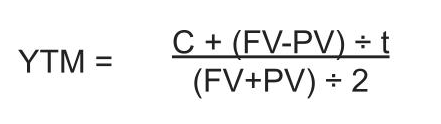
To calculate yield to maturity, investors can use the following YTM formula:

yield to maturity formula

In this calculation:

C = Interest or coupon payment
FV = Face value of the investment
PV = Present value or current price of the investment
t = Years it takes the investment to reach the full value or maturity

Example of YTM Calculation

Here’s an example of how to use the YTM formula.

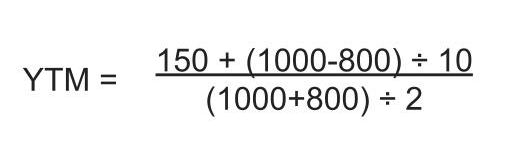
Suppose there’s a bond with a market price of $800, a face value of $1,000, and a coupon value of $150. The bond will reach maturity in 10 years, with a coupon rate of about 14%.

By using this formula, the estimated yield to maturity would calculate as follows:

example of yield to maturity formula

The Importance of Yield to Maturity

Knowing a bond’s YTM can help investors compare bonds with various maturity and coupon rates, and ultimately, what their dividend yield could look like. For example, consider two bonds of varying maturity: a five-year bond with a 3% YTM and a 10-year bond with a 2.5% YTM. Investor’s can easily see that the five-year bond is more valuable.

YTM is particularly useful when attempting to compare older bonds sold in a secondary market, which can be priced at a premium or discounted — meaning they cost more or less than the bond’s face value. Understanding the YTM formula also helps investors understand how market conditions can impact their portfolio based on the investment they select. Since yields rise when prices drop (and vice versa) as seen on a yield curve, investors can forecast how their investment will perform.

Additionally, YTM can help investors understand how likely they are to be affected by interest rate risk — the danger that the value of a bond may be adversely affected due to the changes in interest rate. Current YTM is inversely proportional to interest rate risk. That means, the higher the YTM, the less bond prices will be affected should interest rates change, in theory.

Yield to Maturity vs Yield to Call

With a callable, or redeemable bond, issuers can choose to repay the principal amount before the maturity date, halting interest payments early. This throws a bit of a wrench into the YTM calculation. Instead, investors may want to use a yield to call (YTC) calculation. To do so, they can use the YTM calculation, substituting the maturity date for the soonest possible call date.

Typically a bond issuer will call a bond only if it will result in a financial gain. For example, if the interest rate drops below a coupon rate, the issuer may decide to recall the bond to borrow funds at a lower rate. This situation is similar to when interest rates drop and homeowners refinance their home loans.

For investors that use callable bonds for income, yield to call is significant. Suppose the issuer decides to call the bond when the interest rates are lower than when the investor purchases it. If an investor decides to reinvest their payout, they may have a tough time finding a comparable bond that offers the yield they need to support their lifestyle. They may feel it necessary to take on more risk, looking to high-yield bonds.

💡 Quick Tip: It’s smart to invest in a range of assets so that you’re not overly reliant on any one company or market to do well. For example, by investing in different sectors you can add diversification to your portfolio, which may help mitigate some risk factors over time.

Yield to Maturity vs Coupon Rate

While a bond’s coupon rate is another important piece of information that investors need to keep in mind, it’s not the same as yield to maturity. The coupon rate tells investors the annual amount of interest that a bond’s owner is set to receive — the two may be the same when a bond is initially purchased, but will likely diverge over time due to changing economic and market conditions.

Limitations of Yield to Maturity

The yield to maturity calculation does have limitations.

Taxes

It’s important to note that YTM calculations exclude taxes. While some bonds, like municipal bonds and U.S. Treasury bonds, may be tax exempt on a federal and state level, most other bonds are taxable. In some cases, a tax-exempt bond may have a lower interest rate but ultimately offer a higher yield once taxes are factored in.

As an investor, it can be especially helpful to consider the after-tax yield rate of return. For example, suppose an investor in the 35% federal tax bracket who doesn’t pay state income taxes is considering investing in either Bond X or Bond Y. Bond X is a tax-exempt bond and pays a 4% interest rate, while Bond Y is taxable and pays 6% interest.

While the 4% yield for Bond X remains the same, the after-tax yield for Bond Y is 3.8%. While it seemed like the less lucrative of the two options up front, Bond X should ultimately yield a higher return after taxes.

Presuppositions

Another YTM limitation is that it makes assumptions about the future that may not necessarily come to fruition. Specifically, it assumes that a bondholder will hang on to the bond until its maturity date, which may or may not actually happen. It also assumes that profits from the investment will be reinvested in a uniform manner — again, that may or may not be the case.

The Takeaway

Using the yield to maturity formula can help investors compare bond options with different coupon and maturity rates, market and par values, and determine which one offers the potential for a higher yield. But calculating the YTM is not an exact science, especially when you’re gauging the return on a callable bond, say, or adding the impact of taxes to the mix.

YTM is just one tool investors can use to determine which bond may best serve their financial needs and goals. One alternative to choosing individual bonds is to invest in bond mutual funds or bond exchange-traded funds (ETFs). Investors can also speak with a financial professional for guidance.

Invest in what matters most to you with SoFi Active Invest. In a self-directed account provided by SoFi Securities, you can trade stocks, exchange-traded funds (ETFs), mutual funds, alternative funds, options, and more — all while paying $0 commission on every trade. Other fees may apply. Whether you want to trade after-hours or manage your portfolio using real-time stock insights and analyst ratings, you can invest your way in SoFi's easy-to-use mobile app.

Opening and funding an Active Invest account gives you the opportunity to get up to $1,000 in the stock of your choice.¹

FAQ

What is a bond’s yield to maturity (YTM)?

A bond’s yield to maturity is the total return an investor can anticipate receiving if the bond is held to its maturity date. YTM calculations assume that all interest payments will be made by the issuer and reinvested by the bondholder at a constant rate of interest.

What is the difference between a bond’s coupon rate and its YTM?

A bond’s coupon, or interest, rate is fixed from the moment an investor buys it. However, the same bond’s YTM can fluctuate over time depending on the price paid for it and other interest prices available on the market. If YTM is lower than the coupon rate, it may indicate that the bond is being sold at a premium to its face value. If it’s lower, it may be that the bond is priced at a discount to face value.

What is yield to maturity and how is it calculated?

Yield to maturity refers to the total return an investor can expect or anticipate from a bond if they hold it to maturity. It’s calculated using variables including the time to maturity, a bond’s face value, its current price, and its coupon rate.

Why is yield to maturity important?

The yield to maturity formula can give investors an idea of what they can expect in terms of returns from their bond holdings. But again, there are some assumptions the calculation takes into account, so an investor’s mileage may vary.

Is a higher YTM better?

A higher YTM may be better under certain circumstances. For example, since a higher YTM may indicate a bond is being sold for less than its face value, it may represent a valuable opportunity to invest. However, if the bond is discounted because the company that offered it is in trouble or interest rates offered by other investments are more appealing, then a high YTM might not be such a good thing. Investors must research investments carefully and understand the full story before they buy.


INVESTMENTS ARE NOT FDIC INSURED • ARE NOT BANK GUARANTEED • MAY LOSE VALUE

SoFi Invest is a trade name used by SoFi Wealth LLC and SoFi Securities LLC offering investment products and services. Robo investing and advisory services are provided by SoFi Wealth LLC, an SEC-registered investment adviser. Brokerage and self-directed investing products offered through SoFi Securities LLC, Member FINRA/SIPC.

For disclosures on SoFi Invest platforms visit SoFi.com/legal. For a full listing of the fees associated with Sofi Invest please view our fee schedule.

Financial Tips & Strategies: The tips provided on this website are of a general nature and do not take into account your specific objectives, financial situation, and needs. You should always consider their appropriateness given your own circumstances.


¹Probability of Member receiving $1,000 is a probability of 0.026%; If you don’t make a selection in 45 days, you’ll no longer qualify for the promo. Customer must fund their account with a minimum of $50.00 to qualify. Probability percentage is subject to decrease. See full terms and conditions.

SOIN0623030

Read more
stock market amsterdam

When Is the Stock Market Closed?

The stock market is closed on weekends and many holidays. Accordingly, in a general sense, investors can buy and sell stocks Monday through Friday between 9:30am-4pm ET, but the exact schedule can vary based on time zone, market, and holiday season. Additionally, the major stock exchanges may close or stop trading unexpectedly due to several reasons, like natural disasters or technical glitches. It’s all a part of how the stock markets work.

While a person can always access stock market data, the stock exchanges have strict operating hours during a typical work week. Knowing the stock market schedule and when the stock market is closed may help investors make better investment decisions.

Key Points

•   The stock market operates Monday through Friday, with core trading hours from 9:30 AM to 4 PM ET, and is closed on weekends and holidays.

•   Major U.S. holidays when the stock market is closed include New Year’s Day, Independence Day, Thanksgiving, and Christmas, among others.

•   The stock market may also close unexpectedly due to crises, technical issues, or to honor significant events, such as the passing of notable figures.

•   Trading curbs, which temporarily halt trading, are triggered by significant drops in the S&P 500 Index, with varying levels based on the severity of the decline.

•   Extended trading hours are available for premarket and after-hours trading, but these periods carry higher risks due to lower liquidity and increased volatility.

U.S. Stock Market Holidays

Even with standard operating hours, stock markets will close their markets completely for certain holidays. The New York Stock Exchange and Nasdaq recognize the following holidays:

•   New Year’s Day

•   Martin Luther King, Jr. Day

•   Washington’s Birthday

•   Good Friday

•   Memorial Day

•   Juneteenth National Independence Day

•   Independence Day

•   Labor Day

•   Thanksgiving Day

•   Christmas Day

Additionally, the stock market closes early (at 1pm ET) on the following dates:

•   Black Friday

•   Christmas Eve, if the holiday falls on a weekday

Stock exchanges in other countries might have different national holidays and operating schedules. Investors can buy and sell stocks or other securities during open market hours outside of these major holidays.

Is the Market Closed the Following Monday After a Holiday?

For holidays with a fixed date, like Juneteenth (June 19), Independence Day (July 4), and Christmas (Dec. 25), the stock market will be closed on the preceding Friday if the holiday falls on a Saturday or the following Monday if the holiday falls on a Sunday.

However, if New Year’s Day (Jan. 1) falls on Saturday, the holiday is not observed; the stock market will be open on the preceding Friday and the following Monday.

Other Times the Stock Market Closes or Is Halted

In addition to planned holidays, historically, the stock market has closed trading in times of crisis or technical challenges.

For example, at the beginning of the Covid-19 pandemic in early 2020, markets were halted multiple times due to unprecedented drops in the market. Called trading curbs or circuit breakers, these are temporary pauses mandated by the Securities and Exchange Commission in 2012. Each level follows different criteria:

•   Level 1: A 7% drop in the S&P 500 Index compared to closing the day before will trigger the market to be paused for at least 15 minutes.

•   Level 2: A 13% drop in the S&P 500 compared to closing the day before will trigger at least a 15-minute pause in the market.

•   Level 3: A 20% drop in the S&P 500 compared to closing the day before will trigger a premature close on trading for the rest of the day.

Trading curbs can occur for a single stock and a whole market. It’s more common for the curb to be tripped on a single stock, but unprecedented events can spark a whole market pause. Covid-19 caused three trading curbs in just over a week.

The stock market may also close unexpectedly due to unprecedented events. For example, the terrorist attacks of Sept. 11, 2001, caused the NYSE to close for a week, while Superstorm Sandy forced the NYSE to close for two days in Oct. 2012.

Additionally, the markets may close down to honor the death of a world figure, as was the case with George H.W. Bush and Martin Luther King Jr.

The market has also closed unexpectedly due to technical glitches and cybersecurity threats; in July 2015, the NYSE temporarily stopped trading because of a technical issue on the floor.

Get up to $1,000 in stock when you fund a new Active Invest account.*

Access stock trading, options, alternative investments, IRAs, and more. Get started in just a few minutes.


*Customer must fund their Active Invest account with at least $50 within 45 days of opening the account. Probability of customer receiving $1,000 is 0.026%. See full terms and conditions.

Stock Market Operating Hours

In the United States, the major stock exchanges are generally open Monday through Friday, with core trading hours between 9:30am-4pm ET. The stock market does not operate during the weekend.

Because the different stock exchanges operate on eastern time, these trading hours are different throughout the U.S., depending on time zones and daylight savings time.

However, with so many global stock exchanges, a market may always open if an investor is interested in trading in foreign markets. Most markets operate during their time zone’s business hours.

Recommended: Pros & Cons of Global Investments

Why Does the Stock Market Close Each Day?

The stock market closes each day for several reasons, notably because it allows for the settlement of all trades that have occurred. The close gives market professionals time to calculate the day’s trading results and prepare for the next day.

Additionally, the stock market close is helpful for investment brokers and traders to catch up on paperwork and other administrative tasks.

While the stock market closes each day at 4pm in the United States, other markets, like cryptocurrency and foreign exchange markets, offer trading 24 hours a day.

Recommended: Is 24/7 Stock Trading Available?

When Does the Market Open for Premarket Trading?

The market opens for premarket trading at 4 am ET and operates until 9:30 am ET.

While most stock trading occurs during the normal 9:30am-4pm ET operating hours, investors can also take advantage of extended-hours trading. Investors may be interested in trading during the premarket because of the release of economic data, company earnings reports, and other major news events.

Investors must use an alternative trading system known as electronic communication networks (ECNs) to make trades during premarket trading.

However, investors must be aware of the risks associated with premarket trading. Because fewer buyers and sellers operate during the early hours, there is lower liquidity and higher volatility.

Premarket trading probably isn’t for a beginner investor; if you don’t need to buy or sell a stock immediately, you might prefer to wait until regular trading hours.

After-Hours Trading

The closing bell for the major U.S. stock exchanges might ring promptly at 4 pm ET, but there’s still after-hours trading: it’s possible to buy, sell, and trade stocks between 4pm-8pm ET. Electronic trading tools like ECNs mentioned above make it possible to conduct business after hours, but making moves during after-hours trading comes with its own risks, just like during premarket trading.

The Takeaway

Investors should be aware that the stock market is closed on weekends, designated holidays, and for world events and other disruptive circumstances. When the stock market is open, the exchanges generally operate on a 9:30am-4pm ET schedule, Monday through Friday.

Knowing when the stock market is open and closed can allow investors to strategize the best time to make trades and investments.

Invest in what matters most to you with SoFi Active Invest. In a self-directed account provided by SoFi Securities, you can trade stocks, exchange-traded funds (ETFs), mutual funds, alternative funds, options, and more — all while paying $0 commission on every trade. Other fees may apply. Whether you want to trade after-hours or manage your portfolio using real-time stock insights and analyst ratings, you can invest your way in SoFi's easy-to-use mobile app.

Opening and funding an Active Invest account gives you the opportunity to get up to $1,000 in the stock of your choice.¹

FAQ

Is the stock market closed on holidays?

The stock market is generally closed on New Year’s Day, Martin Luther King Jr. Day, Presidents’ Day, Good Friday, Memorial Day, Juneteenth National Independence Day, Independence Day, Labor Day, Thanksgiving Day, and Christmas Day.

When is the stock market closed and opened?

The stock market in the United States is closed on weekends and some holidays. The stock market is generally open Monday through Friday from 9:30am-4pm ET.

Is the stock market open for extended hours?

The stock market is open for extended hours, from 4am-9:30am ET for premarket trading and 4pm-8pm for after-hours trading. However, trading during this period can be risky.


INVESTMENTS ARE NOT FDIC INSURED • ARE NOT BANK GUARANTEED • MAY LOSE VALUE

SoFi Invest is a trade name used by SoFi Wealth LLC and SoFi Securities LLC offering investment products and services. Robo investing and advisory services are provided by SoFi Wealth LLC, an SEC-registered investment adviser. Brokerage and self-directed investing products offered through SoFi Securities LLC, Member FINRA/SIPC.

For disclosures on SoFi Invest platforms visit SoFi.com/legal. For a full listing of the fees associated with Sofi Invest please view our fee schedule.

Financial Tips & Strategies: The tips provided on this website are of a general nature and do not take into account your specific objectives, financial situation, and needs. You should always consider their appropriateness given your own circumstances.


¹Probability of Member receiving $1,000 is a probability of 0.026%; If you don’t make a selection in 45 days, you’ll no longer qualify for the promo. Customer must fund their account with a minimum of $50.00 to qualify. Probability percentage is subject to decrease. See full terms and conditions.

SOIN-Q324-015

Read more

What Is a Stock Market Crash?

The specter of a stock market crash weighs on the mind of many investors. After all, stock market crashes have played a substantial role in the United States during the 20th and 21st centuries. But knowing what is a stock market crash as well as the history and effects of stock market crashes can help investors weather the storm when the next one occurs.

Key Points

•   A stock market crash occurs when major indices experience significant declines, usually driven by panic selling rather than specific company issues.

•   Key factors that can trigger a crash include economic crises, natural disasters, and investor behavior, often exacerbated by rapid declines in stock prices.

•   Historical crashes, such as those in 1929, 1987, 2000, 2008, and 2020, illustrate the profound impact of bubbles and external shocks on the market.

•   Crashes can lead to bear markets and recessions, as declining stock values negatively affect corporate growth and consumer spending.

•   Strategies for navigating crashes include maintaining long-term focus, diversifying investments, and considering opportunities to buy undervalued stocks during downturns.

What Happens When the Stock Market Crashes?

A stock market crash occurs when broad-based stock indices like the S&P 500, Dow Jones Industrial Average, or the Nasdaq Composite experience double-digit declines over a single or several days. This means that the stocks of a wide range of companies sell off rapidly, generally because of investor panic and macroeconomic factors rather than company-specific fundamentals.

While no specific percentage decline defines a stock market crash, investors generally know one is occurring while it’s happening.

What Causes the Market to Crash?

Stock market crashes are usually unexpected and occur without warning. Often, crashes are caused by investor dynamics; when stocks start to sell off, investors’ fear takes over and causes them to panic sell shares en masse.

Though stock market crashes are usually unexpected, there are often signs that one could be on the horizon because a stock market bubble is inflating. A bubble occurs when stock prices rise quickly during a bull market, outpacing the value of the underlying companies. The bubble forms as investors buy certain stocks, driving prices up. Other investors may see the stocks doing well and jump on board, further raising prices and initiating a self-sustaining growth cycle.

The stock price growth continues until some unexpected event makes investors wary of stocks. This unexpected event causes investors to unload shares as quickly as possible, with the herd mentality of panic selling resulting in a stock market crash.

Catastrophic events such as economic crises, natural disasters, pandemics, and wars can also trigger stock market crashes. During these events, investors sell off risky assets like stocks for relatively safe investments like bonds.

Stock markets can also experience flash crashes, where the stock market plummets and rebounds within minutes. Computer trading algorithms can make these crashes worse by automatically reacting and selling stocks to head off losses. For example, on May 6, 2010, the Dow Jones Industrial Average fell 1,000 points in 10 minutes but recovered 70% of its losses by the end of the day.

Recommended: What Is the Average Stock Market Return?

Alternative investments,
now for the rest of us.

Explore trading funds that include commodities, private credit, real estate, venture capital, and more.


Examples of Past Stock Market Crashes

There have been several crashes in the stock market history, the most recent being the crash associated with the coronavirus pandemic in early 2020. The following are some of the most well-known crashes during the past 100 years.

Stock Market Crash of 1929

The most devastating stock market crash in the history of the United States occurred in October 1929. The crash occurred following a period of relative prosperity during the Roaring Twenties, when new investors poured money into the stock market.

The crash began on Thursday, October 24, when the Dow Jones Industrial Average declined about 11%, followed by a 13% decline on Monday, October 28, and a 12% drop on Tuesday, October 29. These losses started a downward trend that would continue until 1932, ushering in the Great Depression.

Black Monday Crash of 1987

On Monday, October 19, 1987, the Dow Jones Industrial Average plummeted nearly 23% in a single day. Known as Black Monday, this selloff occurred for various reasons, including the rise of computerized trading that made it easier for panicked investors to offload stocks quickly, and stock markets around the world crashed.

Dotcom Crash of 2000

The Dotcom crash between 2000 and 2002 occurred as investors started to pull money away from internet-based companies. The Nasdaq Composite index declined about 77% from March 2000 to October 2002.

In the mid to late 1990s, the internet was widely available to consumers worldwide. Investors turned their eyes to internet-based companies, leading to rampant speculation as they snapped up stocks of newly public internet companies. Eventually, startups that enthusiastic investors had fueled began to run out of money as they failed to turn a profit. The bubble eventually burst.

Recommended: Lessons From the Dotcom Bubble

Financial Crisis of 2008

The stock market crash of 2008 was fueled by rising housing prices, which came on the heels of the dot-com crash recovery. At the time, banks were issuing more and more subprime mortgages, which financial institutions would bundle and sell as mortgage-backed securities.

As the Federal Reserve increased interest rates, homeowners, who often had been given mortgages they couldn’t afford, began to default on their loans. The defaults had a ripple effect throughout the economy. The value of mortgage-backed securities plummeted, causing major financial institutions to fail or approach the brink of failure. This financial crisis spilled over into the stock market, and the S&P 500 fell nearly 60% from a peak in October 2007 to a low in March 2009.

Coronavirus Crash of 2020

As the coronavirus pandemic swept the United States in February 2020, the government responded with stay-at-home orders that shut down businesses and curtailed travel. The U.S. economy entered a recession, and the stock market plunged. The S&P 500 fell 30% into bear market territory in just one month, including a one day decline of 12% on March 16, 2020.

What Are the Effects of a Crash?

Stock market crashes can lead to bear markets, when the market falls by 20% or more from a previous peak. If the crash leads to an extended period of economic decline, the economy may enter a recession.

A market crash could lead to a recession because companies rely heavily on stocks as a way to grow. Falling stock prices curtail a company’s ability to grow, which can have all sorts of ramifications. Companies that aren’t able to earn as much as they need may lay off workers. Workers without jobs aren’t able to spend as much. As consumers start spending less, corporate profits begin to shrink. This pattern can lead to a cycle of overall economic contraction.

A recession is usually declared when U.S. gross domestic product, or GDP, shrinks for two consecutive quarters. There may be other criteria for declaring a recession, such as a decline in economic activity reflected in real incomes, employment, production, and sales.

💡 Quick Tip: How to manage potential risk factors in a self-directed investment account? Doing your research and employing strategies like dollar-cost averaging and diversification may help mitigate financial risk when trading stocks.

Preventing Stock Market Crashes

Major stock exchanges like the New York Stock Exchange (NYSE) have instituted circuit breaker measures to protect against crashes. These measures halt trading after markets drop a certain percentage to curb panic selling and prevent the markets from going into a freefall.

The NYSE’s circuit breakers kick in when three different thresholds are met. A drop of 7% or 13% in the S&P 500 shuts down trading for 15 minutes when the drop occurs between 9 am and 3:25 pm. A market decline of 20% during the day will shut down trading for the rest of the day.

Suppose a crash does occur, and it threatens to weaken the economy. In that case, the federal government may step in to ease the situation through monetary and fiscal policy stimulus measures. Monetary policy stimulus is a set of tools the Federal Reserve can use to stimulate economic growth, such as lowering interest rates. Fiscal stimulus is generally infusions of cash through direct spending or tax policy.

Investment Tips During a Market Crash

A stock market crash can be alarming, especially when it comes to an investor’s portfolio. Here are some investment tips to consider for navigating a market downturn.

Don’t Panic and Focus on the Long-Term

It will help if you remain calm when the stock market is plummeting. That’s often easier said than done, especially when your portfolio’s value declines by more than 10% in a short period. It’s tempting to join the panic selling, to make sure stock losses are minimized.

But remember, investing is a long game. In general, making decisions based on something happening now when your investing time horizon might be 30 years, may not be the best choice. If you don’t need access to your money right away, it may be better to hold on to your investments and give them time to recover.

Diversify Your Portfolio

Stocks and the stock market get most of the media’s attention, especially when the stock market is crashing, but there are other potential ways to help you realize your financial goals. Other assets like bonds, commodities, or emerging market stocks may be attractive investment opportunities to consider during a crash.

Consider Buying The Dip

While it depends on an individual’s specific situation and risk tolerance, a stock market crash might present opportunities to purchase stocks at a lower, more attractive share price that some investors may want to consider.

The Takeaway

The stock market tends to recover following a stock market crash; it took the S&P 500 six months to recover the losses experienced during the coronavirus crash. So any rash moves investors make during a stock market crash may prevent them from seeing gains in the long term.

A stock market crash can be scary, causing you to panic and fret over your savings and investments. But often, with investing, the best advice is not to make rash decisions. Even during a stock market crash, there may still be some opportunities and strategies to help build wealth over time.

Invest in what matters most to you with SoFi Active Invest. In a self-directed account provided by SoFi Securities, you can trade stocks, exchange-traded funds (ETFs), mutual funds, alternative funds, options, and more — all while paying $0 commission on every trade. Other fees may apply. Whether you want to trade after-hours or manage your portfolio using real-time stock insights and analyst ratings, you can invest your way in SoFi's easy-to-use mobile app.


Invest with as little as $5 with a SoFi Active Investing account.

FAQ

When was the last market crash?

The last stock market crash was in 2020, at the onset of the coronavirus pandemic, when business shut down and the stock market plunged. The S&P 500 fell 30% in just one month. Within six months, however, the S&P 500 had recovered its losses.

What goes up when the stock market crashes?

Bonds generally tend to go up when the stock market crashes, although not always. Government bonds such as U.S. Treasuries typically do best during a market crash, though again, there are no guarantees.

Do stocks recover after a crash?

Historically, the stock market has recovered after a crash, although it’s impossible to say how long a recovery might take. Some stock market recoveries have taken a year or less, some have taken much longer.


Photo credit: iStock/Prostock-Studio

Third-Party Brand Mentions: No brands, products, or companies mentioned are affiliated with SoFi, nor do they endorse or sponsor this article. Third-party trademarks referenced herein are property of their respective owners.

Financial Tips & Strategies: The tips provided on this website are of a general nature and do not take into account your specific objectives, financial situation, and needs. You should always consider their appropriateness given your own circumstances.

INVESTMENTS ARE NOT FDIC INSURED • ARE NOT BANK GUARANTEED • MAY LOSE VALUE

SoFi Invest is a trade name used by SoFi Wealth LLC and SoFi Securities LLC offering investment products and services. Robo investing and advisory services are provided by SoFi Wealth LLC, an SEC-registered investment adviser. Brokerage and self-directed investing products offered through SoFi Securities LLC, Member FINRA/SIPC.

For disclosures on SoFi Invest platforms visit SoFi.com/legal. For a full listing of the fees associated with Sofi Invest please view our fee schedule.

Investment Risk: Diversification can help reduce some investment risk. It cannot guarantee profit, or fully protect in a down market.

SOIN0124109

Read more
percentage symbol

Federal Reserve Interest Rates, Explained

The Federal Reserve, or “Fed,” can change the federal funds rate as a tool to sway the economy. For instance, when inflation is high, it can raise interest rates to attempt to curb overall demand in the economy, hopefully lowering prices. As of November 2024, the current federal funds rate is between 4.75% and 5.00%. That rate can affect other interest rates throughout the economy, such as those tied to mortgages, auto loans, and more.

There’s a connection between the Fed’s interest rate decisions, the national economy, and your personal finances. The Fed works to help balance the economy over time — and its actions and influence on monetary policy can affect household finances. Here’s what consumers should know about the Federal Reserve interest rate and how it trickles down to the level of individual wallets.

What Is the Federal Funds Rate?

The federal funds rate, or federal interest rate, is a target interest rate assessed on the bank-to-bank level. It’s the rate at which banks charge each other for loans borrowed or lent overnight.

The federal funds rate is not directly connected to consumer interest rates, like those that might be paid on a personal loan or mortgage. But it can significantly influence those interest rates and, over time, can impact how businesses and individuals access lines of credit.

How Is the Federal Funds Rate Set?

The Federal Open Market Committee (FOMC) sets the federal funds rate. The FOMC is a 12-member group made up of seven members of the Board of Governors of the Federal Reserve System; the president of the Federal Reserve Bank of New York; and four of the remaining eleven Reserve Bank presidents, who serve one-year terms on a rotating basis.

The FOMC meets a minimum of eight times per year — though the committee will meet more often than that if deemed necessary. The group decides the Fed’s interest rate policy based on key economic indicators that may show signs of inflation, rising unemployment, recession, or other issues that may impact economic growth.

The FOMC often slashes rates in response to market turmoil as an attempt to boost the economy. Lower rates may make it easier for businesses and individuals to take out loans, thus stimulating the economy through more spending. The Federal Reserve enacted a zero-interest rate policy in 2008 and maintained it for seven years to boost the economy following the Great Recession, for example.

On the other hand, the FOMC may raise interest rates when the economy is strong to prevent an overheated economy and keep inflation in check. Higher interest rates make borrowing more expensive, disincentivizing businesses and households from taking out loans for consumption and investment. Because of this, higher interest rates, theoretically, can cool the economy.

Current Federal Funds Rate

As noted above, the current federal funds rate is between 4.75% and 5.00% as of early November 2024. The FOMC raised interest rates rapidly throughout 2022 in an effort to bring down inflation, which was at the country’s highest levels since the 1980s. But in the fall of 2024, it issued a rate cut for the first time since the start of the pandemic in early 2020.

The federal funds rate is a recommended target — banks can ultimately negotiate their own rate when borrowing and lending from one another. Over the years, federal fund targets have varied widely depending on the economic outlook. The federal funds rate was as high as 20% in the early 1980s due to inflation and as low as 0.0% to 0.25% in the post-pandemic environment, when the Fed used its monetary policy to stimulate the economy.

How Does the Fed Influence the Economy?

The Federal Reserve System is the U.S. central bank. The Fed is the primary regulator of the U.S. financial system and is made up of a dozen regional banks, each of which is localized to a specific geographical region in the country.

The Fed has a wide range of financial duties and powers to take measures to ensure systemic financial and economic stability. These duties include:

•  Maintaining widespread financial stability, in part by setting interest rates

•  Supervising and regulating smaller banks

•  Conducting and implementing national monetary policy

•  Providing financial services like operating the national payments system

The Fed has authority over other U.S. banking institutions and can regulate them in order to protect consumers’ financial rights. But perhaps its most famous job is setting its interest rate, otherwise known as the federal funds rate.

Recommended: How Do Federal Reserve Banks Get Funded?

How Does the Federal Funds Rate Affect Interest Rates?

Although the federal funds rate doesn’t directly influence the interest levels for loans taken out by consumers, it can change the dynamics of the economy as a whole through a kind of trickle-down effect.

The Fed’s rate changes impact a broad swath of financial areas — from credit cards to mortgages, from savings rates to life insurance policies. The Fed’s rate change can affect individual consumers in various ways. They can also affect the stock market, which may have an outsized impact on those who are online investing or otherwise have money in the markets.

The Prime Rate

A change to the federal funds rate can influence the prime interest rate (also known as the Bank Prime Loan Rate). The prime interest rate is the rate banks offer their most creditworthy customers when they’re looking to take out a line of credit or a loan.

While each bank is responsible for setting its own prime interest rate, many banks choose to set theirs mainly based on the federal funds rate.

Generally, the rate is set approximately three percentage points higher than the federal funds rate—so, for example, if the rate is at 5.00%, a bank’s prime interest rate might be 8.00%.

Even for consumers who don’t have excellent credit, the prime interest rate is important; it’s the baseline from which all of a bank’s loan tiers are calculated.

That applies to a wide range of financial products, including mortgages, credit cards, automobile loans, and personal loans. It can also affect existing lines of credit that have variable interest rates.

Savings Accounts and Certificates of Deposit

Interest rates bend both ways. Although a federal rate hike may mean a consumer sees higher interest rates when borrowing, it also means the interest rates earned through savings, certificates of deposit (CDs), and other interest-bearing accounts will increase.

In many cases, this increase in interest earnings influences consumers to save more, which can help as an incentive to build and maintain an emergency fund that one can access immediately, if necessary.

How Does the Federal Funds Rate Affect the Stock Market?

While the federal funds rate has no direct impact on the stock market, it can have the same kind of indirect, ripple effect that is felt in other areas of the U.S. financial system.

Generally, lower rates make the market more attractive to investors looking to maximize returns. Because investors cannot get an attractive rate in a savings account or with lower-risk bonds, they will put money into higher-risk assets like growth stocks to get an ideal return. Plus, cheaper or more available money can translate to more spending and higher company earnings, resulting in rising stock performance.

On the other hand, higher interest rates tend to dampen the stock market since investors usually prefer to invest in lower-risk assets like bonds that may offer an attractive yield in a high-interest rate environment.

Recommended: How Do Interest Rates Impact Stocks?

What Other Factors Affect Consumer Interest Rates?

Although the Federal Reserve interest rate can impact personal finance basics in various ways, it may take up to 12 months to feel the full effect of a change.

On a consumer level, financial institutions use complex algorithms to calculate interest rates for credit cards and other loans. These algorithms consider everything from personal creditworthiness to loan convertibility to the prime interest rate to determine an individual’s interest rate.

The Takeaway

The federal funds rate — or federal interest rate — set by the Federal Reserve is intended to guide bank-to-bank loans but ends up impacting various parts of the national economy—down to individuals’ personal finances.

Interested in opening an online bank account? When you sign up for a SoFi Checking and Savings account with eligible direct deposit, you’ll get a competitive annual percentage yield (APY), pay zero account fees, and enjoy an array of rewards, such as access to the Allpoint Network of 55,000+ fee-free ATMs globally. Qualifying accounts can even access their paycheck up to two days early.


Better banking is here with SoFi, NerdWallet’s 2024 winner for Best Checking Account Overall.* Enjoy 3.30% APY on SoFi Checking and Savings with eligible direct deposit.


Annual percentage yield (APY) is variable and subject to change at any time. Rates are current as of 12/23/25. There is no minimum balance requirement. Fees may reduce earnings. Additional rates and information can be found at https://www.sofi.com/legal/banking-rate-sheet

Eligible Direct Deposit means a recurring deposit of regular income to an account holder’s SoFi Checking or Savings account, including payroll, pension, or government benefit payments (e.g., Social Security), made by the account holder’s employer, payroll or benefits provider or government agency (“Eligible Direct Deposit”) via the Automated Clearing House (“ACH”) Network every 31 calendar days.

Although we do our best to recognize all Eligible Direct Deposits, a small number of employers, payroll providers, benefits providers, or government agencies do not designate payments as direct deposit. To ensure you're earning the APY for account holders with Eligible Direct Deposit, we encourage you to check your APY Details page the day after your Eligible Direct Deposit posts to your SoFi account. If your APY is not showing as the APY for account holders with Eligible Direct Deposit, contact us at 855-456-7634 with the details of your Eligible Direct Deposit. As long as SoFi Bank can validate those details, you will start earning the APY for account holders with Eligible Direct Deposit from the date you contact SoFi for the next 31 calendar days. You will also be eligible for the APY for account holders with Eligible Direct Deposit on future Eligible Direct Deposits, as long as SoFi Bank can validate them.

Deposits that are not from an employer, payroll, or benefits provider or government agency, including but not limited to check deposits, peer-to-peer transfers (e.g., transfers from PayPal, Venmo, Wise, etc.), merchant transactions (e.g., transactions from PayPal, Stripe, Square, etc.), and bank ACH funds transfers and wire transfers from external accounts, or are non-recurring in nature (e.g., IRS tax refunds), do not constitute Eligible Direct Deposit activity. There is no minimum Eligible Direct Deposit amount required to qualify for the stated interest rate. SoFi Bank shall, in its sole discretion, assess each account holder's Eligible Direct Deposit activity to determine the applicability of rates and may request additional documentation for verification of eligibility.

See additional details at https://www.sofi.com/legal/banking-rate-sheet.

SoFi Checking and Savings is offered through SoFi Bank, N.A. Member FDIC. The SoFi® Bank Debit Mastercard® is issued by SoFi Bank, N.A., pursuant to license by Mastercard International Incorporated and can be used everywhere Mastercard is accepted. Mastercard is a registered trademark, and the circles design is a trademark of Mastercard International Incorporated.

This content is provided for informational and educational purposes only and should not be construed as financial advice.

*Awards or rankings from NerdWallet are not indicative of future success or results. This award and its ratings are independently determined and awarded by their respective publications.

SOBNK-Q424-024

Read more
TLS 1.2 Encrypted
Equal Housing Lender