blue desk with office items

11 Strategies for Paying for College and Other Expenses

For the 2024-25 school year, the average cost of tuition and fees for a four-year private college was $43,350, $30,780 for a public four-year college (out-of-state), and $11,610 for a public four-year college (in-state), according to the College Board.

Add in other living expenses and it’s no surprise that students and their families often rely on a combination of funding sources to pay for their education. Students may turn to savings, scholarships, grants, and student loans to find enough money to pay for college.

Key Points

•   Completing the Free Application for Federal Student Aid (FAFSA®) is essential, as it determines eligibility for various forms of financial aid, including grants, scholarships, and federal student loans.

•   Pursuing merit-based and need-based scholarships, as well as grants from private organizations and institutions, can significantly reduce college costs without the need for repayment.

•   Starting at a community college or choosing an in-state public university can lower tuition expenses, making higher education more affordable.

•   Engaging in part-time employment during college can help cover living expenses and reduce reliance on loans.

•   If students do not have enough federal aid to cover the cost, they can turn to private student loans as another option.

11 Ways to Pay for College and Other Expenses

Paying for college, plus living expenses, often requires a hodgepodge of funding sources. As mentioned, students rely on things like scholarships, grants, and student loans.

Students attending trade school or community college may also be able to use these sources of funding to pay for their education. Continue reading for details on different ways to pay for college.

1. Fill Out FAFSA and See What Aid You Qualify For

The Free Application for Federal Student Aid, better known as FAFSA®, is the application students will fill out if they are interested in securing any form of federal financial aid. This includes federal scholarships, grants, work-study, and loans. Many schools will also use information provided on the FAFSA to determine school-specific scholarships or grants.

Completing the FAFSA is free — it requires a bit of time, but that’s worth it if you qualify for much-needed funding to pay for schools.

Be sure to compare financial aid packages from each college to understand the net cost at each. Some colleges may have more expensive sticker prices, but offer more aid.

2. Applying for Scholarships

Many colleges and private organizations offer merit-based scholarships. This means money is awarded based on academic or athletic ability, not financial need. There are plenty of databases and scholarship search tools that can help students find scholarships.

Scholarships often have specific requirements, so read the criteria carefully. For instance, you might need to live in a certain state or major in a particular subject to qualify. If you’re unsure whether you qualify, contact the scholarship sponsor.

It may also benefit you to start researching scholarships early. Gather required documents and information to apply so that you are ready to meet any early deadlines. Many scholarships require you to submit a high school transcript, your standardized test scores, a financial aid form, and information about your family’s finances, including your parent’s tax returns from the previous year.

Many scholarships also require you to write an essay and provide at least one letter of recommendation. Be sure to follow all the directions carefully and to keep copies of your application.

Recommended: What Is a Scholarship & How to Get One?

3. Applying for Grants

Unlike scholarships, most grants are based on financial need, not academic achievement. The largest source of need-based grants is the federal government’s Pell Grant program, but there are other federal student grants available.

To qualify for a Pell Grant, you must be a U.S. citizen attending either a two- or four-year undergraduate program. If you have already earned a baccalaureate or professional degree, you won’t be eligible for a federal grant.

Pell Grant amounts are based on financial need, the cost to attend your college, and your enrollment status. The amount awarded will vary based on those factors, but the current maximum award is $7,395 for the 2024-25 academic year.

Many states also distribute grants. Check out SoFi’s financial aid database with state-by-state guides.

Need help paying for college?
Find a low-rate in-school loans
that work for you.


4. Asking the College for More Money

While it may seem like a bold move, one strategy for obtaining additional student aid might be asking the college to provide a larger financial aid package. Appealing a financial aid decision is a possibility, but there are no guarantees. Financial aid awards are usually based on information provided on the FAFSA, but in some cases, changes in financial circumstances can lead to an amended financial aid award. Some colleges and universities might also be willing to match a more competitive financial aid offer from a comparable school.

The appeals process might vary based on the school’s policies, so check in with the financial aid office or review the school’s website to determine the exact process.

Many schools will require a letter of explanation. Depending on the circumstances, documentation might be necessary to supplement the information detailed in the appeals letter.

5. Getting a Part-Time Job

Another way to pay for college is to look for a part-time job, either on or off campus. Campus career services offices may also have resources for students looking for part-time work and may even help with resume writing.

Students looking for part-time jobs may want to consider the following types:

Student Research Positions

Bolster your resume while working as a lab assistant or teaching assistant. Some colleges and universities may have research positions available for undergraduate students.

Jobs with Tuition Reimbursement

Some companies may offer tuition reimbursement or support to part-time employees. This means you could earn money to boost your income and also gain some extra funding to pay for your tuition. For example, at Starbucks, part-time employees may qualify for the company’s education assistance program.

Applying for Internships

Internships can be a good way to help you gain work experience and round out your resume. While some internships are unpaid, if you can secure a paid internship it could allow you to earn some extra money and build skills directly applicable to your future career.

Recommended: Top 20 On-campus Jobs for Students

6. Applying for a Tax Credit

Qualifying students — or their parents, if the student is a dependent — may claim the American Opportunity Tax Credit (AOTC) for up to $2,500 for each eligible child attending college. To be eligible, the student must:

•   Be enrolled in a degree program at least half time for one academic period.

•   Have not finished the first four years of higher education at the beginning of the tax year.

•   Have not claimed the AOTC (or the former Hope credit) for more than four tax years.

•   Have not had a felony drug conviction at the end of the tax year.

Another tax credit, the Lifetime Learning Credit (LLC), is also available for qualifying students, but cannot be claimed for the same student on an individual tax return. The maximum benefit of the LLC is $2,000 per tax return, and there is no limit on the number of tax years the credit can be claimed.

Requirements for either of these tax credits may change from year to year, so it’s recommended to check the most recent information before claiming the credit.

7. Federal Student Loans

The U.S. Department of Education oversees the Federal Direct Loan Program which offers a few different types of student loans. Undergraduate students may qualify for subsidized or unsubsidized loans.

Subsidized loans are awarded based on financial need. The interest accrued on a subsidized loan is covered by the Department of Education while the borrower is enrolled at least half-time, during the grace period, and during periods of deferment.

Unsubsidized loans don’t have a financial need requirement, and borrowers are responsible for paying the interest on an unsubsidized loan once it’s disbursed.

Parents of undergraduate students may also qualify for Direct PLUS Loans. Unlike other types of federal loans, a credit check is required for a Direct PLUS Loan.

8. Work-Study

Some students may have been awarded Federal Work-Study as part of their federal student financial aid package. This program is administered by individual colleges or universities, so check with the financial aid office to see if the school participates in the program.

If you are awarded work-study, you’ll still need to find a job that qualifies for the program. Many schools will run an on-campus job database for this sort of thing. Based on your financial aid award, you’ll be allowed to work a certain number of hours each week.

9. Private Student Loans

If you aren’t awarded a scholarship or grant and have exhausted your federal loan options, there are a variety of private student loans you can apply for to help pay for college.

Private loans are offered by banks, credit unions, and other financial institutions. They are not need-based or subsidized, and the lender will often review your credit score among other financial factors. In some cases, you may need to add a cosigner to your application to be approved.

Interest rates and terms vary from lender to lender, so compare loan options before committing.

💡 Quick Tip: New to private student loans? Visit the Private Student Loans Glossary to get familiar with key terms you will see during the process.

10. Use Your Savings

If you’re lucky enough to have money saved away for college, put it to work! Some students may have a 529 savings plan set up in their name. A 529 savings plan is a dedicated college fund that offers certain tax advantages. Money contributed to the plan is invested and can be withdrawn tax-free if it is used for qualified education expenses.

Using money saved up could help you take on less student loans or make it so you can work fewer hours at a part-time gig.

Recommended: Guide to Paying for College for Parents

11. Income-Share Agreements

Income share agreements are made between a student and the school they attend. The college or university lends the student money required to pay for their educational costs, and in exchange the student agrees to pay a share of their future earnings for a fixed amount of time after graduation.

Unlike a student loan where the amount you repay is determined by the interest rate on the loan, the amount you repay for an income share agreement can fluctuate based on how much you earn after you graduate.

Income share agreements can be helpful for students who have exhausted their federal loan options. A potential negative is that students who are high-earners after graduation may end up repaying more than they would if they had borrowed a more traditional loan.

The Takeaway

One place to start figuring out how to pay for college is by speaking with a guidance counselor and doing some research about financing college costs. Understanding the options available can help you and your family figure out what types of funding work best for your situation. Students can use a combination of funding — from student loans to grants and scholarships — to pay for their education.

If you’ve exhausted all federal student aid options, no-fee private student loans from SoFi can help you pay for school. The online application process is easy, and you can see rates and terms in just minutes. Repayment plans are flexible, so you can find an option that works for your financial plan and budget.


Cover up to 100% of school-certified costs including tuition, books, supplies, room and board, and transportation with a private student loan from SoFi.

FAQ

Does anyone actually pay full price for college?

Some students pay the full sticker price for college. According to the Education Data Initiative, roughly 87% of first-time degree seeking students at four year universities received some form of financial aid.

Can you borrow from a 401(k) to pay for your child’s college?

It is possible to borrow a loan against your 401(k) to pay for your child’s college education. However, when you borrow against your 401(k), it can potentially limit growth in your retirement fund. There are also Parent PLUS Loans available from the federal government or private student loans for parents that could be considered to help pay for your child’s college education without requiring you to withdraw from or borrow against your 401(k). Consider speaking with a qualified financial professional for personalized advice.

Do student loans go away after 7 years or a set amount of time?

Repayment terms for federal student loans range from 10 to 25 years. Private student loan repayment terms may vary by lender.


SoFi Private Student Loans
Please borrow responsibly. SoFi Private Student loans are not a substitute for federal loans, grants, and work-study programs. We encourage you to evaluate all your federal student aid options before you consider any private loans, including ours. Read our FAQs.

Terms and conditions apply. SOFI RESERVES THE RIGHT TO MODIFY OR DISCONTINUE PRODUCTS AND BENEFITS AT ANY TIME WITHOUT NOTICE. SoFi Private Student loans are subject to program terms and restrictions, such as completion of a loan application and self-certification form, verification of application information, the student's at least half-time enrollment in a degree program at a SoFi-participating school, and, if applicable, a co-signer. In addition, borrowers must be U.S. citizens or other eligible status, be residing in the U.S., Puerto Rico, U.S. Virgin Islands, or American Samoa, and must meet SoFi’s underwriting requirements, including verification of sufficient income to support your ability to repay. Minimum loan amount is $1,000. See SoFi.com/eligibility for more information. Lowest rates reserved for the most creditworthy borrowers. SoFi reserves the right to modify eligibility criteria at any time. This information is subject to change. This information is current as of 4/22/2025 and is subject to change. SoFi Private Student loans are originated by SoFi Bank, N.A. Member FDIC. NMLS #696891 (www.nmlsconsumeraccess.org).

SoFi Loan Products
SoFi loans are originated by SoFi Bank, N.A., NMLS #696891 (Member FDIC). For additional product-specific legal and licensing information, see SoFi.com/legal. Equal Housing Lender.


Financial Tips & Strategies: The tips provided on this website are of a general nature and do not take into account your specific objectives, financial situation, and needs. You should always consider their appropriateness given your own circumstances.

Third-Party Brand Mentions: No brands, products, or companies mentioned are affiliated with SoFi, nor do they endorse or sponsor this article. Third-party trademarks referenced herein are property of their respective owners.

Third Party Trademarks: Certified Financial Planner Board of Standards Center for Financial Planning, Inc. owns and licenses the certification marks CFP®, CERTIFIED FINANCIAL PLANNER®

SOISL-Q225-032

Read more
solar panel

Solar Panel Financing in 4 Ways

Installing solar panels in your home allows you to do your part for the planet while also reducing your monthly utility bills. However, the cost to purchase panels and have them installed can be a deterrent. Even if you know you’ll save money over the long term, it may be hard to come up with the funds to pay for the project up front.

Fortunately, there are tax incentives as well as financing options that make paying for a solar system a lot more manageable. Solar financing involves using instruments, like loans and leases, to pay for a solar system in installments over time rather than in one lump sum at the time of purchase. Each financing option has different features, advantages, and drawbacks.

Read on to learn more, including how much solar panels cost today, how much they can help you save, plus solar financing options that can help you cover the initial bill.

Key Points

•   Solar panels can significantly reduce or eliminate energy bills and increase home resale value.

•   Financing options include tax credits, leases, and secured or unsecured loans.

•   A 30% federal tax credit is available for solar systems installed between 2022 and 2032.

•   Home equity loans provide low interest rates but require sufficient home equity.

•   Solar leases offer lower monthly payments but do not provide tax benefits.

The Cost of Solar Panels

The cost of solar panels varies by location, the type of solar panels, and the system’s size, but an average-sized residential system currently runs around $29,360. The actual cost of solar panels can run as high as $33,000. However, federal and local tax incentives and rebates can lower the cost by thousands.

There are also different financing options available that allow you to pay for a solar system in installments rather than in one lump sum up front. The monthly amount owed on a solar loan is typically less than an average utility bill.

Recommended: Strategies to Lower Your Energy Bill When Working From Home

Potential Benefits of Solar Panels

While solar panels have the potential to save homeowners money and do a lot of good for the planet, they come with a high price tag. Solar power financing can help make solar energy possible for more people, but not everyone qualifies.

Even if your solar panels don’t eliminate your electric bills, it can lead to significant savings. Generally, the initial expense of the purchase of a solar system can be recouped in an average of six to 10 years. After recouping installation costs, the amount you’ll save over the life of your panels will continue to add up.

Another benefit of solar panels is the potential to increase the resale value of your home. Research has shown that, on average, homes with solar panels sell for nearly 7% more than those without them.

For some people, one of the biggest benefits of installing solar panels, however, is knowing that they’re using renewable energy and helping to reduce greenhouse gasses. This could especially be important for those living in a state where the majority of the energy generated is through non-renewable power sources.

Recommended: How Much Does It Cost to Remodel or Renovate a House?

Potential Drawbacks of Solar Panels

While solar panels have the potential to save homeowners money and do a lot of good for the planet, they come with a high price tag. Solar power financing can help make solar energy possible for more people, but not everyone qualifies.

Another drawback to solar energy is that it is sunlight dependent. If there is a long stretch of overcast weather, or if you live in an area that doesn’t get a lot of sun, you might not be able to generate enough solar energy to take care of your energy needs. However, solar batteries (which store excess energy) can help mitigate this issue.

Solar panels and the wiring they require can also use up a significant amount of space. Depending on how many panels you need for your home, it can be difficult to find adequate space with sufficient sun exposure to install a solar system.

Also keep in mind that uninstalling a solar system and moving it can be difficult and costly. As a result, a solar system is not something you can generally take from house to house. It’s best to consider it as an investment in your home.

Saving Money by Installing Solar Panels

More than 5 million homeowners in America currently have solar panels. One reason is the savings it can offer over time. Once installed on your roof, solar panels typically last for at least 25 years. If your solar system eliminates your electric bill and you normally spend about $150 a month on electricity, that would bring in a potential savings of $65,000 over the life of the system.

Keep in mind, however, that solar panels don’t always eliminate your electricity bill. And, as with any home improvement project, it’s important to consider the upfront costs, how long you plan to live in your home, and if you can find home improvement financing options that work with your budget.

Four Options for Solar Panel Financing

While converting to solar can pay for itself over time, it requires a sizable upfront investment. Here are some options that can help make it easier to foot the bill.

1. Tax Credits and Rebates

A smart solar power financing strategy starts with taking advantage of all available tax credits and rebates. The federal government currently offers a 30% tax credit for solar panels installed through 2032.

Unlike a deduction, a tax credit is an amount of money that you can subtract, dollar for dollar, from the income taxes you owe. So, if you pay $30,000 to install a new solar system, you’ll qualify for a roughly $9,000 tax credit, which equates to $9,000 more in your pocket.

In addition, many states offer rebates that further reduce the cost. To help people learn more about state and local incentive programs, North Carolina State University’s N.C. Clean Energy Technology Center offers a nationwide directory of programs .

2. Solar Panel Leases

A unique option for solar panel financing is a solar lease or power purchase agreement (PPA). With both a lease or a PPA, a company installs the solar system on your roof, and you pay that company for your energy each month, which is typically 10% to 30% lower than your usual electric bill. The company owns the panels and remains responsible for any required maintenance.

Since you don’t own the solar system, however, you can’t take advantage of any tax rebates or other incentives that come with purchasing solar panels outright. Also, solar lease and PPA contracts can extend 20 to 25 years. If you want to move before the contract is up, you would need to find a buyer who wants to take over your contract or could end up paying a hefty cancellation fee.

3. Secured Solar Panel Loans

Since you are adding to and improving your home, you might consider using a home equity loan or home equity line of credit (HELOC) to finance solar panels. This type of financing is secured by the equity you have in your home. Because the debt is secured (which lowers the risk to the lender), you may qualify for a relatively low interest rate. However, if you are unable to repay the loan or credit line, the lender can take your home to recoup its losses. Also, you need to have equity in your home to qualify for a home equity loan or HELOC.

4. Unsecured Solar Panel Loans

An unsecured solar panel loan is an unsecured personal loan that you can use to purchase solar panels. You don’t have to have any equity in your home, or use your home as collateral, to qualify for an unsecured solar panel loan To get approved, the lender considers your income and your credit rating (among other financial factors that vary from lender to lender).

With an unsecured personal loan, you receive a lump sum up front, which you can use for virtually any type of expense, including solar panels. These loans typically have fixed rates so your monthly repayments stay the same over the term of the loan, which is often five to seven years. Because this type of solar panel financing is unsecured, rates can be higher than you might get with a home equity loan or HELOC.

The Tax Benefits of Solar Panels

Installing solar panels can help reduce your federal income tax due in the year the installation is complete. There is a 30% tax credit currently in place for systems installed in 2022-2032. The tax credit expires starting in 2035 unless Congress renews it.

To qualify for the solar panel tax credit, your solar panels must be installed at your primary or secondary U.S. residence between Jan. 1, 2022, and Dec. 31, 2034. You also must own the solar panel system, i.e. you purchased it with cash or solar panel financing but you are neither leasing nor are in a PPA arrangement.

In addition, the system must be new or being used for the first time, and the credit can only be claimed on the original installation of the solar equipment. There is no maximum amount that can be claimed.

The following expenses can be included:

•  Solar PV panels or PV cells (including those used to power an attic fan, but not the fan itself)

•  Contractor costs, including installation, permitting fees, and inspection fees.

•  Balance-of-system equipment, including wiring, inverters, and mounting equipment

•  Energy storage devices that have a capacity rating of 3 kilowatt-hours (kWh) or greater

•  Sale tax on eligible expenses

In addition to the federal tax credit, there are also state-level solar incentives, which vary widely. Generally, getting a state tax break or rebate won’t limit your ability to get solar credits from the IRS.

Your local utility may also offer clear energy incentives, which can help you save money on solar panels. However, this may impact your federal income tax credit.

The Takeaway

There’s no question that solar panels are environmentally friendly. Over time they can also be economically friendly, saving you money on your electricity bill. Doing some research about residential solar panels and general home improvement financing are good steps to take to see if it’s the right choice for your home.

Think twice before turning to high-interest credit cards. Consider a SoFi personal loan instead. SoFi offers competitive fixed rates and same-day funding. See your rate in minutes.


SoFi’s Personal Loan was named a NerdWallet 2026 winner for Best Personal Loan for Large Loan Amounts.

FAQ

How much does it cost to lease a solar panel system?

According to Home Depot, the average lease costs for solar panels run between $50 to $250 per month. The amount you’ll pay will depend largely on the size and production of the system.

How much can you save using solar panels?

The average homeowner saved around 20% on their utility bill when they switched to solar panels. However, savings depend on a number of factors, including where the home is located, the size of the system, and the roof position.

Is there a tax credit for installing solar panels?

Yes. There is currently a 30% tax credit for systems that were installed between 2022 and 2032. Note that the tax credit is set to expire in 2035, unless it’s renewed by Congress.


SoFi Loan Products
SoFi loans are originated by SoFi Bank, N.A., NMLS #696891 (Member FDIC). For additional product-specific legal and licensing information, see SoFi.com/legal. Equal Housing Lender.


Tax Information: This article provides general background information only and is not intended to serve as legal or tax advice or as a substitute for legal counsel. You should consult your own attorney and/or tax advisor if you have a question requiring legal or tax advice.

Third-Party Brand Mentions: No brands, products, or companies mentioned are affiliated with SoFi, nor do they endorse or sponsor this article. Third-party trademarks referenced herein are property of their respective owners.

Non affiliation: SoFi isn’t affiliated with any of the companies highlighted in this article.

External Websites: The information and analysis provided through hyperlinks to third-party websites, while believed to be accurate, cannot be guaranteed by SoFi. Links are provided for informational purposes and should not be viewed as an endorsement.
Financial Tips & Strategies: The tips provided on this website are of a general nature and do not take into account your specific objectives, financial situation, and needs. You should always consider their appropriateness given your own circumstances.

SOPL-Q225-019

Read more

Strategies to Lower Your Energy Bill When Working From Home

One of the obvious perks of working from home is the opportunity to cut some expenses, whether that’s from reducing commuting costs, prepping lunch at home, or cutting back on the cost of buying (and cleaning) work clothes.

However, there are other costs that might ratchet up just because you’re home more — and that includes energy costs. The extra time you may be spending on your laptop, keeping the lights on, or even boiling water for a ramen lunch could nudge your energy usage upward — and your monthly electric bill.

If you have those bills set on autopay, you may not have noticed an increase. Or maybe you noticed the expense creep up but didn’t know what you could do to manage it.

Fortunately, with some planning, you can probably minimize your energy bill. Here are some strategies that might help while you’re working from home.

Key Points

•   Strategies to reduce home office energy costs at home may include choosing energy efficient office equipment, using the hibernate mode, and unplugging devices after work.

•   Positioning workspaces near windows and using energy-efficient bulbs can reduce energy use (and eye strain).

•   Adjusting the thermostat to 68 to 70 degrees in winter and higher in summer can lower energy expenses.

•   Running full loads of laundry and keeping the refrigerator full can curb energy use, while running appliances during off-peak hours can cut costs.

•   Minimizing water heating, which makes up 18% of energy use in the average home, can help save money.

In the Home Office

You may have put some thought into setting up your office in a way that works ergonomically and looks presentable on Zoom. But have you thought about making your workspace energy efficient?

Choosing Power-Saving Equipment

If there’s a choice, consider using a laptop instead of a desktop computer to do your work. According to Energy Saver, the U.S. Department of Energy’s (DOE) consumer resource, it takes much more power to run a desktop and its monitor than it does to run a laptop.

And with the laptop, there’s a battery for backup if the power fluctuates or there’s a brownout due to high electricity demand in your area.

Those who are new to working at home and purchasing their own office equipment may want to check out Energy Star®-certified computers, monitors, and printers, which run more efficiently than standard equipment and use about half as much electricity.

💡 Quick Tip: Help your money earn more money! Opening a high-yield bank account online often gets you higher-than-average rates.

Unplugging at the End of the Day

Remote workers aren’t the only ones who can benefit from a break at the end of their day. The computers, phone chargers, and other pieces of office equipment they rely on may continue to draw power even when not in use.

For convenience, workers may want to consider attaching these “energy vampires” to a smart power strip, with just one easy-to-reach switch to flip when it’s time to call it quits.

Also: Not to be a Grinch, but come the holiday season, if you like to keep the holiday lights on all day to brighten your work area and deliver a holiday mood, you might rethink that. The cost of holiday lights can add up.

Recommended: Adjusting Your Budget for Working from Home

Letting Computers Take a Nap

Another way to save money on energy is to set a computer to sleep or hibernate if it’s going to sit idle for a while. This differs from using a screen saver, which actually may take extra energy to keep an animated display active on the screen.

When a computer enters sleep mode, the power is cut to any unneeded systems, and the memory receives just enough power to maintain data.

In hibernation mode, the computer saves open documents and running applications to the hard disk instead of to RAM, which means it uses zero power. It takes a little longer to start back up from hibernation, though, so sleep mode may be better for shorter breaks.

Recommended: Do You Qualify for Home-Office Tax Deductions?

Choosing the Right Light

Making the most of natural light in the layout of a home office can cut down on eye strain and energy use, so it can help to create a workspace by a window.

But if a desk lamp will be on for much of the day, using energy-efficient bulbs instead of traditional incandescent bulbs could decrease the amount of energy the light will use by as much as 90%.

Because LED light bulbs produce less heat, they also may help cut costs associated with home cooling. And LEDs and compact fluorescent lamps typically last longer than traditional bulbs.

Elsewhere Around the House

Working from home typically means more time spent using appliances; opening and closing doors; and running the air conditioner, fans, or the heater.

Many power companies offer free home energy assessments with a custom report that shows a home’s past and current power use and offers tips on how to save energy in the future.

For those who prefer to DIY their audit, the Environmental Protection Agency provides the Home Energy Yardstick , which compares a household’s actual energy use (based on a year’s worth of utility bills) to that of similar households.

There are also companies that, for a fee, will come and inspect a home’s energy usage. They will also report on areas where the home and its residents could be more energy efficient (though it may require changing some old behaviors).

Making Chores More Efficient

If the local utility company offers “time of use” pricing plans — charging less for power consumed during off-peak hours — it might be another opportunity to save.

Taking advantage of lower pricing may require breaking some old habits — running the dishwasher in the morning, for example, or doing laundry in the late evening — but the reward might be a lower utility bill as well as a healthier planet.

Running full loads in the clothes washer, dryer, and dishwasher can be another way to save. Tempting as it may be to run a load just to get a favorite pair of jeans clean, you’re much better off waiting till you can fill the washer.

💡 Quick Tip: Want to save more, spend smarter? Let your bank manage the basics. It’s surprisingly easy, and secure, when you open an online bank account.

Adjusting the Thermostat

One of the easiest ways to be more energy efficient is to set the thermostat up or down a degree or two to keep a home’s heating or air conditioning from running constantly.

The DOE advises consumers to set the thermostat to 78 degrees — or as high as is comfortable — when home in the summer.

In the winter, the DOE advises consumers to set the thermostat to about 68 or 70 degrees when everyone is awake and to turn it down when they’re asleep or not at home.

For the summer, the DOE similarly recommends setting the temperature to as high as is comfortable when they’re home, but letting the house get warmer when they’re away from the house. (Using a smart thermostat that can be operated from a smartphone can make it easier to manage adjustments.)

Getting Creative When Cooking

If eating at home more often is giving the oven a workout (and heating up the house in the summer), consider using the microwave, slow-cooker, or toaster oven to save on electricity and keep things cooler.

So can using the charcoal or gas grill out on the deck, and that might lend a party atmosphere to your regular dinner.

Keeping the Fridge Filled

A well-stocked freezer operates more efficiently than one that’s sitting half-empty, so feel free to load it up (but look for ways to save money on groceries when doing so). And, of course, if you are buying a new fridge, look for an Energy Star one.

Showering Responsibly

According to the DOE, about 18% of the energy consumed in the average home is from heating water. That means long, hot showers, or even standing at the sink shaving with the water running, can drive up energy bills. So can using the hot water setting on the washing machine or rinsing dishes in hot running water.

One option is to turn down the temperature on the water heater. That will help cut your energy bill when you’re working at home without impacting your comfort much at all. Shortening those showers (which can also help you save on water bills) and changing other habits, regardless of whether you are working from your kitchen table or an office, also can help conserve energy and save money. Extra points awarded to those who air-dry their hair or use the same bath towel more than once.

Increase your savings
with a limited-time APY boost.*


*Earn up to 4.00% Annual Percentage Yield (APY) on SoFi Savings with a 0.70% APY Boost (added to the 3.30% APY as of 12/23/25) for up to 6 months. Open a new SoFi Checking and Savings account and pay the $10 SoFi Plus subscription every 30 days OR receive eligible direct deposits OR qualifying deposits of $5,000 every 31 days by 3/30/26. Rates variable, subject to change. Terms apply here. SoFi Bank, N.A. Member FDIC.

The Takeaway

Whether this is a temporary situation or working from home becomes a regular thing, you may find you’ll have to rethink your budget to accommodate the changes to your lifestyle. While typically your energy bill may go up when you are spending more time at home (and at your laptop and perhaps peeking in the fridge), it’s possible, with a little effort, to manage your power costs.

Interested in opening an online bank account? When you sign up for a SoFi Checking and Savings account with eligible direct deposit, you’ll get a competitive annual percentage yield (APY), pay zero account fees, and enjoy an array of rewards, such as access to the Allpoint Network of 55,000+ fee-free ATMs globally. Qualifying accounts can even access their paycheck up to two days early.


Better banking is here with SoFi, NerdWallet’s 2024 winner for Best Checking Account Overall.* Enjoy 3.30% APY on SoFi Checking and Savings with eligible direct deposit.

FAQ

Does working from home increase your electricity bill?

Working from home can increase your electricity bill due to the extended use of devices such as computers and monitors, an increase in space heating or cooling, keeping lights on for longer periods, and using appliances more frequently. This increased activity leads to higher energy consumption, especially if energy-efficient practices are not followed.

What runs your electric bill up the most?

While home energy use and costs can vary significantly depending on region, home size, and the energy source, the most significant contributors to a high electric bill are typically heating and cooling systems, followed by water heating, lighting, and the use of other appliances and electronic devices. Running these systems and devices for extended periods, especially during peak hours, can significantly drive up energy costs.

How can I cut down on electricity usage?

To cut down on electricity usage, adjust your thermostat by a degree or two, maximize natural light and switch to energy-efficient bulbs, and use smaller appliances when possible, such as a microwave or toaster oven instead of the oven. In the home office, consider choosing a laptop over a desktop, using the computer’s sleep or hibernate mode, and unplugging devices when not in use.


SoFi Checking and Savings is offered through SoFi Bank, N.A. Member FDIC. The SoFi® Bank Debit Mastercard® is issued by SoFi Bank, N.A., pursuant to license by Mastercard International Incorporated and can be used everywhere Mastercard is accepted. Mastercard is a registered trademark, and the circles design is a trademark of Mastercard International Incorporated.

Annual percentage yield (APY) is variable and subject to change at any time. Rates are current as of 12/23/25. There is no minimum balance requirement. Fees may reduce earnings. Additional rates and information can be found at https://www.sofi.com/legal/banking-rate-sheet

Eligible Direct Deposit means a recurring deposit of regular income to an account holder’s SoFi Checking or Savings account, including payroll, pension, or government benefit payments (e.g., Social Security), made by the account holder’s employer, payroll or benefits provider or government agency (“Eligible Direct Deposit”) via the Automated Clearing House (“ACH”) Network every 31 calendar days.

Although we do our best to recognize all Eligible Direct Deposits, a small number of employers, payroll providers, benefits providers, or government agencies do not designate payments as direct deposit. To ensure you're earning the APY for account holders with Eligible Direct Deposit, we encourage you to check your APY Details page the day after your Eligible Direct Deposit posts to your SoFi account. If your APY is not showing as the APY for account holders with Eligible Direct Deposit, contact us at 855-456-7634 with the details of your Eligible Direct Deposit. As long as SoFi Bank can validate those details, you will start earning the APY for account holders with Eligible Direct Deposit from the date you contact SoFi for the next 31 calendar days. You will also be eligible for the APY for account holders with Eligible Direct Deposit on future Eligible Direct Deposits, as long as SoFi Bank can validate them.

Deposits that are not from an employer, payroll, or benefits provider or government agency, including but not limited to check deposits, peer-to-peer transfers (e.g., transfers from PayPal, Venmo, Wise, etc.), merchant transactions (e.g., transactions from PayPal, Stripe, Square, etc.), and bank ACH funds transfers and wire transfers from external accounts, or are non-recurring in nature (e.g., IRS tax refunds), do not constitute Eligible Direct Deposit activity. There is no minimum Eligible Direct Deposit amount required to qualify for the stated interest rate. SoFi Bank shall, in its sole discretion, assess each account holder's Eligible Direct Deposit activity to determine the applicability of rates and may request additional documentation for verification of eligibility.

See additional details at https://www.sofi.com/legal/banking-rate-sheet.

Financial Tips & Strategies: The tips provided on this website are of a general nature and do not take into account your specific objectives, financial situation, and needs. You should always consider their appropriateness given your own circumstances.

Third-Party Brand Mentions: No brands, products, or companies mentioned are affiliated with SoFi, nor do they endorse or sponsor this article. Third-party trademarks referenced herein are property of their respective owners.

*Awards or rankings from NerdWallet are not indicative of future success or results. This award and its ratings are independently determined and awarded by their respective publications.

External Websites: The information and analysis provided through hyperlinks to third-party websites, while believed to be accurate, cannot be guaranteed by SoFi. Links are provided for informational purposes and should not be viewed as an endorsement.
Third Party Trademarks: Certified Financial Planner Board of Standards Center for Financial Planning, Inc. owns and licenses the certification marks CFP®, CERTIFIED FINANCIAL PLANNER®

SOBNK-Q225-007

Read more

Introducing Veteran-Ready Financial Well-Being Programs

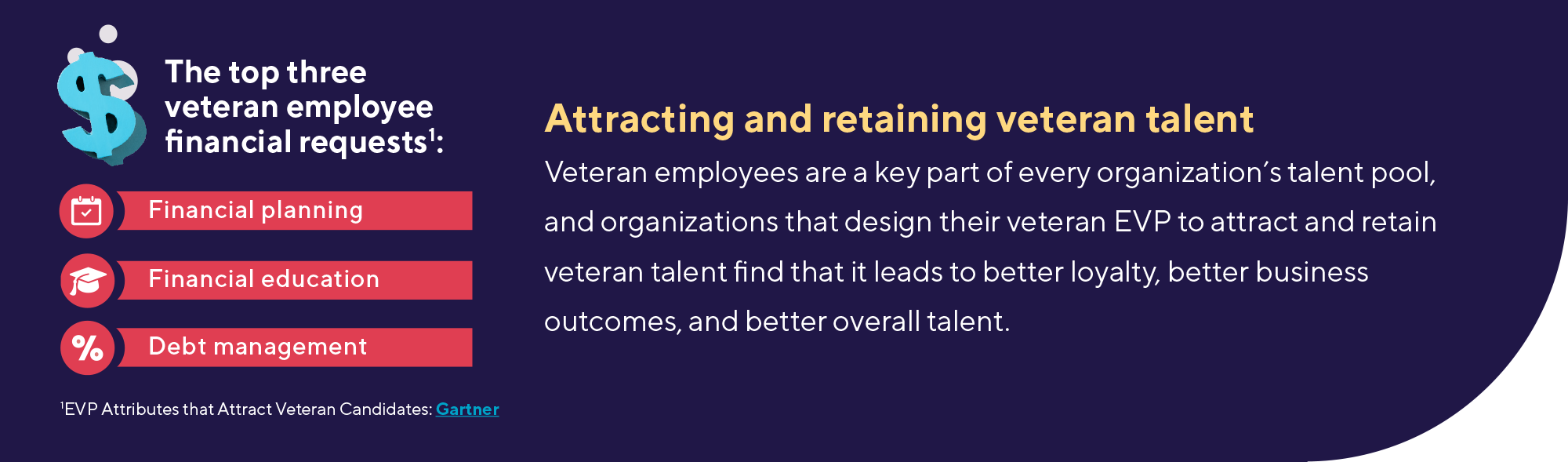
Veteran employees are a key part of every organization’s talent pool. While many companies have invested in veteran-focused employee resource groups, specialized recruitment teams, or tailored onboarding programs, one area often underutilized is financial well-being support.

While financial health is a vital consideration for all employees, veterans often face distinct challenges and circumstances as they transition from military to civilian life. Many are dealing with everyday financial issues — like budgeting, choosing workplace benefits, and planning for retirement — for the first time. Veterans may also carry significant debt, including student loans and credit card balances, and struggle with balancing short-term needs with long-term financial stability. As a result, financial education and counseling can be a critical and much-appreciated benefit for this segment of your workforce.

Here’s a look at how you can design a meaningful and impactful financial wellness program to attract, engage, and retain veteran talent.

Key Points

•   Veterans often face significant financial challenges and may have lower financial literacy compared to civilians.

•   Many veterans have significant student and other debt, as well as low (or no) emergency savings.

•   Employers can support veterans by offering student loan repayment benefits and emergency savings plans.

•   Financial education and coaching can help veterans manage budgets, reduce debt, and plan for the future.

•   Employers can support retirement readiness by offering veteran-specific guidance and employer 401(k) match incentives.

Student Loan Employer Contributions

Despite having access to significant federal veterans’ education benefits, not all veterans leave the service debt-free. Indeed, more than a quarter of veteran undergraduate students have taken out private and federal student loans (with a median amount of $8,000) to complete their education, according to The Pew Charitable Trusts. Their data suggests that the majority of undergraduate student veterans borrow primarily to cover living expenses such as housing and child care. In addition, many veterans accrue student loan debt when they co-sign or take out loans for their children.

Offering student loan repayment benefits is a powerful way to demonstrate support for veterans, as well as all employees who carry student debt. One way to do this on a tax-advantaged basis is through an educational assistance program. Under current law, employers can provide up to $5,250 tax-exempt annually toward a qualified employee’s student loan repayment through 2025 (and possibly beyond, pending legislation).

Thanks to the SECURE 2.0 Act of 2022, another way employers can support workers with student debt is by making matching contributions to retirement plans based on employees’ student loan payments. The purpose of the law is to assist employees who may, because of their student loan debt, decide against making elective contributions by payroll reduction and, as a result, miss out on employer matching contributions.

Emergency Savings Programs

Veteran financial wellness also suffers among those who have less in liquid savings or feel they could not absorb an unexpected financial shock. Research indicates that around 38% of veterans have less than $500 in an emergency savings fund, or no fund at all. These numbers suggest that one way to help relieve financial stress among veteran employees is through an employer-sponsored emergency savings plan.

These plans allow employees to contribute after-tax payroll deductions automatically into a customized savings account. Many employers also make matching contributions, much as they might with a 401(k). Depending on plan design, these funds can be available at any time and for any reason. In addition, most Emergency Savings Accounts (ESAs) are portable, meaning that veterans and other employees can take advantage of the program and retain its benefits even when they have a change in employment.

Help With Credit Card Debt

Another factor that commonly impacts employee financial well-being is high-interest debt, and this may be particularly true for veterans. According to research by the nonprofit group American Consumer Credit Counseling, 41% of veterans have $5,000 or more in credit card debt, compared to only 28% of civilians; 27% have $10,000 or more in credit card debt while only 16% of civilians do; and 10% have $20,000 or more in credit card debt, compared to 7% of civilians.

For any employee carrying a substantial credit card balance, high interest charges and minimum payment structures can create a cycle of debt that’s hard to break free from. Minimum payments often barely cover the interest, which can result in years of payments with little reduction in the outstanding balance.

Here are some ways employers can help support employees having trouble getting ahead of credit card debt:

•   Financial education programs: Consider offering workshops or webinars on budgeting, debt reduction strategies (like the snowball or avalanche method), and credit management. In addition, you might offer access to financial literacy platforms or tools that explain interest rates, minimum payments, and the long-term cost of debt.

•   Financial coaching and credit counseling: You might partner with a local financial counselor or a nonprofit organization to offer employees free or subsidized one-on-one financial coaching and debt counseling.

•   Flexible payroll options: Giving employees access to their earnings before payday in case of an emergency can help workers pay their bills on time, avoid late fees, and reduce their reliance on credit cards for everyday expenses.

Recommended: How Financial and Mental Health Can Collide With Work

Balance Short-Term Needs and Long-Term Financial Goals

Veterans often need to juggle short-term needs (like finding housing, covering moving expenses, or supporting a family) with long-term goals like retirement. Balancing these competing demands can be especially difficult if they’re dealing with debt and learning how to manage money without military infrastructure.

Employers can support retirement readiness by offering clear, veteran-specific guidance on retirement planning, including how to roll over Thrift Savings Plans, how to integrate VA disability benefits into long-term financial planning, and how to catch up on retirement savings. Employer 401(k) match incentives and targeted education on retirement investment strategies can also be especially impactful.

The Takeaway

It’s essential to analyze your workforce — and the talent you’re looking to hire — to understand what programs will best serve your veteran employees’ needs. But implementing a few hallmark veteran-ready financial well-being programs can help you improve the overall financial wellness of your workforce and attract and retain top talent.

SoFi at Work offers a benefits platform, education resources, and financial counseling that can help you increase employee productivity, loyalty, and overall well-being.


Photo credit: iStock/SDI Productions

Products available from SoFi on the Dashboard may vary depending on your employer preferences.

Advisory tools and services are offered through SoFi Wealth LLC, an SEC-registered investment adviser. 234 1st Street San Francisco, CA 94105.

SoFi Student Loan Refinance Loans, Personal Loans, Private Student Loans, and Mortgage Loans are originated through SoFi Bank, N.A., NMLS #696891 (Member FDIC), (www.nmlsconsumeraccess.org ). The 529 Savings and Selection Tool is provided by SoFi Wealth LLC, an SEC-registered investment adviser. For additional product-specific legal and licensing information, see SoFi.com/legal. 2750 E. Cottonwood Parkway #300 Cottonwood Heights, UT 84121. ©2025 Social Finance, LLC. All rights reserved. Information as of November 2025 and is subject to change.


Financial Tips & Strategies: The tips provided on this website are of a general nature and do not take into account your specific objectives, financial situation, and needs. You should always consider their appropriateness given your own circumstances.

SOAW-Q225-012

Read more

Buying a Home With Cash vs. a Mortgage

Most people probably expect to use a mortgage to purchase a home, but what if you have enough to pay in cash?

In a hot housing market, an all-cash offer can give homebuyers a significant competitive edge over those whose bids are contingent on getting a mortgage. And who wouldn’t want to avoid monthly mortgage payments if they could?

Does it really make sense, though, to forgo getting a home loan — especially when you could invest your money and potentially earn a higher return?

Key Points

•   Buying a home with cash avoids mortgage interest, speeds the home-buying process, and can give your offer an edge over others.

•   A disadvantage of cash purchases is reduced liquidity, which can mean you miss out on investment opportunities and don’t have money available for emergencies.

•   Getting a mortgage keeps your cash liquid, allowing you to make alternative investments, and offers a tax deduction on the interest.

•   Mortgages have higher long-term costs and a more complex buying process than paying cash.

•   Delayed financing lets you buy a house with cash, then refinance within six months, combining the benefits of paying cash with the flexibility of a mortgage.

Cash vs. Mortgage: A Quick Overview

According to the National Association of Realtors®, 32% of home sales in January 2024 were cash deals.

Those buyers undoubtedly had a mix of motivations when they decided to pay with cash. Some people don’t like the idea of carrying a big debt — or paying the interest on that debt. Others might want to skip some of the lending costs and nerve-wracking processes (approvals, appraisals, inspections, etc.) that are required when taking out a home loan.

And, yes, a cash offer can be an attention-getter when there are multiple offers on a house.

But it’s also important to look at the advantages of having a mortgage.

Before you move forward with a home purchase, consider some of the pros and cons of buying a house with cash vs. a mortgage.


Get matched with a local
real estate agent and earn up to
$9,500 cash back when you close.

Recommended: What Is the Average Down Payment on a Home?

Pros of Buying a House With Cash

There are some clear benefits to paying cash for a house, including the following.

Beating Out Other Buyers

A cash offer can help you compete more effectively with real estate investors who are able to pay cash for properties of interest.

Or you may be able to negotiate a better price with a seller who’s looking for a quick closing. If your seller already had an offer or two fall through because of contingency issues, it’s possible you’ll be perceived even more favorably.

Speeding Up the Buying Process

When you use a mortgage to buy a home, you can expect to spend a few anxious days working on your loan application, pulling together your paperwork, and waiting for the lender’s approval.

Then you’ll have to wait for a property appraisal, a title search, and other steps that let the lender know the collateral being used for the loan is solid.

With cash, you might be able to avoid some of those steps — and the costs that go with them. (You still may want to follow through, though, with procedures meant to ensure that your purchase is sound, even if they aren’t required. Otherwise, undiscovered issues could come back to bite you if you refinance or sell the home in the future.)

Buying When the Appraised Value Isn’t Market Value

Paying cash for a house can allow you to purchase a home that won’t appraise for the seller’s asking price (or the price the average buyer may be willing to pay). If you understand the problems and plan to make necessary improvements, you may still decide it’s the house you want.

No Monthly Payment and Fewer Long-Term Costs

With a cash purchase, you won’t have a monthly mortgage payment in your budget, which can feel quite freeing. And you can avoid some of the long-term costs associated with a mortgage, including interest and private mortgage insurance.

Cons of Buying a Home With Cash

Paying cash for a house also has drawbacks. Here are a few.

Losing Out on Investing Potential

Yes, if you pay cash, you’ll save by not paying interest, but could you make more money year to year by investing your money elsewhere? If you can lock in a low interest rate on a mortgage, it could free up cash for other purposes, including saving for retirement. (Plus, diversifying your portfolio is recommended in most cases. If you put most of your cash into your house, that’s just one asset — the opposite of diversification.)

Remember, diversification can help reduce some investment risk. However, it cannot guarantee nor fully protect in a down market.

Keep in mind also that if you liquidate assets to help pay for the home, you won’t just lose out on the earnings potential. If those assets have gone up in value since you purchased them, you also may trigger capital gains taxes.

Using Up All Your Cash

If purchasing your home with cash takes a big chunk out of your savings, you might not have money you might need later for unexpected expenses or home improvements.

And if you end up using a credit card for those costs, the interest rate will likely be higher than it would be for a mortgage. The average rate in February 2025 for cards issued by commercial banks was 21.37%.

Cash Isn’t Always Better

An all-cash offer is a power move, but it won’t necessarily win the day. Though the thought of a quicker and easier closing will probably get the attention of the seller, they may still go with the highest offer, even if it includes a mortgage contingency.

Missing Out on the Mortgage Tax Deduction

If you itemize on your federal taxes, you won’t be able to deduct your mortgage interest if you pay cash for your home. Depending on what you’d pay in interest each year and what your tax bracket is, this could be a significant consideration.

The deduction can also be taken on loan interest for second homes, as long as it stays within the limits.

First-time homebuyers can
prequalify for a SoFi mortgage loan,
with as little as 3% down.


How to Buy a House With Cash

If you like the idea of being an all-cash buyer and you’re wondering what that process involves, here are some next steps to consider.

Consolidate Your Cash

Getting your cash together in one place could take a while, so give yourself some time. If you’re ready to buy, you may want to move your money from savings accounts, and any investments and other assets you’ve liquidated, to one easy-to-access account.

If you already own a home and plan to sell it, you’ll have to factor that into this process, as well, especially if you need the cash from the sale of your current home to put toward the purchase of your new home.

Negotiate the Price and Sign the Contract

Once you know how much cash you have to work with, you can make an offer on a home. Be prepared to provide proof that you have enough money to make the purchase. If the offer is accepted, you’ll sign a contract.

Consider the Value of an Inspection

If you’re paying cash, a home inspection won’t be required. However, it’s a good way to protect yourself in case there are hidden issues. The same goes for getting an appraisal, owner’s title insurance, a termite inspection, and homeowners insurance.

Prepare for the Closing

The closing is when you’ll seal the deal and pay the seller. You may be asked to provide a cashier’s check for the amount you owe, or you might be able to pay with an electronic transfer.

How to Obtain a Mortgage

If you’ve decided that buying a house — or a second home — with cash isn’t doable or practical, then you’ll need to know how much you can afford to borrow.

Getting prequalified and preapproved are basics in securing a mortgage. The first provides a ballpark estimate of how much you may be able to borrow and at what rates, and the other will tell you exactly how much you can probably borrow and at what terms.

When you’re getting preapproved, lenders will review things like your credit scores, employment history, earnings, assets, and debt to make sure you can meet your mortgage payment obligations.

You’ll need to consider if your savings are enough for your down payment, closing costs, moving costs, and home repairs. Even if a 20% down payment is ideal, that’s not always realistic or required.


💡 Quick Tip: If you refinance your mortgage and shorten your loan term, you could save a substantial amount in interest over the lifetime of the loan.

Delayed Financing: An Option for Cash Buyers

Delayed financing is a way to combine the benefits of cash and mortgage home buying. In short, it’s a way for you to buy a house with cash but then refinance the property within the first six months to get some of your cash investment back.

This route gives you the advantages of being a cash buyer but the ability to regain some of your sacrificed liquidity.

The cash-out amount can vary by loan program and there are specific eligibility requirements. For example, lenders generally require that the purchase was an arm’s-length transaction. This means the buyer and seller do not have any relationship outside of this transaction.

The stipulation is included to help ensure that each party is acting without pressure from the other and that both have access to the same information about the deal.

You may also need to show the lender a copy of your settlement statement showing the home was purchased with cash, a title report showing that you are the owner and that there are no liens on the property, and proof that your own money was used to make the purchase (no borrowed, gifted, or business funds).

The Takeaway

Paying cash for a house can be a good way to get attention in a hot seller’s market. And the idea of avoiding a monthly mortgage payment — and interest — can be appealing. But there are potential downsides to an all-cash deal.

Looking for an affordable option for a home mortgage loan? SoFi can help: We offer low down payments (as little as 3% - 5%*) with our competitive and flexible home mortgage loans. Plus, applying is extra convenient: It's online, with access to one-on-one help.


SoFi Mortgages: simple, smart, and so affordable.

FAQ

Is it better to get a house with cash or a mortgage?

Whether you’re better off paying for your house with cash or a mortgage depends on your financial situation. Paying with cash can expedite the process, gives you immediate access to your home equity, and means you don’t have to pay interest or worry about monthly payments. On the other hand, a mortgage doesn’t tie up your cash, gives you tax benefits, and can help you build your credit if you make your monthly payments promptly.

What are the disadvantages of buying a house with cash”

When you pay cash for your home, the money you spend is no longer liquid, meaning it’s not available for investing, paying off high-interest debt, or using for emergencies. You also miss out on the mortgage tax deduction.

Is buying a home in cash a tax write-off?

Not only is paying cash for your home not a tax write-off, it means that you don’t get the mortgage tax deduction. The deduction is available to homebuyers who have a mortgage up to $750,000 and itemize.


SoFi Loan Products
SoFi loans are originated by SoFi Bank, N.A., NMLS #696891 (Member FDIC). For additional product-specific legal and licensing information, see SoFi.com/legal. Equal Housing Lender.


SoFi Mortgages
Terms, conditions, and state restrictions apply. Not all products are available in all states. See SoFi.com/eligibility-criteria for more information.


*SoFi requires Private Mortgage Insurance (PMI) for conforming home loans with a loan-to-value (LTV) ratio greater than 80%. As little as 3% down payments are for qualifying first-time homebuyers only. 5% minimum applies to other borrowers. Other loan types may require different fees or insurance (e.g., VA funding fee, FHA Mortgage Insurance Premiums, etc.). Loan requirements may vary depending on your down payment amount, and minimum down payment varies by loan type.

Financial Tips & Strategies: The tips provided on this website are of a general nature and do not take into account your specific objectives, financial situation, and needs. You should always consider their appropriateness given your own circumstances.

Non affiliation: SoFi isn’t affiliated with any of the companies highlighted in this article.

Checking Your Rates: To check the rates and terms you may qualify for, SoFi conducts a soft credit pull that will not affect your credit score. However, if you choose a product and continue your application, we will request your full credit report from one or more consumer reporting agencies, which is considered a hard credit pull and may affect your credit.

Tax Information: This article provides general background information only and is not intended to serve as legal or tax advice or as a substitute for legal counsel. You should consult your own attorney and/or tax advisor if you have a question requiring legal or tax advice.

‡Up to $9,500 cash back: HomeStory Rewards is offered by HomeStory Real Estate Services, a licensed real estate broker. HomeStory Real Estate Services is not affiliated with SoFi Bank, N.A. (SoFi). SoFi is not responsible for the program provided by HomeStory Real Estate Services. Obtaining a mortgage from SoFi is optional and not required to participate in the program offered by HomeStory Real Estate Services. The borrower may arrange for financing with any lender. Rebate amount based on home sale price, see table for details.

Qualifying for the reward requires using a real estate agent that participates in HomeStory’s broker to broker agreement to complete the real estate buy and/or sell transaction. You retain the right to negotiate buyer and or seller representation agreements. Upon successful close of the transaction, the Real Estate Agent pays a fee to HomeStory Real Estate Services. All Agents have been independently vetted by HomeStory to meet performance expectations required to participate in the program. If you are currently working with a REALTOR®, please disregard this notice. It is not our intention to solicit the offerings of other REALTORS®. A reward is not available where prohibited by state law, including Alaska, Iowa, Louisiana and Missouri. A reduced agent commission may be available for sellers in lieu of the reward in Mississippi, New Jersey, Oklahoma, and Oregon and should be discussed with the agent upon enrollment. No reward will be available for buyers in Mississippi, Oklahoma, and Oregon. A commission credit may be available for buyers in lieu of the reward in New Jersey and must be discussed with the agent upon enrollment and included in a Buyer Agency Agreement with Rebate Provision. Rewards in Kansas and Tennessee are required to be delivered by gift card.

HomeStory will issue the reward using the payment option you select and will be sent to the client enrolled in the program within 45 days of HomeStory Real Estate Services receipt of settlement statements and any other documentation reasonably required to calculate the applicable reward amount. Real estate agent fees and commissions still apply. Short sale transactions do not qualify for the reward. Depending on state regulations highlighted above, reward amount is based on sale price of the home purchased and/or sold and cannot exceed $9,500 per buy or sell transaction. Employer-sponsored relocations may preclude participation in the reward program offering. SoFi is not responsible for the reward.

SoFi Bank, N.A. (NMLS #696891) does not perform any activity that is or could be construed as unlicensed real estate activity, and SoFi is not licensed as a real estate broker. Agents of SoFi are not authorized to perform real estate activity.

If your property is currently listed with a REALTOR®, please disregard this notice. It is not our intention to solicit the offerings of other REALTORS®.

Reward is valid for 18 months from date of enrollment. After 18 months, you must re-enroll to be eligible for a reward.

SoFi loans subject to credit approval. Offer subject to change or cancellation without notice.

The trademarks, logos and names of other companies, products and services are the property of their respective owners.


SOHL-Q225-064

Read more
TLS 1.2 Encrypted
Equal Housing Lender