A young woman with glasses and long dark hair sits at a table with a window view, writing in a workbook with a pencil.

Filling Out FAFSA for Divorced Parents

The Free Application for Federal Student Aid or FAFSA® form is required for students who are interested in receiving federal financial aid. Dependent students must report parents’ information when they fill out the FAFSA form, but this can become complicated when a student has parents who are divorced.

The federal government treats divorced parents differently than parents who are married. Understanding the requirements for the financial information required by the FAFSA could help students improve their chances of receiving federal student aid and potentially lower the amount of student loans they need to obtain a degree.

Continue reading for more information on filling out the FAFSA if your parents are divorced or separated.

Key Points

•   For divorced parents, FAFSA requires financial information from the parent who provided more financial support.

•   If the parents split financial support equally, the parent with the greater income must complete the FAFSA.

•   If divorced parents still live together, FAFSA requires reporting both parents’ information.

•   If the contributing parent is remarried, you may need to include your stepparent’s financial information on the form.

•   Beyond federal aid, students can explore scholarships, grants, part-time jobs, and private loans to cover gaps in tuition and living costs.

What Complicates FAFSA for Divorced Parents?

The FAFSA treats parents who are divorced differently than it treats parents who are married. If a student’s parents are married, information about both parents must be included on the FAFSA form. If a student’s parents are divorced or separated, the parent who provided more financial support during the last 12 months is considered “the contributor” and must provide their information. If both parents provided an equal amount of financial support, the parent with the greater income and assets is the contributor and must provide their information.

If the contributing parent has remarried by the time a student is filing the FAFSA, your stepparent is considered a parent if they have adopted you. If they haven’t adopted you, the form may still prompt your parent to provide your stepparent’s information depending on their tax filing status.

Recommended: Important FAFSA Deadlines for Students and Parents

FAFSA Tips for Students with Divorced Parents

Here are some important questions to ask yourself and tips for completing the FAFSA application with divorced parents:

Who to Count as Parents for FAFSA

According to the FAFSA, a “parent” means your legal (biological and/or adoptive) parent.

If your parents are divorced, the FAFSA requests information from the parent who provided more financial support during the previous 12 months. If both parents shared support equally, you’ll provide information for the parent who earns more.

If your parent is remarried, you may need to provide information on the stepparent, as well.

What Is a Custodial Parent?

In the past, FAFSA defined a custodial parent as the parent you spend the most time living with during the year. The parent responsible for filing the FAFSA is now determined based on whichever parent provides more financial support to the student.

What About Stepparents and Common-Law Spouses?

Generally, you’ll need to provide the financial information for a stepparent who is married to the custodial parent.

Should Alimony Be Included as Income?

Any alimony or child support received by the custodial parent should be reported on the FAFSA.

Parent’s Education Level

The FAFSA will ask you to include the education levels of your parents. You only need to include information about either your birth or adoptive parents. In this section, the FAFSA does not need information about your stepparent.

What If My Divorced Parents Still Live Together?

If your parents live together, but are divorced, the marital status should be “Unmarried and both legal parents living together.” You need to provide information about both of them on the FAFSA form.

If your parents live together, but are separated, the marital status should be “married or remarried.” Do not use “divorced or separated.” You should provide information about both of them on the FAFSA form.

Additional Sources to Finance Tuition

Many students seek alternative financial aid to finance college if they do not qualify for federal aid or if the amount of federal aid allocated will not cover the entire tuition cost.

About half of college tuition and living expenses are paid by the income and savings of a student’s family members, according to a Sallie Mae study, “How America Pays for College 2025.”

Federal Aid

There are many other sources that could help a student obtain funding for tuition, books, and living expenses. When filling out the FAFSA, students are applying for federal financial aid. This includes federal student loans, the federal work-study program, and some federal grants. However, many states and colleges use the information from the form to award their own grants, scholarships, and loans.

Federal aid is provided on a first-come first-served basis, so it can potentially be helpful to file your FAFSA early. Check out even more detailed information in SoFi’s FAFSA guide.

Federal student loans can be either subsidized or unsubsidized.

Subsidized federal loans are given to students based on financial need. The interest on these loans is subsidized by the federal government, which means students will not be responsible for repaying the interest that accrues while they are enrolled at least part time or during their grace period.

Unsubsidized loans are not awarded based on need and will begin accruing interest as soon as the loan is disbursed.

Recommended: Types of Federal Student Loans

Scholarships

If federal aid is not enough to cover the cost associated with attending college, there are other options available to help you pay for college. Two sources of funding are grants and scholarships. These are highly sought after by students because they do not have to be repaid. Many of them require students to apply annually.

SoFi’s Scholarship Search Tool can help you find scholarships based on your location, level of study, and more.

Part-Time Job

Some students may also consider getting a part-time job to help pay for tuition or living expenses. Consider looking both on and off campus, or even online.

Private Student Loans

When other financial aid isn’t enough, private student loans can fill the funding gap for expenses like tuition, housing, and books.

Private student loans are offered by private organizations, like banks or online lenders, and can be more expensive than federal student loans. They also don’t come with the same borrower protections as federal loans, like deferment or income-driven repayment. That’s why private student loans are generally considered an option after students have exhausted all other sources of financing.

The loan terms and interest rate will vary from lender to lender and will likely be determined by the borrower’s financial history and credit score. Those interested in borrowing a private loan should consider shopping around with various lenders to find the best fit for them.

The Takeaway

Navigating the FAFSA process can be complex, especially for students whose parents are divorced or separated. The key is to correctly identify the “contributor” parent based on who provided more financial support, and to understand how stepparents and living arrangements can impact the application. By understanding these nuances and exploring all available funding options — including federal aid, scholarships, grants, part-time jobs, and private student loans — students can maximize their chances of securing the financial assistance needed for their education.

If you’ve exhausted all federal student aid options, no-fee private student loans from SoFi can help you pay for school. The online application process is easy, and you can see rates and terms in just minutes. Repayment plans are flexible, so you can find an option that works for your financial plan and budget.


Cover up to 100% of school-certified costs including tuition, books, supplies, room and board, and transportation with a private student loan from SoFi.

FAQ

Does FAFSA require both parents’ income if they are divorced?

If your parents are divorced, you’ll generally report the information for the parent who provided the most financial support for the past 12 months. If your parents split financial support equally, then the parent with the greater income is responsible for completing the FAFSA.

How do you determine who parent 1 and parent 2 are for FAFSA?

The FAFSA doesn’t currently specify a parent “1” or “2.” Instead, it directs you to provide information for the “parent” (if your parents are divorced, this would be the parent who provided more financial support in the past 12 months), then provide information for the “parent’s spouse or partner.”

What is the maximum parent income to qualify for FAFSA?

There are no income limits when it comes to filling out the FAFSA or qualifying for federal financial aid. Even if your parents are high earners, you could still qualify for certain types of aid, such as scholarships or federal student loans. The FAFSA application is free to fill out, so it’s almost always worth taking the time to do so.


SoFi Private Student Loans
Please borrow responsibly. SoFi Private Student loans are not a substitute for federal loans, grants, and work-study programs. We encourage you to evaluate all your federal student aid options before you consider any private loans, including ours. Read our FAQs.

Terms and conditions apply. SOFI RESERVES THE RIGHT TO MODIFY OR DISCONTINUE PRODUCTS AND BENEFITS AT ANY TIME WITHOUT NOTICE. SoFi Private Student loans are subject to program terms and restrictions, such as completion of a loan application and self-certification form, verification of application information, the student's at least half-time enrollment in a degree program at a SoFi-participating school, and, if applicable, a co-signer. In addition, borrowers must be U.S. citizens or other eligible status, be residing in the U.S., Puerto Rico, U.S. Virgin Islands, or American Samoa, and must meet SoFi’s underwriting requirements, including verification of sufficient income to support your ability to repay. Minimum loan amount is $1,000. See SoFi.com/eligibility for more information. Lowest rates reserved for the most creditworthy borrowers. SoFi reserves the right to modify eligibility criteria at any time. This information is subject to change. This information is current as of 4/22/2025 and is subject to change. SoFi Private Student loans are originated by SoFi Bank, N.A. Member FDIC. NMLS #696891 (www.nmlsconsumeraccess.org).

SoFi Bank, N.A. and its lending products are not endorsed by or directly affiliated with any college or university unless otherwise disclosed.

SoFi Loan Products
SoFi loans are originated by SoFi Bank, N.A., NMLS #696891 (Member FDIC). For additional product-specific legal and licensing information, see SoFi.com/legal. Equal Housing Lender.


External Websites: The information and analysis provided through hyperlinks to third-party websites, while believed to be accurate, cannot be guaranteed by SoFi. Links are provided for informational purposes and should not be viewed as an endorsement.
Non affiliation: SoFi isn’t affiliated with any of the companies highlighted in this article.

SOISL-Q425-003

Read more
A wallet has money, credit cards, and a mobile phone spilling out of it.

How to Avoid Overdraft Fees

In your financial life, overdrafting your bank account is bad enough; no one likes to feel as if they’ve run out of money. But being charged an overdraft fee can dig you even deeper into the hole.

That’s why it can make sense to take some simple steps to avoid overdraft fees. You may be able to get a reprieve by contacting your bank or by linking accounts, among other moves.

In this guide, you’ll learn more about overdrafting and the charges involved, plus smart ideas for how to avoid overdraft fees.

Key Points

•  Regularly monitor your account balance to track available funds and avoid spending more than you have to prevent an overdraft.

•  Set up low balance alerts to receive notifications and take action before overdrafts occur.

•  Manage overdraft coverage options to control when and how overdrafts are handled.

•  Link your checking account to a savings account for automatic transfers to cover low balances.

•  Use a modern mobile banking app for real-time account management and alerts.

What Is an Overdraft Fee?

If you pay out more than is in your bank account when writing a check, using your debit card, or making an electronic bill payment, your bank may go ahead and process the payment you’ve initiated, leaving you with a negative balance.

The bank will likely charge you for the privilege of letting you spend more than you have, and that is an overdraft fee.

How Much Do Overdraft Fees Cost?

Overdraft fees aren’t cheap. The cost can vary somewhat depending on the bank or financial institution, with the current average being $26.77 according to survey data. However, the fee can be as high as $30 to $35.

It’s important to note that the overdraft fee is generally per overdraft. So if you overdraft your account and don’t realize you overdrafted, you might make multiple purchases and incur a separate fee on each one.

And these fees can add up quickly. At almost $27 a pop, just three small purchases could set you back over $75. That’s why it’s helpful to learn how to get rid of overdraft fees.

Some banks may also charge extended overdraft fees (sometimes called continuous or sustained fees) if your account doesn’t go back into positive territory within a few days.

In 2024, Americans paid $12.1 billion in overdraft and related non-sufficient funds (NSF) fees each year. However, some banks are beginning to lower their overdraft fees. Other financial institutions don’t charge any fees for the first $50 of overdraft, which is the SoFi overdraft limit, for example.

8 Smart Ways to Avoid Overdraft Fees

If your bank does charge an overdraft fee, you’ll want to make sure there’s enough money in your account so that you don’t spend more than you have. These strategies can help you avoid overdraft fees.

1. Monitor Your Account Balance Regularly

How often do you monitor your balance? It’s a good idea to make a habit of checking your accounts weekly or even more frequently to make sure your balances aren’t too low.

This can be done quickly online, via mobile app, when you withdraw money from the ATM, and/or by calling the bank and getting an automated update on your account.

One simple way to avoid overdraft fees is to keep a cash cushion in your checking account. A cushion means you have a little more stashed in your account than you typically spend each month in order to cover unexpected or forgotten charges.

This cash cushion can help prevent overdraft. You might even add it as an item on your budget to make sure it gets replenished if you use it up.

Increase your savings
with a limited-time APY boost.*


*Earn up to 4.00% Annual Percentage Yield (APY) on SoFi Savings with a 0.70% APY Boost (added to the 3.30% APY as of 12/23/25) for up to 6 months. Open a new SoFi Checking and Savings account and pay the $10 SoFi Plus subscription every 30 days OR receive eligible direct deposits OR qualifying deposits of $5,000 every 31 days by 3/30/26. Rates variable, subject to change. Terms apply here. SoFi Bank, N.A. Member FDIC.

2. Set up Low Balance Alerts

An easy way to help avoid unexpected overdrafts, plus possible overdraft fees, is to set up some automatic alerts.

•   One that is particularly helpful is a low balance alert, which means you will be notified (by text, email, or cell phone notification) whenever your balance falls below a certain amount.

You could then immediately transfer money from savings, make a mobile deposit into your account, or hold off on making any purchases until another paycheck comes in.

•   Another useful alert you may be able to set up is the overdraft alert. This means you would be notified whenever you overdraft your account.

This alert won’t help you avoid the initial overdraft fee, but it could stop you from continuing to make purchases and incurring more overdraft fees.

3. Understand and Manage Overdraft Coverage

Customers typically have to “opt-in” to a bank’s overdraft coverage program, which many do without thinking much about it when they open their accounts.

This gives the institution permission to clear a transaction even if there is not enough money to cover it in the account by essentially loaning you the money. They may then charge you a fee for this service. You can opt out of overdraft coverage. Once you do this, any purchase you make that you don’t have money in your account to pay for will be declined without a fee.

If you’re unsure about whether you’re enrolled in an overdraft program when you opened your account, you can contact your bank to find out whether you have this coverage or not.

Keep in mind, though, that opting out of overdraft coverage programs typically does not protect you from fees charged for bounced checks.

4. Link Your Checking to a Savings Account

Next on the list of how to avoid overdraft fees: Connect your accounts for overdraft protection.

Overdraft protection service is different from overdraft coverage. This service, which typically involves signing a contract to set up, will link your checking account to another account at the same institution.

Then, in the event that there’s not enough cash in your checking account to cover a transaction, the needed money would be transferred from the linked account to cover it. Some banks may charge a fee for the funds transfer, but these charges are typically lower than overdraft fees. Other banks offer overdraft protection transfers for free.

It’s important to remember, however, that some savings accounts have a limit of six withdrawals per month. If you go over the limit you could be charged an excessive transaction fee.

Recommended: How to Make Money From Home

5. Manage Your Autopay and Bill Pay Dates

It’s a good idea to check when monthly payments are due, and see how that dovetails (or doesn’t) with your paycheck schedule. For instance, you might be more likely to overdraft your account if your credit card payment is due a couple of days before your paycheck hits. If that’s the case, you might try contacting your credit card issuer and see if they could move your due date slightly to better accommodate your cash flow. Many companies will do that for you.

Check the autopay dates for all your bills to make sure you’ll have enough in your account to cover them.

6. Use a Modern Mobile Banking App

Another way to avoid overdraft fees is to use a mobile bank app, which can let you see your account balance, pending payments, and spending in one quick glance at your mobile device.

Mobile banking can make it easy to eyeball how your money looks so you can avoid overspending. You can check your balance on the app before you make purchases in stores or online to make sure you have sufficient funds in your account.

7. Use Direct Deposit to Your Advantage

When you enroll in direct deposit for your paychecks, you’ll generally get your money faster since it’s directly deposited into your account by your employer. You’ll also know exactly when the money will be deposited into the account — typically on every pay day, which might be bi-weekly. Otherwise, if you have an actual paper check to deposit, you have to take it to the bank, which can be inconvenient and time consuming. It also usually takes a few days for the check to clear and the money to be available to you.

Not only that, at some banks, if you have direct deposit, you can get paid up to two days early.

It’s possible to use direct deposit for other payments as well, such as tax refunds and Social Security payments.

8. Switch to a Bank With No Overdraft Fees

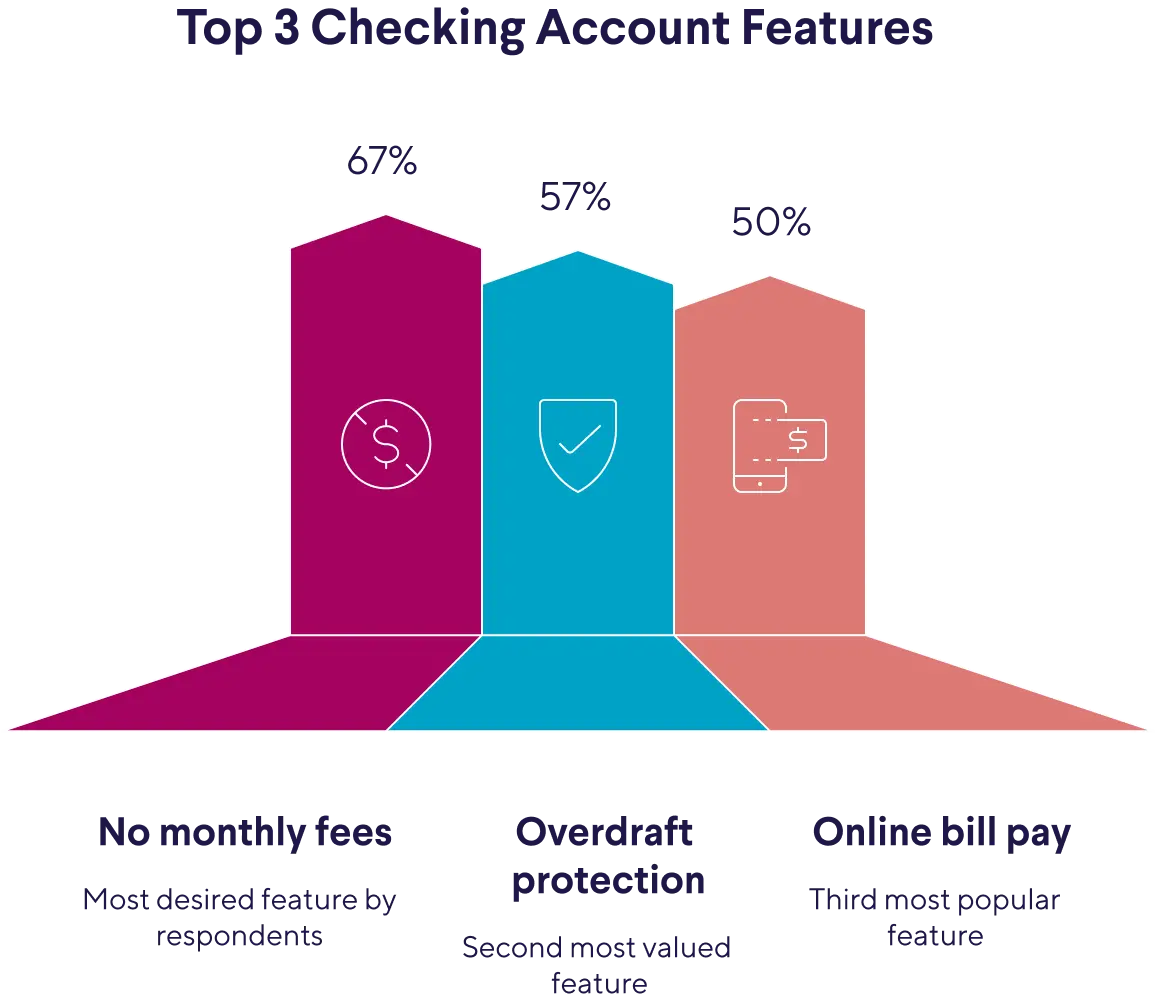
Banks are recognizing that overdraft fees can be a pain point for consumers. In fact, in a 2024 SoFi Banking survey, 57% of respondents said overdraft protection is an important feature in a bank account.

top 3 checking account features based on sofi survey

Source: SoFi’s 2024 Banking Survey

Some banks are now providing fee-free overdraft coverage. This may be limited to a certain amount, such as covering the first $50 of an overdraft, as mentioned earlier. It may also require the customer to get back to a positive balance within a certain period of time (say, until your next direct deposit hits).

It can be wise to shop around for this feature and check online vs. traditional banks for it.

What to Do If You’ve Already Been Charged an Overdraft Fee

If you’ve overdrawn your account, here are some steps to take to help avoid overdraft fees or limit them:

•  The best first action is generally to transfer money into the account right away. You might still be able to prevent an overdraft fee.

You can check to see if your provider has a daily cutoff time or deadline for adding money to an account to correct a negative balance that same day to avoid fees.

Even if you miss the cutoff, transferring money into the account quickly can prevent other fees. That’s because leaving a balance negative for several days can sometimes result in an extended overdraft fee.

•  If you are charged an overdraft fee, however, that doesn’t automatically mean you are stuck paying it. It doesn’t hurt to negotiate with the institution to try to have the fee reimbursed.

You can try to get overdraft fees waived by calling the bank and politely asking if they will remove the charge — if it’s your first offense, you might prevail. You may also want to ask your bank if it has a forgiveness program. Some institutions have policies to waive the first fee charged each year or if a customer is experiencing economic hardship.

How to Avoid an Overdraft Fee at the Checkout

One helpful habit to try: When you’re at the checkout about to make a purchase, first make sure you have enough money in your bank account before you proceed with the transaction. Here’s how.

•  Use your mobile banking app to get an instant balance check on your account (many banking apps offer this feature). That way you can see at a glance if your purchase will be covered.

•  Know your current balance vs. your available balance. There may be deposits or other transactions still pending in your current balance, which could affect what you have available to spend. Focus on the available balance of your account.

•  When using a debit card to make a purchase online, an item may be on back order, and your card might not be charged until the item ships. It can be easy to forget about it and then not have enough funds in your account to cover it when the item does ship. To avoid an overdraft, make a note about delayed charge in your transaction register. You can also set a reminder on your phone to check on the item and the money in your account.

The Takeaway

There are a few simple ways to avoid overdraft fees, such as opting out of overdraft coverage, setting up an automatic low-balance alert, linking your accounts, keeping a little cash cushion in your account, or banking where you get a level of no-fee overdraft coverage.

Interested in opening an online bank account? When you sign up for a SoFi Checking and Savings account with eligible direct deposit, you’ll get a competitive annual percentage yield (APY), pay zero account fees, and enjoy an array of rewards, such as access to the Allpoint Network of 55,000+ fee-free ATMs globally. Qualifying accounts can even access their paycheck up to two days early.


Better banking is here with SoFi, NerdWallet’s 2024 winner for Best Checking Account Overall.* Enjoy 3.30% APY on SoFi Checking and Savings with eligible direct deposit.

FAQ

Can I get an overdraft fee refunded?

It may be possible to get an overdraft fee refunded. Call the bank and ask if they will refund the fee. If it’s the first time you’ve ever overdrafted your account, they might give you a refund. Some banks even have policies to waive the fee in certain situations — such as if a customer is facing economic hardship. So if there was an extenuating circumstance, be sure to explain it. But no matter what the circumstances, it doesn’t hurt to ask politely for a refund.

Is it better to turn off overdraft protection?

You may want to opt out of overdraft coverage, which is different from overdraft protection, which usually triggers a fee. Overdraft protection, on the other hand, typically links your checking account to another account at the same bank and if there’s not enough cash in your checking account to cover a transaction, the needed money would be transferred to cover it. Some banks charge a fee for these transfers, others don’t.

Do overdraft fees affect my credit score?

Overdraft fees generally don’t affect your credit score because your checking account activity is not typically reported to the credit bureaus. However, if you overdraft the account and don’t pay the overdraft and any fees incurred, the bank could send the debt you owe to collections. The collection agency can then report the debt to the credit bureaus which can negatively impact your credit score.

How long do I have to pay an overdraft?

How long you have to pay an overdraft is determined by your bank. Some institutions may give you just a day to cover the overdrawn amount plus any fees, others may give you one or two days. It’s important to find out what your bank’s specific policy is, and then follow it to avoid further negative consequences.

What’s the difference between overdraft protection and overdraft coverage?

Overdraft coverage is a service that gives your bank permission to clear a transaction even if there is not enough money in the account to cover it by essentially fronting you the money. They may then charge you a fee for doing so. Overdraft protection, on the other hand, usually links your checking account to another account at the same bank. If there’s not enough cash in your checking account to cover a transaction, the funds would be transferred to cover it. Some banks offer these transfers free of charge.


SoFi Checking and Savings is offered through SoFi Bank, N.A. Member FDIC. The SoFi® Bank Debit Mastercard® is issued by SoFi Bank, N.A., pursuant to license by Mastercard International Incorporated and can be used everywhere Mastercard is accepted. Mastercard is a registered trademark, and the circles design is a trademark of Mastercard International Incorporated.

Annual percentage yield (APY) is variable and subject to change at any time. Rates are current as of 12/23/25. There is no minimum balance requirement. Fees may reduce earnings. Additional rates and information can be found at https://www.sofi.com/legal/banking-rate-sheet

Eligible Direct Deposit means a recurring deposit of regular income to an account holder’s SoFi Checking or Savings account, including payroll, pension, or government benefit payments (e.g., Social Security), made by the account holder’s employer, payroll or benefits provider or government agency (“Eligible Direct Deposit”) via the Automated Clearing House (“ACH”) Network every 31 calendar days.

Although we do our best to recognize all Eligible Direct Deposits, a small number of employers, payroll providers, benefits providers, or government agencies do not designate payments as direct deposit. To ensure you're earning the APY for account holders with Eligible Direct Deposit, we encourage you to check your APY Details page the day after your Eligible Direct Deposit posts to your SoFi account. If your APY is not showing as the APY for account holders with Eligible Direct Deposit, contact us at 855-456-7634 with the details of your Eligible Direct Deposit. As long as SoFi Bank can validate those details, you will start earning the APY for account holders with Eligible Direct Deposit from the date you contact SoFi for the next 31 calendar days. You will also be eligible for the APY for account holders with Eligible Direct Deposit on future Eligible Direct Deposits, as long as SoFi Bank can validate them.

Deposits that are not from an employer, payroll, or benefits provider or government agency, including but not limited to check deposits, peer-to-peer transfers (e.g., transfers from PayPal, Venmo, Wise, etc.), merchant transactions (e.g., transactions from PayPal, Stripe, Square, etc.), and bank ACH funds transfers and wire transfers from external accounts, or are non-recurring in nature (e.g., IRS tax refunds), do not constitute Eligible Direct Deposit activity. There is no minimum Eligible Direct Deposit amount required to qualify for the stated interest rate. SoFi Bank shall, in its sole discretion, assess each account holder's Eligible Direct Deposit activity to determine the applicability of rates and may request additional documentation for verification of eligibility.

See additional details at https://www.sofi.com/legal/banking-rate-sheet.

*Awards or rankings from NerdWallet are not indicative of future success or results. This award and its ratings are independently determined and awarded by their respective publications.

We do not charge any account, service or maintenance fees for SoFi Checking and Savings. We do charge a transaction fee to process each outgoing wire transfer. SoFi does not charge a fee for incoming wire transfers, however the sending bank may charge a fee. Our fee policy is subject to change at any time. See the SoFi Bank Fee Sheet for details at sofi.com/legal/banking-fees/.
^Early access to direct deposit funds is based on the timing in which we receive notice of impending payment from the Federal Reserve, which is typically up to two days before the scheduled payment date, but may vary.

Financial Tips & Strategies: The tips provided on this website are of a general nature and do not take into account your specific objectives, financial situation, and needs. You should always consider their appropriateness given your own circumstances.

Third-Party Brand Mentions: No brands, products, or companies mentioned are affiliated with SoFi, nor do they endorse or sponsor this article. Third-party trademarks referenced herein are property of their respective owners.

Third Party Trademarks: Certified Financial Planner Board of Standards Center for Financial Planning, Inc. owns and licenses the certification marks CFP®, CERTIFIED FINANCIAL PLANNER®

SOBNK-Q425-005

Read more
Do I Need a Long Term Savings Account?

Do You Need a Long-Term Savings Account?

Saving money is the first step toward achieving your financial goals. But not all savings goals are created equal. Some goals are short-term, like setting aside money for holiday gifts, while others may stretch years into the future, such as buying a home, paying for a wedding, or preparing for retirement. When your savings goals extend beyond a year or two, you may want to consider a long-term savings account.

But what exactly makes a savings account “long-term”? And with so many options — high-yield savings, certificates of deposit, money market accounts, or retirement-specific vehicles — which type is best for your situation?

Below, we’ll explore the essentials of long-term savings accounts, when to use them, and how they can help you reach your biggest financial milestones.

Key Points

•  Long-term savings accounts are designed for goals that are at least a couple of years away.

•  High-yield savings accounts, certificates of deposit, money market accounts, and retirement accounts can be good options.

•  High-yield savings accounts offer higher-than-average interest rates and easy access.

•  Certificates of deposit provide fixed, competitive rates but penalize early withdrawals.

•  Retirement accounts offer tax advantages and long-term growth.

What Makes a Savings Account “Long-Term”?

In simple terms, a savings account becomes “long-term” when the money is meant to stay untouched for several years, and often much longer. Short-term savings, like an emergency fund or paying for an upcoming vacation, are designed for relatively quick use. Long-term savings, on the other hand, are earmarked for goals that might be a few years — or even decades — away.

While long-term savings accounts generally offer lower returns than investment accounts, they provide security, predictability, and liquidity. These three factors are especially important when you know you’ll need the money at a specific point in the future.

4 Best Types of Long-Term Savings Accounts

There is no single savings account that works for every saver. Instead, the best long-term savings option will depend on your timeline, your need for access to the funds, and how much you want to prioritize growth. Here are four types of accounts (including one investment account) that can help you reach your long-term savings goals.

1. High-Yield Savings Accounts (HYSAs)

A high-yield savings account is a type of savings account that offers a significantly higher interest rate, or annual percentage yield (APY), than a traditional savings account. These accounts are typically offered by online banks, which tend to have lower overhead costs than brick-and-mortar institutions and can pass that savings on to customers in the form of higher rates and lower (or no) fees.

HYSAs are usually insured by the Federal Deposit Insurance Corporation (FDIC), which means your deposits are covered up to $250,000 per depositor, per insured bank, for each account ownership category, even if the bank were to fail.

In addition to safety, HYSAs also offer easy access to your funds via debit card or transferring money online. That accessibility can make them a good fit for people who want to earn meaningful interest but still keep the option of withdrawing their money if a goal comes up sooner than expected.

If you’re saving for a home purchase, a new car, or a major renovation within the next few years, you may find an HYSA particularly useful. An HYSA is also a good place to stash your emergency fund (more on that below).

Recommended: Savings Goal Calculator

2. Certificates of Deposit (CDs)

Available at banks, credit unions, and brokerage firms, certificates of deposit are time-locked accounts where you agree to keep your money deposited for a set term — often ranging from six months to five years — in exchange for a fixed interest rate.

Rates on CDs are not only guaranteed but are generally higher than what you could earn in a traditional savings account. CDs are also typically insured by the FDIC or National Credit Union Administration (NCUA), which insures deposits at credit unions.

This type of long-term savings account can be ideal for savers with a clear timeline. For example, if you know you’ll need the money in three years for a down payment, a CD of the same length can help you protect your funds while also ensuring steady growth.

3. Money Market Accounts

A money market account (MMA) is an interest-bearing deposit account offered by banks and credit unions that blends features of both savings and checking accounts. MMAs typically offer higher rates than standard savings accounts, along with some of the conveniences of a checking account, such as checks and a debit card.

Similar to other types of savings accounts, MMAs are usually FDIC- or NCUA-insured. However, they often require higher minimum balances and may charge fees if you don’t meet monthly balance requirements.

An MMA can be a flexible option for long-term savers who want to earn more than the average savings rate but still want to access their funds occasionally. You might consider an MMA for an emergency fund, saving for a large purchase (like a car or wedding), or holding funds for future investments.

4. Retirement Accounts

Retirement-specific accounts — such as 401(k)s, Individual Retirement Accounts (IRAs), or Roth IRAs — are technically investment vehicles but are crucial for long-term savings. These accounts are designed specifically for retirement and offer unique tax advantages.

These accounts also allow savers with decades-long time horizons to benefit from compounding returns (which is when your returns start earning returns of their own) and, in some cases, employer contributions.

Because they are tied to investments like stocks and bonds, retirement accounts do carry risk, meaning balances can fluctuate in the short term. However, the long time frame can help smooth out those fluctuations. Plus, the tax benefits can make them hard to beat for anyone focused on retirement. Their tradeoff is limited liquidity, since withdrawing money early often results in penalties.

When to Use a Savings Account for Long-Term Goals vs an Investment Account

One of the biggest questions savers face is whether to use a savings account or an investment account for long-term goals. The answer largely depends on your exact timeline and tolerance for risk

Generally speaking, you want to use a savings account when:

•  You’ll need the money within the next one to five years.

•  You can’t afford to risk losing your principal.

•  Your goal has a fixed date, such as a wedding or tuition payment.

Consider using an investment account when:

•  Your goal is more than five years away.

•  You’re comfortable with short-term market fluctuations in exchange for the chance for higher long-term growth.

•  You’re saving for retirement or other distant financial milestones.

In short, savings accounts are about security and liquidity, while investment accounts are about growth and long-term wealth building.

Examples of Long-Term Savings Goals

What might you use a long-term savings account for? Here are three common examples.

Saving for a Down Payment on a House

Buying a home is one of the largest financial milestones most people will face. If you plan to buy in the next few years, keeping your down payment in a HYSA, CD, or MMA ensures your money is safe and growing without the risk of market downturns derailing your purchase plans.

Building a Fund for a Future Large Purchase (Like a Car or Wedding)

Whether you’re planning a dream wedding or upgrading your vehicle, large expenses require careful planning. By using a dedicated savings account — such as a money market or HYSA — you can separate these funds from your everyday spending while earning competitive interest.

Creating a Sabbatical or “Freedom Fund”

More people are saving for lifestyle choices, such as taking time off work to travel, study, or recharge. A sabbatical or “freedom fund” can provide peace of mind and flexibility. Keeping these funds in a long-term savings account like a HYSA, CD, or MMA, ensures they’ll be available when the time is right.

When to Consider an Emergency Savings Account

While long-term savings is essential for reaching your future goals, it’s equally important to have a separate emergency savings account.

This account provides a cushion for unexpected events, such as losing a job, facing a sudden illness, or needing to pay for urgent car or home repairs. Knowing you have funds available for emergencies can ease financial anxiety during a crisis. It also prevents the need to rely on high-interest credit cards or loans to cover surprise costs.

Experts generally advise setting aside at least three to six months’ worth of living expenses in a separate savings account earmarked for emergencies.

Emergency funds are generally best stored in HYSAs or money market accounts, where the money is accessible but still earning above-average interest. Having this safety net allows your long-term savings to stay intact, even when life throws an expensive curveball.

How to Use a Savings Account to Organize Your Long-Term Savings

Managing multiple goals can get tricky, but today’s digital banking tools make it easier. Many banks and credit unions allow you to:

•  Open multiple accounts or create customized sub-accounts and label each fund (e.g., “House Fund,” “Wedding Fund”).

•  Automate transfers so savings happen consistently without effort.

•  Track your progress toward each goal with visual dashboards.

By assigning each goal its own dedicated account or sub-account, you reduce the temptation to borrow from one savings pot to pay for a different goal or expense. It also makes it easy to track your progress, since you can see exactly how close you are to reaching each milestone.

The Takeaway

Long-term savings accounts are powerful tools for turning your future plans into reality. Whether you choose a high-yield savings account for flexibility, a CD for guaranteed returns, a money market account for occasional access, or a retirement account for decades-long growth, the right choice depends on your goals and time frame.

The best long-term savings account is ultimately the one that supports your unique plans, provides the right balance of safety and growth, and makes it easy for you to stay disciplined until you achieve the milestones that matter the most.

Interested in opening an online bank account? When you sign up for a SoFi Checking and Savings account with eligible direct deposit, you’ll get a competitive annual percentage yield (APY), pay zero account fees, and enjoy an array of rewards, such as access to the Allpoint Network of 55,000+ fee-free ATMs globally. Qualifying accounts can even access their paycheck up to two days early.


Better banking is here with SoFi, NerdWallet’s 2024 winner for Best Checking Account Overall.* Enjoy 3.30% APY on SoFi Checking and Savings with eligible direct deposit.

FAQ

What type of account is best for long-term savings?

The best account for long-term savings depends on your goals and risk tolerance. For safe, predictable growth, high-yield savings accounts, certificates of deposit (CDs), or money market accounts are good options. If you want higher returns and can tolerate risk, retirement accounts like IRAs or 401(k)s and investment accounts may be better. Many people use a mix: savings accounts for stability and investment accounts for growth. Diversifying helps ensure your money grows while remaining accessible for future needs.

What is a long-term savings account called?

A long-term savings account doesn’t have a single universal name — it depends on the purpose and institution. Common options include certificates of deposit (CDs), individual retirement accounts (IRAs), 401(k)s, or investment accounts. These accounts are designed for goals like retirement, buying a home, or funding education. High-yield savings accounts and money market accounts can also serve mid- to long-term goals, especially if you want to maintain access to your funds.

What is considered long-term savings?

Long-term savings generally refers to money set aside for goals that are several years or even decades away, such as buying a house, funding a child’s education, or retirement. Unlike emergency funds or short-term savings, which cover immediate or near-future needs, long-term savings are designed to grow over time through interest, dividends, or investment returns. These savings often benefit from compound growth, which is when the returns you earn also earn returns, which can help your money grow faster.

How much should I have in my long-term savings account?

The amount you should have in long-term savings depends on your financial goals, age, and income. A common benchmark for retirement savings is to aim to save at least 15% of your pre-tax income each year, including any employer match. By age 30, some experts suggest having one year’s salary saved, increasing to three times by age 40, and six times by age 50. However, smaller long-term saving goals, like a down payment on a house, will require less.

What kind of savings account makes the most money?

If you’re strictly looking at savings accounts, high-yield savings accounts and certificates of deposit (CDs) typically earn the most interest. However, if your goal is maximizing long-term growth, investment-based accounts — such as brokerage accounts, individual retirement accounts (IRAs), or 401(k)s — generally offer much higher returns over time, though with more risk. Money market accounts can also pay higher rates than standard savings. The best choice depends on your timeframe, risk tolerance, and need for liquidity.


Photo credit: iStock/AndreyPopov

SoFi Checking and Savings is offered through SoFi Bank, N.A. Member FDIC. The SoFi® Bank Debit Mastercard® is issued by SoFi Bank, N.A., pursuant to license by Mastercard International Incorporated and can be used everywhere Mastercard is accepted. Mastercard is a registered trademark, and the circles design is a trademark of Mastercard International Incorporated.

Annual percentage yield (APY) is variable and subject to change at any time. Rates are current as of 12/23/25. There is no minimum balance requirement. Fees may reduce earnings. Additional rates and information can be found at https://www.sofi.com/legal/banking-rate-sheet

Eligible Direct Deposit means a recurring deposit of regular income to an account holder’s SoFi Checking or Savings account, including payroll, pension, or government benefit payments (e.g., Social Security), made by the account holder’s employer, payroll or benefits provider or government agency (“Eligible Direct Deposit”) via the Automated Clearing House (“ACH”) Network every 31 calendar days.

Although we do our best to recognize all Eligible Direct Deposits, a small number of employers, payroll providers, benefits providers, or government agencies do not designate payments as direct deposit. To ensure you're earning the APY for account holders with Eligible Direct Deposit, we encourage you to check your APY Details page the day after your Eligible Direct Deposit posts to your SoFi account. If your APY is not showing as the APY for account holders with Eligible Direct Deposit, contact us at 855-456-7634 with the details of your Eligible Direct Deposit. As long as SoFi Bank can validate those details, you will start earning the APY for account holders with Eligible Direct Deposit from the date you contact SoFi for the next 31 calendar days. You will also be eligible for the APY for account holders with Eligible Direct Deposit on future Eligible Direct Deposits, as long as SoFi Bank can validate them.

Deposits that are not from an employer, payroll, or benefits provider or government agency, including but not limited to check deposits, peer-to-peer transfers (e.g., transfers from PayPal, Venmo, Wise, etc.), merchant transactions (e.g., transactions from PayPal, Stripe, Square, etc.), and bank ACH funds transfers and wire transfers from external accounts, or are non-recurring in nature (e.g., IRS tax refunds), do not constitute Eligible Direct Deposit activity. There is no minimum Eligible Direct Deposit amount required to qualify for the stated interest rate. SoFi Bank shall, in its sole discretion, assess each account holder's Eligible Direct Deposit activity to determine the applicability of rates and may request additional documentation for verification of eligibility.

See additional details at https://www.sofi.com/legal/banking-rate-sheet.

*Awards or rankings from NerdWallet are not indicative of future success or results. This award and its ratings are independently determined and awarded by their respective publications.

Financial Tips & Strategies: The tips provided on this website are of a general nature and do not take into account your specific objectives, financial situation, and needs. You should always consider their appropriateness given your own circumstances.

We do not charge any account, service or maintenance fees for SoFi Checking and Savings. We do charge a transaction fee to process each outgoing wire transfer. SoFi does not charge a fee for incoming wire transfers, however the sending bank may charge a fee. Our fee policy is subject to change at any time. See the SoFi Bank Fee Sheet for details at sofi.com/legal/banking-fees/.
Third Party Trademarks: Certified Financial Planner Board of Standards Center for Financial Planning, Inc. owns and licenses the certification marks CFP®, CERTIFIED FINANCIAL PLANNER®

Tax Information: This article provides general background information only and is not intended to serve as legal or tax advice or as a substitute for legal counsel. You should consult your own attorney and/or tax advisor if you have a question requiring legal or tax advice.

SOBNK-Q325-107

Read more
woman mobile depositing check

Guide to Signing Over a Check

At some point in your financial life, you’ll likely want to sign over a check to someone else instead of depositing it or cashing it. For example, you might want to endorse a check you received and give it to your landlord as part of your rent payment.

To sign a check over to someone else isn’t hard, but you do need to follow the right protocol. Here’s a quick guide on how to sign over checks to someone else, plus some factors to consider before accepting a check that has been endorsed to you.

Key Points

•   Signing over a check involves a few important steps to ensure it is valid and acceptable by the recipient’s bank.

•   Verifying the check’s date is crucial, as banks typically only accept checks that are less than six months old.

•   Endorsing the check requires writing your signature along with “Pay to the order of [Recipient’s name]” on the back of the check.

•   Confirming the recipient’s bank policies regarding third-party checks is essential to avoid complications during the cashing or depositing process.

•   Alternatives to signing over a check include using money transfer apps or opening a bank account if unable to cash the check directly.

5 Steps to Signing Over a Check

Generally, when someone writes you a check, you (the payee of the check) are the only person who can cash it or deposit it into your bank account.

But can you sign a check over to someone else? Yes. These five steps detail how to sign a check over to someone else (you may hear a check that’s been signed over referred to as a “third-party check,” incidentally).

1. Make Sure the Check is Still Good

Before you begin the process of signing over a check, it’s a good idea to take a look at the date it was written by the payer, especially if the check has been lying around for a while.

How long are checks good for? Generally, checks are good for six months. After that, the bank may refuse to accept it.

It’s worth noting that this is true for both business and personal checks.

If the bank does accept a check older than six months, the check could potentially bounce if the issuer no longer has the funds in their account.

2. Get the Okay From the Recipient

Before endorsing a check to a third party, whether that’s a person, a business, or a landlord, it can be wise to first reach out to that third party and confirm that they are open to accepting this form of payment.

When moving through the signing over process, it’s important that you and the recipient both agree to the transfer.

3. Verify the Bank Will Allow the Signed Over Check

Banks often have different rules and requirements when it comes to accepting third-party checks.

To help ensure the process will go smoothly, it can be a good idea to call the recipient’s bank and ask about their policies before you endorse the check.

That way, you can avoid adding extra signatures and names to the back of the check (which can create confusion and delays if you later need to cash or deposit it somewhere else).

You may also want to find out what kind of identification the recipient will need to bring to the bank or if there is anything special they should do or know before going to the bank.

4. Endorse the Check Correctly

The next step in how to sign a check over is to endorse or sign it. Checks that typically come in your checkbook have an area on the back that reads “Endorse Check Here.”

On the line just below that, you will want to sign your name in pen, writing it just as it appears on the front of the check.

Underneath your signature, you’ll then want to write, “Pay to the order of [Recipient’s name].”

It’s a good idea to clearly write out the recipient’s name as it appears on their driver’s license or other photo identification they will use at the bank when depositing the check.

Checks often say “do not write, stamp or sign below this line” beneath the endorsement area. You’ll want to try to avoid running into this area. If you do, the bank may refuse the check.

Recommended: How to Write a Check to Yourself

5. Transfer the Check

Once you’ve endorsed the check, you will have a “third party check” that you can give to the person you signed it over to so that they can cash or deposit the check into their bank account.

While it may not be essential, you may also want to consider accompanying the recipient to their bank with your own photo identification to ensure it’s a seamless transaction and in case the bank teller has any questions.

If you decide you will be going to the bank together, you may want to hold off signing over the check until you get there. That way, you can endorse the check right in front of the teller after showing your ID.

Increase your savings
with a limited-time APY boost.*


*Earn up to 4.00% Annual Percentage Yield (APY) on SoFi Savings with a 0.70% APY Boost (added to the 3.30% APY as of 12/23/25) for up to 6 months. Open a new SoFi Checking and Savings account and pay the $10 SoFi Plus subscription every 30 days OR receive eligible direct deposits OR qualifying deposits of $5,000 every 31 days by 3/30/26. Rates variable, subject to change. Terms apply here. SoFi Bank, N.A. Member FDIC.

Can You Deposit Someone Else’s Check in Your Account?

Depending on your bank, you may or may not be able to deposit or cash a check that has been signed over to you.

As mentioned above, some banks might not want to accept an endorsed-to-you check because there’s a chance it could be a fraudulent check. Many check-cashing places won’t accept this form of a check either.

That’s why it’s a good idea to check with your bank before accepting a third-party check as a form of payment.

In addition, you may want to keep the following considerations in mind before accepting a signed-over check as opposed to one written directly to you.

•  They can be less convenient. Unlike a regular check, you typically can’t deposit a third-party check at an ATM or upload it via your bank’s mobile deposit app. Getting the check cashed or deposited generally requires a trip to the bank.

•  It could be a scam. There are lots of fake check scams out there (see below for more details).

•  It could potentially bounce. Even if you know and trust the person who is signing the check over to you, there may still be a bit of risk involved. That’s because you can’t be certain the original person who wrote the check has the funds to cover it. If they don’t, it will be a case of the check bouncing, and you won’t get the money.

Alternatives to Signing a Check Over to Someone

Perhaps you discover that your bank won’t take a third-party check. Or what if the person you wanted to sign a check over to says “no thanks”? Now what? Try these options instead.

Use a Money Transfer App

If you wanted to sign a check over to someone because you are trying to pay them, you could instead deposit the check and use a money transfer app, such as PayPal, Venmo, or Cash App.

Open a Bank Account

If the reason you want to sign over a check is that you don’t have a place to deposit it, you could open a free checking account. Or, if you have had issues with your banking in the past (such as too many overdrafts or an account being closed by your bank), you might look into what is known as a second chance checking account. These can have some restrictions but allow you access and may eventually be transitioned to a standard checking account.

Try a Check-Cashing Business

If you received a check but don’t have an account to deposit it into and you need to get funds to someone, you could try a check-cashing business. However, while this can be a convenient option, the fees can be quite high.

Recommended: What Is an Electronic Check (E-Check)?

Do All Banks Accept Third-Party Checks?

Not all banks accept checks signed over to someone else. That is why it can be a smart move to find out if the bank in question allows this before you try to go this route. You or the person to whom you signed over a check could wind up discovering that the check is not accepted for deposit once you arrive at the bank. Or it could be rejected if mobile or ATM deposit is used.

Also, if the bank does accept these checks and you are going the in-person route to deposit it, you may want to ask what sort of identification may be required. You may need some additional ID in order for the check to be cashed or deposited.

Watch Out for Check Cashing Scams

Third-party checks may be used as a ploy in fraudulent transactions, so be wary. You could become a victim of one if someone you don’t know offers to sign over a check to you (often for a large amount) as payment or in exchange for cash. For instance, if you were selling a used mobile phone for $400 and a person offers to sign over a check for $500 to you and tells you to keep the excess, that’s a major red flag.

That’s why it can be wise to only accept an endorsed check from a person you know and trust or verify the check before depositing.

Opening a Checking Account With SoFi

Interested in opening an online bank account? When you sign up for a SoFi Checking and Savings account with eligible direct deposit, you’ll get a competitive annual percentage yield (APY), pay zero account fees, and enjoy an array of rewards, such as access to the Allpoint Network of 55,000+ fee-free ATMs globally. Qualifying accounts can even access their paycheck up to two days early.


Better banking is here with SoFi, NerdWallet’s 2024 winner for Best Checking Account Overall.* Enjoy 3.30% APY on SoFi Checking and Savings with eligible direct deposit.

FAQ

How can you cash a check that is not in your name?

If you want to cash a check that is not in your name, you could have the person to whom the check is made out endorse the check to you. Then, make sure that your bank will accept it. Another option is to request a new check from the payor if it was mistakenly made out to the wrong name. Or contact your bank for guidance.

Can you mobile deposit a check signed over to you?

It is likely that you can mobile deposit a check that has been signed over to you, but it can be wise to double-check your financial institution’s policies to be sure.

Can someone deposit a check for you without your signature?

Generally, banks require a signature on the back to deposit a check. If someone is depositing a check for you, it will likely need to say “For deposit only” and have your signature to be accepted.


SoFi Checking and Savings is offered through SoFi Bank, N.A. Member FDIC. The SoFi® Bank Debit Mastercard® is issued by SoFi Bank, N.A., pursuant to license by Mastercard International Incorporated and can be used everywhere Mastercard is accepted. Mastercard is a registered trademark, and the circles design is a trademark of Mastercard International Incorporated.

Annual percentage yield (APY) is variable and subject to change at any time. Rates are current as of 12/23/25. There is no minimum balance requirement. Fees may reduce earnings. Additional rates and information can be found at https://www.sofi.com/legal/banking-rate-sheet

Eligible Direct Deposit means a recurring deposit of regular income to an account holder’s SoFi Checking or Savings account, including payroll, pension, or government benefit payments (e.g., Social Security), made by the account holder’s employer, payroll or benefits provider or government agency (“Eligible Direct Deposit”) via the Automated Clearing House (“ACH”) Network every 31 calendar days.

Although we do our best to recognize all Eligible Direct Deposits, a small number of employers, payroll providers, benefits providers, or government agencies do not designate payments as direct deposit. To ensure you're earning the APY for account holders with Eligible Direct Deposit, we encourage you to check your APY Details page the day after your Eligible Direct Deposit posts to your SoFi account. If your APY is not showing as the APY for account holders with Eligible Direct Deposit, contact us at 855-456-7634 with the details of your Eligible Direct Deposit. As long as SoFi Bank can validate those details, you will start earning the APY for account holders with Eligible Direct Deposit from the date you contact SoFi for the next 31 calendar days. You will also be eligible for the APY for account holders with Eligible Direct Deposit on future Eligible Direct Deposits, as long as SoFi Bank can validate them.

Deposits that are not from an employer, payroll, or benefits provider or government agency, including but not limited to check deposits, peer-to-peer transfers (e.g., transfers from PayPal, Venmo, Wise, etc.), merchant transactions (e.g., transactions from PayPal, Stripe, Square, etc.), and bank ACH funds transfers and wire transfers from external accounts, or are non-recurring in nature (e.g., IRS tax refunds), do not constitute Eligible Direct Deposit activity. There is no minimum Eligible Direct Deposit amount required to qualify for the stated interest rate. SoFi Bank shall, in its sole discretion, assess each account holder's Eligible Direct Deposit activity to determine the applicability of rates and may request additional documentation for verification of eligibility.

See additional details at https://www.sofi.com/legal/banking-rate-sheet.

We do not charge any account, service or maintenance fees for SoFi Checking and Savings. We do charge a transaction fee to process each outgoing wire transfer. SoFi does not charge a fee for incoming wire transfers, however the sending bank may charge a fee. Our fee policy is subject to change at any time. See the SoFi Bank Fee Sheet for details at sofi.com/legal/banking-fees/.

1SoFi Bank is a member FDIC and does not provide more than $250,000 of FDIC insurance per depositor per legal category of account ownership, as described in the FDIC’s regulations. Any additional FDIC insurance is provided by the SoFi Insured Deposit Program. Deposits may be insured up to $3M through participation in the program. See full terms at SoFi.com/banking/fdic/sidpterms. See list of participating banks at SoFi.com/banking/fdic/participatingbanks.

^Early access to direct deposit funds is based on the timing in which we receive notice of impending payment from the Federal Reserve, which is typically up to two days before the scheduled payment date, but may vary.

Third-Party Brand Mentions: No brands, products, or companies mentioned are affiliated with SoFi, nor do they endorse or sponsor this article. Third-party trademarks referenced herein are property of their respective owners.

Financial Tips & Strategies: The tips provided on this website are of a general nature and do not take into account your specific objectives, financial situation, and needs. You should always consider their appropriateness given your own circumstances.

*Awards or rankings from NerdWallet are not indicative of future success or results. This award and its ratings are independently determined and awarded by their respective publications.

Third Party Trademarks: Certified Financial Planner Board of Standards Center for Financial Planning, Inc. owns and licenses the certification marks CFP®, CERTIFIED FINANCIAL PLANNER®

SOBNK-Q325-050

Read more

Where to Cash a Check Without Paying a Fee

Getting a check is typically good news — money is coming your way. However, it’s not available to spend just yet. First, you need to convert that check into cash. While there are many options for cashing checks that are free, some places charge a hefty fee for this service, shrinking the value of your check. Here’s how to cash a check for free (or a low fee).

Key Points

•  Account holders can typically cash a check for free at the bank or credit union where they have an account.

•  Non-account holders may be able to cash a check at the bank that issued it, sometimes for a small fee.

•  Large retail stores and supermarkets often offer check-cashing services for a low fee, typically around $4 for checks up to $1,000.

•  Many payment apps and prepaid card providers allow mobile check deposits, often with fees for expedited access to the funds.

•  Check-cashing stores tend to charge high fees for their services, sometimes up to 10% of the check’s value.

1. Your Bank or Credit Union

Banks and credit unions generally allow you to cash a check for free if you’re an existing customer. As an account holder, you can typically cash or deposit a check in person at a branch, at an ATM, or through the bank’s mobile app. If you deposit a check at an ATM or through a mobile app, however, you may not get the entire amount of the check immediately. Usually the first $225 is available right away or in one business day, with the rest of the money being released on the second business day.

If you’re cashing a check in person, you’ll need to bring your debit card and, in some cases, a photo ID.

If you attempt to cash a check at a bank where you do not hold an account, you may be charged a fee, or the bank may simply refuse to cash the check. If you don’t have a bank account, opening a checking account will give you an easy way to cash checks for free.

2. Check Writer’s Bank

Another option for cashing a check for free, or a small fee, is to visit the bank where the funds were drawn from, also known as the issuing bank. You can find the name of the issuing bank on the front of the check.

Banks will typically cash a check for free if the check is written from one of their own accounts. However, some banks may charge a small fee for non-account holders, such as a percentage (like 2%) of the check. In some cases, a bank might offer free check-cashing up to a certain dollar amount (such as $25), with a fee for higher amounts. To cash a check as a non-account holder, you may also have to supply two forms of ID.

3. ​​Retail Stores

Some large retail stores and supermarkets offer check-cashing services, though there is typically a fee. For example, Walmart will cash payroll checks, government checks, tax refund checks, and some other types of pre-printed checks for a low fee (at the time of publication, up to $4 for checks up to $1,000; a max off $8 for larger checks). Certain grocery store chains, such as Kroger or Albertsons, also offer check-cashing for payroll, government, insurance, or business checks for a fee (typically around $4).

If you’re heading to a store to cash a check, be sure to bring a government-issued ID, such as a driver’s license or passport. Also keep in mind that retail stores might not cash certain checks, such as personal checks.

Recommended: Can You Cash Checks at an ATM?

4. Payment Apps

Some payment apps offer the ability to deposit checks into your account without a fee if you’re willing to wait a while to access the funds. PayPal and Venmo, for example, have mobile check deposit features that allow users to take a photo of a check and deposit it electronically into their account.

With PayPal, there is no fee if you’re willing to wait 10 days to access your funds. If you want expedited check cashing, the fee is 1% for payroll and government checks with a pre-printed signature (with a minimum fee of $5) and 5% for all other accepted check types, including hand-signed payroll and government checks (with a minimum fee of $5). Venmo offers similar terms.

5. Load Onto a Prepaid Card​​

Another way to cash a check (potentially for free) is to load it onto a prepaid card using the card’s mobile check deposit feature. Once the check clears, you’ll be able to access the funds as cash by making a withdrawal at an ATM. Depending on the service, you may be able to get some of the funds right away.

Before using this option, however, you’ll want to check whether your prepaid card provider charges fees for reloading the card and/or cashing a check, as terms vary by company.

Recommended: What Is a Second Chance Checking Account?

Where Not to Cash a Check

If you’re looking to cash a check for free or a low fee, you’ll generally want to avoid check-cashing stores. These stores specialize in cashing checks for individuals without bank accounts, and typically charge steep fees for their services. Costs can run as high as 10% of the check’s value, which can be a hefty sum, especially for large checks.

Some check-cashing services are located in low-income areas, often within or alongside payday loan shops. In some cases, a check-cashing outlet might try to lure you into taking out a high-interest payday loan, which can trap you into a cycle of fees and high costs.

Recommended: What to Know if You’ve Been Denied a Checking Account

The Takeaway

Banks generally allow you to cash a check for free if you’re an account holder. If you don’t have a bank account, you may be able to cash a check for free by visiting the check writer’s bank, loading it to a prepaid card, or using the check-deposit feature on a payment app. You can also cash payroll and government checks at some retail stores, but expect to pay a fee.

If you don’t have a bank account, opening one will provide a long-term solution for cashing checks. Cashing a check at a bank where you have an account is free and, typically, the most convenient method.

Interested in opening an online bank account? When you sign up for a SoFi Checking and Savings account with eligible direct deposit, you’ll get a competitive annual percentage yield (APY), pay zero account fees, and enjoy an array of rewards, such as access to the Allpoint Network of 55,000+ fee-free ATMs globally. Qualifying accounts can even access their paycheck up to two days early.


Better banking is here with SoFi, NerdWallet’s 2024 winner for Best Checking Account Overall.* Enjoy 3.30% APY on SoFi Checking and Savings with eligible direct deposit.

FAQ

Where is the cheapest place to cash a check?

The cheapest place to cash a check is likely the bank or credit union where you have an account, where it’s likely to be free. Another option is to cash the check at the check writer’s bank; many banks offer this service for free or for a minimal fee if you are not an account holder. Retail stores like Walmart also offer check-cashing services at a low fee, typically under $4 for checks up to $1,000. Additionally, some prepaid cards and payment apps provide free mobile check deposit options if you’re willing to wait for processing.

Where can I cash a check without having a bank account?

If you don’t have a bank account, you may be able to cash a check at the check writer’s bank or at a large retailer or supermarket (for a fee). Other options include loading the check onto a prepaid card or using a payment app’s mobile check deposit feature. You can also cash a check at a check-cashing store, but this tends to be the most expensive option.

What app will cash a check immediately?

Several payment apps allow you to cash a check immediately, but it typically comes with a cost. For example, PayPal and Venmo also offer mobile check deposit services. If you can wait 10 days before the funds are available in your account, the service is free. If you want immediate access, you’ll pay a fee of 1% to 5%, depending on the type of check.


About the author

Julia Califano

Julia Califano

Julia Califano is an award-winning journalist who covers banking, small business, personal loans, student loans, and other money issues for SoFi. She has over 20 years of experience writing about personal finance and lifestyle topics. Read full bio.


Photo credit: iStock/Fly View Productions

SoFi Checking and Savings is offered through SoFi Bank, N.A. Member FDIC. The SoFi® Bank Debit Mastercard® is issued by SoFi Bank, N.A., pursuant to license by Mastercard International Incorporated and can be used everywhere Mastercard is accepted. Mastercard is a registered trademark, and the circles design is a trademark of Mastercard International Incorporated.

Annual percentage yield (APY) is variable and subject to change at any time. Rates are current as of 12/23/25. There is no minimum balance requirement. Fees may reduce earnings. Additional rates and information can be found at https://www.sofi.com/legal/banking-rate-sheet

Eligible Direct Deposit means a recurring deposit of regular income to an account holder’s SoFi Checking or Savings account, including payroll, pension, or government benefit payments (e.g., Social Security), made by the account holder’s employer, payroll or benefits provider or government agency (“Eligible Direct Deposit”) via the Automated Clearing House (“ACH”) Network every 31 calendar days.

Although we do our best to recognize all Eligible Direct Deposits, a small number of employers, payroll providers, benefits providers, or government agencies do not designate payments as direct deposit. To ensure you're earning the APY for account holders with Eligible Direct Deposit, we encourage you to check your APY Details page the day after your Eligible Direct Deposit posts to your SoFi account. If your APY is not showing as the APY for account holders with Eligible Direct Deposit, contact us at 855-456-7634 with the details of your Eligible Direct Deposit. As long as SoFi Bank can validate those details, you will start earning the APY for account holders with Eligible Direct Deposit from the date you contact SoFi for the next 31 calendar days. You will also be eligible for the APY for account holders with Eligible Direct Deposit on future Eligible Direct Deposits, as long as SoFi Bank can validate them.

Deposits that are not from an employer, payroll, or benefits provider or government agency, including but not limited to check deposits, peer-to-peer transfers (e.g., transfers from PayPal, Venmo, Wise, etc.), merchant transactions (e.g., transactions from PayPal, Stripe, Square, etc.), and bank ACH funds transfers and wire transfers from external accounts, or are non-recurring in nature (e.g., IRS tax refunds), do not constitute Eligible Direct Deposit activity. There is no minimum Eligible Direct Deposit amount required to qualify for the stated interest rate. SoFi Bank shall, in its sole discretion, assess each account holder's Eligible Direct Deposit activity to determine the applicability of rates and may request additional documentation for verification of eligibility.

See additional details at https://www.sofi.com/legal/banking-rate-sheet.

*Awards or rankings from NerdWallet are not indicative of future success or results. This award and its ratings are independently determined and awarded by their respective publications.

Third-Party Brand Mentions: No brands, products, or companies mentioned are affiliated with SoFi, nor do they endorse or sponsor this article. Third-party trademarks referenced herein are property of their respective owners.

Financial Tips & Strategies: The tips provided on this website are of a general nature and do not take into account your specific objectives, financial situation, and needs. You should always consider their appropriateness given your own circumstances.

SOBNK-Q324-087

Read more
TLS 1.2 Encrypted
Equal Housing Lender